PO Box 9021, Wilmington, DE 19809, USA
E-mail: font@focusonnature.com
Phone: Toll-free in USA 1-800-721-9986
 or 302/529-1876; Fax: 302/529-1085


Alaska Birds

during Focus On Nature Tours


1995 thru 2010


(during late May & early June)


An Alaska bird list compiled by Armas Hill
with photos


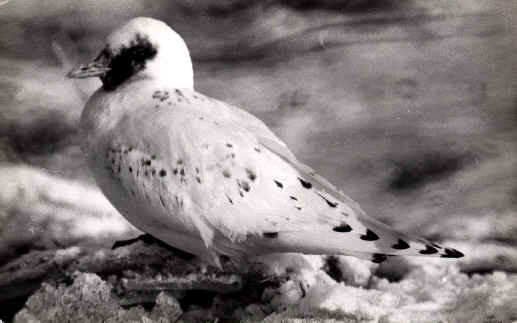
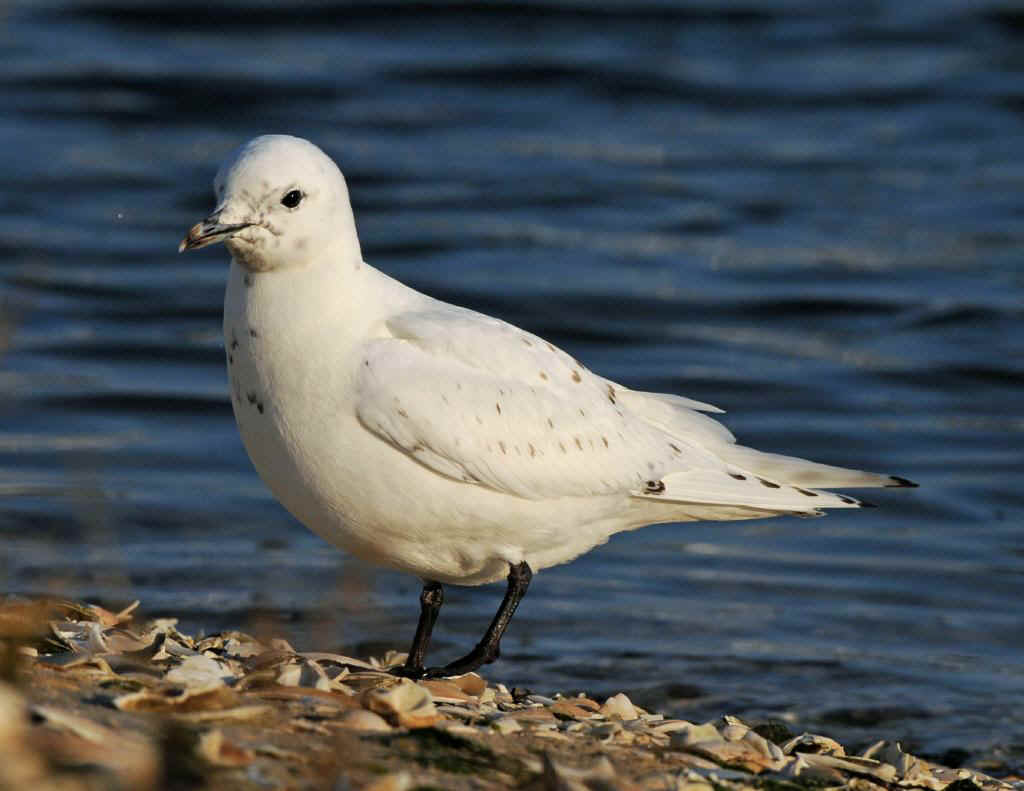
Photo at right: an immature IVORY GULL 

230 species of birds have cumulatively been found during FONT Alaskan tours. 2 subspecies brings the number of birds in this list to 232.
The numbers that follow the bird names indicate the number of tours 
during which the bird has been found (out of 7). 


Codes:

(i): introduced species
(t): a globally threatened or rare species, designated by Birdlife International
    (t1): critical    (t2): endangered    (t3): vulnerable
(nt): a near-threatened species globally
(NAr): rare in North America
(NAu): uncommon in North America 

(B): a Beringian species (restricted, or nearly so, to the area of & surrounding the Bering Sea, as either a resident or a breeder)
(OW): a species primarily of the Old World 
  

 b: during FONT tours at Barrow
 g: during FONT tours at Gambell on St. Lawrence Island
 p: during FONT tours at the Pribilof Islands

nac: during FONT tours seen north of the Arctic Circle (at either Kotzebue or Barrow)  


Places in Alaska visited during FONT tours have included:

Anchorage area (all tours), Barrow, north of the Arctic Circle (twice), Denali area (three tours), Fairbanks (once), Gambell (on St. Lawrence Island) (twice), Kotzebue, north of the Arctic Circle (once), Nome (all tours but one), Seward (all tours), the Pribilof Islands (St. Paul) (all tours).

For birds seen at the Pribilofs, the number following the "p" indicates the number of tours during which the species has been seen there. 
The same applies to Gambell (following the g) and Barrow (following the b).


Links:


Upcoming FONT Birding & Nature Tours in North America

Alaska Mammals  (with some photos)


Bird-List:

  1. Willow Ptarmigan ______ 6
    Lagopus lagopus

  2. Rock Ptarmigan ______ 6
    Lagopus mutus

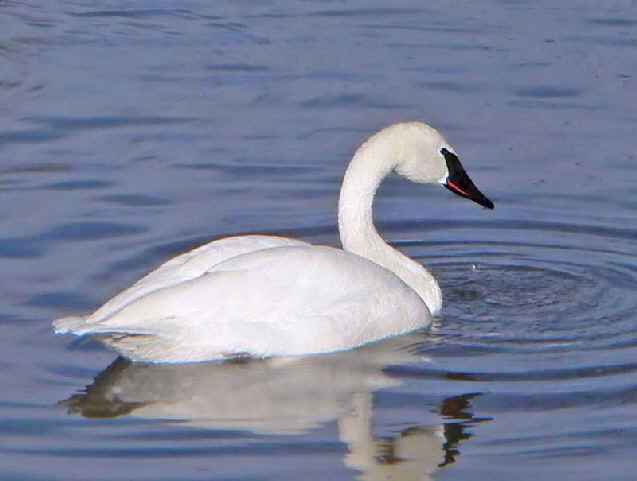
  3. Tundra Swan ______ 6
    Cygnus columbianus

  4. Trumpeter Swan (nt) ______ 6 p1
    Cygnus buccinator


    Trumpeter Swan

  5. Greater White-fronted Goose ______ 5 p1
    Anser albifrons

  6. Snow Goose ______ 2 p1
    Chen
    (formerly Anser) caerulescens

  7. Ross' Goose ______ 1 p1
    Chen
    (formerly Anser) rossii

  8. Canada Goose ______ 7 p2
    Branta canadensis

  9. Emperor Goose  (nt) (B)  ______ 4
    Chen
    (formerly Anser) canagica

  10. Bean Goose  (NAr) (OW) ______ 1 p1
    Anser fabalis

  11. "Black" Brant Goose ______ (in North America has been called Brant; in Eurasia has been called Brent Goose
    Branta bernicla nigricans

  12. Mallard ______ 7 p2
    Anas platyrhynchos

  13. Northern Pintail ______ 7 p7
    Anas acuta

  14. Gadwall ______ 2
    Anas strepera

  15. Falcated Duck (nt) (NAr) (OW) ______ 1 p1
    Anas falcata


    Falcated Duck
    (This photo taken during a FONT tour in Japan)

  16. Green-winged Teal ______ 7 p7 (was considered conspecific with the Eurasian Teal
    Anas carolinensis


    Green-winged Teal
    (photo by Howard Eskin)
     

  17. Eurasian Teal  (OW) ______ 4 p3
    Anas crecca nimia 
    (the subspecies of far-eastern Asia & into the Aleutian Is. of Alaska)   

  18. Garganey  (NAr) (OW) ______ 1 p1
    Anas querquedula

  19. Northern Shoveler ______ 7 p1
    Anas clypeata

  20. American Wigeon ______ 7 p4
    Anas americana

  21. Eurasian Wigeon  (OW) ______ 3 p2
    Anas penelope

  22. Common Pochard  (NAr) (OW) ______ 1 p1
    Aythya ferina

  23. Canvasback ______ 7
    Aythya valisineria

  24. Redhead ______ 2
    Aythya americana

  25. Ring-necked Duck ______ 5
    Aythya collaris


    Ring-necked Duck
    (photo by Howard Eskin)

  26. Greater Scaup ______ 7 p5
    Aythya marila

  27. Lesser Scaup ______ 7
    Aythya affinis

  28. Tufted Duck  (NAu) (OW) ______ 2 p1
    Aythya fuligula

     
  29. Common Goldeneye ______ 7 p6
    Bucephala clangula

  30. Barrow's Goldeneye ______ 5
    Bucephala islandica

  31. Bufflehead ______ 5 p2
    Bucephala albeola


    Bufflehead
    (photo by Kim Steininger)

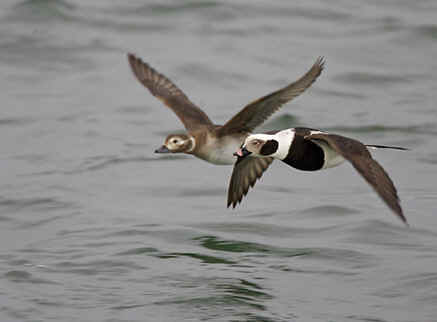
  32. Long-tailed Duck ______ 7 p7  (in North America has been called Oldsquaw)
    Clangula hyemalis


    Long-tailed Ducks, male & female
    (photo by Kim Steininger) 

  33. Harlequin Duck ______ 7 p7  
    Histrionicus histrioncus


    Male Harlequin Duck
    (photo by Howard Eskin)

  34. Common Eider ______ 6 p1
    Somateria mollissima

  35. King Eider ______ 7 p6   
    Somateria spectabilis


    An immature male King Eider

  36. Steller's Eider (t3) ______ 5 p2
    Polysticta stelleri

  37. Spectacled Eider (t3) (B) ______ 4 b1
    Somateria fischeri

  38. Surf Scoter ______ 6 p2
    Melanitta perspicillata

  39. White-winged Scoter ______ 6 p2
    Melanitta fusca

  40. Black Scoter ______ 6
    Melanitta nigra

  41. Smew  (NAr) (OW) ______ 1 p1
    Mergellus albellus

  42. Common Merganser ______ 5 p1  (in Eurasia has been called Goosander)
    Mergus merganser

  43. Red-breasted Merganser ______ 6 p1
    Mergus serrator

  44. Hooded Merganser ______ 1
    Lophodytes cucullatus


    Male Hooded Merganser
    (photo by Howard Eskin)

  45. Red-throated Loon ______ (in Eurasia has been called Red-throated Diver)
    Gavia stellata 
    (monotypic)

  46. Pacific Loon ______ (in Eurasia has been called Pacific Diver)
    Gavia pacifica 
    (monotypic)


    Pacific Loon

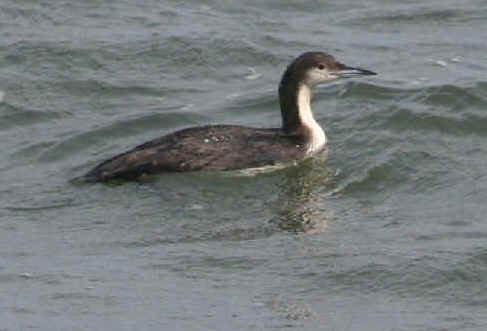
  47. Black-throated Loon  ______ (in North America has been called Arctic Loon; in Eurasia has been called Black-throated Diver)  
    Gavia arctica viridigularis

  48. Yellow-billed Loon ______ 5 g1 p1  (in Eurasia has been called White-billed Diver)
    Gavia adamsii 
    (monotypic)

  49. Great Northern Loon ______ (in North America has been called Common Loon; in Eurasia has been called Great Northern Diver
    Gavia immer 
    (monotypic)

  50. Northern Fulmar ______ 7 p7  
    Fulmarus glacialis rodgersii


    Northern Fulmar
    (photo by Rick Wiltraut)

  51. Sooty Shearwater ______ 2
    Puffinus griseus

  52. Red-necked Grebe ______ 7 p1
    Podiceps grisegena holboellii


    Red-necked Grebe
    (photo by Kim Steininger)

  53. Horned Grebe ______ (in Eurasia has been called Slavonian Grebe)
    Podiceps auritus cornutus

  54. Pied-billed Grebe ______ 1
    Podilymbus p. podiceps

  55. Double-crested Cormorant ______ 5
    Phalacrocorax auritus albociliatus

  56. Pelagic Shag ______ 7 p6  (has been called Pelagic Cormorant)
    Leucocarbo
    (formerly Phalacrocorax) pelagicus resplendens

  57. Red-faced Shag (B) ______ 7 p7  (also been called Red-faced Cormorant)
    Leucocarbo
    (formerly Phalacrocorax) urile  (monotypic)

  58. American Kestrel ______ 4
    Falco sparverius

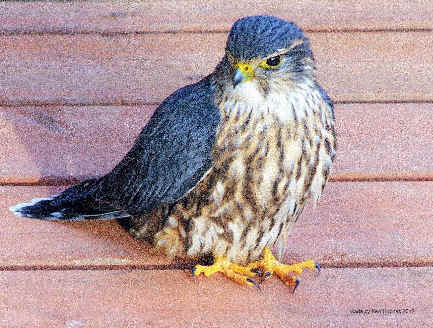
  59. Merlin ______ 4
    Falco columbarius

  60. Peregrine Falcon ______ 5 p1 
    Falco peregrinus


    Peregrine Falcon
    (photo by Kim Steininger)

  61. Gyrfalcon ______ 5
    Falco rusticolus

  62. Bald Eagle ______ 7 p3 
    Haliaetus leucocephalus


    Adult Bald Eagles
    (photo by Ed Kendell) 

  63. Northern Harrier ______ 6
    Circus hudsonius

  64. Osprey ______ 1
    Pandion haliaetus

  65. Northern Goshawk ______ 2
    Accipiter gentilis

  66. Sharp-shinned Hawk ______ 1
    Accipiter striatus

  67. Red-tailed Hawk ______ (including subspecies known as "Harlan's Hawk")
    Buteo jamaicensis

  68. Rough-legged Hawk ______ 6
    Buteo lagopus

  69. Golden Eagle ______ 6
    Aquila chrysaetos

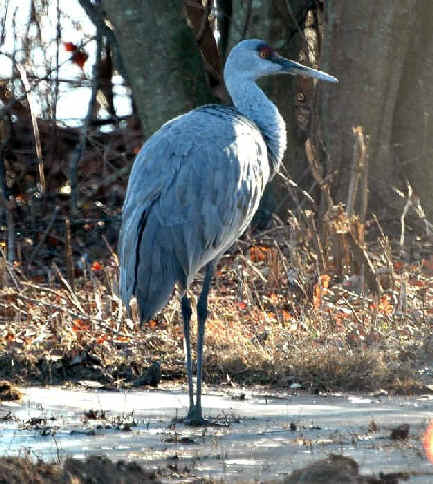
  70. Sandhill Crane ______ 7 p2
    Grus canadensis


    Sandhill Crane
    (photo by Howard Eskin)

  71. Grey (or Black-bellied) Plover ______ (in Eurasia called Grey Plover)
    Pluvialis s. squatarola

  72. American Golden Plover ______ 6
    Pluvialis dominicus 
    (monotypic)

  73. Pacific Golden Plover ______ 7 p2  (was conspecific with the American Golden Plover)
    Pluvialis fulva 
    (monotypic)

  74. Common Ringed Plover  (NAr) (OW)  ______ 2 g1
    Charadrius hiaticula tundrae

  75. Semipalmated Plover ______ 7 p7
    Charadrius semipalmatus 
    (monotypic)

  76. Black Oystercatcher ______ 5
    Haematopus bachmani

  77. Common Greenshank  (NAr) (OW)  ______ 3 p3
    Tringa nebularia 
    (monotypic)

  78. Greater Yellowlegs ______ 6 p2
    Tringa melanoleuca 
    (monotypic)

  79. Lesser Yellowlegs ______ 6 p1
    Tringa flavipes 
    (monotypic)

  80. Wood Sandpiper  (NAr) (OW)  ______ 4 p4
    Tringa glareola 
    (monotypic)

     
  81. Wandering Tattler ______ 7 p5
    Heteroscelus incanus 
    (monotypic)

  82. Gray-tailed Tattler  (NAr) (OW)  ______ 3 p2
    Heteroscelus breviceps 
    (monotypic)

  83. Common Sandpiper (NAr) (OW)  ______ 1 p1
    Actitis hypoleucos 
    (monotypic)

  84. Spotted Sandpiper ______ 6
    Actitis macularia 
    (monotypic)


    Spotted Sandpiper
    (photo by Howard Eskin)

  85. Green Sandpiper  (NAr) (OW) ______ 1 p1
    Tringa ochropus
    (monotypic)

  86. Terek Sandpiper (NAr) (OW) ______ 1
    Xenus cinereus 
    (monotypic, and the single member of its genus)

  87. "American" Whimbrel ______ 7 p2
    Numenius phaeopus rufiventris

  88. Bristle-thighed Curlew (t3) (NAr) ______ 4 p1
    Numenius tahitiensis 
    (monotypic)

  89. Eastern Curlew (nt) (NAr) (OW) ______ 1 p1  (has been called Far Eastern Curlew
    Numenius madagascariensis 
    (monotypic)

  90. Bar-tailed Godwit (OW) ______ 7 p6  (an Old World species, but the subspecies L. l. baueri commonly breeds in west Alaska) 
    Limosa lapponica baueri


    Bar-tailed Godwits
    (photo by Paul West)

  91. Eastern Black-tailed Godwit  (nt) (NAr) ______ 1 p1  (a "split" from the Black-tailed Godwit)
    Limosa melanuroides

  92. Hudsonian Godwit  ______ 5
    Limosa haemastica

  93. Ruddy Turnstone ______ 7 p1
    Arenaria interpres

  94. Black Turnstone ______ 4
    Arenaria melanocephala

  95. Surfbird ______ 5
    Aphriza virgata

  96. Red Knot ______ 5
    Calidris canutus

  97. Sanderling ______ 2
    Calidris alba 

  98. Semipalmated Sandpiper ______ 6
    Calidris pusilla

  99. Western Sandpiper ______ 6 p1
    Calidris mauri


    Western Sandpiper
    (photo by Howard Eskin)

  100. Red-necked Stint  (NAr) (OW) ______ 3 p2 b1
    Calidris ruficollis

  101. Temminck's Stint  (NAr) (OW) ______ 1 b1
    Calidris temminckii

  102. Long-toed Stint  (NAr) (OW) ______ 1 p1
    Calidris subminuta


    Long-toed Stint
    (photo taken during a FONT tour in Japan) 
     

  103. Least Sandpiper ______ 6 p5
    Calidris minutilla


    Least Sandpiper
    (photo by Howard Eskin)

  104. Baird's Sandpiper ______ 4
    Calidris bairdii

  105. Pectoral Sandpiper ______ 5 p3
    Calidris melanotos

  106. Rock Sandpiper ______ 7 p7
    Calidris ptilocnemis

  107. Dunlin ______ 6 p1
    Calidris alpina

  108. Ruff / Reeve  (NAu) (OW) ______ 1 p1
    Philomachus pugnax

  109. Stilt Sandpiper ______ 1
    Calidris himantopus

  110. Short-billed Dowitcher ______ 4 p1
    Limnodromus griseus

  111. Long-billed Dowitcher ______ 3
    Limnodromus scolopaceus

  112. Wilson's Snipe ______ 6 p1  (was conspecific with the Common Snipe of the Old World)
    Gallinago delicata


    Wilson's Snipe
    (photo by Armas Hill)

  113. Red-necked Phalarope ______ 7 p7
    Phalaropus lobatus

  114. Red Phalarope ______ 5 p2  (in Eurasia has been called Grey Phalarope)
    Phalaropus fulicaria

  115. Pomarine Skua ______ (in North America has been called Pomarine Jaeger)
    Stercorarius pomarinus 
    (monotypic)

  116. Parasitic Jaeger ______ 6 p(in Eurasia has been called Arctic Skua)
    Stercorarius parasiticus 
    (monotypic)

  117. Long-tailed Jaeger ______ 6 p2  (in Eurasia has been called Long-tailed Skua)
    Stercorarius longicaudus pallescens

  118. Black-headed Gull  (NAu) (OW) ______ 4 p1
    Chroicocephalus
    (formerly Larus) ridibundus  (monotypic)


    Common Black-headed Gull
    (photo by Armas Hill)
     

  119. Bonaparte's Gull ______ 6
    Chroicocephalus
    (formerly Larus) philadelphia  (monotypic)


    Bonaparte's Gull
    (photo by Howard Eskin)

  120. Mew Gull ______ 7 p1  (in Eurasia the nominate race has been called Common Gull; the race in eastern Asia has been called the "Kamchatka Gull" is L. c. kamtschatschensis)
    Larus canus brachyrhynchus

  121. "American" Herring Gull ______ 6 p1
    Larus (argentatus) smithsonianus

  122. Vega Gull (OW) ______  (has been considered a subspecies of the Herring Gull)  
    Larus vegae

  123. Slaty-backed Gull  (NAr) (OW) ______ 6 p1
    Larus schistisagus 
    (monotypic)

  124. Glaucous-winged Gull ______ 7 p7
    Larus glaucescens 
    (monotypic)

  125. Glaucous Gull ______ 7 p5
    Larus hyperboreus barrovianus 
    (Another subspecies, L. h. pallidissimus, on the Asian side of the Bering Sea) 


    An immature Glaucous Gull
      
  126. Black-legged Kittiwake ______ 7 p7
    Rissa tridactyla 
    (now said to be monotypic)

  127. Red-legged Kittiwake (t3) (B) ______ 7 p7
    Rissa brevirostris 
    (monotypic)
    (In the mid-1970s, the total population of this species was estimated at about 260,000 individuals. It declined to about 168,000 by the mid-1990s. Most of this decline was on the Pribilofs.)  


    A Red-legged Kittiwake photographed during a FONT tour in Alaska

  128. Ross' Gull ______ 2 p1
    Hydrocoloeus
    (formerly Rhodostethia) rosea 
    (monotypic) 


    Two photos of Ross' Gulls


  129. Sabine's Gull ______ 6 p1
    Xema sabini 
    (monotypic, and the single member of its genus) 


    A juvenile Sabine's Gull
    (photo by Jens Bruun)

  130. Ivory Gull ______ 1  (a bird of the high arctic)  (PHOTO AT THE BEGINNING OF THIS LIST) 
    Pagophila eburnea 
    (monotypic, and the single member of its genus)


    Ivory Gull
    (photo by Howard Eskin)


  131. Common Tern ______ 2 p1
    Sterna h. hirundo

  132. Arctic Tern ______ 7 p1
    Sterna paradisaea 
    (monotypic)

  133. Aleutian Tern (B) ______ 6
    Onychoprion
    (formerly Sterna) aleutica  (monotypic)

  134. Little Auk ______ 2  (in North America has been called Dovekie)
    Alle alle polaris

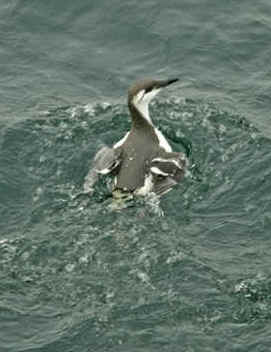
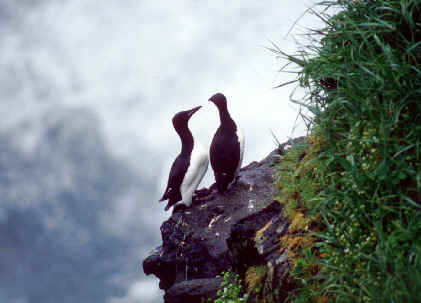
  135. Common Murre ______ 7 p7  (in Eurasia has been called Guillemot)
    Uria aalge inornata


    Common Murre
    (photo by Kim Steininger)

  136. Thick-billed Murre ______ 7 p7  (in Eurasia has been called Brunnich's Guillemot)
    Uria lomvia arra

  137. Black Guillemot ______ 2
    Cepphus grylle mandtii 
    (a different subspecies than in the NE USA & eastern Canada)

  138. Pigeon Guillemot ______ 6 p3
    Cepphus c. columba 
    (the 2 other subspecies are in eastern Asia) 

  139. Marbled Murrelet (t2)  ______ 5 p1  (was conspeciic with what's now the Long-billed Murrelet of eastern Asia) 
    Brachyramphus marmoratus 
    (monotypic)

  140. Kittlitz's Murrelet  (t2)  ______ 5
    Brachyramphus brevirostris 
    (monotypic)

  141. Ancient Murrelet ______ 3 p1
    Synthliboramphus a. antiquus 
    (the other subspecies breeds on Commander Island, Siberia) 

  142. Parakeet Auklet (B) ______ 7 p7
    Aethia
    (formerly Cyclorrhynchus) psittacula  (monotypic)

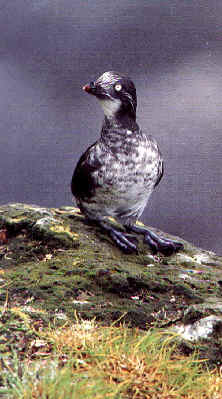
  143. Least Auklet (B) ______ 7 p7  (Alaska's most numerous colonial seabird)
    Aethia pusilla 
    (monotypic)


    Least Auklet
    (photo by Mike Danzenbaker)

  144. Crested Auklet (B) ______ 7 p7
    Aethia cristatella 
    (monotypic)

  145. Rhinoceros Auklet ______ 3
    Cerorhinca monocerata 
    (monotypic, and the single member of its genus) 

  146. Tufted Puffin ______ 7 p7  
    Fratercula
    (formerly Lunda) cirrhata  (monotypic)


    Tufted Puffin
    (photo by Paul West)

  147. Horned Puffin ______  7 p7 
    Fratercula corniculata 
    (monotypic)


    Horned Puffin
    (photo by Paul West)


  148. Common (or Feral) Pigeon ______ 6
    Columba livia

  149. Common Cuckoo (OW) (NAr) ______ 1 p1
    Cuculus canorus

     
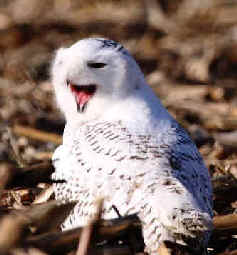
  150. Snowy Owl ______ 3 p3 b1  
    Bubo scandiacus
    (was Nyctea scandiaca)  (monotypic)


    Snowy Owl
    (photo by Kim Steininger)

  151. Short-eared Owl ______ 6 p3
    Asio flammeus


    Short-eared Owl
    (photo by Kim Steininger)

  152. Northern Hawk-Owl ______ 2
    Surnia ulula

  153. Boreal Owl ______ 4  (in Eurasia has been called Tengmalm's Owl)
    Aegolius funereus

  154. Northern Saw-whet Owl ______ 2
    Aegolius acadicus


    Northern Saw-whet Owl
    (photo by Andy Ednie)

  155. Rufous Hummingbird ______ 5
    Selasphorus rufus


    An immature female Rufous Hummingbird
    (photo by Howard Eskin)

  156. Belted Kingfisher ______ 5
    Megaceryle
    (formerly Ceryle) alcyon  (now said to be monotypic)


    Belted Kingfisher
    (photo by Howard Eskin)


  157. Downy Woodpecker ______ 4
    Picoides pubescens medianus 
    (1 of 2 subspecies in Alaska)

  158. Hairy Woodpecker ______ 5
    Picoides villosus septentrionalis 
    (1 of 2 subspecies in Alaska)

  159. American Three-toed Woodpecker ______ (was conspecific with the Eurasian Three-toed Woodpecker)
    Picoides tridactylus fasciatus

  160. Black-backed Woodpecker ______ 2  (was at one time called the Black-backed Three-toed Woodpecker, as this species also has 3 toes) 
    Picoides arcticus 
    (monotypic)

  161. "Red-shafted" Northern Flicker ______ 4
    Colaptes auratus cafer

  162. Olive-sided Flycatcher  (nt)  ______ (an alternate name could be Boreal Pewee)
    Contopus borealis

  163. Western Wood Pewee ______ 3
    Contopus sordidulus

  164. Alder Flycatcher ______ 5
    Empidonax alnorum

  165. Hammond's Flycatcher ______ 1
    Empidonax hammondii

  166. Say's Phoebe ______ 3
    Sayornis saya

  167. Great Gray Shrike ______ 4  (in North America has been called Northern Shrike)  
    Lanius excubitor

  168. Gray Jay ______ 6
    Pesisoreus canadensis

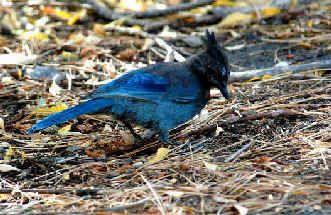
  169. Steller's Jay ______ 5
    Cyanocitta stelleri


    The Steller's Jay was among the first birds found in Alaska 
    by European explorers from Russia.
    Georg Steller encountered it in July 1741 when he landed
    for a few hours on an island off the Alaskan coast.
    (photo by Howard Eskin)
     
  170. Black-billed Magpie ______ 7  (was conspecific with the Eurasian Magpie, Pica pica)
    Pica hudsonia

  171. Northwestern Crow ______ 6
    Corvus caurinus

  172. Common Raven ______ 7
    Corvus corax

  173. Bohemian Waxwing ______  
    Bombycilla garrulus

  174. Black-capped Chickadee ______ 7
    Poecile
    (formerly Parus) atricapillus


    Black-capped Chickadee
    (photo by Doris Potter)

  175. Boreal Chickadee ______ 5
    Poecile
    (formerly Parus) hudsonicus

  176. Chestnut-backed Chickadee ______ 1
    Poecile
    (formerly Parus) rufescens

  177. Tree Swallow ______ 7 p3
    Tachycineta bicolor 
    (monotypic)

  178. Violet-green Swallow ______ 7
    Tachycineta t. thalassina

  179. Sand Martin (or Bank Swallow) ______ 7 p1  
    Riparia r riparia

  180. American Cliff Swallow ______ 6
    Petrochelidon
    (formerly Hirundo) p. pyrrhonota

  181. Barn Swallow ______ 3
    Hirundo rustica erythrogaster

  182. Horned Lark ______ (in Eurasia has been called Shore Lark)
    Eremophila alpestris

  183. Eurasian Skylark (OW) (NAr) ______ 2 p1 (in Alaska not introduced)
    Alauda arvensis

  184. Arctic Warbler (OW) (NAr) ______ 3
    Phylloscopus borealis kennicotti 
    (1 of 3 subspecies; P. b. kennicotti breeds only in Alaska, and winters in the Philippines & Indonesia)   

  185. Golden-crowned Kinglet ______ 1
    Regulus satrapa olivaceus 
    (1 of 2 subspecies in Alaska)


    Golden-crowned Kinglet
    (photo by Howard Eskin)

  186. Ruby-crowned Kinglet ______ 5
    Regulus calendula grinnelli

  187. Winter (or Northern) Wren ______ 6 p6
    Troglodytes troglodytes alascensis 
    (this subspecies of the Pribilof Is. is 1 of 6 subspecies in Alaska; most of the others are on islands including the Aleutians & Kodiak.)   


    Winter Wren
    (photo by Howard Eskin)

  188. Red-breasted Nuthatch ______ 3
    Sitta canadensis


    Red-breasted Nuthatch
    (photo by Howard Eskin)

  189. Brown Creeper ______ 2 (an alternate name would be American Treecreeper)
    Certhia americana

  190. Bluethroat  (NAr) (OW)  ______ 5
    Luscinia s. svecica 
    (Bluethroats that breed in Alaska winter in southeast Asia.) 

  191. Northern Wheatear (OW) ______ 5 p1
    Oenanthe o. oenanthe 
     
    (Wheatears that breed in Alaska winter on the savannas of northern & eastern Africa.) 

  192. Gray-cheeked Thrush ______ 6
    Catharus minimus

  193. Swainson's Thrush ______ 4
    Catharus ustulatus

  194. Hermit Thrush ______ 6
    Catharus guttatus

  195. Eye-browed Thrush  (NAr) (OW) ______ 1 p1
    Turdus obscurus

  196. American Robin ______ 7
    Turdus migratorius

  197. Varied Thrush ______ 6
    Ixoreus naevius meruloides 
    (1 of 2 subspecies in Alaska) (the single member of its genus) 

  198. Eastern Yellow Wagtail (OW) ______ 6 p2
    Motacilla t. tschutschensis 
    (This subspecies breeds in Alaska & the northern Kamchatka Peninsula of Siberia. It winters in east Asia to the Greater Sundas.)

  199. White Wagtail (OW) ______ 3 g1
    Motacilla alba ocularis
    Motacilla alba lugens  _____  2 g1 
    (this race has been called "Black-backed Wagtail"

  200. Olive-backed Pipit  (NAr) (OW) ______ 2 p2
    Anthus hodgsoni

  201. Red-throated Pipit  (NAu) (OW) ______ 2 p1 g1
    Anthus cervinus

  202. Buff-bellied Pipit ______ 5 p1  (in North America has been called American Pipit)
    Anthus rubescens

  203. Brambling  (NAr) (OW) ______ 1 p1  
    Fringilla montifringilla

  204. Gray-crowned Rosy Finch ______ 7 p7
    Leucosticte tephrocotis


    Gray-crowned Rosy Finch

  205. Scarlet (or Common) Rosefinch  (NAr) (OW) ______ 1
    Carpodacus erythrinus

     
  206. Two-barred Crossbill ______ 3  (in North America has been called White-winged Crossbill) 
    Loxia leucoptera


    Two-barred
    (or White-winged) Crossbill

  207. Oriental Greenfinch (OW) (NAr) ______ 1 p1
    Carduelis sinica

  208. Common Redpoll ______ 7 p4
    Carduelis flammea


    Common Redpoll
    (photo by James Scheib)

  209. Hoary Redpoll ______ 6  (in Eurasia has been called Arctic Redpoll)
    Carduelis hornemanni

  210. Pine Siskin ______ 5
    Carduelis pinus

  211. Orange-crowned Warbler ______ 7
    Vermivora celata

  212. Yellow Warbler ______ 6
    Dendroica petechia

  213. "Myrtle" Yellow-rumped Warbler ______ 7 p1
    Dendroica c. coronata


    Yellow-rumped Warbler
    (photo by Kim Steininger)

  214. Townsend's Warbler ______ 4
    Dendroica townsendi

  215. Blackpoll Warbler ______ 6  
    Dendroica atriata


    Blackpoll Warbler

  216. Northern Waterthrush ______ 6
    Seiurus noveboracensis

  217. Wilson's Warbler ______ 6 p1
    Wilsonia pusilla

  218. Red-winged Blackbird ______ 4 p1
    Agelaius phoeniceus

  219. Rusty Blackbird ______ 6
    Euphagus carolinus 


    Rusty Blackbird
    (photo by Howard Eskin)

  220. American Tree Sparrow ______ 6
    Spizella arborea


    American Tree Sparrow
    (photo by Howard Eskin)

  221. Savannah Sparrow ______ 6
    Passerculus sandwichensis 
    (the single member of its genus) 

  222. "Red" Fox Sparrow  ______ (near Nome)
    Passerella i. iliaca

  223. "Sooty" Fox Sparrow ______  (on the Kenai Peninsula) 
    Passerella iliaca unalaschcensis 

  224. Song Sparrow ______ 4 p1 (see note at the end of the list)
    Melospiza melodia

  225. Lincoln's Sparrow ______ 5
    Melospiza lincolnii

  226. Golden-crowned Sparrow ______ 6
    Zonotrichia atricapilla

  227. White-crowned Sparrow ______ 7
    Zonotrichia leucophrys


    White-crowned Sparrow
    (photo by Howard Eskin)

  228. "Slate-colored" Dark-eyed Junco ______ 7
    Junco hyemalis

  229. Lapland Longspur ______ 7 p7  (in Eurasia has been called Lapland Bunting
    Calcarius lapponicus


    Lapland Longspur in non-breeding plumage
    (photo by Howard Eskin)

  230. Smith's Longspur ______ 1
    Calcarius pictus

  231. Snow Bunting ______ 7 p7  
    Calcarius
    (formerly Plectrophenax) nivalis


    Snow Bunting
    (photo by Kim Steininger)

  232. McKay's Bunting (nt) (B) ______ 1g  
    Calcarius
    (formely Plectrophenax) hyperboreus
    (Breeds only on Hall & St. Matthew's Islands in the Bering Sea, and occasionally on St. Lawrence Island & probably on St. Paul Island in the Pribilofs. It winters along the wet Alaska coast mainly from Kotzebue to the tip of the Alaska Peninsula.)  

Notes:

(*) A Song Sparrow seen during one of our tours on St Pauls Island in the Pribilofs was believed to be ship-assisted.

During our 1997 tour, all 4 species of eider were seen at Barrow.

Photos of Some of the Alcids We've Seen in Alaska 


Common Murres


Least Auklet
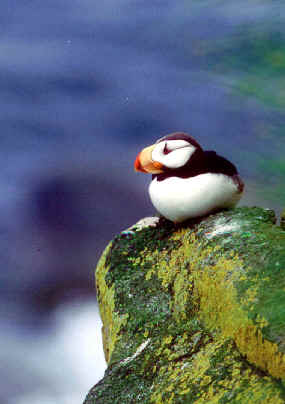

Horned Puffin
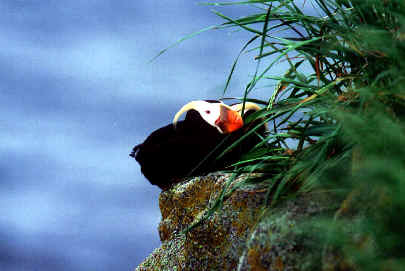


Tufted Puffin