Birds of
COLORADO
and in the nearby states of
KANSAS, NEBRASKA,
OKLAHOMA, and WYOMING
From Flycatchers to Buntings
including those
during
Focus On Nature Tours
in April and July
with an (*)
1993 thru 2015
PART 2 of a List of Birds of Colorado and Nearby
States with some photos,
compiled by Armas Hill
249 species of birds have cumulatively been
seen,
along with 8 additional subspecies.
during 11 FONT Colorado birding & nature tours: 9 in April and 2 in July.
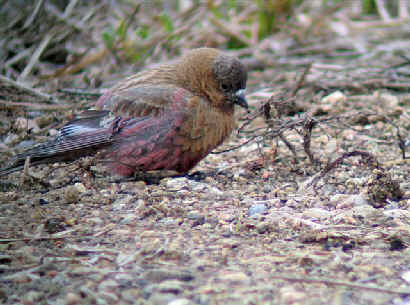
Upper right photograph: BROWN-CAPPED ROSY FINCH
This species as a breeder is nearly endemic to Colorado. Some also nest in a
limited area of southern Wyoming.
In the winter, the species occurs in a third state, with some in northern New
Mexico.
Link: Part
1 of List of Colorado Birds from Quails to Woodpeckers
Codes:
co = Colorado
ks = Kansas
ne = Nebraska
ok = Oklahoma
wy = Wyoming
APR: during tours in April (usually 3rd week)
JUL: during tours in July (1st week)
(USe): endemic to the USA
(USqe): quasi (or nearly) endemic to the USA
(USneb): near-endemic breeder in the USA
(NAi): species introduced into North America
(t): a globally threatened or rare species, designated by Birdlife International
(t1): critical (t2): endangered (t3): vulnerable
(nt): a near-threatened species globally
(ph): species with a photo in the FONT web-site
Links:
Upcoming FONT Tours in Colorado & adjacent states
A Complete List with some Photos of North American Birds, in 6 parts:
List #1: Grouse to Anhinga
List #2: Condor to
Shorebirds List #3: Jaegers to Cuckoos
List #4: Owls to
Flycatchers List #5: Shrikes to Pipits
List #6: Olive Warbler to
Buntings
Nebraska Birds
Mammals during
FONT tours in Colorado & nearby states (with some photos)
Directory of Photos in this Website

Birds:
- Olive-sided Flycatcher ______ JUL co
Contopus cooperi
- Western Wood Pewee ______ JUL co
Contopus sordidulus
- Willow Flycatcher ______ JUL co
Empidonax traillii
- Dusky Flycatcher (ph) ______ APR, JUL co,ks
Empidonax oberholseri
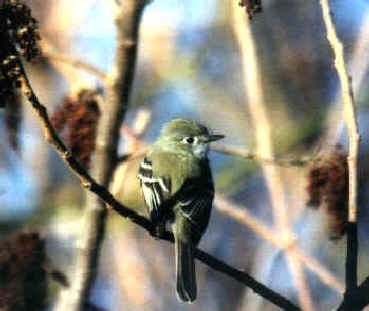
Dusky Flycatcher
(photo by Marie Gardner)
- Gray Flycatcher ______ APR co
Empidonax wrightii
- Cordilleran Flycatcher ______ JUL co
Empidonax occidentalis
- Eastern Phoebe (ph) ______ APR JUL
co,ks,ok
Sayornis phoebe
- Say's Phoebe (ph) ______ APR JUL co,ks
Sayornis saya
- Vermilion Flycatcher (ph) ______ APR (rare in CO)
co
Pyrocephalus rubinus
- Ash-throated Flycatcher (ph) ______ APR co
Myarchus cinerascens
- Cassin's Kingbird ______ APR co
Tyrannus vociferans
- Western Kingbird (ph) ______ APR JUL co,ks
Tyrannus verticalis
- Eastern Kingbird (ph) ______ JUL
co
Tyrannus tyrannus
- Loggerhead Shrike (ph) ______ APR JUL co,ks,ok
Lanius ludovicianus
- Plumbeous Vireo ______ JUL co
Vireo plumbeus
- Warbling Vireo ______ JUL co
Vireo gilvus
- Gray Jay (ph) ______ APR JUL co
Perisoreus canadensis capitalis
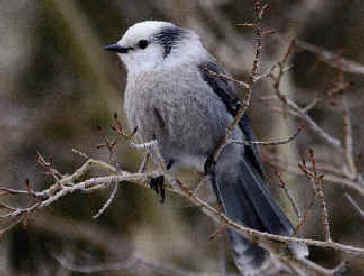
This Gray Jay was photographed during the FONT
tour in Colorado in April 2009
- Steller's Jay (ph) ______ APR JUL co
Cyanocitta stelleri macrolopha
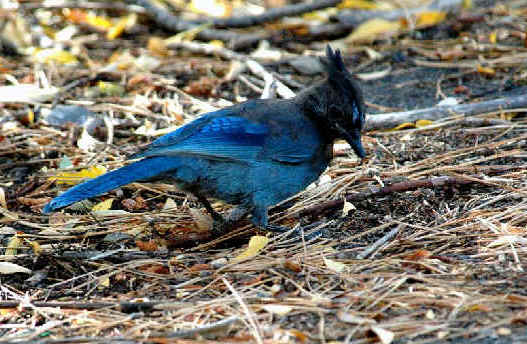
The eastern range of the Steller's Jay is in western Colorado
(photo by Howard Eskin)
- Blue Jay (ph) ______ APR JUL co,ne
Cyanocitta cristata cyanotephra
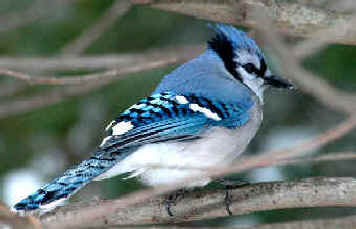
The Blue Jay reaches the western edge of its range in eastern Colorado
(photo by Howard Eskin)
- Western Scrub Jay (ph) ______ APR JUL co
Aphelocoma californica woodhouseii
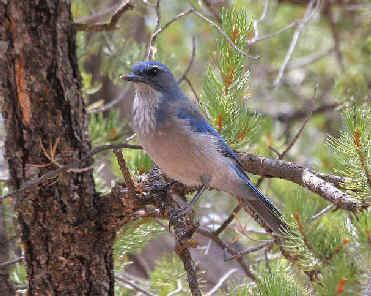
The Western Scrub Jay is at the eastern edge of
its range in Colorado
(photo by Doris Potter)
- Pinyon Jay ______ APR
co
Gymnorhinus cyanocephalus
- Clark's Nutcracker ______ APR JUL co
Nucifraga columbiana
- Black-billed Magpie (ph) ______ APR JUL co,ks,wy
(was conspecific with the Eurasian Magpie, Pica
pica)
Pica hudsonia
- American Crow (ph) ______ APR JUL co,ks,ne,wy
Corvus brachyrhynchos hesperis
- Chihuahuan Raven (ph) ______ APR co,ks,ok
Corvus cryptoleucus
- Northern Raven (ph) ______ APR JUL
co,ne,ok,wy
Corvus corax principalis
- Cedar Waxwing (ph) ______ APR JUL co
Bombycilla cedrorum
- Juniper Titmouse _____ APR co
Baeolophus
(formerly Parus) r. ridgwayi
- Black-capped Chickadee (ph) ______ APR JUL
co,ks,ne,wy
Poecile (formerly Parus) atricapilla septentrionalis
- Mountain Chickadee ______ APR JUL co,wy
Poecile
(formerly Parus) g. gambeli
- Tree Swallow (ph) ______ APR JUL
co,ks,ne,wy
Tachycineta bicolor
- Violet-green Swallow ______ APR JUL co
Tachycineta thalassina lepida
- Northern Rough-winged Swallow
(ph) ______ APR JUL co,ks
Stelgidopteryx serripennis
- Bank Swallow ______ APR co (in
the Old World called Sand Martin)
Riparia r. riparia
- American Cliff Swallow ______ APR JUL
co,ks
Petrochelidon p. pyrrhonota
- Barn Swallow (ph) ______ APR JUL
co,ks,ne,ok,wy
Hirundo rustica erythrogaster
- American Bushtit (ph) ______ APR co
Psaltriparus minimus plumbeus (the "Lead-colored Bushtit")
- Horned Lark (ph) ______ APR JUL co,ks,ne,ok,wy
Eremophila alpestris
- Rock Wren (ph) ______ APR JUL
co
Salpinctes obsoletus
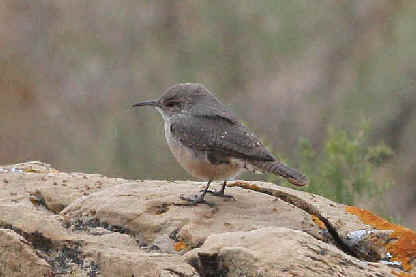
A Rock Wren in the rain, and on a rock
(photo by Doris Potter)
- Canyon Wren ______ APR JUL co
Catherpes mexicanus
- Bewick's Wren ______ APR co,ks
Thryomanes bewickii eremophilus
- House Wren (ph) ______ APR JUL co
Troglodytes aedon parkmani
- Pacific Wren ______ APR co
Troglodytes pacificus
- Marsh Wren (ph) ______ APR JUL co,wy
Cistothorus palustris
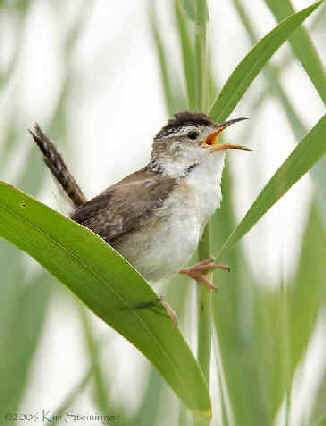
Marsh Wren
(photo by Kim Steininger)
- Ruby-crowned Kinglet (ph) ______ APR JUL
co,wy
Regulus calendula
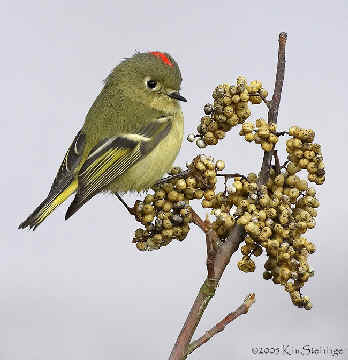
Ruby-crowned Kinglet
(photo by Kim Steininger)
- Golden-crowned Kinglet (ph) ______ APR
co
Regulus satrapa
- Blue-gray Gnatcatcher (ph) ______ APR JUL co
Polioptila caerulea
- Red-breasted Nuthatch (ph) ______ APR JUL
co,wy
Sitta canadensis
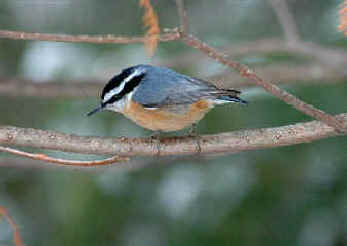
Red-breasted Nuthatch
(photo by Howard Eskin)
- White-breasted Nuthatch (ph) ______ APR
co,ks,wy
Sitta carolinensis nelsoni
- Pygmy Nuthatch (ph) ______ APR JUL co
Sitta pygmaea melanotis
- Brown Creeper (ph) ______ APR JUL co
Certhia americana montana
- Gray Catbird (ph) ______ APR JUL co
Dumetella carolinensis
- Northern Mockingbird (ph) ______ APR JUL
co,ks
Mimus p. polyglottos
- Sage Thrasher (ph) ______ APR JUL
co,wy
Oreoscoptes montanus
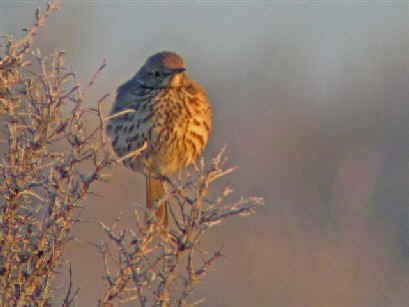
A Sage Thrasher photographed in the early morning sunlight
during a FONT Colorado tour in April
- Brown Thrasher (ph) ______ APR JUL co
Toxostoma rufum
- Eastern Bluebird (ph) ______ APR co.ks,ne
Sialia sialis
- Western Bluebird (ph) ______ APR JUL co
Sialia mexicana
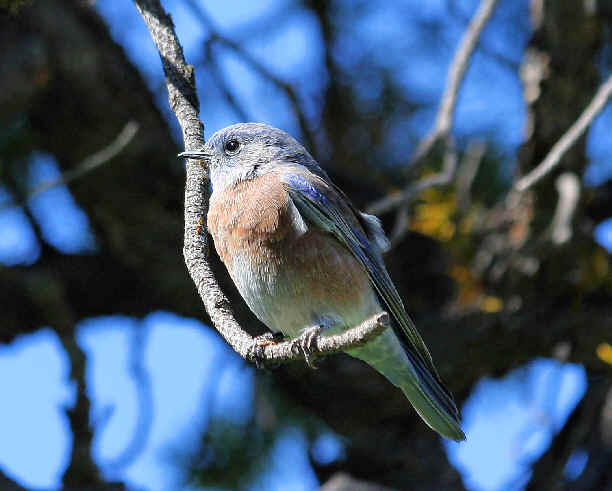
A Western Bluebird
(photo by Doris Potter)
- Mountain Bluebird (ph) ______ APR JUL co,wy
Sialia currucoides
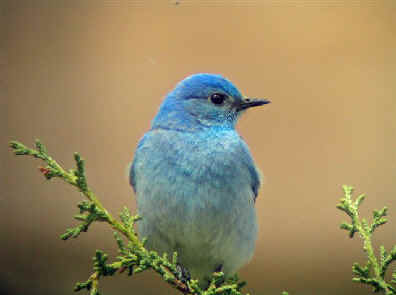
A Mountain Bluebird photographed during a FONT tour
- Townsend's Solitaire ______ APR JUL co,wy
Myadestes townsendi
- Swainson's Thrush ______ JUL co
Catharus ustulatus
- Hermit Thrush (ph) ______ APR JUL
co
Catharus guttatus auduboni
- American Robin (ph) ______ APR JUL co,ks,ne,ok,wy
Turdus migratorius
- American Dipper (ph) ______ APR JUL co
Cinclus mexicanus unicolor
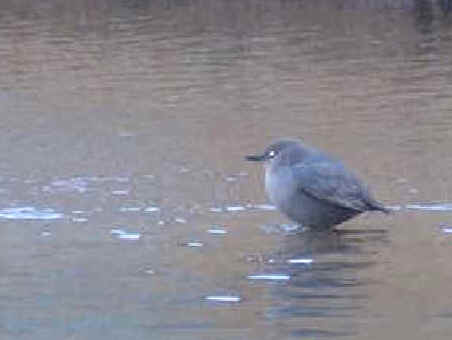
An American Dipper photographed in Colorado in the spring of 2015
(photo by Sally Brady)
Showing, in the photo, the white eyelid.
The eyelid flashes white when the bird blinks.
Understandably, people assume that this flashing white eyelid must
have something to do
with the dipper's unusual underwater habits, related to helping them
see underwater,
which leads to a common misconception that the white flash is a nictitating
membrane.
But all birds have a nictitating membrane, a translucent sometimes
whitish/often bluish
"third eyelid" that flicks across the surface of the eye
from front to back to protect it
while still allowing some vision.
Because the dipper's eyelid is white it can be seen (as in
the above photo) every time
the bird blinks.
As to why the dipper has such an obvious white eyelid,
nobody really knows.
- Common Starling (i) (ph) ______ APR JUL co,ks,ne,ok,wy
Sturnus vulgaris
- House Sparrow (i) ______ APR JUL co,ks,ne,ok,wy
Passer domesticus
- American Pipit (ph) ______ APR JUL co,wy
(also called Buff-bellied Pipit)
Anthus rubescens
- Gray-crowned Rosy Finch
(ph) ______ APR
co
Leucosticte tephrocotis
Leucosticte t. littoralis ("Hepburn's Rosy
Finch")
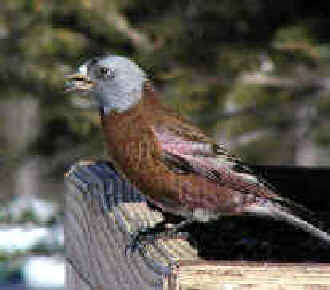
A Gray-crowned Rosy Finch photographed during a
FONT tour in Colorado in April
- Black Rosy Finch (USe) (ph) ______ APR co
Leucosticte atrata
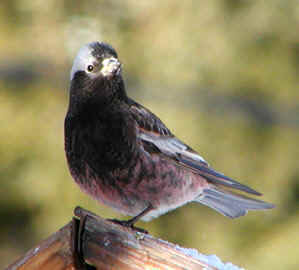
A Black Rosy Finch photographed during a
FONT tour in Colorado in April
- Brown-capped Rosy Finch (USe) (ph) ______ APR
JUL co
Leucosticte australis
The Brown-capped Rosy Finch is nearly endemic to Colorado,
particularly as a breeder.
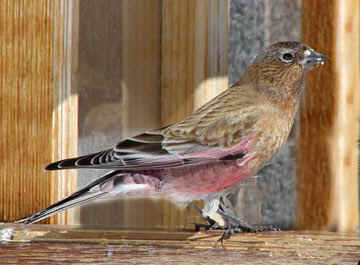
A Brown-capped Rosy Finch photographed during a
FONT tour in Colorado in April
- Pine Grosbeak (ph) ______ APR JUL
co,wy
Pinicola enucleator montanus
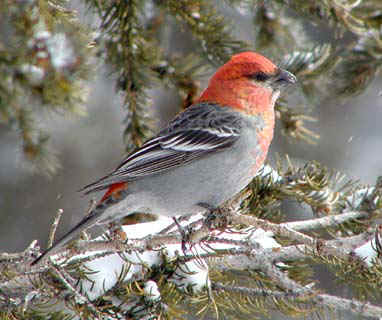
A Pine Grosbeak photograph during a FONT tour
in Wyoming, near Colorado, in April
- Cassin's Finch (ph) ______ APR JUL
co,wy
Haemorhous
(formerly Carpodacus) cassinii
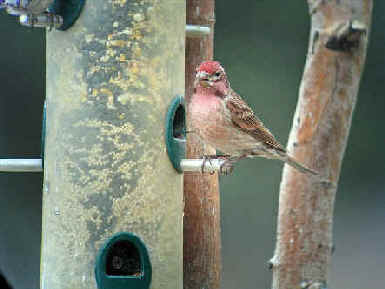
A Cassin's Finch photographed during a FONT tour
in Wyoming, near Colorado, in April
- House Finch (ph) ______ APR JUL
co,ks,wy
Haemorhous
(formerly Carpodacus) mexicanus frontalis
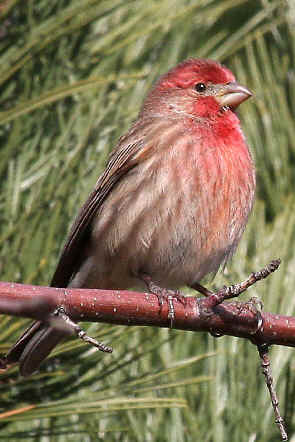
House Finch
(photo by Doris Potter)
- Red Crossbill (ph) ______ APR JUL
co,wy
Loxia curvirostra
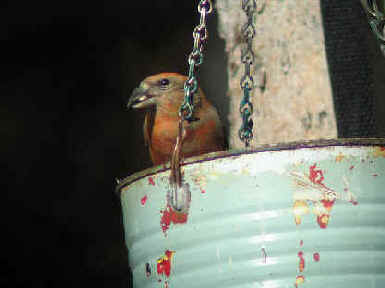
A Red Crossbill photographed during a FONT tour
in Wyoming, near Colorado, in April
- Pine Siskin (ph) ______ APR JUL
co,ks,ok,wy
Carduelis pinus
- American Goldfinch (ph) ______ APR JUL
co,ks,ne
Carduelis tristis
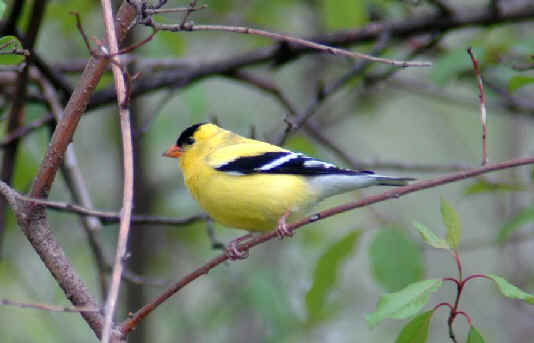
American Goldfinch
(photo by Howard Eskin)
- Lesser Goldfinch (ph) ______
JUL co
(both
black-backed & green-backed forms)
Carduelis psaltria
- Evening Grosbeak (ph) ______
APR JUL
co,wy
Coccothraustes vespertinus
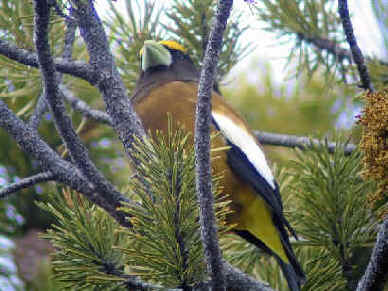
An Evening Grosbeak photographed during a FONT tour
in Wyoming, near Colorado, in April
- Worm-eating Warbler ______ APR co
(rare in CO)
Helmitheros vermivorum
- Northern Parula (ph) ______ APR co
(rare in CO)
Setophaga
(formerly Parula)
americana
- Orange-crowned Warbler (ph) ______ APR co,ks
Oreothlypis
(formerly Vermivora) celata orestera
- Virginia's Warbler ______ APR JUL co
Oreothlypis (formerly Vermivora)
virginiae
- Yellow Warbler (ph) ______ JUL co
Setophaga
(formerly Dendroica) petechia
- "Myrtle" Yellow-rumped Warbler
(ph) ______ APR
co,ks
Setophaga (formerly Dendroica)
coronata
- "Audubon's" Yellow-rumped Warbler
(ph) ______ APR JUL co,ks,wy
Setophaga (formerly Dendroica)
coronata
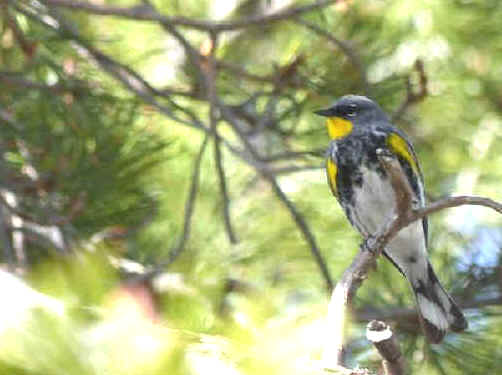
An "Audubon's" Yellow-rumped Warbler
photographed in Colorado in the spring of 2015
(photo by Sally Brady)
- Black-throated Gray Warbler
______ APR co
Setophaga
(formerly Dendroica) nigrescens
- Black-and-white Warbler ______ JUL co
Mniotilta varia
- MacGillivray's Warbler (ph) ______ JUL co
Geothlypis
(formerly Oporornis) petechia
- Common Yellowthroat (ph) ______ JUL co
Geothlypis trichas
- Wilson's Warbler ______ APR JUL co,ks
Cardellina (formerly
Wilsonia) pusilla pileolata
- Yellow-breasted Chat (ph) ______ JUL co
Icteria virens
- Western Meadowlark ______ APR JUL co,ks,ne,ok,wy
Sturnella neglecta
- Red-winged Blackbird (ph) ______ APR JUL co,ks,ne,ok,wy
Agelaius phoeniceus
- Yellow-headed Blackbird (ph) ______ APR JUL co,ks,ne,wy
Xanthocephalus xanthocephalus
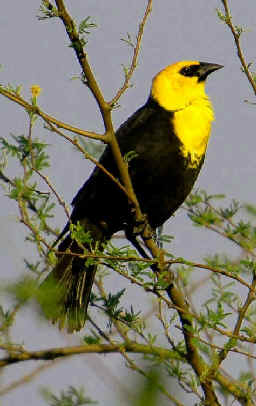
A male Yellow-headed Blackbird
(photo by Howard Eskin)
- Brewer's Blackbird (ph) ______ APR JUL
co,ks,ne,ok,wy
Euphagus cyanocephalus
- Great-tailed Grackle (ph) ______ APR JUL
co,ks,ok
Quiscalus mexicanus
- Common Grackle ______ APR JUL cp,ks,ne,ok,wy
Quiscalus quiscula
- Brown-headed Cowbird (ph) ______ APR JUL
co,ks
Molothrus ater
- Orchard Oriole (ph) ______ APR JUL co
Icterus spurius
- Bullock's Oriole (ph) ______ JUL co
Icterus bullockii
- Western Tanager (ph) ______ JUL co
Piranga ludoviciana
- Northern Cardinal (ph) ______ APR co
Cardinalis c. canicaudus
- Green-tailed Towhee (ph) ______ APR JUL co
Pipilo chlorurus
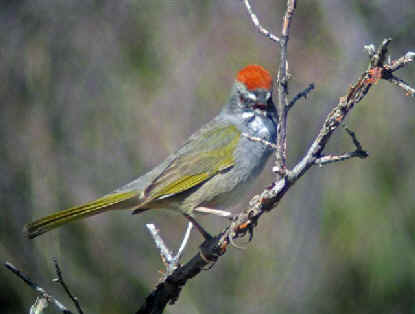
A Green-tailed Towhee photographed during a
FONT Colorado tour in April
- Spotted Towhee (ph) ______ APR JUL co
Pipilo maculatus montanus
- Canyon Towhee (ph) ______ APR co,ok
Pipilo fuscus
- Cassin's Sparrow ______ APR JUL co,ks
Aimophila cassinii
- Rufous-crowned Sparrow ______ APR
ok
Aimophila ruficeps
- American Tree Sparrow (ph) ______ APR co
Spizelloides arborea (formerly
Spizella arborea)