
E-mail: font@focusonnature.com
Phone: Toll-free in USA 1-888-721-3555
or 302/529-1876
|
PO
Box 9021, Wilmington, DE 19809, USA E-mail: font@focusonnature.com Phone: Toll-free in USA 1-888-721-3555 or 302/529-1876 |
 Birds
found during
Birds
found during
Focus On Nature Tours
on the main Japanese island
of
Honshu
including the small offshore island
of Hegura
1994 thru 2014
during the
months of January, February, April,
May, June, July, October, November, & December
A List of Birds on Honshu
in Japan
compiled by Armas Hill
There have been 23 FONT Fall & Winter birding tours in Japan:
FW.
There have been 13 FONT Spring & Summer birding tours in Japan: SS.
During all of these 36 tours, there has been birding on Honshu,
where cumulatively,
308 species of birds have been
found!
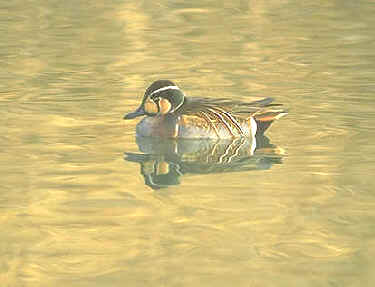
UPPER RIGHT PHOTO: A male
BAIKAL TEAL,
as seen during FONT tours in Honshu during the Winter.
Codes:
(i): introduced species
(t): a globally threatened or rare species, designated by Birdlife
International.
(t1): critical
(t2): endangered
(t3): vulnerable
(nt): considered a near-threatened species globally
(JAr): rare in Japan
(JArs): rare in Japan in spring/summer
(JArw): rare in Japan in winter
(JAe): Japanese endemic
(JAeb): Japanese endemic breeder
(JAneb): Japanese near-endemic breeder
(p): seen pelagically
(p1): offshore on the Pacific, off northern Honshu, from the large ferry to or from
Hokkaido
(p2): offshore on the Sea of Japan, from the small ferry to or from Hegura
Island
(po): pelagic only
FW: Seen during FONT Fall
& Winter Japanese birding tours.
SS: Seen during FONT Spring & Summer Japanese birding tours.
Months of the FONT tours when found are noted for each species.
HI: seen
on Hegura Island (Hegura-jima) in the Sea of Japan off Honshu, (o):
on Hegura Island only. (Hegura Island
visited during Spring tours)
Links:
Upcoming
FONT Birding & Nature Tours in Japan
A List & Photo Gallery of Japan Birds, in 2 parts:
Part #1: Pheasants to Pitta Part
#2: Minivets to Buntings
Birds of Hegura Island (with some photos)
Birds
during FONT Japan Tours in the Spring & Summer
Rare
Birds during our Japan Tours (with some photos)
List
of Japanese Mammals (with some photos)
List
of Japanese Butterflies (with some photos)
Directory of Photos in this FONT Website
List of Birds during
FONT Tours in Honshu, Japan:
Copper Pheasant (nt)
(JAe) ______ SS,FW
Syrmaticus soemmerringii
Japanese Green
Pheasant (JAe) ______ SS,FW
Mute Swan (JAi) ______ SS,FW
Cygnus olor
Whooper Swan ______ FW
Cygnus cygnus
"Bewick's" Tundra
Swan ______ FW
Cygnus columbianus bewickii
Greater White-fronted
Goose ______ FW
jan,nov
Anser albifrons frontalis
(or albicans)
“Tundra” Bean Goose
______ FW
Anser fabalis serrirostris
Snow Goose (JAr)
______ FW
Anser
(formerly Chen) caerulescens
Mandarin Duck (nt)
______ SS,FW
jan,feb,apr,may,oct,nov,dec
Aix galericulata
Eurasian Wigeon ______ SS,FW HI jan,feb,apr,may,oct,nov,dec
Anas penelope
American Wigeon
(JAr) ______ FW
Anas americana
Falcated Duck
______ SS,FW
Anas falcata
Baikal Teal (t3) ______ FW
Anas formosa
Eurasian Teal ______
SS,FW
Anas c. crecca
Garganey ______ SP
Anas querquedula
Gadwall ______
SS,FW
Anas s. strepera
Mallard ______ SS,FW
HI
Anas p. platyrhynchos
Eastern Spot-billed Duck
______ SS,FW
HI jan,feb,apr,may,jun,oct,nov,dec
Anas zonorhyncha
Northern Pintail _____ SS,FW
Anas acuta
Northern Shoveler ______ SS,FW
Anas clypeata
Common Pochard
______ SS,FW
Aythya ferina
Red-crested Pochard
(JAr)
______ FW
Netta rufina
Baer’s Pochard (JAr) ______ FW
Aythya baeri
Ring-necked Duck (JAr) ______ FW
Aythya collaris
Tufted Duck ______
SS,FW
Aythya fuligula
Greater Scaup ______ SS,FW
(p) p1
Aythya marila mariloides
Harlequin Duck ______ SS,FW
jan,may,dec
Histrionicus histrionicus
Long-tailed Duck ______ FW
(po) p1
Clangula hyemalis
Black Scoter ______ SS,FW
p1
jan,feb,apr,may
Melanitta americana
The Black Scoter was conspecific was the Common Scoter of
Europe, Melanitta nigra.
Common Goldeneye ______ FW
Bucephala c. clangula
Smew
______ SS,FW
Mergellus albellus
Red-breasted Merganser ______ SS,FW HI
Mergus serrator
Scaly-sided Merganser
(t3) (JAr) ______ FW
Mergus squamatus
The Scaly-sided Merganser is also called the Chinese Merganser.
Common Merganser ______ SS,FW
jan,feb,may
Mergus m. merganser
The Common Merganser is also called the Goosander.
Yellow-billed Loon
______ FW (po)
p1
Gavia adamsii
Red-throated Loon
______ FW
Gavia stellata
The Red-throated Loon is also called the Red-throated Diver.
Pacific Loon ______ SS,FW p1 HI
Gavia pacifica
The Pacific Loon is also called the Pacific Diver.
Arctic Loon
______ SS,FW
(p) p1
Gavia arctica
The Arctic Loon is also called the Black-throated Diver.
Black-footed Albatross
(t3) ______ SS,FW (po) p1 jan,apr,may,jun,nov
Phoebastria nigripes
Laysan Albatross ______ SS,FW
(po) p1 jan,feb,may,jun,nov.dec
Phoebastria immutabilis
Short-tailed Albatross (t2) ______ SS,FW (po) p1 jan,apr,may
Phoebastria albatrus
The Short-tailed Albatross is also called the Steller's Albatross.
Northern Fulmar
______ SS,FW (po) p1 jan,feb,may,jun,nov,dec
Fulmaris glacialis rodgersii
Bonin Petrel
(JAr) ______ FW (po) p1 jan
Pterodroma h. hypoleuca
Streaked Shearwater
(JAneb) ______
SS,FW (p) p1,2 HI
jan,apr,may,jun,nov,dec
Calonectris leucomelas
Buller’s Shearwater
______ SS (po) p1
may,jun
Puffinus bulleri
Flesh-footed Shearwater ______ SS,FW
(po) p1 may,jun,nov
Puffinus carneipes
Sooty Shearwater
______ SS (po) p1 apr,may,jun
Puffinus griseus
Short-tailed Shearwater ______
SS,FW (po) p1,2 HI
Puffinus tenuirostris
Tristram’s Storm
Petrel (nt) (JArw) ______ SS,FW
(po) p1 jan,may,dec
Oceanodroma tristrami
The Tristram's Storm Petrel is also called the Sooty Storm Petrel.
Fork-tailed Storm Petrel ______ SS,FW
p1 jan,feb,nov,dec
Oceanodroma furcata
The Fork-tailed Storm Petrel is also called the Grey Storm Petrel.
Little Grebe ______
SS,FW jan,feb,apr,may,oct,nov,dec
Tachybaptus ruficollis poggei
Eared Grebe ______ FW
jan,feb
Podiceps nigricollis
The Eared Grebe is also called the Black-necked Grebe.
Horned Grebe ______ FW jan,feb,oct
Podiceps a. auritus
The Horned Grebe is also called the Slavonian Grebe.
Red-necked Grebe ______
SS,FW jan,apr,oct,nov
Podiceps grisegena holboellii
Great Crested Grebe
______ SS,FW (p) p1 HI
jan,feb,apr,may,oct,nov
Podiceps c. cristatus
Black-faced Spoonbill
(t2) ______ FW
jan
Platalea minor
Great Cormorant ______
SS,FW jan,feb,apr,may,jun,oct,nov,dec
Phalacrocorax carbo hanedae
Temminck's (or
Japanese)
Cormorant (JAneb) ______ SS,FW
(p) p1,2 HI
Phalacrocorax capillatus
Pelagic Shag
(or
Cormorant) ______ SS,FW (p) p1,2 HI
Phalacrocorax p. pelagicus
Eurasian Bittern ______
FW jan
Botaurus s. stellaris
Black-crowned
Night-Heron ______ SS,FW
HI jan,ap
Chinese Pond Heron
(JAr) ______
SS HIo
Ardeola bacchus
Eastern Cattle
Egret ______
SS,FW
HI jan,may
Bublucus coromandus
The Eastern Cattle Egret is in eastern
Asia. The Western Cattle Egret, Bubulcus ibis, is in Africa, parts of
Europe, and the Americas.
Chinese Egret (t3) (JAr) ______ SS HI may
Egretta eulophotes
The Chinese Egret is also called the
Swinhoe's Egret.
Little Egret ______
SS,FW HI
Egretta g. garzetta
Intermediate
Egret ______ SS,FW
HI
Egretta i. intermedia
Great Egret
______ SS,FW
HI
Ardea a. alba
Grey Heron ______ SS,FW
HI
Ardea cinerea jouyi
Purple Heron (JAr)
______ SS
HIo
Ardea purpurea manilensis
Striated Heron ______ SS
HI
Butorides striatus amurensis
Pacific Reef Heron ______ SS,FW
HI
Egretta s. sacra
The Pacific Reef Heron is also called the Eastern Reef
Heron.
Oriental Honey Buzzard ______
SS HIo
may
Pernis orientalis
The Oriental Honey Buzzard has been split from the Crested Honey Buzzard,
Pernis ptilohynchus, that occurs elsewhere in Asia.
Black-eared Kite ______ SS,FW
HI
Migrans (migrans) lineatus
White-tailed (Sea)
Eagle (nt) ______ FW
Haliaeetus a. albicilla
Steller’s Sea Eagle
(t3) ______ FW
jan
Hen
Harrier ______ SS,FW
HI
Circus cyaneus
The Hen Harrier is now considered distinct from the
Northern Harrier, Circus hudsonius, of North America.
Eastern Marsh Harrier ______
SS,FW HI
Circus spilonotus
The Eastern Marsh Harrier was conspecific with what is now the Western Marsh
Harrier, Circus aeruginosus.
Northern Goshawk ______ SS,FW
Accipiter gentilis
Eurasian Sparrowhawk
______ SS,FW
HI jan,may,nov,dec
Accipiter nisus nisosimilis
Japanese Sparrowhawk
______ SS HIo
may
Accipiter gularis iwasakii
Grey-faced Buzzard
______ SS,FW
HI may,nov
Butastur indicus
Eastern Buzzard ______ SS,FW
Buteo japonicus
The Eastern Buzzard was part of the Common Buzzard, Buteo
buteo.
Rough-legged Buzzard
(or Rough-legged Hawk) ______
FW jan
Buteo lagopus menzibieri
Mountain
Hawk-Eagle ______ FW
Spizaetus nipalensis orientalis
The Mountain Hawk-Eagle has been called the Hodgson's Hawk-Eagle.
The subspecies in Japan is rather distinct from populations on mainland
Asia, and may be described as a separate species.
Osprey
______ SS,FW
HI
Pandion h. haliaetus
Eurasian Kestrel
______ SS,FW
Falco tinnunculus interstinctus
Merlin ______ FW
Falco columbarius
Northern Hobby
______ SS,FW
HI
Falco s. subbuteo
Amur Falcon (JAr)
______ SS HIo
may
Falco amurensis
Another name for the Amur Falcon has been the Eastern Red-footed Falcon.
Peregrine Falcon
______ SS,FW HI
Falco peregrinus japonensis
Gyrfalcon ______ FW
(po)
Falco rusticolus
Ruddy-breasted Crake
______ SS,FW
HI
jan,may
Porzana fusca
Common Moorhen ______ SS,FW
HI
Gallinula chloropus indica
The Common Moorhen is now considered distinct from the Common
Gallinule of the Americas, Gallinula galeata.
Eurasian Coot
______ SS,FW
HI
jan,feb,apr,may,jun,oct,nov
Fulica a. atra
Eurasian Oystercatcher
(JAr)
______ SS apr
Haematopus ostralegus
Black-winged Stilt
______ SS,FW
Himantopus h. himantopus
Long-billed Plover (nt)
______ SS,FW
jan,feb,may,jun
Charadrius placidus japonicus
Little Ringed Plover
______ SS,FW
HI j
Common Ringed Plover
(JArw) ______ SS.FW
HI jan,may,dec
Charadrius hiaticula tundrae
Kentish Plover ______ SS,FW jan,feb,apr,may,dec
Charadrius alexandrinus dealbatus
The Kentish Plover is now distinct from the Snowy Plover of
the Americas, Charadrius nivosus.
Lesser Sand Plover
______ SS HI
Charadrius mongolus stegmanni
The Lesser Sand Plover has been called the Mongolian Plover.
Pacific Golden Plover ______ SS,FW HI
Pluvialis fulva
Grey Plover ______ SS,FW
Pluvialis s, squatarola
Gray-headed Lapwing (nt) ______
SS,FW
Vanellus cinereus
Northern Lapwing ______
FW
Vanellus vanellus
Great Knot ______
SS
Calidris tenuirostris
Red Knot _______
SS HI
Calidris canutus
Red-necked Stint (JArw) ______ SS,FW
HI
Calidris ruficollis
Long-toed Stint ______
SS HIo
may
Calidris subminuta
Sharp-tailed Sandpiper
______ SS
Calidris acuminata
Curlew Sandpiper ______
SS
Calidris ferruginea
Dunlin
______ SS,FW
Calidris alpina
Broad-billed Sandpiper
______ SS
Limicola falcinellus
Sanderling ______ SS,FW
(p) p2 HI
Calidris alba rubida
Ruddy Turnstone _______ SS
HI
apr,may
Arenari i. interpres
Eurasian Woodcock
______ FW jan
Scolopax rusticola
Common Snipe ______ SS,FW
HI
jan,apr,may
Gallinago galliango
The Common Snipe, Gallinago gallinago, was conspecific with the
Wilson's Snipe of North America, Gallinago delicata.
Latham’s
(or
Japanese)
Snipe ______
SS HIo
may
Gallinago hardwickii
Solitary Snipe ______ FW
Gallinago solitaria japonica
Jack Snipe (JAr) ______ SS
HIo
apr
Lymnocryptes minimus
Common Redshank (JAr)
______ SS
Tringa totanus eurhinus
Spotted Redshank ______
SS
Tringa erythropus
Common Greenshank
______ SS,FW
HI
Tringa nebularia
Green Sandpiper ______ SS
HI
Tringa ochropus
Wood Sandpiper ______
SS HIo
Tringa glareola
Grey-tailed
(or
Polynesian)
Tattler ______ SS
HI
may
Heteroscelus brevipes
Terek Sandpiper ______
SS HI
may
Xenus cinereus
Common Sandpiper ______
SS,FW
HI
jan,feb,apr,may,dec
Actitis hypoleucos
Bar-tailed Godwit ______ SS
Limosa lapponica baueri
Eastern Black-tailed
Godwit ______ SS HIo
may
Limosa melanuroides
The Eastern Black-tailed Godwit was part of the
Black-tailed Godwit, Limosa limosa.
Eurasian Curlew
______ SS,FW
may,dec
Numenius arquata
Eastern Curlew (nt)
______ SS
Numenius madagascariensis
Numenius madagscariensis
has also been called the Far Eastern Curlew.
Its scientific name notwithstanding, the bird does not occur in
Madagascar.
“Eurasian” Whimbrel
______ SS
HI
apr,may
Numenius phaeopus variegatus
Red-necked Phalarope
______ SS,FW
(po) p1,2 HI
Phalaropus lobatus
Red Phalarope ______
SS (po) p1 apr,may,jun
Phalaropus fulicarius
The Red Phalarope is also called the Grey Phalarope.
Pomarine Jaeger ______ SS,FW
(po) p1
Stercorarius pomarinus
The Pomarine Jaeger is also called the Pomarine Skua.
Parasitic Jaeger
______ SS
(po) p 2
Stercorarius parasiticus
The Parasitic Jaeger is also called the Arctic Skua.
South Polar Skua ______ SS
(po) p1
Stercorarius maccormicki
Black-headed
Gull ______ SS,FW
(p) p1 HI
jan,f
Chroicocephalus ridibundus
Black-tailed Gull
(JAneb) ______ SS,FW (p)
p1,2 HI
jan,feb,apr,may,jun,jul,oct,nov,dec
Larus crassirostris
Kamchatka
Gull ______ SS,FW
(p) p1
Larus (canus) kamtschatschensis
The Kamchatka Gull is by some considered a distinct species, but
generally it has been a subspecies of the Common Gull, Larus canus,
of Eurasia, known as the Mew Gull in North America, Larus canus
brachyrhynchus.
Vega Gull ______ SS,FW
(p) p1 HI
jan,feb,apr,may,jun,oct,nov,dec
Larus vegae
The Vega Gull has been considered part of the Herring Gull, Larus
argentatus.
Mongolian Gull (JAr)
______ SS
Larus mongolicus
The Mongolian Gull was considered conspecific with the Caspian
Gull, Larus cachinnans, which itself has been considered conspecific
with the Yellow-legged Gull of southern Europe.
Thayer’s Gull (JAr) ______
FW
Larus thayeri
Slaty-backed Gull ______
SS,FW (p)
p1 HI
jan,feb,apr,may,jun,oct,nov,dec
Larus schistisagus
Glaucous-winged Gull _____ SS,FW
(p) p1 HI
jan,feb,may,nov,dec
Glaucous Gull ______
SE,FW
(p)
p1
Larus hyperboreus pallidissimus
Ross’ Gull (JAr)
______ FW
Rhodostethia rosea
Black-legged Kittiwake ______ SS,FW
(p) p1 jan,feb,apr,nov,dec
Rissa tridactyla
Common Tern ______
SS (p)
p2 may
Sterna hirundo longipennis
Little Tern ______ SS (p)
p1
Sternula albifrons sinensis
Common Murre
(or
Guillemot) _____ SS,FW
(po) p1
Uria aalge inornata
Thick-billed Murre
(or
Brunnich’s Guillemot) ______
FW (po)
p1
Uria lomvia arra
Spectacled Guillemot ______ FW
(po) p1
Cepphus carbo
Pigeon Guillemot ______ FW
(po) p1
jan,dec
Cepphus columba snowi
Long-billed Murrelet
______ FW
(po) p1
jan
Brachyramphus perdix
Ancient Murrelet ______ SS,FW
(p) p1
Synthliboramphus a. antiquus
Japanese Murrelet (t3)
(JAe) ______ SS
(p) p2
Synthliboramphus wumizusume
Crested Auklet ______ SS,FW
(po) p1
Aethia cristatella
Least Auklet ______ FW
(po) p1
Aethia pusilla
Rhinoceros Auklet
______ SS,FW
(po) p1,2
Cerorhinca monocerata
Tufted Puffin (JPr) ______
FW
(po) p1
Fratercula cirrhata
Horned Puffin (JPr)
______ SS
(po) p1
Fratercula corniculata
Common (or
Feral)
Pigeon (JAi) ______ SS,FW
HI
Columba livia
Oriental Turtle Dove ______ SS,FW
(p) p1 HI
jan,feb,apr,may,jun,oct,nov,dec
Sterotopelia o. orientalis
White-bellied Green
Pigeon (nt) ______
SS
Treron s. sieboldii
Black
Wood Pigeon (nt) (JAneb) ______
SS HIo may
Columba j, janthina
Rose-ringed Parakeet
(JAi)
______ SS
Psittacula krameri
Common Cuckoo ______
SS HI
Cuculus canorus telephonus
Oriental Cuckoo ______
SS HI
may
Cuculus optatus
The Oriental Cuckoo was conspecific with the Himalayan Cuckoo,
Ciculus saturatus.
Another name for the Oriental Cuckoo has been the Horsfield's
Cuckoo.
Lesser Cuckoo
______ SS
HI
Cuculus poliocephalus
Northern
Cuculus hyperythrus
The Northern Hawk-Cuckoo was part of the Hodgson's Hawk-Cuckoo, Cuculus
fugax.
Japanese Scops Owl
Otus semitorques pryeri
The Japanese Scops Owl was part of the Collared Scops Owl, Otus
lettia.
Brown
(or
Oriental)
Hawk-Owl ______
SS HI
Ninox scutulata japonica
Ural Owl ______ FW
Strix uralensis
Short-eared Owl ______ FW
(p) p1
Asio flammeus
Grey Nightjar
______ SS
HI
Caprimulgus indicus jotaka
Pacific Swift ______ SS
(p) p2 HI apr,may,jun
Apus p. pacificus
Other names for the Pacific Swift are Asian White-rumped Swift
and
Fork-tailed Swift.
Oriental Dollarbird ______
SS HIo
may
Eurystomus orientalis calonyx
Ruddy Kingfisher
______ SS
HIo
Halcyon coromanda
Black-capped Kingfisher
(JAr) ______
SS HIo
Halcyon pileata
Common Kingfisher ______ SS,FW
HI jan,feb,apr,may,nov,dec
Alcedo atthis bengalensis
Crested Kingfisher ______
SS,FW jan,feb,apr,may
Ceryle lugubris lugubris
Eurasian Hoopoe (JAr) ______ SS
HIo
Upupa epops saturata
Japanese Green
Woodpecker (JAe) ______ SS,FW
Picus a. awokera
Great Spotted
Woodpecker ______ SS,FW
Dendrocopos major japonicus
Japanese Pygmy
Woodpecker ______ SS,FW
jan,feb,apr,may,jun,oct,nov,dec
Yungipicus
(formerly Dendrocopos) kiuki seebohmi
Greater Short-toed Lark
(JAr) ______ SS
HIo
Calandrella brachydactyla
Eurasian Skylark ______ SS,FW
jan,feb,apr,may,jun,oct,nov
Alauda arvensis japonica
The breeding Eurasian Skylark on Honshu is the subspecies japonica. The
subspecies pekinensis (JAr) has been seen during a FONT tour on Hegura
Island in the spring.
Barn Swallow ______
SS,FW HI
Hirundo rustica
Sand Martin
(or
Bank Swallow)
______ SS
HI
Riparia riparia ijimae
Red-rumped Swallow ______
SS HI
may
Cecropis daurica
Asian House Martin
______ SS
Delichon d. dasypus
Richard’s Pipit (JAr)
______ SS
HIo
may
Anthus novaeseelandiae
Olive-backed Pipit ______
SS,FW HI
Anthus h. hodgsoni
Tree Pipit (JAr)
______ SS
HIo may
“Siberian”
Buff-bellied Pipit ______
SS,FW
HI jan,feb,apr,may
Anthus rubescens japonicus
The Buff-bellied Pipit, Anthus rubescens japonicus, was part of the Water
Pipit. Now it is considered conspecific with the American Pipit.
Eastern Yellow Wagtail (JPr)
______ SS
HIo
Motacilla tschutschensis simillma
Grey Wagtail ______ SS,FW
HI
Motacilla cinerea robusta
White Wagtail
______
SS,FW HI
jan,feb,apr,may,jun,jul,oct,nov,dec
Motacilla alba
The subspecies of the White Wagtail, Motacilla alba lugens, that occurs
commonly on Honshu has been called the Black-backed Wagtail
The subspecies Motacilla alba ocularis (JAr) has been seen during FONT
tours on Hegura Island in the spring.
Japanese Wagtail (JAe)
______ SS,FW
Motacilla grandis
Brown-eared Bulbul
(JAneb) ______ SS,FW
HI
Microscelis amaurotis
Ashy Minivet ______
SS,FW HI
Pericrocotus divaricatus
Japanese Waxwing (nt)
______ SS,FW
Bombycilla japonica
Bohemian Waxwing ______
SS
Bombycilla garrulus
Brown
(or
Pallas’)
Dipper ______
SS,FW
Cinclus p. pallasii
Eurasian Wren ______ SS,FW
Troglodytes troglodytes fumigatus
Japanese Accentor
(JAe)
______ FW
Prunella rubida fervida
Japanese Robin (JAneb) ______ SS
HI
Luscinia akahige
Swinhoe's (or
Rufous-tailed)
Robin (JAr) ______ SS HIo
Luscinia sibilans
Siberian Blue Robin ______ SS
HI
Luscinia cyane bachaiensis
Siberian Rubythroat
______ SS
HIo
Luscinia calliope camtschhaatkensis
Bluethroat (JPr)
______ SS
HIo may
Luscinia s. svecicus
Daurian Redstart
______ SS,FW
HI jan,feb,apr,may,oct,nov
Phoenicurus a. auroreus
Black Redstart (JAr)
______ SS HIo
apr
Phoenicurus ochruros
Red-flanked Bluetail ______ SS,FW
HI
jan,feb,apr,may,dec
Luscinia
(formerly Tarsiger) c. cyanurus
Other names of the Red-flanked Bluetail are Siberian Bluechat and
Orange-flanked Bush-Robin.
Desert Wheatear (JAr)
______ FW
Oenanthe deserti
Pied Wheatear (JAr) ______
SS HIo
Oenanthe pleschanka
Isabelline Wheatear
(JAr) ______
SS HIo
Oenanthe isabellina
Siberian Stonechat
______ SS
HI
Saxicola stejnegeri
Blue Rock Thrush ______
SS,FW HI
Monticola solitarius philippensis (subspecies with a reddish belly)
White-throated Rock
Thrush (JAr) ______
SS HIo may
Monticola gularis
White’s (Ground)
Thrush ______ SS,FW
HI
Zoothera aurera toratugumi
Siberian (Ground) Thrush
______ SS
HI
Zoothera sibirica davisoni
Brown-headed Thrush
(JAneb)
______ SS,FW
HI jan,feb,apr,may,jun,nov,dec
Turdus c. chrysolaus
The Brown-headed Thrush has been called the Brown Thrush.
Pale Thrush
______ SS,FW
HI
Turdus pallidus
Eye-browed Thrush ______ SS,FW HIo
Turdus obscurus
The Eye-browed Thrush is also called the Grey-headed Thrush.
Dusky Thrush (JArs) ______ SS,FW
HI
Turdus eunomus
Naumann’s Thrush
______ SS,FW HI
jan
Turdus naumanni
The Naumann's Thrush was conspecific with the Dusky Thrush.
Japanese (Grey) Thrush
______ SS
HI apr,may
Turdus cardis
The Japanese Thrush has been called the Grey Thrush.
Asian Stubtail ______ SS
HI
Cettia s. squameiceps
The Asian Stubtail was called the Short-tailed Bush Warbler.
Japanese Bush Warbler
______ SS,FW
HI
Cettia diphone
Zitting Cisticola
______ SS HI
apr,may,jun
Cisticola juncidis brunniceps
The Zitting Cisticola has been called the Fan-tailed Warbler.
Gray’s (Grasshopper)
Warbler ______
SS HIo
Locustella fasciolata amnicola
Marsh Grassbird
(t3) ______
SS
Megalurus p. pryeri
Black-browed
(or
Schenk’s)
Reed Warbler ______ SS HIo
may
Acrocephalus bistrigiceps
Oriental Reed Warbler
______ SS
HI apr,may,jun
Acrocephalus orientalis
Eastern Crowned Warbler
______ SS
HI
apr,may,jun
Phylloscopus coronatus
Sakhalin
Leaf Warbler ______ SS HI
Phylloscopus borealoides
The Sakhalin Leaf Warbler was part of the Pale-legged Leaf Warbler.
Dusky Warbler (JAr) ______
SS HIo may
Phylloscopus f. fuscatus
Radde’s Warbler (JAr)
______ SS
HIo
Phylloscopus schwarzi
Arctic Warbler
______ SS HIo may
Phylloscopus borealis
Kamchatka Leaf
Warbler ______ SS HIo
may
Phylloscopus examinandus
Japanese Leaf
Warbler ______ FW
jan
Phylloscopus xanthodryas
Yellow-browed Warbler
(JAr) ______
SS HIo
Phylloscopus inornatus
Siberian
Chiffchaff (JAr) ______ SS
HIo may
Phylloscopus tristis
Goldcrest
______ SS,FW
jan,may
Regulus regulus japonensis
Blue-and-white
Flycatcher ______ SS
HI
Cyanoptila c. cyanomelana
Moustached Laughing
Thrush ______ FW oct
Garrulux cineraceus
Asian Brown Flycatcher
______ SS
HI
Muscicapa d, dauurica
Dark-sided
(or
Siberian)
Flycatcher ______
SS,FW HI
Muscicapa . sibirica
Grey-streaked
Flycatcher ______
SS HIo
may
Muscicapa griseisticta
Mugimaki Flycatcher
(JAr)
______ SS
HIo may
Ficedula mugimaki
Taiga Flycatcher
(JAr) ______
SS HIo
Ficedula albicilla
The Taiga Flycatcher was part of the Red-breasted Flycatcher.
Narcissus Flycatcher
(JAneb)
______ SS
HI
apr,may
Ficedula narcissina
Yellow-rumped Flycatcher
(JAr) ______
SS HIo
Ficedula zanthopygia
The Yellow-rumped Flycatcher is also called the Tricolored Flycatcher.
Japanese
Terpsiphone a. atrocaudata
Long-tailed Bushtit ______ SS,FW
Aegithalos caudatus trivirgatus
Willow Tit
______ SS,FW
Parus montanus restrictus
Varied Tit (JAneb)
______ SS,FW
HI
Parus v. varius
Coal Tit ______ SS,FW
HI
Parus ater insularis
Eastern Great Tit
______ SS,FW
Parus minor minor
The Eastern Great Tit, Parus minor, was conspecific with what is now
the Northern Great Tit of Europe, Parus major.
Eurasian Nuthatch ______
SS,FW
Sitta europaea amurensis
Eurasian Treecreeper
______ FW
Certhia familiaris
Japanese White-eye
______ SS,FW
HI
Zosterops j. japonica
Bull-headed Shrike
______ SS,FW
HI jan,feb,apr,may,jun,oct,nov
Lanius b. bucephalus
Brown Shrike
______ SS,FW
HI
Lanius cristatus superciliosus
Tiger Shrike ______
SS HIo
Lanius tigrinus
The Tiger Shrike is also called the Thick-billed Shrike.
Eurasian Jay
______ SS,FW
Garrulus (glandarius) japonicus
Some say that the jay on Honshu, and some other Japanese islands, is
the Japanese Jay, Garrulus japonicus, including the subspecies
tokugawae, hiugaensis, and orii,
Azure-winged Magpie
______ SS,FW
Cyanopica cyana japonica
Spotted Nutcracker
______ SS,FW
Nucifraga caryocatactes
Daurian Jackdaw
______ FW
Corvus dauuricus
Rook ______ SS,FW
HI
Corvus frugilegus pastinator
Carrion Crow
______ SS,FW
HI
Corvus corone orientalis
Large-billed Crow
______ SS,
FW HI
Corvus macrorhynchos japonensis
The Large-billed Crow was conspecific with the Jungle Crow of
southern Asia, Corvus levaillantii.
Chestnut-cheeked
Starling (nt) (JAeb) ______
SS,FW HI
Sturnus philippensis
The Chestnut-cheeked Starling is also called the Violet-backed
Starling, or Myna.
White-cheeked
(or
Grey)
Starling ______ SS,FW
HI jan,feb,apr,may,jun,oct,nov,dec
Sturnus cineraceus
Daurian
(or
Purple-backed)
Starling (JAr) ______ SS HIo may
Sturnus sturninus
Crested Myna (JAi)
______ FW
Acridotheres cristatellus
Black Drongo (JAr)
______ SS
HIo
Dicrurus macrocercus
Black-naped Oriole
(JAr) ______
SS HIo may
Oriolus chinensis
Eurasian Tree Sparrow
______ SS,FW
Passer montanus saturatus
Russet
(or
Cinnamon)
Sparrow ______ SS
HIo
Passer rutilans
Brambling ______ SS,FW
HI
Fringilla montifringilla
Oriental
(or Grey-capped) Greenfinch
______ SS,FW
HI
Carduelis sinica
Eurasian Siskin ______ SS,FW
HI
Carduelis spinus
Red
(or Common) Crossbill ______ FW
Loxia curvirostra japonica
Asian Rosy Finch
______ SS,FW
HI
Leucosticte arctoa
Long-tailed Rosefinch ______ SS,FW
HI
Uragus sibricus
Pallas’ Rosefinch
(JAr)
______ SS,FW
jan,feb,apr
Carpodacus roseus
Eurasian Bullfinch ______ SS,FW
HI
Pyrrhula pyrrhula
Japanese Grosbeak
______ SS,FW
HI
Eophona p. personata
Chinese
Grosbeak (JAr) ______ SS HIo
Eophona m. migratoria
Hawfinch ______
SS,FW
HI
Caccothraustes caccothraustes japonicus
Grey Bunting (JAneb)
______ SS,FW
HI jan,feb,may,jun,nov,dec
Emberiza v, variabilis
Black-faced Bunting
______ SS,FW
HI jan,feb,apr,may,jun,oct,nov
Emberiza spodocephala personata
Japanese Yellow Bunting
(t3) (JAeb) ______
SS HI
Emberiza sulphurata
Meadow Bunting
______ SS,FW
HI jan,feb,apr,may,jun
Emberiza cioides ciopsis
Yellow-breasted Bunting
______ SS
HIo
Emberiza aureola
Chestnut Bunting (JAr)
______ SS
HIo
Emberiza rutila
Chestnut-eared
(or
Grey-headed)
Bunting ______ SS HIo may
Emberiza f. furcata
Rustic Bunting ______
SS,FW HI
Emberiza rustica latifascia
Elegant
(or Yellow-throated) Bunting
______ SS,FW
HIo
Emberiza e. elegans
Yellow-browed Bunting
(JAr) ______
SS HIo
may
Emberiza chrysophrys
Little Bunting (JAr)
______ SS
HIo may
Emberiza pusila
Tristram’s Bunting
(JAr)
______ SS
HIo may
Emberiza tristrami
Common Reed Bunting
______ SS,FW
HI
jan,feb,apr,may
Emberiza schoenictus pyrrhulina
Japanese Reed Bunting
(nt)
______ SS,FW
Emberiza y. yessoensis
