 Birds
of TEXAS
Birds
of TEXAS
and some in
nearby New Mexico
from Flycatchers to Buntings
Noting those during
Focus On Nature Tours
with an (*)
thru 2015
during the months of
December, January,
March, April, and May
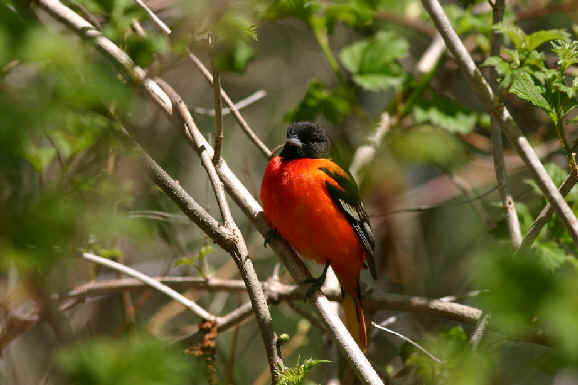
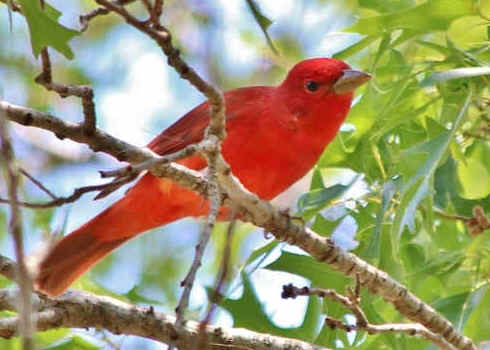
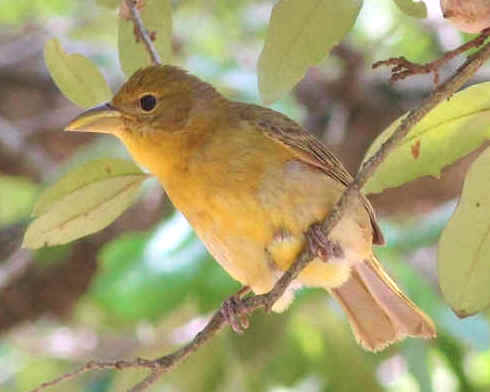
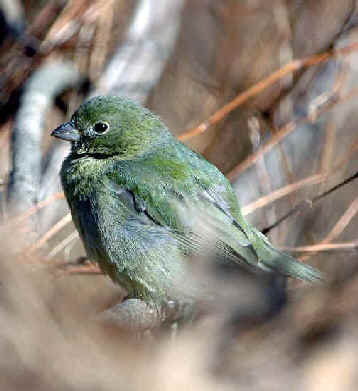
PHOTO AT UPPER RIGHT: a female PAINTED BUNTING
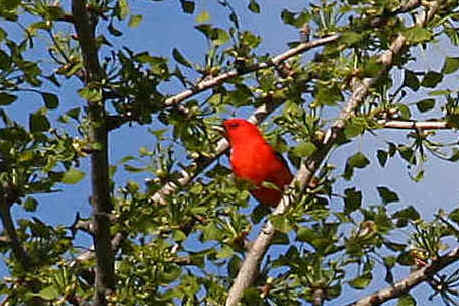
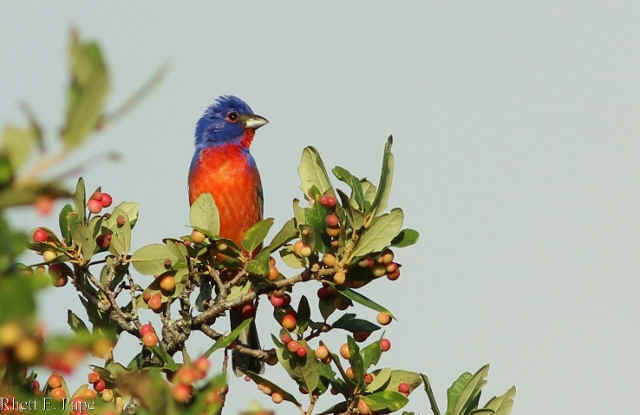
(A photo of a male PAINTED BUNTING is in the list below.)
Part 2 of a List of Texas Birds by Armas Hill,
with some photos
402 species of birds have been seen during Focus On Nature tours in Texas
& nearby New Mexico
Link:
Part 1 of this List of Texas Birds, Quails to Becard
Codes:
e: east -
along the Gulf Coast, including the areas of Rockport & Aransas
s: south - the southern Rio Grande Valley, as far upriver as San
Ignacio
c: central - including areas of Austin, the Edwards Plateau (or
"Hill Country") & Fort Clark
Springs
w: west - including Big Bend National Park, the Davis Mtns area,
& lakes near I-10
nm: in nearby New Mexico
mx: seen across the Rio Grande in Mexico
(mex):
a mostly
"Mexican species" that occurs in Texas
(some of these birds are also common further south in the tropics)
(USe):
endemic
to the United States
(USqe): quasi (or nearly) endemic to the
United States
(USeb): endemic-breeder in the United
States
(USneb): near-endemic breeder in the United States
(NAi): species introduced into North America
(USri): re-introduced species
into the United States
(USr): rare in the
United States
(TXr): rare in Texas
(NMr): rare in New Mexico
(t): a globally threatened or rare species, designated by Birdlife International
(t1): critical (t2): endangered (t3): vulnerable
(nt): a near-threatened species globally
(ph): species with a photo in the FONT website
Birds seen during FONT tours in Texas and/or New Mexico
in:
March: mar
April: apr
May: may
Links to Bird Groupings in this List:
Flycatchers
Shrikes Vireos
Corvids Waxwings & Allies
Chickadees & Titmice
Verdin Martins & Swallows
Bushtit Lark
Kinglets Wrens
Gnatcatchers
Nuthatches & Creeper
Thrashers Thrushes
Pipits Olive
Warbler Finches
Warblers Blackbirds, Orioles & Allies
Sparrows Towhees
Tanagers
Seedeater, Grassquit, Olive Sparrow Dickcissel, Cardinal,
Grosbeaks, Buntings
Other Links:
Upcoming
FONT Birding & Nature Tours in Texas
A
Complete List & a Photo Gallery of North American Birds, north of
Mexico, in 6 parts:
Part #1: Grouse to Anhinga
Part
#2: Condor to Shorebirds Part
#3: Jaegers to Cuckoos
Part #4: Owls to Flycatchers Part #5 Shrikes to Pipits
Part #6: Olive Warbler to Buntings
Lists of Other Texas Wildlife (each with some
photos):
Mammals
Butterflies
Dragonflies & Damselflies
Amphibians & Reptiles
Marine Life
(inc. Fish,
Jellyfish, Mollusks (Shells), & Arthropods: Crustaceans & Echinoderms)
Plants
of the Desert & Some Nearby Habitats
(with some photos)
Notes
regarding some Texas Plant-Life
A Directory of Photos in this Website
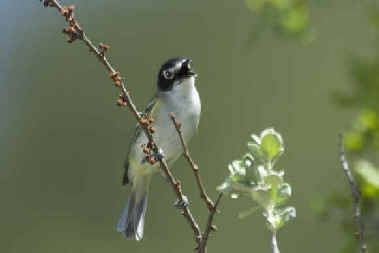
Black-capped Vireo, a Texas bird specialty

Bird-List:
FLYCATCHERS
- Northern Beardless Tyrannulet ______
Camptostoma imberbe
The Northern Beardless Tyrannulet is the smallest flycatcher
found in the United States. Its song. however, is surprisingly loud and
quite different than that of any of the similar appearing Empidonax
flycatchers.
- Greenish Elaenia (USr) (TXr)
______
Mytopagis viridicata
- Northern Tufted Flycatcher (USr) (TXr)
______
Mitrephanes phaeocercus
The Northern Tufted Flycatcher has occurred a few times in Texas (and
once in Arizona). Otherwise, this handsome flycatcher of Central & South
America is found as far north as the Mexican highlands just south of the
US-Mexico border.
A Northern Tufted Flycatcher was in a Texas 2010/11 Christmas Bird
Count, at
Big Bend National Park. It was first found in late November 2010.
- Olive-sided Flycatcher (nt) (*)
______ e may
Contopus cooperi
- Greater Pewee (TXr)
______
Contopus [ertinax
A Greater Pewee was in a Texas
2010/11 Christmas Bird Count at Santa Ana Refuge in Hidalgo County.
- Western Wood Pewee (*) ______ w
apr
Contopus sordidulus
- Eastern Wood Pewee (ph) (*) ______ e,s,c
apr may
Contopus virens
- Acadian Flycatcher (*) ______ s
may
Empidonax virescens
- Alder Flycatcher (*) ______ s
may
Empidonax alnorum
- Willow Flycatcher (*) ______ s
may
Empidonax trailii
- Least Flycatcher (*) ______ e
may
Empidonax minimus
- Gray Flycatcher (*) ______ w
apr
Empidonax wrightii
- Dusky Flycatcher (ph) (*) ______ w
Empidonax oberholseri
- Cordilleran Flycatcher (*) ______ w
nm apr
may
Empidonax occidentalis
The Cordilleran Flycatcher and the more-westerly Pacific-slope
Flycatcher were formerly combined as the Western Flycatcher, Empidonax
difficilis. That scientific name is now given to the Pacific-slope
Flycatcher.
- Yellow-bellied
Flycatcher ______
Empidonax flaviventris
- Hammond's
Flycatcher ______
Empidonax hammondii
- Buff-breasted
Flycatcher (TXr) ______
Empidonax fulvifrons
During a study of birds in the
upper elevations of the Davis Mountains in west Texas, that began in 1999, a
breeding pair of Buff-breasted Flycatchers was discovered. That pair
returned in subsequent summers.
- Black Phoebe (*) ______ c,w
nm,mx apr
may
Sayornis nigricans
- Eastern Phoebe (ph) (*) ______ e,c
mar may
Sayornis phoebe
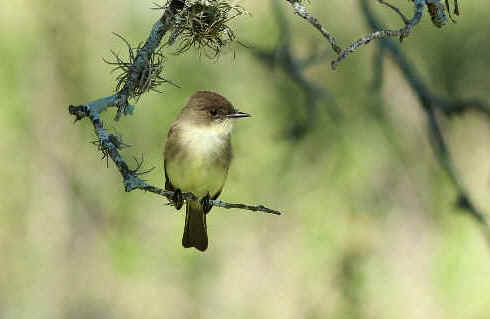
An Eastern Phoebe photographed in Wimberley, Texas
(photo by Rhett Poppe)
- Say's Phoebe (ph) (*) ______ w
nm,mx apr may
Sayornis saya
- Vermilion Flycatcher (ph) (*) ______ c,w
nm mar apr may
Pyrocephalus rubinus
- Ash-throated Flycatcher (ph) (*) ______ c,w
nm apr may
Myiarchus cinerascens
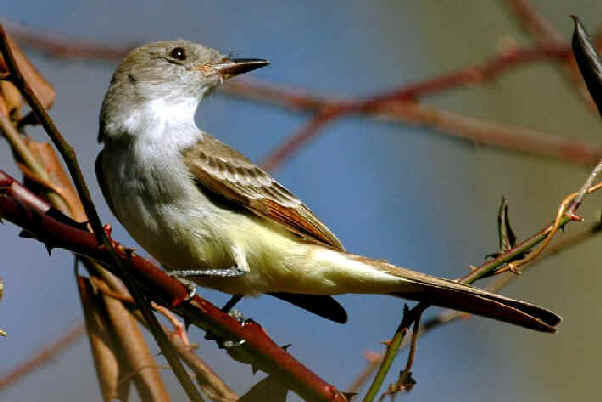
Ash-throated Flycatcher
(photo by Howard Eskin)
- Great Crested Flycatcher (ph) (*) ______ e
apr may
Myiarchus crinitus
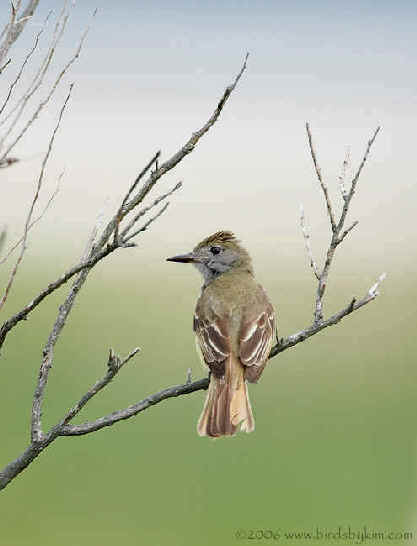
Great Crested Flycatcher
(photo by Kim Steininger)
- Brown-crested Flycatcher (*) ______ e,s,w
(mex) apr may
Myiarchus tyrannulus
The Brown-crested Flycatcher was, at one time, called
the Wied's Crested Flycatcher.
- Dusky-capped
Flycatcher (TXr) (ph) ______
Myiarchus tuberculifer
- Great Kiskadee (ph) (*) ______ s,c
(mex) mar may
Pilangus sulphuratus
The Great Kiskadee is a conspicuous and vocal component of the
birdlife of South Texas.
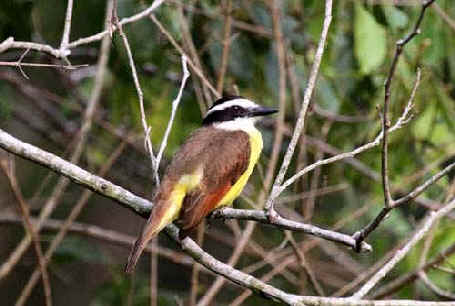
Great Kiskadee
(photo by Marie Gardner)
- Social Flycatcher (USr) (TXr)
(ph) ______
Myiozetetes similis
- Sulphur-bellied Flycatcher (TXr)
______
Myiodynastes luteiventris
The Sulphur-bellied Flycatcher only occurs casually in Texas, but
it has been found as far east as the Upper Texas Coast. There was a resident
pair in Starr County for several years in the 1970s.
- Piratic Flycatcher (USr) (TXr)
______
Legatus leucophaius
- Tropical Kingbird (NAr) (ph) (*) ______ w
(mex) may (uncommon in
lower Rio Grande Valley)
Tyrannus melancholicus
- Couch's Kingbird (ph) (*) ______ s
(mex) may
(common in lower Rio Grande Valley)
Tyrannus couchii
The Couch's Kingbird can safely be told from the very
similar Tropical Kingbird only by its voice. Most Couch's
Kingbirds withdraw south from Texas during the winter, while Tropical
Kingbirds are permanent residents.
- Cassin's Kingbird (*) ______ w
apr
Tyrannus v. vociferans
- Western Kingbird (ph) (*) ______ e,s,c,w
nm,mx apr may
Tyrannus verticalis
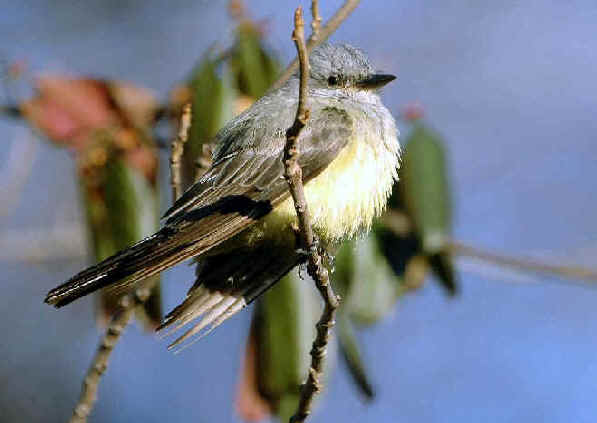
Western Kingbird
(photo by Howard Eskin)
- Eastern Kingbird (ph) (*) ______ e,s
apr may
Tyrannus tyrannus
- Thick-billed
Kingbird (TXr) ______
Tyrannus crassirostris
- Gray Kingbird (ph) (TXr)
______
Tyrannus dominicensus
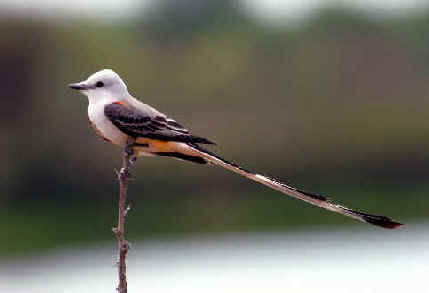
- Scissor-tailed Flycatcher (ph) (*) ______
e,s,c,w apr may
(uncommon in west TX) nm
(rare in New Mexico)
Tyrannus forficatus
The elegant Scissor-tailed Flycatcher is a common summer resident
in open areas through much of Texas.
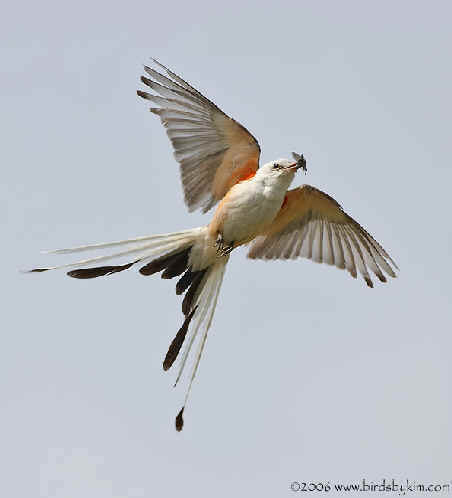
Above: A Scissor-tailed Flycatcher in flight
(photo by Kim Steininger)
Below: A perched Scissor-tailed Flycatcher
(photo by Howard Eskin)
- Fork-tailed Flycatcher (USr) (TXr)
(ph) ______
Tyrannus savana
SHRIKES
- Loggerhead Shrike (ph) (*) ______ e,c,w
nm mar may
Lanius ludovicianus excubitorides
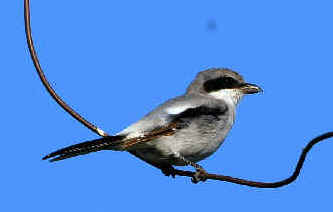
Loggerhead Shrike
(photo by Howard Eskin)
- Northern Shrike (ph) ______
Lanius excubitor
VIREOS
- White-eyed Vireo (ph) (*) ______ e,s,c
mar may
Vireo griseus
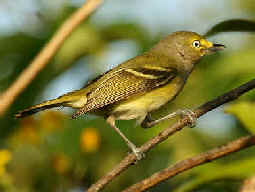
White-eyed Vireo
(photo by Dick Tipton)
- Bell's Vireo (nt) (*) ______ w
nm
Vireo bellii
- Black-capped Vireo (t3) (NAneb) (ph) (*) ______ c
may
Vireo atricapillus
The small breeding range of the Black-capped Vireo is
almost all in Texas. A small part of it extends into northern Mexico.
Black-capped Vireo
(photo by Clair de Beuvior)
- Gray Vireo (*) ______ w
Vireo vicinior
- Plumbeous Vireo (*) ______ w
Vireo plumbeus
The Plumbeous Vireo was part of the former Solitary
Vireo.
- Blue-headed Vireo (ph) (*) ______ e,s,c
may
Vireo solitarius
The Blue-headed Vireo was part of the former Solitary Vireo.
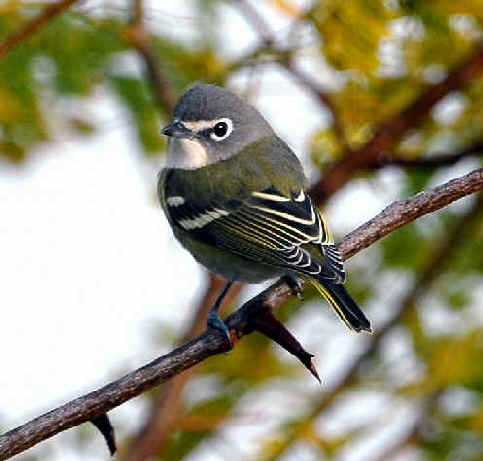
Blue-headed Vireo
(photo by Howard Eskin)
- Hutton's Vireo (*) ______ c,w
mar
Vireo huttoni
- Warbling Vireo (*) ______ c
Vireo gilvus
- Philadelphia Vireo (*) ______ e,s
Vireo philadelphicus
- Red-eyed Vireo (*) ______ s
may
Vireo olivaceus
- Yellow-throated
Vireo ______
Vireo flavifrons
- Cassin's Vireo
______
Vireo cassinii
- Yellow-green Vireo
(USr) (TXr) ______
Vireo flavoviridis
During recent years, a small population
of summering or nesting Yellow-green Vireos has been present at the
Sabal Palm Sanctuary, the Resaca de la Palma State Park, and occasionally at
other places in Cameron County, and more rarely in Hidalgo County.
In 2012, there were none at Sabal Palm.
The similar Red-eyed Vireo does not nest in the Lower Rio Grande
Valley.
- Black-whiskered
Vireo (TXr) ______
Vireo altiloquus
- Yucatan Vireo (USr)
(TXr) (ph) ______
Vireo magister
CORVIDS
- Blue Jay (ph) (*) ______ c
mar may
Cyanocitta cristata
- Steller's Jay
(ph) ______
Cyanocitta stelleri
- Green Jay (ph) (*) ______ s
(mex) mar
Cyanocorax yncas
What was the southern population of the Green Jay in
South America is now called the Inca Jay.
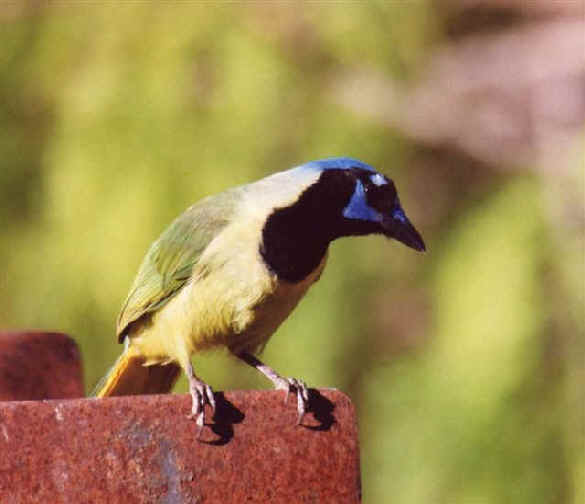
Green Jay
(photo by Marie Gardner)
- Brown Jay (ph) ______
Psilorhinus
(formerly Cyanocorax) morio