E-mail: font@focusonnature.com
Phone: Toll-free in USA 1-800-721-9986
or 302/529-1876; Fax: 302/529-1085
|
PO
Box 9021, Wilmington, DE 19809, USA E-mail: font@focusonnature.com Phone: Toll-free in USA 1-800-721-9986 or 302/529-1876; Fax: 302/529-1085 |
With focus on nature tours,
a Birding & Nature Tour
in 2 very different areas of
Brazil
IN Minas GeraiS
A Large State noted for its Gems
&
in
Rio Grande do Sul
The southernmost Brazilian
State,
bordering Uruguay
October 16–30, 2010
(tour:
FON/BR-3, '10)
With an OPTIONAL EXTENSION
for Birds & Animals
in the PANTANAL
of MATO GROSSO DO SUL
October 30 - November 3, 2010
(tour:
FON/BR-3A, '10)
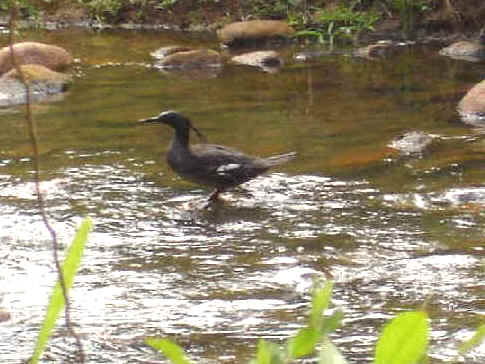
Brazilian Merganser
During this tour, among
the gems in Minas Gerais that we'll seek
will
be
avian endemics and specialties.
Among them, the rare Brazilian Merganser
(we've seen it during this tour in the past - one time as many as 7.)
And others including the Cipo Canastero, Brasilia Tapaculo,
Three-toed Jacamar, and Cock-tailed Tyrant.
Among Birds possible in far-southern Brazil:
2 swans, 2 dotterels, 3 coots,
many ducks including Ringed Teal,
Giant Wood-Rail, Trudeau's Tern,
seabirds from shore,
and some blackbirds far from ordinary
notably the Scarlet-headed & Saffron-cowled.
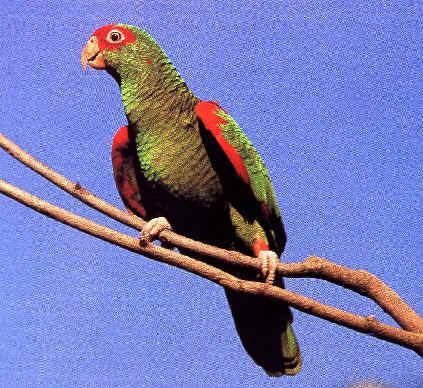
Rare parrots in far-southern Brazil
included the Vinaceous-breasted &
Red-spectacled Amazons
(in photo below).
During this tour, there should also
be
an assortment of Mammals possible
as well.
Among those previously
during this tour:
Maned Wolf, Giant Anteater, and various monkeys.
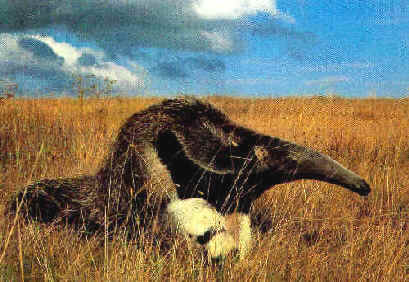
Giant Anteater
Tour to be led by Armas Hill, who has
traveled & birded in Brazil
many times, with over 40 visits to the country, since 1982.
Links:
A Complete
List of the Birds of Brazil & a Photo Gallery
(noting birds found during FONT tours):
Part
1: Tinamous to Doves
Part 2: Macaws to Flycatchers
Part 3: Anshrikes to Grosbeaks
List
of Minas Gerais Birds
List of Rio Grande do Sul Birds
Rare & Threatened Birds of Brazil (with some photos)
Brazilian Mammals & Other Wildlife (with some photos)
Highlights of Previous FONT Tours in Brazil

Itinerary
(price follows):
Sat: Oct 16
Departure from North America, or elsewhere.
Overnight flight to Brazil
(either to Sao Paulo, or to Belo Horizonte).
Sun: Oct 17 Either
a morning flight from Sao Paulo to Belo Horizonte, or arrival
there directly from the U.S.
Belo Horizonte is in Minas Gerais,
the largest state in Brazil,
and where we'll be spending this entire
tour. Travel, from the airport, to the area of the Serra do Cipo National
Park. Overnight at pleasant
accommodations, near the park entrance.
Mon: Oct 18
Exploration in the area of the Serra do Cipo National Park. The higher parts of the
park are true campo
habitat. The lower
parts are a mixture of cerrado and gallery forest - with some
spectacular waterfalls and gorges.
And, yes, some very interesting birds. Among them, 4 Brazilian endemics:
the hummingbird known as the Hyacinth Visorbearer, the Gray-backed Tachuri, Buff-throated Pampa-Finch,
and the Cipo Canastero.
The last of these species was discovered only as recently as 1985.
Some other bird species to be sought in the area include:
Lesser Nothura, Long-trained Nightjar, Horned
Sungem, Checkered Woodpecker, Serra Antwren, Collared Crescentchest,
White-winged Black-Tyrant,
and White-naped Jay. Giant Snipe and Cinereous Warbling-Finch
occur. The
plant-life in the Serra do Cipo area is interesting as well. Overnight,
again, by the Serra do Cipo Park entrance.
Tue: Oct 19 After some morning birding, travel back to Belo Horizonte, and then east to the Rio Doce Park, a place with perhaps the largest single tract of Atlantic Forest (the "Mata Atlantica") in southeastern Brazil. There's both primary and secondary forests, with numerous and interesting birds, from the Minute Hermit to the Great Potoo. Golden-capped Parakeet occurs. Overnight either in or close to the park.
Wed: Oct 20
A full-day of birding in and around the Rio Doce Park. More time to look for the
specialty birds of the
region such as: Crescent-chested Puffbird, Tail-banded Hornero, Black-cheeked
Gnateater, and Cinnamon-vented
Piha, just to mention a
few. Again, an overnight in or near Rio Doce.
Thu: Oct 21 A
short-trip, after some morning birding, west, to the Caraca Natural Park,
near Belo
Horizonte. In a beautiful mountainous region,
one of the most idyllic settings in Brazil. Our two overnights at Caraca will be
at a
monastery. After the
sun sets, it'll be worth remembering that Caraca is a famed location for the
Maned Wolf.
Some of these elegant, shy, and rare animals have come for years, after dark, to the steps of
the monastery, where food has been put for them. During the day, one of the
nicest of the
numerous birds at Caraca should be the exquisite Swallow-tailed Cotinga.
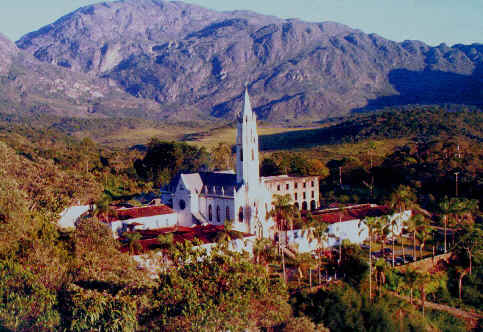
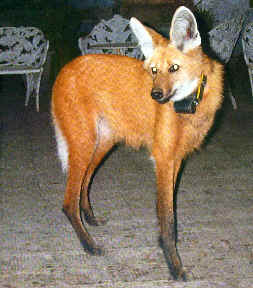
Monastery in the hills at Caraca
(left)
and Maned Wolf (right)
as seen there after dark.
(The animals we've seen at Caraca have not been collared.)
Fri: Oct 22
A full-day in Caraca National Park, a location exceedingly good for birds.
Both
Brasilia and White-breasted
Tapaculos are said to
occur. More easily seen are Gray-breasted Sabrewing and an assortment of antbirds
(mostly southeast Brazil specialties).
Also possible is the Brazilian
Laniisoma (a rarity that has been known as the
Shrike-like Cotinga).
Other birds, in their appropriate habitats include:
the Red-eyed Thornbird and
Streamside Lochmias (a bird that has been known as the
Sharp-tailed Streamcreeper).
After a nice birding day, another night at the monastery.
Sat:
Oct 23 This day, travel west for a very special objective -
one of the rarest of the world's birds, the Brazilian Merganser, at a
special place, the Serra da Canastra National Park.
Hopefully, we'll see it (the merganser, that is - as we have
during 6 FONT tours in the that area, from 1997 thru 2008). We'll certainly
try. The entire population of the Brazilian Merganser has recently been
estimated at just about 200 birds.
We'll definitely be able to explore and enjoy the pristine grassland habitat,
with an assortment of birds and mammals, and with clear streams (favored by
the merganser) atop a high plateau. Around the perimeter of
the vast plateau there are over two dozen waterfalls, favored by various species
of nesting and roosting swifts. The Brazilian Merganser occurs at
the top and the bottom of one of those waterfalls. This remote area of Brazil is
a tremendous place.
Overnight in the area of Serra da Canastra.
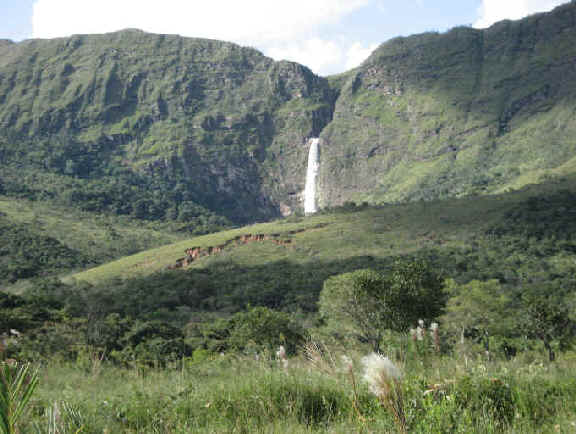
One
of the waterfalls at Canastra National Park,
photographed during the FONT tour in March 2008.
Sun: Oct 24
The first of two days in the area of Serra da Canastra. During
our previous tours, in this region, in addition to the merganser, we've
also seen some other "special birds" such as the: Cock-tailed
Tyrant, Sharp-tailed Grass Tyrant, Black-masked Finch, Ochre-bellied Pipit, and
Brasilia Tapaculo.
During one of our recent tours in the region, we enjoyed wonderful looks at a
pair of Crowned Solitary Eagles. other notable birds such as Red-legged
Seriemas, Toco Toucans, White Woodpeckers, and Least Nighthawks were
seen in numbers. During another recent tour, the rare Sickle-winged Nightjar
was seen.
Canastra National Park is a striking place - as noted, a vast grassland atop a
high plateau, where in addition to birds, mammals included the Giant
Anteater, Giant Armadillo, and Maned Wolf.
Overnight again in the area of Serra da Canastra.
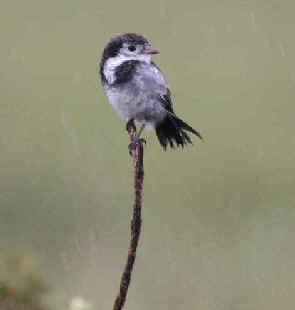
A
Cock-tailed Tyrant.
photographed during the FONT tour in March 2008.
Mon: Oct 25
Return, during the day, to the Belo Horizonte area, but we'll spend our this,
our last night, and following morning, not in the city, but rather a few miles
to the south, in a fine hotel atop a forested hill, above one of the most
interesting places in Brazil, the historic city of Ouro
Preto.
At the hotel, there will be numerous birds, notably hummingbirds and
tanagers.

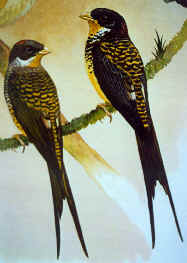
The historic city
of Ouro Preto
(left).
Nearby, we've seen Swallow-tailed Cotingas (right).
Tue: Oct 26 After an enjoyable morning in the area of Ouro Preto, flights in the afternoon from Belo Horizonte south to Puerto Alegre, in the state of Rio Grande do Sul, in southern Brazil. Overnight in Puerto Alegre.
Wed:
Oct 27 From
Puerto Alegre, our birding begins this morning as we head further south to some coastal habitats where
our targets we will be those birds in Brazil restricted to this most-southerly
region in the country. It's a wonderful area, that we've
enjoyed during our tours there in the past, with mostly open habitats, and some very good birding. Our
overnight will be in the city of Rio Grande.
Thu: Oct 28 & Fri Oct 29
Among the waterbirds,
we should see, during these two days, are two species of swans.
Among the
shorebirds, we could see the Rufous-chested Dotterel.
Among seabirds, we could see from shore, an albatross or a penguin is
possible. Others, such as an assortment of gulls, terns, or even a jaeger,
are likely.
During our recent tours, along this coast, we've seen Black-browed
Albatross, White-chinned Petrel, and many Wilson's Storm-Petrels. (Not
bad for Brazil - after when birds of that country are normally thought of,
they're in the realm of those more tropical, such as macaws, parrots,
motmots, trogons, and toucans.)
Among the landbirds, we'll be aiming for this day will be Freckle-breasted
Thornbird, Sulphur-bearded Spinetail, and Bay-capped Wren-Spinetail
(just
to name some).
We'll be visiting some marshes with fine birding as well. Among the many birds
in the area, a few should be: Brown-and-yellow Marshbird, Scarlet-headed
Blackbird, Warbling Doradito, Ringed Teal, and Giant Wood-Rail.
Overnights in Rio Grande.
Sat: Oct 30 This day, our time in Rio
Grande do Sul, and in Brazil, will end. Our last birding, in the
morning, will be along the way from Rio Grande north to Porto Alegre. From
there, we'll board a flight to Sao Paulo. And from there, departure will be on
an overnight flight, either to North America, or wherever home is.
Sun: Oct
31 Morning arrival (after overnight flight) back in North America.
Or, for those who wish, an Optional Extension to
Mato Grosso do Sul for Birds & Animals of the Pantanal:
Sat: Oct 30 A flight, continuing after
Porto Alegre to Sao Paulo, and then from Sao Paulo to Campo Grande. Overnight in
Campo Grande.
Sun: Oct 31 From Campo Grande, we'll
travel west into a region rich in wildlife, and especially birds, the Pantanal.
We'll be in the southern portion of the Pantanal.
The accommodations and the meals at the lodge, where we'll be staying in the
Pantanal, are good indeed, but teh best aspect of the tour would be the close
accessibility, when we'll be there, to some spectacular wildlife. Our travel in
the Pantanal, in the area of the lodge, would be on vehicles designed for good
wildlife observation, during day-trips and night-trips, and by boat. There will
be 2 overnights at the lodge.
The lodge where we'll be staying in the Pantanal is about 150 miles from Campo
Grande. There will, of course, be birding along the way, both ways, between
Campo Grande and the Pantanal.
Sun: Oct 31 thru Tue: Nov 2 Our
diversified experience in the Pantanal, with
birds (many birds!) and other nature. There are lists of the birds
and other wildlife of the Pantanal (that we have seen during our previous
tours) elsewhere in this web-site (see links above).
But, now, we'll note here that just a few of the birds would be: Hyacinth
Macaw (the largest macaw in the world). Golden-collared Macaw,
Great Rufous Woodcreeper, Red-billed Scythebill, Helmeted Manakin, and the
Mato Grosso Antbird.
What can be particularly spectacular are the large concentrations of waterbirds.
Ducks can be numerous in certain rice-fields. During our previous tours,
we've seen many whistling ducks, comb ducks, and some others, Other
aquatic birds, numerous in the Pantanal, would be: egrets, herons, ibises,
and storks (Wood and Maguari Storks, and the biggest of
all, the Jabiru). Also in the mix would be Limpkins and Roseate
Spoonbills.
Landbirds, in the trees or in the air, would be parrots and parakeets,
and raptors of various kinds.
Possible at dusk, and after dark, would be 2 species of Potoos (the Great
and the Common), nightjars & nighthawks, and an owl
or two. During our previous tours, we've enjoyed tremendous looks, after dark,
of Striped Owls and Barn Owls.
Mammals after dark should be those that are common, such as fox
and bats, but it has to be noted that there are JAGUARS in the
area, With good look, we'll see one ..... as we did in September
2006, August 2007, and March 2009 when we saw that big elusive cat. We'll be
making during our stay, if necessary, two night-time excursions for it, and
other creatures. Pumas can also be seen (with luck).
During one of our recent tours, we had, during excursions on two nights, nice
looks at as many as 7 Ocelots, a Pantanal (formerly Pampas)
Cat, 2 Brazilian Tapirs, and a Maned Wolf, in addition to
other animals including: Marsh Deer, Crab-eating Fox and Crab-eating
Raccoon, and a favorite, the Giant Anteater. During one of our stays
at the lodge, we saw as many as 8 Giant Anteaters.
Another anteater, the Tamandua, is also possible. During the day, monkeys
and marmosets can be seen in the trees and groups of peccaries can
be seen on the ground. Numerous caimans will be in and near the water.
And maybe an anaconda, as we've seen in the past.
During our overnights in the Pantanal (and after our evening excursions),
we should hear, from the lodge, an assortment of sounds including those of limpkins,
owls, potoos, and nightjars. At dawn, howler monkeys.
Our last night (Tue, Nov 2), in the state of Mato Grosso do Sul, would be
back in the city of Campo Grande. Overnight, there, would be convenient to the
airport.
Wed: Nov 3 The flight from Campo
Grande to Sao Paulo, connecting to international overnight flights home from
Brazil (arriving in North America the a.m. of Thu: Nov 4).
Price for the Oct 16-30 Tour : US$ 3,395 per person, based upon double-occupancy.
Single supplement
(when applicable): US$ 395.
Price for the Mato Grosso do Sul Extension until Nov 3: US$
1,495 per person, based upon double occupancy.
Single supplement (if applicable): US$ 265.
Includes:
All overnight
accommodations.
All meals.
Ground
transportation in Brazil.
Does not include:
Drinks and any other
items of a personal nature.
International
flights to/from Brazil and domestic flights within Brazil.
"Focus On Nature
Tours" can arrange air travel,
and would seek the best possible fares.
For this tour, international
flights can be to/from Sao Paulo,
or possibly to/from Belo Horizonte.
A deposit of US $500 is required to register for this tour.

animals & Birds
in the Pantanal of Mato Grosso do Sul
as
photographed during a previous FONT Tour
All of the following photographs were taken during the tour
by Andy Smith of Pennsylvania, USA - © -
all rights reserved.
www.andysmithphotography.com
Our Upcoming Birding & Nature Tours in Brazil
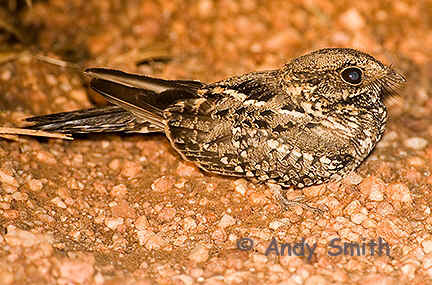
Little Nightjar
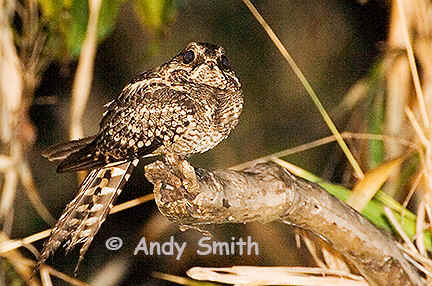
Scissor-tailed Nightjar
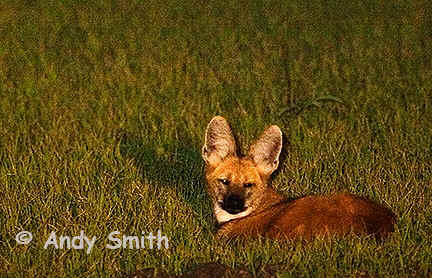
Maned Wolf
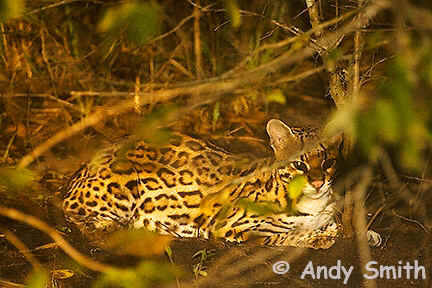
Ocelot
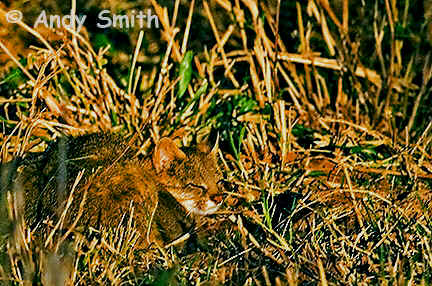
Pantanal Cat
(formerly Pampas Cat)
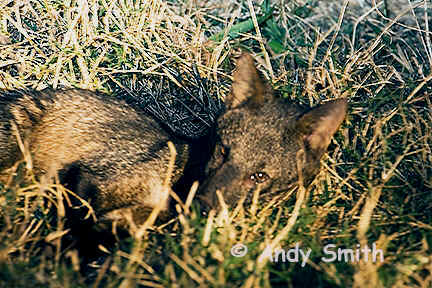
Crab-eating Fox
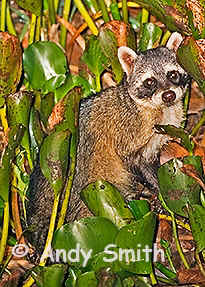
Crab-eating Raccoon