A Birding
& Nature Tour
in
TURKEY
Highlighting Specialty Birds,
and a Total Eclipse of the Sun
The
8th Birding & Eclipse Tour for FONT
The
Specialty Birds can included:
Caspian Snowcock, Caucasian Black Grouse,
Kruper's Nuthatch, Wallcreeper, Lammergeier, various other Raptors,
Dalmation Pelican, Pygmy Cormorant, and more.
March 25 - April 2, 2006
(tour:
FON/TU-1 '06)
Tour to be led by Armas Hill,
who has birded in Europe numerous (over 35) times.
Links:
A List of Birds during previous FONT Tours in Europe
Solar Eclipses & Other Celestial Nature during FONT Tours

Itinerary:
Sat,
Mar 25: Arrival in Istanbul,
Turkey. (For those coming from the US, an overnight flight having
departed on Fri, Mar 24.)
Upon arrival in Istanbul, continuation from there, by air, within Turkey, to
Trabzon, a city by the Black
Sea in the eastern part of the country. From there, a drive east,
along the sea, to Hopa, where the first two
overnights will be spent - for birding, during a full-day and the following
morning, in the mountainous region known as Kacker
Daglari.
Sun, Mar 26: From
Hopa, birding, this day, in the region of Kackar Daglari, in the areas of
Karagol and the Cankurtaran Pass.
This is the highest region of the Pontic Alps,
with the highest peak over 10,000 feet above sea level. In this area of
mountains, valleys, and forests, there are some very special birds. This is the
best place in Turkey to find Caspian Snowcock. At a lower altitude, Caucasian
Black Grouse can be common. In the morning, in a given area that we'll
visit, there's a cacophony of sound with Snowcocks calling loudly from
the ridges and some Caucasian Black Grouse in the area calling as well.
In the mountains, the Lammergeier and Golden Eagle are the two
most commonly observed raptors. Other alpine birds that are quite plentiful
include both choughs and Crimson-winged Finches. And Wallcreepers
and Alpine Accentors can be considered as common.
In the area of the treeline, Red-fronted Serin and Common Rosefinches
occur. In the forests, Green Warblers and Red-breasted Flycatchers
are common.
Not just birds, but animals inhabit the area, including wolves and bears.
In rocky places, both chamois and ibex can be found. Overnight
again in Hopa, back down at sea level, along the Black Sea
coast.
Mon, Mar 27: A
good part of another day of birding in the Kacker Daglari region, followed by
travel, late in the day, west to another place by the Black Sea where good
birding is to be had, in the area of Rize.
Overnight there.
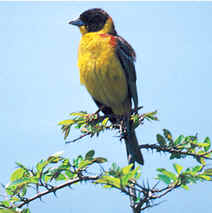
Black-headed Bunting
(Emberiza melanocephala),
a common bird in Turkey
in the spring.
Tue,
Mar 28: After birding in the morning near Rize, travel to Sivas,
with more birding along the way. Overnight to be in Sivas, where the next day
we'll be observing a Total Eclipse of the
Sun.
Wed, Mar 29: On this special day of the
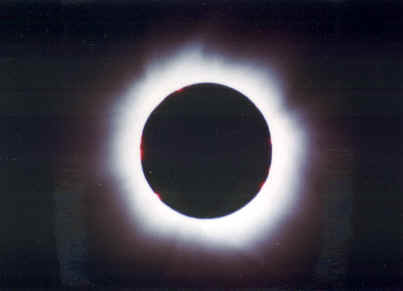
tour, the TOTAL ECLIPSE OF THE SUN. This
event that we will be experiencing will be the 5th Total Solar Eclipse (&
the 8th Solar Eclipse) during a FONT tour. Our last total solar eclipse was
also in central Turkey, back on August 11, 1999.
In addition to the eclipse, there will, of course, be birding this day as
well.
Following the eclipse, we'll travel west toward Ankara,
the capital of Turkey, with an overnight there.
Thu, Mar 30: Birding
this day west of Ankara, in the areas of the Soguksu
National Park and Nallihan.
Later, at Lake Abant, near Bolu.
The regions in which we'll be can be particularly good for raptors. Those
that occur there include: Black Kite, Lammergeier, and Egyptian,
Griffon, and Cinereous (formerly Black) Vultures.
Also, Levant Sparrowhawk, and Lesser Spotted, Spotted,
Steppe, and Bonelli's Eagles, Red-footed Falcon, and Saker can
occur. Passerines include 3 species of Nuthatches: Kruper's, Western Rock, and
Eurasian. One of the Tits is the Sombre. Overnight by Lake
Abant.
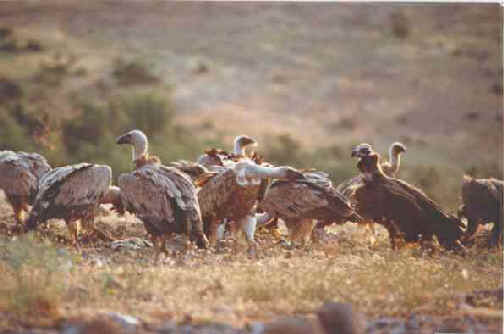
Griffon & Cinerous
Vultures
Fri,
Mar 31: Birding continues in the area of Lake Abant, where Black
Storks and Greater Flamingoes occur. Also possible are birds ranging
from the Long-legged Buzzard to the Rock Petronia.
Travel, in the afternoon, to Istanbul. The first of two overnights
there.
Sat, Apr 1: A final day of birding
(with some sightseeing, if desired) in the area of Istanbul.
The birding would be in various habitats: wetlands, including reed-beds by the
shore, and forest. also, for those who wish, a boat-ride on the strait
known as the Bosphorus (the boundary
between Europe and Asia) and into the Sea of
Marmara, where Shearwaters (Cory's and
Levantine) can be seen. The final overnight in Istanbul,
Sun,
Apr 2: Departure
from Istanbul, Turkey (arrival in North America would be in the p.m. the same day).
Dozens of White Stork nests will e seen during the tour. Species such as: Little
Owl, Scops Owl, Syrian Woodpecker, Lesser Spotted Woodpecker, European Roller,
European Bee-eater, Eurasian Hoopoe, Red-rumped Swallow, the black-headed
subspecies of the Yellow Wagtail, Olivaceosu Warbler, Marsh Warbler, Red-backed
Shrike, Lesser Grey Shrike, Spanish Sparrow, Hawfinch, Black-headed Bunting,
Cirl Bunting, Ortolan Bunting, and Corn Bunting will be seen at various places
during the tour.

Price:
US $1,975, per person, based upon double
occupancy.
Single-supplement: $235.
Includes: All overnight accommodations, meals, and land transportation (by bus or van) within Turkey. Services of the guide(s).
Does not include: Drinks and other items of a personal nature. Gratuities. International flights to/from Turkey (& the single domestic flight in Turkey).
A deposit of US$ 400 is required to reserve a place on this tour.