 |
PO Box 9021,
Wilmington, DE 19809, USA
E-mail: font@focusonnature.com
Phone: Toll-free in USA 1-888-721-3555
or 302/529-1876 |
 MAMMALS
of
Belize
during
Focus On Nature Tours
1992 to
2015
Noting those found
during FONT tours
with an (*)
The following list of the
Mammals of Belize compiled by Armas Hill
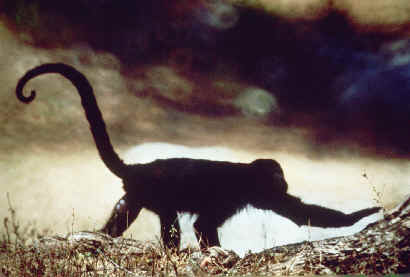
Photo at upper right: YUCATAN BLACK HOWLER MONKEY
Codes
noting locations:
ah:
near the Mayn ruins of Altun Ha
bb:
Banana Bank
bi:
on & near Bird Island
cb: Cockscomb Basin Wildlife
Sanctuary & the nearby Maya Centre
cc:
the offshore island of Caye Caulker
ct:
vicinity of Crooked Tree
cy: the Cayo District near San
Ignacio including the Macal River valley & the farming area near Spanish
Lookout
gp: near
Gale's Point (Manatee Lodge)
hh: along the Hummingbird Highway
mp: Mountain Pine Ridge
pc:
the coastal area in & near Placencia
A fine book, "Jungle of the Maya" has recently been published (in
2006) by the University of Texas Press. In it, there some very good photographs of
wildlife in Belize, and in nearby Guatemala & Mexico. In the following
lists, pages in that book with photos of particular species are referred to with a (p. xx)
(ph): species with a photo in the FONT website
Links:
Upcoming
FONT Birding & Nature Tours in Central America
List
of Birds in Belize Mammals
in Central
America (with
some photos)
A
List & Photo Gallery of Central America Butterflies, in 5 Parts
Amphibians & Reptile
s
of Belize & Guatemala
(with some photos)
Marine Life. including that of the Coral Reef, in Belize & Mexico
(with some photos)
Previous
Belize
Tour Highlights
Directory of Photos in the
FONT Website

List
of Mammals (followed by a separate list of Bats):
- Central American Wooly Opossum ______
Caluromys derbianus
- Water Opossum ______
(in Belize called
"Water Dog")
Chironectes minimus
Southern Opossum ______ (in Belize called
"Possum")
Didelphis marsupialis
Virginia Opossum (ph) ______ (in Belize called
"Possum")
Didelphis virginiana
Mexican Mouse-Opossum ______
Marmosa mexicana
Robinson's Mouse-Opossum ______
Marmosa robinsoni
Alston's Woolly Mouse Opossum ______
Micoureus alstoni
Gray Four-eyed Opossum (*) ______ ct
Philander opossum
Silky Pygmy Anteater ______ (in Belize called
"Antbear")
Cyclopes didactylus (the single member of its genus & its family)
Northern Tamandua (ph) ______ (in Belize called
"Antbear")
Tamandua mexicana
Nine-banded Armadillo (ph) ______ (in Belize called
"Dilly")
Dasypus novemcinclus
Northern Naked-tailed Armadillo ______ (in Belize called
"Dilly")
Cabassous centralis
Maya Small-eared Shrew ______
Cryptotis mayensis
American Least Shrew ______
Cryptotis parva
In taxonomic order, BATS would be here, but instead they follow at the end
of this mammal list.
Yucatan Black Howler Monkey (*) (ph) ______ bb,cy (in
Belize called
"Baboon")
(p. 2, p. 37-38 & 41 & 108)
Alouatta pigra
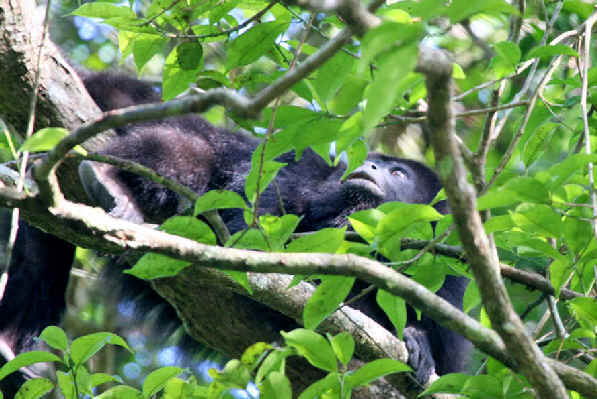
Yucatan Black Howler Monkey
(photo during a FONT tour by Marie Gardner)
Geoffroy's Spider Monkey (ph) ______ (in Belize called
"Monkey")
(p. 12 & 36 & 39-40 & 52)
Ateles geoffroyi yucatanensis,
the "Yucatan Spider Monkey"
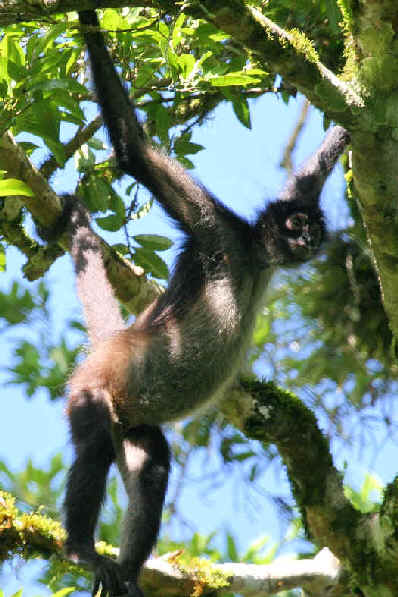
Geoffroy's Spider Monkey
(photo during a FONT tour by Marie Gardner)
Gray Fox ______ (p. 25)
Urocyon cinereoargenteus
Jaguarundi ______ (in Belize called "Halari")
(p. 60)
Puma (formerly
Herpailurus) yagouaroundi
Ocelot (ph) ______ (in Belize called
"Tiger Cat") (p. 60)
Leopardus (formerly
Felis)
pardalis
Margay ______ (in Belize called
"Small Tiger Cat")
(p.
61)
Leopardus (formerly
Felis)
wiedii
Puma (ph) ______ (in Belize called
"Red Tiger") (p. 63)
Puma (formerly
Felis)
concolor
Jaguar (*) (ph) ______ gp
(in
Belize called
"Tiger") (p. xiii & 58-59 & 118)
(also p. 62 of a Mayan sculpture)
Panthera (formerly
Jaguarius)
onca
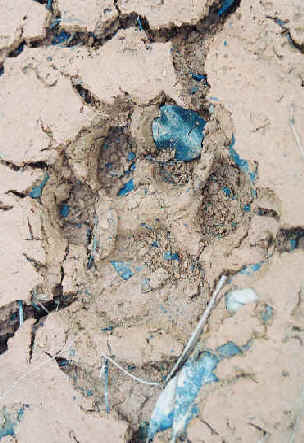
A Jaguar track, seen & photographed
during the FONT tour in Belize in March 2007
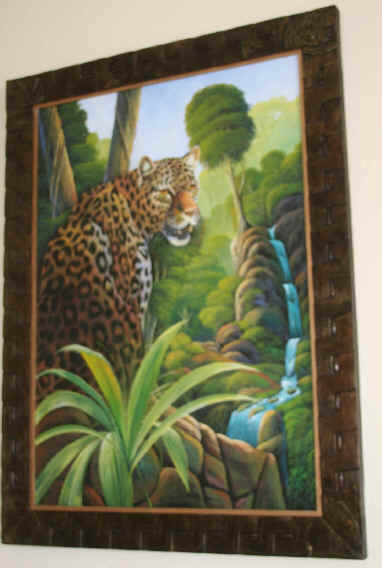
In a hotel lobby, a painting of a Jaguar.
Throughout Belize, pictures of Jaguars are common.
In the wild, the animal itself is more common than it is
in most Central American countries.
Neotropical River Otter ______ (in Belize called
"Water
Dog")
Lutra (formerly
Lontra)
longicaudis
Striped Hog-nosed Skunk ______ (in Belize called
"Polecat")
Conepatus semistriatus
Eastern Spotted Skunk ______ (in Belize called
"Polecat")
Spilogale putorius
Tityra ______ (in Belize called
"Bush Dog")
(p. 25
& 105)
Eira barbara (the single member of its genus)
Greater Grison ______ (in Belize called
"Bush Dog")
Galictis vittata
Long-tailed Weasel ______
Mustela frenata
Kinkajou (ph) ______ (in Belize called
"Night Walker") (p. 92)
Potos flavus (the single member of its genus)
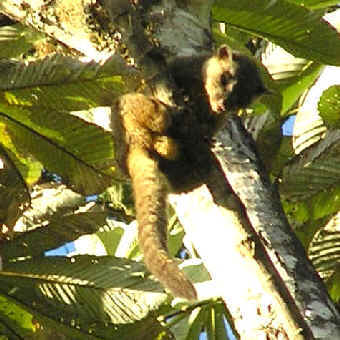
Kinkajou
(photo during a FONT tour by Rosemary Lloyd)
Cacomistle ______
Bassariscus sumichrasti
White-nosed Coati (*) (ph) ______ ah
(in Belize called
"Quash") (p. 25)
Nasua narica
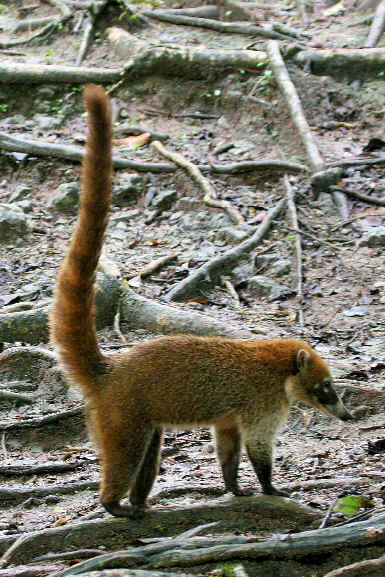
White-nosed Coati
(photo during a FONT tour by Marie Gardner)
Northern Raccoon (*) (ph) ______ ct
Procton lotor
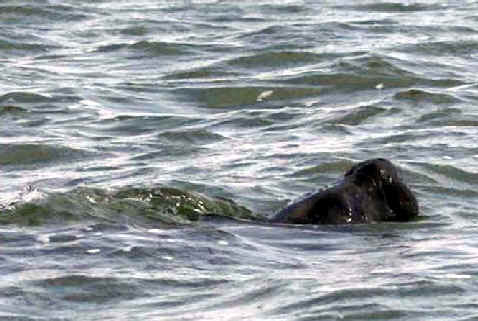
West Indian Manatee (*) (ph) ______ gp
(in Belize called "Sea Cow")
Trichechus manatus
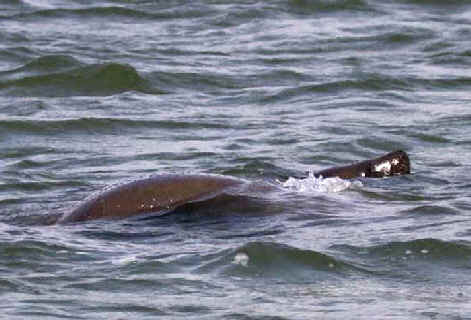
Above & Below: Two
photographs of West Indian (or Antillean) Manatees
during the FONT tour in Belize in April 2011
(photos by Marie
Gardner)
Baird's Tapir (ph) ______ (in Belize called
"Mountain Cow")
Tapirus bairdii
Collared Peccary (ph) ______ (in Belize called
"Peccary")
Pecari tajacu
White-lipped Peccary (ph) ______ (in Belize called
"Wari") (p. 25)
Tayassu pecari
Red Brocket Deer (*) ______ cb
(in
Belize called "Antelope") (p. 24)
Mazama americana
White-tailed Deer (ph) ______ (in Belize called "Savanna Deer")
(p. 24)
Odocoileus virginianus
Yucatan Squirrel (*) ______
ct,cy
Sciurus yucatanensis
Deppe's Squirrel ______
Sciurus deppei
Hispid Pocket Gopher ______ (in Belize called "Ground
Mole")
Orthogeomys hispidus
Forest Spiny Pocket Mouse ______
Heteromys desmarestianus
Gaumer's Spiny Pocket Mouse ______
Heteromys gaumeri
Western House Mouse ______ (was conspecific with
Eastern House Mouse, of Europe & Asia,
Mus musculus; the Western House Mouse native to
western & southern Europe, North Africa, and the Middle East)
Mus domesticus
Brown Rat ______
(has also been called Norway Rat)
(in Belize
called
"Charlie Price")
Rattus norvegicus
House Rat ______ (has also been called
Black Rat and
Roof Rat) (in Belize called
"Charlie Price")
Rattus rattus
Vesper Rat ______
Nyctomys sumichrasti (the single member of its genus)
Northern Pygmy Rice Rat ______
Oligoryzomys fulvescens
Alfaro's Rice Rat ______
Oryzomys alfaroi
Coue's Rice Rat ______
Oryzomys couesi
Black-eared Rice Rat ______ (has also been called
Rusty Rice Rat)
Oryzomys melanotis
Yucatan Vesper Mouse ______
Otonyctomys hatti (the single member of its genus)
Big-eared Climbing Rat ______
Ototylomys phyllotis (the single member of its genus)
Mexican Deer Mouse ______
Peromyscus mexicanus
Slender Harvest Mouse ______
Reithrodontomys gracilis
Hispid Cotton Rat ______ (in Belize called
"Pine Ridge Rat')
Sigmodon hispidus
Northern Climbing Rat ______
Tylomys nudicaudus
Mexican Hairy Dwarf Porcupine (ph) ______
Coendou (formerly
Sphiggurus)
mexicanus
Lowland Paca (*) ______ ah
(in
Belize called the
"Gibnut")
Cuniculus (formerly
Agouti)
paca
Cuniculus paca
is also called the Spotted Paca.
Central American Agouti (ph) ______ (in Belize called
"Indian
Rabbit")
Dasyprocta punctata
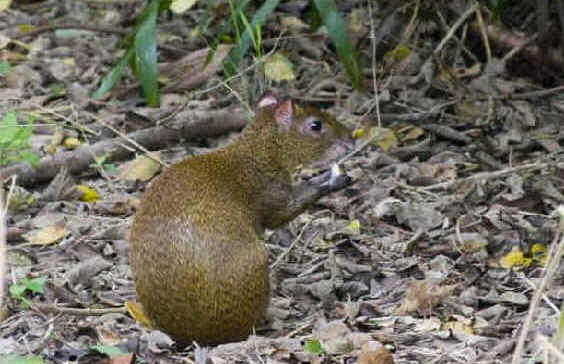
Central American Agouti
(photo by Linda Navarro)
Forest Rabbit ______ (in Belize called
"Bush Rabbit")
Sylvilagus brasiliensis
Bats (more than half of the mammals in Belize are bats):
SHEATH-TAILED BATS (Family Emballonuridae)
Least Sac-winged Bat ______ (lowland forests)
Balantiopteryx io
Shaggy Bat _____
(lowland forests & regrowth areas)
Centronycteris maximiliani (the single member of its genus)
Northern Ghost Bat _____ (lowland & mid-elevation clearings
& built areas)
Diclidurus albus
Greater Dog-like Bat _____ (lowland forest & forest edge)
Peropteryx kappleri
Lesser Dog-like Bat _____ (caves, rock piles, & built-up
areas in the lowlands)
Peropteryx macrotis
Proboscis Bat _____
(near water in low-level rainforests)
Rhynchonycteris naso (the single member of its genus)
Greater White-lined Bat _____ (lowland forests & forest
edge)
Saccopteryx bilineata
Lesser White-lined Bat _____ (lowland forest)
Saccopteryx leptura
FISHING BAT (Family Noctilionidae)
Greater Fishing Bat _____ (lowland forests, lakes, rivers, &
coasts)
Noctilio leporinus
LEAF-CHINNED BATS (Family Mormoopidae)
Ghost-faced Bat _____ (dry forests)
Mormoops megalophylla
Davy's Naked-backed Bat _____
(locally in forests &
clearings)
Pteronotus davyi
Common Moustached Bat _____
(lowland & mid-elevation forests
& clearings)
Pteronotus (formerly Phyllodia) parnelli
Lesser Moustached Bat _____
(lowland forests)
Pteronotus (formerly Chilonycteris)
personatus
AMERICAN LEAF-NOSED BATS (Family Phyllostomidae) (p. 101)
Woolly False Vampire Bat (also called Big-eared
Woolly Bat) _____ (forests & regrowth areas)
Chrotopterus auritus (the single member of its genus)
Common Sword-nosed Bat _____ (locally in lowland forests &
farmland)
Lonchorhina aurita
Long-legged Bat _____ (near streams in lowland forests)
Macrophyllum macrophyllum (the single member of its genus)
Orange-throated Big-eared Bat _____ (locally in lowland forests)
Micronycteris (formerly Lampronycteris)
brachyotis
Common Big-eared Bat _____ (forest & regrowth areas)
Micronycteris microtis
Niceforo's Big-eared Bat _____ (locally in lowland forests)
Micronycteris (formerly Trinycteris)
nicefori
Schmidt's Big-eared Bat _____ (locally in lowland forests &
forest edge)
Micronycteris schmidtorum
Golden Bat _____ (lowland forests)
Mimon bennettii
Striped Hairy-nosed Bat _____ (locally in lowland forests
& clearings)
Mimon (formerly Anthorhina) crenlatum
Pale-faced Bat _____ (locally in primary rainforests &
adjacent clearings)
Phylloderma stenops
Pale Spear-nosed Bat _____ (lowland forests)
Phyllostomus discolor
Greater Spear-nosed Bat _____ (lowland forests & clearings)
Phyllostomus hastatus
Pygmy Round-eared Bat ____ (lowland forests & regrowth
areas)
Tonatia brasiliense
Davis's Round-eared Bat _____ (lowland forests)
Tonatia evotis
Stripe-headed Round-eared Bat _____ (locally in lowland forests)
Tonatia saurophila
Fringe-lipped Bat _____ (forests & farmland)
Trachops cirrhosus (the single member of its genus)
Greater False Vampire Bat (also called Spectral Bat)
_____ (forests & grasslands) (actually tail-less)
Vampyrum spectrum
Brown Long-tongued Bat _____ (locally in forests &
clearings)
Glossophaga commissarisi
Common Long-tongued Bat _____
(forests & clearings)
Glossophaga soricina
Underwood's Long-tongued Bat _____ (lowland & mid-elevation
forests & clearings)
Hylonycteris underwoodi (the single member of its genus)
Dark Long-tongued Bat _____ (lowland forests & plantations;
few records)
Lichonycteris obscura (the single member of its genus)
Silky Short-tailed Bat _____
(forest clearings, regrowth areas,
& plantations)
Carollia brevicauda
Seba's Short-tailed Bat _____ (forest clearings, regrowth areas,
& plantations)
Carollia perspicillata
Intermediate Fruit-eating Bat _____
(forests & regrowth
areas)
Artibeus intermedius
Jamaican Fruit-eating Bat (ph) _____ (forests & plantations)
Artibeus jamaicensis
Great Fruit-eating Bat _____ (rainforests & clearings)
Artibeus lituratus
Pygmy Fruit-eating Bat _____ (forests & fruit groves)
Artibeus phaeotis
Toltec Fruit-eating Bat _____ (mid-elevation forests & fruit
groves)
Artibeus (formerly Dermanura) toltecus
Thomas's Fruit-eating Bat _____ (forests & fruit groves)
Artibeus watsoni
Wrinkle-faced Bat _____ (lowland & mid-elevation regrowth
areas)
Centurio senex (the single member of its genus)
Hairy Big-eyed Bat _____ (lowland forests & fruit groves)
Chiroderma villosum
Heller's Broad-nosed Bat _____ (lowland & mid-elevation
forests & fruit groves)
Platyrrhinus helleri
Little Yellow-shouldered Bat _____ (forest & fruit groves)
Sturnira lilium
Common Tent-making Bat _____ (lowland & mid-elevation
forests & fruit groves)
Uroderma bilobatum
Little Yellow-eared Bat _____ (lowland & mid-elevation
forests)
Vampyressa pusilla
Great Stripe-faced Bat _____ (lowland primary rainforests)
Vampyrodes caraccioli
Common Vampire Bat _____ (livestock farmland, gardens, &
forest)
Desmodus rotundus (the single member of its genus)
Hairy-legged Vampire Bat _____
(lowland & mid-elevation
forest & farmland)
Diphylia ecaudata (the single member of its genus)
FUNNEL-EARED BAT (Family Natalidae)
Mexican Funnel-eared Bat _____ (lowland & mid-elevation
forests)
Natalus stramineus
FREE-TAILED BATS (Family Molossidae)
Greenhall's Dog-faced Bat _____ (forests & clearings,
usually near water)
Molossops (formerly Cynomops) greenhalli
Broad-eared Bat _____
(dry forests & scrub)
Nyctinomops laticaudatus
Black Bonneted Bat _____
(forests & savannas)
Eumops auripendulus
Dwarf Bonneted Bat _____
(lowland dry deciduous forests &
scrub)
Eumops bonariensis
Wagner's Bonneted Bat _____
(lowland forests, scrub, & built
areas)
Eumops glaucinus
Underwood's Bonneted Bat _____ (dry forests)
Eumops underwoodi
Black Mastiff Bat _____ (forests, scrub, & built areas)
Molossus ater
Pallas's Mastiff Bat _____ (forests & built areas)
Molossus molossus
Sinaloan Mastiff Bat _____ (forests, farmland, & built
areas)
Molossus sinaloae
DISK-WINGED BAT (Family Thyropteridae)
Spix's Disk-winged Bat _____ (lowland & mid-elevation
forests & regrowth areas)
Thyroptera tricolor
ANTROZOID BAT (Family Antrozoidae)
Van Gelder's Bat _____ (forest interiors)
Bauerus dubiaquercus (the single member of its genus)
VESPER BATS (Family Vespertilionidae)
Argentine Brown Bat _____ (p. 116) (forests & forest
clearings)
Eptesicus furnalis
Western Red Bat _____ (forests)
Lasiurus borealis
Southern Yellow Bat _____
(lowland scrub & foothill forests)
Lasiurus (formerly Dasypterus) ega
Northern Yellow Bat _____ (dry forests & scrub)
Lasiurus (formerly Dasypterus) intermedius
Elegant Myotis _____
(lowland forests & clearings)
Myotis (formerly Selysius) elegans
Hairy-legged Myotis _____ (forests, regrowth areas, & forest
edge)
Myotis (formerly Selysius) keaysi
Central American Yellow Bat _____
(forests, clearings, &
built areas)
Rhogeessa tumida
To
Top of Page