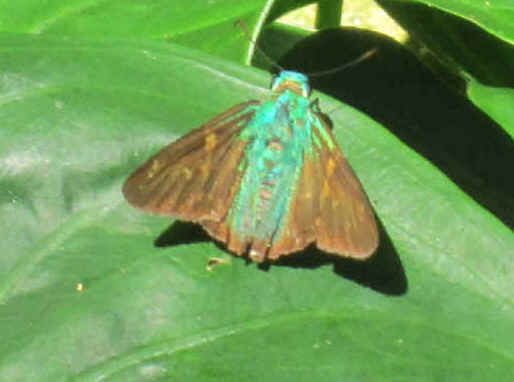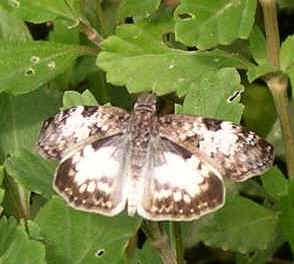
A List of selected 

Butterflies & Moths

in the
West Indies 
of the Caribbean


in
Barbados,
the Cayman Islands,
Dominica
the Dominican Republic,
Jamaica, 
Puerto Rico,
Saint Lucia
& St. Vincent


Butterflies in the Caribbean exclusively in Trinidad & Tobago are not in this list.
 
FONT tours in the Caribbean have been during the months of: January, February, March, April, May, July, & December.


The following list compiled by Armas Hill


Codes relating to illustrations in various books:

Numbers noted as (C:xx) refer to pages in "A World of Butterflies", with text by Brian Cassie, and photographs (superb) by Kjell Sandved

Numbers noted as (DV1:xx) refer to plates in "The Butterflies of Costa Rica and their Natural History (Volume 1): Papilionidae, Pieridae, Nymphalidae", by Philip J. DeVries   

Numbers noted as (F:xx) refer to pages in "The Illustrated Encyclopedia of Butterflies", by Dr. John Feltwell  

Numbers noted as (K:xx) refer to pages in the "Kaufman Focus Guide to Butterflies of North America", by Jim Brock & Kenn Kaufman

Numbers noted as (PE:xx) refer to plates in the "Peterson Field Guide to Eastern Butterflies", by Paul Opler & Vichai Malikul, 1998 edition. Those noted as (PEp:xx) refer to a page with a photograph.

Numbers noted as (PW:xx) refer to plates in the "Peterson Field Guide to Western Butterflies", by Paul Opler & illustrated by Amy Bartlett Wright, 1999 edition. Those noted as (PWp:xx) refer to a page with a photograph. 

Numbers noted as (S:xx) refer to pages in the "Smithsonian Handbook, Butterflies & Moths", by David Carter

Island (or Country) Codes:

BD: Barbados: On this relatively small Caribbean island, largely cleared for sugar cane planting by the end of the 17th Century, there are 24 butterfly species.
  
BH: Bahamas

CU: Cuba

CY: the Cayman Islands

DM: Dominica

DR: the Dominican Repubic: On the Greater Antillean island of Hispaniola there are 151 known species of butterflies, of which 41 are endemic. Largely, this is the result of a luxuriant radiation of Calisto, a genus of Satyrids.

JM: Jamaica

PR: Puerto Rico

SL: Saint Lucia

SV: Saint Vincent  


BUTTERFLIES OBSERVED DURING FONT TOURS ARE NOTED BY AN (*) AFTER THE 2-LETTER CODE.
 

Throughout the world, there are over 180,000 described species of butterflies and moths (in the order Lepidoptera). 
In the following list, of those in the West Indies of the Caribbean, about 150 species (with some additional subspecies) are included.   


SOME COMMENTARY REGARDING BUTTERFLY IDENTIFICATION:

"Get a guidebook, take a few years, and you'll still make mistakes. Butterfly identification has an initial, deceptive simplicity. 
Individuals in a species vary naturally, an eyespot slightly larger, a color brighter.
Males and females of a species can be strikingly dissimilar.
So can genetic morphs or forms within a gender.
In a single species, butterflies that live in a range of habitat can vary in appearance and produce different populations or geographical races, each better adapted to its environment.
Species can also produce generations of distinct morphs in the same place at different times of the year.

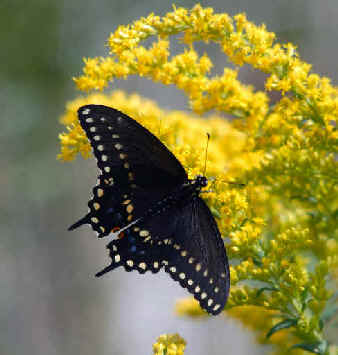
One Tiger Swallowtail is black. On the same flower, another Tiger Swallowtail is yellow.
Another species produces red butterflies in the wet season and blue in the dry. A species darkens in response to air pollution.
A species gains an eyespot. A species lose one."

The above commentary taken from the book, "An Obsession with Butterflies", by Sharman Apt Russell (a wonderful read).  


Links:


Itineraries for upcoming FONT Tours in:
The Cayman Islands & Jamaica, Dominican Republic, Puerto Rico, & the Lesser Antilles 

Birds during previous tours in:
the Cayman Islands
   Jamaica    the Dominican Republic   Puerto Rico  
the Lesser Antilles

A List of Mammals & Other Wildlife in the West Indies of the Caribbean 
(including Reptiles & Amphibians)


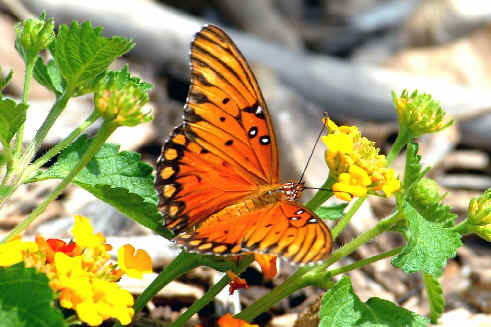
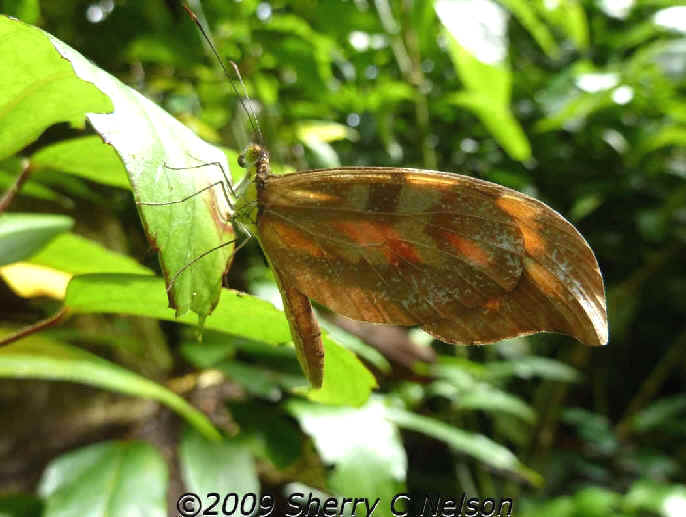
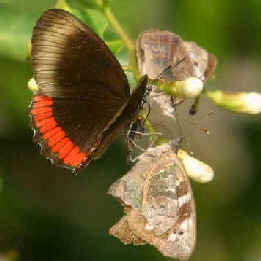
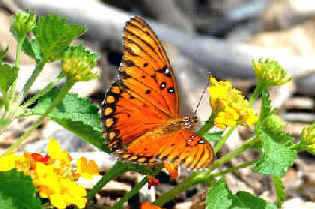
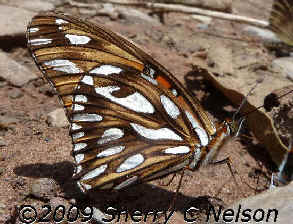
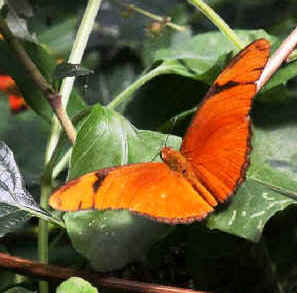
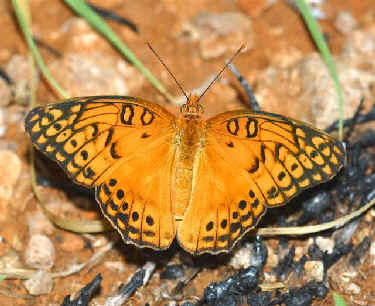
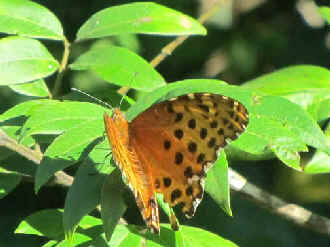
The Gulf Fritillary in the Caribbean is called the Silver-spotted Flambeau.
This photo by Howard Eskin.


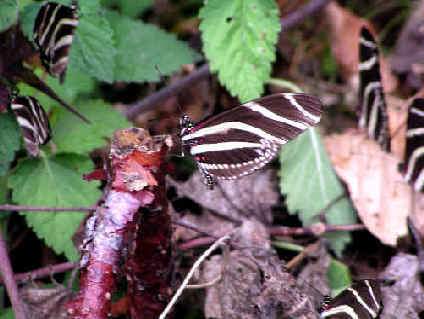
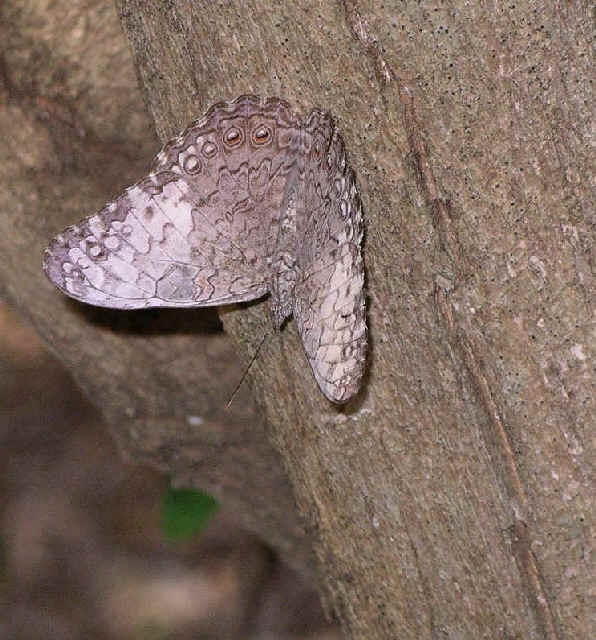
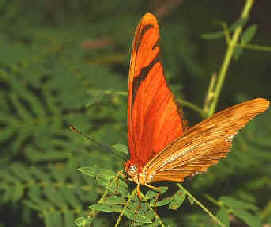
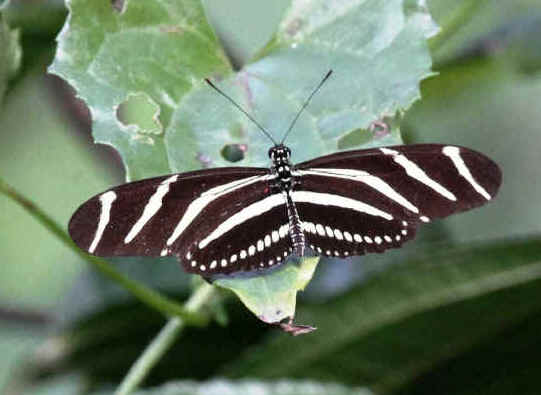
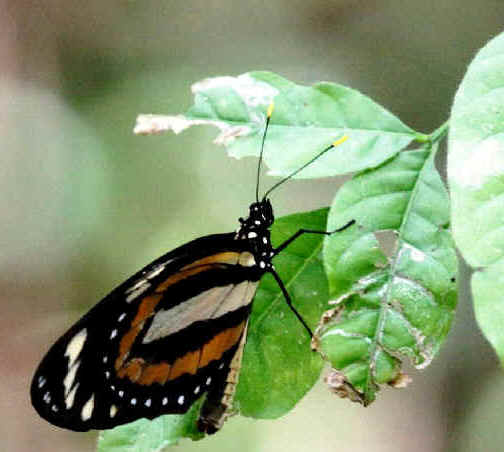
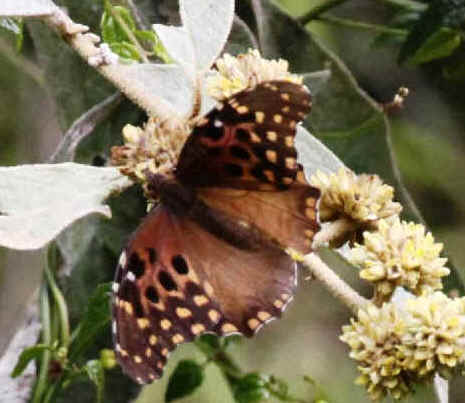
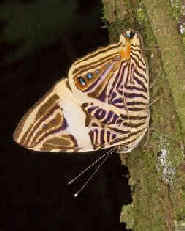
Zebra Helicons roost in groups. 
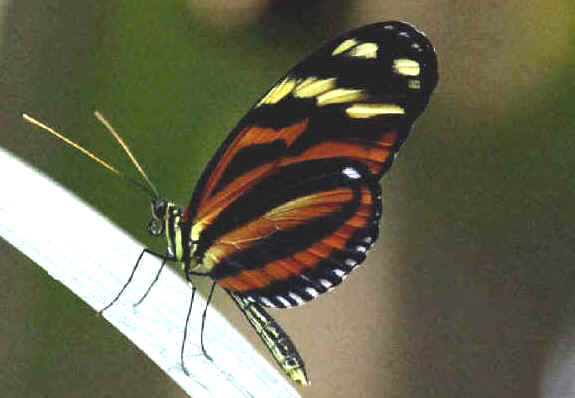
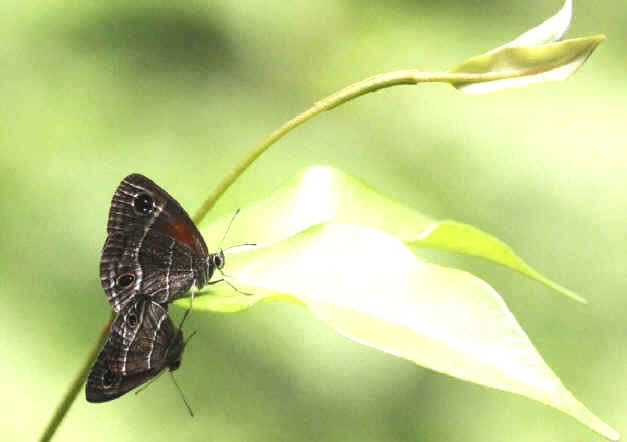
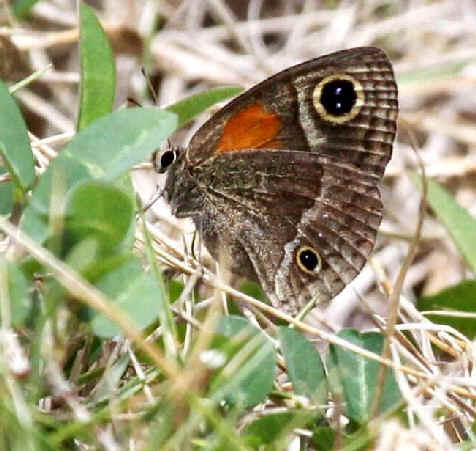
This & the photograph at the top of this file by Doug Johnson. 

 List of Butterflies: 

          Family PAPILIONIDAE: SWALLOWTAILS (and allies): 
          There are totally about 700 known species of Swallowtails.


          Genus BATTUS: PIPEVINE SWALLOWTAILS:  Totally 15 species 
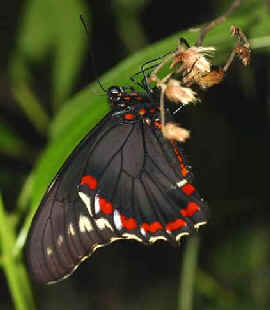
 

  1. Battus polydamas  ______  BD BH CU CY(*) DM DR(*) JM PR(*) SL SV  (DV1:1) (F:38) (K:37) (PE:5) (PW:2) (S:55)
    Polydamas Swallowtail
    (also called The Gold Rim, or Black Page)
    (throughout the Antilles & the Americas) 
    (In the tropics, continuously brooded. Butterflies live about a week. Very common near human settlement. The mainland race is variable. Most West Indian islands have distinct local races, indicating little migration between islands and probable isolation for long periods of time.)
    Race in Puerto Rico: Battus polydamus thyamus

  2. Battus devilliersi ______  BH CU
    Deviller's Swallowtail 
    (the Bahamas & Cuba)

  3. Battus zetides ______  DR
    (Haiti)


    Genus PARIDES

  4. Parides anchises ______  Leeward Islands
    Cattle Heart

  5. Parides neophilus ______  Leeward Islands
    Spear-winged Cattle Heart

  6. Parides gundlachianus  ______  CU
    Gundlach's Swallowtail
    (eastern Cuba)
    (a beautiful butterfly, with green on the upper forewing, blue on the lower forewing, and red on the upper and lower hindwing)


    Genus traditionally EURYTIDES, now PROTESILAUS:  KITE SWALLOWTAILS: About 50 species confined to the New World. Some mimic PARIDES and HELICONIUS butterflies. Others have long tails, hence the name "Kite Swallowtails". Fast fliers. Engage in mud-puddling.

  7. Protesilaus (formerly Eurytides) marcellinus ______  JM  (F:40)
    Jamaican Kite Swallowtail
     
    (This species is endemic to Jamaica. It is classified as VULNERABLE in the Red Data Book of Threatened Swallowtail Butterflies of the World.)
     
  8. Protesilaus (formerly Eurytides) celadon  ______  CU  (F:39)
    Cuban Kite Swallowtail
    (Resident on Cuba; possible sightings of strays in the Florida Keys)

  9. Protesilaus (formerly Eurytides) zonarius ______  DR
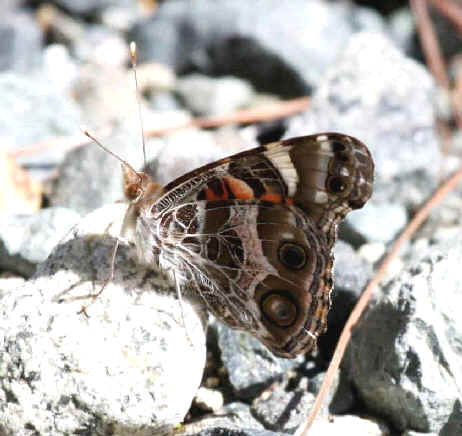
    Haitian Kite Swallowtail 

     
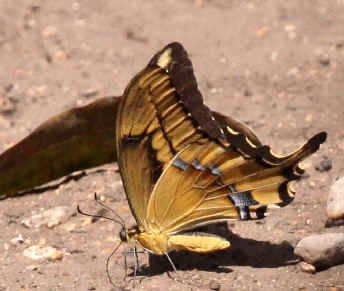
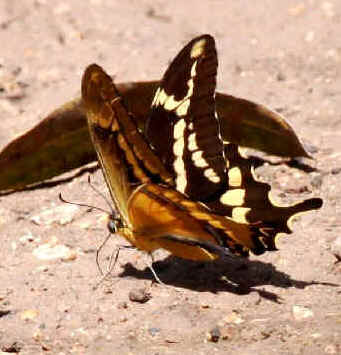
    Genus: PAPILIO, or now HERACLIDES, or now PTEROURUS:  FLUTED SWALLOWTAILS: one of the most widespread of genera, with over 200 species. Most are tropical. Most are tailed. Many are migratory. These are the largest of the Swallowtails. They are butterflies of the sunshine, paths, roads, and open county. They readily visit flowers such as: Lantana, Bauhinia, Bougainvillea, and Hibiscus.

  10. Papilio (or Heraclides) thoas  ______  CU JM  (C:295) (DV1:4) (K:38 text) (PE:6)
    Thoas Swallowtail
    (very similar to Giant Swallowtail K:39)
    (Cuba, Jamaica; also Trinidad and the southern US thru Central & South America) 

  11. Papilio (or Heraclides) androgeus  ______  CU DR PR LA  (DV1:4) (F:52) (K:41) (PE:6)
    Androgeus Swallowtail
    (or Queen Page)
    (the West Indies - Cuba, Hispaniola, St. Lucia; also Mexico to Argentina) 
    (The female tends to be reclusive, not often seen. She is polymorphic, with green hindwings, and no yellow band on the forewings. The male spends much of his time in the forest canopy, occasionally coming down to mud-puddle.)

  12. Papilio (or Heraclides) thersites ______ JM
    False Androgeus Swallowtail

  13. Papilio (or Heraclides) aristodemus ______  BH CU DR PR(*)  (F:53) (PE:6)
    Schaus' Swallowtail 
    (also called Dusky Swallowtail
    (Greater Antilles, north to Florida Keys) (An endangered species, it's classified as Threatened)  (On the upperside the wings have a thick yellow bar with yellow marks inside the margin, and a black tail. The yellow-orange undersides have red and a band of silvery-blue on the hindwing.) 

  14. Papilio (or Heraclides) andraemon  ______  BH CU JM  (F:54) (PE:6)
    Bahaman Swallowtail
    (Bahamas, Cuba, the Cayman Islands, & Jamaica) (Lives in open flowery areas and breeds on member s of the citrus family.)  (The subspecies P. a. bjorndalae occurs in the Bahamas; in Jamaica, this species it was introduced.) (A large yellow and brown swallowtail which has a reddish wedge-shaped mark on the underside of the hindwing.)  

  15. Papilio (or Heraclides) machaonides ______ DR(*)
    Machaonides Swallowtail

  16. Papilio (or Heraclides) aristor ______  DR  (F:53)
    Scarce Haitian Swallowtail
    (Endemic to Hispaniola. Habitats include dry scrub, and it probably breeds on citrus. Classified as Indeterminate in the Red Data Book of Threatened Swallowtail Butterflies of the World.) (The warm brown ground is crossed on the forewing by a row of bead-like white spots which splits into two. There are yellow chevrons on the hindwing and a single eyespot. The rarely seen female is slightly larger and paler than the male, with larger yellow spots.) 

  17. Papilio (or Heraclides) oxynius ______  CU 
    Cuban Black Swallowtail

  18. Papilio (or Heraclides) caiguanabus ______  (F:55)
    Poey's Black Swallowtail
    (Endemic to Cuba. It is classified as Indeterminate in the Red Data Book of Threatened Swallowtail Butterflies of the World.)  (This pretty butterfly is distinguished by the bright yellow band which runs around the hindwings, wider on the hindwing than on the forewing, where it is white. There is a bold reddish area on the anal part of the hindwing. The sexes are similar.)  

  19. Papilo (or Pterourus) homerus  ______  JM(*)  (F:59)
    Homerus Swallowtail 
    (also called Homer's Swallowtail)
    (An endemic resident of Jamaica, where it occurs in rainforests in both lowland and highland areas. Due to habitat destruction, it is classified as Endangered in the Red Data Book of Threatened Swallowtails of the World. Also, this attractive butterfly has been much collected. It has contrasting light & dark markings, similar in both sexes. A white-cream band crosses both dark wings, and the hindwing has a row of submarginal spots. This is the largest butterfly in the New World.)    

  20. Papilo pelaus  ______  JM(*)  (F:64)
    Pelaus Swallowtail 
    (also called Prickly Ash Swallowtail)
    (Occurs only in Jamaica, where it is widely distributed. It is not threatened. There are 3 subspecies. This swallowtail often flies in shady wooded areas.)  (The brown ground color is crossed on the forewing by a curved yellow band and on the tailed hindwing by a series of red spots. There is a small eye-spot at the anal region of the hindwing.)   

  21. Papilio polyxenes ______  BH
    Eastern Black Swallowtail


    Family PIERIDAE: most are predominantly white, yellow, or orange in color, and are often referred to as WHITES, YELLOWS, SULPHURS, or MARBLES
    (Worldwide, over 1,000 species of whites & sulphurs have been described.)  

    Subfamily DISMORPHIINAE: MIMIC WHITES. A long-winged, tropical group of about 100 species.


    Genus DISMORPHIA: This grouping is of about 40 species of "atypical" PIERIDS.  They are large and widely distributed, mostly in South America. Many of the DISMORPHIDS are involved in mimicry, often being remarkable mimics of various distasteful butterflies. Their wingshapes and coloration can be misleading, causing them to be regarded as ITHOMIIDS or HELICONIDS. Also, these DISMORPHIDS often fly in the same localities and occupy the same habitats as the ITHOMIIDS ore HELICONIDS which they resemble. Thus, unlike more "typical" PIERIDS, they often prefer shady areas. Sometimes, however. they can be found resting on leaves, with their wings open, trying to catch some sunlight struggling to enter the dark places where they hide. At the beginning of the dry season, large numbers can be encountered imbibing nectar from flowers growing at the edge of the forest or along pathways. 
    The patterning of DISMORPHIDS is quite variable. 

  22. Dismorphia amphione  ______ (DV1:6) (S:74)
    Tiger Pierid
    (Cuba, Hispaniola, & Puerto Rico; also Trinidad, and Mexico thru South America) (This is a highly variable species, so variable that different populations have hitherto been regarded as different species.) 

  23. Dismorphia spio  ______  (F:94)  DR
    Haitian Mimic
    (in the Antilles, in rainforest above 2,000 feet) (Clearly the mimic of another butterfly, almost certainly a heliconid with long forewings and a similar color and pattern. The color of this butterfly is variable, from yellow, orange to brown. The body is long and thin. The forewing is strongly curved, almost with a hook-tip.)    


    Subfamily PIERINAE: a cosmopolitan group, well represented in both temperate and tropical regions, with as many as 1200 species worldwide.


    Genus APPIAS: A distinctive group with strongly curved wings (especially in the males), which makes them powerful fliers. Many dwell in the rainforest. Males commonly mud-puddle. The sexes are usually completely different in color, with the females darker with more subdued coloration.  
    This genus occurs in Asia (mainly), Africa, and Australia, in addition to the Americas. This genus in the New World is also said by some, for structural reasons, to be GLUTOPHRISSA (with 2 species).
    (Note: The APPIAS butterflies in the Old World are referred to as THE GULLS.)  
     
  24. Appias drusilla ______ BD BH CU CY(*) DM DR JM PR SL SV  (DV1:12) (K:53) (PE:7)(PW:7)
    Tropical White
    (also called Florida White)
    (throughout the West Indies; also the southern US, and Central & South America) (lowland tropical evergreen or semideciduous forests) 
    (This is an extraordinarily swift butterfly, "so swift that, in a few seconds, they traverse long distances. Not only do they fly extremely fast, but they also take their nourishment from flowers in the greatest haste. Only in imbibing water from the damp ground, where these butterflies, particularly the males, sometimes settle in large groups close together, do they allow themselves time, and engage in this activity for the moment as an amusement".  

  25. Appias punctifera ______  JM PR
    D'Almeida's White
    (Hispaniola, Puerto Rico, & the Virgin Islands)
    (Has a small black spot on the forewing) 
      

    Genus ASCIA: in North, Central, and South America. 8 species of large plain white butterflies with some brown or gray markings, especially in the females. They live in open areas.

  26. Ascia josephina ______ (D1:12)
    (the Antilles; also Central & South America) 

  27. Ascia monuste ______  BD BH CU CY(*) DM DR JM PR SL SV  (DV1:12) (K:53) (PE:8)(PW:8)
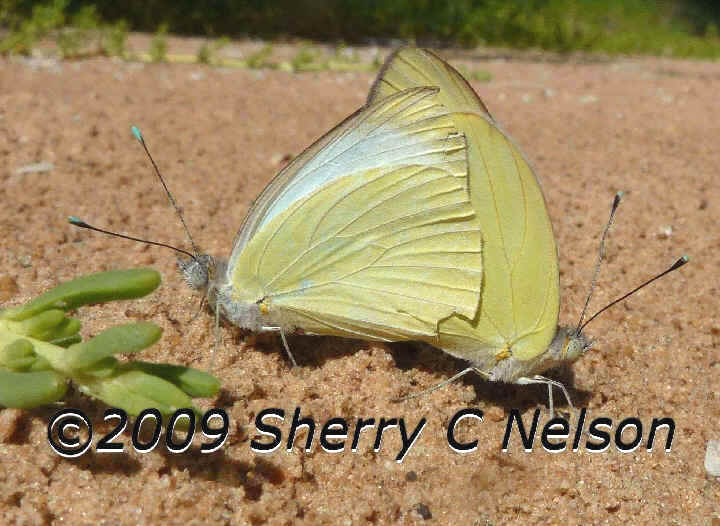
    Great Southern White 

    (the Antilles; also the southern US, and Central & South America)
    (in coastal salt marshes & dunes; also open places such as fields & gardens; migrants are in a variety of open habitats) 
    (The migrating females are almost totally gray in color, while non-migratory females are largely yellowish-white with dark brown margins.)


    Genus GANYRA: This group of North, Central, and South American butterflies are powerful fliers, and some are strong migrants. They live in open areas, and breed on members of the caper, crucifer or cabbage, and nasturtium families.  

  28. Ganyra josephina ______ (PE:8)(PW:8)
    Giant White

    (the Greater Antilles; also Mexico & Central America) (forest edges, usually in seasonally dry tropical lowlands) 


    Subfamily COLIADINAE: SULPHURS  (300 species worldwide)


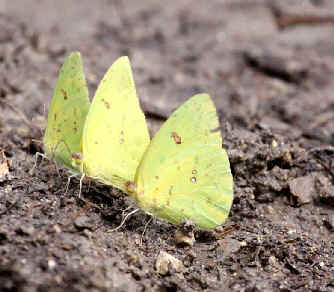
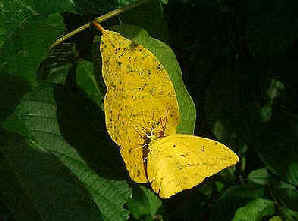
    Genus PHOEBIS: GIANT SULPHURS. This grouping of 10 species is found exclusively in the Americas. They are the most conspicuous of the tropical sulphurs, being common and large. They are given to vast migrations and are often found in open areas & forest edges. They are fast flying, and all members of the genus are migrants. The sexes are dimorphic. Males, more often than females, cluster on moist sand along rivers & streams. The females usually has less active behavior, flying not far from vegetation, or simply visiting flowers. 

  29. Phoebis trite ______ (DV1:8)
    (the Antilles: also Mexico to Argentina)

  30. Phoebis sennae ______  BD BH CU DR JM PR SL SV  (DV1:9) (F:105) (K:75) (PE:10)(PW:12)
    Cloudless Sulphur
    (throughout the West Indies; also the southern US to Argentina)
    (Can be abundant in both lowlands & highlands. It prospers in open land, with weedy tropical & subtropical plants.) (The female is variable, with some being yellowish. The race on Hispaniola, P. s. editha, which is rare & local, has females which are orange or orange-red in color.) 

  31. Phoebis argante ______  CU DM DR JM PR SL SV  (DV1:9) (F:104) (PW:text)
    Argante Giant Sulphur
    (also called Apricot Sulphur)
    (the Antilles; also Mexico to Paraguay) (tropical forest clearings, roadsides, gardens, pastures)  . 

  32. Phoebis orbis ______ (PE:text)
    Orbed Sulphur
    (resident on Cuba & Hispaniola) (On Hispaniola, usually in tropical moist forest above 500 meters, but also otherwise.)

  33. Phoebis avellaneda ______ CU DR JM
    Red-splashed Sulphur
    (This species occurs in eastern Cuba and almost everywhere in Hispaniola. It is a thrilling butterfly to see, and a confusing one when encountered with the similar species Phoebis philea. It differs from philea in that the male has deep red patches washed with a purple sheen on the forewing, and the female has a red underside as opposed to being yellow on philea. Both species occur in Hispaniola & Cuba.)    

  34. Phoebis philea ______  BH CU DR PR  (PE:10)
    Orange-barred Sulphur
    (Hispaniola & Cuba, and in the Lesser Antilles; also throughout much of lowland tropical America south to Brazil, and in Florida & the Fla. Keys, since about 1928)

  35. Phoebis agarithe  ______  BH CU DM DR JM PR  (PE:10)
    Large Orange Sulphur
    (the West Indies; also from Florida & Texas south to Peru)


    Genus KRICOGONIA

  36. Kricogonia lyside ______ (DV1:8) (K:77) (PE:8)(PW:13)
    Lyside Sulphur
    (or Lyside)
    (the Antilles; also from the southern US to Venezuela)  (lowland scrub & seasonally dry forest edges)


    Genus APHRISSA: Central & South American WHITES, similar to Phoebis. With shiny undersides.

  37. Aphrissa (has been Phoebis) statira ______ (D1:9) (F:80) (PE:10)(PW:13)
    Statira
    (also called Yellow Migrant, Migrant Sulphur, or Statira Sulphur)
    (also called Yellow Migrant, Migrant Sulphur, or Statira Sulphur)
    (several subspecies in the Antilles; also Mexico to Brazil)


    Genus NATHALIS

  38. Nathalis iole ______  BH CU DR JM  (K:71)  (PE:10)(PW:13)
    Dainty Sulphur 
    (also called Dwarf Yellow)
    (the West Indies; also North America to Guatemala) 
    (dry open areas, including weedy fields, sandy coastal flats, hillsides)
    (This species is unique among
    SULPHURS, in several structural features, so much so that some say it belongs in a separate subfamily. Forewings elongated. Sexually dimorphic & seasonally diphenic.)  


    Genus EUREMA: SMALL YELLOWS. This widespread genus, of 35-40 species, has a circumtropical distribution. They are usually lemon-yellow with black borders. Males often have a long scent patch on the forewing. These are familiar little butterflies that fly along paths and roadways, usually in considerable numbers after rains. Blistering heat will often send them to pools of water or to the watering holes of cattle where the sand moistened with the animals's urine furnishes them with mineralized liquid.  

  39. Eurema nicippe ______  BH CU DR JM PR  (K:69) (PE:11)(PW:13)
    Sleepy Orange
    (the West Indies; also the US to Costa Rica)  
    (low areas in lower austral & subtropical zones: open woods, pines, open fields) (Males often occur at mud puddles.)

     
  40. Eurema proterpia ______ (DV1:10) (F:97) (K:69) (PE:11)(PW:13)
    Tailed Orange
    (or Little Jaune)  
    (in the Antilles, in: Cuba, Hispaniola, & Jamaica; also in the southern US, thru Central & South America) 
    (seasonally dry scrub, forest edges, pastures)  (There are seasonally different forms of both sexes. This butterfly occurs from sea level to mountains, and breeds on Desmodium species.) 

  41. Eurema boisduvaliana ______ (DV1:10) (K:73) (PE:11)(PW:13)
    Boisduval's Yellow
    (the Antilles; also Mexico to Costa Rica)  (thorn scrub, pastures, & roadsides)

  42. Eurema dina  ______ (DV1:10) (K:73) (PE:11)(PW:13)
    Dina Yellow
    (the Antilles; also from the southern US to Panama) (edges of brushy fields & in open forests)

  43. Eurema albula ______ (DV1:10)
    Ghost Yellow
    (the West Indies; also Mexico to Brazil)

  44. Eurema nise ______ (DV1:10) (K:71) (PE:11)(PW:13)
    Mimosa Yellow
    (also called Jamaican Sulphur)
    (the West Indies; also from the southern US to Argentina) (brushy edges of woods)

  45. Eurema lisa ______  BD BH CU CY(*) DM DR JM PR SL SV  (DV1:10) (K:71) (PE:11)(PW:13)
    Little Yellow
    (or Little Sulphur)
    (the West Indies; also the US to Panama)  (found in open flowery areas, also dry sandy fields, roadsides)

  46. Eurema daira ______ (DV1:10) (F:96) (K:71) (PE:11)(PW:13)
    Barred Yellow
    (or Barred Sulphur)
    (in the West Indies; also from the southern US to Uruguay) (In the Caribbean, occurs in: Cuba, Hispaniola, Jamaica, and from Puerto Rico south to Grenada and Barbados.) (This species is subject to seasonal dimorphism in both sexes.) 

  47. Eurema elathea ______ (DV1:10)
    (West Indies; also Nicaragua to Brazil & Bolivia)  
    (pastures, dunes, & forest edges in tropical & subtropical zones) 

  48. Eurema messalina ______ (PE:text)
    Shy Yellow
    (resident in the West Indies)  (in brushy areas)

  49. Eurema leuce  ______
    Hall's Yellow
    (in the West Indies, in: Hispaniola, St. Kitts, Dominica, St. Lucia, St, Martin, Guadeloupe, & Puerto Rico; also Panama to Argentina)  
    (The sexes are similar, but the female is usually a paler yellow. However, in the subspecies on
    Hispaniola, E. l. nemulus, the female is darker than the male, and has a orange-brown spot on the apex of the hindwing.) 


    Family LYCAENIDAE (GOSSAMER WINGS), including: COPPERS, HAIRSTREAKS, BLUES
     
    (Throughout the world but mostly in tropical and subtropical regions. The sexes often differ in coloration, and the undersides usually differ from the upper surfaces.
    Among several distinct groups are the HAIRSTREAKS, with tails and bright eyespot markings on the hindwings, creating a "false head" at the rear, to divert attackers.) 
    (Thus far, worldwide, about 5,000 species in this family have been discovered and named. Caterpillars of many of these species are closely associated with ants.)

    Genus EUMAEUS

  50. Eumaeus atala ______  BH CU  (PE:12)
    Atala
    (Bahamas, Cuba; also southeast Florida & the Fla. Keys)  (in shaded, subtropical hardwood hammocks and adjacent open areas, & botanical gardens with ornamental cycads) 


    Genus CHLOROSTRYMON: Mostly South American, these butterflies are dimorphic. Males are often brightly colored.  

  51. Chlorostrymon simaethis ______ (F:228) (K:117) (PE:13)(PW:15)
    Silver-banded Hairstreak
    (or Simaethis Hairstreak) (Another name is St. Christopher's Hairstreak)
    (the West Indies; also from the southern US to Argentina) (Similar to Chlorostrymon maesites in size and pattern, but the uppers are not as lively in color. The male is a dull iridescent purple; the female even duller. The undersides are yellow-green with extensive white areas toward the outer edge of the hindwing. This butterfly breeds on the sapindaceous vine, Cardiospermum halicacabum.))     

  52. Chlorostrymon maesites ______ (F:227) (PE:13)
    Amethyst Hairstreak

    (the West Indies; also southeast Florida & Fla. Keys)  (Occurs in evergreen or semideciduous forest and hammocks.) 


    Genus ELECTROSTRYMON

  53. Electrostrymon angelia ______  (PE:13)
    Fulvous Hairstreak

    (the West Indies; also south Florida & Fla. Keys)  (tropical hardwood hammock edges)


    Genus MINISTRYMON: HAIRSTREAKS of North & South America that have adaptations for living in deserts. Breed on mesquites, spiny trees, and shrubs of the Proposis genus, which grow in deserts, especially by watercourses. The colors of the butterflies are blue, gray, and black.  

  54. Ministrymon azia ______ (K:119) (PE:13)(PW:18)
    Gray Ministreak
    (or Azia Hairstreak)
    (the West Indies; also from south Texas to southern Brazil)


    Genus CALYCOPIS

  55. Calycopis cecrops ______  (PE:13) 
    Red-banded Hairstreak 

    (in the West Indies on New Providence Is. in the Bahamas)


    Genus PSEUDOLYCAENA: A single species which occurs mostly in South America, but also in the Caribbean.

  56. Pseudolycaena marsyas ______  SV  (F:266)
    Giant Hairstreak

    (Recorded in the Windward Islands, in forested areas of St. Vincent. This is the largest hairstreak in the West Indies. This tailed blue has curved and pointed forewings. The uppers are sky blue with black markings, and the undersides are a silvery blue with black spots. This butterfly is often found in swampy locations.)   


    Genus STRYMON: SCRUB HAIRSTREAKS: In both North & South America. Butterflies exhibit seasonal variation. 

  57. Strymon melinus ______  BH  (PE:15)
    Gray Hairstreak
    (in the West Indies on Grand Bahama Is. in the Bahamas)
     
  58. Strymon rufofusca ______ (K:123) (PE:15)
    Red-crescent Scrub-Hairstreak
    (or Reddish Hairstreak)
    (Grenada; also south Texas to Argentina)

  59. Strymon martialis  ______  (F:273) (PE:15)
    Martial Scrub-Hairstreak 
    (Other names are: Long-tailed Hairstreak, Blue-and-Gray Hairstreak, & Cuban Gray Hairstreak)
    (the West Indies; also south Florida & Fla. Keys) (in open lowlands)  (The sexes are fairly similar, although the slightly larger female has a more pronounced violet-blue. The violet-blue covers most of the hindwing and the trailing edge of the forewing. The rest of the wings are dark brown. The male has a dark sex brand on the forewing.)    

  60. Strymon acis  ______  (F:273) (PE:15)
    Bartram's Scrub-Hairstreak 
    (Other names are: Drury's Hairstreak, Acis Hairstreak, & Antillean Hairstreak 
    (the West Indies; also south Florida & Fla. Keys) (This butterfly occurs in gardens and beside woodland. It breeds on the attractive spurge plant, Croton.)  (This is a two-tailed
    hairstreak. The sexes are fairly similar, brown-black above and gray-slate below. There is a thick "hairstreak" line crossing the wings, and a large orange spot by the tails.)    

  61. Strymon limenia  ______ (PE:14)
    Disguised Scrub-Hairstreak

    (the West Indies; also Florida Keys) 

  62. Strymon bazochii ______ (K:123) (PE:15)(PW:18)
    Lantana Scrub-Hairstreak
    (or Bazochii Hairstreak)
    (the Greater Antilles; also from south Texas to Paraguay)


    Subfamily POLYOMMATINAE: BLUES. Very small butterflies, mostly blue above. Females of many are browner.


    Genus BREPHIDIUM

  63. Brephidium isophthalma  ______  (PE:15)
    Eastern Pygmy Blue
    (the West Indies; also locally in southeastern US) 


    Genus LEPTOTES: A relatively small grouping of striped and generally tailed blues, small in size, which have colonized various parts of Europe, Asia, and North and South America. They are sexually dimorphic. Butterflies breed on members of the pea family, Leguminosae. Some species are migratory.   

  64. Leptotes cassius ______  BH CU DM DR JM PR SL SV  (K:127) (PE:16)(PW:19) (S:99) 
    Cassius Blue  
    (the West Indies; also from the southern US to South America)
    (males are a light lilac-blue, females mainly white) (particularly attracted to blue and violet flowers, in open grassy scrubland)


    Genus HEMIARGUS: Commonly called "eyed blues", these butterflies occur in both North & South America. The common name is from 2 or 3 eye-spots on the undersides of the hindwings. They breed on a wide variety of members of the pea family, Leguminosae.

       
  65. Hemiargus thomasi  ______  (F:238) (PE:15)
    Miami (Eyed) Blue 
    (also called the Caribbean (Eyed) Blue, or Thomas's (Eyed) Blue
    (the West Indies; also Florida Keys & formerly south Florida) (Occurs in tropical hardwood hammock openings and edges.)  (The key identification feature is the pair of large black spots on the leading edge of the underside of the hindwing. The female has orange around one of two other black spots which are near the trailing edge of the hindwing. The uppers of the male are powdery blue.)     

  66. Hemiargus ceraunus ______ (K:129) (PE:15)(PW:19)
    Ceraunus Blue
    (the West Indies; also from the southern US to South America)

  67. Hemiargus hanno ______  BH CU DM DR JM PR SL SV
    Hanno Blue


    Family NYMPHALIDAE: BRUSHFOOTS
    (cosmopolitan, with subfamilies range from 8 to 25, depending upon taxonomic treatment)
    (This is the most diverse family of butterflies, with approximately 6,000 known species worldwide. Brushfoot butterflies appear 4 rather than 6-legged as their 2 front legs are much reduced.)  


    Subfamily LIBYTHEINAE: SNOUTS


    Genus LIBYTHEANA: A group of SNOUT BUTTERFLIES with long palps which protrude under the head like a snout. There are about 10 species which occur in South and Central America. They breed on members of Celtis which belong to the elm family, Ulmaceae. 

     
  68. Libytheana carinenta ______ (C:281) (DV1:20) (F:175) (K:223) (PE:18)(PW:22) (S:146)
    Southern
    (or American) Snout (or American) Snout (or Snout Butterfly)
    (the West Indies; also from the southern US to Brazil) 


    Genus COLOBURA: only 1 species is in this genus

  69. Colobura dirce ______  CU DR JM PR  (C:291) (DV1:21) (S:114)
    The Mosaic
    (the West Indies; also from Mexico thru Central & South America)  (Overall, this species is very common and may be encountered on rotting fruit or simply resting very still on a tree trunk for a long period of time. In the West Indies, common in Cuba, the Dominican Republic, & Puerto Rico.) 


    Genus HISTORIS: 1 of these species, H. acheronta used to be regarded as belonging to a genus of its own, COEA.  

  70. Historis odius ______  CU DM DR JM PR SL SV  (DV1:21) (PE :text)
    Orion
    (also called Stinky Leaf Wing)
    (the West Indies; also throughout Central & South America; in North America it's a rare stray to Florida)  (This strong flier is found on all of the islands of the Lesser Antilles. The wings have velvety dark brown uppersides and cryptically-colored undersides. At rest, with the wings folded, this butterfly blends into the background which is often tree bark.)     
      
  71. Historis acheronta ______  CU DR JM  (C:353) (DV1:21) (PW:31)
    Tailed Cecropian
    (also called Acheronta or Cadmus) 
    (the Greater Antilles, in: Cuba, Hispaniola, & Jamaica; also from Mexico to the Amazon Basin)


    Genus MESTRA

  72. Mestra cana  ______  DM SL SV
    St. Lucia Mestra
    (confined to the Windward Islands: Domincia, St. Lucia, St. Vincent, Barbados, & Grenada; also in Trinidad & Tobago and in northern South America)
    (This is a fairly common but drab yellow-gray species with light whitish-gray patches. It is a slow flier, settling on flowers bordering hill tracks and roadsides.)   


  73. Mestra dorcas ______ JM
    Jamaican Mestra
    (endemic to Jamaica) 
    (with orange coloration)


    Genus BIBLIS: A single species. Breeds on Tragia, a species of spurge. 

  74. Biblis hyperia ______  DM DR PR(*)  SL SV  (DV1:21) (F:124) (K:215) (PE:25)(PW:31)
    Red Rim
    (the West Indies, common in the Greater Antilles except Cuba & Jamaica; also occurs from Mexico to the Amazon Basin)  (Widespread in the Lesser Antilles.)  (This butterfly is quite variable throughout its range. It is a fairly slow flier that frequents open ground, feeding often on rotting fruit, but also settling, with open wings, on green vegetation. It is common.) 


    Genus HAMADRYAS: the CRACKERS, also called "CALICO BUTTERFLIES"

  75. Hamadryas amphichloe  ______  DR(*)  (PE:26)
    Pale Cracker 
    (the West Indies; also in South America south to Ecuador; a rare stray in the Florida Keys, where possibly an import on exotic plants. Can be common on Hispaniola; also known in Cuba & Jamaica.)
       

    Genus EUNICA:  There are from some say 40 or so to maybe 60 species in Central & South America and the Greater Antilles, but most occur almost exclusively in Amazonas. They live mostly in primary forest, and have a preference for sub-montane habitats. Like most NYMPHALIDS, they are attracted to putrefying fruit. Most species are medium-sized with dull-coloring and SATYRID-like ocelli and markings below.   

     
  76. Eunica tatila  ______  BH CU DR JM PR  (DV1:22) (K:215) (PE:25)(PW:30)
    Florida Purplewing
    (or Large Purplewing)
    (the West Indies, in the Greater Antilles; also from the southern US to the Amazon Basin) 
     

  77. Eunica monima modesta ______  BH CU DR JM PR  (DV1:22) (K:215) (PE:25)(PW:30)
    Dingy Purple Wing
    (the Antilles & Bahamas; also the US & Mexico thru Central & South America)  


    Genus ADELPHA:  Over a hundred species which are among the most common and characteristic butterflies of the Neotropics. They occur from Central America south to Paraguay & Argentina, with some in the West Indies. Throughout that range, they can be found from sea level to 8 or 9,000 feet.
    These butterflies share the characteristic of an orange patch at the apex of the forewing, a feature had by few other Caribbean butterflies.

  78. Adelpha abyla ______ JM
    Jamaican Admiral
    (Jamaica)

  79. Adelpha iphicla ______ CU
    Cuban Admiral
    (Cuba)

  80. Adelpha lapitha ______ DR
    (Hispaniola)

  81. Adelpha gelania ______  DR PR(*)
    Haitian Admiral
    (Hispaniola & Puerto Rico)


    Genus DOXOCOPA (or CHLORIPPE):  About 30 species distributed from Mexico to Argentina, and in the West Indies. They are forest fliers that are sometimes confused with ADELPHA, but they can be distinguished from species in that genus by the blue or green metallic reflection of the upper surface and the silvery white ground color of the under surface.


    Genus ARCHAEOPREPONA

  82. Archaeoprepona demophoon ______  CU  DR  JM
    Silverking
    (Cuba, Hispaniola, Puerto Rico)
            

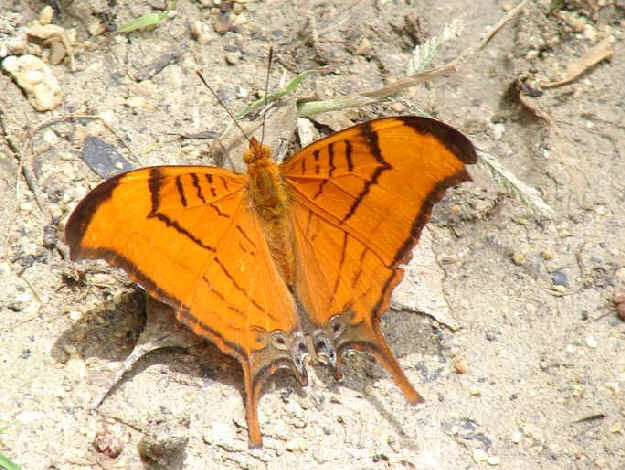
    Genus MARPESIA: DAGGERWINGS: A genus of mostly Central and South American butterflies, but also occurs in Africa. Called "daggerwings" after the long tail on each hindwing. The butterflies, some of which are dimorphic, engage in mud-puddling. 


  83. Marpesia petreus ______  DM PR  SL SV   (DV1:23) (F:177) (K:219) (PE:25)(PW:31) (S:123)
    Ruddy Daggerwing
    (also called Southern Daggertail; in the West Indies called the Tailed Flambeau)
    (in the West Indies, including: St. Lucia, Dominica, Guadeloupe, St. Kitts, & Puerto Rico; also from the southern US thru Central & South America)
    (visits flowers and mud-puddles)  (In flight, very similar to
    D. juno, the Silver Spot, and one or two other species that feed to together on flowering shrubs. This species and D. juno both occur in the Lesser Antilles.)   

  84. Marpesia chiron ______  CU DR JM PR  (C:273) (DV1:23) (K:219) (PE:25)(PW:31)
    Many-banded Daggerwing 
    (also called Common Daggertail)
    (the West Indies; also southern US, Central & South America. Rarely in Jamaica. Its Caribbean stronghold is Cuba. Most commonly observed at fallen fruit.)

  85. Marpesia eleuchea ______  BH CU DR JM  (PE:25)
    Antillean Daggerwing 
    (also called Cuban Daggerwing)
    (the West Indies; occasionally strays to the Florida Keys, presumably from Cuba) (Occurs in tropical woodlands. At least 3 subspecies are known. Most common in the Greater Antilles, this butterfly breeds on Ficus species. The key difference between this species and the
    Tailed Flambeua, or Ruddy Daggerwing, Marpesia petreus, is the bent lines crossing the wings. In M. petreus, they are straight.)     


    Genus SIPROETA: Butterflies in South & Central America, and as far north as the southern US. 

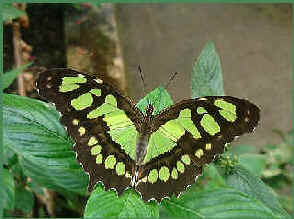
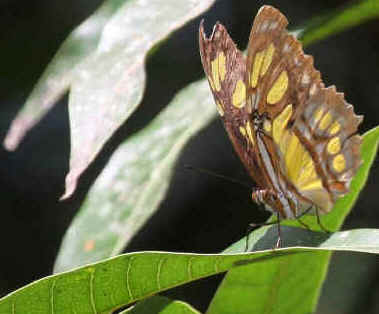
  86. Siproeta (or Metamorpha) stelenes ______ CY(*) DM  DR(*) JM(*) PR(*) SL SV   (DV1:28) (F:202) (K:209) (PE:26)(PW:30)
    Malachite
    (throughout the West Indies; also from the southern US to the Amazon Basin)  
    (This beautiful butterfly has vivid green in large blotches and bands on a dark brown background. Usually a solitary flier, but it does congregate in numbers around rotting fruit. It is on the wing all year in the tropics.)  


    Genus MYSCELIA:  About a dozen species of strongly sexually dimorphic butterflies, distributed from Mexico to Paraguay, and in Hispaniola in the West Indies.  


    Genus ANARTIA: 4 species found in the southern US to Central America, and in the West Indies. These are common butterflies of the tropics. They are swift fliers, and bear some resemblance to members of the CYNTHIA genus

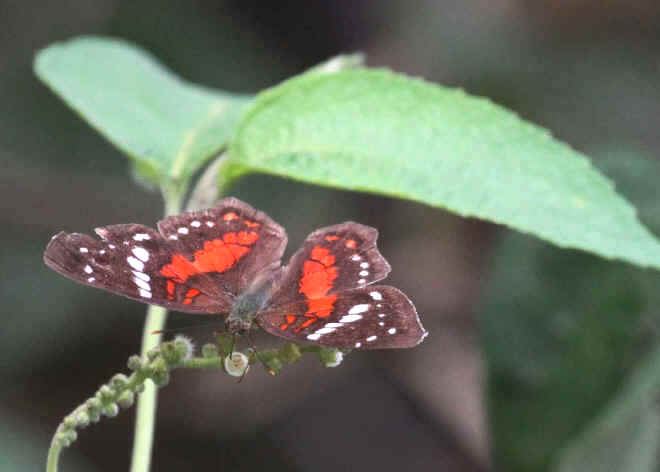
  87. Anartia amathea ______  DM SL SV  (C:311)
    Red Peacock (or Red Anartia)
    (in the West Indies throughout the Lesser Antilles, becoming more common southwards toward South America; occurs also from Panama to Argentina, and in Trinidad & Tobago)  
    (A red-and-black butterfly with a sprinkling of white spots on the forewing. The red of the male is deep and vivid. The female has a brownish pallor.)
     
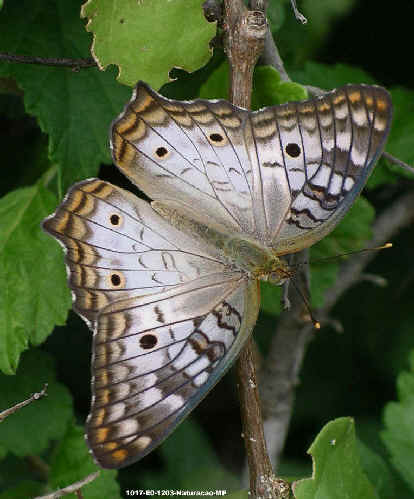
  88. Anartia jatrophae ______  BH CY(*) DM(*) DR(*) JM(*) PR(*) SL SV  (C:309) (DV1:28) (K:209) (P:33)(PW:30) (S:107)
    White Peacock
    (the West Indies; also from the southern US thru Central & South America)
    (This is a common butterfly of open country, roadsides, beaches and wasteland, often with other species such as the Buckeye. The upperside is a light gray with six black dots. This butterfly in the Caribbean is on the wing year-round.)   

  89. Anartia chrysopelea  ______  (PE:24)
    Caribbean Peacock

    (a resident in Cuba, the Isle of Pines, & on Swan Island) (disturbed scrubland)

  90. Anartia lytrea ______
    (Dominican Republic)

  91. Anartia chrysopelea ______ CU
    Huebner's Anartia
    (Cuba)


    Genus JUNONIA: BUCKEYES, a common name from the false eyes that are prominent on the wings. This is a widespread grouping, found in all of the global regions. The precise number of species is unknown, as there is yet more classifying to be done.  

  92. Junionia coenia  ______  CU  (PE:23)
    Common Buckeye
    (Cuba and the Isle of Pines; also in the southeast US & in central California, and Mexico)
      
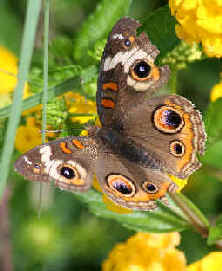
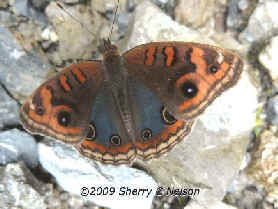
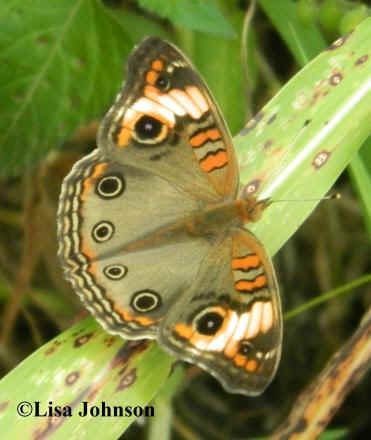
  93. Junonia evarete ______  BD(*) BH CU CY(*) DM DR JM PR SL SV  (DV1:28) (F:168) (K:207) (PE:23)
    Mangrove Buckeye
    (in the West Indies, called Caribbean Buckeye) (Other names: Smoky Buckeye, Florida Buckeye, West Indian Buckeye)
    (the West Indies; also the southern US & thru the American tropics)
    (A common species with a fast flight, often settling on dry, open ground. The wing spots have pupils of violet.)

  94. Junonia genoveva  ______  JM  (PE:23)
    Tropical Buckeye

    (the West Indies, in Jamaica; also throughout in the Americas from the southern US to Argentina)  (Practically indistinguishable from Junonia evarete)


    Genus VANESSA: LADY BUTTERFLIES: A widespread group of strong fliers, sometimes migratory, with bright oranges and reds. 

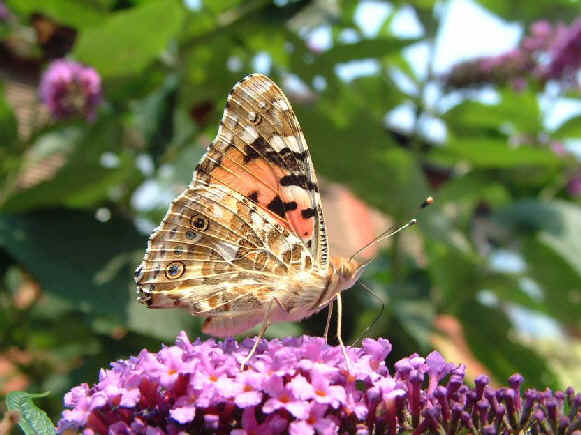
  95. Vanessa virginiensis ______  BH CU DR JM PR  (DV1:28) (K:205) (PE:23)(PW:29)
    American (Painted) Lady
    (the West Indies; also from southern Canada thru North America. In Central America in montane regions)


    Genus HYPOLIMNAS: Commonly called DIADEM BUTTERFLIES, because of the row of spots around the wings which look like a necklace. Sexual dimorphism is exhibited, and females sometimes mimic DANAID butterflies. These butterflies are found in open sunny areas, villages, glades, and forest edges, and they frequent nectar feeders.  

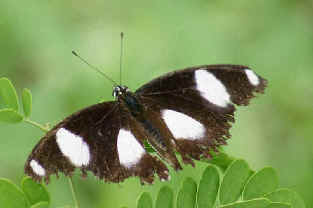
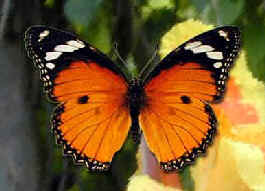
  96. Hypolimnas misippus ______ (DV1:28) (F:164)
    The Mimic
    (other names: Diadem Butterfly, Six-continent Butterfly, Danaid Butterfly
    (One of the most widespread butterflies in the world, thanks in part to human history. It is thought to have been introduced into the West Indies in slave ships from Africa. The sexes are completely different, with the male looking like a male Hypolimnas bolina, but with white wing marks. The female has a number of forms with mimic various DANAIDS, resembling Danaus chrysippus of the Old World, with coloration similar to Danaus glippus, the Queen.)


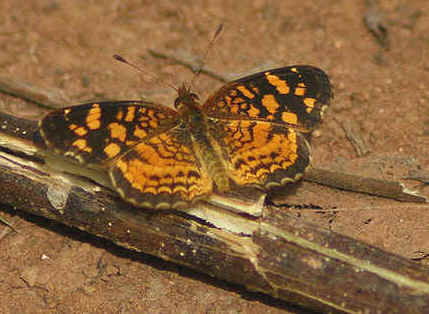
    Genus PHYCIODES: CRESCENTS: North & South American butterflies which often have a speckled and variable pattern. Some species are sexually dimorphic. They live in open sunny meadows and pastures, and visit flowers regularly for nectar. A few species are migratory, but most are not. 

  97. Phyciodes frisia ______ (PE:21)
    Cuban Crescent 
    (the West Indies; also south Florida & the Fla. Keys)

  98. Phyciodes phaon  ______  CY(*)  (PE:21)
    Phaon Crescent

    (Cuba and the Cayman Islands; also in the southern US and south into Central America as far as Guatemala) 


    Subfamily HELICONIINAE: LONGWINGS
    (Mostly in the American tropics. Adults of some species are long-lived, and several are distasteful. Various other species mimic the distasteful butterflies of this group.)  


    Genus DIONE: 4 species (depending upon taxonomy) in Central & South America, with one reaching into the southern US. Typically, they have orange uppers with stunning silver marks on the undersides of the wings. They breed on many species of passion flower, Passiflora. They exploit secondary vegetation, and their numbers increase dramatically in areas where there has been rainforest destruction.  

  99. Dione juno ______  SL SV  (DV1:31) (S:161)
    Silverspot
    (or Scarce Silver-spotted Flambeau)
    (the Lesser Antilles from Martinique southwards; also thru Central & South America)  
    (closely related to
    Dryas iulia) (The bright silver spots which give the butterfly its common name are on the underside. Often occurs in the same places as the very similar Gulf Fritillary. Said to be attracted to red and blue flowers.)

  100. Agraulis (or Dione) vanillae ______  BD BH CU CY(*) DR(*) JM(*) PR SL SV   (C:269) (DV1:31) (F:144) (K:157) (PE:19)(PW:23) (S:160)
    Gulf Fritillary
    (another common name, Silver-spotted Flambeau
    (the West Indies; also from the southern US thru American tropics to South America) 
    (This widespread, familiar butterfly visits gardens to drink nectar. This is a sun-loving butterfly. it is common along the coasts of islands. The upperside is fiery orange. It is distinguished from the
    Julia, or Flambeau, by the presence of numerous black dots on the forewing. It is silver-spotted on the underside.)


    Genus DRYAS: A single migratory species represents this mostly Central & South American genus. 

  101. Dryas iulia ______  BD BH CU CY(*) DR(*) JM(*) PR(*) SL SV  (C:301) (DV1:31) (F:145) (K:157) (PE:19)(PW:23) (S:159)
    Julia Heliconian 
    (or Julia) (in the Caribbean called The Flambeau)
    (the West Indies; also from the southern US thru American tropics to Brazil)
    (The uppersides of the elongated wings are orange, unmarked but for a conspicuous black blob or band in the cell area of the forewing. The undersides are a very pale brown with small white flashes. Different races include variation of the black band and other black markings on the upperside of the forewing.  
    This butterfly visits open sunny and flowery areas (often wet ground), and breeds on the passion flower.) 


    Genus EUEIDES 


  102. Eueides isabella ______ (DV1:31) (K:155) (P:29)(PW:23) (S:159)
    Isabella's Heliconian
    (or Isabella, or Isabella Tiger)
    (the West Indies; also from Mexico to the Amazon Basin) 


    Genus HELICONIUS: LONGWINGS: Found principally in Central & South America, reaching into the southern US. There are 15 species in Central America. The larvae feed on members of the passion flower family, Passifloraceae. The adults (the butterflies) are gregarious and have communal roosting spots. Adults feed on pollen, from which they derive amino acids, enabling them to live up to nine months. The butterflies stay very much in the same localities. They are very noticeable and found in all types of habitats.
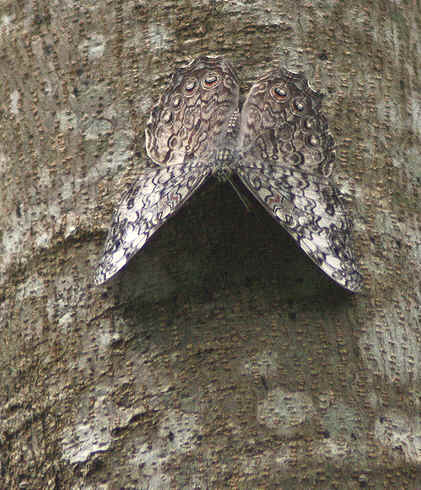
     
  103. Heliconius charitonius ______  CU CY(*) DR(*) JM(*) PR(*)  (C:303) (DV1:32) (F:160) (K:155) (PE:19 & PEp:234)(PW:23) (S:160)
    Zebra Heliconian
    (or Zebra) (also called Zebra Longwing)
    (the West Indies, in: Cuba, Jamaica, the Caymans, Hispaniola, Puerto Rico, and the Leeward Islands south to Montserrat, and on Andros Island in the Bahamas; also from the southern US thru Central & South America)
    (This graceful butterfly is a common sight in gardens and at roadside flowers. Roosts in small to large clusters, with the adults returning to the same roost night after night.) (Very familiar to visitors of butterfly houses as it is easy to rear.)


    Genus EUPTOIETA

  104. Euptoieta claudia  ______  BH, CU, DR, JM  (DV1:32) (K:157) (PE:3 & 20 & PEp:235)(PW:23)
    Variegated Fritillary
    (the West Indies, in the highlands of Cuba and Jamaica; also Canada thru Central & South America) 

  105. Euptoieta hegesia  ______  BH, CU, DR, JM, PR  (DV1:32) (K:157) (P:29)(PW:23)
    Mexican Fritillary 
    (the West Indies; also from the southern US thru Central America)


    Subfamily CHARAXINAE: LEAF BUTTERFLIES


    Genus ANAEA: LEAFWINGS:  This grouping of about 120 species occur in the Caribbean and Central & South America. They are similar in behavior to the African genus CHARAXES. They are called LEAFWING butterflies because the undersides of the wings are leaf-like and disguise the butterfly when it settles on the ground. Some species are sexually dimorphic. The larvae feed on members of the Euphorbiaceae (spurges), Piperaceae (peppers), and Lauraceae.      
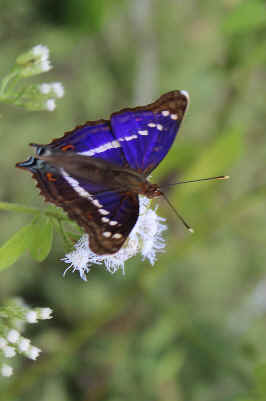
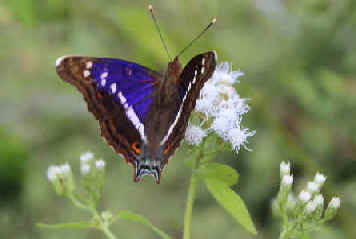
  106. Anaea troglodyta  ______  CY(*)
    Troglodyte
    (in the Caribbean, in Jamaica, Cuba, Hispaniola, Puerto Rico, St. Kitts, & Antigua) (It is closely related to Anaea floridalis, the Florida Leafwing, of the Florida Keys & extreme southern peninsular Florida - (PE:25).)  (The sexes are similar but the female is larger and with yellow-orange patches on the outer margins of the forewings.)  

  107. Anaea echemus  ______  (PE:25)
    Chestnut Leafwing
    (Cuba; windblown strays to nearby islands)

  108. Anaea cubana  ______  (F:116)
    Leaf Wing
    (Occurs only in Cuba, where however it is migratory. This is the largest Anaea. It is distinguished by its bright orange, almost red, color on the upper surface. The forewing is hooked, and the hindwing is partially scalloped with a substantial tail. Females are larger than males. The undersides are dill. This butterfly feeds on members of the spurge family, such as crotons, often grown in gardens.)  


    Genus SIDERONE:  3 or 4 distinctive butterflies distributed from southern Mexico to southern Brazil, and in the West Indies.

  109. Siderone galanthis ______
    (Hispaniola; also southern Mexico to southern Brazil)   


    Subfamily ITHOMIIDAE: CLEARWINGS


    Genus CRETA

  110. Creta diaphana  ______  DR JM
    Jamaican Clearwing

  111. Creta cubana  ______  CU
    Cuban Clearwing 


    Subfamily DANAIDAE: MILKWEED BUTTERFLIES: Predominantly a tropical and subtropical group, referred to as TIGERS, in reference to their striking orange coloration with strong black strips. This pattern is an advertisement of a noxious element consisting of heart poisons (cardiac glycosides) accumulated from the food plants, milkweeds (asclepiadaceae & apocynaceae) by the larvae and stored by the adults. 


    Genus LYCOREA: a group of HELICONID MIMICS which have long wings, long bodies, and share similar patterns.

  112. Lycorea cleobaea  ______  CU DM DR JM PR SL SV  (DV1:33) (F:176) (K:155) (PE:27) (S:187)
    Tiger Mimic-Queen
    (or Large Tiger)
    (in the West Indies, in: Cuba, Hispaniola, & Puerto Rico; also Mexico to Peru. Common in the Greater Antilles; rare in the Lesser Antilles.) 
    (Resemble
    Heliconius ethilla, but larger than the true heliconids. The male has a tuft of extrusible "hair-pencils" at the tip of the abdomen.) (Occurs in wood and scrub habitats.)


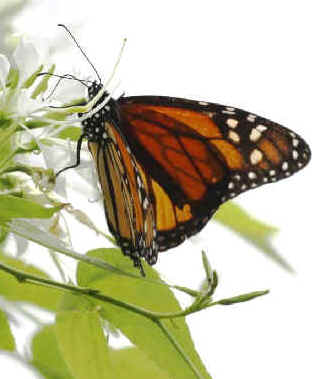
    Genus DANAUS: ROYALTY: Known also as TIGER BUTTERFLIES. There are representatives in all geographical regions of the world. More species occur in the Old World, but one of the best known butterflies of the New World is D. plexippus, the Monarch. Larvae of this genus feed on members of the milkweed and dogbane families, and render themselves poisonous to predators by storing plant poisons. There are many other butterflies that mimic the toxic members of this genus.     

  113. Danaus plexippus  ______  BH CU DM DR JM PR SL SV  (PE:27)
    Monarch
    (the West Indies; also in North & Central America, and in most tropical American lowlands) (A number of islands in the West Indies now have distinctive local populations and have been treated by various authors as races or subspecies. Caribbean Monarchs are resident & do not migrate.)     

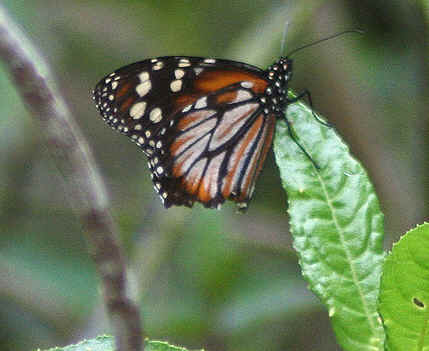
  114. Danaus eresimus  ______  CU DR JM SL SV  (C:283) (DV1:33) (F:142) (K:229) (PE:27)
    Soldier
    (in the Antilles; also from the southern US to the Amazon Basin) (This butterfly breeds on members of the poisonous Asclepiadaceae.)  (The ground color is dusky brown with a pronounced black margin around the wings, broader on the hindwing. The veins are black and there is considerable white speckling on the black areas.) (Very similar to the Queen, but has a series of very faint spots, only slightly paler than the ground color, on the underside of the hindwings.)

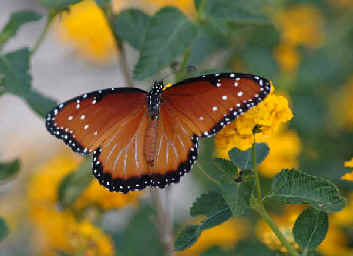
  115. Danaus gilippus  ______  BH CU DM DR JM PR SL SV
    Queen
    (the West Indies; rare in the Lesser Antilles. Also in the extreme southern US and through American tropical lowlands)

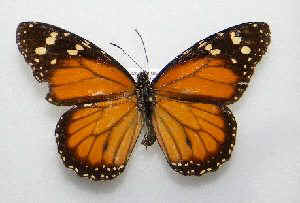
  116. Danaus cleophile  ______  DR JM
    Jamaican Monarch
    (Jamaica & Hispaniola; Looks like a small Monarch but has yellow spots on its wings instead of white ones.)    


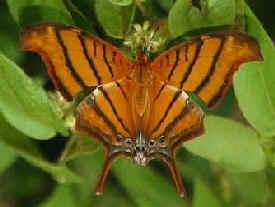
    Genus ANETIA:  4 species of large and strikingly-colored butterflies, 3 of which are confined to the West Indies. The other species, A. thirza, is confined to Central America.

    Family HESPERIIDAE: SKIPPERS 
    A very large family (more than 3,500 species throughout the world) of stout-bodied short-winged butterflies that resemble day-flying moths. The adult butterfly's flight resembles a 'skipping' motion when going from flower to flower. Their forewings are closed above their back when they are settled.

    Subfamily PYRGINAE: Open-winged Skippers


    Genus PHOCIDES

  117. Phocides pigmalion ______ (K:267) (PE:30)
    Mangrove Skipper
    (the West Indies; also Florida & from Mexico to Argentina)


    Genus PROTEIDES

  118. Proteides mercurius ______ (K:273) (PE:30) 
    Mercurial Skipper
    (the West Indies; also Mexico to Argentina. Strays north to southern US.) 


    Genus EPARGYREUS: Silver-spotted Skippers

  119. Epargyreus zestos ______  (PE:30)
    Zestos Skipper

    (the West Indies; also South Florida & the Fla. Keys) 


    Genus POLYGONUS

  120. Polygonus leo ______ (K:267) (PE:30) 
    Hammock Skipper
    (the West Indies; also Florida & from Mexico to Argentina)

  121. Polygonus manueli ______ (PE:text)
    Manuel's Skipper
    (the West Indies; also from Mexico to Argentina)


    Genus CHIOIDES 

  122. Chioides catillus ______ (C:377) (K:271) (P:39) 
    White-striped Longtail
    (the West Indies: Jamaica; also from south Texas to Argentina)  


    Genus AGUNA

  123. Aguna asander ______ (K:273) (PE:30) 
    Gold-spotted Aguna
    (the West Indies; also from Mexico to Argentina)


    Genus POLYTHRIX

  124. Polythrix octomaculata ______ (K:271) (P:39) 
    Eight-spotted Longtail
    (or Polythrix)
    (the West Indies: Haiti; also from Mexico to Argentina) 


    Genus URBANUS: LONG-TAILED SKIPPERS

  125. Urbanus proteus ______  BD BH CU CY(*) DM DR(*) JM(*) PR SL SV  (K:269) (PE:30) (S:36)
    (Common) Long-tailed Skipper
    (the West Indies; also Florida & south Texas to Argentina) 
    (Common throughout the West Indies. This species has the basic brown coloration of the family with irridescent green hair scales on the body and base of the hindwing.)  

  126. Urbanus dorantes ______ (K:269) (PE:30)
    Dorantes Longtail
    (or Skipper)
    (the West Indies: also Florida & from south Texas to Argentina)


    Genus ASTRAPTES: FLASHERS

  127. Astraptes alardus ______ (K:279) (PE:text)
    Frosted
    (or White) Flasher
    (the West Indies: Cuba; also Mexico to Argentina, & rarely north to southern Texas)

  128. Astraptes anaphus ______ (PE:text)
    Yellow-tipped Flasher
    (the West Indies; also from Mexico to Argentian)


    Genus CABARES

  129. Cabares potrillo ______ (K:277) (PE:31)
    Potrillo Skipper
    (the West Indies; also from south Texas to Colombia) 


    Genus ACHLYODES 
  130. Achlyodes tamenund ______  CU DR JM PR  (K:xxx) (PE:31) 
    Sickle-winged Skipper
    (the West Indies; also from south Texas to Argentina) 


    Genus TIMOCHARES

  131. Timochares ruptifaciata ______  (PE:32)
    Brown-banded Skipper 

    (the West Indies: Jamaica; also south Texas & Mexico)


    Genus CHIOMARA  

  132. Chiomara asychis ______ (K:295) (PE:32)
    White-patched
    (or Asychis) Skipper
    (the West Indies; also from south Texas to Argentina) 


    Genus GESTA

  133. Gesta invisus ______ (K:287) (PE:32)
    False Dusky Wing
    (the West Indies; also from south Texas to Argentina)  (formerly in the genus Erynnis, the true duskywings)


    Genus EPHYRIADES
     
  134. Ephyriades brunneus ______ (K: 287) (PE:32)
    Florida Dusky Wing
    (the West Indies & south Florida, but strays to Honduras)


    Genus ERYNNIS: True Duskywings

  135. Erynnis zarucco ______ (PE:32)
    Zarucco Duskywing

    (the West Indies: Cuba & Hispaniola; also in the southeast US)


    Genus PYRGUS: Checkered-Skippers

  136. Pyrgus oileus ______  (PE:33)
    Tropical Checkered Skipper 

    (the West Indies; also Florida & south Texas to Argentina)  


    Subfamily HESPERIINAE: BRANDED SKIPPERS
    (this group is comprised of more than 2,000 species worldwide) 


    Genus SYNAPTE

  137. Synapte malitiosa ______ (K:309) (PE:33)
    Malicious (Shady) Skipper
    (the West Indies: Cuba; also from far-southern Texas to southern Brazil & Paraguay)  


    Genus CYMAENES

  138. Cymaenes tripunctus ______ (K:309) (PE:34)
    Three-spotted Skipper
    (the West Indies & south Florida; also from central Mexico to Paraguay)  


    Genus PERICHARES

  139. Perichares philetes ______ (K:357) (PE:text)
    Green-backed Ruby-eye
    (or Skipper)
    (the West Indies; also from north Mexico to Paraguay, & strays to far-southern Texas)


    Genus RHINTHON

  140. Rhinthon osca ______ (PE:text)
    Osca Skipper
    (the West Indies; also from north Mexico to Ecuador & periodically strays to far-southern Texas)


    Genus HYLEPHILA

  141. Hylephila phyleus ______  (PE:35)
    Fiery Skipper

    (the West Indies: also from the southern US to Argentina) 


    Genus POLITES

  142. Polites baracoa ______  (PE:36)
    Baracoa Skipper
    (the West Indies; also parts of Florida & adjacent south Georgia & south Alabama)
     
  143. Polites vibex ______ (K:303) (PE:35)
    Whirlabout
    (the West Indies; also from the southeast US to Argentina)


    Genus ASBOLIS

  144. Asbolis caprucinus ______  (PE:38)
    Monk Skipper

    (the West Indies; and now parts of Florida & the Fla. Keys. It was introduced from the West Indies into south Florida about 1947-48.)     


    Genus WALLENGRENIA

  145. Wallengrenia otho ______ (K:327) (PE:36)
    (Southern) Broken Dash
    (the West Indies; also from southeast US to Argentina)


    Genus LERODEA

  146. Lerodea eufala ______ (K:353) (PE:39)
    Eufala Skipper
    (the West Indies: Cuba; also from the southern US to southern Argentina)


    Genus CALPODES

  147. Calpodes ethlius ______  BD BH CU DM DR JM PR SL SV   (K:357) (PE:39) (S:44)
    Brazilian Skipper
    (also called the Canna Skipper, as it is common in gardens where Cannas are grown, on which the larva feeds)
    (the West Indies; also from the southern US to Argentina) (In the West Indies occurs throughout, with the apparent exception of the Virgin Islands.)     


    Genus PANOQUINA

  148. Panoquina panoquinoides ______ (K:355) (PE:39)
    Obscure Skipper
    (the West Indies; also from the southern US to Peru)

  149. Panoquina ocola ______ (K:355) (PE:39)
    Ocola Skipper
    (the West Indies; also from the southern US to Paraguay)

  150. Panoquina sylvicola ______ (K:357) (PE:39)
    Purple-washed
    (or Sylvicola) Skipper
    (the West Indies; also from north Mexico to Argentina & a regular stray to south Texas)

  151. Panoquina fusina ______ (K:357) (PEp:402)
    Evans' Skipper

    (the West Indies in Jamaica; also from central Mexico to Paraguay & a periodic stray to far-southern Texas)


    Genus NYCTELIUS

  152. Nyctelius nyctelius ______ (K:357) (PE:39)
    Violet-banded
    (or Nyctelius) Skipper
    (the West Indies; also from Mexico to Argentina & a periodic stray to south Texas)


Some selected reference books regarding Butterflies & Moths of the Caribbean
(in addition to those noted at the beginning of the list):

"Butterflies of the Caribbean & Florida", by Peter D. Stiling

"Butterflies & Other Insects of the Eastern Caribbean", by Peter D. Stiling 


To Top of Page.