PO Box 9021, Wilmington, DE 19809, USA
E-mail: font@focusonnature.com
Phone: Toll-free in USA 1-800-721-9986
 or 302/529-1876; Fax: 302/529-1085


Mammals & Other Wildlife during
FONT Birding & Nature Tours 

in Chile

1991 thru 2007

(during the months of October & November)


Those seen during FONT tours noted with an (*)
  

The following list compiled by Armas Hill


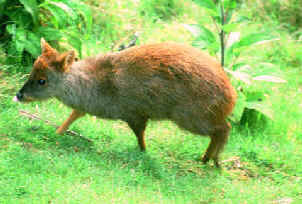
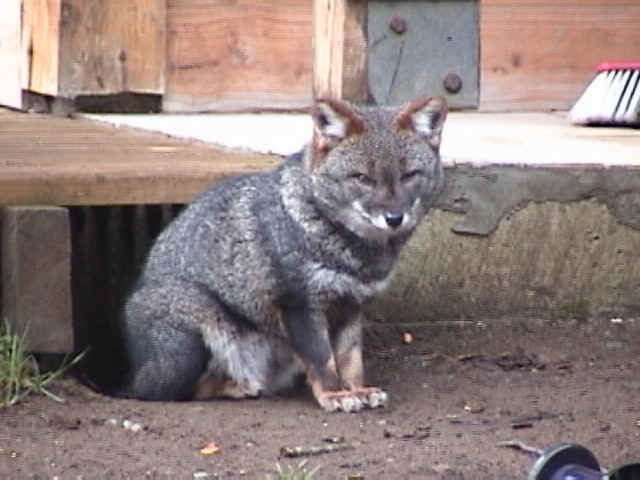
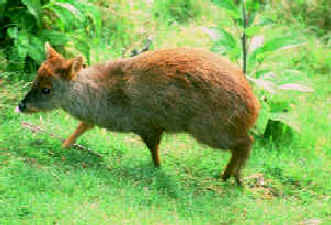
Photo at right: A small deer known as the SOUTHERN PUDU,
photographed during a FONT tour in southern Chile   


There have been 16 FONT tours in Chile.


Codes:

(e):     endangered, (ECH) endangered in Chile  
(v):     vulnerable
(r):      rare
(t):      threatened (but with status indeterminate)
(iCH):  introduced in Chile

cc: in central Chile, near Santiago 

ca: in central Chile, in the Andes

cs: in central Chile, along the seacaost   

so: in southern Chile (including Chiloe Island)  

fn: in far-northern Chile, from Arica on the coast to Lauca in the High Andes 

fs: in far-southern Chile, in Patagonia

(tf): on the island Tierra del Fuego in far-southern Chile, or in nearby waters  


Links:

Upcoming FONT Birding & Nature Tours in Chile

Birds during previous FONT Tours in Chile

South American Mammal List

Southern South America Bird Photo Gallery


Land Mammals:


          ARMADILLOS - Family Dasypodidae

  1. Pichi  _____
    Zaedyus pichiy
    CH: Pichi

  2. Larger Hairy Armadillo _____
    Chaetophractus villosus
    CH: Quirquincho grande


    HARES & RABBITS - Family Leporidae

  3. European Hare (i) ______
    Lepus europaeus

  4. European Rabbit (i) ______
    Oryctolagus cuniculus  (the single member of its genus)


    NEOTROPICAL MICE - Subfamily Sigmodontinae


  5. Darwin's Leaf-eared Mouse _____
    Phyllotis darwini

  6. Narrow-toothed Leaf-eared Mouse _____ 
    Phyllotis limatus

  7. Master Leaf-eared Mouse _____
    Phyllotis magister

  8. Osgood's Leaf-eared Mouse _____  fn  (Andean altiplano in Arica province) 
    Phyllotis osgoodi

  9. Yellow-rumped Leaf-eared Mouse _____  so
    Phyllotis xanthopygus

  10. Southern Big-eared Mouse _____ so
    Loxodontomys micropis  (the single member of its genus)

  11. Bolivian Big-eared Mouse _____ fn
    Auliscomys boliviensis

  12. Andean Big-eared Mouse _____
    Auliscomys sublimis

  13. Garlepp's Mouse _____
    Galenomys garleppi

  14. Altiplano Chinchilla-Mouse _____
    Chinchillula sahamae

  15. Andean Mouse _____
    Andinomys edax  (the single member of its genus)

  16. Chilean Climbing Mouse _____
    Irenomys tarsalis  (the single member of its genus)

  17. Patagonian Chinchilla-Mouse _____  fs
    Euneomys chinchilloides 

  18. Biting Chinchilla-Mouse _____  ca
    Euneomys mordax

  19. Peterson's Chinchilla-Mouse _____
    Euneomys petersoni

  20. Andean Swamp Rat ______
    Neotomys ebriosus  (the single member of its genus)

  21. Bunny Rat _____
    Reithrodon auritus   


    GUINEA-PIGS & CAVIES - Family Caviidae 

  22. Common Yellow-toothed Cavy _____   (northern Chile)
    Galea musteloides


  23. Southern Mountain Cavy ______ so  (also called Southern Dwarf Cavy, or Least Cavy)
    Microcavia australis
    CH: Cuis Chico, or Cuis de los Salitres 

  24. Montane Guinea-Pig  ______ fn
    Cavia tschudii


    DEGUS & TUCO-TUCOS - Family Octodontidae  (53 species, mostly in Argentina & Chile)

  25. Coruro  (*)  _____ so (this rare animal was seen during a FONT tour on Chiloe Island)
    Spalacopus cyanus 
    (the single member of its genus)

  26. Chilean Rock Rat _____  cc
    Pithanotomys fuscus

  27. Sage's Rock Rat _____ (in central Chile in Malleco Province)
    Pithanotomys sagei

  28. Bridges' Degu _____
    Octodon bridgesi

  29. Common Degu (*) _____
    Octodon degus

  30. Moon-toothed Degu _____ 
    Octodon lunatus

  31. Isla Mocha Degu _____
    Octodon pacificus

  32. Mountain Degu (*) _____
    Octodontomys gliroides

  33. Coyhaique Tuco-tuco _____
    Ctenomys coyhaiquensis

  34. Magellanic Tuco-tuco  (*)  _____
    Ctenomys magellanicus

  35. Maule Tuco-tuco _____
    Ctenomys maulinus

  36. Highland Tuco-tuco _____
    Ctenomys opimus


    SPINY RAT - Family Echimyidae

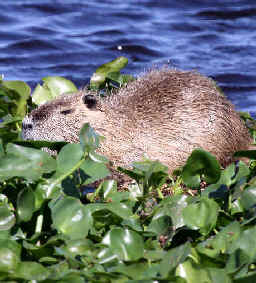
  37. Coypu  (*)  ______ (also known as Nutria)
    Myocastor coypus 
    (the single member of its genus)
    CH: Coipo


    MUSKRAT - Family Arvicolinae

  38. Muskrat (i)  (*)  _____ fs (tf)
    Ondatra zibethicus


    CHINCHILLAS & VISCACHAS - Family Chinchillidae

  39. Short-tailed Chinchilla  (e) (*)  ______ nw
    Chincilla brevicaudata 
    AR: Chincilla Grande, or Chinchilla del Altiplano  


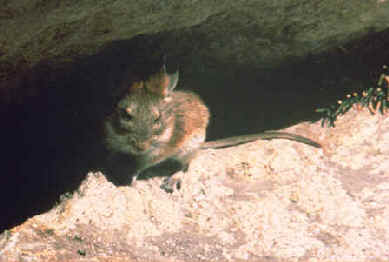
    A Short-tailed Chinchilla photographed during a FONT tour in Chle.

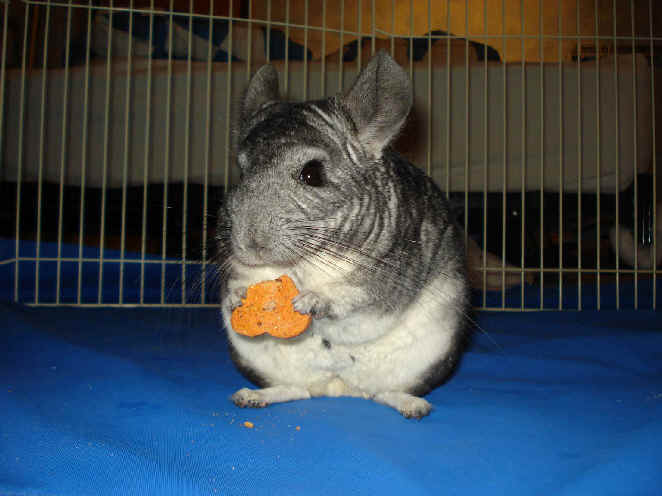
  40. Chinchilla (*)  _____
    Chinchilla lanigera 


    Chinchilla, photographed during a FONT tour in Chile.

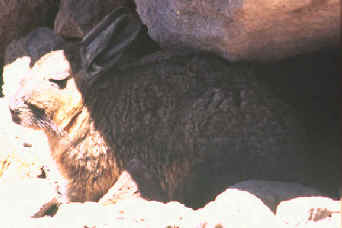
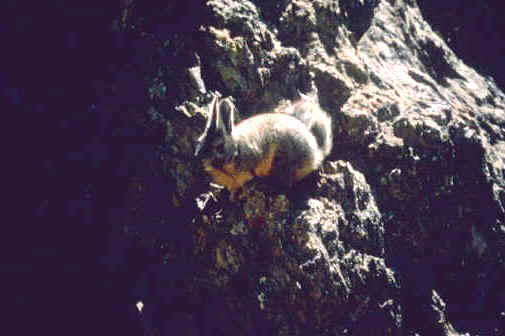
  41. Southern Viscacha (*)  ______ ca  (was called Mountain Viscacha until recently split.)     
    Lagidium viscacia
    CH: Chinchillon Comun, or Vizcachon, or Vizcacha de la Sierra 

  42. Northern Viscacha (*) _____ fn  (was called Mountain Viscacha until recently split.) 
    Lagidium peruanum


    Two photos above of the Mountain Viscacha, both taken during FONT tours. 
    This animal has been seen during our tours in Argentina & Chile.
    It's an odd creature, with a tail like that of a squirrel, and a head like that of a rabbit.
     
  43. Wolffsohn's Viscacha  _____  (in extreme southern Chile)
    Lagidium wolffsohni 
    CH: Chinchillon anaranjado


    CHINCHILLA-RATS - Family Abrocomidae 

  44. Bennett's Chinchilla-Rat  ______ cc
    Abrocoma bennettii

  45. Ashy Chinchilla-Rat _____
    Abrocoma cinerea


    CATS - Family Felidae


  46. Geoffroy's Cat  (*)  _____  fs
    Felis  (formerly Leopardus) geoffroyi
    CH: Gato montes

  47. Colocolo ______
    Felis  (formerly Leopardus) colocolo

  48. Kodkod _____ so
    Felis  (formerly Leopardus) guigna
    CH: Gato huina

  49. Pampas Cat _____
    Felis pajeros
    CH: Gato de pajonal

  50. Andean Cat _____ 
    Felis (formerly Oreailurus) jacobita


  51. Puma _____ 
    Felis  (formerly Puma) concolor
    CH: Puma


    FOXES - Family Canidae 

  52. Colpeo Fox (*) ______ fs (tf)
    Pseudalopex
    (formerly Dusicyon) culpaeus
    CH: Zorro Colorado
    (On Tierra del Fuego called "Fuegian Fox", Pseudalopex c. magellanicus) 
     
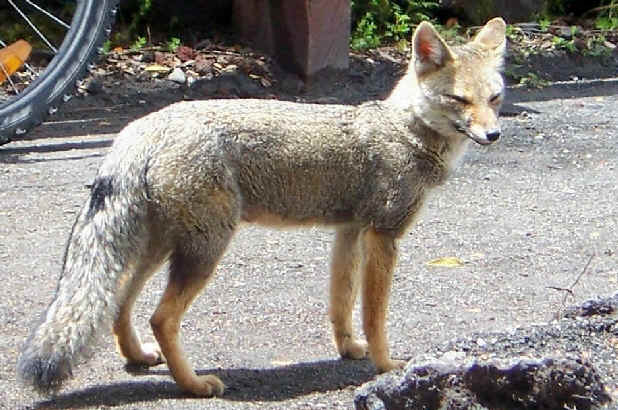
  53. Argentine Gray Fox (*)  ______ ca, fs  (this species includes the Pampas Fox
    Pseudalopex
    (formerly Dusicyon) gymnocercus  (includes P. griseus) 
    CH: Zorro Gris, Zorro Patagonico, Chilla


    OTTERS - Family Mustelidae

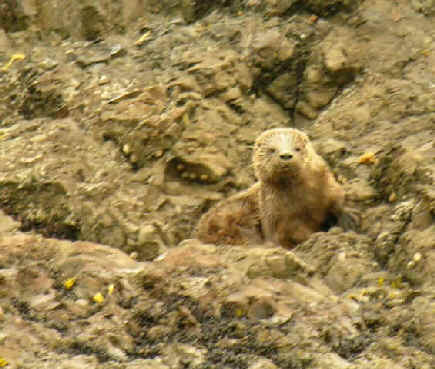
  54. Marine Otter _____ 
    Lutra  (formerly Lontra) felina
    CH: Nutria marina


    SKUNKS & ALLIES - Family Mustelidae

  55. Humboldt's Hog-nosed Skunk (t) (*) ______ fs  (also called Patagonian Hog-nosed Skunk)
    Conepatus humboldti 
    CH: Zorrino Patagonico, Zorrino Austral  


    BATS - Order Chiroptera

  56. Common Vampire Bats ______ cc
    Desmodus rotundus 
    (the single member of its genus)

  57. Smoky Thumbless Bat _____  (extreme northwest Chile)
    Amorphochilus schnablii 
    (the single member of its genus)

  58. Kalinowski's Mastiff Bat ______  (northern Chile)
    Mormopterus kalinowskii

  59. Chilean Myotis  (*)  _____ cc,so
    Myotis chiloensis
    CH: Murcielago oreja de raton 


    CAMELS - Family Camelidae

  60. Guanaco (*)  ______ fn,fs  
    Lama guanicoe
    CH: Guanaco


    A Guanaco photographed during a FONT tour. This animal has been
    seen during our tours in both Argentina & Chile.

      
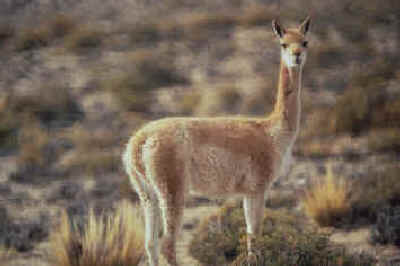
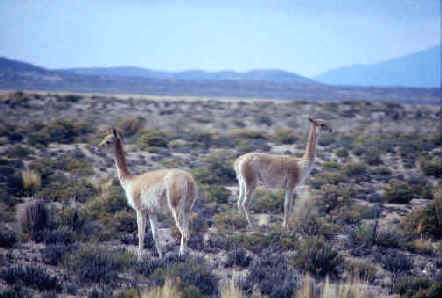
  61. Vicuna (v) (*) ______ fn  
    Vicugna vicugna
    CH: Vicuna


    Vicunas photographed during a FONT tour. This animal has been seen 
    during our tours in northwest Argentina & in northern Chile.

       
  62. Llama  (*)  ______ (a domesticated animal)
    Lama glama
    CH: Llama

  63. Alpaca  (*) _____  (a domesticated animal)
    Vicugna pacos
    CH: Alpaca


    Some Notes about the South American Lamoids
    (the Llama, Alpaca, Guanaco, Vicuna)

    There are 4 species of South American Lamoids. 2 are wild (the Vicuna and the Guanaco). 2 are domesticated (the Llama and the Alpaca). In Argentina: 8% of the South American Lamoids, and 96% of the Guanacos. 

    Combined there are an estimated 7.7 million of these animals, with 53% in Peru, 37% in Bolivia, 8% in Argentina, and 2% in Chile.
    The domestic Llamas and Alpacas (91% of the total) are far more numerous than the wild Guanacos and Vicunas (9%). Llamas (3.7 million) are slightly more abundant than Alpacas (3.3 million) and Guanacos (575,000) are much more common than Vicunas (85,000).
    Most Alpacas (91%) and Vicunas (72%) are in Peru, and the majority of Llamas (70%) are in Bolivia, and nearly all of the Guanacos (96%) are in Argentina. 
    The Guanaco has been decreasing during recent years due to hunting and competition with livestock. The Vicuna was reduced to a dangerously low population in the 1960's, but the species is now recovering under protection.


    DEER - Family Cervidae

  64. Perrvian Guemal  (v)  (*) ______ fn
    Hippocamelus antisensis  

    CH: Huemal


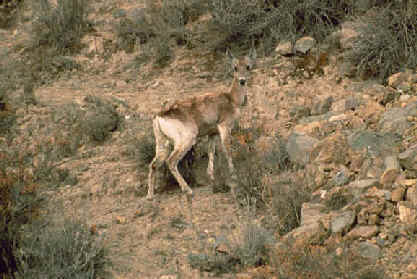
    A Peruvian Guemal photographed during a FONT tour in the Andes in northern Chile.
     
  65. Chilean Guemal  ______
    Hippocamelus bisulcus

  66. Southern Pudu  (*)  ______ so  (PHOTO AT THE TOP OF THIS LIST) 
    Pudu pudu
    CH: Pudu


    Marine Mammals:


    MARINE DOLPHINS - Family Delphinidae
     
  67. Chilean Dolphin ______   
    Cephalorhynchus eutropia 

     
  68. Short-beaked Common Dolphin (*)  _____ fn
    Delphinus delphis

  69. Dusky Dolphin ______  fs
    Lagenorhynchus obscurus
    CH: Delfin Oscuro


  70. Peale's Dolphin (*)  ______ fs (tf)
    Lagenorhynchus australis
    CH: Delfin Griseoblanco


    EARED SEALS - Family Otariidae

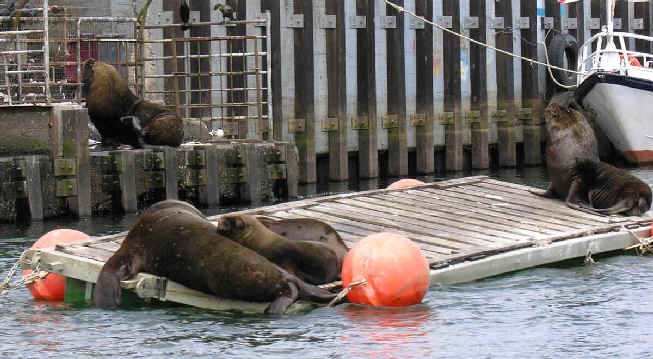
  71. South American Sea-Lion (*) ______ so,fs (tf)
    Otaria flavescens 
    (the single member of its genus)
    CH: Lobo Marino Austral

  72. South American Fur Seal ______ fs (tf)  
    Arctocephalus australis
    CH: Lobo Fino Patagonico 


    EARLESS SEALS - Family Phocidae

  73. Southern Elephant Seal ______ so
    Mirounga leonina
    CH: Elefante Marino Austral

Common Dolphin

Other Nature:

In 1992, a probable extra-terrestrial object (a meteorite fragment): Found in the Andes, not far from where the Diademed Sandpiper-Plover was seen. A light-weight, nearly spherical, dark-colored "rock". Upon our return to the U.S., there was an article in "Sky & Telescope Magazine" referring to such objects in that area.

Fossils, of marine life, also found in that region of the High Andes.