 |
PO Box 9021,
Wilmington, DE 19809, USA
E-mail: font@focusonnature.com
Phone: Toll-free in USA 1-888-721-3555
or 302/529-1876
Website: www.focusonnature.com |
 MAMMALS
in
COLORADO
including those during
Focus On Nature Tours
and in nearby Kansas,
Wyoming, Nebraska,
& Oklahoma
1993 thru 2015
during tours in the months of April
and June/July
A cumulative list of Colorado Mammals compiled by Armas Hill
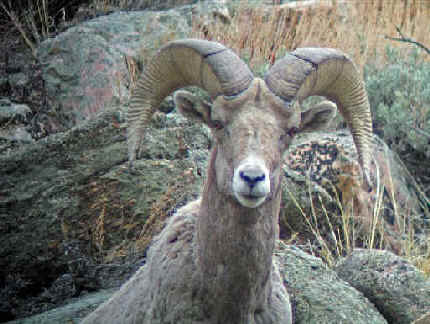
UPPER RIGHT PHOTO: BIGHORN SHEEP, in the Rocky Mountains of Colorado
Codes:
CO: in Colorado
KS: in Kansas
NE: in Nebraska
OK: in Oklahoma
WY: in Wyoming
Links within this List: Shrews
Rabbits
& Allies Porcupine
Beaver
Squirrels Gophers, Woodrats, & Mice
Bats
Felines Canines
Bear
Raccoon & Ringtail Mustelids
Pronghorn Deer
Sheep Bison
Other Links:
Upcoming North American Tour Itineraries, including those in Colorado & adjacent
states
A List & Photo Gallery of Birds in Colorado &
Nearby States, in 2 parts:
Part
#1: Quails to Woodpeckers
Part #2: Flycatchers to Buntings
Directory of Photos in this Website

Mammals:
- Virginia Opossum (ph)
______ (in far-eastern Colorado)
Didelphis virginiana
SHREWS
- Cinereus Shrew ______
Sorex cinereus
- Water Shrew ______ (in western
Colorado)
Sorex palistris
- Dwarf Shrew ______
Sorex nanus
- Merriam's Shrew ______
Sorex meriami
- Preble's Shrew ______
Sorex preblei
- Montane Shrew ______
Sorex monticolus
- Least Shrew ______
Cryptotis parva
RABBITS & ALLIES
- American Pika ______ JUN/JUL CO
(also called "Cony")
Ochotona princeps
- Snowshoe Hare ______ APR CO,WY
(has also been called Varying Hare)
Lepus americanus
- Black-tailed Jackrabbit (ph) ______ APR
CO,KS,OK
Lepus californicus
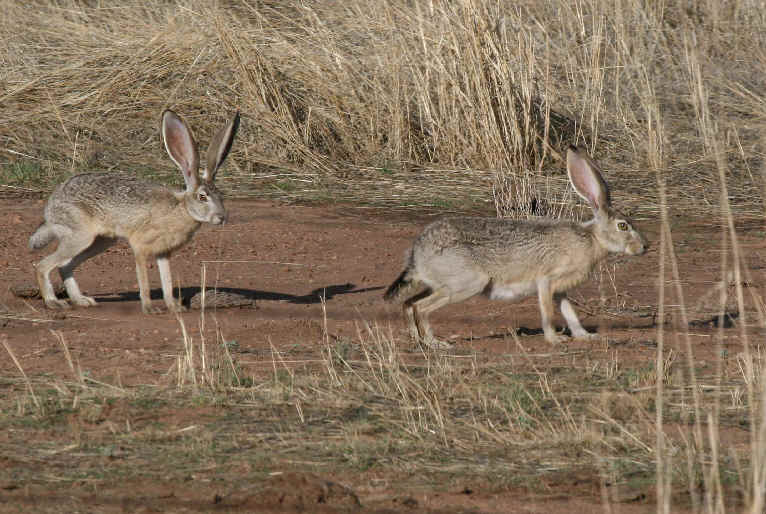
Black-tailed Jackrabbits
- White-tailed Jackrabbit ______ APR JUN/JUL
CO,WY
Lepus townsendii
- Desert Cottontail (ph) ______ APR JUN/JUL
CO
Sylvilagus auduboni
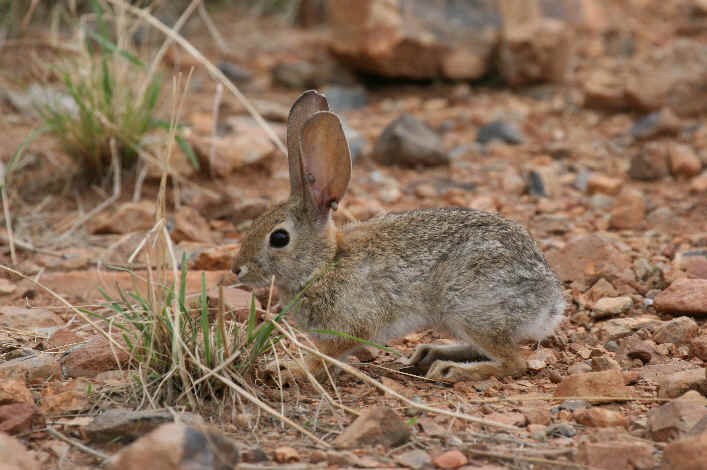
A Desert Cottontail
- Mountain Cottontail ______ APR
JUN/JUL CO,WY (has also been called Nuttall's
Cottontail)
Sylvilagus nuttallii
- Eastern Cottontail ______ APR JUN/JUL
CO,KS,OK
Sylvilagus floridanus
PORCUPINE
North American Porcupine (ph) ______ APR
CO
Erethizon dorsatum
(the single member of its
genus)
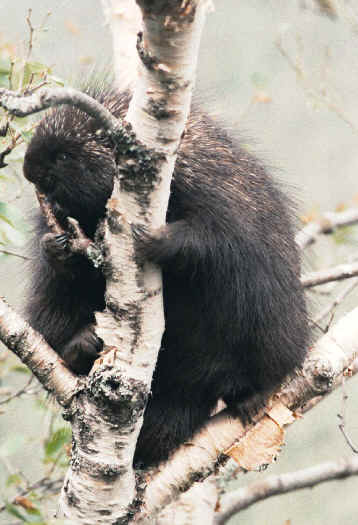
North American Porcupine
(photo by Doris Potter)
BEAVER & MUSKRAT
American Beaver (ph) ______ APR JUN/JUL
CO,WY
Castor canadensis
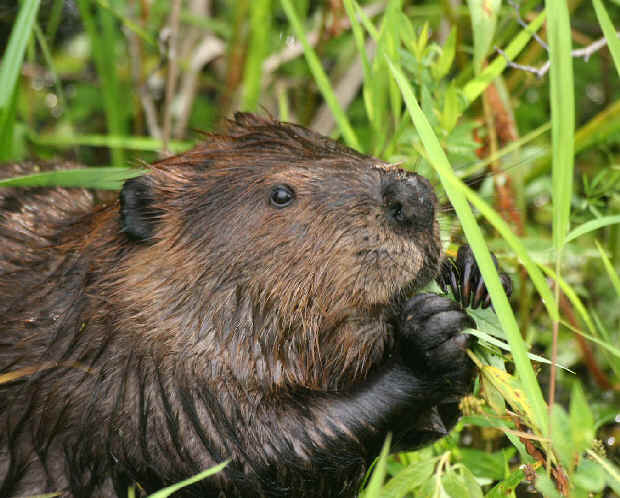
American Beaver
(photo by Doris Potter)
Muskrat (ph) ______ APR JUN/JUL
CO,WY
Ondatra zibethicus
(the single member of its
genus)
SQUIRRELS
Yellow-bellied Marmot (ph) ______ APR JUN/JUL
CO
Marmota flaviventris
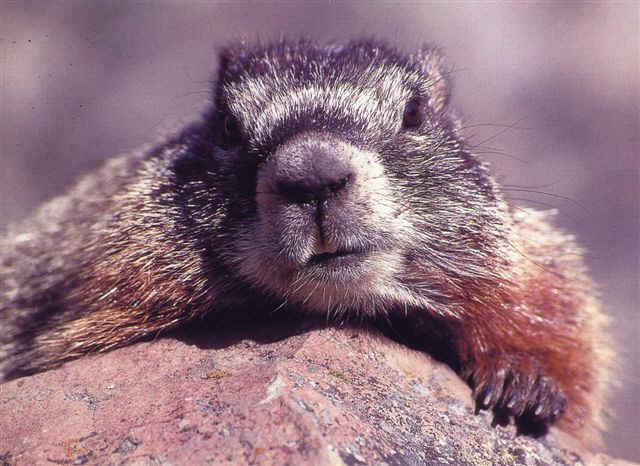
Yellow-bellied Marmot
Black-tailed Prairie Dog ______ APR JUN/JUL
CO,KS,NE
Cynomys ludovicianus
White-tailed Prairie Dog ______ APR JUN/JUL
CO
Cynomys leucurus
Gunnison's Prairie Dog (ph) ______ APR CO
Cynomys gunnisoni
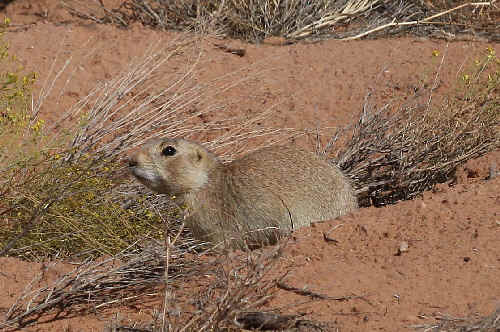
Gunnison's Prairie Dog
(photo by Doris Potter)
Thirteen-lined Ground-Squirrel ______ APR
JUN/JUL CO,WY
Spermophilus
(formerly Ictidomys) tridecemlineatus
Wyoming Ground Squirrel (was
conspecific with Richardson's Ground Squirrel, Spermophilus
richardsonii) ______ APR JUN/JUL
CO,WY
Spermophilus elegans
Variegated Ground Squirrel (ph)
______ APR JUN/JUL
CO (has also been called Rock Squirrel)
Spermophilus
(formerly Otospermophilus) variegatus
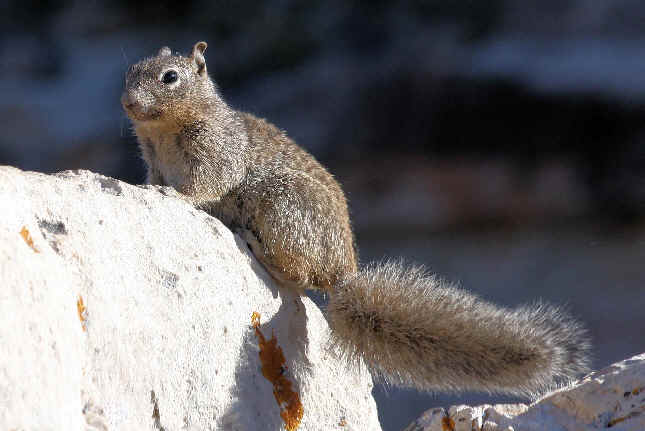
A Rock Squirrel on a rock.
The species is also called the Variegated Ground Squirrel.
(photo by Doris Potter)
Golden-mantled Ground Squirrel ______ APR
JUN/JUL CO
Spermophilus
(formerly Callospermophilus) lateralis
American Red Squirrel ______ APR JUN/JUL
CO (also called Chickaree)
Tamiasciurus hudsonicus
Least Chipmunk ______ APR JUN/JUL
CO
Tamias
(formerly Neotamias) minimus
Colorado Chipmunk ______ APR JUN/JUL
CO
Tamias
(formerly Neotamias) quadrivittatus
Unita Chipmunk ______
Tamias umbrinus
Hopi Chipmunk (ph) ______
Tamias rufus
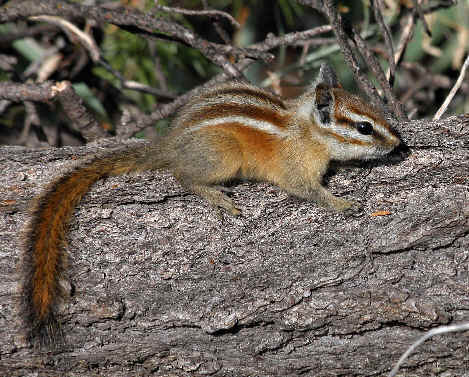
Hopi Chipmunk
(photo by Doris Potter)
Abert's Squirrel (both
black and gray morphs) ______ JUN/JUL CO
(has also been called Tassel-eared Squirrel)
Sciurus
(formerly Otosciurus) aberti
Eastern Fox Squirrel (northern form)
(ph) ______ APR JUN/JUL CO,NE
Sciurus niger
GOPHERS,
WOODRATS, & MICE
Northern Pocket Gopher ______
Thomomys talpoides
Botta's Pocket Gopher ______ (in far-southern Colorado)
Thomomys bottae
Yellow-faced Pocket Gopher
______ (in southeastern Colorado)
Cratogeomys castanops
Plains Pocket Gopher ______
(in
eastern Colorado)
Geomys bursarius
Olive-backed Pocket Mouse ______ APR
CO
Perognathus fasciatus
Plains Pocket Mouse ______ APR
KS
Perognathus flavescens
Silky Pocket Mouse ______
Perognathus flavus
Great Basin Pocket Mouse ______
(in far-southwestern Colorado)
Perognathus parvus
Hispid Pocket Mouse ______
Chaetodipus hispidus
Ord's Kangaroo Rat ______
Dipodomys ordii
Meadow Jumping Mouse ______
(in
northern Colorado in mountains)
Zapus hudsonius
Western Jumping Mouse ______
Zapus princeps
Eastern Woodrat ______ (in
eastern Colorado)
Neotoma floridana
Mexican Woodrat ______
Neotoma mexicana
Southern Plains Woodrat ______ (in southeastern Colorado)
Neotoma micropus
White-throated Woodrat ______
Neotoma albigula
Bushy-tailed Woodrat ______
Neotoma cinerea
Desert Woodrat ______
(locally
in far-western Colorado)
Neotoma lepida
Brown Rat (i) ______
Rattus norvegicus
Northern Grasshopper Mouse ______
Onychomys leucogaster
Southern Grasshopper Mouse ______
Onychomys torridus
Plains Harvest Mouse ______ APR
CO
Reithrodontomys montanus
Western Harvest Mouse ______
Reithrodontomys megalotis
White-fronted Deermouse ______
Peromyscus leucopus
North American Deermouse ______
Peromyscus maniculatus
|
Canyon Deermouse ______ (locally in far-western Colorado)
Peromyscus crinitus
Pinon Deermouse ______
Peromyscus truei
Northern Rock Deermouse ______
Peromyscus nasutus
Brush Deermouse ______
Peromyscus boylii
Southern Red-backed Vole ______
Clethrionomys gapperi
Montane Vole ______
Microtus montanus
Long-tailed Vole ______
Microtus longicaudus
Sagebrush Vole ______ (in
northwestern Colorado)
Lemmiscus curtatus
Western Heather Vole ______ (in
far-western Colorado)
Phenacomys intermedius
Prairie Vole ______ (in eastern
Colorado)
Microtus ochrogaster
Meadow Vole (ph) ______
Microtus pennsylvanicus
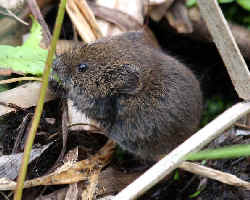
Meadow Vole
(photo by Doris Potter)
BATS
Mexican Free-tailed Bat (ph)
______
Tadarida brasiliensis
Eastern Red Bat (ph)
______ (in eastern Colorado)
Lasiurus borealis
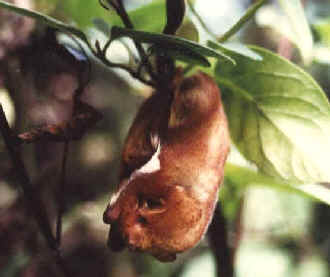
Eastern Red Bat
(photo by Alan Brady)
Hoary Bat ______
Lasiurus cinereus
Silver-haired Bat (ph) ______
Lasionycteris noctivagans
Spotted Bat ______ (in western
Colorado)
Euderma maculatum
Townsend's Big-eared Bat ______
Corynorhinus townsendii
Pallid Bat ______
Antrozous pallidus
Fringed Myotis ______
Myotis thysanodes
Long-eared Myotis ______
Myotis evotis
California Myotis ______ (in
far-western Colorado)
Myotis californicus
Western Small-footed Myotis ______
Myotis ciliolabrum
Long-legged Myotis ______
Myotis volans
Brown Myotis ______ JUN/JUL CO
(has also been called Little Brown Bat)
Myotis lucifugus
Yuma Myotis ______ (in
far-southern Colorado)
Myotis yumanensis
Western Pipistrelle ______
Pipistrellus hesperus
Big Brown Bat ______
Eptesicus fuscus
FELINES
Bobcat (ph) ______
Felis
(formerly Lynx) rufus
Canadian Lynx ______ (in
far-western Colorado)
Felis
(formerly Lynx) canadensis
Puma (ph) ______
Felis
(formerly Puma) concolor
CANINES
Red Fox (ph) ______ APR CO
Vulpes fulva (the North
American animal is considered by some as conspecific with the Old World Red
Fox, Vulpes vulpes)
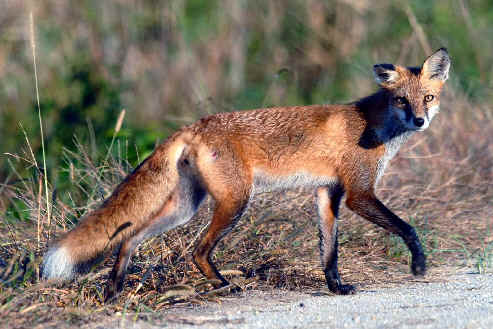
Red Fox
(photo by Howard Eskin)
Swift Fox ______ APR JUN/JUL CO
Vulpes velox
Kit Fox ______ (in western
Colorado)
Vulpes macrotis
Gray Fox ______ APR CO
Urocyon cinereoargenteus
Coyote (ph) ______ APR JUN/JUL CO,KS
Canis latrans
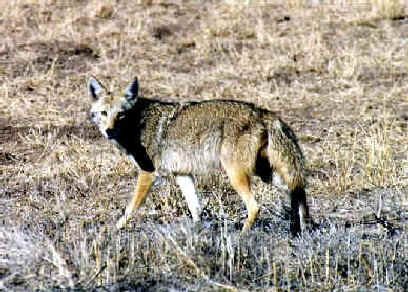
A Coyote photographed during a FONT tour
BEARS
Black Bear ______
Ursus americanus
RACCOON & RINGTAIL
Northern Raccoon (ph) ______ APR
CO
Procyon lotor
Ringtail ______
Bassariscus astutus
MUSTELIDS
American Mink (ph) ______
Mustela vison
American Marten ______
Martes americana
Wolverine ______
Gula gula
A lone Wolverine that arrived in Colorado in early June 2011 was
the first confirmed Wolverine in Colorado since 1919.
Late the previous year, in December of 2010, and further north, biologists
outfitted with a tracking collar a young Wolverine, as part of a reintroduction
program.
That animal made a 500-mile journey from where it had been caught in the Grand
Teton National Park in Wyoming. It was tracked as it crossed
rugged terrain and some busy highways in Wyoming, from the Togwotee Pass to
the Wind River Range and across sagebrush areas. The lone animal traveled
until it crossed into Colorado on June 1.
The Wolverine reintroduction program, referred to here, began in
2001.
Most Wolverines live in Alaska and Canada. But formerly the animal
did range in Idaho, Montana, Wyoming, Utah, Colorado, California, and
Washington State.
The Wolverine is one of the most elusive of mammals, a mysterious
creature. It is known as being fearless and aggressive. It is strong,
tenacious, sharp-toothed, and cunning.
Although adult Wolverines typically weigh about 30 pounds, they are
stocky and "bear-like", and they prey on animals larger than they
are. Even though the Wolverine is not a big animal, it is the largest
land-dwelling member of the weasel family.
Wolverines have evolved to require huge territories for roaming. A
male's territory might be as much as 500 square miles, and he might share
that landscape with 2 or 3 females that breed every other year, and usually
produce a litter of two. Thus the species has a slow reproduction rate.
Although a good survivor in nature, the Wolverine could not survive
the trappers who prized its almost waterproof fur, and the ranchers who
killed it with poison bait. So the animal pretty much vanished from the
lower 48 states about a century ago.
The Wolverine in Colorado in 2011 was the first known to be in the
state in 90 years. And, thus far, the only one.
American Badger (ph) ______
APR CO
Taxidea taxus (the single member of its
genus)
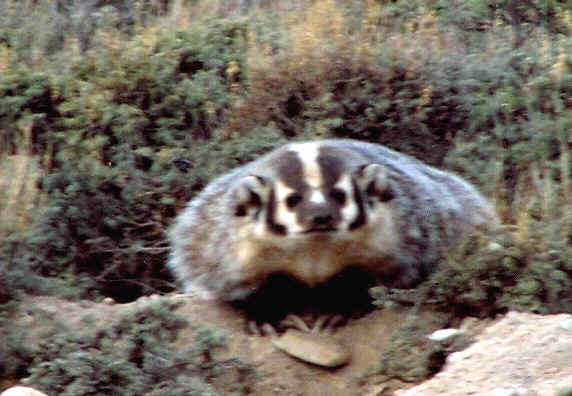
An American Badger photographed during a
FONT April tour in Colorado
Ermine ______
Mustela erminea
Long-tailed Weasel ______
Mustela frenata
Black-footed Ferret ______
Mustela nigripes
Western Spotted Skunk ______ JUN/JUL CO
Spilogale gracilis (was conspecific with
what's now the Eastern Spotted Skunk, Spilogale
putorius)
Eastern Spotted Skunk ______ (in far-eastern Colorado)
Spilogale putorius
Western Hog-nosed Skunk ______
Conepatus mesoleucus
Striped Skunk (ph) ______
Mephitis mephitis
PRONGHORN
Pronghorn ______ APR JUN/JUL
CO,KS,OK,WY
Antilocapra americana
(the single member of
its genus & family)
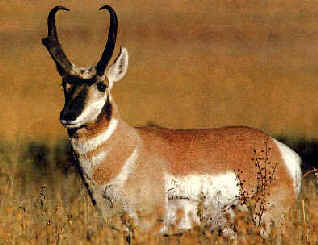
Pronghorn, the only antelope in the Americas
DEER
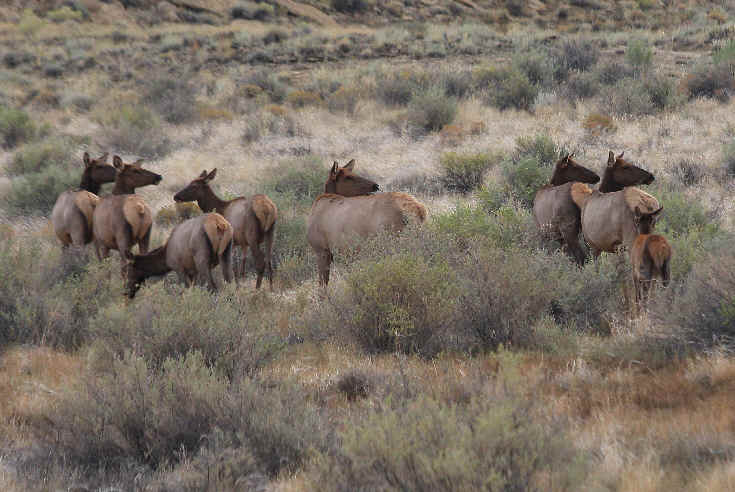
Elk (or Wapiti) ______ APR JUN/JUL
CO,WY
Cervus elaphus canadensis (another,
slightly smaller, subspecies in Europe is called there the Red Deer)
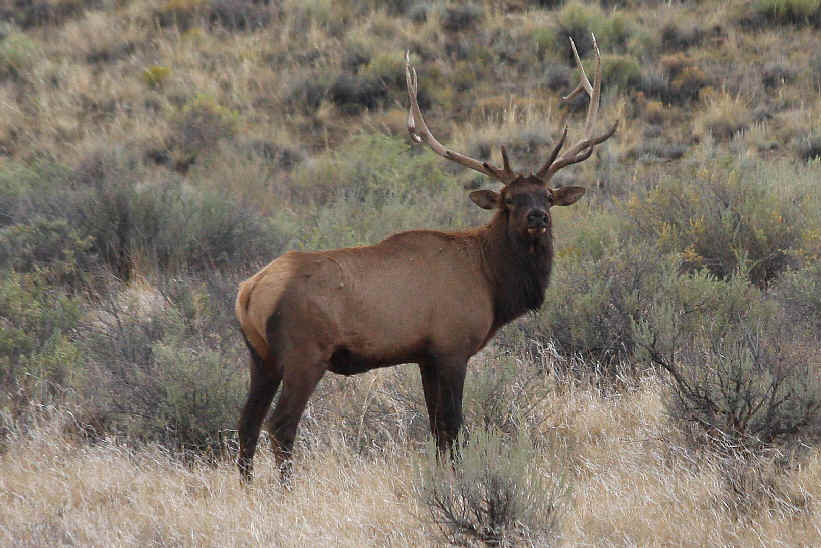
Two photos of Elks. ABOVE: a male, BELOW: a
herd of females
(photos by Doris Potter)
Moose ______ APR JUN/JUL
CO
(in Europe called the Elk)
Alces alces (the single member of its genus)
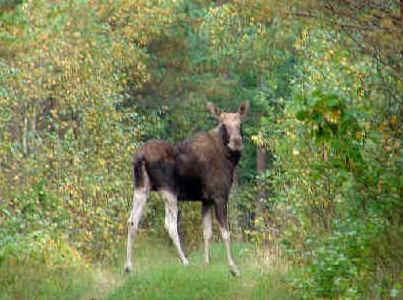
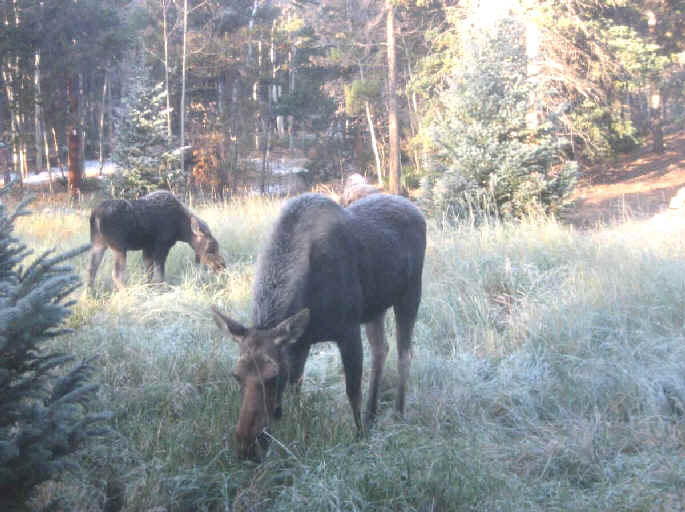
Above & below: Moose
In the lower photo, in Colorado, a female and a yearling male, mother and
son
(upper photo by James Scheib; lower photo
by Sally Brady)
Mule Deer ______ APR JUN/JUL
CO,KS,OK,WY
Odocoileus hemionus
White-tailed Deer ______ APR JUN/JUL
CO,KS
Odocoileus virginianus
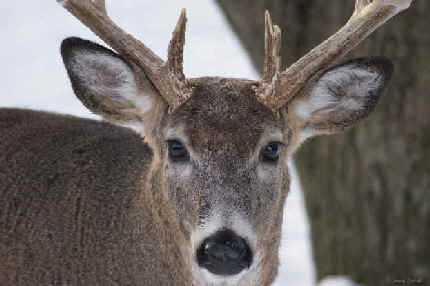
White-tailed Deer
(photo by James Scheib)
SHEEP
Bighorn Sheep ______ APR JUN/JUL
CO
Ovis c. canadensis (the
subspecies of the central and northern Rockies)
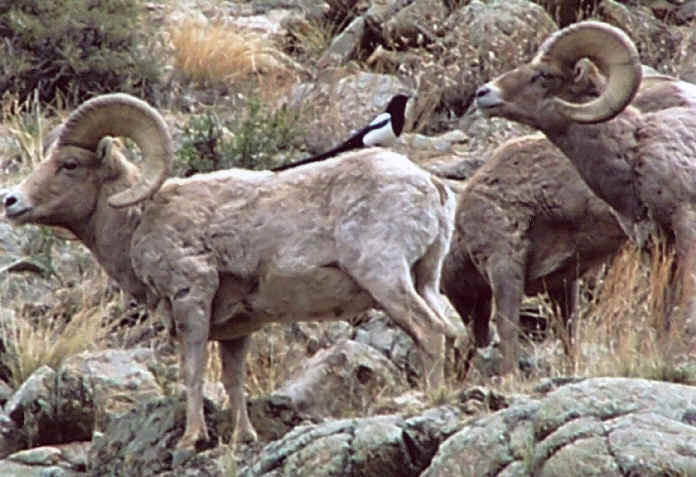
Bighorn Sheep photographed during a FONT
tour in Colorado.
Notice the Black-billed Magpie on the back of one of the animals.
Another Bighorn Sheep photograph is at the top of this list.
BISON
"Plains" Bison (or Buffalo)
______ APR JUN/JUL CO (today
domesticated, the last wild Bison in Colorado was killed in 1889, in eastern
CO)
Bison b. bison
Some Notes:
Coyotes
have expanded east across North America in the mid-1900's of wolves. Generally
those in eastern North America tend to be larger than those in the American
West. Those in the northern part of their range have longer and coarser fur.
Coyotes travel in packs.
The Bison (or Buffalo)
is North America's largest present-day land mammal. It was, with the European
settlement of America, nearly hunted to extinction. There were probably fewer
than 1,000 animals remaining at the end of the 19th Century. The species
"recovered" to about 150,000 animals by 1995, with 90% privately
owned. They typically graze now in herds of 4 to 20.
Reference for this mammal list is the new book:
"Mammals of North America" by Roland W. Kays & Don E. Wilson,
published by Princeton Univ Press, 2002.