PO Box 9021, Wilmington, DE 19809, USA
E-mail: font@focusonnature.com
Phone: Toll-free in USA 1-800-721-9986
 or 302/529-1876; Fax: 302/529-1085


Mammals
in Mexico


Noting those found during FONT tours in Mexico
with an (*)

Tours during the months of March, June, September, 
& November.


The following list compiled by Armas Hill


PHOTO AT RIGHT: 
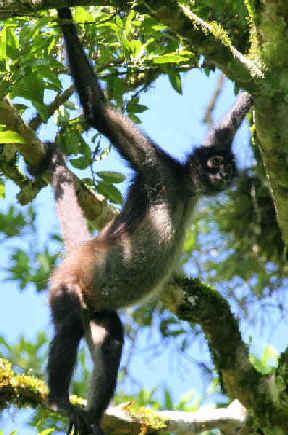
CENTRAL AMERICAN SPIDER MONKEY
(seen in southern Mexico)

Codes:

Threatened Species, designated in CITES: 
(t1): critical
(t2): endangered
(t3): vulnerable
(ti):  threatened (but with status indeterminate)
(i):   introduced species

(MXe):   endemic to Mexico

(NO):     in north Mexico
(SO):     in south Mexico


An excellent book about Central American Mammals: 
"A Field Guide to the Mammals of Central America & Southeast Mexico" by Fiona Reid, 1997.


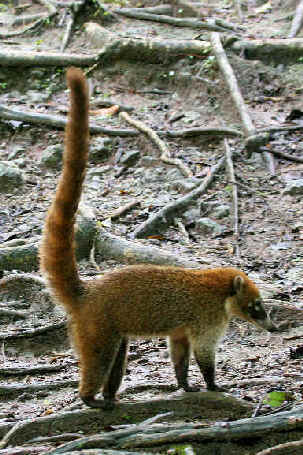
This White-nosed Coati was photographed in Mexico,
but its picture came to us from Gill Hopkins in London, England.
Thanks Gill!

Links:

Itineraries for Upcoming FONT Birding & Nature Tours in:
Mexico & further south in Central America
      

Birds during previous tours in:

Mexico (part 1: Tinamous to Woodpeckers)

Mexico (part 2: Manakins to Buntings)

the Yucatan Peninsula

Cozumel Island
  
List of Butterflies in the Yucatan Region of Mexico

List of Amphibians & Reptiles in Mexico

Marine Life, including that of the Coral Reef, of Mexico & Belize

Directory of Photos in this Website


List of Mammals:

        AMERICAN OPOSSUMS (in the Order Didelphimorphia, Family Didelphidae):
        (78 species throughout the Americas; 7 in Mexico)       
 
        All Marsupials were formerly classified in the Order Marsupialia. 
        However, this large group has recently been split into 7 orders. 
        NEW WORLD OPOSSUMS consist of 3 orders. Australian marsupials are in 
        4 orders.
        The Order Didelphimorphia includes all of the Central American & Mexican opossums - 
        13 species)
   

  1. Common Opossum  (*) ______     
    Didelphis marsupialis

  2. Virginia Opossum  (*)  ______ 
    Didelphis virginiana

  3. Gray Four-eyed Opossum  (*) ______ 
    Philander opossum

  4. Water Opossum ______  (also called Yapok
    Chironectes minimus

  5. Brown Four-eyed Opossum ______
    Metachirus nudicaudatus

  6. Mexican Mouse Opossum ______
    Marmosa mexicana

  7. Central American Woolly Opossum  (*) ______ 
    Caluromys derbianus 


    AMERICAN ANTEATERS and ARMADILLOS (in the Order Xenarthra, formerly Edentata) 

    AMERICAN ANTEATERS (in the Family Myrmecophagidae)  (3 species in the Neotropics; 1 in Mexico) 

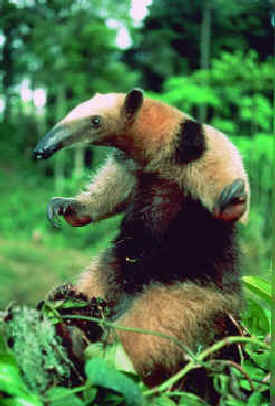
  8. Northern Tamandua  (SO) (*)  ______  (also called Banded or Vested Anteater
    Tamandua mexicana


    Northern Tamandua


    SILKY ANTEATER (in the Family Cycloipedidae)  (1 species in the family)

      
  9. Silky  Anteater ______  
    Cyclopes didactylus 
    (the single member of its genus & its family)


    ARMADILLO (in the Family Dasypodidae)  (21 species in the Americas; 1 in Mexico)

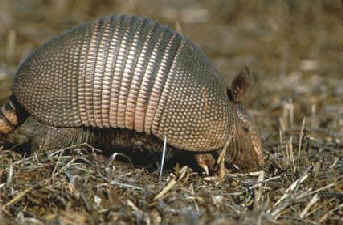
  10. Nine-banded (Long-nosed) Armadillo ______  
    Dasypus novemcinctus


    Nine-banded Armadillo


    RABBITS (in the Order Lagomorpha, Family Leporidae)  (57 species worldwide; 14 in Mexico)
     
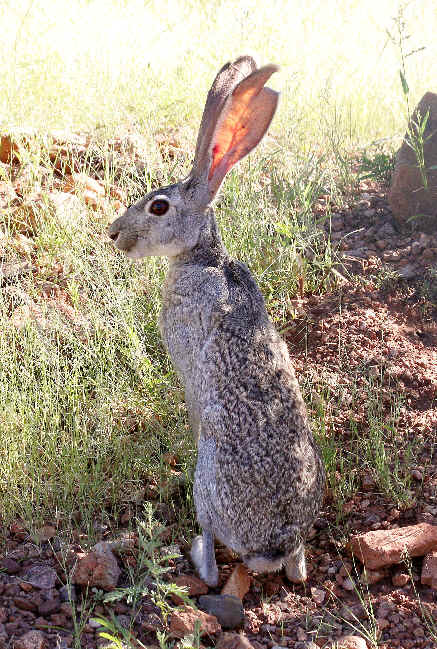
  11. Antelope Jackrabbit  (NO) (*)  _____
    Lepus alleni


    An Antelope Jackrabbit photographed during a FONT tour in Mexico
    (photo by Doris Potter)

  12. Black-tailed Jackrabbit  (NO)  _____
    Lepus californicus


    Black-tailed Jackrabbit

  13. White-sided Jackrabbit  (NO)  _____  (endemic to Mexico other than in Hidalgo County, New Mexico, US)
    Lepus callotis

  14. Tehuantepec Jackrabbit  (t2) (MXe)  _____
    Lepus flavigularis

  15. Black Jackrabbit  (MXe)  _____  (only on Espiritu Santo Is. in the Gulf of California)
    Lepus insularis

  16. Brush Rabbit  (NO)  _____ (In Mexico, in Baja California)
    Sylvilagus
    (formerly Microlagus) bachmani

  17. San Jose Brush Rabbit  (MXe)  _____ (only on San Jose Is. in the Gulf of California)
    Sylvilagus
    (formerly Microlagus) mansuetus

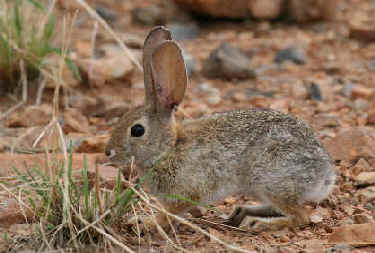
  18. Desert Cottontail  (NO)  _____
    Sylvilagus auduboni


    Desert Cottontail

  19. Mexican Cottontail  (MXe)  _____  (only in south Mexico)
    Sylvilagus cunicularius 
     
  20. Eastern Cottontail  (NO) (SO) (*)  ______ 
    Sylvilagus floridanus

  21. Tres Marias Cottontail  (MXe)  (only on Tres Marias Is. in the Pacific)
    Sylvilagus graysoni

  22. Forest Rabbit  ______  (other names: Tropical Cottontail Rabbit or Brazilian Rabbit or Tapiti
    Sylvilagus
    (formerly Tapeti) brasilensis

  23. Omiteme Cottontail  (t1) (MXe)  (only in the mountains of Sierra Madre del Sur in central Guerrero)
    Sylvilagus
    (formerly Tapeti) insonus

  24. Volcano Rabbit  (t2) (MXe) ______ (only in the area of the volcanoes in central Mexico in the District Federal & west Puebla)
    Romerolagus diazi
    (the single member of its genus) 


    RODENTS: the gnawing mammals (in the Order Rodentia, which is the largest order of mammals with nearly 2,000 species worldwide).
    Families & some subfamilies in Mexico include:
    SQUIRRELS:  Family Sciuridae
    BEAVERS:  Family Castoridae
    NEOTROPICAL MICE:  Subfamily Sigmodontinae
    VOLES & MUSKRAT:  Subfamily Arvicolinae
    POCKET GOPHERS, POCKET MICE, & KANGAROO RATS:  Family Geomyidae
    NEW WORLD PORCUPINES:  Family Erethizontidae 
    AGOUTIS & PACA:  Family Agoutidae

    SQUIRRELS (in the Family Sciuridae)  (276 species worldwide; 32 in Mexico)

  25. Western Gray Squirrel  (NO) ______ 
    Sciurus
    (formerly Hesperosciurus) griseus

  26. Allen's Squirrel  (MXe) ____
    Sciurus alleni

  27. Arizona Gray Squirrel  (NO)  ____  (in Mexico, in northeast Sonora)
    Sciurus arizonensis

  28. Yucatan Squirrel  (SO) (*) ____  (in southeast Mexico, Belize, and north Guatemala)
    Sciurus yucatanensis

  29. Mexican Gray Squirrel  (SO) ____  (also called Red-bellied Squirrel)
    Sciurus aureogaster

  30. Collie's Squirrel  (MXe) ____    
    Sciurus colliaei

  31. Deppe's Squirrel ____
    Sciurus deppei

  32. Mexican Fox Squirrel (NO) ____  (another name has been "Apache Fox Squirrel")
    (nearly endemic to Mexico; in US, only in mountains of southeast Arizona)
    Scirus nayaritensis

  33. Peter's Squirrel  (MXe) _____
    Sciurus oculatus

  34. Variegated Squirrel _____ 
    Sciurus variegatoides
    (14 named subspecies are recognized)

     
  35. Sierra Madre Ground Squirrel  (MXe)  _____ (only in southwest Chihuahua)
    Spermophilus
    (formerly Callospermophilus) madrensis

  36. Mexican Ground Squirrel  (NO) _____
    Spermophilus
    (formerly ictidomys) mexicanus

  37. Perote Ground Squirrel  (MXe) _____
    Spermophilus
    (formerly Ictidomys) perotensis

  38. Spotted Ground Squirrel  (NO) _____
    Spermophilus
    (formerly Ictidomys) spilosoma

  39. Ring-tailed Ground Squirrel  (MXe) _____
    Spermophilus
    (formerly Notocitellus) annulatus

  40. Tropical Ground Squirrel  (MXe) _____
    Spermophilus
    (formerly Otospermophilus) adocetus

  41. Baja California Ground Squirrel  (MXe) _____ (only in Baja California)
    Spermophilus
    (formerly Otospermophilus) atricapillus

  42. California Ground Squirrel  (NO) _____
    Spermophilus
    (formerly Otospermophilus) beecheyi

  43. Variegated Ground Squirrel  (NO) (*) _____ (also called Rock Squirrel)
    Spermophilus
    (formerly Otospermophilus) variegatus


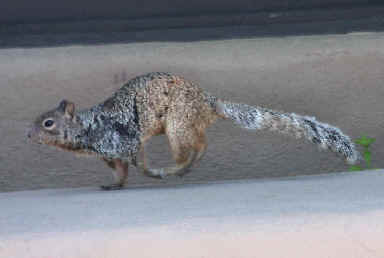
    A Variegated Ground Squirrel (or Rock Squirrel) photographed during a FONT tour
    (photo by Doris Potter)


  44. Round-tailed Ground Squirrel  (NO) _____
    Spermophilus
    (formerly Xerospermophilus) tereticaudus


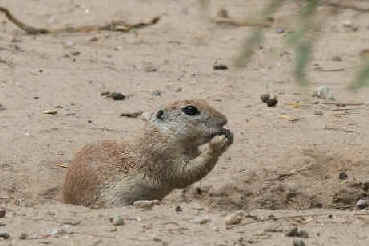
    Round-tailed Ground Squirrel

  45. Harris's Antelope Squirel  (NO) _____
    Ammospermophilus harrisii


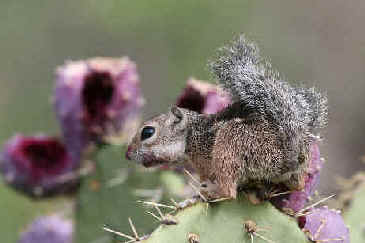
    Harris's Antelope Squirrel

  46. Espiritu Santo Island Antelope Squirrel  (MXe) _____ (only on Espiritu Santo is. in Baja California)
    Ammospermophilus insularis

  47. Texas Antelope Squirrel  (NO) _____
    Ammospermophilus interpres

  48. White-tailed Antelope Squirrel  (NO)  _____
    Ammospermophilus leucurus

  49. Mexican Prairie Dog  (t2) (MXe) _____
    Cynomys mexicanus

  50. Buller's Chipmunk  (MXe) _____
    Tamias
    (formerly Neotamias) bulleri
     
  51. Cliff Chipmunk  (NO) _____
    Tamias
    (formerly Neotamias) dorsalis


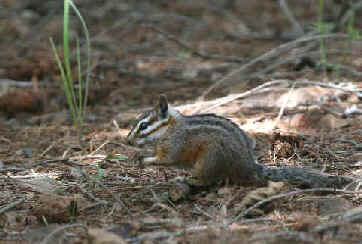
    Cliff Chipmunk

  52. Durango Chipmunk  (MXe) _____
    Tamias
    (formerly Neotamias) durangae

  53. Merriam's Chipmunk _____
    Tamias
    (formerly Neotamias) merriami

  54. California Chipmunk  (NO) _____
    Tamias
    (formerly Neotamias) obscurus

  55. Mearn's Squirrel  (MXe) _____  (only in Baja California)
    Tamiasciurus mearnsi

  56. Southern Flying Squirrel  _____
    Glaucomys volans


    VOLES & MUSKRAT (in the Family Arvicolinae)  (140 species worldwide; xx in Mexico)

  57. Guatemalan Vole  _____  
    Microtus
    (formerly Herpetomys) guatemalensis

  58. California Vole  (NO)  _____
    Microtus
    (formerly Mynomes) californicus

  59. Mexican Vole  (*)  _____
    Microtus
    (formerly Mynomes) mexicanus

  60. Jalapan Pine Vole  _____
    Microtus
    (formerly Pitymys) quasiater

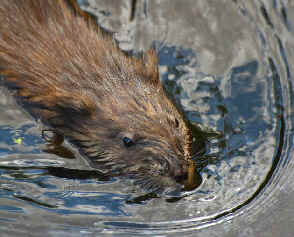
  61. Muskrat  (NO)  _____  
    Ondata zibethicus 
    (the single member of its genus)


    Muskrat
    (photo by Doris Potter)


    BEAVERS  (2 species worldwide; 1 in Mexico)

  62. American Beaver (NO) ______ 
    Castor canadensis


    American Beaver
    (photo by Doris Potter)


    POCKET GOPHERS, POCKET MICE, & KANGAROO RATS (in the Family Geomyidae)  FOLLOW LATER IN THIS LIST 

    RATS & MICE (in the  Family Muridae)  FOLLOW LATER IN THIS LIST


    NEW WORLD PORCUPINES (in the Family Erethizontidae)
    (More closely related to cavy-like rodents (such as the Agouti and Paca) than to the Old World Porcupines) 

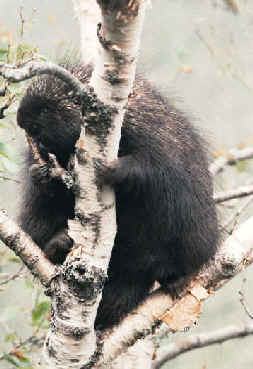
  63. North American Porcupine  (NO) ______ (in extreme northern Mexico, and the US & Canada)
    Erethizon dorsatum 
    (the single member of its genus)


    North American Porcupine
    (photo by Doris Potter)

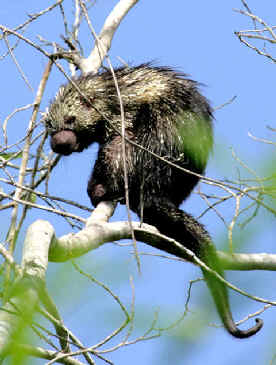
  64. Mexican Hairy Dwarf Porcupine  (SO) ______ (has also been called Prehensile-tailed Porcupine
    Coendou
    (formerly Sphiggurus) mexicanus


    Mexican Hairy Dwarf Porcupine
    (photo courtesy of Dick Tipton)


    AGOUTIS & PACA  (in the Family Dasyproctidae)

  65. Mexican Black Agouti  (MXe) (but also introduced in Cuba) ______
    Dasyprocta mexicana

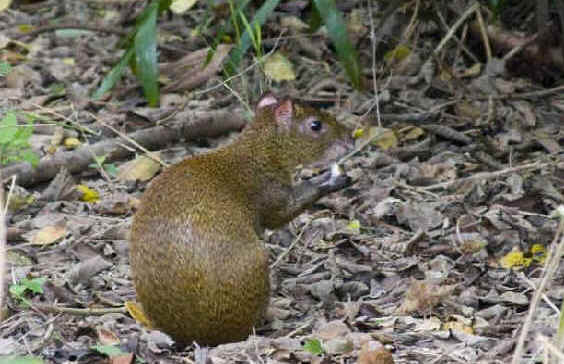
  66. Central American Agouti  (*)  ______ 
    Dasyprocta punctata

  67. Paca  ______
    Cuniculus
    (formerly Agouti) paca


    CARNIVORES, in the Order Carnivora 
    Families in Mexico include:
    DOGS & FOXES:  Family Canidae
    BEARS:  Family Ursidae
    RACCOONS:  Family Procyonidae
    OTTERS, WEASELS, BADGERS:  Family Mustelidae 
    CATS:  Family Felidae

    SEALS & SEA-LIONS are also in the CARNIVORES, but they follow later in this list in the category of "MARINE MAMMALS"


    DOGS & FOXES  (in the Family Canidae)  (36 species worldwide; 3 in Mexico)

  68. Kit Fox  (NO)  _____
    Vulpes macrotis

  69. Gray Fox  (NO) (SO)  (*) ______  
    Urocyon cinereoargenteus

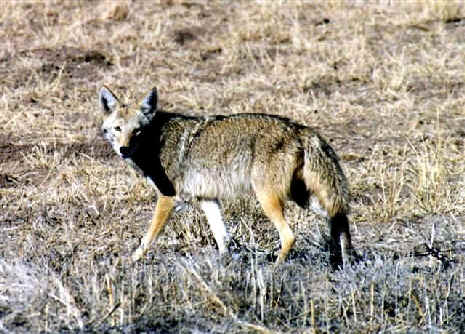
  70. Coyote  (NO) (SO) (*)  ______ 
    Canis latrans


    Coyote


    BEARS  (in the Family Ursidae)  (8 species worldwide; 1 in Mexico)

  71. American Black Bear  (NO)  ______
    Ursus americanus


    MARINE MAMMALS (Seals & Sea-Lions)  LATER IN THIS LIST


    RACCOONS & ALLIES  (in the Family Procyonidae)  (19 species in total; 7 in Mexico)
     
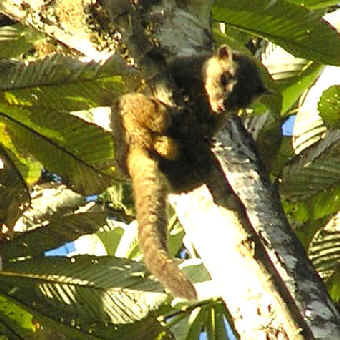
  72. Kinkajou (ti)  (SO) ______ 
    Potos flavus 
    (the single member of its genus)


    Kinkajou, photographed during a FONT tour 
    (photo by Rosemary Lloyd)
     

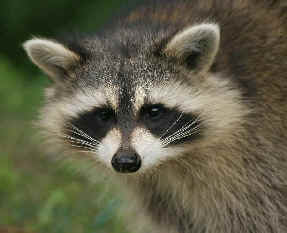
  73. Northern Raccoon  (SO) (*)  ______ 
    Procyon lotor


    Northern Raccoon
    (photo by Doris Potter)

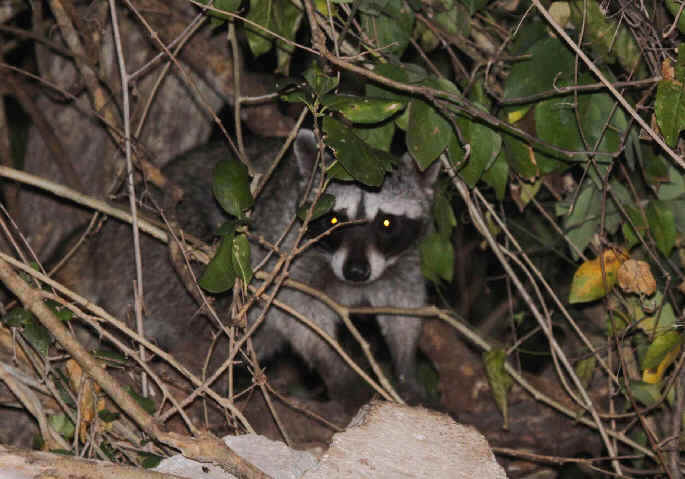
  74. Cozumel Raccoon  (t2) (MXe) (SO) (*) ______  (also called Pygmy Raccoon) (only on Cozumel Is., resembles the Northern Raccoon, but smaller)
    Procyon pygmaeus


    A Cozumel (or Pygmy) Raccoon photographed during the FONT March 2009 Mexico Tour 
    (photo by Marie Gardner)

  75. Tres Marias Raccoon  (t2) (MXe) ______  (only on Tres Marias Is. in the Pacific)
    Procyon insularis    

  76. White-nosed Coati  (*)  ______ 
    Nasua narica

    When is a COATI a COATIMUNDI?
    Female Coatis and their young associate in bands of 5-12 individuals, but adult males are solitary. This difference at first confused biologists, who described the solitary males as a separate species. The use of the term "coatimundi" (meaning "lone coati" in the Brazilian native Guarani language) for the species reflects the same error.     


    A White-nosed Coati photographed during a FONT tour
    (photo by Marie Gardner)
     

  77. Ringtail  (NO)  ______
    Bassariscus astutus

  78. Cacomistle  (SO) (*) ______  
    Bassariscus sumichrasti


    OTTERS, WEASELS, & ALLIES  (in the Family Mustelidae)  (68 species worldwide; 13 in Mexico)

  79. Neotropical River Otter  (t2) (SO) ______
    Lutra
    (formerly Lontra) longicaudis

  80. Sea Otter  (t2)  ______  (formerly along the Pacific seacoast of northwest Mexico - in north Baja California)
    Enhydra lutris 
    (the single member of its genus) 


  81. Long-tailed Weasel  (SO) (*)  ______ 
    Mustela frenata

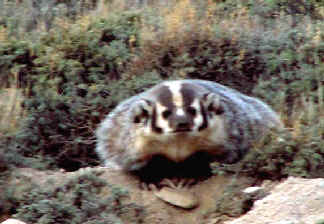
  82. American Badger  ______
    Taxidea taxus 
    (the single member of its genus)


    An American Badger photographed during a FONT tour

  83. Greater Grison  (SO)  ______  (also called Huron)
    Galictis vittata

  84. Tayra  (SO) (*)  ______ 
    Eira barbara 
    (the single member of its genus)

  85. Striped Skunk ______ 
    Mephitis mephitis

  86. Hooded Skunk ______  
    Mephitis macroura

  87. Eastern Spotted Skunk ______
    Spilogale putorius

  88. Western Spotted Skunk ______
    Spilogale gracilis

  89. Pygmy Spotted Skunk (MXe) ______
    Spilogale pygmaea

  90. Eastern Hog-nosed Skunk ______
    Conepatus leuconotus

  91. Western Hog-nosed Skunk ______
    Conepatus mesoleucus

  92. Striped Hog-nosed Skunk ______ 
    Conepatus semistriatus


    CATS  (in the Family Felidae)  (39 species worldwide; 6 in Mexico)

  93. Bobcat  ______
    Felis
    (formerly Lynx) rufa

  94. Ocelot (t2) (SO) ______ 
    Leopardus pardalis


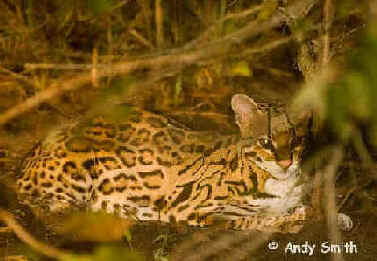
    Ocelots photographed during a FONT tours 


  95. Margay (t2) (SO) ______  
    Leopardus wiedii

  96. Jaguarundi  (t2) (SO) ______  
    Herpailurus yauarondi

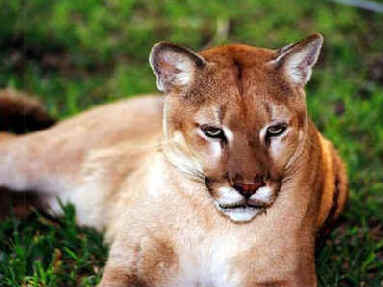
  97. Puma  (t3) (SO) ______ (other names are Cougar and Mountain Lion) 
    Puma concolor


    Puma

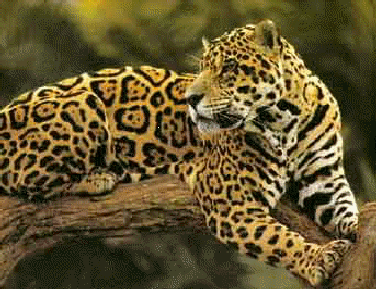
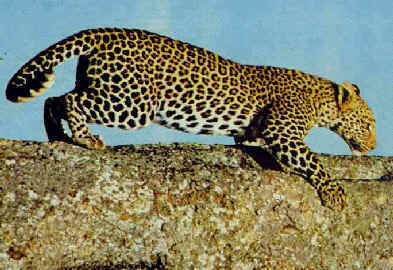
  98. Jaguar  (t2) (SO) (*)  ______  (one seen closely during the FONT Mexico tour in November 2008)
    Panthera onca


    Above: A painting of a Jaguar on a wall in Belize
    Below: Jaguars


    BATS FOLLOW LATER IN THIS LIST


    THE CEBIDS, or NEW WORLD MONKEYS, in the Order of Primates, in the Family Atelidae:
    (82 species in the Americas; 3 in Mexico) 

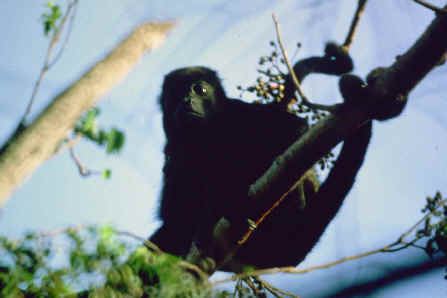
  99. Yucatan Black Howler Monkey  (t2) (SO) (*) _____ 
    Alouatta pigra


    Yucatan Howler Monkey photographed during a FONT tour
    (photo by Marie Gardner)
     
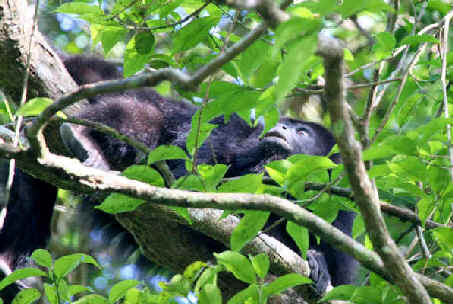
  100. Mantled Howler Monkey (t3) (SO) ______  
    Alouatta palliata   


    A Mantled Howler Monkey photographed during a FONT tour in Costa Rica

  101. Central American Spider Monkey (t3) (SO) (*)  ______ (another name has been Geoffroys's Spider Monkey) 
    Ateles geoffroyi


    A Central American Spider Monkey photographed during a FONT tour
    (photo by Marie Gardner)


    MARINE MAMMALS (Dophins & Whales)  FOLLOW LATER IN THIS LIST


    EVEN-TOED UNGULATES (in the Order Artiodactyla)  

    Families in Mexico include:
    PECCARIES:  Family Tayassuidae
    PRONGHORN:  Family Antilocapridae
    DEER:  Family Cervidae
    SHEEP:  Family Bovidae  


    PECCARIES (in the Family Tayassuidae)  (3 species in the Americas; 2 in Mexico)

  102. Collared Peccary  (SO) (*) ______   (another name has been Javelina) 
    Dicotyles tajacu  (the single member of its genus)


    Collared Peccaries

  103. White-lipped Peccary ______ 
    Tayassu pecari  (the single member of its genus)


    PRONGHORN  (in the Family Antilocapridae)  (1 species in the family)

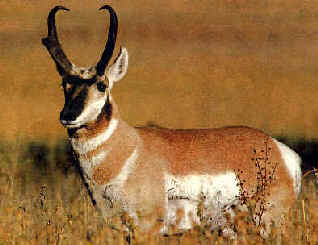
  104. Pronghorn  (NO) _____
    Antilocapra americana 
    (the single member of its genus, and family)


    Pronghorn


    Deer  (in the Family Cervidae)
    (47 species worldwide; 4 in Mexico)     


  105. Mule Deer  (NO) _____ 
    Odocoileus hemionus


    Mule Deer

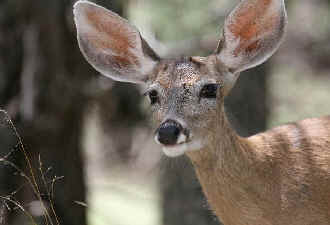
  106. White-tailed Deer  (NO) (SO) (*)  ______ 
    Odocoileus virginianus


    Coue's White-tailed Deer
    (photo by Doris Potter)

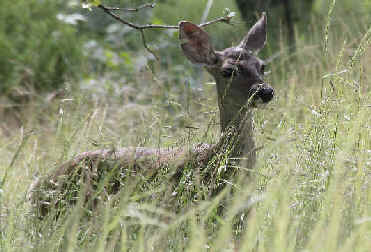
  107. Red Brocket (Deer)  (SO) ______ 
    Mazama americana

  108. Yucatan Brown Brocket Deer  (MXe) (SO)  _____  (only in south Mexico) 
    Mazama pandora


    SHEEP  (in the Family Bovidae)
    (141 species worldwide; 1 in Mexico)

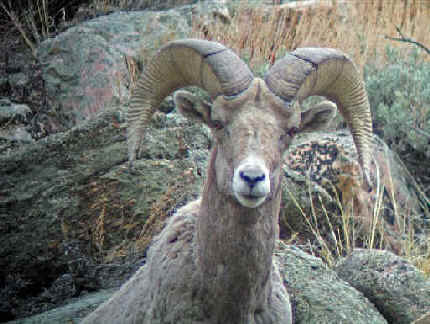
  109. Bighorn Sheep  (NO) _____
    Ovis aries


    A Bighorn Sheep photographed during a FONT tour


    ODD-TOED UNGULATES  (in the Order Perissodactyla; the tapirs in Family Tapiridae)

     
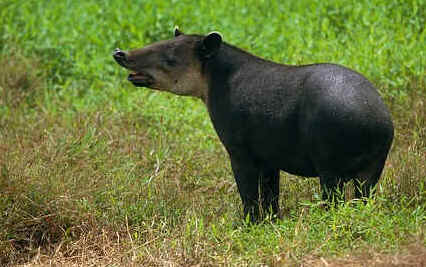
  110. Baird's Tapir (t2) (SO) ______ 
    Tapirus bairdii


    Baird's Tapir


    MANATEES  (in the Order Sirenia, in the Family Trichechidae)

  111. West Indian Manatee (t1) (SO)  ______  (rare & local along the Yucatan coast)
    Trichechus manatus 


    POCKET GOPHERS, POCKET MICE, & KANGAROO RATS (in the Family Geomyidae)
    (99 species in the Americas; xx in Mexico)


  112. Desert Pocket Gopher ______  
    Geomys arenarius 

  113. Texas Pocket Gopher ______
    Geomys personatus

  114. Tropical Pocket Gopher  (MXe) _____
    Geomys tropicalis

  115. Yellow-faced Pocket Gopher  (NO) _____
    Pappogeomys
    (formerly Cratogeomys) castanops

  116. Hispid Pocket Gopher ______  
    Orthogeomys
    (formerly Heterogeomys) hispidus

  117. Big Pocket Gopher  (MXe) ______  
    Orthogeomys
    (formerly Heterogeomys) lanius 

  118. Oaxacan Pocket Gopher  (MXe) ______ (in )
    Orthogeomys cuniculus 

  119. Salvin's Spiny Pocket Mouse ______  
    Liomys salvini

  120. Forest Spiny Pocket Mouse ______ 
    Heteromys desmarestianus

  121. Gaumer's Spiny Pocket Mouse  (SO) (*) ______ (in the Yucatan region of southeast Mexico, north Belize, & north Guatemala)
    Heteromys gaumeri 


    RATS & MICE (in the Family Muridae)


    NEOTROPICAL MICE (in the Subfamily Sigmodontinae)
    (461 species in the Americas; 102 in Mexico)

    Various mice & other similar mammals nicely illustrated in the field guide "Mammals of North America" by Roland Kays & Don Wilson are noted with the code (mna). 

  122. Southern Pygmy Mouse ______
    Balomys musculus

  123. Northern Pygmy Mouse  (NO) (mna) ______
    Balomys taylori

  124. Alston's Singing Mouse ______
    Scotinomys teguina

  125. Yucatan Vesper Mouse ______  (very few records from lowland forests & regrowth areas of the Yucatan Peninsula, in southeast Mexico, northern Belize, & northern Guatemala)
    Otonyctomys hatti 
    (the single member of its genus) 

  126. Vesper Rat ______
    Nyctomys sumichrasti 
    (the single member of its genus)

  127. Northern Climbing Rat ______
    Tylomys nudicaudus

  128. Big-eared Climbing Rat ______
    Ototylomys phyllotis 
    (the single member of its genus) 

  129. White-throated Woodrat  (NO) (mna)  ______
    Neotoma albigula

  130. Tamaulipan Woodrat  (MXe)  ______
    Neotoma angustapalata

  131. Goldman's Woodrat  (MXe)  ______
    Neotoma goldmani

  132. Desert Woodrat  (NO) (mna) ______
    Neotoma lepida

  133. Anthony's Woodrat  (MXe)  ______  (on Todos Santos Island, Baja California Norte) (endangered)
    Neotoma anthonyi

  134. Bryant's Woodrat  (MXe) ______ (on Cedros Island, Baja California Norte) (endangered)
    Neotoma bryanti

  135. Bunker's Woodrat  (MXe)  ______  (on Coronados Island, Baja California Sur) (endangered)
    Neotoma bunkeri

  136. San Martin Island Woodrat  (MXe)  ______  (on San Martin Island, Baja California Norte) (endangered)
    Neotoma martinensis

  137. Mexican Woodrat  (NO) (mna)  ______
    Neotoma mexicana

  138. Southern Plains Woodrat  (NO) (mna)  ______
    Neotoma micropus

  139. Nelson's Woodrat  (MXe)  ______  (in the Perote region of Veracruz)
    Neotoma nelsoni

  140. Bolaos Woodrat  (MXe)  ______  (in east-central Jalisco)
    Neotoma palatina

  141. Turner Island Woodrat  (MXe)  ______  (on Turner Island, Sonora) (endangered)
    Neotoma varia

  142. Sonoran Woodrat  (MXe)  ______  
    Neotoma
    (formerly Teanopus) phenax

  143. Dusky-footed Woodrat  (NO) (mna)  ______
    Neotoma fiscipes

  144. Magdalena Rat  (MXe)  ______  (in western Jalisco & Colima)
    Xenomys nelsoni  (the single member of its genus)

  145. Allen's Woodrat  (MXe)  ______
    Hodomys alleni 
    (the single member of its genus)

  146. Nelson and Goldman's Woodrat  (MXe)  ______
    Nelsonia goldmani

  147. Diminutive Woodrat  (MXe)  ______
    Nelsonia neotomodon

  148. Coue's Rice Rat  (NO) (mna)  ______ 
    Oryzomys couesi

  149. Black-eared Rice Rat  (MXe) ______
    Oryzomys melanotis

  150. Cloud Forest Rice Rat ______
    Oryzomys saturatior

  151. Allen's Cotton Rat  (MXe) ______  
    Sigmodon alleni

  152. Arizona Cotton Rat  (NO) (mna) ______
    Sigmodon arizonae

  153. Tawny-bellied Cotton Rat  (NO) (mna) ______   
    Sigmodon fuliventer

  154. White-eared Cotton Rat  (MXe)  ______
    Sigmodon leucotis

  155. Jaliscan Cotton Rat  (MXe) ______ 
    Sigmodon mascotensis

  156. Yellow-nosed Cotton Rat  (NO) (mna)  ______  
    Sigmodon ochrognathus

  157. Hispid Cotton Rat  (NO) (mna) ______ 
    Sigmodon hispidus

  158. Mexican Water Mouse  (MXe) ______  
    Rheomys mexicanus

  159. Thomas's Water Mouse ______  (in Mexico, in forests & regrowth areas of Chiapas)
    Rheomys thomasi  

  160. Slender Harvest Mouse ______  (southern Mexico to Costa Rica)
    Reithrodontomys
    (formerly Aporodon) gracilis

  161. Small-toothed Harvest Mouse _____ 
    Reithrodontomys
    (formerly Aporodon) microdon

  162. Cozumel Harvest Mouse  (MXe) ______ (only on Cozumel Is.) (endangered)
    Reithrodontomys
    (formerly Aporodon) spectabilis

  163. Narrow-nosed Harvest Mouse ______
    Reithrodontomys
    (formerly Aporodon) tenuirostris

  164. Sonoran Harvest Mouse  ______  
    Reithrodontomys burti

  165. Volcano Harvest Mouse  (MXe) ______
    Reithrodotomys chrysopsis

  166. Fulvous Harvest Mouse  (NO) (mna) ______
    Reithrodotomys fulvescens

  167. Hairy Harvest Mouse  (MXe) ______  
    Reithrodotomys hirsutus

  168. Western Harvest Mouse  (NO) (mna) ______  
    Reithrodotomys megalotis 

  169. Sumichrast's Harvest Mouse ______
    Reithrodontomys sumichrasti

  170. Plains Harvest Mouse  (NO) (mna) ______  
    Reithrodontomys montanus

  171. Mexican Harvest Mouse ______ 
    Reithrodontomys (formerly Aporodon) mexicanus

  172. Zacatecan Harvest Mouse ______
    Reithrodontomys zacatecae

  173. Chihuahuan Grasshopper Mouse ______
    Onychomys arenicola

  174. Northern Grasshopper Mouse (NO) (mna) ______
    Onychomys leucogaster

  175. Southern Grasshopper Mouse  (NO) (mna) ______
    Onychomys torridus

  176. Mexican Volcano Mouse  (MXe) ______
    Neotomodon alstoni 
    (the single member of its genus)

  177. Oaxaca Giant Deer Mouse  (MXe)  ______
    Megadontomys cryophilus

  178. Nelson's Giant Deer Mouse  (MXe) ______  (on the east slope of the Sierra Madre Oriental in east-central Mexico)
    Megadontomys nelsoni

  179. Thomas' Giant Deer Mouse  (MXe) ______ (in the Sierra Madre del Sur mountains in southern Mexico)
    Megadontomys thomasi 

  180. Chinanteco Deer Mouse  (MXe)  ______  (in the Sierra de Juarez mountains in Oaxaca)
    Habromys chinanteco

  181. Slender-tailed Deer Mouse  (MXe) ______  (in cloud forest in north-central Oaxaca)
    Habromys lepturus

  182. Crested-tailed Deer Mouse ______  (in wet montane oak forests from Chiapas south to northwest El Salvador)
    Habromys lophurus

  183. Jico Deer Mouse  (MXe)  ______  (east slope of south Sierra Madre Oriental in east-central Mexico) (endangered)
    Habromys simulatus
     
  184. Michoacan Deer Mouse  (MXe) ______  
    Osgoodomys basnderanus 
    (the single member of its genus)

  185. Aztec Deer Mouse ______
    Peromyscus aztecus

  186. Brush Deer Mouse  (NO) (mna)  ______
    Peromyscus boylii

  187. Perote Deer Mouse  (MXe) ______ (in the Perote region of Vera Cruz) (endangered)
    Peromyscus bullatus 

  188. California Deer Mouse  (NO) (mna)  ______  (in Mexico, in Baja California Norte)
    Peromyscus californicus

  189. Canyon Deer Mouse  (NO) (mna)  ______ 
    Peromyscus crinitus

  190. Zacatecan Deer Mouse  (MXe) ______
    Peromyscus difficills  

  191. Cactus Deer Mouse  (NO) (mna)  ______  (from southwest US south to central Mexico, including San Lorenzo islands & Montserrate Is. off Baja California)
    Peromyscus eremicus 

  192. Eva's Deer Mouse  (MXe)  ______  (in southern Baja California Sur, & Carmen Island)
    Peromyscus eva

  193. Blackish Beer Mouse  (MXe) ______  (east slope of southern Sierra Madre Oriental)
    Peromyscus furvus

  194. Saxicolous Deer Mouse  (NO) (mna)  ______
    Peromyscus gratus

  195. Angel Island Deer Mouse (MXe) ______  (on the Angel de la Guarda islands in the northern Gulf of California)
    Peromyscus guardia

  196. Guatemalan Deer Mouse  ______
    Peromyscus guatemalensis

  197. Naked-eared Deer Mouse  ______
    Peromyscus gymnotis

  198. Hoope's Deer Mouse  (MXe)  ______
    Peromyscus hooperi

  199. White-footed Deer Mouse  (NO) (mna) ______
    Peromyscus leucopus

  200. Southern Deer Mouse ______
    Peromyscus levipes

  201. Tres Marias Deer Mouse  (MXe) ______
    Peromyscus madrensis 

  202. North American Deer Mouse  (NO) (mna) ______
    Peromyscus maniculatus

  203. Brown Deer Mouse  (MXe) ______ (in Sierra Madre del Sur mountains)
    Peromyscus megalops


  204. Puebla Deer Mouse  (MXe) ______    (only in southeast Puebla)
    Peromyscus mekisturus

  205. Zempoaltepec Deer Mouse (MXe) ______  (in cloud forest of north-central Oaxaca in southern Mexico)
    Peromyscus melanocarpus

  206. Plateau Deer Mouse  (MXe)  ______  
    Peromyscus melanophrys

  207. Black-eared Deer Mouse (MXe) ______  
    Peromyscus melanotis

  208. Black-tailed Deer Mouse  (MXe) ______   
    Peromyscus melanurus

  209. Merriam's Deer Mouse  (NO) (mna) ______
    Peromyscus merriami

  210. Mexican Deer Mouse ______
    Peromyscus mexicanus

  211. Northern Rock Deer Mouse  (NO) (mna) ______
    Peromyscus nasutus

  212. El Carrizo Deer Mouse  (MXe)  ______
    Peromyscus ochraventer

  213. White-ankled Deer Mouse  (NO) (mna)  ______
    Peromyscus pectoralis

  214. Marsh Deer Mouse  (MXe) ______
    Peromyscus perfulvus 

  215. Chihuahuan Deer Mouse  (MXe) ______
    Peromyscus polius

  216. False Canyon Deer Mouse  (MXe)  ______  (on Coronados Island, Baja California Sur) (critically endangered)
    Peromyscus pseudocrinitus

  217. Santa Cruz Deer Mouse  (MXe) ______ (on Santa Cruz & San Diego Islands, in the southern Gulf of California)
    Peromyscus sejugis

  218. Slevin's Deer Mouse  (MXe) ______  (on Santa Catarina Island, Baja California Sur) (critically endangered)
    Peromyscus slevini

  219. Nayarit Deer Mouse  (MXe)  ______  (in coastal Nayarit and southern Sinola)
    Peromyscus simulus

  220. Gleaning Deer Mouse  (MXe)  ______
    Peromyscus spicilegus

  221. Pinon Deer Mouse  (mna)  ______
    Peromyscus truei

  222. Winkelmann's Deer Mouse  (MXe)  ______
    Peromyscus winkelmanni

  223. Yucatan Deer Mouse  (MXe) (SO)  ______
    Peromyscus yucatanicus

  224. Chiapan Deer Mouse  (MXe)  ______
    Peromyscus zarhynchus  


    OLD WORLD RATS & MICE (in the Subfamily Murinae) 

  225. House Rat (i) ______ (*)  (other names include Black Rat & Roof Rat) (originally from India, introduced worldwide)  
    Rattus rattus

  226. Brown Rat (i) ______ (also called Norway Rat) (originally from southeast Siberia & northern China, introduced worldwide) (less widespread than Rattus rattus in Central America)
    Rattus norvegicus

  227. Western House Mouse (i) ______ (commensal with humans in Europe, north Africa, & the Middle East; introduced in North & South America, subsaharan Africa, north Australia, & oceanic islands)   
    Mus domesticus  (formerly conspecific with Mus musculus, now the Eastern House Mouse)


    INSECTIVORES (in the Order Insectivora)

    SHREWS (Family Soricidae)

  228. American Least Shrew ______
    Cryptotis parva

  229. Merriam's Small-eared Shrew ______  
    Cryptotis merriami


    BATS (in the Order Chiroptera)


    Bats nicely illustrated in the field guide "Mammals of North America" by Roland Kays & Don Wilson are noted with the code (mna). 


    SHEATH-TAILED BATS (in the Family Emballonuridae)
    (51 species worldwide; 9 in Mexico)

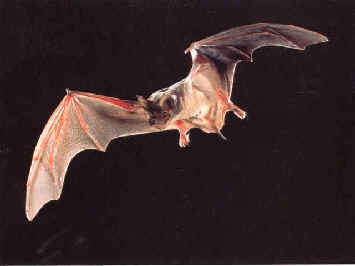
  230. Long-nosed Bat ______  (also called Proboscis Bat)   
    Rhynchonycteris naso 
    (the single member of its genus)
    (Common in lowland forest near water: streams, rivers, mangroves, and lakes)


    Long-nosed Bat
    (photo by Doris Potter)

  231. Greater White-lined Bat (or White-lined Sac-winged Bat) ______  
    Saccopteryx bilineata

  232. Lesser White-lined Bat ______ 
    Saccopteryx leptura 

  233. Shaggy Bat ______ (rare, known only from a few specimens) 
    Centronycteris maximiliani

  234. Lesser Doglike Bat ______ 
    Peropteryx macrotis

  235. Greater Doglike Bat ______ 
    Peropteryx kappleri

  236. Least Sac-winged Bat  ______ 
    Balantiopteryx io

  237. Gray Sac-winged Bat ______ 
    Balantiopteryx plicata

  238. Northern Ghost Bat ______ 
    Diclidurus albus


    FISHING (or BULLDOG) BATS  (in the Family Noctilionidae)  
    (2 species in the Neotropics; both in Mexico) 

  239. Greater Fishing Bat ______ 
    Noctilio leporinus

  240. Lesser Fishing Bat ______ 
    Noctilio albiventris


    LEAF-CHINNED BATS (in the Family Mormoopidae)
    (8 species in total; 5 in Mexico)  

  241. Common Moustached Bat  (*) ______   (at "the Cave of the Hanging Snakes", "La Cueva de las Serpientes Colgantes", in the central Yucatan Peninsula, visited during the FONT November 2008 Mexico Tour)   
    Pteronatus (formerly Phyllodia) parnellii


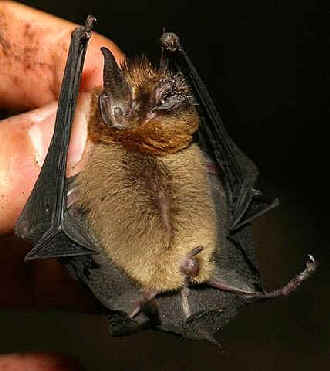
    A Common Moustached Bat in the hand

  242. Lesser Moustached Bat  (*) ______   (at "the Cave of the Hanging Snakes", "La Cueva de las Serpientes Colgantes", in the central Yucatan Peninsula, visited during the FONT November 2008 Mexico Tour)   
    Pteronatus (formerly Chilonycteris) personatus

  243. Davy's Naked-backed Bat  (*) ______   (at "the Cave of the Hanging Snakes", "La Cueva de las Serpientes Colgantes", in the central Yucatan Peninsula, visited during the FONT November 2008 Mexico Tour)   
    Pteronatus davyi

  244. Big Naked-backed Bat ______ 
    Pteronatus gymnonotus 

  245. Peter's Ghost-faced Bat  (NO) (mna) (*) ______  (at "the Cave of the Hanging Snakes", "La Cueva de las Serpientes Colgantes", in the central Yucatan Peninsula, visited during the FONT November 2008 Mexico Tour)   
    Mormoops megalophylla


    AMERICAN LEAF-NOSED BATS  (in the Family Phyllostomidae) 
    (155 species in total; 56 in Mexico)

  246. Common Big-eared Bat ______
    Micronycteris microtis

  247. Schmidt's Big-eared Bat ______ (on Cozumel Is. & eastern Chiapas)
    Micronycteris schmidtorum

  248. Orange-throated Big-eared Bat ______ (uncommon & local)
    Micronycteris brachyotis

  249. Tricolored Big-eared  Bat ______ (rare & local)
    Micronycteris (formerly Glyphonycteris) sylvestris

  250. California Leaf-nosed Bat  (NO) (mna) ______  (in northwest Mexico)
    Macrotus californicus

  251. Waterhouse's Leaf-nosed Bat  ______ 
    Macrotus waterhousii

  252. Common Sword-nosed Bat ______
    Lonchorhina aurita

  253. Long-legged Bat ______ 
    Macrophyllum macrophyllum

  254. Stripe-headed Round-eared Bat ______ (Uncommon to rare; usually in mature evergreen forest)
    Tonatia saurophils

  255. Pygmy Round-eared Bat ______  (lowland forest & regrowth areas)
    Tonatia brasiliense

  256. Davis' Round-eared Bat ______ 
    Tonatia evotis

  257. Golden Bat ______ 
    Mimon bennettii

  258. Cozumel Golden Bat  (MXe)  ______  (endemic to Cozumel Is.)  
    Mimon cozumelae

  259. Striped Hairy-nosed Bat ______ (rare & local) 
    Mimon
    (formerly Anthorhina) crenulatum

  260. Pale Spear-nosed Bat ______
    Phyllostomus discolor

  261. Pale-faced Bat ______ (rare & local)
    Phyllostomus stenops

  262. Fringe-lipped Bat ______
    Trachops cirrhosus

  263. Big-eared Woolly Bat  (also called Woolly False Vampire Bat) ______ (uncommon to rare, but widespread)
    Chrotopterus auritus

  264. Spectral Bat (also called Great False Vampire Bat) ______ (rare & local)
    Vampyrum spectrum


    NECTAR-FEEDING or LONG-TONGUED BATS (in the Subfamilies Glossophaginae & Lonchophyllinae) 

  265. Brown Long-tongued Bat ______
    Glossophaga commissarisi

  266. Common Long-tongued Bat ______ (in forests & clearings)
    Glossophaga soricina

  267. Western Long-tongued Bat (MXe)  ______  (dry forest & scrub from Michoacan to east Chiapas)  
    Glossophaga morenoi

     
  268. Gray's Long-tongued Bat ______ (in dry forest & scrub)
    Glossophaga leachii

  269. Brown Long-tongued Bat ______
    Glossophaga commissarisi

  270. Geoffrey's Tailless Bat ______
    Anoura geoffroyi

  271. Dark Long-tongued Bat ______ (rare)
    Lichonycteris obscura

  272. Underwood's Long-tongued Bat ______
    Hylonycteris underwoodi

  273. Mexican Long-nosed Bat  (NO) (mna)  ______ (endangered)
    Leptonycteris nivalis

  274. North American Long-nosed Bat  (NO) (mna)  ______ 
    Leptonycteris yerbabuenae

  275. Godman's Whiskered Long-nosed Bat ______ (rare to uncommon)
    Choeronycteris godmani

  276. Mexican Long-tongued Bat  (NO) (mna) ______ 
    Choeronycteris mexicana 


    SHORT-TAILED BATS  (in the Subfamily Carolliinae)

  277. Gray Short-tailed Bat ______  
    Carollia subrufa

  278. Silky Short-tailed Bat ______
    Carollia brevicauda

  279. Seba's Short-tailed Bat  (SO) (*) ______
    Carollia perspicillata

  280. Sowell's Short-tailed Bat ______ 
    Carollia sowelli


    TAILLESS BATS (in the Subfamily Stenodermatinae)

  281. Little Yellow-shouldered Bat ______ 
    Sturnira lilium

  282. Highland Yellow-shouldered Bat ______  (mid-elevation forests & forest edge)
    Sturnira ludovici

  283. Great Fruit-eating Bat ______  (in rainforests & clearings) 
    Artibeus lituratus

  284. Intermediate Fruit-eating Bat ______ 
    Artibeus intermedius

  285. Hairy Fruit-eating Bat  (MXe) ______   (occurs from Sonora south to Guerrero)
    Artibeus hirsutus 

  286. Jamaican Fruit-eating Bat  (*)  ______  (in rainforests & plantations) (at "the Cave of the Hanging Snakes", "La Cueva de las Serpientes Colgantes", in the central Yucatan Peninsula, visited during the FONT November 2008 Mexico Tour)   
    Artibeus jamaicensis


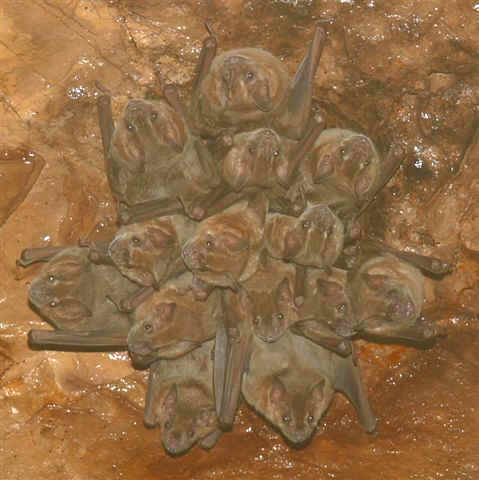
    Jamaican Fruit-eating Bats in a cave

  287. Aztec Fruit-eating Bat ______ 
    Artibeus
    (formerly Dermanura) aztecus

  288. Toltec Fruit-eating Bat ______ 
    Artibeus
    (formerly Dermanura) toltecus

  289. Pygmy Fruit-eating Bat ______ 
    Artibeus phaeotis

  290. Thomas' Fruit-eating Bat ______ 
    Artibeus watsoni

  291. Velvety Fruit-eating Bat ______ 
    Artibeus
    (formerly Enchisthenes) hartii

  292. Common Tent-making Bat ______  
    Uroderma bilobatum


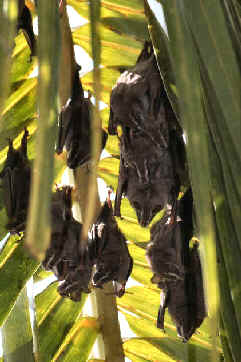
    Common Tent-making Bats
    (photo by Doris Potter)

  293. Brown Tent-making Bat ______ 
    Uroderma magnirostrum

  294. Heller's Broad-nosed Bat ______ 
    Platyrrhinus helleri

  295. Great Stripe-faced Bat ______  (uncommon north of Panama)
    Vampyrodes caraccioli

  296. Hairy Big-eyed Bat ______ 
    Chiroderma villosum

  297. Salvin's Big-eyed Bat ______ 
    Chiroderma salvini

  298. Little Yellow-eared Bat ______ 
    Vampyressa pusilla

  299. Wrinkle-faced Bat ______ 
    Centurio senex


    VAMPIRE BATS (in the Subfamily Desmodontinae)

  300. Common Vampire Bat ______ 
    Desmodus rotundus

  301. White-winged Vampire Bat ______  (primarily South American; in Mexico & Central America, rare & local.)
    Diaemus youngi

  302. Hairy-legged Vampire Bat  (NO) (mna) ______ 
    Diphylla ecaudata


    FUNNEL-EARED BATS (in the Family Natalidae)

  303. Mexican Funnel-eared Bat  (*)  ______  (at "the Cave of the Hanging Snakes", "La Cueva de las Serpientes Colgantes", in the central Yucatan Peninsula, visited during the FONT November 2008 Mexico Tour)   
    Natalus stramineus


    DISK-WINGED BATS (in the Family Thyropteridae)

  304. Spix's Disk-winged Bat ______ 
    Thyroptera tricolor


    VESPER or PLAIN-NOSED BATS (in the Family Vespertilionidae)
    (364 species worldwide; 41 in Mexico) 

  305. Spotted Bat  (NO) (mna)  ______
    Euderma maculatum 
    (the single member of its genus)

  306. Allen's Big-eared Bat  (NO) (mna)  ______ (occurs south to central Mexico)
    Idionycteris phyllotis 
    (the single member of its genus)

  307. Mexican Big-eared Bat  (MXe) ______  (highland pine-oak forests & lowlands, and Cozumel Island)
    Plecotus
    (formerly Corynorhinus) mexicanus

  308. Townsend's Big-eared Bat  (NO) (mna)  ______  (occurs south to southern Mexico)
    Plecotus
    (formerly Corynorhinus) townsendii

  309. Western Pipistrelle  (NO) (mna) (*)  ______
    Pipistrellus
    (formerly Hypsugo) hesperus

  310. Eastern Pipistrelle  (NO) (mna)  ______ 
    Pipistrellus
    (formerly Perimyotis) subflavus

  311. Cinnamon Myotis ______
    Myotis
    (formerly Leuconoe) fortidens

  312. Little Brown Myotis  (NO (mna)  ______
    Myotis
    (formerly Leuconoe) lucifugus

  313. Southwestern Myotis  (NO) (mna)  ______
    Myotis auriculus

  314. Long-eared Myotis ______
    Myotis evotis

  315. Miller's Myotis  (MXe)  ______  (northern Baja California) (endangered)
    Myotis milleri

  316. Peninsular Myotis  (MXe) ______ (southern Baja California)
    Myotis peninsularis

  317. Fringed Myotis  (NO) (mna)  ______
    Myotis thysanodes

  318. California Myotis  (NO) (mna)  ______
    Myotis californicus

  319. Western Small-footed Myotis  (NO) (mna)  ______
    Myotis ciliolabrum   

  320. Black Myotis ______  (in forests & built-up areas)
    Myotis nigricans

  321. Elegant Myotis ______ 
    Myotis elegans

  322. Findley's Myotis ______ (on Tres Marias Island, in Nayarit) (endangered)
    Myotis findleyi 

  323. Flat-headed Myotis  (MXe) ______ (in north-central Mexico, in Coahuila, Nuevo Leon, and Zacatecas) (critically endangered)
    Myotis planiceps 

  324. Silver-haired Myotis ______   
    Myotis
    (formerly Leuconoe) albescens

  325. Fish-eating Myotis ______  (coasts & islands of Baja California & Sonora)
    Myotis
    (formerly Leuconoe) vivesi

  326. Long-legged Myotis  (NO) (mna)  ______
    Myotis
    (formerly Leuconoe) volans

  327. Yuma Myotis  (NO) (mna)  ______
    Myotis
    (formerly Leuconoe) yumanensis 

  328. Cave Myotis  (NO) (mna)  ______
    Myotis
    (formerly Leuconoe) velifer

  329. Hairy-legged Myotis  (*)  ______  (at "the Cave of the Hanging Snakes", "La Cueva de las Serpientes Colgantes", in the central Yucatan Peninsula, visited during the FONT November 2008 Mexico Tour)   
    Myotis keaysi

  330. Big Brown Bat  (NO) (mna) ______ 
    Eptesicus fuscus

  331. Brazilian Brown Bat ______ 
    Eptesicus brasiliensis

  332. Argentine Brown Bat ______ 
    Eptesicus furinalis

  333. Evening Bat  (NO) (mna)  ______ 
    Nycticelus humeralis

  334. Allen's Yellow Bat  (MXe) ______ (central & southern Mexico: Zacatecas to Oaxaca)
    Rhogeesa
    (formerly Baeodon) alleni

  335. Genoway's Yellow Bat  (MXe) ______ (southern Chiapas)
    Rhogeesa genowaysi

  336. Slender Yellow Bat  (MXe) ______ (central & southern Mexico: Jalisco and Zacatecas south to Oaxaca)
    Rhogeesa gracilis


  337. Least Yellow Bat  (MXe) ______ (in south Michoacan) (endangered)
    Rhogeese mira

  338. Little Yellow Bat  (MXe)  ______  (in addition to mainland Mexico, also occurs on Tres Marias Island in Nayarit) 
    Rhogeesa parvula

  339. Central American Yellow Bat ______ 
    Rhogeessa tumida

  340. Western Red Bat  (NO) (mna)  ______ 
    Lasiurus blossevillii

  341. Eastern Red Bat  (NO) (mna) ______ (in the US & northeast Mexico)
    Lasiurus borealis 

  342. Hoary Bat  (NO) (mna)  ______
    Lasiurus cinereus

  343. Southern Yellow Bat  (NO) (mna)  ______
    Lasiurus
    (formerly Dasypterus) ega   

  344. Northern Yellow Bat  (NO) (mna)  ______
    Lasiurus
    (formerly Dasypterus) intemedius 

  345. Western Yellow Bat  (NO)  ______  (southwest US & west Mexico)
    Lasiurus (formerly Dasypterus) xanthinus

  346. Silver-haired Bat  (NO) (mna)  ______  (in the US. including Alaska, & Canada, & in northeast Mexico) 
    Lasionycteris noctivagans 
    (the single member of its genus)


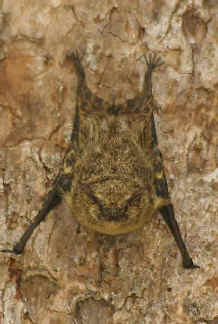
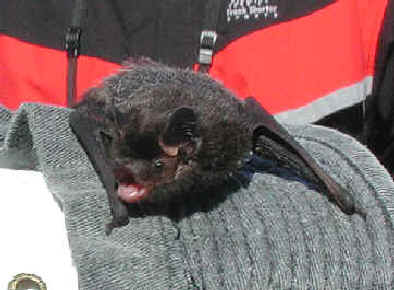
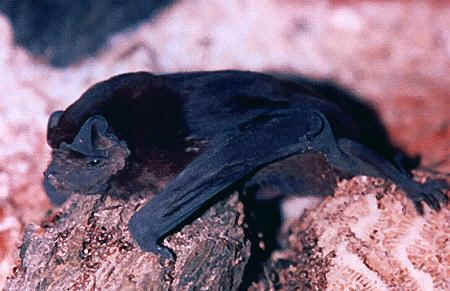
    Silver-haired Bat


    ANTROZOID BATS  (in the Family Antrozoidae)
    (Totally 2 species in North America; both in Mexico)

  347. Van Gelder's Bat ______  (in Mexico, in interiors of southern forests & on Tres Marias Island, in Nayarit) 
    Bauerus dubiaquercus 
    (the single member of its genus)   

  348. Pallid Bat  (NO) (mna)  ______  (occurs south to central Mexico)
    Antrozous pallidus   
    (the single member of its genus) 


    FREE-TAILED BATS (in the Family Molossidae)
    (94 species worldwide; 19 in Mexico)

  349. Greenhall's Dog-faced Bat ______ 
    Molossops greenhalli

  350. Mexican Dog-faced Bat  (MXe) ______   (in west-central Mexico)
    Molossops mexicanus

  351. Mexican (or Brazilian) Free-tailed Bat  (NO) (mna) (*)  ______  (locally in dry open areas & forests) (forms summer colonies of millions of individuals in large caves)
    Tadarida brasiliensis


    ABOVE & BELOW: Mexican Free-tailed Bats


  352. Peale's Free-tailed Bat ______ 
    Nyctinomops aurispinosus

  353. Pocketed Free-tailed Bat  (NO) (mna) ______ (occurs from the southwest US south to Guerrero) 
    Nyctinomops femorosaccus 

  354. Broad-eared Bat  (SO) (*)  ______  (in dry forest & scrub) 
    Nyctinomops laticaudatus

  355. Big Free-tailed Bat  (NO) (mna) ______ 
    Nyctinomops macrotis

  356. Black Bonneted Bat ______ 
    Eumpos auripendulus

  357. Wagner's Bonneted Bat ______ 
    Eumops glaucinus

  358. Sanborn's Bonneted Bat ______ (in Mexico, in Chiapas) 
    Eumops hansae

  359. Dwarf Bonneted Bat ______ 
    Eumops bonariensis

  360. Greater Bonneted Bat  (NO) (mna) ______ 
    Eumops perotis

  361. Underwood's Bonneted Bat  (NO) (mna) ______ 
    Eumops underwoodi 

  362. Big-crested Mastiff Bat ______ 
    Promops centralis 

  363. Black Mastiff Bat ______ 
    Molossus ater

  364. Bonda Mastiff Bat ______  (in Mexico, occurs in forest on Cozumel Island)
    Molossus currentium 

  365. Miller's Mastiff Bat ______ 
    Molossus prestiosus

  366. Sinaloan Mastiff Bat ______ 
    Molossus sinaloae

  367. Pallas' Mastiff Bat  (NO) (mna) ______ 
    Molossus molossus 


    Pallas' Mastiff Bat


    MARINE MAMMALS ALONG THE MEXICAN COAST

    SEALS:

    EARED SEALS (in the Family Otariidae) 
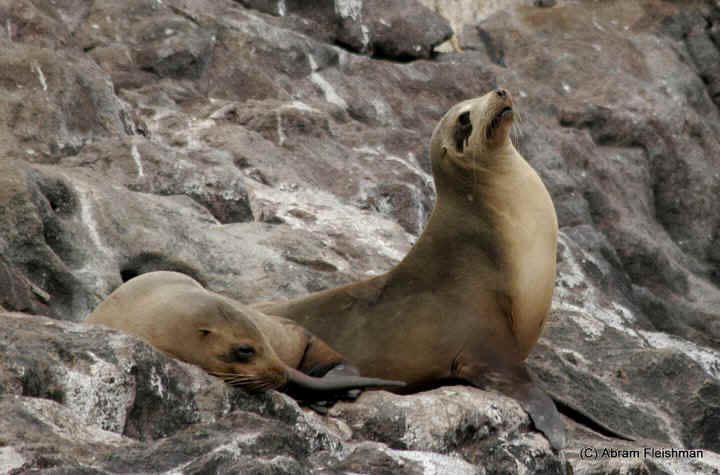
  368. California Sea Lion  ______  (the same species called the Galapagos Sea Lion on those islands in the Pacific)
    Zalophus californianus 
    (the single member of its genus)


    California Sea Lions in Sonora, Mexico along the coast of the Sea of Cortez 
    (photo by Abram Fleishman)


    EARLESS SEALS (in the Family Phocidae)
  369. Northern Elephant Seal ______ 
    Mirounga angustirostris

  370. West Indian Monk Seal ______  (formerly occurred along the Yucatan coast; the species is now extinct throughout its range)
    Monachus tropicalis

  371. Harbor Seal ______  (along the Mexican Pacific coast) 
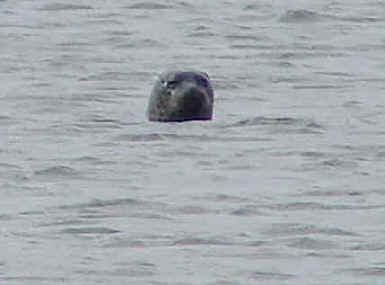
    Phoca vitulina


    Harbor Seal
    (photo by James Scheib) 


    MARINE MAMMALS IN MEXICAN WATERS  (in the Order Cetacea) 

    TOOTHED WHALES (in the Suborder Odontoceti)

    OCEAN DOLPHINS (in the Family Delphinidae)
     

  372. Rough-toothed Dolphin (t3) ______ 
    Steno bredanensis
    (in the Pacific, well offshore)  

     
  373. Pacific Spotted Dolphin ______
    Stenella atrenuata
    (off the Pacific coast) 

  374. Atlantic Spotted Dolphin (t3) ______
    Stenella frontalis
    (off the Caribbean coast) 

  375. Long-snouted Spinner Dolphin ______ 
    Stenella longirostris centroamericana
    (off the Pacific coast, & further offshore)

  376. Clymene Dolphin (also called Short-snouted Spinner Dolphin) (t3) ______
    Stenella clymene
    (in the Caribbean)

  377. Striped (or Blue-white) Dolphin ______
    Stenella coeruleoalba
    (in the Pacific, offshore) 

  378. Common Dolphin ______
    Delphinus delphis
    (off the Pacific coast; one of the most gregarious and abundant of the world's cetaceans


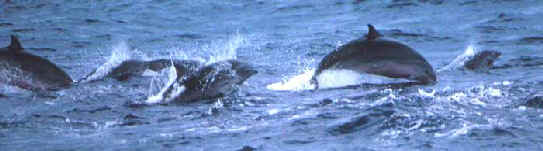
    A Common Dolphin photographed during a FONT tour
    (photo by Andy Smith)

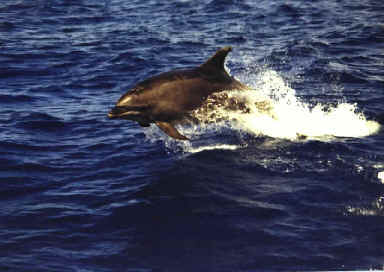
  379. Bottlenose Dolphin ______ 
    Tursiops truncatus
    (off & along the Pacific & Caribbean coasts)


    A Bottlenose Dolphin photographed during a FONT tour

  380. Fraser's Dolphin (t2) ______
    Lagenodelphis hosei
    (off Pacific coast, well offshore; occurs in the Gulf of Mexico & near the Lesser Antillean islands of the Caribbean) 


    Fraser's Dolphin

  381. Risso's Dolphin (also called Gray Grampus) (t3) ______
    Grampus griseus
    (in the Pacific)


    Risso's Dolphin

  382. Melon-headed Whale (t3) ______
    Peponocephala electra
    (in the Pacific)  

  383. Pygmy Killer Whale (t3) ______
    Feresa attenuata
    (in the Pacific)

  384. False Killer Whale (t3) ______
    Pseudorca crassidens
    (in the Pacific)

  385. Killer Whale (or Orca) (t3) ______
    Orcinus orca
    (off the Pacific coast) 

  386. Short-finned Pilot Whale (t3) ______
    Globicephala Macrorhynchus
    (off the Pacific coast, & further offshore)


    SPERM WHALE (a single species in the Family Physeteridae) 

  387. Great Sperm Whale (t2) ______
    Physeter catodon
    (in the Pacific and the Caribbean)


    PYGMY SPERM WHALES (now in the Family Kogiidae)

  388. Pygmy Sperm Whale (t3) ______
    Kogia brevicops
    (in the Pacific)


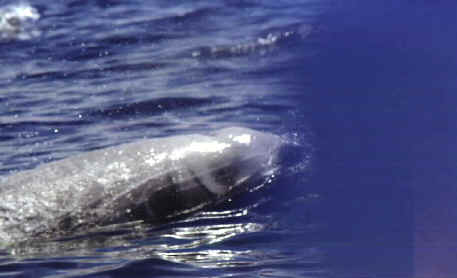
    Pygmy Sperm Whale
    (photo by Alan Brady)

  389. Dwarf Sperm Whale (t3) ______
    Kogia simus
    (in the Pacific) 


    BEAKED WHALES (in the Family Hyperoodontidae)

  390. Cuvier's Beaked Whale (t3) ______
    Ziphius cavirostris
    (off the Pacific coast) 


    Cuvier's Beaked Whale

  391. Blainville's Beaked Whale (t3) ______
    Mesoplodon densirostris
    (on occasion, in the Pacific off Mexico) 

  392. Gray's Beaked Whale (t3) ______
    Mesoplodon grayi
    (in the Pacific, well offshore) 

  393. Southern Bottlenose Whale (t2) ______
    Hyperoodon planifrons
    (in the Pacific)   


    RORUALS (in the Family Balaenopteridae)

  394. Blue Whale (t1) ______
    Balaenoptera musculus
    (in the Pacific, generally far offshore) 


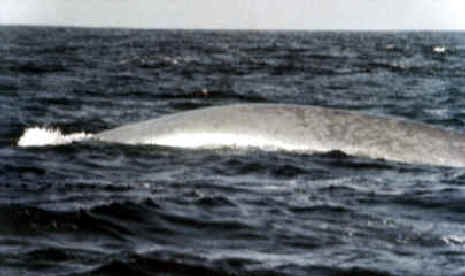
    Blue Whale
    (photo by Armas Hill)


  395. Fin Whale (t2) ______
    Balaenoptera physalus
    (in the Caribbean, offshore)

  396. Sei Whale (t2) ______
    Balaenoptera borealis 
    (in the Pacific, well offshore) 

  397. Bryde's Whale (t1) ______
    Balaenoptera brydei
    (formerly edeni)
    (in the Pacific, offshore) 

  398. Northern Minke Whale (t2) ______
    Balaenoptera acutorostrata
    (formerly conspecific with what's now the Antarctic Minke Whale, Balaenoptera bonaerensis)
    (in the Caribbean, offshore; & in the Pacific off Mexico)

  399. Humpback Whale (t2) ______
    Megaptera novaeangliae 
    (the single member of its genus)
    (in the Pacific, off Mexico, mainly from July to December)

  400. Gray Whale  ______
    Eschrichtius robustus  (the single member of its genus)
    (in the Pacific, including the Sea of Cortez)    

To Top of Page