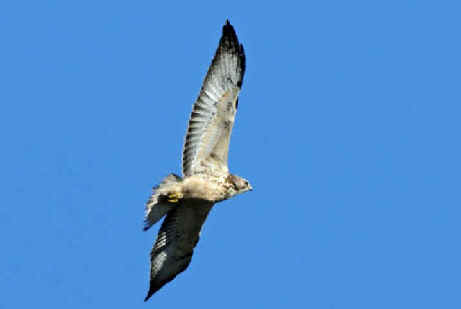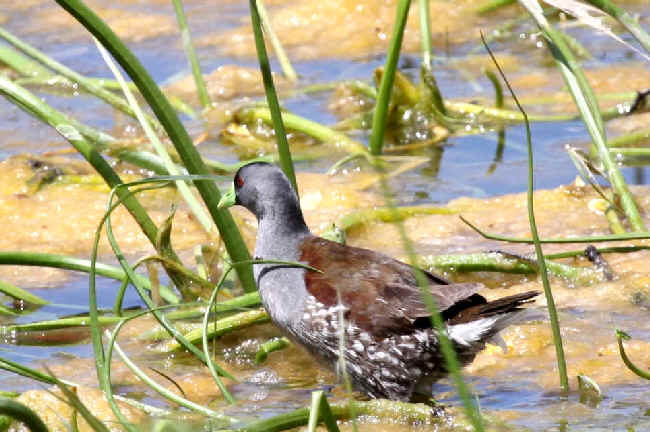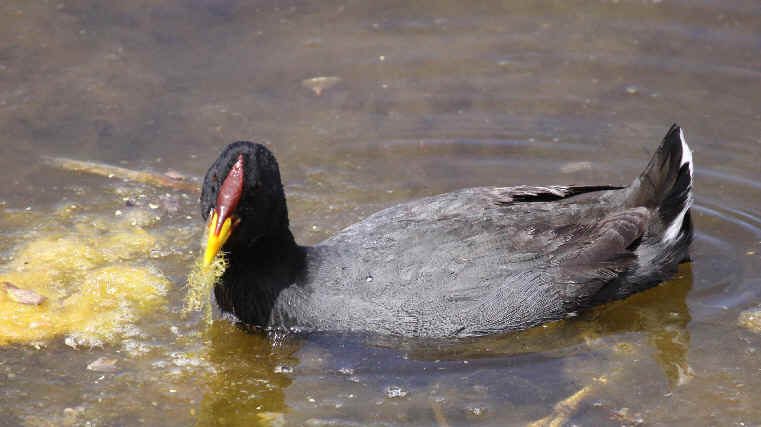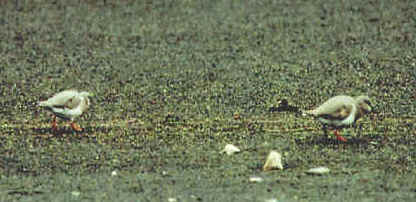
PO Box 9021, Wilmington, DE 19809, USA
E-mail: font@focusonnature.com
Phone: Toll-free in USA 1-800-721-9986
 or 302/529-1876; Fax: 302/529-1085


Argentina Birds

Tinamous to Flycatchers

Noting those found during 
Focus On Nature Tours
with an (*).  


from 1992 thru 2009

(during the months of October &  November)

Part 1 of a List compiled by Armas Hill


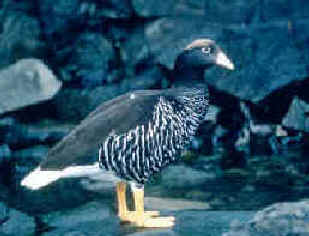
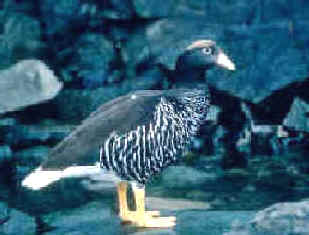
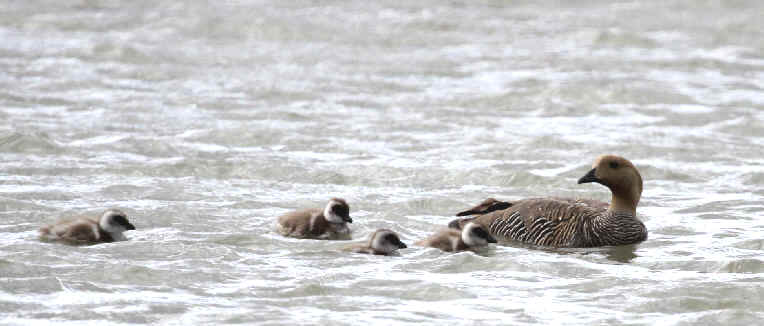
UPPER RIGHT PHOTO: a female KELP GOOSE

Link:

Part #2 of this List of Argentina Birds:  Antbirds thru Grosbeaks


There have been 13 FONT birding tours in Argentina.
692 species of birds have cumulatively been seen during FONT Argentina tours.  

Recent taxonomic changes have been incorporated into the following list. A number of these are from "The Birds of Ecuador - Status, Distribution, and Taxonomy" by Robert S. Ridgely and Paul J. Greenfield. Others are from the 3rd edition of "The Howard & Moore Complete Checklist of the Birds of the World". In general, the taxonomic order is as it is in that publication and in "Birds of the World - Recommended English Names" by Frank Gill and Minturn Wright. Nomenclature is usually as it is in the Gill & Wright book. 

Codes:

(e): endemic to Argentina
(qe): quasi (or near) endemic to Argentina
(i): introduced species

(t): a globally threatened or rare species, designated by Birdlife International
  (t1): critical 
  (t2): endangered 
  (t3): vulnerable
(nt): a near-threatened species globally

(ph):  species with a photograph in the FONT web-site 

ba: in and near Buenos Aires

fs: far-southern Argentina, including Patagonia and Tierra del Fuego

nc: in north-central Argentina, including areas south from Salta to Tucuman and Cordoba  

ne: in northeast Argentina, including the areas of Iguazu (in Missiones) and the Ibera Marshes (in Corrientes), and in between 

nw: in northwest Argentina (from Salta north of Jujuy), including the areas of Jujuy, Calilegua National Park, and the Altiplano

so: in southern Argentina, including the Valdez Peninsula, and nearby areas to the north & south, in Chubut & Rio Negro   

Other Links:

Upcoming FONT Birding & Nature Tours in Argentina

Mammals & Other Wildlife in Argentina (with some photos)

Mammals in South America (with some photos)

Directory of Photos in this Web-Site


  Birds:

      
TINAMUS
  1. Solitary Tinamou (nt) (*)  ______ ne
    Tinamus s. solitarius 


    CRYPTURELLUS

  2. Undulated Tinamou   ______ 
    Crypturellus undulatus 

  3. Brown Tinamou  ______ 
    Crypturellus obsoletus  

  4. Small-billed Tinamou   ______ 
    Crypturellus parvirostris 
    (monotypic)

  5. Tataupa Tinamou   ______ 
    Crypturellus t. tataupa 


    RHYNCHOTUS

  6. Red-winged Tinamou  (*)   ______ ne
    Rhynchotus rufescens pallescens


    NOTHOPROCTA

  7. Ornate Tinamou  (*)  ______  nw
    Nothoprocta ornata rostrata

  8. Brushland Tinamou  (*)  ______ nw,nc
    Nothoprocta c. cinerascens

  9. Andean Tinamou  (*)  ______  nc
    Nothoprocta pentlandii doeringi


    NOTHURA

  10. Spotted Nothura  (ph) (*)   ______  ne 
    Nothura m. maculosa  


    A Spotted Nothura photographed during a FONT tour
    (photo by Marie Gardner)

  11. Darwin's Nothura  (*)  ______  nc,so 
    Nothura darwinii 
    (monotypic)


    EUDROMIA 

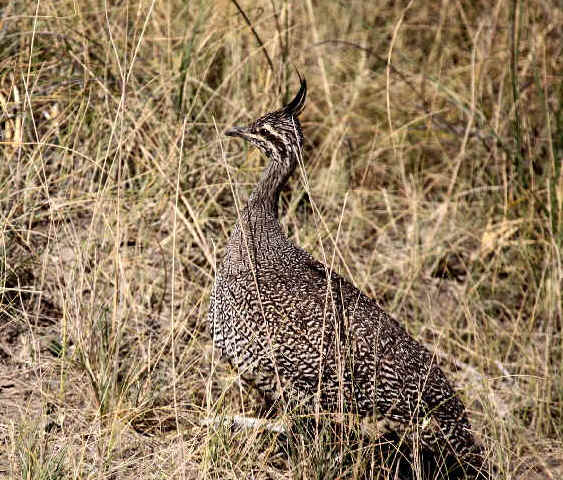
  12. Elegant Crested Tinamou  (*)  ______  so
    Eudromia e. elegans

  13. Quebracho Crested Tinamou  ______
    Eudromia formosa


    TINAMOLIS

  14. Puna Tinamou  (*)  ______  nw
    Tinamolis pentlandii 
    (monotypic)

  15. Patagonian Tinamou  (*)  ______  fs
    Tinamolis ingoufi 
    (monotypic)


    RHEA

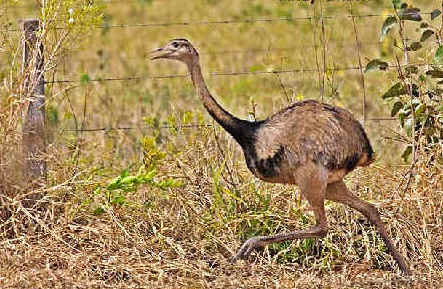
  16. Greater Rhea (nt) (ph) (*) ______  ne 
    Rhea americana albescens
     
    (the single member of its genus)


    Above: A Greater Rhea photographed during
    a FONT tour in 2006.
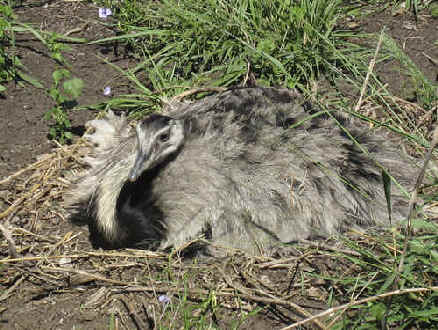
    Below: A photo during another FONT tour in 2008 of a Rhea sitting on eggs.
    (upper photo by Andy Smith)  


    A Greater Rhea sitting on its eggs


    PTEROCNEMIA

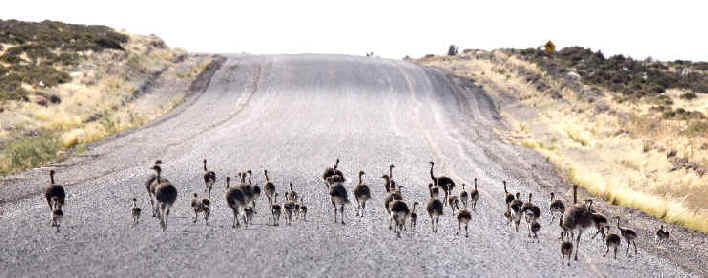
  17. Lesser Rhea  (*) _____  nw,so,fs_
    Pterocnemia p. pennata  (Darwin's Rhea) 
    Pterocnemia pennata garleppi  (
    Puna Rhea)


    ORTALIS


  18. Chaco Chachalaca  (ph) (*) ______  nc 
    Ortalis canicollis   


    PENELOPE

  19. Rusty-margined Guan  ______ 
    Penelope superciliaris 

  20. Dusky-legged Guan  (ph) (*)  ______  nw,ne 
    Penelope obscura

  21. Red-faced Guan  ______
    Penelope dabbenei


    PIPILE

  22. Black-fronted Piping-Guan  (t3) (*)  ______  ne 
    Pipile jacutinga
    (monotypic)


    CRAX

  23. Bare-faced Curassow   ______ 
    Crax fasiolata 


    ODONTOPHURUS

  24. Spot-winged Wood Quail  (*)  ______  ne 
    Odontophorus capueira
    (monotypic)  


    LOPHORTYX

  25. California Quail  (i) ______
    Lophortyx californica 


    CHAUNA

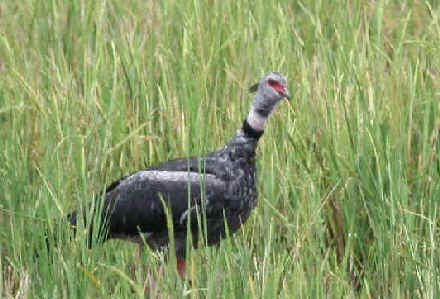
  26. Southern Screamer  (ph) (*) ______  ba,ne 
    Chauna torquata
    (monotypic)


    A Southern Screamer photographed during a FONT tour 


    CYGNUS

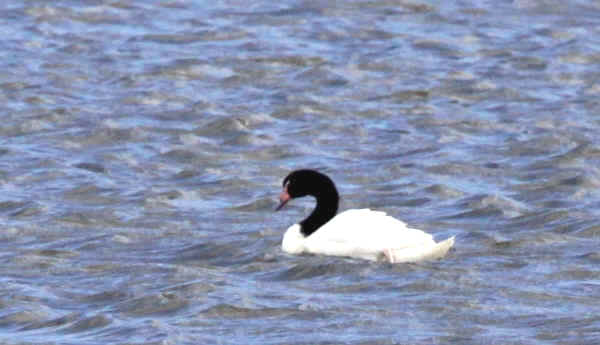
  27. Black-necked Swan  (*)  ______  ba,so,fs 
    Cygnus melancoryphus
    (monotypic)


    COSCOROBA

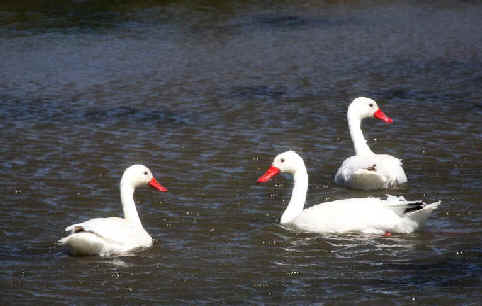
  28. Coscoroba Swan  (*)  ______  ba,nc.so,fs 
    Coscoroba coscoroba
    (monotypic, and the single member of its genus)


    CAIRINA

  29. Muscovy Duck  (ph) (*) ______  nw 
    Cairina moschata
      (monotypic, and the single member of its genus)


    DENDROCYGNA

  30. White-faced Whistling Duck  (ph) (*) ______  ba,ne 
    Dendrocygna viduata
    (monotypic)

  31. Black-bellied Whistling Duck  (ph) (*)  ______  ne 
    Dendrocygna autumnalis discolor

  32. Fulvous Whistling Duck  (*) ______  ba,ne,nc
    Dendrocygna bicolor
    (monotypic)


    SARKIDIORNIS

  33. Comb Duck  (*)  ______  ne   (was conspecific with what's now the Knob-billed Duck of Africa & Asia) 
    Sarkidiornis sylvicola 
    (monotypic)     


    NEOCHEN

  34. Orinoco Goose  (nt)  ______
    Neochen jubata 
    (the single member of its genus) 


    CHLOEPHAGA

  35. Andean Goose  (*)  ______  nw
    Chloephaga melanoptera

  36. Kelp Goose  (ph) (*)  ______  fs
    Chloephaga hybrida


    A female Kelp Goose photographed during a FONT tour

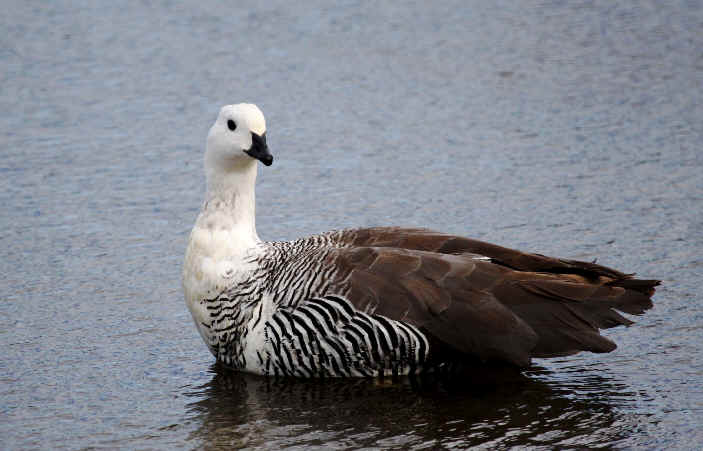
  37. Upland Goose  (ph) (*)  ______  fs
    Chloephaga picta

  38. Ashy-headed Goose  (ph) (*)  ______  fs
    Chloephaga poliocephala

  39. Ruddy-headed Goose  ______
    Chloephaga rubidiceps


    TACHYERES

  40. Fuegian Steamer Duck  (*) ______  fs
    Tachyeres pteneres

  41. Chubut Steamer Duck  (nt) (*) ______  so
    Tachyeres leucocephalus 

  42. Falkland Steamer Duck ______
    Tachyeres brachypterus

  43. Flying Steamer Duck  (ph) (*) ______  fs
    Tachyeres patachonicus


    MERGANETTA

  44. Torrent Duck  (ph) (*) ______  nc
    Merganetta armata 
    (the single member of its genus) 


    LOPHONETTA

  45. Crested Duck  (*)  ______  nw,so,fs
    Lophonetta specularioides


    ANAS

  46. White-cheeked Pintail  (*)  ______  nw 
    Anas bahamensis rubriostris

  47. Yellow-billed Pintail  (*)  ______  ba,nw,nc,so,fs 
    Anas georgica spinicauda

  48. Speckled Teal  (*)  ______  ba,nw,nc,so,fs 
    Anas flavirostris

  49. Silver Teal  (*)  ______  ba,fs 
    Anas versicolor

  50. Puna Teal  (*) ______  nw
    Anas puna


  51. Chiloe Wigeon  (*) ______  so,fs  (has also been called Southern Wigeon) 
    Anas sibilatrix

  52. Cinnamon Teal  (*)  ______  ba,nw,nc,so,fs 
    Anas cyanoptera

  53. Blue-winged Teal  (ph) ______
    Anas discors

  54. Red Shoveler  (*)  ______  ba,nc,so,fs  
    Anas platalea

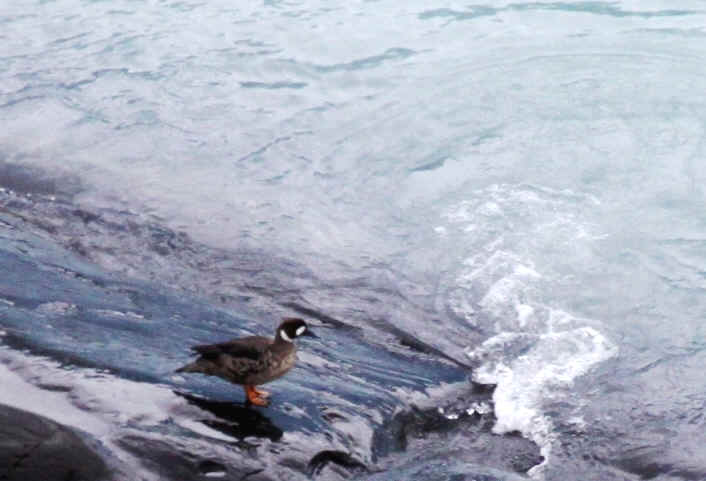
  55. Bronze-winged (or Spectacled) Duck  (nt)  ______  fs
    Anas specularis


    NETTA

  56. Rosy-billed Pochard  (*)   _____  ba,so,fs  (another name has been "Rosybill")
    Netta peposaca
    (monotypic)

  57. Southern Pochard  ______ 
    Netta e. erythrophthalma


    CALLONETTA

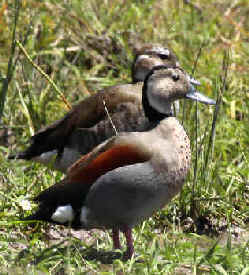
  58. Ringed Teal  (*)  ______  nw 
    Callonetta leucophrys
    (monotypic, and the single member of its genus)


    AMAZONETTA

  59. Brazilian Teal  (ph) (*)  ______  ne 
    Amazonetta brasiliensis ipecutiri 
    (the single member of its genus)


    MERGUS

  60. Brazilian Merganser (t1) (ph)  ______ 
    Mergus octosetaceus
      (monotypic)


    HETERONETTA

  61. Black-headed Duck  (nt) (*)  ______  ba   (the only brood-parasitic duck in the world)
    Heteronetta atricapilla 
    (monotypic, and the single member of its genus)


    OXYURA 

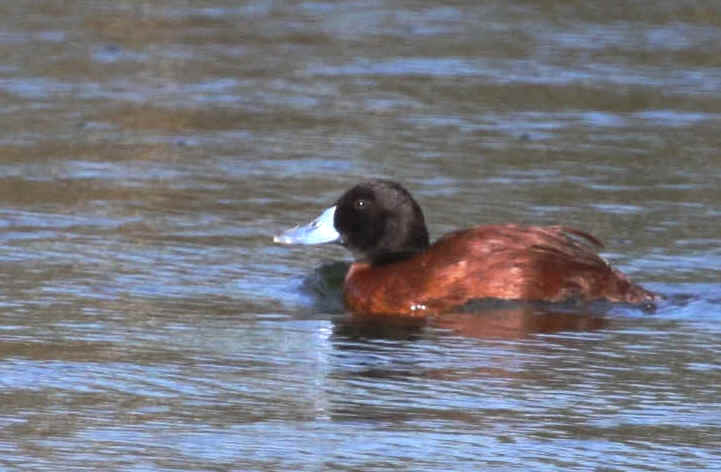
  62. Lake Duck  (*) ______  ba,nw,so
    Oxyura vittata

  63. Andean Ruddy Duck  (*)  ______  nw,fs
    Oxyura ferruginea


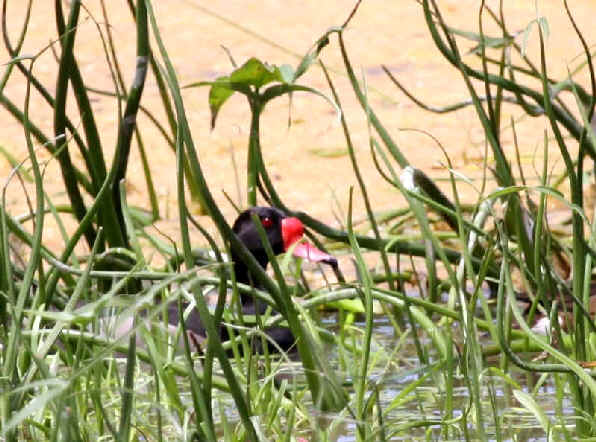
    NONONYX

  64. Masked Duck  (*)  ______  ba 
    Nononyx
    (formerly Oxyura) dominica  (monotypic, and the single member of its genus)


    SPHENISCUS

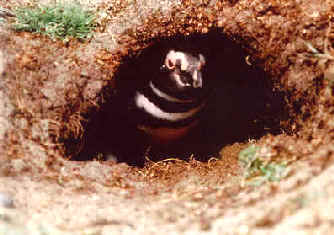
  65. Magellanic Penguin (nt) (ph) (*)  ______ so,fs
    Spheniscus mendiculus 
    (monotypic)


    A Magellanic Penguin at its burrow, 
    photographed during a FONT tour 


    APTENODYTES

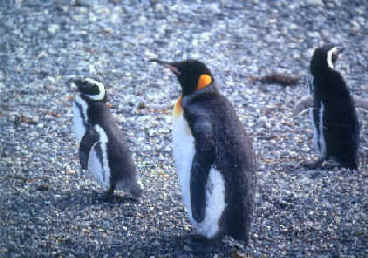
  66. King Penguin (ARr) (ph) (*) ______  fs 
    Aptenodytes patagonicus  (monotypic)


    A King Penguin, with Magellanic Penguins, in Argentina,
    photographed during a FONT tour 


    PYGOSCELIS

  67. Gentoo Penguin  (ARr) (*) ______  fs
    Pygoscelis p. papua

  68. Chinstrap Penguin  ______  (has also been called Bearded Penguin)
    Pygoscelis antarctica


    EUDYPTES

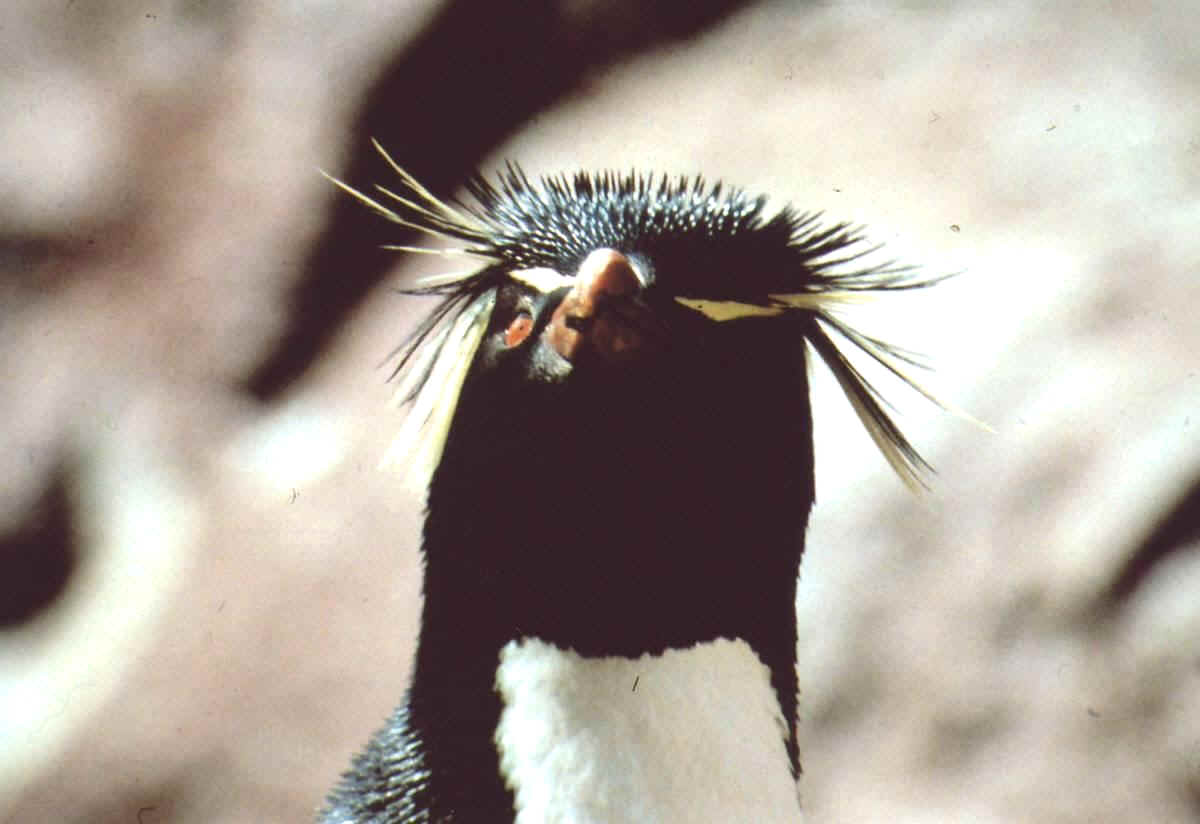
  69. Rockhopper Penguin (t3) (ARr) (*)  ______  fs   
    Eudyptes c. chrysocome

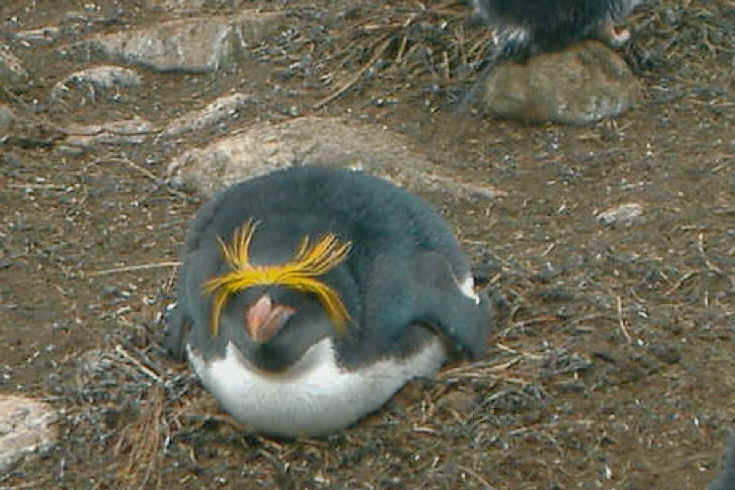
  70. Macaroni Penguin  (t3) _____ 
    Eudyptes chrysolophus   


    DIOMEDEA

  71. Wandering Albatross  (t3) ______
    Diomedea exulans 

  72. Northern Royal Albatross  (t2) ______
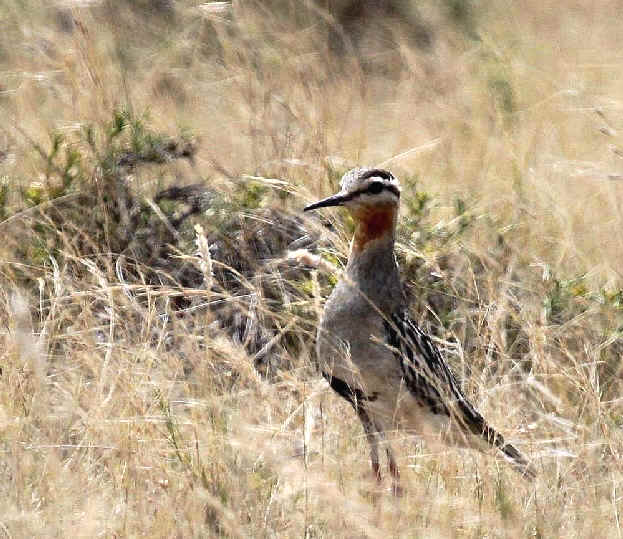
    Diomedea sanfordii

  73. Southern Royal Albatross  (t3) (ph) ______
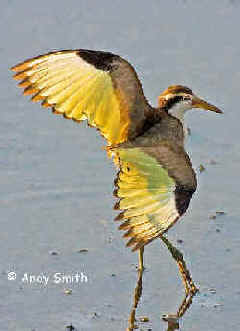
    Diomedea epomophora 


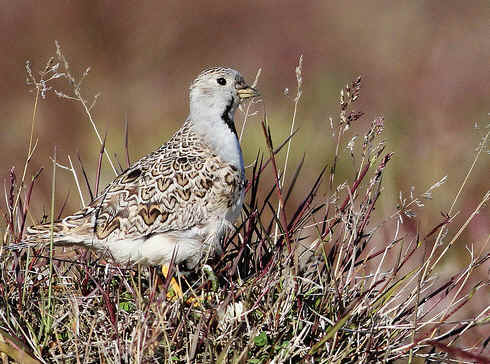
    THALASSARCHE

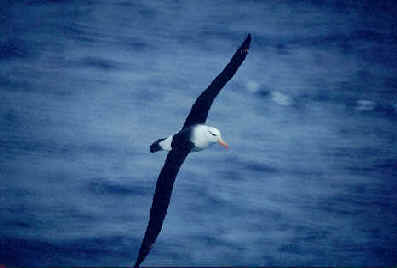
  74. Black-browed Albatross  (nt) (ph) (*)  ______ so,fs
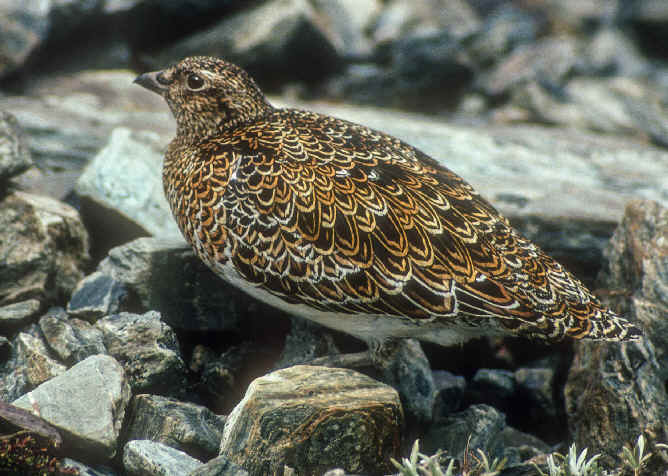
    Thalassarche
    (has been Diomedea) m. melanophrys


    Black-browed Albatross

  75. Atlantic Yellow-nosed Albatross  (nt) ______
    Thalassarche chlororhynchos

  76. Gray-headed Albatross  (t3) (ph) ______
    Thalassarches chrysostoma


    PHOEBETRIA

  77. Sooty Albatross  (t3) ______
    Phoebetria fusca

  78. Light-mantled Albatross  (nt) ______ 
    Phoebetria palpebrata


    MACRONECTES 

  79. Southern Giant Petrel  (t3) (ph) (*) ______  so,fs
    Macronectes giganteus 
    (monotypic)

  80. Northern Giant Petrel  (nt) (ph) ______
    Macronectes halli 
    (monotypic)


    FULMARUS

  81. Southern Fulmar  (ph) (*) ______  fs
    Fulmarus glacialoides 
    (monotypic)


    HALOBAENA

  82. Blue Petrel ______  
    Halobaena caerulea  (the single member of its genus)


    PACHYPTILA

  83. Broad-billed Prion ______   
    (The closely-related
    Antarctic Prion has been considered conspecific with the Broad-billed Prion)
    Pachyptila vittata

  84. Slender-billed Prion ______  
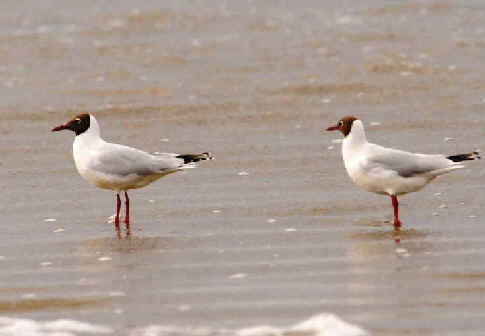
    Pachyptila belcheri

  85. Antarctic Prion  ______  (has also been called Dove Prion)
    Pachyptila desolata


    DAPTION

  86. Cape Petrel  (ph) ______  (also called Pintado)
    Daption capense


    APHRODROMA

  87. Kerguelen Petrel ______
    Aphrodroma
    (or Lugensa) brevirostris  (the single member of its genus) 


    PTERODROMA 

  88. Soft-plumaged Petrel ______
    Pterodroma mollis

  89. Great-winged Petrel ______
    Pterodroma macroptera

  90. Kermadec Petrel ______  (this species is not common in the South Atlantic)
    Pterodroma neglecta

  91. White-headed Petrel ______
    Pterodroma lessonii

  92. Atlantic Petrel  (t3) ______  (has been called Hooded Petrel)
    Pterodroma incerta 


    PROCELLARIA

  93. White-chinned Petrel  (t3) (*) ______  so 
    Procellaria aequinoctialis

  94. Spectacled Petrel  (t1) ______  (has been split from the White-chinned Petrel)
    Procellaria conspicillata

  95. Gray Petrel  (nt) ______  (also called Pediunker)
    Procellaria (formerly Adamastor) cinerea


    CALONECTRIS

  96. Cory's Shearwater  (ph) ______  
    Calonectris diomedea  


    PUFFINUS

  97. Manx Shearwater  (*)  ______  so 
    Puffinus puffinus 
    (monotypic)

  98. Greater Shearwater (ph) ______  (seasonally present offshore)
    Puffinus gravis

  99. Sooty Shearwater  (ph) ______  
    Puffinus griseus

  100. Subantarctic Little Shearwater ______
    Puffinus elegans   


    OCEANITES

  101. Wilson's Storm-Petrel  (ph)  ______  
    Oceanites oceanicus


    GARRODIA  

  102. Gray-backed Storm Petrel ______
    Garrodia nereis 
    (the single member of its genus)


    FREGETTA

  103. White-bellied Storm Petrel ______
    Fregetta grallaria

  104. Black-bellied Storm Petrel ______
    Fregetta tropica


    PELAGODROMA

  105. White-faced Storm Petrel  (ph) ______
    Pelagodroma marina 
    (the single member of its genus) 


    PELECANOIDES

  106. Magellanic Diving Petrel  (*)  ______  fs  
    Pelecanoides magellani  (monotypic)

  107. Common Diving Petrel  (ph) ______
    Pelecanoides urinator   


    PODILYMBUS

  108. Pied-billed Grebe  (*)  ______  ba,nw,ne,nc 
    Podilymbus podiceps antarcticus


    TACHYBABTUS

  109. Least Grebe  (ph) (*)  ______  nw 
    Tachybabtus
    (formerly Podiceps) dominicus speciosus


    ROLLANDIA

  110. White-tufted Grebe  (*) ______   ba,nw,nc,so,fs
    Rollandia
    (formerly Podiceps) rolland chilensis


    PODICEPS

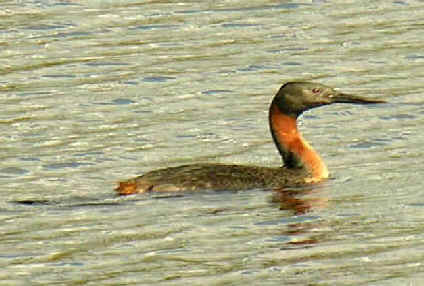
  111. Great Grebe  (*)  ______   ba,so,fs
    Podiceps m. major 

  112. Silvery Grebe  (*) ______  so,fs 
    Podiceps o, occipitalis

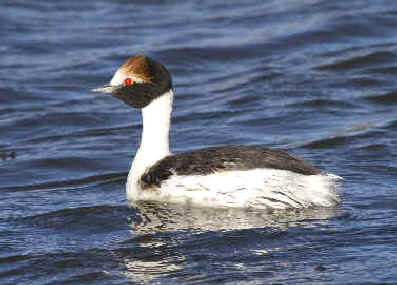
  113. Hooded Grebe  (*)  ______  fs  (described recently, in 1974) 
    Podiceps gallardoi  (monotypic)


    PHOENICOPTERUS

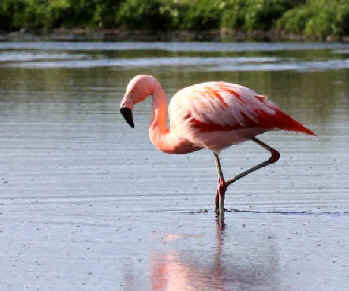
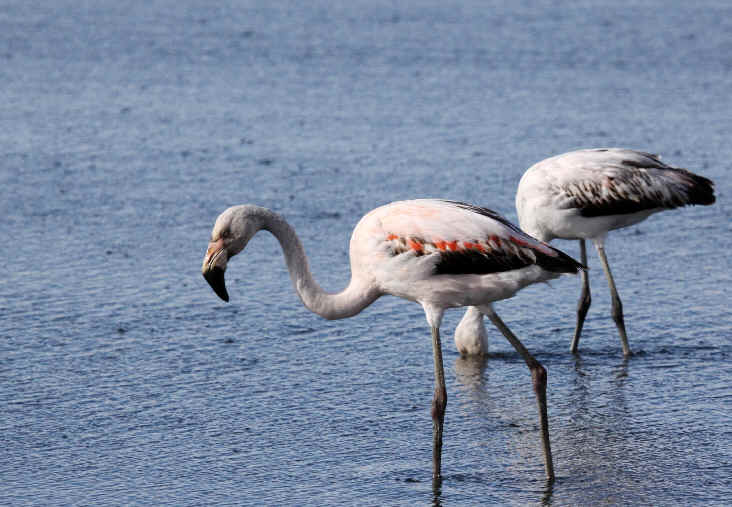
  114. Chilean Flamingo  (nt) (ph) (*)  ______  nw,nc,so,fs  
    Phoenicopterus chilensis


    Chilean Flamingos photographed during a FONT tour


    PHOENICOPARRUS

  115. Andean Flamingo  (t3)  ______  nw  
    Phoenicoparrus andinus

  116. Puna Flamingo  (nt)  ______  nw
    Phoenicoparrus jamesi 


    JABIRU

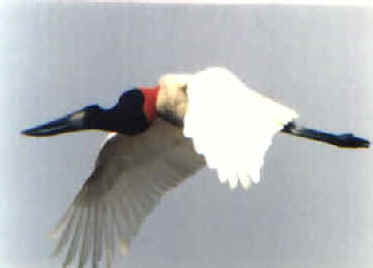
  117. Jabiru  (ph) (*)  ______  ne 
    Jabiru mycteria 
    (monotypic, and the single member of its genus)


    A Jabiru in flight, photographed during a FONT tour


    CICONIA

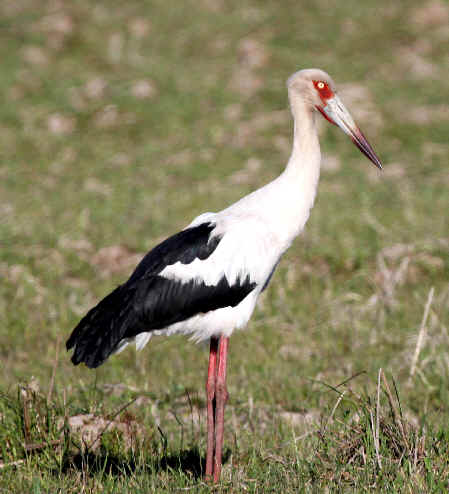
  118. Maguari Stork  (ph) (*)  ______  ba,ne
    Ciconia maguari
      (monotypic)


    A Maguari Stork photographed during a FONT tour
    (photo by Marie Gardner)


    MYCTERIA

  119. Wood Stork  (ph) (*)  ______  nw,ne 
    Mycteria americana
    (monotypic)


    THERISTICUS

  120. Buff-necked Ibis  (ph) (*)  ______  ne 
    Theristicus caudatus 

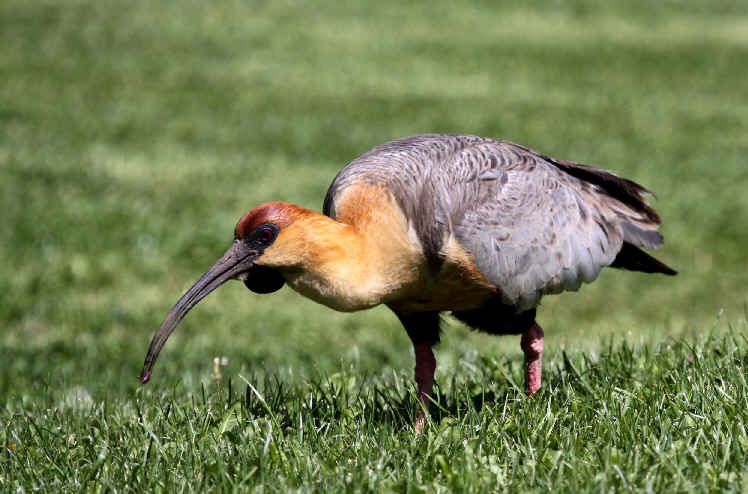
  121. Black-faced Ibis  (ph) (*)  ______  nw,fs
    Theristicus melanopis


    A Black-faced Ibis photographed during a FONT tour

  122. Plumbeous Ibis  (ph)  ______ 
    Theristicus
    (formerly Harpiprion) caerulescens  (monotypic)


    MESEMBRINIBIS

  123. Green Ibis  ______ 
    Mesembrinibis cayennensis
      (monotypic, and the single member of its genus)


    PHIMOSUS

  124. Bare-faced Ibis  (*)  ______  ba,ne 
    Phimosus infuscatus nudifrons 
    (the single member of its genus)


    PLEGADIS

  125. White-faced Ibis  (ph) (*)  ______  ba,ne,nc,so,fs 
    Plegadis chihi
      (monotypic)

  126. Puna Ibis  (*) ______  nw
    Plegadis ridgwayi  


    PLATALEA

  127. Roseate Spoonbill  (ph) (*) ______  ba,ne,nc 
    Platalea (formerly Ajaia) ajaja  (monotypic)


    BUTORIDES

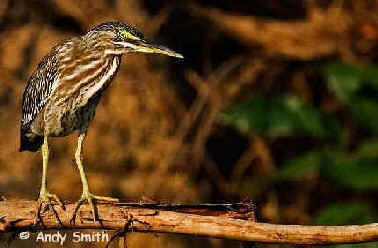
  128. Striated Heron  (ph) (*) ______  ba,ne,nc   (at one time considered conspecific with the Green Heron of North America and most of Central America, and was then called Green-backed Heron
    Butorides striatus


    IXOBRYCHUS

  129. Least Bittern  (ph) (*)  ______  ne 
    Ixobrychus exilis 

  130. Stripe-backed Bittern  (*)  ______  ba 
    Ixobrychus involucris 
    (monotypic)


    BOTAURUS

  131. Pinnated Bittern  (ph)  ______ 
    Botaurus pinnatus 


    TIGRISOMA

  132. Rufescent Tiger Heron  (ph) (*)  ______  ne,nc
    Tigrisoma lineatum marmoratum

  133. Fasciated Tiger Heron  ______
    Tigrosoma fasciatum


    NYCTICORAX

  134. Black-crowned Night Heron  (*) ______  ba,nw,ne,so,fs
    Nycticorax nycticorax 


    COCHLEARIUS

  135. Boat-billed Heron  (ph)  ______ 
    Cochlearius c. cochlearius 
    (the single member of its genus)


    SYRIGMA

  136. Whistling Heron  (ph) (*)  ______  ba,ne,nc 
    Syrigma s. sibilatrix 
    (the single member of its genus)


    BUBULCUS

  137. Western Cattle Egret  (ph) (*)  ______  ba,nw,ne,nc 
    Bubulcus ibis


    EGRETTA

  138. Little Blue Heron  (ph)  ______  (very rare in Argentina) 
    Egretta caerulea 
    (monotypic)

  139. Snowy Egret  (ph) (*)  ______  ba,nw,ne,nc,so
    Egretta thula 


    ARDEA

  140. Cocoi Heron  (ph) (*) ______  ba,nw,ne,nc  (has also been called White-necked Heron, but there's a species so-named in Australia)
    Ardea cocoi 
    (monotypic)


    CASMERODIUS

  141. Great Egret  (ph) (*)  ______ ba,nw,ne,nc
    Casmerodius (has been Ardea) alba egretta 


    FREGATA

  142. Magnificent Frigatebird  (ph)  ______ 
    Fregata magnificens 
    (now considered monotypic) 


    SULA

  143. Brown Booby  ______ (has occurred as a vagrant at Buenos Aires)
    Sula leucogaster


    PHALACROCORAX

  144. Neotropic Cormorant  (ph) (*)  ______  ba,nw,ne,nc,so,fs  (has also been called Olivaceous Cormorant)
    Phalacrocorax b. brasilianus 
    (formerly P. olivacous)

  145. Red-legged Shag  (nt) (*) ______  fs  (has been called Red-legged Cormorant)
    Phalacrocorax gaimardi
      (monotypic)

  146. Rock Shag  (ph) (*)  ______  so,fs  (has been called Rock Cormorant; another name has been Magellan Cormorant)
    Phalacrocorax magellanicus 
    (monotypic)


    A Rock Shag photographed during a FONT tour

  147. Guanay Cormorant  (*)  ______  so
    Phalacrocorax bougainvilli

  148. King Shag  (*) ______  so,fs
    Phalacrocorax albiventer

  149. Imperial Shag  (*) ______ fs  (has been called Blue-eyed Cormorant)
    Phalacrocorax atriceps

  150. Antarctic Shag ______  (this species breeds on the South Shetland Islands in the far-southern Atlantic)
    Phalacrocorax bransfieldensis
      

    ANHINGA

  151. Anhinga  (ph) (*)  ______  ne
    Anhinga a. anhinga


    SACORAMPHUS


  152. King Vulture  (ph) (*)  ______  nw 
    Sarcoramphus papa 
    (monotypic, and the single member of its genus)


    CORAGYPS

  153. Black Vulture  (ph) (*)   ______  nw,ne,nc,so 
    Coragyps atratus 
    (now said to be monotypic)


    CATHARTES

  154. Turkey Vulture  (ph) (*)  ______  ba,nw,ne,nc,so,fs 
    Cathartes aura 

  155. Lesser Yellow-headed Vulture  (ph) (*)  ______  ne 
    Cathartes burrovianus
      (now said to be monotypic)


    VULTUR

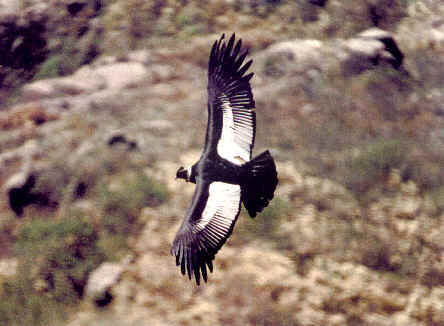
  156. Andean Condor (nt) (ph) (*) ______  nw,nc,fs  
    Vultur gryphus


    An Andean Condor


    CARACARA

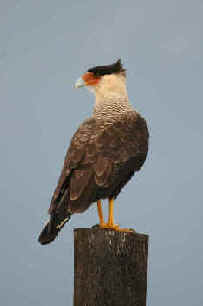
  157. Southern Crested Caracara  (ph) (*) ______  ba,nw,ne,nc,so,fs  (was considered conspecific with Northern Crested Caracara, Caracara cheriway, of north of the Amazon & further north in Central America & parts of North America) 
    Caracara plancus


    A Southern Crested Caracara


    MILVAGO

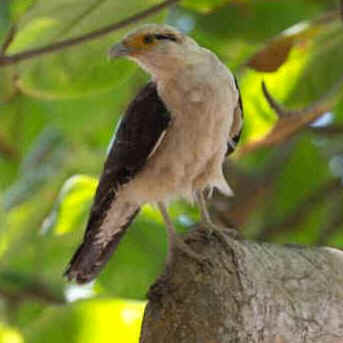
  158. Yellow-headed Caracara  (*)  ______  ne 
    Milvago c. chimachima

  159. Chimango Caracara  (ph) (*)  ______  ba,ne,nc,so,fs 
    Milvago c. chimago


    POLYBORUS

  160. Mountain Caracara  (*)  ______  nw
    Polyborus megalopterus

  161. White-throated Caracara  (*)  ______ fs
    Polyborus albogularis

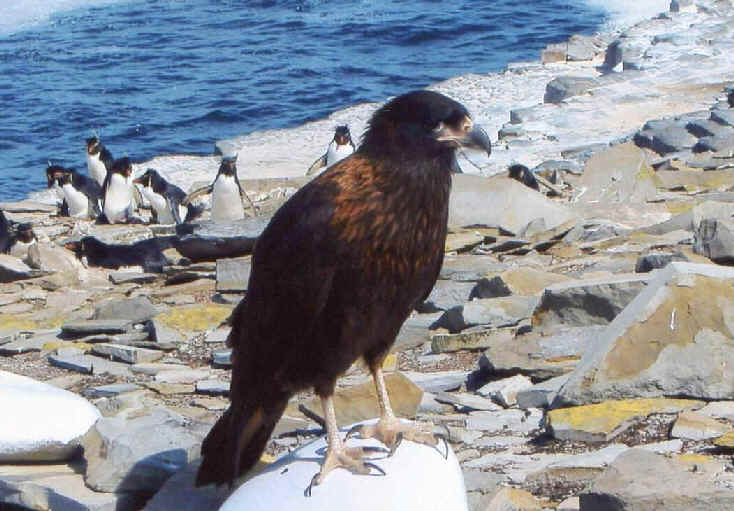
  162. Striated Caracara  ______
    Polyborus australis 


    HERPETOTHERES

  163. Laughing Falcon  ______ 
    Herpetotheres cachinnans 
    (the single member of its genus)


    MICRASTUR

  164. Barred Forest Falcon  ______ 
    Micrastur r. ruficollis

  165. Collared Forest Falcon  ______ 
    Micrastur s. semitorquatus 


    SPIZIAPTERYX 

  166. Spot-winged Falconet  (*)  ______  nc,so
    Spizapteryx circumcinctus


    FALCO

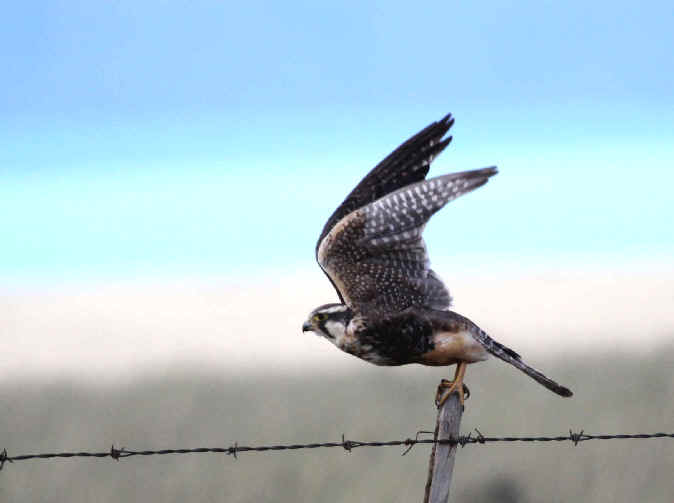
  167. American Kestrel  (ph) (*) ______  ba,nw,ne,nc,so,fs 
    Falco sparverius caerae

  168. Bat Falcon  (ph) (*)  ______  ne 
    Falco r. rufigularis

  169. Orange-breasted Falcon  (ph)  ______ 
    Falco deiroleucos 
    (monotypic)

  170. Aplomado Falcon  (ph) (*) ______  nw,ne,nc,so  
    Falco femoralis

  171. Peregrine Falcon  (ph) (*)  ______  nw,nc.fs 
    Falco peregrinus tundrius


    PANDION

  172. Osprey  (ph)  ______ 
    Pandion haliaetus 
    (the single member of its genus)


    ELANOIDES

  173. Swallow-tailed Kite  (*)  ______ nw,ne
    Elanoides forficatus 
    (the single member of its genus)


    GAMPSONYX

  174. Pearl Kite  ______ 
    Gampsonyx swainsonii 
    (the single member of its genus)


    ELANUS

  175. White-tailed Kite  (*)  ______  ba,nw,ne,nc,so 
    Elanus l. leucurus


    LEPTODON

  176. Gray-headed Kite  (*)  ______  ne  
    Leptodon cayanensis 
    (the single member of its genus)


    CHONDROHIERAX

  177. Hook-billed Kite  (*)  ______  nw,ne 
    Chondrohierax uncinatus 
    (the single member of its genus)


    ROSTRHAMUS
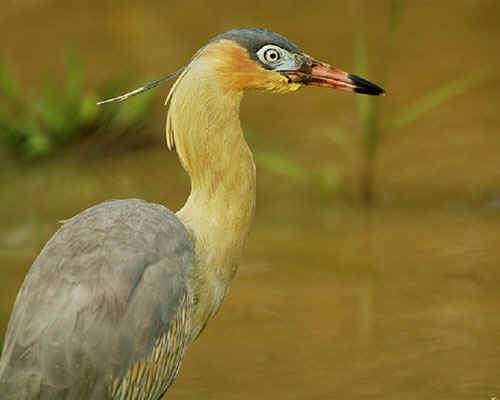
  178. Snail Kite  (ph) (*)  ______  ba,ne 
    Rostrhamus s. sociabilis 


    HARPAGUS

  179. Rufous-thighed Kite  (*)  ______  nw,ne 
    Harpagus diodon
    (monotypic)


    ICTINIA

  180. Plumbeous Kite  (*)  _______   nw,ne
    Ictinia plumbea
    (monotypic)

  181. Mississippi Kite ______
    Ictinia mississippiensis


    CIRCUS

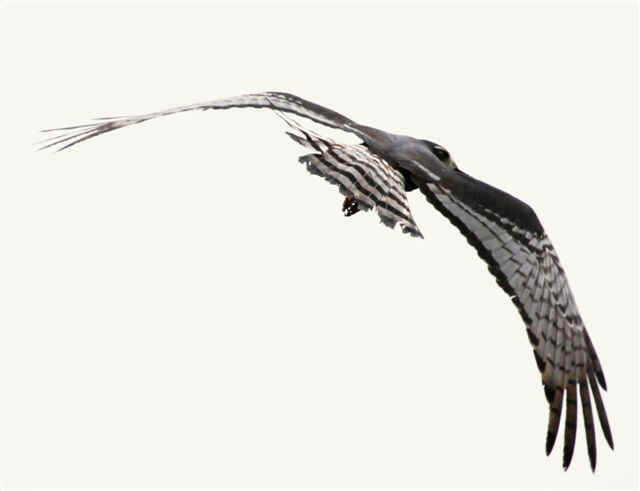
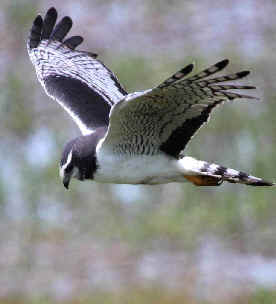
  182. Long-winged Harrier  (ph) (*)  ______  ba,ne 
    Circus buffoni
    (monotypic)

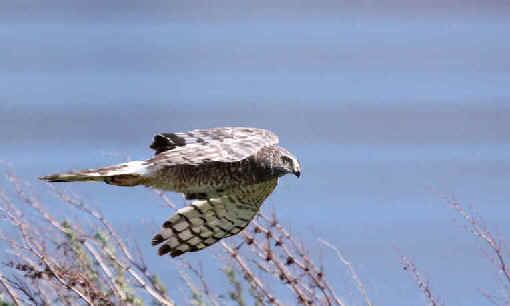
  183. Cinereous Harrier  (*)  ______  nw,nc,so,fs  
    Circus cinereus
    (monotypic)


    GERANOSPIZA

  184. Crane Hawk  (ph) (*) ______ 
    Geranospiza caerulescens 
    (the single member of its genus) 


    ACCIPITER

  185. Rufous-thighed Hawk  (*)  ______  (was considered conspecific with the Sharp-shinned Hawk)  
    Accipiter erythronemius

  186. Bicolored Hawk (*)  ______  nw,fs 
    Accipiter bicolor 

  187. Tiny Hawk  _____ 
    Accipiter superciliosus

  188. Gray-bellied Hawk (nt)  ______ 
    Accipiter poliogaster 
    (monotypic)


    LEUCOPTERNIS

  189. Mantled Hawk (nt)  ______ 
    Leucopternis polionotus 
    (monotypic)  


    BUTEOGALLUS

  190. Great Black Hawk  (*)  ______  nw,ne 
    Buteogallus u. urubitinga 

  191. Savanna Hawk  (ph) (*) ______  ne 
    Buteogallus meridionalis 
    (monotypic) 


    HARPYHALIAETUS

  192. Crowned Solitary Eagle (t3) (ph) (*)  ______ 
    Harpyhaliaetus coronatus 
    (monotypic) 


  193. Montane Solitary Eagle ______
    Harpyhaliaetus solitarius 


    BUSARELLUS

  194. Black-collared Hawk  (ph) (*) ______  ne 
    Busarellus nigricollis 
    (the single member of its genus)


    GERANOAETUS

  195. Black-chested Buzzard-Eagle  (ph) (*)  ______  nw,ne,nc,so,fs   
    Geranoaetus melanoleucus 
    (the single member of its genus)


    BUTEO

  196. Gray-lined Hawk  (ph) (*)  ______  (includes "Gray Hawk" of mostly Central America)
    Buteo nitida pallida

  197. Roadside Hawk  (ph) (*) ______  ba,nw,ne,nc 
    Buteo magnirostris 

  198. Variable Hawk  (*)  ______  nw,nc,so
    Buteo p. polyosoma  ("Red-backed Hawk)
    Buteo polyosoma poecilochrous  
    ("Puna Hawk")

  199. Rufous-tailed Hawk  ______
    Buteo ventralis

  200. White-throated Hawk  ______
    Buteo albigula


  201. Short-tailed Hawk  (ph) (*) ______  nw 
    Buteo b. brachyurus

  202. White-tailed Hawk  (*)  ______  ne,nc,so 
    Buteo a. albicaudatus

  203. Swainson's Hawk  (ph) (*) ______  nw
    Buteo swainsoni 


    Swainson's Hawk
    (photo by Howard Eskin)


    PARABUTEO

  204. Bay-winged Hawk  (ph) (*)  ______  ba,ne  (called Harris' Hawk in North America)
    Parabuteo unicinctus 
    (the single member of its genus)


    PERCNOHIERAX

  205. White-rumped Hawk ______
    Percnohierax
    (formerly Buteo) leucorrhous


    HARPIA

  206. Harpy Eagle (nt) (ph)  _____ 
    Harpia harpyja 
    (monotypic, and the single member of its genus)


    MORPHNUS 

  207. Crested Eagle  (nt) ______
    Morphnus guianensis


    SPIZAETUS

  208. Ornate Hawk-Eagle  (ph)  ______ 
    Spizaetus o. ornatus

  209. Black Hawk-Eagle  ______ 
    Spizaetus t. tyrannus


    SPIZASTUR

  210. Black-and-white Hawk-Eagle  ______ 
    Spizastur melanoleucus 
    (monotypic, and the single member of its genus)


    OROAETUS

  211. Black-and-chestnut Eagle  ______
    Oroaetus isidori
     

    CARIAMA  

  212. Red-legged Seriema  (ph)  ______ 
    Cariama cristata 
    (monotypic, and the single member of its genus)


    CHUNGA

  213. Black-legged Seriema  (*)  ______  nc
    Chunga burmeisteri  (the single ember of its genus) 


    RALLUS

  214. Austral Rail   ______
    Rallus antarcticus


    PARDIRALLUS

  215. Plumbeous Rail  (*) ______  ba,nw,ne,so
    Pardirallus
    (formerly Rallus) sanguinolentus

  216. Blackish Rail  ______ 
    Pardirallus nigricans 

  217. Spotted Rail ______
    Pardirallus maculatus 


    ARAMIDES

  218. Giant Wood Rail  (*) ______  ne 
    Aramides ypecaha 
    (monotypic) 

  219. Gray-necked Wood Rail  (ph) (*) ______  ba,nw 
    Aramides c. cajanea

  220. Slaty-breasted Wood Rail  (*)  ______  ne 
    Aramides saracura 
    (monotypic)


    NEOCREX

  221. Paint-billed Crake ______
    Neocrex erythrops


    PORZANA

  222. Ash-throated Crake  (*)  ______  ne 
    Porzana a. albicollis

  223. Yellow-breasted Crake  (*) ______  ne
    Porzana flaviventer


  224. Dot-winged Crake ______ 
    Porzana spiloptera  


    MICROPYGIA 

  225. Ocellated Crake ______
    Micropygia schomburgkii 


    LATERALLUS

  226. Rufous-sided Crake  (*) ______  nw 
    Laterallus melanophaius

  227. Red-and-white Crake ______
    Laterallus leucopyrrhus

  228. Black Rail  (nt) ______  (might better be called Black Crake)
    Laterallus jamaicensis


    COTURNICOPS

  229. Speckled Crake ______   (also called Speckled Rail)
    Coturnicops notatus
    (monotypic)


    GALLINULA

  230. Common Gallinule (or Moorhen) (*) ______  ba,nw,ne,nc,so 
    Gallinula chloropus galeata

  231. Spot-flanked Gallinule  (*)  ______  ba 
    Gallinula m. melanops


    PORHYRULA

  232. Purple Gallinule  (ph) (*)  ______  ne
    Porphyrula martinicus
    (monotypic)

  233. Azure Gallinule  (*)  ______  ne 
    Porphyrula flavirostris
    (monotypic)


    FULICA

  234. Red-gartered Coot  (*)  ______   ba,nw,nc,so,fs
    Fulica armilata 
    (monotypic)

  235. White-winged Coot  (*)  ______  ba,nw,nc,so,fs  
    Fulica leucoptera
    (monotypic)

  236. Red-fronted Coot  (*)   ______  ba,nc,so,fs  
    Fulica rufifrons 
    (monotypic)

  237. Andean Coot  (*) ______  nw,nc
    Fulica ardesiaca

  238. Giant Coot  (*)  ______  nw
    Fulica gigantea

  239. Horned Coot  (t3) (*)  ______  nw
    Fulica cornuta


    HELIORNIS

  240. Sungrebe  ______  (an alternate name would be  "American Finfoot")
    Heliornis fulica
    (monotypic)


    ARAMUS
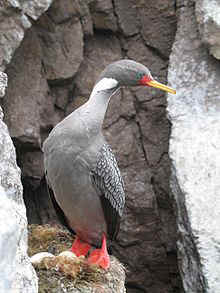
      
  241. Limpkin  (ph) (*) ______ ba,ne
    Aramus guarauna 
    (the single member of its genus & family)


    CHIONIS

  242. Snowy Sheathbill  (*)  ______  so,fs  
    Chionis albus


    PLUVIANELLUS
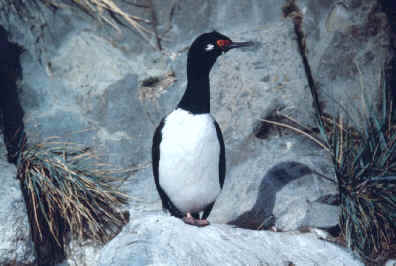
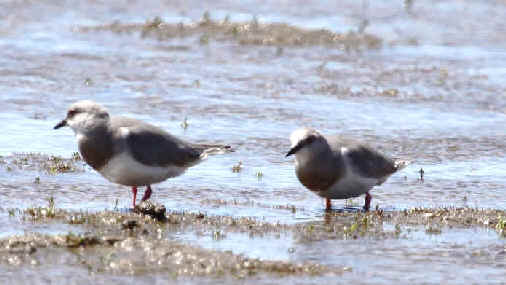
  243. Magellanic Plover  (*)  ______  fs
    Pluvianellus socialis


    Two rare Magellanic Plovers photographed during a FONT tour 


    HAEMATOPUS  
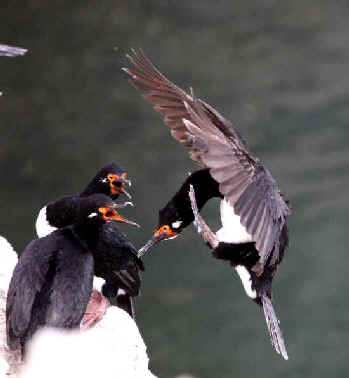
  244. American Oystercatcher  (ph) (*) ______  so 
    Haematopus palliatus

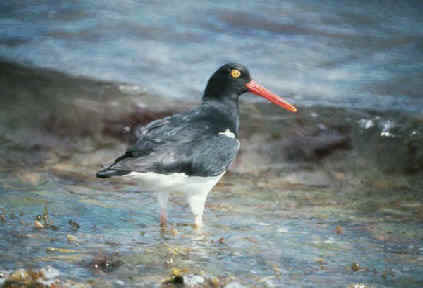
  245. Magellanic Oystercatcher  (ph) (*)  ______  fs
    Haematopus leucopodus


    A Magellanic Oystercatcher photographed during a FONT tour
    (photo by Armas Hill)

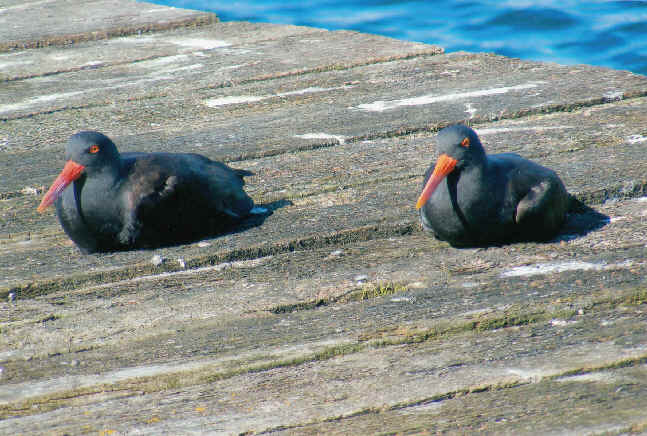
  246. Blackish Oystercatcher  (*)  ______  so,fs
    Haematopus ater 


    RECURVIROSTRA

  247. Andean Avocet  (*)  ______  nw
    Recirvirostra andina


    HIMANTOPUS

  248. White-backed Stilt  (*)  ______  ba,ne,nc,so  (was said to be conspecific with the Black-winged Stilt of the Old World, Himantopus himantopus, including also the Black-necked Stilt of North America) 
    Himantopus melanurus

  249. Black-necked Stilt  (*)  ______  nw
    Himantopus mexicanus


    VANELLUS
  250. Southern Lapwing  (ph) (*) ______  ba,nw,ne,nc,so,fs 
    Vanellus chilensis 

  251. Andean Lapwing  (*)  ______  nw,nc
    Vanellus resplendens


    PHEGORNIS

  252. Diademed Plover  ______
    Phegornis mitchellii


    PLUVIALIS

  253. Grey Plover  (ph) (*) ______  so   (has been called Black-bellied Plover in the Americas) 
    Pluvialis squatarola cynosurae

  254. Amercian Golden Plover  (ph) (*)  ______ 
    Pluvialis dominica 
    (monotypic)


    CHARADRIUS

  255. Collared Plover  (*) ______  nw 
    Charadrius collaris
    (monotypic)

  256. Semipalmated Plover  (ph) (*) ______ 
    Charadrius semipalmatus 
    (monotypic) 


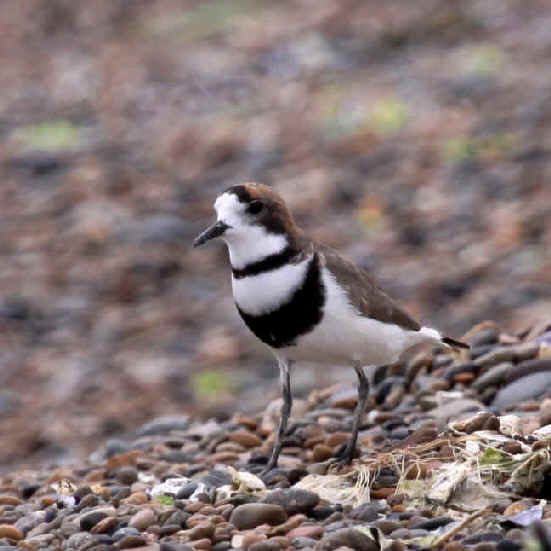
  257. Two-banded Plover  (ph) (*) ______  so,fs 
    Charadrius falklandicus


    Two-banded Plover
    (photo Larry O'Meallie) 

  258. Puna Plover  (*)  ______  nw
    Charadrius alticola 


  259. Rufous-chested Plover  (*) ______  fs  (has been called Rufous-chested Dotterel
    Charadrius modestus 


    OREOPHOLUS

  260. Tawny-throated Dotterel  (*) ______  nw,so,fs  
    Oreopholus ruficollis


    NYCTICRYPHES

  261. South American Painted Snipe (*) ______  nw  
    Nyctiryphes semicollaris


    JACANA  

  262. Wattled Jacana  (ph) (*)  ______  ba,nw,ne,nc 
    Jacana j. jacana


    THINOCORUS

  263. Least Seedsnipe  (*) ______  so,fs 
    Thinocorus rumicivorus

  264. Gray-breasted Seedsnipe  (*)  ______  nw,fs
    Thinocorus orbignyianus


    ATTAGIS

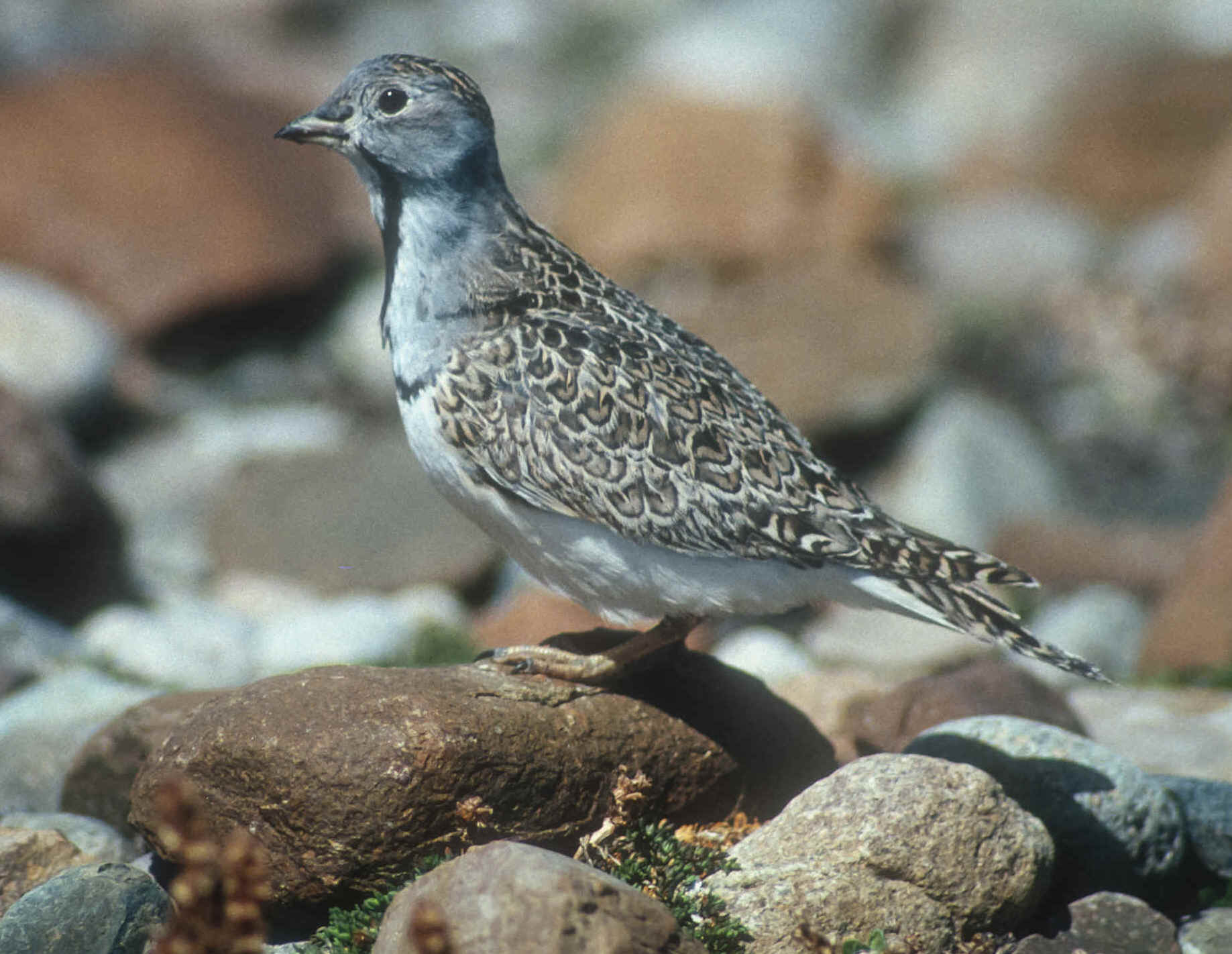
  265. White-bellied Seedsnipe  (*)  ______  fs
    Attagis malouinus

  266. Rufous-bellied Seedsnipe  ______
    Attagis gayi  


    GALLINAGO  

  267. South American Snipe  (*)  ______  ne,so,fs  (was considered conspecific with what's now the Wilson's Snipe, Gallinago delicata, of North America, which was formerly conspecific with the Common Snipe, Gallinago gallinago, of the Old World) 
    Gallinago p. paraguaiae 


  268. Fuegian Snipe  (*)  ______  fs  (has been called Strickland's Snipe or Cordilleran Snipe)
    Gallinago stricklandis

  269. Puna Snipe  (ph)  ______
    Gallinago andina


    LIMNODROMUS

  270. Short-billed Dowitcher  (*) ______
    Limnodromus griseus 


    LIMOSA

  271. Hudsonian Godwit  (*)  ______  fs 
    Limosa haemastica 
    (monotypic) 


    NUMENIUS

  272. Whimbrel  (ph) (*) ______  fs
    Numenius phaeopus

  273. Eskimo Curlew  (t1) ______  (now presumed extinct; the last sightings may have been in the 1980s)
    Numenius borealis 


    BARTRAMIA

  274. Upland Sandpiper  (*)  ______  ne 
    Bartramia longicauda 
    (monotypic, and the single member of its genus)


    TRINGA

  275. Greater Yellowlegs  (*)  ______  ba,nw,ne,so,fs 
    Tringa melanoleuca 
    (monotypic)

  276. Lesser Yellowlegs  (*)  ______  ba,ne,so 
    Tringa flavipes
      (monotypic)

  277. Solitary Sandpiper  (ph) (*) ______  ne 
    Tringa s. solitaria

  278. Willet  (ph) ______ 
    Tringa
    (formerly Catoptrophorus) semipalmatus


    ACTITIS

  279. Spotted Sandpiper  (ph) (*)  ______  ba 
    Actitis macularia
    (monotypic)


    ARENARIA

  280. Ruddy Turnstone  (ph) (*)  _____ 
    Arenaria interpres morinella


    APHRIZA

  281. Surfbird  (*)  ______
    Aphriza virgata 


    CALIDRIS

  282. Red Knot  (ph) (*)  ______  so,fs 
    Calidris canutus rufa

  283. Sanderling  (ph) (*)  ______  so 
    Calidris alba rubida

  284. Baird's Sandpiper  (*)  _____  ba,nw,nc 
    Calidris bairdii 
    (monotypic)

  285. White-rumped Sandpiper  (ph) (*)  ______  ba,nc,so,fs 
    Calidris fuscicollis
    (monotypic)

      
  286. Pectoral Sandpiper  (ph) (*)  ______  ba,nc 
    Calidris melanotos 
    (monotypic)

  287. Stilt Sandpiper  ______ 
    Calidris
    (formerly Micropalama) himantopus (monotypic) 

  288. Semipalmated Sandpiper ______
    Calidris pusilla

  289. Least Sandpiper  (ARr) (*) ______  ba
    Calidris minutilla


    TRYNGITES

  290. Buff-breasted Sandpiper  (nt) (ph) ______  
    Tryngites subruficollis  (the single member of its genus)


    PHALAROPUS

  291. Wilson's Phalarope  (*)  ______  fs 
    Phalaropus
    (formerly Steganopus) tricolor  (monotypic) 

  292. Red Phalarope ______
    Phalaropus fulicarius

  293. Red-necked Phalarope  ______
    Phalaropus
    (formerly Lobipes) lobatus
     

    LARUS

  294. Kelp Gull  (ph) (*) ______  ba,so,fs  (called Domincan Gull in Australia & Africa) 
    Larus d. dominicanus   

  295. Olrog's Gull (t3)  ______  (was part of the Band-tailed Gull when it was conspecific with the Belcher's Gull of the Pacific coast of South America)  
    Larus atlanticus 
    (monotypic)

  296. Gray-hooded Gull  (ph) (*)  ______  ba,nw 
    Larus c. cirrocephalus

  297. Brown-hooded Gull  (*)   ______  ba,nc,so,fs 
    Larus maculipennis 
    (monotypic) 


  298. Franklin's Gull  (ph)  ______  (has occurred as a vagrant in Amazonian Brazil and on the Fernando de Noronha islands offshore from northeast Brazil)
    Larus pipixcan

  299. Andean Gull  (*)  ______  nw,nc
    Larus serranus
     

    LEUCOPHAEUS 

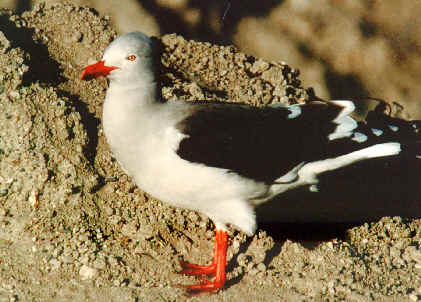
  300. Dolphin Gull  (*)  ______  fs  (another name has been Magellan Gull)
    Leucophaeus scoresbii 


    A Dolphin Gull photographed during a FONT tour


    GELOCHELIDON

  301. Gull-billed Tern  (*) ______  ba
    Gelochelidon nilotica


    STERNA

  302. Snowy-crowned Tern  (*)  ______  ba,so   (has also been called Trudeau's Tern)
    Sterna trudeaui
    (monotypic) 

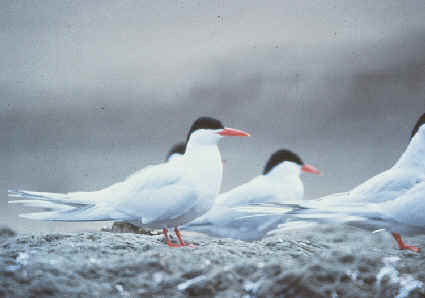
  303. South American Tern  (ph) (*)  ______  so,fs 
    Sterna hirundinacea 
    (monotypic)


    South American Terns during a FONT tour
    (photo by Armas Hill)

  304. Antarctic Tern  ______ 
    Sterna vittata

  305. Common Tern  (*)  ______  so 
    Sterna h. hirundo

  306. Arctic Tern ______  (seasonally offshore)
    Sterna paradisaea

  307. Roseate Tern  (ph) ______
    Sterna dougallii 


    PHAETUSA

  308. Large-billed Tern  (ph) (*) ______  ne 
    Phaetusa simplex chloropoda 
    (the single member of its genus)


    STERNULA

  309. Yellow-billed Tern  (*)  ______  ne  (has also been called Amazon Tern, but not restricted to that basin) 
    Sternula
    (formerly Sterna) superciliaris (monotypic) 


    THALASSEUS

  310. Cayenne Tern  (*)  ______  so  (was considered conspecific with the more-northerly Sandwich Tern)
    Thalasseus
    (formerly Sterna) eurygnatha

  311. Royal Tern  (ph) (*)  ______  so 
    Thalasseus
    (formerly Sterna) m. maxima


    RYNCHOPS

  312. Black Skimmer  (ph) (*)  ______  ba 
    Rynchops nigra 


    STERCORARIUS

  313. Parasitic Jaeger  (ph)  ______  (has also been called Arctic Skua)
    Stercorarius parasiticus  

  314. Long-tailed Jaeger  (ph) ______  (offshore, with records mostly off the seacoast of southeastern & far-southern Brazil)
    Stercorarius longicaudus  

  315. Pomarine Skua (or Jaeger)  (ph) ______  (generally occurs offshore, seasonally, but it has been recorded on the Amazon & Tapajos Rivers)
    Stercorarius pomarinus  

  316. South Polar Skua  (ph) ______  (offshore waters)
    Stercorarius maccormicki 

  317. Brown Skua  (*) ______  so,fs  (offshore & coastally) 
    Stercorarius antarcticus

  318. Chilean Skua  (ph) (*) ______  fs  (offshore & coastally) 
    Stercorarius chilensis  


    PATAGIOENAS

  319. Scaled Pigeon  ______ 
    Patagioenas
    (formerly Columba) speciosa (monotypic)

  320. Picazuro Pigeon  (*)  ______  ba,nw,ne,nc 
    Patagioenas
    (formerly Columba) (formerly Columba) picazuro

  321. Spot-winged Pigeon  (*)  ______  ba,nc,so 
    Patagioenas
    (formerly Columba) maculosa

     
  322. Pale-vented Pigeon  (*)  ______  nw,ne 
    Patagioenas
    (formerly Columba) cayennensis 

  323. Band-tailed Pigeon  ______
    Patagioenas
    (formerly Columba) fasciata 

  324. Chilean Pigeon  ______  
    Patagioenas (formerly Columba) araucana


    COLUMBA

  325. Common (or Feral) Pigeon (i) (*)  ______  ba,nw,ne,nc,so,fs 
    Columba livia


    ZENAIDA

  326. Eared Dove  (ph) (*)  ______  ba,nw,ne,nc,so,fs 
    Zenaida auriculata virgata


    COLUMBINA

  327. Ruddy Ground Dove  (*)  ______  ba,ne,nc 
    Columbina t. talpacoti

  328. Picui Ground Dove  (*)  ______  ba,nw,ne,nc,so  
    Columbina picui

  329. Scaled Dove  (ph)  ______ 
    Columbina squammata


    CLARAVIS

  330. Blue Ground Dove  ______ 
    Claravis preiosa
      (monotypic) 

  331. Purple-winged Ground Dove  (t2)  ______
    Claravis godefrida


    METRIOPELIA

  332. Black-winged Ground Dove  (*)  ______  nc
    Metriopelia melanoptera

  333. Golden-spotted Ground Dove  (*)  ______  nw
    Metriopelia aymara

  334. Bare-faced Ground Dove  (*)  ______  nw
    Metriopelia ceciliae

  335. Moreno's Ground Dove  (*)  ______  nc
    Metriopelia morenoi


    LEPTOTILA

  336. White-tipped Dove  (*)  ______  ba,ne,nc   (has been called White-fronted Dove)
    Leptotila verreauxi 

     
  337. Gray-fronted Dove  (*) ______  ne 
    Leptotila rufaxilla 

  338. Yungas Dove  (*)  ______  nc  (has been called Large-tailed Dove and White-faced Dove) 
    Leptotila megalura


    GEOTRYGON

  339. Ruddy Quail-Dove  ______ 
    Geotrygon m. montana

  340. Violaceous Quail-Dove  (*)  ______  ne 
    Geotrygon violacea

  341. White-throated Quail-Dove  (*)  ______  nw
    Geotrygon frenata


    ARA

  342. Red-and-green Macaw  (ph)  ______ 
    Ara chloroptera 
    (monotypic)  


  343. Military Macaw  ______
    Ara militaris


    PRIMOLIUS

  344. Blue-winged Macaw (t3) (*) ______  ne  (has also been called Illiger's Macaw)
    Primolius
    (formerly Propyrrhura) maracana  (monotypic)

  345. Golden-collared Macaw  (ph) (*)  ______  ne  (has also been called Cassin's Macaw; also called Yellow-collared Macaw)
    Primolius
    (formerly Propyrrhura) auricollis  (monotypic) 


    ANODORHYNCHUS

  346. Glaucous Macaw ______  (extinct)
    Anodorhynchus glaucus 


    ARATINGA

  347. Blue-crowned Parakeet  (*) ______  nw 
    Aratinga acuticaudata

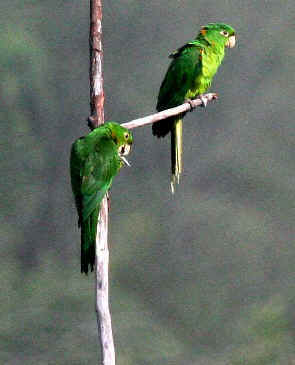
  348. White-eyed Parakeet  (ph) (*)  ______  nw,ne 
    Aratinga leucophtalmus

  349. Peach-fronted Parakeet  (ph) ______ 
    Aratinga aurea
    (monotypic) 


  350. Mitred Parakeet  (*)  ______  nw,nc
    Aratinga mitrata


    NANDAYUS

  351. Nanday Parakeet  (ph) ______  (has also been called Black-hooded Parakeet)
    Nandayus nenday
    (monotypic, and the single member of its genus)


    CYANOLISEUS

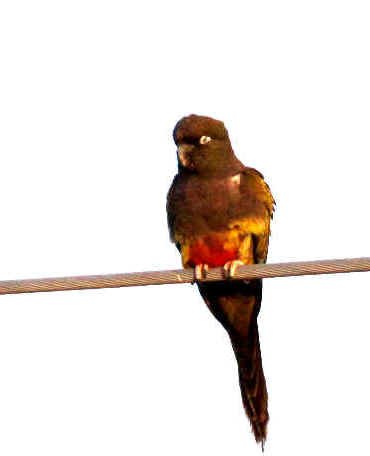
  352. Burrowing Parrot  (*)  ______  so  (another name has been Patagonian Conure)
    Cyanoliseus patagonus  (the single member of its genus)


    PYRRHURA

  353. Reddish-bellied Parakeet  (*)  ______  ne  (also called Maroon-bellied Parakeet)
    Pyrrhura frontalis 

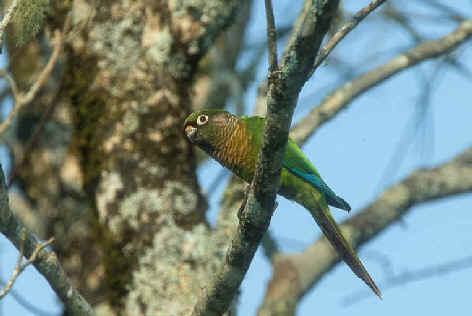
  354. Green-cheeked Parakeet  (*)   ______ 
    Pyrrhura molinae


    ENICOGNATHUS

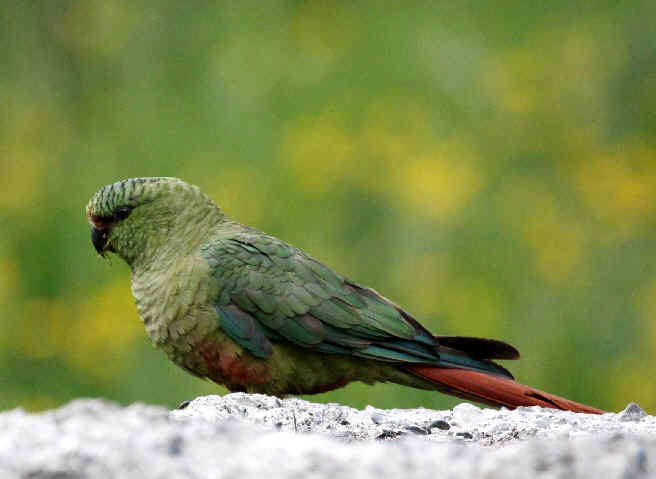
  355. Austral Parakeet  (*)  ______  fs
    Enicognathus ferrugineus


    MYIOPSITTA

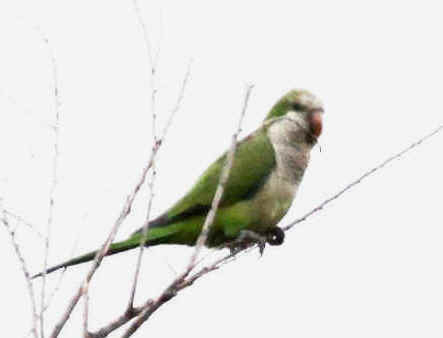
  356. Monk Parakeet  (*)   ______  ba,ne,nc 
    Myiopsitta monachus 


    FORPUS

  357. Blue-winged Parrotlet  (*)  ______  ne  (was, at one time, considered conspecific with the more-northerly Green-rumped Parrotlet, Forpus passerinus
    Forpus xanthopterygius
    (formerly crassirostris) xanthopterygius   


    BROTOGERIS

  358. Yellow-chevroned Parakeet  ______
    Brotogeris chiriri


    BOLBORHYNCHUS

  359. Sierra Parakeet  (*)  ______  nc   (has been called Gray-hooded Parakeet)
    Psilopsiagon
    (formerly Bolborhynchus) aymara 

  360. Mountain Parakeet  (*)  ______  nw 
    Psilopsiagon
    (formerly Bolborhynchus) aurifrons


    PIONOPSITTA

  361. Pileated Parrot (nt) (qe) (*) ______ es,se  (has also been called the Red-capped Parrot)
    Pionopsitta pileata
    (monotypic)


    PIONUS

  362. Scaly-headed Parrot  (*)   ______  nw,ne 
    Pionus maximiliani 


    AMAZONA

  363. Turquoise-fronted Amazon  (ph) (*) ______  nw,ne,nc  (has also been called Blue-fronted Amazon, or Parrot)
    Amazona aestiva xanthopteryx

  364. Vinaceous-breasted Amazon  (t2) ______ 
    Amazona vinacea
    (monotypic) 

  365. Tucuman Amazon  (*)  ______  nw,nc  (was called Alder Amazon, or Parrot)
    Amazona tucumana


    CROTOPHAGA

  366. Smooth-billed Ani  (ph) (*)  ______  ne,nc 
    Crotophaga ani
    (monotypic)

  367. Greater Ani  (*)  ______  ne
    Crotophaga major
    (monotypic)


    COCCYZUS

  368. Dark-billed Cuckoo  (*)  ______  ne 
    Coccyzus melacoryphus
    (monotypic)

  369. Pearly-breasted Cuckoo ______
    Coccyzus euleri

  370. Yellow-billed Cuckoo ______
    Coccyzus americanus

  371. Black-billed Cuckoo  (*) ______  nc
    Coccyzus erythropyhalmus 


    COCCYCUA

  372. Ash-colored Cuckoo  (*)  ______  ba,so 
    Coccycua cinereus 
    (monotypic)  


    PIAYA

  373. Squirrel Cuckoo  (ph) (*)  ______  nw,ne
    Piaya cayana


    TAPERA

  374. Striped Cuckoo  (*)  ______  ne,nc
    Tapera naevia 
    (the single member of its genus)


    DROMOCOCCYX

  375. Pheasant Cuckoo  ______ 
    Dromococcyx phasianellus

  376. Pavonine Cuckoo  (*) ______
    Dromococcyx pavoninus 


    GUIRA

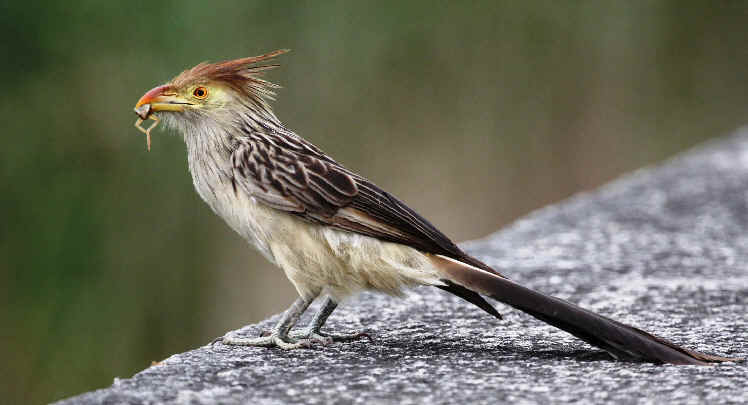
  377. Guira Cuckoo  (ph) (*)  ______  ba,nw,ne,nc,so
    Guira guira
    (monotypic, and the single member of its genus)


    This photograph of Guira Cuckoos, taken during a FONT tour, 
    was subsequently chosen to be in the National Geographic web-site.
    (photo by Marie Gardner)


    TYTO

  378. Barn Owl  (ph) (*) ______ 
    Tyto alba 


    BUBO

  379. Great Horned Owl  (ph) (*)  ______  ne 
    Bubo virginianus 

  380. Lesser Horned Owl  (ph) (*) ______  nc,fs
    Bubo magellanicus


    PULSATRIX

  381. Spectacled Owl  (ph)  ______  
    Pulsatrix p. perspicillata

  382. Tawny-browed Owl  ______  (has also been called White-chinned Owl)
    Pulsatrix koeniswaldiana
    (monotypic)


    STRIX

  383. Mottled Owl  ______ 
    Strix virgata 

  384. Rusty-barred Owl  ______ 
    Strix hylophila
    (monotypic)

  385. Black-banded Owl  ______
    Strix
    (formerly Ciccaba) huhula

  386. Rufous-legged Owl ______
    Strix rufipes


    MEGASCOPS

  387. Tropical Screech Owl  (*) ______  ne 
    Megascops
    (formerly Otus) choliba 

  388. Black-capped Screech-Owl  ______ 
    Megascops
    (formerly Otus) atricapilla
    (Was historically lumped with these other Screech-Owls: Guatemalan, Rio Napo, Montane Forest, and Long-tufted. When so, called Variable Screech-Owl.) (There are 3 color morphs: red, gray, and dark.)  

  389. Long-tufted Screech Owl  ______
    Megascops
    (formerly Otus) sanctaecatarinae

  390. Yungas Screech Owl  (*)  ______  nw  (has been called Montane Forest Screech Owl or Hoy's Screech Owl) 
    Megascops (formerly Otus hoyi  


    GLAUCIDIUM

  391. Ferruginous Pygmy Owl  (ph) (*)  ______  ne 
    Glaucidium brasilianum

  392. Austral Pygmy Owl  (*) ______  fs 
    Glaucidium nanum


    ATHENE

  393. Burrowing Owl  (ph) (*) ______  ba,ne,nc,so 
    Athene cunicuaria 


    ASIO

  394. Short-eared Owl  (ph)  ______ 
    Asio flammeus suinda

  395. Stygian Owl ______
    Asio stygius


    PSEUDOSCOPS

  396. Striped Owl  (ph) ______  
    Pseudoscops
    (formerly Asio) clamator 


    AEGOLIUS

  397. Buff-fronted Owl ______
    Aegolius harrisii 


    NYCTIBIUS

  398. Common Potoo  (*)   ______  ne  (has also been called Gray Potoo)
    Nyctibius g. griseus


    LUROCALIS

  399. Short-tailed Nighthawk  (*)  ______  ne  (has also been called Semicollared Nighthawk)
    Lurocalis semitorquatus
    (the southern subspecies L. s. natteri has been called "Chestnut-banded Nighthawk")


    PODAGER

  400. Nacunda Nighthawk  (*)  ______  ne,nc 
    Podager n. nacunda


    CHORDEILES

  401. Common Nighthawk  ______ 
    Chordeiles minor


    NYCTIDROMUS

  402. Pauraque  (ph) (*)  ______  ne 
    Nyctidromus albicollis 


    NYCTIPHRYNUS

  403. Ocellated Poorwill   ______   
    Nyctiphrynus ocellatus


    CAPRIMULGUS

  404. Rufous Nightjar  (ph) (*) ______ 
    Caprimulgus rufus 


  405. Silky-tailed Nightjar  ______ 
    Caprimulgus sericocaudatus

  406. Band-winged Nightjar  (*)  ______  nw 
    Caprimulgus longirostris

  407. Little Nightjar  (ph) (*) ______  ne 
    Caprimulgus parvulus


    HYDROPSALIS

  408. Scissor-tailed Nightjar  (ph) (*) ______  ne 
    Hydropsalis torquata
    (formerly brasiliana)  


    MACROPSALIS

  409. Long-trained Nightjar (nt)  ______ 
    Macropsalis creagra
    (monotypic, and the single member of its genus)


    UROPSALIS

  410. Lyre-tailed Nightjar  ______
    Uropsalis lyra


    ELEOTHREPTUS

  411. Sickle-winged Nightjar (nt) (*) ______  ne 
    Eleothreptus anomalus 
    (monotypic, and the single member of its genus)


    STREPTOPROCNE

  412. White-collared Swift  (*)   ______  ne,nc 
    Streptoprocne zonaris 


    CYPSELOIDES

  413. Sooty Swift  ______ 
    Cypseloides fumigatus 
    (monotypic)

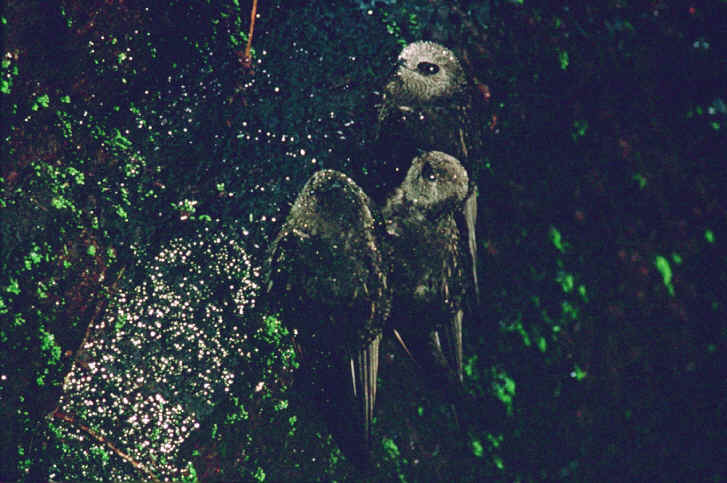
  414. Great Dusky Swift  (*)  ______  ne 
    Cypseloides senex 
    (monotypic) 


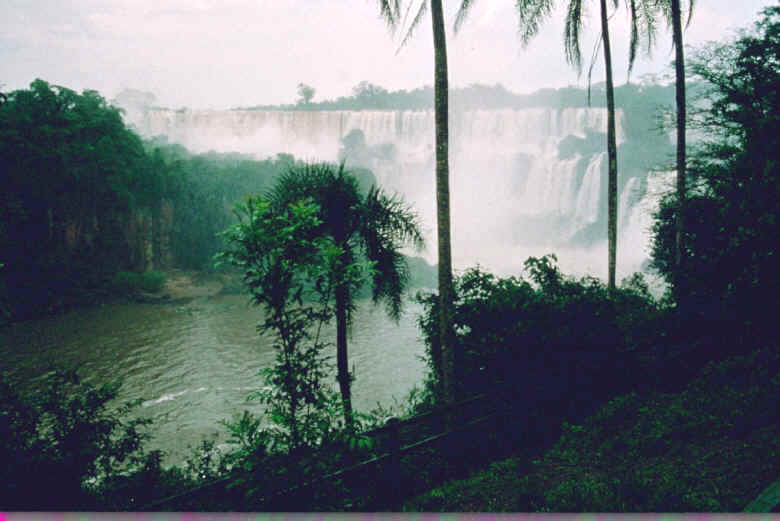
    Great Dusky Swifts (above) photographed at Iguazu Falls (below) during a FONT tour.

    The swifts were perched on the mossy, rocky ledge beneath the falls.   


  415. Rothchild's Swift  (nt) (*)  ______  nw  (another name was Dark Brown Swift) 
    Cypseloides rothschildi


    CHAETURA

  416. Ashy-tailed Swift  (*)  ______  ne 
    Chaetura meridionalis
      (monotypic)

  417. Gray-rumped Swift  (*)  ______ 
    Chaetura cinereiventris 


    AERONAUTES

  418. Andean Swift  (*)  ______  nw
    Aeronautes andecolus 
     

    PHAETHORNIS

  419. Scale-throated Hermit  (*)  ______ ne
    Phaethornis eurynome  

  420. Planalto Hermit  (ph) (*)  ______ nw
    Phaethornis pretrei
    (monotypic) 


    FLORISUGA

  421. Black Jacobin  (ph)  ______ 
    Florisuga
    (formerly Melanotrochilus) fuscus


    COLIBRI

  422. White-vented Violetear  (ph)  ______ 
    Colibri serrirostris 
    (monotypic) 

  423. Sparkling Violetear  (ph) (*)  ______  nw  
    Colibri coruscans

  424. Green Violetear  (ph) ______   
    Colibri thalassinus


    ANTHRACOTHORAX

  425. Black-throated Mango  (ph) (*)  ______  ne
    Anthracothorax nigricollis
      (monotypic)   


    STEPHANOXIS

  426. Black-breasted Plovercrest (ph)  ______ 
    Stephanoxis lalandi 
    (the single member of its genus)


    LOPHORNIS

  427. Festive Coquette  ______ 
    Lophornis c. chalybea 


    CHLOROSTILBON

  428. Glittering-bellied Emerald  (ph) (*)  ______  ba,nw,ne,nc 
    Chlorostilbon aureoventris 


    THALURANIA

  429. Fork-tailed Woodnymph  (*)  ______ 
    Thalurania furcata eriphile  

  430. Violet-capped Woodnymph  (*)   ______  ne
    Thalurania glaucopis 
    (monotypic) 


    POLYTMUS

  431. White-tailed Goldenthroat  (*)   ______ 
    Polytmus guainumbi thaumantias


    HYLOCHLARIS

  432. Gilded Sapphire  (ph) (*) ______  ba,ne 
    Hylocharis chrysura 
    (monotypic)

  433. Rufous-throated Sapphire  (*) ______  ne
    Hylochlaris sapphirina 
    (monotypic)


    LEUCOCHLORIS

  434. White-throated Hummingbird  (ph) (*) ______  ne
    Leucochloris albicollis
    (monotypic, and the single member of its genus)


    AMAZILIA

  435. Versicolored Emerald  (*)  ______ 
    Amazilia versicolor kubtchecki  

  436. White-bellied Hummingbird  (*) ______  nw,nc
    Amazilia chionogaster


    OREOTROCHILUS

  437. White-sided Hillstar  (*)  ______
    Oreotrochilus leucopleurus

  438. Andean Hillstar  (*)  ______  nw
    Oreotrochilus estella


    PATAGONA

  439. Giant Hummingbird  (*)  ______  nw
    Patagona gigas


    SEPHANOIDES

  440. Green-backed Firecrown  (*)  ______  fs
    Sephanoides galeritus


    SAPPHO

  441. Red-tailed Comet  (*)  ______  nw,nc
    Sappho sparganura 
    (the single member of its genus)   


    HELIOMASTER

  442. Blue-tufted Starthroat  (ph) (*)  ______  nc
    Heliomaster furcifer
    (monotypic)


    CALLIPHLOX

  443. Amethyst Woodstar  ______ 
    Calliphlox amethystina 
    (monotypic)


    MICROSTILBON

  444. Slender-tailed Woodstar  (*)  ______  nw
    Microstilbon burmeisteri


    TROGON

  445. Black-throated Trogon  (*)  ______ 
    Trogon rufus 

  446. Blue-crowned Trogon  (*)  ______  nw
    Trogon curucui 

  447. Surucua Trogon  (*)  ______  ne
    Trogon s. surrucura 
    (this southern subspecies sometimes referred to "Orange-bellied Trogon"


    MEGACERYLE

  448. Ringed Kingfisher  (ph) (*)  ______  ba,ne,nc
    Megaceryle torquata


    CHLOROCERYLE

  449. Green Kingfisher  (ph) (*) ______  ne
    Chloroceryle americana 

  450. Amazon Kingfisher  (*) ______  ne
    Chloroceryle amazona 
    (said by some to be monotypic)


    MOTMOTUS

  451. Blue-crowned Motmot  (ph) (*) ______ 
    Motmotus momota 


    BARYPHTHENGUS

  452. Rufous-capped Motmot  (*)  ______  ne  (was at one time considered part of the more-northerly Rufous Motmot)
    Baryphthengus ruficapillus  (monotypic) 


    NOTHARCHUS

  453. Buff-bellied Puffbird  (*)  ______  ne   (was considered conspecific with the White-necked Puffbird)
    Notharchus swainsoni  


    NYSTALUS

  454. White-eared Puffbird  (*)   ______  ne 
    Nystalus chacuru

  455. Chaco Puffbird  (*) ______  nc,ne   (was part of "Spot-backed Puffbird")
    Nystalus striatipectus   


    NONNULA

  456. Rusty-breasted Nunlet  (*)   ______  ne  
    Nonnula rubecula   


    RAMPHASTOS

  457. Toco Toucan  (ph) (*) ______  ne
    Ramphastos toco 

  458. Green-billed Toucan  (ph) (*) ______  ne  (has been called Red-breasted Toucan)
    Ramphastos dicolorus
    (monotypic)


    PTEROGLOSSUS

  459. Chestnut-eared Aracari  (*)  ______  ne
    Pteroglossus castanotis   


    SELENIDERA

  460. Spot-billed Toucanet  (*)  ______  ne
    Selenidera maculirostris
    (monotypic)


    BAILLONIUS

  461. Saffron Toucanet (nt) (ph) (*)  ______  ne
    Baillonius bailloni
    (monotypic) 


    CELEUS

  462. Blond-crested Woodpecker  (*)  ______  ne
    Celeus f. flavescens  

  463. Pale-crested Woodpecker  (ph) ______ 
    Celeus lugubris


    COLAPTES

  464. Campo (or Field) Flicker  (ph) (*)  ______  ba,ne,nc
    Colaptes campestris

  465. Andean Flicker  (ph) (*)  ______  nw,nc
    Colaptes rupicola


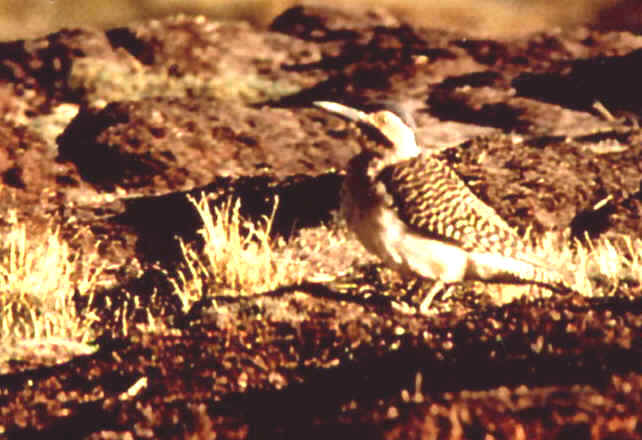
    An Andean Flicker photographed during a FONT tour.
    This bird gets along very well without trees. 

  466. Chilean Flicker  (*)  ______  fs
    Colaptes pitius


    CHRYSOPTILUS

  467. Green-barred Woodpecker  (*)  ______  ba,ne,nc,so  (includes "Golden-breasted Woodpecker"
    Chrysoptilus
    (formerly Colaptes) melanochloros  


    PICULUS

  468. Golden-olive Woodpecker  (ph) (*) ______  nw
    Piculus rubiginosus 

  469. Yellow-browed Woodpecker (nt)  ______ 
    Piculus aurilentus 
    (monotypic)

  470. Golden-green Woodpecker  ______ 
    Piculus chrysochloros    


    DRYOCOPUS

  471. Lineated Woodpecker  (*)  ______   nw,ne
    Dryocopus lineatus erythrops  

  472. Helmeted Woodpecker  (t3) ______  
    Dryocopus galeatus

  473. Black-bodied Woodpecker  ______
    Dryocopus schulzi


    MELANERPES

  474. Yellow-fronted Woodpecker (ph) (*) ______  ne
    Melanerpes flavifrons 
    (monotypic)

  475. White-fronted Woodpecker  (*)  ______  nc
    Melanerpes
    (formerly Trichopicus) cactorum (monotypic)


  476. White Woodpecker  (*)  ______  ne
    Melanerpes
    (formerly Leuconerpes) candidus


    PICOIDES

  477. Checkered Woodpecker  (*)  ______  nc
    Picoides
    (formerly Dendrocopos) mixtus

  478. Striped Woodpecker  ______
    Piciodes
    (formerly Dendrocopos) lignarius  


    VENILIORNIS

  479. White-spotted Woodpecker  (*) ______  ne
    Veniliornis spilogaster 
    (monotypic)

  480. Little Woodpecker  (*)  ______  ne
    Veniliornis passerinus 

  481. Dot-fronted Woodpecker  (*)  ______  nc
    Veniliornis frontalis

  482. Smoky-brown Woodpecker  (*) ______  nc
    Veniliornis fumigatus 


    CAMPEPHILUS

  483. Crimson-crested Woodpecker  (ph)  ______ 
    Campephilus melanoleucos

  484. Robust Woodpecker  (*)  ______  ne
    Campephilus robustus
    (monotypic)


    A Robust Woodpecker photographed during a FONT tour at Iguazu Falls

  485. Cream-backed Woodpecker  (*) ______  ne
    Campephilus leucopogon

  486. Magellanic Woodpecker  (*)  ______  fs  
    Campephilus magellanicus


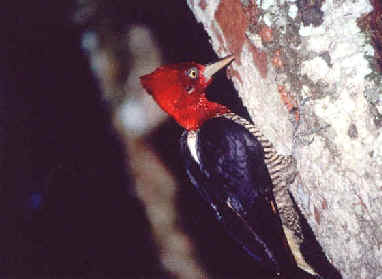
    A female Magellanic Woodpecker photographed during a FONT tour
    (photo by Robert Hinz)


    PICUMNUS

  487. White-barred Piculet  (*)  ______  ne,nc
    Picumnus cirratus

  488. Ochre-collared Piculet   ______ 
    Picumnus temminckii 
    (monotypic)

  489. Mottled Piculet (nt)  ______ 
    Picumnus nebulosus 
    (monotypic)

  490. Ocellated Piculet  (*) ______  ne
    Picumnus dorbignyanus 


    MANACUS

  491. White-bearded Manakin  (ph) (*)  ______  ne
    Manacus manacus gutturosus


    PIPRA

  492. Band-tailed Manakin   ______ 
    Pipra fascilcauda scarlatina


    CHIROXIPHIA
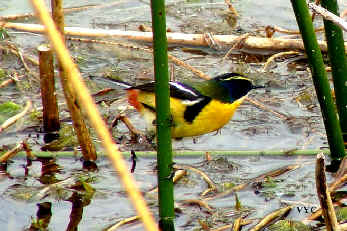
  493. Blue Manakin  (*) ______  ne  (has also been known as the Swallow-tailed Manakin, although the tail is not notably so)
    Chiroxiphia caudata  (monotypic) 


    TITYRA

  494. Black-tailed Tityra  (*)  ______  ne
    Tityra cayana braziliensis

  495. Black-crowned Tityra  (*)  ______  ne
    Tityra i. inquisitor 


    SCHIFFORNIS

  496. Greenish Schiffornis  (*)   ______  ne  (has been called Greenish Mourner; formerly called Greenish Manakin)
    Schiffornis virescens 
    (monotypic) 
    (this genus has been moved from the manakin to the cotinga family)  


    XENOPSARIS

  497. White-naped Xenopsaris  ______ 
    Xenopsaris albinucha 
    (the single member of its genus; has now been put into the Cotinga family)


    PACHYRAMPHUS

  498. Green-backed Becard  ______ 
    Pachyramphus viridis

  499. White-winged Becard  (*)  ______  ne
    Pachyramphus polychopterus spixii

  500. Chestnut-crowned Becard  (*)  ______  ne
    Pachyramphus c. castaneus 

  501. Crested Becard  (*)  ______   ne
    Pachyramphus v. validus


    PHILALURA

  502. Swallow-tailed Cotinga (nt) (ph)  ______ 
    Philalura flavirostris 
    (the single member of its genus)


    PHYTOTOMA

  503. White-tipped Plantcutter  (*) ______  nw,nc,so
    Phytotoma rutila angustirostris  (nw AR)
    Phytotoma r, rutila 
    (nc to so AR)

  504. Rufous-tailed Plantcutter  (*)  ______  fs
    Phytotoma rara 
    (monotypic)
     

    PROCNIAS

  505. Bare-throated Bellbird (nt) ______ 
    Procnias nudicollis
    (monotypic) 


    PYRODERUS

  506. Red-ruffed Fruitcrow  (*)  ______  ne
    Pyroderus s. scutatus 
    (the single member of its genus) 


    PIPRITES

  507. Wing-barred Piprites  ______  (at one time called Wing-barred Manakin, but not a manakin) 
    Piprites chloris 

  508. Black-capped Piprites (t3)  ______  (at one time called Black-capped Manakin, but not a manakin)
    Piprites pileatus  (monotypic) 


    MIONECTES

  509. Gray-hooded Flycatcher  (*)  ______  ne
    Mionectes
    (formerly Pipromorpha) rufiventris  (monotypic)


    LEPTOPOGON

  510. Sepia-capped Flycatcher  (*)  ______ 
    Leptopogon a. amaurocephalus


    HEMITRICCUS

  511. Drab-breasted Bamboo Tyrant  _____  (has also been called Drab-breasted Pygmy Tyrant
    Hemitriccus diops  (monotypic)

  512. Pearly-vented Tody-Tyrant  (*)  ______  ne 
    Hemitriccus
    (formerly Idioptilon) margaritaceiventer


    POECILOTRICCUS

  513. Ochre-faced Tody-Flycatcher  (*)  ______ 
    Poecilotriccus
    (formerly Todirostrum) p. plumbeiceps


    CORYTHOPIS

  514. Southern Antpipit  (*)  ______  ne 
    Corythopis delalandi 
    (monotypic) 


    PHYLLOMYLAS

  515. Planalto Tyrannulet  ______ 
    Phyllomylas fasciatus 

  516. Rough-legged Tyrannulet  ______ 
    Phyllomylas
    (formerly Acrochordopus) burmeisteri

  517. Greenish Tyrannulet  (*)  ______  ne  
    Phyllomylas (formerly Xanthomyias) virescens  (monotypic)

  518. Sclater's Tyrannulet  (*)  ______  nw,nc 
    Phyllomyias
    (formerly Xanthomyias) s. sclateri  


    CAMPTOSTOMA

  519. Southern Beardless Tyrannulet  (*)  ______  nw,ne 
    Camptostoma o. obsoletum  


    PHAEOMYLAS

  520. Mouse-colored Tyrannulet  ______ 
    Phaeomylas murina


    CAPSIEMPIS

  521. Yellow Tyrannulet  (*)  ______  ne
    Capsiempis f. flaveola 
    (the single member of its genus)


    SUBLEGATUS 


  522. Southern Scrub Flycatcher  (*)  ______  nc 
    Sublegatus modestus brevirostris


    SUIRIRI

  523. Chaco Suiriri  (*)   ______  ne,nc  (was part of the former Suiriri Flycatcher, S. suiriri, with 3 subspecies) 
    Suiriri suiriri

  524. Campo Suiriri  ______
    Suiriri affinis


    MECOCERCULUS

  525. White-throated Tyrannulet ______
    Mecocerculus l. leucophrys

  526. Buff-banded Tyrannulet ______
    Mecocerculus hellmayri


    MYIOPAGIS

  527. Gray Elaenia  (*)  ______  ne 
    Myiopagis c. caniceps 

  528. Greenish Elaenia  (*)  ______  nw 
    Myiopagis v. viridicata


    ELAENIA

  529. Yellow-bellied Elaenia  (ph) (*)  ______  ne 
    Elaenia f. flavogaster

  530. Large Elaenia  (*)   ______  nw 
    Elaenia spectabilis
      (monotypic)

  531. Small-billed Elaenia  (*)  ______  ba,nw,ne,nc 
    Elaenia parvirostris 
    (monotypic)

  532. White-crested Elaenia  (*)  ______  nw,fs 
    Elaenia a. albiceps 
    (nwAR)
    Elaenia albiceps chilensis 
    (fsAR) 

  533. Olivaceous Elaenia  ______ 
    Elaenia mesoleuca 
    (monotypic)

  534. Highland Elaenia  (*)  ______  nw 
    Elaenia o. obscura 

  535. Lesser Elaenia  (*)  ______  ne 
    Elaenia chiriquensis albivertex

  536. Slaty Elaenia  (*) ______  nw
    Elaenia strepera 
    (monotypic)


    ANAIRETES

  537. Yellow-billed Tit-Tyrant  (*)  ______  nw,so
    Anairetes f. flavirostris

  538. Tufted Tit-Tyrant  (*)  ______  so,fs
    Anairetes p. parulus


    SERPOPHAGA

  539. Sooty Tyrannulet  (*)   ______  ba,nw,ne 
    Serpophaga nigricans 
    (monotypic)

  540. White-crested Tyrannulet  (*)  ______  ba,nc,so 
    Serpophaga s. subcristata

  541. White-bellied Tyrannulet  (*) ______  nw  
    Serpophaga munda 
    (monotypic)


    INEZIA

  542. Plain Inezia  ______ (has been called Plain Tyrannulet)
    Inezia inornata 
    (monotypic) 


    CULLICIVORA

  543. Sharp-tailed Grass Tyrant (nt)  ______ 
    Culicivora caudacuta 
    (monotypic, and the single member of its genus)


    POLYSTICTUS

  544. Bearded Tachuri (nt) (*) ______  ne
    Polystictus p. pectoralis


    TACHURIS

  545. Many-colored Rush Tyrant  (*) ______  ba  
    Tachuris r. rubrigastra 
    (the single member of its genus)


    PSEUDOCOLOPTERYX

  546. Warbling Doradito  (*)  ______  ba 
    Pseudocolopteryx flaviventris 
    (monotypic) 

  547. Subtropical Doradito  ______
    Pseudocolopteryx acutipennis

  548. Crested Doradito  (*) ______  ne
    Pseudocolopteryx sclateri 
    (monotypic)

  549. Dinelli's Doradito ______  
    Pseudocolopteryx dinelliana 


    STIGMATURA

  550. Greater Wagtail-Tyrant  (*) ______  nc,so
    Stigmatura budytoides flavocinerea


    PHYLLOSCARTES

  551. Southern Bristle Tyrant (nt)  ______ 
    Phylloscartes eximius 
    (monotypic)

  552. Sao Paulo Tyrannulet (t3)  ______ 
    Phylloscartes paulistus
      (monotypic)

  553. Mottle-cheeked Tyrannulet  (*)  ______  nw,ne 
    Phylloscartes v. ventralis

  554. Bay-ringed Tyrannulet  ______ 
    Phylloscartes sylviolus  


    MYIORNIS

  555. Eared Pygmy Tyrant  (*)   ______  ne 
    Myiornis auricularis 
    (monotypic) 


    EUSCARTHMUS

  556. Tawny-crowned Pygmy Tyrant  (*)  ______  
    Euscarthmus m. meloryphus 


    TOLMOMYIAS

  557. Yellow-olive Flatbill   ______   (has been called Yellow-olive Flycatcher)
    Tolmomyias sulphurescens  


    RAMPHOTRIGON

  558. Bamboo Flatbill  ______  (has been called Large-headed Flatbill)
    Ramphotrigon megacephala


    PLATYRINCHUS

  559. White-throated-Spadebill  (*)  ______  ne 
    Platyrinchus m. mystaceus 
    ("Yellow-crested Spadebill"

  560. Russet-winged Spadebill  ______
    Platyrinchus mystaceus
     

    MYIOPHOBUS

  561. Bran-colored Flycatcher  (*)  ______  nw,ne,nc 
    Myiophobus fasiatus flammiceps 
    (ne AR)
    Myiophobus fasiatus auriceps 
    (nw & nc AR) 


    PYRRHOMYIAS

  562. Cinnamon Flycatcher  (*)  ______  nw
    Pyrrhomyias c. cinnamomea 
    (the single member of its genus) 


    HIRUNDINEA

  563. Cliff Flycatcher  (*)  ______   (has been called "Swallow Flycatcher")
    Hirundinea ferruginea bellicosa


    CNEMOTRICCUS

  564. Fuscous Flycatcher  (*)  ______  ne 
    Cnemotriccus f. fuscatus 
    (the single member of its genus)


    LATHROTICCUS

  565. Euler's Flycatcher  (*)  ______  ne 
    Lathrotriccus e. euleri


    SAYORNIS

  566. Black Phoebe  (*)  ______  nw,nc
    Sayornis nigricans latirostris


    CONTOPUS

  567. Tropical Pewee  (ph) (*)  ______  ne 
    Contopus c. cinereus 

  568. Smoke-colored Pewee  (*)  ______  nw
    Contopus fumigatus brachyrhynchus


    EMPIDONAX

  569. Alder Flycatcher  ______
    Empidonax alnorum


    PYROCEPHALUS

  570. Vermilion Flycatcher  (ph) (*)  ______  ba,ne,nc,so 
    Pyrocephalus r. rubinus 
    (was the single member of its genus before the splitting of the Darwin's Flycatcher of the Galapagos)


    LESSONIA

  571. Patagonian Negrito  (ph) (*)  ______  so,fs  (has been called the Austral Negrito, and prior to that, the Rufous-backed Negrito when it was considered conspecific with the Andean Negrito
    Lessonia rufa
      (monotypic)


    A Patagonian Negrito photographed during a FONT tour.
    Apparent here is why this species was called Rufous-backed Negrito.


  572. Andean Negrito  (*)  ______  nw
    Lessonia oreas 
    (monotypic)


    MUSCISAXICOLA

  573. Black-fronted Ground Tyrant  ______
    Muscisaxicola frontalis

  574. Cinereous Ground Tyrant  (*)  ______  nw  (was part of Plain-capped Ground Tyrant)
    Muscisaxicola cinereus argentina

  575. Dark-faced Ground Tyrant  (*)  ______  fs
    Muscisaxicola macloviana mentalis

  576. Cinnamon-bellied Ground Tyrant  (*)  ______  fs
    Muscisaxicola capistratus 
    (monotypic)

  577. Rufous-naped Ground Tyrant  (*)  ______
    Muscisaxicola rufivertex pallidiceps 
    (nw AR)
    Muscisaxicola r. rufivertex 
    (swAR) 

  578. Puna Ground Tyrant  (*)  ______  nw
    Muscisaxicola juninensis 
    (monotypic)

  579. White-browed Ground Tyrant  (*)  ______  fs
    Muscisaxicola albilora 
    (monotypic)

  580. Ochre-naped Ground Tyrant  (*)  ______  fs
    Muscisaxicola flavinucha brevirostris

  581. Spot-billed Ground Tyrant  (*)  ______
    Muscisaxicola m. maculirostris


    AGRIORNIS


  582. Great Shrike-Tyrant  ______
    Agriornis livida

  583. Gray-bellied Shrike-Tyrant  (*)  ______  so,fs
    Agriornis m. micropterus

  584. White-tailed Shrike-Tyrant  (t3) (*) ______  nc
    Agriornis a. albicauda

  585. Black-billed Shrike-Tyrant  (*)  ______  nw,nc
    Agriornis m. montanus  (nw AR)
    Agriornis montanus leucurus  (ncAR)

  586. Least Shrike-Tyrant  (*)  ______  so
    Agriornis murinus 
    (monotypic) 


    XOLMIS

  587. Gray Monjita  (*)  ______  ne 
    Xolmis cinerea pepoaza

  588. Black-crowned Monjita  (*)  ______  so
    Xolmis coronatus 
    (monotypic) 

  589. White Monjita  (ph) (*)  ______  nw,ne,nc,so  
    Xolmis i. irupero


    A
    White Monjita photographed during a FONT tour
    (photo by Marie Gardner)

  590. Rusty-backed Monjita  (ARe) (*)  ______  so
    Xolmis
    (formerly Neoxolmis) rubetra  (monotypic)

  591. Salinas Monjita  (nt) (ARe) (*)  ______  nc  (has been considered part of the Rusty-backed Monjita, but usually said to be a separate species) (first described in 1979) 
    Xolmis
    (formerly Neoxolmis) salinarum  (monotypic)

  592. Fire-eyed Diucon  (ph) (*)  ______  fs
    Xolmis
    (formerly Pyrope) p. pyrope 


    A Fire-eyed Diucon photographed during a FONT tour.

    Armas Hill remembers when, during a tour in Patagonia years ago, after saying "Fire-eyed Diucon" a tour participant responded with "a far-eyed what?".  


    HETEROXOLMIS

  593. Black-and-white Monjita (t3) (ph) (*)  ______  ne  
    Heteroxolmis
    (formerly Xolmis) dominicana  (monotypic, and the single member of its genus)


    A Black-and-white Monjita photographed during a FONT tour
    (photo by Marie Gardner)


    MYIOTHERETES 

  594. Streak-throated Bush-Tyrant  (*)  ______  nw
    Myiotheretes striaticollis pallidus


    KNIPOLEGUS

  595. Blue-billed Black Tyrant  ______ 
    Knipolegus cyanirostris
    (monotypic)

  596. Crested Black Tyrant  (ph)  ______ 
    Knipolegus lophotes 
    (monotypic)

  597. White-winged Black Tyrant  (*)  ______  nc
    Knipolegus a. aterrimus

  598. Hudson's Black Tyrant  (*)  _______  so
    Knipolegus hudsoni 
    (monotypic)

  599. Andean Tyrant  (*)  ______  nw  (was called Plumbeous Tyrant) 
    Knipolegus signatus cabanisi  (Females were historically called "Jelski's Bush Tyrant, "Myiotheretes signatus"; immature was called "Berlioz's Tyrant, Knipolegus subflammulatus".) 

  600. Cinereous Tyrant  (*)  ______  nw
    Knipolegus striaticeps 
    (monotypic)


    HYMENOPS

  601. Spectacled Tyrant  (ph) (*)  ______  ba,ne,nc,so 
    Hymenops p. perspicillatus 
    (the single member of its genus) 


    Two Spectacled Tyrants photographed during a FONT tour,
    a male above and a female below
    (photos by Marie Gardner)


    FLUVICOLA

  602. Black-backed Water Tyrant  (*)  ______  ba  (was considered conspecific with the more-northerly Pied Water Tyrant)
    Fluvicola albiventer 


    ARUNDINICOLA

  603. White-headed Marsh Tyrant  (ph) (*)  ______  ne 
    Arundinicola leucocephala 
    (monotypic)


    ALECTRURUS

  604. Cock-tailed Tyrant (t3) (ph)  ______ 
    Alectrurus tricolor
    (monotypic, and the single member of its genus)

  605. Strange-tailed Tyrant (t3) (*) _____  ne_
    Alectrurus risora 
    (monotypic)


    NEOXOLMIS

  606. Chocolate-vented Tyrant  (*)  ______  fs
    Neoxolmis rufiventris 
    (monotypic & the single member of its genus)


    GUBRENETES

  607. Streamer-tailed Tyrant  (*)  ______  ne 
    Gubrenetes yetapa 
    (monotypic, and the single member of its genus)


    SATRAPA

  608. Yellow-browed Tyrant  (*)  ______  ba,nw,ne 
    Satrapa icterophrys 
    (monotypic, and the single member of its genus)


    COLONIA

  609. Long-tailed Tyrant  (*)  ______   ne
    Colonia c. colonus 
    (the single member of its genus)


    COLORHAMPHUS

  610. Patagonian Tyrant  ______
    Colorhamphus parvirostris


    OCHITHOECA

  611. White-browed Chat-Tyrant  (*)  ______  nc
    Ochithoeca leucophrys tucumana

  612. D'Orbigny's Chat-Tyrant  (*)  ______  nw
    Ochithoeca o. oenanthoides


    MACHETORNIS

  613. Cattle Tyrant  (ph) (*)  ______  ba,nw,ne,nc,so 
    Machetornis rixosa 
    (the single member of its genus)


    Cattle Tyrant


    MUSCIPIPRA

  614. Shear-tailed Gray Tyrant (nt) ______ 
    Muscipipra vetula
    (monotypic, and the single member of its genus)


    ATTILA

  615. Rufous-tailed Attila  ______ 
    Attila phoenicurus 
    (monotypic) 


    CASIORNIS

  616. Rufous Casiornis  ______ 
    Casiornis rufus
    (monotypic)


    SIRYSTES

  617. Eastern Sirystes  (*)   ______  ne 
    Sirystes sibilator 
    (Western Sirystes, west of the Andes, is S. albogriseus)  


    MYIARCHUS

  618. Dusky-capped Flycatcher  (ph) (*)  ______  nw,ne 
    Myiarchus t. tuberculifer

  619. Short-crested Flycatcher  (*)  ______ ne 
    Myiarchus ferox australis

  620. Brown-crested Flycatcher  (*)  ______  ne,nc 
    Myiarchus t. tyrannulus 

  621. Swainson's Flycatcher  (*)  ______  nw,ne,so 
    Myiarchus swainsoni ferocior


    TYRANNUS

  622. Tropical Kingbird  (ph) (*)  ______  ba,ne,nc 
    Tyrannus m. melancholicus

  623. Eastern Kingbird  (ph) ______
    Tyrannus tyrannus

  624. Fork-tailed Flycatcher  (ph) (*)  ______  ba,ne,nc,so 
    Tyrannus s. savana


    EMPIDONOMUS

  625. Variegated Flycatcher  (*)  ______  nw,ne 
    Empidonomus varius 
    (the single member of its genus)


    GRISEOTYRANNUS

  626. Crowned Slaty Flycatcher  (*)  ______  ba,ne,nc 
    Griseotyrannus a. aurantioatrocristatus  (the single member of its genus)


    MEGARHYNCHUS

  627. Boat-billed Flycatcher  (*)  ______  ne 
    Megarhynchus p. pitangua 
    (the single member of its genus)


    CONOPIAS

  628. Three-striped Flycatcher  (*)  ______  ne 
    Conopias t. trivirgatus 


    MYLODYNASTES

  629. Streaked Flycatcher  (ph) (*)  ______  ba,nw,ne 
    Mylodynastes maculatus solitarius


    MYIOZETETES

  630. Social Flycatcher  (ph) (*)  ______  ne   (has also been called Vermilion-crowned Flycatcher)
    Myiozetetes similis pallidiventris


    LEGATUS

  631. Piratic Flycatcher  (*)  ______  nw,ne 
    Legatus l. leucophalus 
    (the single member of its genus) 


    PITANGUS

  632. Great Kiskadee  (ph)  ______  ba,nw,ne,nc,so
    Pitangus sulphuratus maximiliani 
    (the single member of its genus)


To Top of Page.