BIRDS
 during
Focus On Nature Tours
in Minas
Gerais
Brazil
A List of Birds in Minas Gerais
compiled by Armas Hill
465 species of birds
have been found during FONT tours, since 1992, in Minas Gerais (& adjacent
Espiritu Santo).
During one of our Minas Gerais tours, we traveled into Espiritu Santo to see the
extremely rare CHERRY-THROATED TANAGER.
Codes:
MN:
in the state of Minas Gerais
ES: nearby, in the adjacent state of Espiritu Santo
In the following list, months of the tours are noted
during which the birds have been found.
(t): a globally threatened or rare species, designated by Birdlife International
(t1): critical (t2): endangered
(t3): vulnerable
(nt): a near-threatened species globally
(BRe): species endemic to
Brazil (BRqe): quasi (or nearly) endemic to Brazil
(BRi): introduced species in Brazil
(ph): species with a photo in the FONT web-site
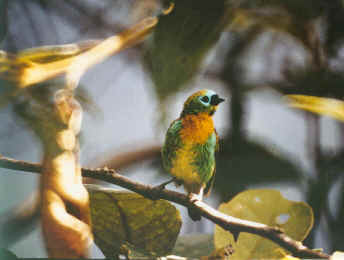
Photo at upper right:
BRASSY-BREASTED TANAGER, a colorful Brazilian endemic
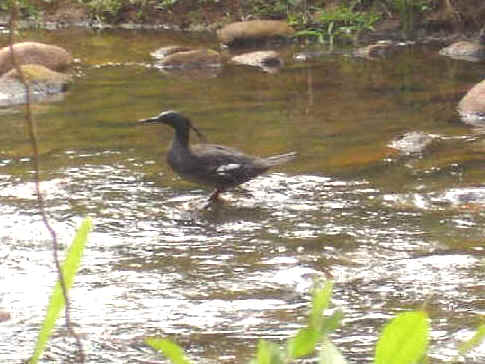
Photo below: the BRAZILIAN MERGANSER, one of the rarest of the world's
birds,
has been found during 6 FONT tours in Minas Gerais.
Links:
Upcoming
FONT Birding & Nature Tours in Brazil
A Complete List of Brazil Birds, in 4 parts:
Part
#1: Tinamous to Doves
Part
#2: Macaws to Flycatchers
Part #3: Antshrikes to Grosbeaks Part
#4: Vireos to Grosbeaks
Birds
during FONT Tours in Mato Grosso, Brazil
Rare
& Threatened Birds of Brazil (with
some photos)
Mammals
& Other Wildlife during FONT Tours in Brazil
(with some photos)
Directory of Photos in this Website

Birds:
- Solitary Tinamou (nt) (BRqe) ______
MN may,oct
Tinamus solitarius
- Little Tinamou ______ MN oct
Crypturellus soui
- Yellow-legged Tinamou (nt) (BRe) ______ MN
sep,oct
Crypturellus noctivagus
- Brown Tinamou ______ MN may,sep,oct
Crypturellus obsoletus
- Small-billed Tinamou ______ MN may
Crypturellus parvirostris
- Tataupa Tinamou ______ MN oct
Crypturellus tataupa
- Red-winged Tinamou ______ MN sep,oct
Rhynchotus rufescens
- Spotted Nothura ______ MN
mar.sep,oct
Nothura maculosa
- Lesser Nothura ______ MN
Nothura minor
- Greater Rhea (nt) (ph) ______ MN
sep
Rhea americana
- Scaled Chachalaca ______ MN aug
Ortalis squamata
- Rusty-margined Guan ______ MN may.sep,oct
Penelope superciliaris
- Dusky-legged Guan (ph) ______
MN
may,sep,oct
Penelope obscura
- Spot-winged Wood Quail ______ MN may,sep,oct
Odontophurus capueira
- White-faced Whistling Duck
(ph) ______ MN mar,may,oct
Dendrocygna viduata
- Black-bellied Whistling Duck
(ph) ______ MN mar
Dendrocygna autumnalis
- Muscovy Duck (ph) ______ MN
mar,sep,oct
Cairina moschata
- Brazilian Teal (ph) ______ MN
mar,may,sep,oct
Amazonetta brasiliensis
- BRAZILIAN MERGANSER (t1) (BRqe)
(ph) ______
MN mar,aug,sep,oct
(photo above)
Mergus octosetaceus
The very rare BRAZILIAN
MERGANSER has been seen during a number of FONT tours: in March 1997, in October 1998,
in August 2002, in October 2003, in September 2006, and in March 2008.
Each time, our sightings have been in a remote
part of western Minas Gerais State
Recent estimates have put the population of the species at only about a hundred
pairs. Some say, however, that's too high a number. With large territories, and
favoring remote areas, the merganser is not usually an easy bird to see.
The range of the bird has included southeast Brazil, northeast Argentina, and
adjacent Paraguay. It's probably now extinct in Paraguay, and may be in
Argentina (where the population has been critically small). Actually, in the
mid-20th Century, the species was thought to be extinct altogether. It was
re-found in 1948. Now, just over 50 years later, the bird is still "too
close" to extinction.
- Pied-billed Grebe (ph) ______ MN
may,sep,oct
Podilymbus podiceps
- Least Grebe (ph) ______ MN
may,sep,oct
Tachybabtus dominicus
- Wood Stork (ph) ______ MN aug
Mycteria americana
- Buff-necked Ibis (ph) ______ MN mar,aug,sep,oct
Theristicus caudatus
- Green Ibis ______ MN
Mesembrinibis cayennensis
- Bare-faced Ibis ______ MN sep,oct
Phimosus infuscatus
- Striated Heron (ph) ______ MN
may,sep,oct
Butorides striatus
- Rufescent Tiger Heron (ph) ______
MN
may,sep
Tigrisoma lineatum
- Black-crowned Night Heron ______ MN sep,oct
Nycticorax nycticorax
- Capped Heron (ph) ______ MN
may
Pilherodius pileatus
- Whistling Heron (ph) ______
MN
may,oct
Strigma sibilatrix
- Cattle Egret (ph) ______ MN mar,may,aug,sep,oct
Bubulcus ibis
- Snowy Egret (ph) ______ MN
may,aug,sep,oct
Egretta thula
- Great Egret (ph) ______ MN
mar,may,aug,sep,oct
Ardea alba
- Cocoi Heron (ph) ______
MN
mar,sep,oct
Ardea cocoi
- Neotropic Cormorant (ph) ______
MN
aug,sep,oct
Phalacrocorax brasilianus
- Anhinga (ph) ______ MN aug
Anhinga anhinga
- King Vulture (ph) ______
MN
oct
Sacoramphus papa
- Black Vulture (ph) ______ MN
mar,may,aug,sep,oct ES oct
Coragyps atratus
- Turkey Vulture (ph) ______ MN
mar,may,aug,sep,oct
Cathartes aura
- Lesser Yellow-headed Vulture
(ph) ______ MN may
Cathartes burrovianus
- Southern Crested Caracara
(ph) ______ MN mar,may,aug,sep,oct
Caracara cheriway
- Yellow-headed Caracara ______ MN
mar,may,aug,sep,oct
Milvago chimachima
- Laughing Falcon (ph) ______ MN aug,sep,oct
Herpetotheres cachinnans
- Barred Forest Falcon ______ MN oct
Micrastur ruficollis
- Collared Forest Falcon ______ MN may,oct
Micrastur semitorquatus
- American Kestrel (ph) ______ MN
mar,may,aug,sep,oct
Falco sparverius
- Bat Falcon (ph) ______ MN
may,oct
Falco rufigularis
- Aplomado Falcon (ph) ______ MN
mar,aug,sep,oct
Falco femoralis
- Osprey (ph) _____ MN mar
Pandion haliaetus
- Swallow-tailed Kite (ph) ______ MN oct
ES oct
Elanoides forficatus
- White-tailed Kite (ph) ______ MN
mar,sep,oct
Elanus leucurus
- Rufous-thighed Kite ______ MN oct
Harpagus diodon
- Plumbeous Kite _______ MN
mar,sep,oct
Ictinia plumbea
- Crane Hawk (ph) ______ MN
oct
Geranospiza caerilescens
- Rufous-thighed Hawk ______
MN oct (formerly part of Sharp-shinned Hawk)
Accipiter erythronemius
- Bicolored Hawk ______ MN sep,oct
Accipiter bicolor
- Gray-bellied Hawk (nt) ______ MN oct
Accipiter poliogaster
- Mantled Hawk (nt) (BRqe) ______ MN
sep
Leucopternis polionotus
- Great Black Hawk (ph) ______ MN sep,oct
Buteogallus urubitinga
- Savannah Hawk (ph) ______ MN may,aug,sep,oct
Buteogallus meridionalis
- Crowned Solitary Eagle (t3) (ph) ______
MN
mar,sep
Harpyhaliaetus coronatus
- Black-chested
Buzzard-Eagle (ph) ______ MN sep,oct
Geranoaetus melanoleucus
- Roadside Hawk (ph) ______
MN
mar,may,aug,sep,oct ES oct
Buteo magnirostris
- Short-tailed Hawk (ph) ______ MN oct
Buteo brachyurus
- White-tailed Hawk ______ MN
mar,may,aug,sep,oct
Buteo albicaudatus
- Ornate Hawk-Eagle ______ MN sep
Spizaetus ornatus
- Black Hawk-Eagle ______ ES oct
Spizaetus tyrannus
- Red-legged Seriema (ph) ______
MN
mar,may,aug,sep,oct
Cariama cristata
- Blackish Rail ______ MN may,sep,oct
Pardirallus nigricans
- Gray-necked Wood-Rail (ph) ______ MN
mar,may,sep,oct
Aramides calopterus
- Slaty-breasted Wood-Rail (BRqe) ______ MN sep,oct
Aramides saracura
- Ash-throated Crake ______ MN
Porzana albicollis
- Rufous-sided Crake ______ MN may
Laterallus melanoiphalus
- Common Gallinule ______ MN
may,sep,oct
Gallinula galeata
- Purple
Gallinule (ph) ______ MN
Porphyrula martinicus
- Limpkin (ph) ______ MN
sep,oct
Aramus gurauna
- Wattled
Jacana (ph) ______ MN mar,may,aug,sep,oct
Jacana jacana
- Southern Lapwing (ph) ______ MN
mar,may,aug,sep,oct
Vannelus chilensis
- Semipalmated Plover (ph) ______ MN
oct
Charadrius semipalmatus
- Collared Plover _____ MN mar
Charadrius collaris
- Upland Sandpiper ______ MN oct
Bartramia longicauda
- Greater Yellowlegs ______ MN oct
Tringa melanoleuca
- South American Snipe ______ ES oct
Gallinago paraguaiae
- Common (or Feral) Pigeon ______ MN
mar,may,aug,sep,oct
Columba livia
- Picazuro Pigeon ______ MN
mar,may,aug,sep,oct
Patagioenas picazuro
- Pale-vented Pigeon ______ MN
may,oct,sep
Patagioenas cayennensis
- Plumbeous Pigeon ______ MN
may,sep,oct
Patagioenas plumbea
- Eared Dove (ph) ______ MN
mar,aug,sep,oct ES oct
Zenaida auriculata
- Ruddy Ground Dove ______ MN
mar,may,aug,sep,oct ES oct
Columbina talpacoti
- Plain-breasted Ground Dove ______ MN
may,sep,oct
Columbina minuta
- Scaled Dove (ph) ______ MN
mar,may,aug,sep,oct
Columbina squammata
- Purple-winged Ground Dove (t2)
______ MN oct
Claravis godefrida
- White-tipped
Dove ______ MN may sep oct ES oct
Leptotila verreauxi
- Gray-fronted Dove ______ MN oct
Leptotila rufaxilia
- Ruddy Quail-Dove ______ MN oct
Geotrygon montana
- Violaceous Quail-Dove ______ MN
may
Geotrygon violacea
- Blue-winged Macaw (t3) ______ MN may,sep,oct
Primolius maracana
- White-eyed Parakeet (or Conure)
(ph) ______ MN mar,may,aug,sep,oct
Psittacara
(formerly Aratinga) leucophtalmus
- Golden-capped Parakeet (or Conure) (t3) (BRe) ______
MN aug,oct
Aratinga auricapillus
- Peach-fronted Parakeet (or Conure)
(ph) ______ MN mar,may,oct,sep,oct
Eupsittula
(formerly Aratinga) aurea
- Blue-winged Parrotlet ______ MN
mar,oct
Forpus xanthopterygius
- Plain Parakeet (BRe) ______ ES oct
Brotogeris tirica
- Yellow-chevroned Parakeet ______ MN
mar,may,aug,oct
Brotogeris chiriri
- Pileated Parrot (nt) (BRqe) ______ MN
may ES oct (also called Red-capped Parrot)
Pionopsitta pileata
- Scaly-headed Parrot ______ MN
may,sep,oct
Pionus maximiliani
- Mealy Amazon (or Parrot) ______ MN
sep,oct
Amazona farinosa
- Vinaceous-breasted Amazon (or
Parrot) (t2) (BRqe) ______ MN may,oct
Amazona vinacea
- Smooth-billed Ani (ph) ______ MN
mar,may,aug,sep,oct
Crotophaga ani
- Dark-billed Cuckoo ______ MN oct
Coccyzus melacoryphus
- Squirrel Cuckoo (ph) ______
MN
may,aug,sep,oct ES oct
Piaya cayana
- Striped Cuckoo ______
MN
aug,sep,oct
Tapera naevia
- Guira Cuckoo (ph) ______
MN
mar,may,aug,sep,oct ES oct
Guira guira
- American Barn Owl (ph) ______ MN aug,sep,oct
Tyto furcata
- Rusty-barred Owl (BRqe) ______ MN oct
Strix hylophila
- Tropical Screech Owl ______ MN
sep,oct
Megascops choliba
- Ferruginous Pygmy Owl (ph) ______ MN
sep,oct
Glaucicium brasilanum
- Burrowing Owl (ph) ______ MN
mar,may,aug,sep,oct
Athene cunicuaria
- Short-eared Owl (ph) ______ MN
mar
Asio flammeus
- Striped Owl (ph) ______ MN
sep
Pseudoscops clamator
- Great Potoo ______ MN
Nyctibius grandis
- Common Potoo ______ MN oct
Nyctibius griseus
- Short-tailed Nighthawk ______ ES oct
Lurocalis semitorquatus
- Nacunda Nighthawk ______ MN aug
Podager nacunda
- Least Nighthawk ______ MN
mar,sep,oct
Chordeiles acutipennis
- Pauraque (ph) ______ MN
mar,sep,oct
Nyctidromus albicollis
- Band-winged Nightjar ______ MN sep,oct
Caprimulgus longirostris
- Little Nightjar (ph) ______ MN
sep
Caprimulgus parvulus
- Scissor-tailed Nightjar (ph) ______
MN mar,oct
Hydropsalis torquata
- Sickle-winged Nightjar (nt) ______ MN oct
Eleothreptus anomalus
- White-collared Swift ______ MN
mar,sep,oct
Streptoprocne zonaris
- Biscutate Swift ______ MN may,aug,oct
Streptoprocne biscutata
- Great Dusky Swift ______ MN sep,oct
Cypseloides senex
- Ashy-tailed
Swift ______ MN sep,oct
Chaetura meridionalis
- Gray-rumped Swift ______ MN oct
Chaetura cinereiventris
- Swallow-tailed
Hummingbird (ph) ______ MN mar,may,aug,sep,oct
Eupetomena macroura
- Rufous-breasted Hermit ______
MN may,oct
Glaucis hirsutus
- Scale-throated Hermit ______ MN
sep,oct
Phaethornis eurynome
- Dusky-throated Hermit ______ MN
ES oct
Phaethornis squalidus
- Planalto Hermit (ph) ______ MN
may,sep,oct
Phaethornis pretrei
- Cinnamon-throated Hermit ______ MN
Phaethornis nattereri
- Reddish Hermit ______ MN may
Phaethornis ruber
- Minute Hermit (BRe) ______ MN
sep,oct
Phaethornis idaliae
- Gray-breasted Sabrewing ______ MN
sep,oct
Campylopterus largipennis
- Black Jacobin (ph) ______ MN
may,sep
Florisuga fuscus
- White-vented Violetear (ph) ______
MN mar,may,sep,oct
Colibri serrirostris
- Black-throated Mango (ph) ______ MN
sep
Anthracothorax nigricollis
- Black-breasted Plovercrest
(ph) ______ MN oct
Stephanoxis lalandi
- Frilled Coquette (BRe) (ph) ______
MN:sep ES oct
Lophornis magnifica
- Black-bellied Thorntail ______ MN may,oct
Popelairia langsdorffi
- Ruby Topaz ______ MN sep,oct
Chrysolampis mosquitus
- Glittering-bellied
Emerald (ph) ______ MN may,aug,sep,oct
Chlorostilbon aureoventris
- Fork-tailed Woodnymph ______ MN
may,sep,oct
Thalurania furcata
- Violet-capped Woodnymph ______ MN
sep,oct
Thalurania glaucopis
- Rufous-throated Sapphire ______ MN
may,aug,sep
Hylochlaris sapphirina
- White-chinned Sapphire ______ MN oct
Hylocharis cyanus
- White-throated
Hummingbird (ph) ______ MN may,sep,oct
Leucochloris albicollis
- White-tailed Goldenthroat ______ MN may
Polytmus guainumbi
- Versicolored Emerald ______
MN
mar,sep,oct
Amazilia versicolor
- Glittering-throated
Emerald ______ MN mar,may,sep,oct
Amazilia fimbriata
- Sapphire-spangled
Emerald ______ MN may,sep,oct
Amazilia lactea
- Sombre Hummingbird (BRe) ______ MN may,oct
Aphantochroa cirrhochloris
- Brazilian Ruby (BRe) ______ MN
sep,oct ES oct
Clytolaema rubricauda
- Hyacinth Visorbearer (nt) (BRe)
(ph) ______ MN may,sep,oct
Augastes scutatus
- Horned Sungem ______ MN oct
Heliactin bilophus
- Stripe-breasted
Starthroat (BRe) (ph) ______ MN sep,oct
Heliomaster squamosus
- Amethyst Woodstar ______ MN may,oct
Calliphlox amethystina
- Green-backed
(formerly White-tailed) Trogon
(ph) ______ MN oct
Trogon melanopterus
- Black-throated Trogon ______ MN sep,oct
Trogon rufus
- Surucua Trogon (BRqe) ______ MN
sep,oct
Trogon surrucura
- Ringed Kingfisher (ph) ______ MN
mar,may,sep,oct
Megaceryle torquata
- Green Kingfisher (ph) ______ MN
mar,oct
Chloroceryle americana
- Amazon Kingfisher ______ MN
mar,sep,oct
Chloroceryle amazona
- Rufous-capped Motmot ______ MN oct
Baryphthengus ruficapillus
- Three-toed Jacamar (t2) (BRe) ______ MN oct
Jacamaralcyon tridactyla
- Rufous-tailed Jacamar (ph)
______ MN may,sep,oct
Galbula ruficauda
- White-eared Puffbird ______ MN aug,sep,oct
Nystalus chacuru
- Caatinga Puffbird ______ MN oct
(was, now with the Chaco
Puffbird, part of the former "Spot-backed
Puffbird")
Nystalus maculatus
- Crescent-chested
Puffbird (BRe) ______ MN oct
Malacoptila striata
- Toco Toucan (ph) ______ MN
mar,may,aug,sep,oct
Ramphastos toco
- Channel-billed Toucan (ph) ______
MN may,oct ES oct
Ramphastos vitellinus
- Green-billed
(formerly called Red-breasted) Toucan (BRqe) ______ MN
may,sep ES oct
Ramphastos dicolorus
- Black-necked Aracari ______ MN oct
Pteroglossus aracari
- Spot-billed Toucanet (BRqe) ______ ES
oct
Selenidera maculirostris
- Blond-crested Woodpecker ______ MN
sep,oct
Celeus flavescens
- Campo
(or Field) Flicker (ph)
______ MN mar,may,aug,sep,oct
Colaptes campestris
- Green-barred Woodpecker ______ MN sep,oct
Chrysoptilus
(formerly Colaptes) melanochloros
- Yellow-browed
Woodpecker (nt) (BRqe) ______ MN oct
Piculus aurilentus
- Yellow-fronted
Woodpecker (BRqe) (ph) ______ MN oct
Melanerpes flavifrons
- White Woodpecker (ph) ______ MN
mar,may,aug,sep
Melanoerpes candidus
- Little Woodpecker ______ MN
may,sep,oct
Veniliornis passerinus
- Yellow-eared Woodpecker (BRe) ______ MN
may,oct ES oct
Veniliornis maculifrons
- Lineated Woodpecker ______ MN may,oct
ES oct
Dryocopus lineatus
- Robust Woodpecker ______ MN may
Campephilus robustus
- White-wedged Piculet ______ MN may
Picumnus albosquamatus
- White-barred Piculet ______ MN
may,sep,oct
Picumnus cirratus
- Pin-tailed Manakin (BRe) ______ MN
Ilicura militaris
- White-bearded Manakin (ph) ______ MN
may,sep,oct
Manacus manacus
- Helmeted Manakin (BRqe) ______ MN
sep,oct
Antilophia galeata
- Blue Manakin ______ MN may,sep,oct
ES oct
Chiroxiphia caudata
- Black-tailed Tityra ______ ES oct
Tityra cayana
- Black-crowned Tityra ______ MN oct
Tityra inquisitor
- Greenish Schiffornis ______ MN sep ES
oct
Schiffornis virescens
- Green-backed Becard ______ MN sep
Pachyramphus viridis
- White-winged Becard ______ MN oct
Pachyramphus polychopterus
- Black-capped Becard ______ MN may
Pachyramphus marginatus
- Chestnut-crowned Becard ______ MN sep,oct
ES oct
Pachyramphus castaneus
- Sharpbill ______ ES oct
Oxyruncus cristatus
- Swallow-tailed Cotinga (nt) (BRqe)
(ph) ______
MN may,sep,oct
Philalura flavirostris
- Hooded Berryeater (nt) (BRe) ______
ES
oct
Carpornis cucullatus
- Cinnamon-vented Piha (t3) (BRe) ______ MN
sep,oct ES oct
Lipaugus lanioides
- Bare-throated Bellbird (nt) ______
ES oct
Procnias nudicollis
- Red-ruffed Fruitcrow ______ MN
may,oct
Pyroderus scutatus
- Gray-hooded Flycatcher (BRqe) ______ MN
may
Mionectes rufiventris
- Sepia-capped Flycatcher (ph) ______ MN
may,oct ES oct
Leptopogon amaurocephalus
- Drab-breasted Bamboo-Tyrant _____ MN
oct ES oct
Hemitriccus diops
- Hangnest Tody-Tyrant (nt) (BRe) ______ MN
may
Hemitriccus nidipendulus
- Eye-ringed Tody-Tyrant (nt) (BRe) ______ MN
Hemitriccus orbitalis
- Pearly-vented Tody-Tyrant ______ MN
may
Hemitriccus margaritaceiventer
- Ochre-faced Tody-Flycatcher ______ MN
may,sep,oct
Poecilotriccus plumbeiceps
- Yellow-lored Tody-Flycatcher (BRe) ______
MN may,sep,oct
Todirostrum poliocephalum
- Common Tody-Flycatcher ______ MN
may,sep,oct
Todirostrum cinereum
- Planalto Tyrannulet (BRqe) ______ MN
may,oct
Phyllomylas fasciatus
- Greenish Tyrannulet (BRqe) ______ MN
may,sep,oct
Phyllomylas virescens
- Rough-legged Tyrannulet ______ MN sep
Phyllomylas burmeisteri
- Gray-capped Tyrannulet (nt) (BRe) ______ MN sep,oct
Phyllomylas griseocapilla
- Southern Beardless
Tyrannulet ______ MN mar,may,sep,oct
Camptostoma obsoletum
- Mouse-colored Tyrannulet ______ MN
sep,oct
Phaeomylas murina
- Yellow Tyrannulet ______ MN
may,sep,oct
Capsiempis flaveola
- Southern Scrub Flycatcher ______ MN may,oct
Sublegatus modestus
- Campo Suiriri ______ MN
Suiriri islerorum
- Gray Elaenia ______ MN oct
Myiopagis caniceps
- Greenish Elaenia ______ MN sep
Myiopagis viridicata
- Yellow-bellied Elaenia (ph) ______ MN mat,sep,oct
Elaenia flavogaster
- White-crested Elaenia ______ MN oct
Elaenia albiceps
- Small-billed Elaenia ______ MN oct
Elaenia parvirostris
- Highland Elaenia ______ MN
may,sep,oct
Elaenia obscura
- Plain-crested Elaenia ______ MN may,sep,oct
Elaenia cristata
- Lesser Elaenia ______ MN sep,oct
Elaenia chiriquensis
- Sooty Tyrannulet ______ MN
mar,may,sep,oct
Serpophaga migricans
- White-crested Tyrannulet ______ MN may,oct
Serpophaga subcristata
- Sharp-tailed
Grass-Tyrant (nt) ______ MN aug,sep,oct
Culicivora caudacuta
- Gray-backed Tachuri (nt) (BRe)
______ MN may,sep,oct
Polystictus superciliaris
- Southern Bristle Tyrant (nt) (BRqe) ______
MN sep
Phylloscartes eximius
- Mottle-cheeked
Tyrannulet ______ MN sep,oct
Phylloscartes ventralis
- Bay-ringed Tyrannulet (nt) ______ MN
Phylloscartes sylviolus
- Yellow-olive Flatbill ______ MN oct
Tolmomyias sulphurescens
- White-throated Spadebill ______ MN
sep,oct
Platyrinchus mystaceus
- Black-tailed Myiobius ______ MN sep
Myiobius atricaudus
- Yellow-rumped Myiobius (ph)
______ MN sep
Myiobius barbatus
- Bran-colored Flycatcher ______ MN
sep,oct
Myiophobus fasiatus
- Cliff Flycatcher (ph) ______
MN
may,aug,sep,oct
Hirundinea ferruginea
- Fuscous Flycatcher ______ MN
Cnemotriccus fuscatus
- Euler's Flycatcher ______ MN oct
Lathrotriccus euleri
- Tropical Pewee (ph) ______ MN may.sep,oct
Contopus cinereus
- Gray Monjita ______ MN
mar,may,aug,sep,oct
Xolmis cinerea
- White-rumped Monjita ______ MN mar,may,aug,sep,oct
Xolmis velatus
- Blue-billed Black Tyrant ______ MN
may,sep ES oct
Knipolegus cyanirostris
- Velvety Black Tyrant (BRe)
(ph) ______ MN
may,aug,sep,oct
Knipolegus nigerrimus
- Crested Black Tyrant (ph) ______ MN
mar,aug,sep,oct
Knipolegus lophotes
- Masked Water Tyrant ______ MN
mar,may,aug,sep,oct
Fluvicola nengeta
- White-headed Marsh Tyrant
(ph) ______ MN mar,may,sep,oct
Arundinicola leucocephala
- Cock-tailed Tyrant (nt) (ph) ______ MN
mar,aug,sept,oct
Alectrurus tricolor
- Streamer-tailed Tyrant ______ MN
mar,may,aug,sep,oct
Gubrenetes yetapa
- Yellow-browed Tyrant ______ MN
sep,oct
Satrapa icterophrys
- Cattle Tyrant (ph) ______ MN
mar,may,aug,sep,oct
Machetornis rixosa
- Long-tailed Tyrant (ph) ______
MN may,sep,oct
Colonia colonus
- Shear-tailed Gray-Tyrant (nt) ______ MN may,sep
Muscipipra vetula
- Rufous Casiornis ______ MN
Casiornis rufus
- Eastern Sirystes ______ MN may,sep,oct
ES oct
Sirystes sibilator
- Dusky-capped Flycatcher ______ MN
may.sep,oct
Myiarchus tuberculifer
- Short-crested Flycatcher ______
MN may,sep,oct
Myiarchus ferox
- Brown-crested Flycatcher ______ MN
mar,may,aug,sep,oct
Myiarchus tyrannulus
- Swainson's Flycatcher ______ MN
mar,sep,oct
Myiarchus swainsoni
- White-throated Kingbird (ph) ______
MN
may,sep,oct
Tyrannus albogularis
- Tropical Kingbird (ph) ______ MN
mar,may,aug,sep,oct ES oct
Tyrannus melancholicus
- Fork-tailed Flycatcher (ph) ______ MN
aug,sep,oct ES oct
Tyrannus savana
- Variegated Flycatcher ______ MN
sep,oct
Empidonomus varius
- Crowned Slaty Flycatcher ______ MN sep,oct
Griseotyrannus aurantioatrocristatus
- Boat-billed Flycatcher ______ MN
may,sep,oct
Megarhynchus pitangua
- Streaked Flycatcher (ph) ______ MN
sep,oct
Mylodynastes maculatus
- Rusty-margined Flycatcher ______ MN may,oct
Myiozetetes cayanensis
- Social Flycatcher (ph) ______ MN
mar,may,aug,sep,oct
Myiozetetes similis
- Piratic Flycatcher ______ MN sep,oct
Legatus leucophalus
- Lesser Kiskadee ______ MN sep
Philohydor
(formerly Pitangus) lictor
- Great Kiskadee (ph) ______ MN
mar,may,aug,sep,oct ES oct
Pitangus sulphuratus
- Gray-hooded Attila (BRe) ______ MN
may
Attila rufus
- Great Antshrike (ph)
______ MN
Taraba major
- Variable Antshrike ______ MN
may,sep,oct ES oct
Thamnophilus caerulescens
- Rufous-winged Antshrike ______ MN
sep
Thamnophilus torquatus
- Rufous-capped Antshrike ______ MN oct
Thamnophilus ruficapillus
- Chestnut-backed Antshrike ______ MN
may,sep,oct
Thamnophilus palliatus
- Sooretama Slaty Antshrike (BRe) ______
MN
may,sep,oct
Thamnophilus ambiguus
- Planalto Slaty Antshrike (BRqe) ______ MN
sep,oct
Thamnophilus pelzelni
- Giant Antshrike ______ MN may,sep
Batara cinera
- Large-tailed Antshrike (BRqe) ______
MN
may,sep,oct
Mackenziaena leachi
- Tufted Antshrike (BRqe) ______ MN
may,oct
Machenziaena severa
- Cinereous Antshrike ______ MN
Thamnomanes caesius
- Plain Antvireo ______ MN sep
Dysithamnus mentalis
- Silvery-flanked Antwren (BRe) ______ MN sep
Myrmotherula luctuosa
- Unicolored Antwren (t3) (BRe) ______
MN
sep
Myrmotherula unicolor
- Black-capped Antwren (nt) ______ MN
oct
Herpsilochmus atricapillus
- Large-billed Antwren (BRqe) ______
MN
Herpsilochmus longirostris
- Rusty-backed Antwren ______ MN may
Formicivora rufa
- Serra Antwren (nt) (BRe) ______ MN
may,sep,oct
Formicivora serrana
- Ferruginous Antbird (BRe) ______ MN
sep,oct
Drymophila ferruginea
- Ochre-rumped Antbird (nt) (BRe) ______
MN sep,oct
Drymophila ochropyga
- Dusky-tailed Antbird ______ MN
may,oct
Drymophila malura
- Scaled Antbird (BRe) ______ MN
oct
Drymophila squamata
- White-shouldered
Fire-eye (BRqe) ______ MN may,sep,oct
Pyrigiena leucoptera
- White-bibbed Antbird (BRe) ______ ES
oct
Myrmeciza loricata
- Rufous Gnateater ______ MN may,sep,oct
Conopophaga lineata
- Serra do Mar Tapaculo (BRqe) ______ MN
(has been called Mouse-colored Tapaculo)
Scytalopus speluncae
- White-breasted Tapaculo (BRe) ______ MN may,oct
Scytalopus indigoticus
- Brasilia Tapaculo (t3) (BRe) ______
MN
oct
Scytalopus novacapitalis
- Cryptic Antthrush (BRe) ______ MN
sep ES oct
Chamaeza meruloides
- "Imperial" Variegated Antpitta
(ph)
______ MN oct ES oct
Grallaria varia imperator
- Speckle-breasted Antpitta (BRqe) ______
MN sep ES oct
Hylopezus nattereri
- Campo Miner ______ MN oct
Geobates poeciloptera
- Rufous Hornero (ph) ______ MN
mar,may,aug,sep,oct ES oct
Furnarius rufus
- Band-tailed
Hornero (BRe) ______ MN may,sep,oct
Furnarius figulus
- Rufous-capped Spinetail (BRqe) ______ MN may,sep,oct
Synallaxis ruficapilla
- Sooty-fronted Spinetail ______ MN
may,oct
Synallaxis frontalis
- Pale-breasted Spinetail ______ MN oct
Synallaxis albescens
- Spix's Spinetail ______ MN
may,sep,oct (has also been called Chicli
Spinetail)
Synallaxis spixi
- Gray-bellied Spinetail (qe) ______ MN sep
Synallaxis cinerascens
- Yellow-chinned
Spinetail ______ MN may,aug,sep
Certhiaxis cinnamomea
- Pallid Spinetail (BRe) ______ MN
may,oct
Cranioleuca pallida
- Cipo Canastero (t2) (BRe) ______ MN
may,oct
Asthenes luizae
The CIPO CANASTERO was
discovered only as recently as 1985 in the Brazilian state of Minas Gerais, where it is very localized. When the species was
initially found, it was a surprise as all other canasteros occur
much further to the west in South America, mostly in Andean
habitats. We've seen it during nearly all of our tours in Minas Gerais.
- Rufous-fronted
Thornbird (ph) ______ MN may,sep,oct
Phacellodomus rufifrons
- Orange-eyed
Thornbird (BRe) (ph) ______ MN oct
Phacellodomus ferrugineigula
- Firewood-gatherer ______ MN sep,oct
Anumbius annumbi
- White-collared
Foliage-gleaner (BRe) ______ MN ES oct
Anabazenops fuscus
- Buff-browed Foliage-gleaner ______ MN
Syndactyla rufosuperciliata
- White-browed
Foliage-gleaner (nt) (BRqe) ______ MN may,oct
Anabacerthia amaurotis
- Black-capped
Foliage-gleaner ______ MN may,oct
Philydor atricapillus
- Buff-fronted
Foliage-gleaner ______ MN may,sep
Philydor rufum
- Ochre-breasted
Foliage-gleaner (BRqe) ______ MN
Philydor lichtensteini
- White-eyed
Foliage-gleaner (BRqe) ______ MN may
Automolus leucophthalmus
- Henna-capped
Foliage-gleaner (nt) (BRqe) ______ MN
Hylocryptus rectirostris
- Streaked Xenops ______ MN may,oct
ES oct
Xenops rutilans
- Plain Xenops ______ MN
may
Xenops minutus
- Sharp-tailed Streamcreeper
______ MN sep,oct
Lochmias nematura
- Black-billed Scythebill ______ MN
may
Campylorhamphus falcularius
- Plain-winged Woodcreeper ______ MN
may
Dendrocincla turdina
- Olivaceous Woodcreeper ______ MN
may,sep,oct
Sittasomus griseicapillus
- White-throated
Woodcreeper (BRqe) ______ MN sep ES oct
Xiphocolaptes albicollis
- Lesser Woodcreeper (BRqe)
______ MN sep
Xiphorhyncus fuscus
- Scaled Woodcreeper (BRe) ______ MN
may,sep,oct ES oct
Lepidocolaptes squamatus
- Narrow-billed
Woodcreeper (ph) ______ MN mar,sep,oct
Lepidocolaptes angustirostris
- Rufous-browed
Peppershrike ______ MN may,aug,sep,oct
Cyclarhis gujanensis
- Red-eyed Vireo ______ MN sep,oct
Vireo olivaceus
- Rufous-crowned Greenlet ______ MN
may ES oct
Hylophilus poecilotis
- Gray-eyed Greenlet (BRe) ______ MN
may,sep
Hylophilus amaurocephalus
- Lemon-chested Greenlet ______ MN
may,oct
Hylophilus thoracicus
- Ashy-headed Greenlet ______ MN
Hylophilus pectoralis
- White-naped Jay (BRe) ______ MN
Cyanocorax cyanopogon
- Curl-crested Jay ______ MN
may,aug,sep,oct
Cyanocorax cristatellus
- White-winged Swallow ______ MN may,sep,oct
Tachycineta albiventer
- White-rumped Swallow ______ MN
mar,may,aug,sep,oct
Tachycineta leucorrhoa
- Brown-chested Martin (ph) ______ MN
may.sep,oct
Progne tapera
- Gray-breasted Martin ______ MN
sep,oct ES oct
Progne chalybea
- Purple Martin (ph) ______ MN
oct
Progne subis
- Blue-and-white Swallow ______ MN
mar,may.aug,sep,oct ES oct
Notiochelidon cyanoleuca
- Tawny-headed Swallow ______ MN
mar,may,aug,sep
Alopochelidon fucata
- Southern Rough-winged
Swallow ______ MN may,aug,sep,oct
Stelgidopteryx ruficollis
- Barn Swallow (ph) ______ MN oct
Hirundo rustica
- American Cliff Swallow ______ MN oct
Petrochelidon pyrrhonota
- Moustached Wren ______ MN may,oct
Thryothorus genibarbis
- Sedge
(or Grass) Wren (ph) ______ MN
oct
Cistithorus platensis
- "Southern" House Wren ______ MN
may,aug,sep,oct ES oct
Troglodytes aedon
- Black-capped Donacobius (ph) ______ MN
aug,oct
Donacobius atricapillus
- Masked Gnatcatcher ______ MN
may
Polioptila dumicola
- Chalk-browed Mockingbird (ph)
______ MN
mar,may,aug,sep,oct
Mimus saturninus
- White-necked Thrush ______ MN may
Turdus albicollis
- Eastern Slaty Thrush ______ MN sep
Turdus subalaris
- Rufous-bellied Thrush (ph) ______ MN
may,sep,oct ES oct
Turdus rufiventris
- Pale-breasted Thrush ______ MN
may,sep,oct ES oct
Turdus leucomelas
- Creamy-bellied Thrush ______ MN
mar,may,sep,oct
Turdus amaurochalinus
- Yellowish Pipit ______ MN sep,oct
Anthus lutescens
- Hellmayr's Pipit ______ MN mar,oct
Anthus hellmayri
- Ochre-breasted Pipit (t2) ______ MN oct
Anthus nattereri
- Purple-throated Euphonia ______ MN
may,sep,oct ES oct
Euphonia chlorotica
- Violaceous Euphonia ______ MN sep
Euphonia violacea
- Green-chinned Euphonia (nt) ______ MN
sep
Euphonia chalyba
- Chestnut-bellied Euphonia ______ ES oct
Euphonia pectoralis
- Blue-naped Chlorophonia (ph) ______ MN
Chlorophonia cyanea
- Hooded Siskin (ph) ______ MN sep,oct
Carduelis magellanica
- Southern Yellowthroat
______ MN
Geothlypis velata
- Tropical Parula ______
MN may,oct
Setophaga
(formerly Parula) pitiyumi
- Stripe-crowned Warbler ______ MN may,sep,oct
(has been called Golden-crowned Warbler)
Basileuterus culicivorus
- Flavescent Warbler ______ MN oct
Basileuterus flaveolus
- White-bellied Warbler ______ MN may,sep,oct
Basileuterus hypoleucus
- White-striped Warbler (BRe) ______ MN
may,sep,oct
Basileuterus leucophrys
- Riverbank Warbler ______ MN oct
Phaeothlypis (formerly Basileuteris) rivularis
- Red-rumped Cacique ______ MN
may,sep,oct
Cacicus haermorrhous
- Shiny Cowbird ______ MN
mar,aug,sep,oct ES oct
Molothrus bonariensis
- Giant Cowbird ______ MN sep
Molothrus oryzivora
- Baywing (ph) ______ MN sep
Agelaioides badius
- Crested Oropendola (ph) ______ MN mar,may,sep,oct
Psarocolius decumanus
- Chestnut-capped
Blackbird (ph) ______ MN may,sep,oct
Chrysomus ruficapillus
- Unicolored Blackbird (ph) ______
MN
oct
Agelaius cyanopus
- Chopi Blackbird ______ MN mar,aug,sep,oct
Gnorimopsar chopsi
- Forbes's Blackbird (t1) (BRe)
______ MN may
Curaeus forbesi
The FORBES'S BLACKBIRD
has been considered a critically endangered species as it has a very small total
population actually comprised of very small subpopulations in the Brazilian
states of Alagoas, Pernambuco, and Minas Gerais. Thus the rare of this rare
Brazilian endemic is severely fragmented in the eastern part of the country.
Being all-black, without any really distinctive features other than a slender
bill and a unique voice, the most notable aspect of the bird is its rarity.
The small numbers (about an estimated 150 birds at one time said to be in
Alagoas, and about 40 at most in one area of Minas Gerais) has made the Forbes's
Blackbird a rather mysterious "phantom-like" species, not often
seen.
We were fortunate to see 3 Forbes's Blackbirds during the FONT tour in Minas
Gerais, not far from Serra do Cipo, in May 2011.
The birds, at about 4pm, were in the tops of palm trees in the valley of a small
river. Their slender bills and recognizable call were well noted before they
flew away from us.
- Campo Troupial (BRe) ______
MN may
Icterus jamacaii
- Yellow-rumped Marshbird (ph) ______
MN mar,aug,sep,oct
Pseudoleistes guirahuro
- White-browed Blackbird (ph) ______ MN
may,oct
Sturnella superciliaris
- Bananaquit (ph) ______ MN
mar,may,sep,oct
Coereba flaveola
- Blue Finch (nt) (BRqe) ______
MN
sep,oct
Porphyrospiza caerulescens
- Grassland Sparrow ______ MN
mar,may,aug,sep,oct
Myospiza humeralis
- Rufous-collared Sparrow (ph) ______
MN mar,may,aug,sep,oct
Zonotrichia capensis
- Sayaca Tanager (ph) ______ MN mar,may,aug,sep,oct
Thraupis sayaca
- Azure-shouldered Tanager (nt) (BRe) ______
MN oct ES oct
Thraupis cyanoptera
- Golden-chevroned Tanager (BRe)
(ph) ______ MN may,sep,oct ES oct
Thraupis ornata
- Palm Tanager ______ MN
mar,may,sep,oct
Thraupis palmarum
- Silver-beaked Tanager (ph) ______ MN sep,oct
Ramphocelus carbo
- Green-headed Tanager (ph) ______ MN
oct
Tangara seledon
- Gilt-edged Tanager (BRe) (ph)
______ MN may,sep,oct
Tangara cyanoventris
- Brassy-breasted Tanager (BRe)
(ph) ______ MN may,sep,oct
Tangara desmaresti
- Burnished-buff Tanager ______ MN
mar,may,aug,sep,oct
Tangara cayana
- Yellow-backed Tanager ______ MN
sep,oct
Hemithraupis flavicollis
- Fawn-breasted Tanager ______ MN sep
Pipraeidea melanonota
- Diademed Tanager ______ MN may,sep
Stephanophurus diadematus
- Red Tanager ______ MN may,sep
Piranga saira
- Olive-green Tanager (BRe) ______ MN
Orthgonys chloricterus
- White-lined Tanager ______ MN sep
Tachyphonus rufus
- Ruby-crowned Tanager ______ MN
may,sep,oct
Tachyphonus coronatus
- Flame-crested Tanager ______ MN oct
Tachyphonus cristatus
- Black-goggled Tanager ______ MN
may,sep,oct
Trichothraupis melanops
- Guira Tanager ______ MN oct
Hemithraupis guira
- Rufous-headed Tanager (BRe) ______ MN
may,sep ES oct
Hemithraupis ruficapilla
- Orange-headed Tanager ______ MN sep
Thlypopsis sordida
- White-rumped Tanager (nt)
(ph) ______ MN mar,sep,oct
Cypsnagra hirundinacea
- Hooded Tanager ______ MN sep,oct
Nemosia pileata
- CHERRY-THROATED TANAGER (t1) (BRe)
______ ES oct
Nemosia rouri
The Cherry-throated Tanager is one the rarest birds ever seen during any FONT
tour.
- Brown Tanager (nt) (BRe) ______
MN may,sep ES oct
Orchesticus abeillei
- Cinnamon Tanager (BRe) ______ MN may,aug,sep,oct
Schistochlamys ruficapillus
- Magpie Tanager ______ MN may,sep,oct
ES oct
Cissopis leveriana
- Swallow Tanager (ph) ______ MN
may,aug,sep,oct
Tersina viridis
- Blue Dacnis (ph) ______ MN mar,may,sep,oct
Dacnis cayana
- Chestnut-vented Conebill ______ MN may,sep,oct
Conirostrum speciosum
- Blue-black Grassquit ______ MN
mar,may,aug,sep,oct
Volatinia jacarina
- Plumbeous Seedeater ______ MN
mar,may,sep,oct
- Lined Seedeater ______ MN mar
Sporophila plumbea
- Yellow-bellied (inc. Dubois')
Seedeater ______ MN mar,may,aug,sep,oct
Sporophila nigricollis
Sporophila nigricollis ardesiaca (Dubois' Seedeater)
- Double-collared
Seedeater ______ MN may,sep,oct
Sporophila caerulescens
- Capped Seedeater ______ MN mar,oct
Sporophila bouvreuil
- Saffron Finch (ph) ______ MN
mar,may,aug,sep,oct
Sicalis flaveola
- Stripe-tailed Yellow Finch ______ MN mar,may,aug,oct
Sicalis citrina
- Uniform Finch ______ MN sep
Haplospiza unicolor
- Coal-crested Finch (nt) ______ MN
Charitospiza eucosma
- Gray Pileated Finch ______ MN
may,sep,oct
Coryphospingus pileatus
- Pampa Finch (ph) ______
MN sep,oct
Embernagra platensis
- Serra Finch (nt) (BRe) ______ MN may,oct
Embernagra longicauda
- Wedge-tailed Grass-Finch (ph)
______ MN mar,may,aug,sep,oct
Emberizoides herbicola
- Black-masked Finch (t3) ______ MN
may.sep,oct
Coryphaspiza melanotis
- Bay-chested Warbling Finch (BRe) ______
MN
sep
Poospiza thoracica
- Red-rumped Warbling Finch ______ MN
may,sep
Poospiza lateralis
- Cinereous Warbling-Finch (nt) (BRe) ______ MN
may,oct
Poospiza cinera
- Buff-throated Saltator (ph) ______ MN oct
Saltator maximus
- Green-winged Saltator ______ MN
may,sep,oct
Saltator similis
- Black-throated Saltator ______ MN
mar,may,aug,sep,oct
Saltator atricollis
- Black-throated Grosbeak (BRqe)
______ MN
Saltator
(formerly Pitylus) fuliginosus
- Ultramarine Grosbeak ______ MN sep
Cyanocompsa brissonii
- Common Waxbill (BRi) (ph) ______ MN
oct
Estrilda astrild
- House Sparrow (BRi) ______ MN
mar,may,aug,sep,oct
Passer domesticus
To Top
of Page