PO Box 9021, Wilmington, DE 19809, USA
E-mail: font@focusonnature.com
Phone: Toll-free in USA 1-800-721-9986
 or 302/529-1876; Fax: 302/529-1085


MAMMALS 
& OTHER WILDLIFE

in Brazil


Those during 
Focus On Nature Tours 
in Brazil, 1992 thru 2010, 
noted with an (*) 

Focus On Nature Tours in Brazil 
have been during the months of 
February, March, July, August, 
September, and October

The following list of Mammals of Brazil compiled by Armas Hill


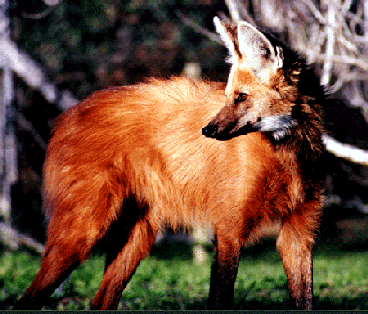
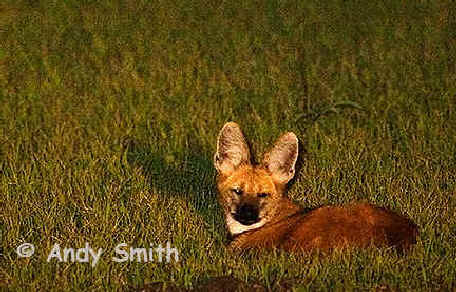
UPPER RIGHT PHOTO: A MANED WOLF   

Codes:

Threatened species of mammals, designated in CITES:
(t1): critically endangered   
(t2): endangered
(t3): vulnerable
(ti): threatened (but with status indeterminate)


(BRe):  species endemic to Brazil
(BRi):  species introduced into Brazil 

AF:    the Alta Floresta and Rio Cristalino areas (mostly Amazonian) in northern Mato Grosso state
AM:  
Amazonas state, mostly in the area of Manaus   
BR
:    Brasilia
ES
:    Espiritu Santo state
IG:
     the area of Iguacu Falls
MN
:   Minas Gerais state
MS:  
Mato Grosso do Sul state, including the southern Pantanal 
MT:
   Mato Grosso state, excluding Alta Floresta/Rio Cristalino  (including the northern Pantanal, 
         Chapada dos Guimaraes, Serra das Araras, and the Jardim da Amazonia, in central MT near the Rio Claro)
RS:    Rio Grande do Sul in far-southern Brazil 
SE:  
  southeast Brazil (in the states of Rio de Janeiro & Sao Paulo, including the areas of Itatiaia National Park, and
         Cubatao, Ubatuba, Angra dos Reis, and Cabo Frio along the coast) 


(ph):  species with a PHOTO IN THE FONT WEB-SITE


FOR A NUMBER OF MAMMALS BELOW, BRAZILIAN NAMES ARE GIVEN BENEATH THE SCIENTIFIC NAMES, AFTER "BR:"

AMPHIBIANS & REPTILES FOLLOW THE MAMMALS. FOR THEM, BRAZILIAN NAMES ARE ALSO GIVEN BENEATH THE SCIENTIFIC NAMES, AFTER "BR:"


During the FONT Brazil Tour in Mato Grosso do Sul during September 2006, mammals seen during one night's "safari" included: a JAGUAR, 7 OCELOTS, a PANTANAL CAT, a MANED WOLF, 2 BRAZILIAN TAPIRS, and a number of GIANT ANTEATERS in addition to MARSH DEER, BROCKET DEER, YELLOW ARMADILLO, TAPITI (or BRAZILIAN RABBIT), many CAPYBARAS, CRAB-EATING FOX, CRAB-EATING RACCOON, and various BATS (along with an assortment of nocturnal birds: OWLS & NIGHTJARS).


Some of the FONT group participants in September 2006
who saw the animals & birds noted above.


Links:

Upcoming FONT Birding & Nature Tours in Brazil

FONT Past Tour Highlights 

A Complete List of the Birds of Brazil (1,718 species): 
Part 1: Tinamous to Doves
Part 2: Macaws to Flycatchers

Part 3: Antshrikes to Grosbeaks

Directory of Photos in this Website


Mammals:

   
      AMERICAN OPOSSUMS - Family Didelphidae
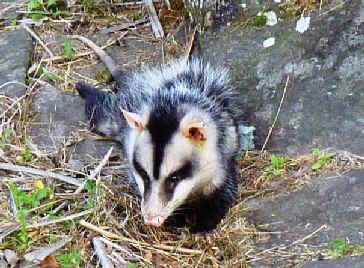
  1. Southern (or Black-eared) Opossum (*)  ______  af  
    Didelphis marsupialis
    BR: Gamba de Orelha Preta

  2. White-eared Opossum (*) ______ af,se
    Didelphis albiventris 
    BR: Gamba de Orelha Branca

  3. Agile Gracile Mouse-Opossum  ______
    Gracilinanus agilis
    BR: Catita, or Guaiquica

  4. Brazilian Gracile Mouse-Opossum  ______
    Gracilinanus microtarsus 

  5. Gray Slender Mouse-Opossum  ______  (in Atlantic coastal forests from Bahia to Parana states in southeast Brazil) 
    Marmosa
    (formerly Marmosops) incanua
    BR: Cuica, or Marmosa

  6. Three-striped Short-tailed Opossum  ______  (in Atlantic coastal forests from Para to Santa Catarina states in eastern Brazil)
    Monodelphis americana

  7. Shrewish Short-tailed Opossum  ______  (in Atlantic coastal rainforests in southeast Brazil)
    Monodelphis sorex

  8. Theresa's Short-tailed Opossum  ______
    Monodelphis theresa 

  9. Gray Short-tailed Opossum  ______
    Monodelphis domestica
    BR: Cuica-de-rabo-curto

  10. Lutrine Opossum  ______
    Lutreolina crassicaudata 
    (the single member of its genus)

  11. Bridled Four-eyed Opossum  ______
    Philander frenata
    BR: Cuica-de-quatro-olhos


    ARMADILLOS - Family Dasypodiidae

  12. Southern Long-nosed Armadillo  ______
    Dasypus hybridus

  13. Great Long-nosed Armadillo  ______
    Dasypus kappieri

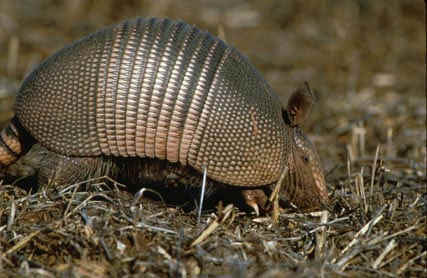
  14. Nine-banded (or Common Long-nosed) Armadillo (*) (ph)  ______ ms,mt
    Dasypus novemcinctus
    BR: Tatu-galinha


    Nine-banded Armadillo

  15. Seven-banded Armadillo  ______
    Dasypus septemcinctus


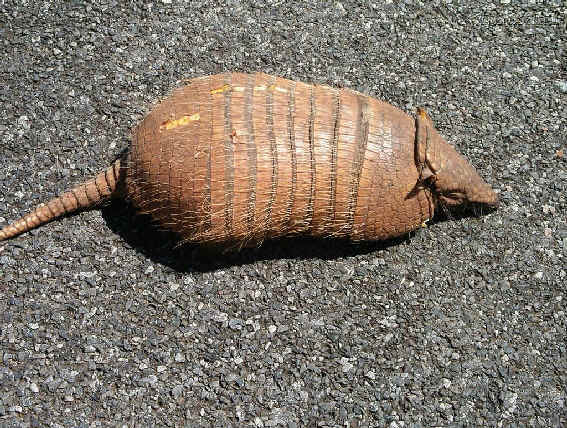
  16. Six-banded (or Yellow) Armadillo (*) (ph)  ______ ms,mt
    Euphractus sexcinctus 
    (the single member of its genus)
    BR: Tatu-peba


    Six-banded Armadillo

  17. Southern Three-banded Armadillo  ______
    Tolypeutes matacus

  18. Brazilian Three-banded Armadillo  ______
    Tolypeutes tricinctus

  19. Greater Naked-tailed Armadillo  ______
    Cabassous tatouay

  20. Southern Naked-tailed Armadillo  ______
    Cabassous unicinctus

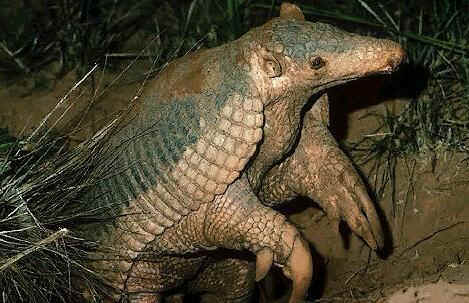
  21. Giant Armadillo  (ph)  ______
    Priodontes maximus 
    (the single member of its genus)


    Giant Armadillo


    AMERICAN ANTEATERS - Family Myrmecophagidae

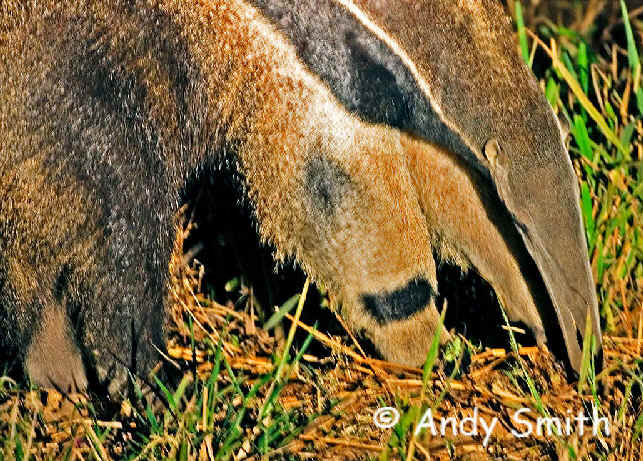
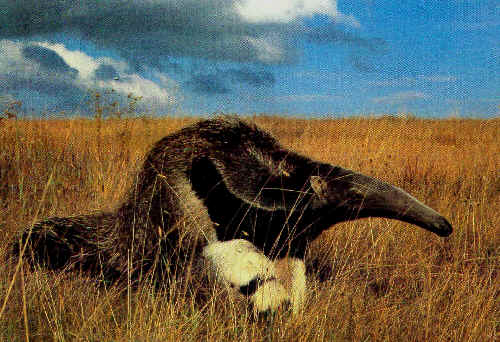
  22. Giant Anteater (t3) (*) (ph)  ______ af,mn,ms,mt
    Myrmecophaga tridactyla 
    (the single member of its genus)
    BR: Tamandua Bandeira


    The above Giant Anteater was photographed at night during our Brazil Tour 
    in Mato Grosso do Sul in September 2006. 
    We saw a nice number of these animals both day & night.
    In the photo, the head of the anteater is to the right, with its long nose 
    toward the ground as the animal feeds. Note the small ear.  
    (Above photo by Andy Smith)

    Below is another photograph of a Giant Anteater, walking in open countryside 
    of Brazilian grassland.


  23. Southern Tamandua  (or Collared Anteater)  (ti) (*) ______ mt
    Tamandua tetradactyla
    BR: Tamandua-de-colete
    or Mambira or Tamandua Mirim


    SILKY ANTEATER - Family Cyclopedidae

  24. Silky Anteater  ______
    Cyclopes didactylus
      (the single member of its genus & family)


    TWO-TOED SLOTHS - Family Megalonychidae
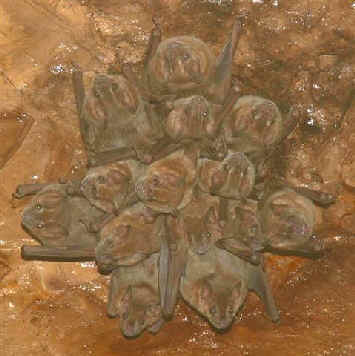
  25. Southern Two-toed Sloth  ______
    Choloepus didactylus

  26. Hoffmann's Two-toed Sloth  ______
    Chlorepus hoffmanni


    THREE-TOED SLOTHS - Family Bradypodidae
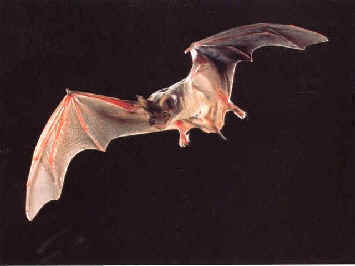
  27. Pale-throated Three-toed Sloth (*) ______ am
    Bradypus tridactylus
    BR: Preguica de bentinho  

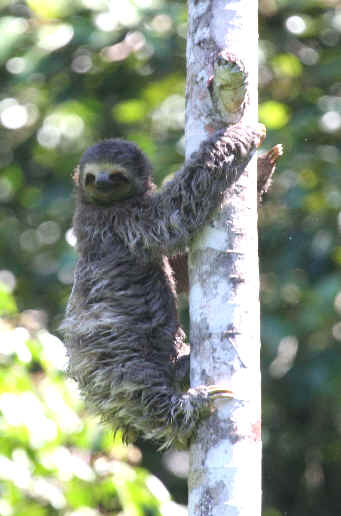
  28. Maned three-toed Sloth (t2) (*) (ph)  ______ se
    Bradypus torquatus
    BR:  Preguica de coleira


    A rare Maned Three-toed Sloth.
    Bradypus torquatus,
    clinging on the trunk of a Cecropia Tree
    (photographed by Marie Gardner during the FONT March '08 Brazil Tour)
     

    RABBITS - Family Leporidae
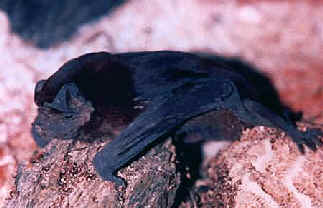
  29. Forest Rabbit (*)  ______ mn,ms,mt  (also called Tapiti, and Brazilian Rabbit)
    Sylvilagus
    (formerly Tapeti) brasiliensis
    BR: Coelho

  30. European Hare (i) (*) ______ rs
    Lepus europaeus


    SQUIRRELS - Family Sciuridae
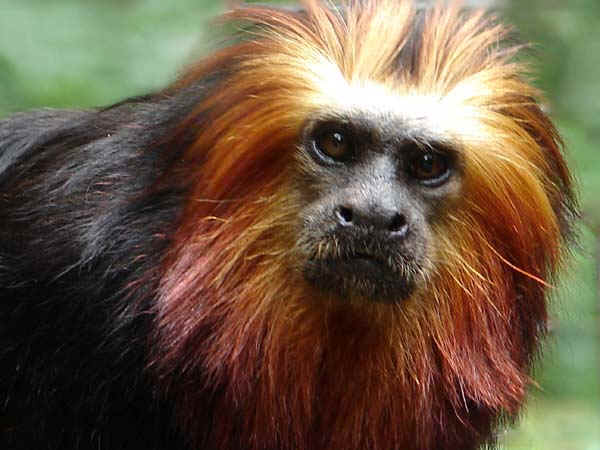
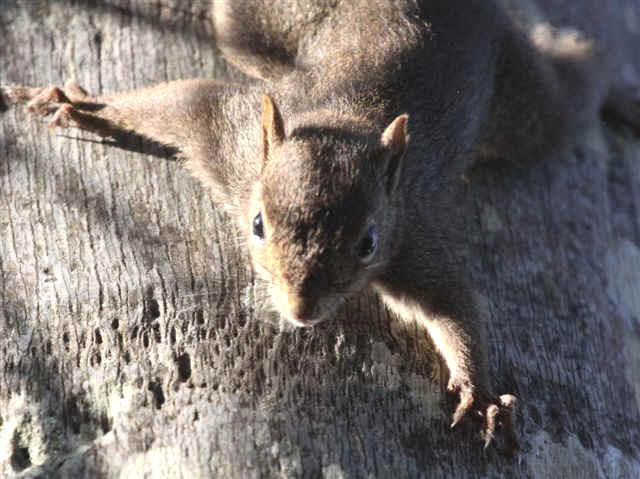
  31. Guianan Squirrel (*) (ph)  ______ ig,mn,se  (also called Brazilian Squirrel)
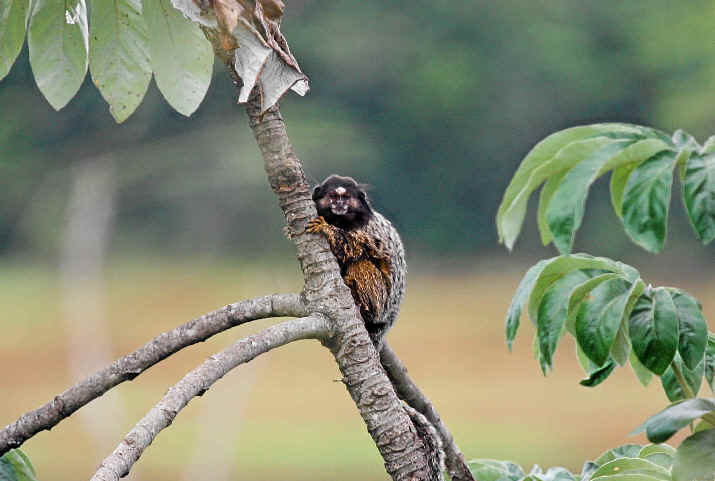
    Sciurus
    (formerly Guerlinguetus) aestuans ingrami  (subspecies in se Brazil)
    BR: Esquilo, or Caxinguele


    A Guianan, or Brazilian, Squirrel photographed during the October 2009 FONT tour in Brazil  
    (photo by Marie Gardner)

  32. Yellow-throated Squirrel  ______  (in eastern Amazonian Brazil)
    Sciurus
    (formerly Guerlinguetus) gilvigularis

  33. Bolivian Squirrel  ______  (in southwestern Brazil)
    Sciurus
    (formerly Guerlinguetus) ignitus

  34. Northern Amazonian Red Squirrel  ______  (in northwestern Brazil)
    Sciurus
    (formerly Urosciurus) igniventris 

  35. Southern Amazonian Red Squirrel (*) ______ af,am
    Sciurus
    (formerly Urosciurus) spadiceus
    BR: Esquilo

  36. Amazon Dwarf Squirrel  ______  (in western Amazonian Brazil)
    Microsciurus flaviventer

  37. Neotropical Pygmy Squirrel  (*)  ______  am
    Sciurillus pusillus


    NEOTROPICAL MICE - Subfamily Sigmodontinae

  38. Brazilian Arboreal Mouse (t1) ______  (very few records from the states of Minas Gerais & Rio de Janeiro in southeast Brazil) 
    Rhagomys rufescens 
    (the single member of its genus)

  39. Azara's Grass Mouse (*) ______ se
    Akodon azarai

  40. Akodon cursor  ______
    BR: Rato-de-chao

  41. Bolomys lasiurus  ______
    BR: Rato-do-mato

  42. Calomys tener  (BRe)  ______
    BR: Rato-do-mato


    TRUE MICE & RATS - Subfamily Murinae

  43. Western House Mouse (i) (*) ______ se  (was conspecific with the Eastern House Mouse, native to Eurasia, Mus musculus
    Mus domesticus 
    BR: Cachita

  44. Brown Rat (i) (*) ______ am,rs  (has also been called "Norway Rat")
    Rattus norvegicus


    NEW WORLD PORCUPINES - Family Erethizontidae

  45. Brazilian Porcupine (*) ______ mt
    Coendou prehensilis
    BR: Ourico-cacheiro,
    or Porco-espinho

  46. Koopman's Porcupine  ______
    Coendou nycthemera

  47. Bahia Hairy Dwarf Porcupine  ______
    Coendou
    (formerly Sphiggurus) insidiosus

  48. Black-tailed Hairy Dwarf Porcupine  ______
    Coendou
    (formerly Sphiggurus) melanurus 

  49. Van Roosmalens' Hairy Dwarf Porcupine  ______
    Coendou
    (formerly Sphiggurus) roosmalenorum

  50. Orange-spined Hairy Dwarf Porcupine  ______
    Coendou
    (formerly Sphiggurus) spinosus

  51. Bristle-spined Porcupine  ______
    Chaetomys subspinosus 
    (the single member of its genus) 


    AGOUTIS & PACAS - Family Agoutidae

  52. Red Acouchi  ______
    Myoprocta acouchy

  53. Green Acouchi  ______
    Myoprocta exilis

  54. Azara's Agouti (*) ______ ig,ms,mt
    Dasyprocta fuliginosa
    BR: Cutia

  55. Black Agouti  ______
    Dasyprocta fuliginosa

  56. Red-rumped Agouti (*) ______ af,am,mn
    Dasyprocta leporina
    (formerly agouti)
    BR: Cutia

  57. Black-rumped Agouti  ______
    Dasyprocta prymnolopha

  58. Paca (*) ______ af,mn,mt
    Cuniculus
    (formerly Agouti) paca
    BR: Paca  


    PACARANA - Family Dinomyidae

  59. Pacarana  (t2)  ______  (in western Brazil in the Amazon basin)
    Dinomys branickii 
    (the single member of its genus & family) 


    CAVIES & GUINEA-PIGS - Family Caviidae

  60. Spix's Yellow-toothed Cavy (*) ______ se  (in the caatinga habitat of eastern Brazil) 
    Galea spixii

  61. Brazilian Guinea-Pig (*) ______ ms,mt
    Cavia aperea
    BR: Prea

  62. Shiny Guinea-Pig  (BRe)  ______  (in coastal east-central Brazil)
    Cavia fulgida

  63. Intermediate Guinea-Pig  (BRe)  ______  (only on Moleques do Sul Island in Santa Catarina state in southeast Brazil)
    Cavia intermedia

  64. Greater Guinea-Pig (*) ______ rs  (in southeast Brazil - and Uruguay)
    Cavia magna

  65. Acrobat Cavy  (BRe) ______  (by the River Sao Mateus in the state of Goias)
    Kerodon acrobata

  66. Rock Cavy  (BRe) (*) ______ mn
    Kerodon rupestris


    CAPYBARA - Family Hydrochoeridae

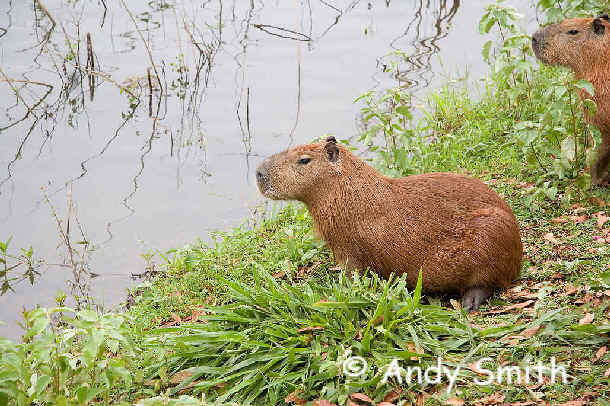
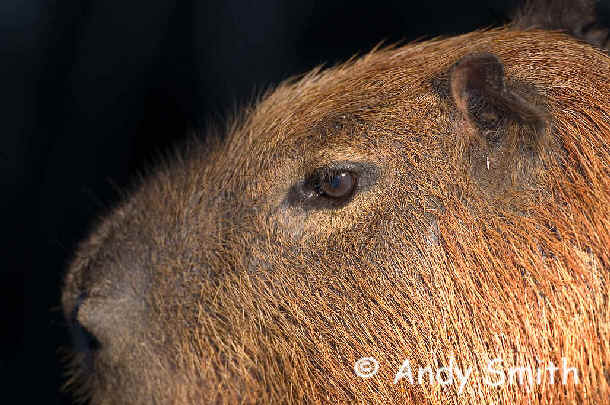
  67. Capybara (*) (ph)  ______ af,ms,mt,rs,se
    Hydrochaeris hydrochaeris 
    (the single member of its genus & its family) 
    BR: Capivara, or Cupido


    Capybaras were seen both day (above) & night (below) during our
    tours in Mato Grosso do Sul, not only in September 2006 
    (when these photos were taken), but during every FONT tour in that area. 


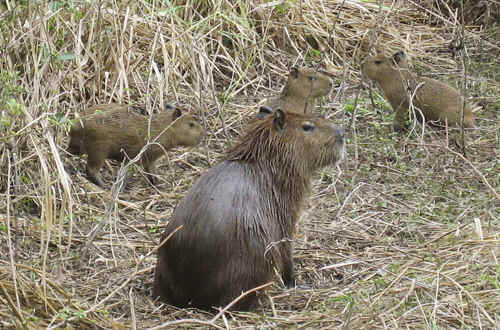
    Another photo (below) of an adult & young Capybaras was taken during the 
    FONT tour in Mato Grosso do Sul, in August 2008.
    (photo courtesy of Trevor & Pamela Sims) 


    DEGUS & TUCO-TUCOS - Family Octodontidae (mostly in Argentina & Chile)

  68. Brazilian Tuco-tuco  (BRe) (*) ______ mn  (in Minas Gerais, southeast Brazil)
    Ctenomys brasiliensis 

  69. Natterer's Tuco-tuco  (BRe)  ______  (in Mato Grosso, southwest Brazil)
    Ctenomys nattereri


    SPINY RATS - Family Echimyidae

  70. Punar  ______
    Thrichomys apereoides 
    (the single member of its genus)

  71. Cuvier's Spiny Rat  ______  (in eastern Amazonian Brazil)
    Proechimys cuvieri

  72. Hedgehog Spiny Rat  (BRe) ______  (in western Amazonian Brazil)
    Proechimys echinothrix

  73. Gardner's Spiny Rat  ______  (in western Amazonian Brazil)
    Proechimys gardneri

  74. Goeldi's Spiny Rat  (BRe)  ______  (in southwestern & central Amazonian Brazil) 
    Proechimys goeldii

  75. Cayenne Spiny Rat  ______  (in northern & central Brazil)
    Proechimys guyannensis

  76. Guyanan Spiny Rat  ______  (in northwest Brazil)
    Proechimys hoplomyoides

  77. Common Spiny Tree Rat (*) ______ af
    Mesomys hispidus

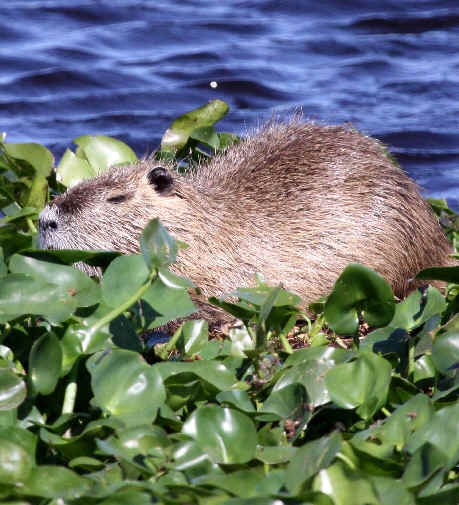
  78. Coypu (*) (ph)  ______ rs,se  (also known as Nutria)
    Myocastor coypus 
    (the single member of its genus)
    BR: Ratao do Banhado


    A Coypu, or Nutria, photographed during the October 2009 FONT tour
    in Rio Grande do Sul, Brazil
    (photo by Marie Gardner)


    CATS - Family Felidae

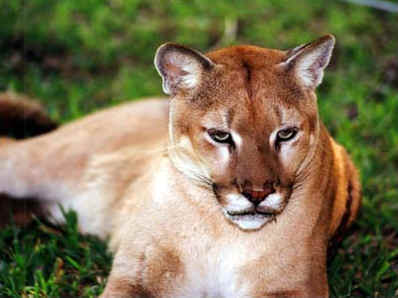
  79. Puma  (ph)  _____ 
    Felis
    (formerly Puma) concolor
    BR: Sussuarana


    Puma

  80. Jaguarundi (ti) (*) ______ mn,ms,mt
    Felis
    (formerly Herpailurus) yagouaroundi
    BR: Jaguarundi, or  Gato Mourisco  (or Gato Preto for the black morph) 

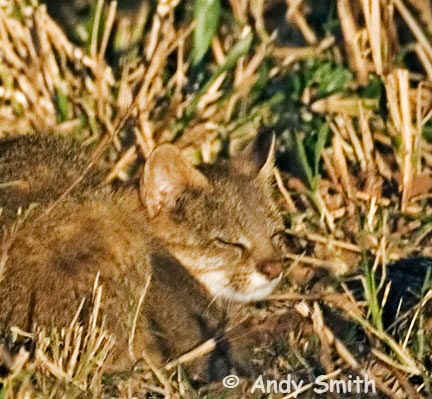
  81. Pantanal Cat  (*) (ph)  ______ ms  (was part of the Pampas Cat)
    Felis
    (formerly Leopardus) braccata  
    BR: Gato Palheiro


    The Pantanal Cat
    (formerly part of the more-southerly Pampas Cat)
    photographed at night during the FONT tour in Mato Grosso do Sul in September 2006.

     
  82. Geoffroy's Cat ______  (in southern Brazil)
    Felis
    (formerly Leopardus) geoffroyi

  83. Oncilla  (or Little Spotted Cat)  ______
    Felis
    (formerly Leopardus) tigrina
    BR: Gato-do-mato-pequeno

  84. Margay  ______
    Felis
    (formerly Leopardus) wiedii

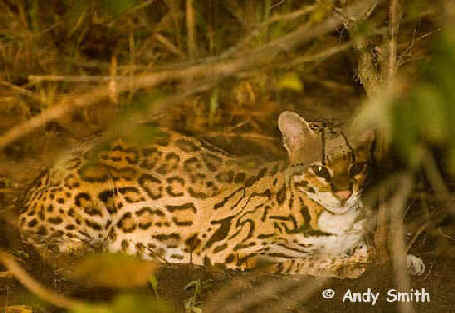
  85. Ocelot  (t3) (*) (ph)  ______  ms,mt
    Felis
    (formerly Leopardus) pardalis
    BR: Gato Maracaja, or Jaguatirica


    An Ocelot photographed at night during the FONT tour in Mato Grosso do Sul
    in September 2006. 
    This wonderful animal has been seen nicely during numerous FONT tours in that area. 
       

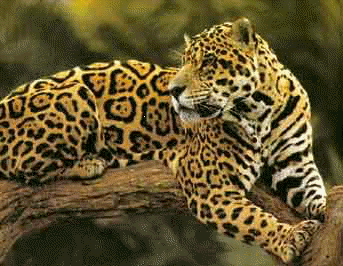
  86. Jaguar (*) (ph)  ______  ms
    Panthera
    (formerly Jaguarius) onca  
    BR: Onca Pintada 


    Jaguar
    This mighty animal has been seen during 3 FONT Brazil tours 
    in Mato Grosso do Sul in the last 4 years.


    DOGS & FOXES - Family Canidae

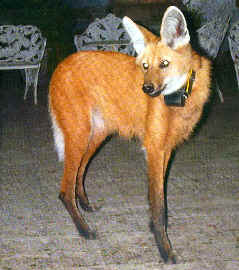
  87. Maned Wolf  (t3) (*) (ph)  ______ mn,ms  
    Chrysocyon brachyurus 
    (the single member of its genus)
    BR: Lobo-guara


    The second of the two Maned Wolf photographs above was taken at night 
    during our tour in Mato Grosso do Sul in September 2006.
     
    Below: A Maned Wolf, as we've seen it after dark outside a monastery, 
    during our Brazil tours in Minas Gerais.  


  88. Argentine Gray Fox (*)  ______ rs  (this species now includes the "Pampas Fox")
    Pseudalopex
    (has previously been Dusicyon) griseus
    BR: Graxaim do Campo

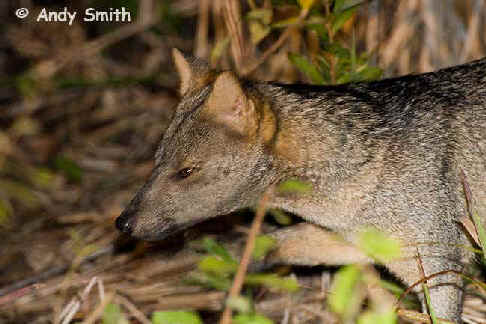
  89. Crab-eating Fox (*) (ph)  ______ ms,mt
    Cerdocyon
    (has previously been Dusicyon) thous  (the single member of its genus)
    BR: Cachorro-do-mato  (or Graxaim)


    Above & below: Crab-eating Foxes photographed at night during our 
    Brazil tour in Mato Grosso do Sul in September 2006. 
    The species has been seen during every FONT tour in that area.


  90. Hoary Fox (*) ______ mn,ms
    Lycalopex
    (has previously been Dusicyon) vetulus  (the single member of its genus)
    BR: Raposinha

  91. Short-eared Dog (*) ______ af  
    Atelocynus
    (has previously been Dusicyon) microtis  (the single member of its genus)
    BR: Cachorro do Mato 
    (a rarely seen animal)

  92. Bush Dog _____
    Speothos venaticus 
    (the single member of its genus)


    EARED SEALS - Family Otariidae

  93. South American Sea-Lion (*) ______ rs
    Otaria byronia 
    (the single member of its genus)


    OTTERS & ALLIES - Family Mustelidae

  94. Greater Grison (*)  ______ af  (has also been called Huron)
    Galictis vittata
    BR: Furao 
    (or Furax)

  95. Lesser Grison  (*)  ______  rs
    Galictis cuja
    BR: Furao


  96. Tayra (*) ______ af,mn,se
    Eira batbata 
    (the single member of its genus)
    BR: Irara  (or Papa Mel)
    (This animal rather like a South American Marten)

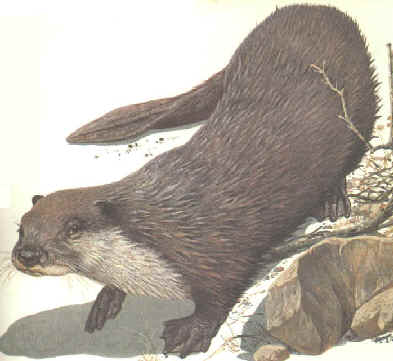
  97. Giant Otter (t2) (*) (ph)  ______ af,ms,mt
    Pteronura brasiliensis 
    (the single member of its genus)
    BR: Arianha 


    The Giant Otters above were photographed during a FONT tour in the Pantanal of Brazil.
    Another photo and an color illustration of the species are below.  


    The photo below of 2 Giant Otters was taken during 
    the FONT Brazil Tour in August 2008.
    The animals was first seen resting on wooden steps along a riverbank.
    Later, they entered the water, and swam away.
    (photo courtesy of Trevor & Pamela Sims)   


  98. Neotropical River Otter (*) ______ ms,mt,se
    Lutra longicaudus
    BR: Lontra
    or Cachorro-d'agua 

  99. Striped Hog-nosed Skunk  ______
    Conepatus semistriatus

  100. Amazon Weasel  ______
    Mustela africana


    RACCOONS - Family Procyonidae

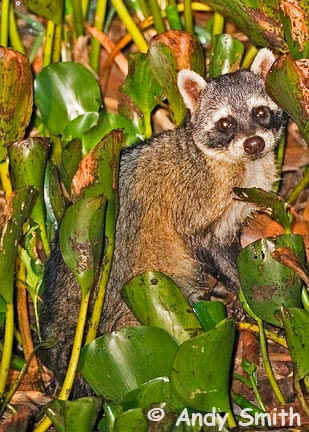
  101. Crab-eating Raccoon  (*) (ph)  ______ ms,mt
    Procyon cancrivorous
    BR: Mao-pelada


    A Crab-eating Raccoon photographed at night 
    during the FONT Brazil tour in Mato Grosso do Sul in September 2006.
      

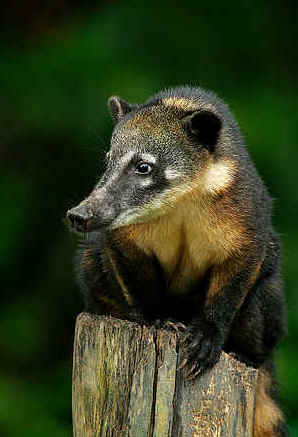
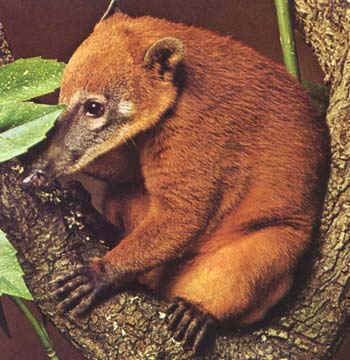
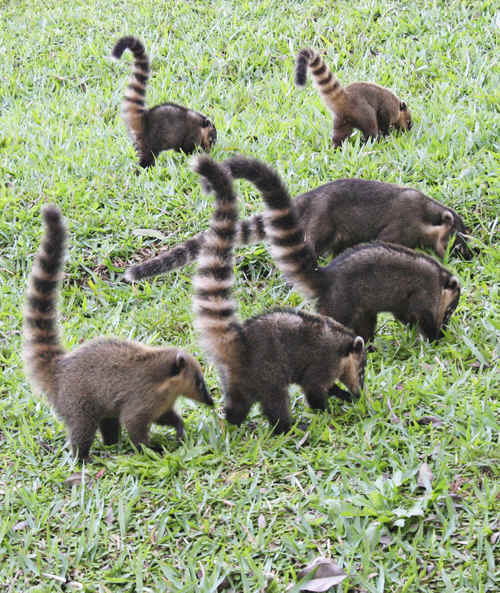
  102. South American Coati  (*) (ph)  ______ ig,mn,ms,mt,se
    Nasua nasua
    BR: Quati
    or Quatimunde 


    Above: Two photos of the South American Coati
    Below: a group of them seen during the FONT Brazil tour in August 2008.
    (photo below courtesy of Trevor & Pamela Sims)


    SHEATH-TAILED BATS - Family Embalionuridae

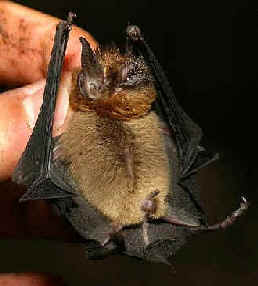
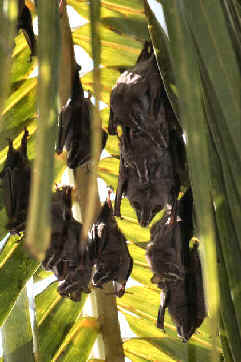
  103. Proboscis Bat (*) ______ af
    Rhynchonycteris naso 
    (the single member of its genus) 

  104. Shaggy Bat  ______
    Centronycteris maximiliani 
    (the single member of its genus)

  105. Greater White-lined Bat (*) ______ af,mt
    Saccopteryx bilineata

  106. Frosted White-lined Bat  ______
    Saccopteryx canescens

  107. Amazonian White-lined Bat  ______
    Saccopteryx gymnura

  108. Lesser White-lined Bat  ______
    Saccopteryx leptura

  109. Chestnut Sac-winged Bat  ______
    Cormura brevirostris 
    (the single member of its genus)

  110. White-winged Dog-like Bat  ______
    Peropteryx
    (formerly Peronymus) leucoptera

  111. Greater Dog-like Bat  ______
    Peropteryx kappleri

  112. Lesser Dog-like Bat  ______
    Peropteryx macrotis

  113. Trinidad Dog-like Bat  ______
    Peropteryx trinitatus

  114. Smoky Sheath-tailed Bat  ______  (in eastern Amazonian Brazil near Belem)
    Cyttarops alecto  (the single member of its genus)


    FISHING BATS - Family Noctilionidae

  115. Greater Fishing Bat (also called Bulldog Bat) (*) ______ af,ms,mt
    Noctilio leporinus

  116. Lesser Fishing Bat (also called Bulldog Bat) (*) ______ af,ms,mt
    Noctilio albiventris


    LEAF-CHINNED BATS - Family Mormoopidae

  117. Lesser Moustached Bat  ______
    Pteronotus personatus

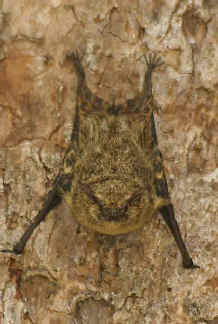
  118. Common Moustached Bat  (ph)   ______
    Pteronotus
    (formerly Phyllodia) parnellii


    Common Moustached Bat


  119. Davy's Naked-backed Bat  ______
    Pteronotus
    (formerly Pteronotus) davyi 


    AMERICAN LEAF-NOSED BATS - Family Phyliostomidae

  120. Behni's Big-eared Bat  ______
    Micronycteris
    (formerly Glyphonycteris) behnii

  121. Davies' Big-eared Bat  ______  (also called Bartica Bat)
    Micronycteris
    (formerly Glyphonycteris) daviesi

  122. Tricolored Big-eared Bat  ______
    Micronycteris
    (formerly Glyphonycteris) sylvestris  


  123. Great Fruit-eating Bat (*) ______ mt
    Artibeus lituratus


    MARMOSETS & TAMARINS - Family Callitrichidae

  124. Pied Bare-faced Tamarin (t1) (*) ______ am
    Saguinus bicolor
    (now considered a distinct species)
    (In previous taxonomy, there were 3 subspecies of what was called the
    Brazilian Bare-faced Tamarin
    These were:
    Pied Bare-faced Tamarin, Saguinus bicolor bicolor,
    Martin's Bare-faced Tamarin, Saguinus bicolor martinsi,
    Ochraceous Bare-face Tamarin, Saguinus bicolor ochraceous.
    The
    Pied Bare-faced Tamarin (seen during the FONT '05 Brazil Tour) is restricted to a 30 kilometer radius of Manaus. 
    The other 2 species (or subspecies) probably range between the lower Rivers Uatuma and Cumina (Erepecuru); their range limits are not precisely known.)
    BR: Sauim  (or Sagui de Cara Nua or Sagi de Duascores)  

  125. Saddle-backed Tamarin  ______
    Saguinus fuscicollis

  126. Emperor Tamarin  ______
    Saguinus imperator

  127. Mottle-faced Tamarin ______ (between the Rivers Japura & Negro in northwest Brazil)
    Saguinus inustus

  128. Red-chested Moustached Tamarin  ______
    Saguinus labiatus

  129. Martins' Bare-faced Tamarin  ______
    Saguinus martinsi 
    (see note with Pied Bare-faced Tamarin)

  130. White-mantled Tamarin  ______
    Saguinus melanoleucus

  131. Red-handed Tamarin  (*)  ______  am
    Saguinus midas

  132. Black-chested Moustached Tamarin  ______
    Saguinus mystax

  133. Black Tamarin  ______
    Saguinus niger

  134. Black-mantled Tamarin ______  (in northwest Brazil)
    Saguinus nigricollis

  135. Red-capped Moustached Tamarin  ______
    Saguinus pileatus

  136. Black-faced Lion Tamarin (t1) ______  (in the Parana & Sao Paulo states in southeast Brazil)
    Leontopithecus caissara

  137. Golden-headed Lion Tamarin  (t2) (ph)   ______  (very locally between the Rivers Contas & Jequitinhonha in southern Bahia & Minas Gerais states in east-central Brazil) 
    Leontopithecus chrysomeias


    Golden-headed Lion Tamarin

  138. Black Lion Tamarin  (t1)  ______  (only in two small remnant forest patches in Sao Paulo state in southeast Brazil)
    Leontopithecus chrysopygus

  139. Golden Lion Tamarin  (t2) ______  (in a few isolated forest patches in Rio de Janeiro state in southeast Brazil)
    Leontopithecus rosalia


    Genus CALLITHRIX:  Marmosets

  140. Rio Acari Marmoset  ______  (between the Rivers Aripuana & Juruena and between Rivers Acari & Sucunduri in central Amazonian Brazil)
    Callithrix acariensis

  141. Silvery Marmoset  ______  (between the Rivers Tapajos & Tocantins in the state of Para in Amazonian Brazil)
    Callithrix argentata 

  142. Buffy-tufted Marmoset (t2) (*) ______  se  (formerly one of the subspecies of the Tufted-eared Marmoset)
    Callithrix aurita
    BR: Sauim 
    (or Sagui)

  143. Gold-and-white Marmoset ______ (right bank of lower River Madeira-Aripuana north to River Amazon in central Amazonian Brazil)
    Callithrix chrysoleuca

  144. Emilia's Marmoset ______
    Callithrix emiliae 

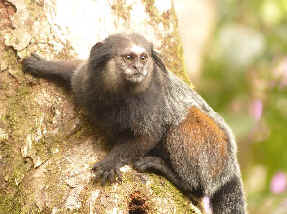
  145. Buffy-headed Marmoset  (t2) (*) (ph)  ______ mn  (formerly one of the subspecies of the Tufted-eared Marmoset)
    Callithrix flaviceps
    BR: Sauim 
    (or Sagui)


    A Buffy-headed Marmoset photographed during the FONT tour 
    in Minas Gerais, Brazil, in March 2008
    (photo by Marie Gardner)

  146. Black-tailed Marmoset (*)  ______  mt  (formerly a subspecies of the Silvery Marmoset
    Callithrix melanura
    BR: Sauim 
    (or Sagui Branco)

  147. Geoffroy's Marmoset  ______  (between the Rivers Itaunas & Jucu in Minas Gerais & Espiritu Santo, in east-central Brazil)
    Callithrix geoffroyi
    BR: Mico-de-cara-branca

  148. Santarem Marmoset  ______
    Callithrix humeralifera

  149. Dwarf Marmoset  ______
    Callithrix humilis

  150. Hershkovitz's Marmoset ______
    Callithrix intermedia

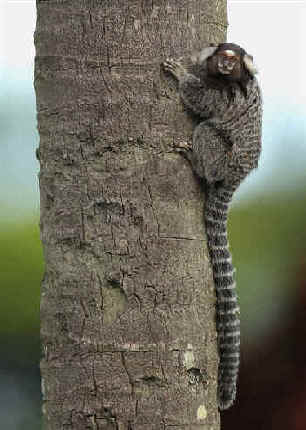
  151. White-tufted Marmoset  ______
    Callithrix jacchus

  152. Wied's Black-tufted Marmoset  ______
    Callithrix kuhlii

  153. White Marmoset  ______
    Callithrix leucippe

  154. Rio Manicore Marmoset  ______
    Callithrix manicorensis

  155. Marca's Marmoset  ______
    Callithrix marcai

  156. Rio Maues Marmoset  ______
    Callithrix mauesi

  157. Black-headed Marmoset  ______
    Callithrix nigriceps

  158. Black-tufted Marmoset  ______
    Callithrix penicillata

  159. Pygmy Marmoset  ______
    Callithrix pygmaea

  160. Satere-Maues Marmoset  ______
    Callithrix saterei

  161. Goeldi's Marmoset  ______
    Callimico goeldii 
    (the single member of its genus) 


    NEW WORLD MONKEYS - Family Atelidae


    Genus SAIMIRI:  Squirrel Monkeys

  162. Common Squirrel Monkey  ______  
    Saimiri oerstedii
    BR: Macaco-de-cheiro or Boca Preta

  163. Bolivian Squirrel Monkey  ______
    Saimiri boliviensis

  164. Bare-eared Squirrel Monkey  (*)  ______  am
    Saimiri ustus
    BR: Macaco-de-cheiro or Boca Preta

  165. Black Squirrel Monkey  ______
    Saimiri vanzolinii 


    Genus ALOUATTA:  Howler Monkeys  


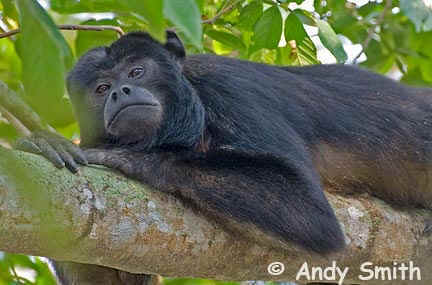
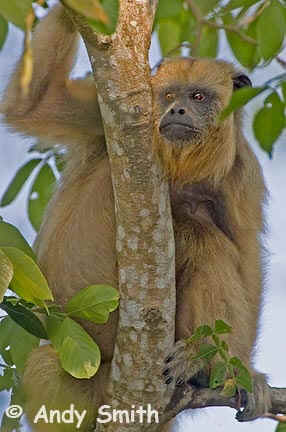
  166. Black Howler Monkey (*) (ph)  ______ mn,ms,mt  (in south-central Brazil)
    Alouatta caraya
    BR: Guariba or Bugio
    (male: black; female: brown)


    Above: male Black Howler Monkey
    Below: female Black Howler Monkey
    Photographed during our tour in Mato Grosso do Sul
    in September 2006. 


  167. Amazon Black Howler Monkey  ______  (in central & eastern Amazonian Brazil)
    Alouatta nigerrima

  168. Red-handed Howler Monkey (*) ______  af  (in central & northeast Brazil)
    Alouatta belzebul
    BR: Guariba

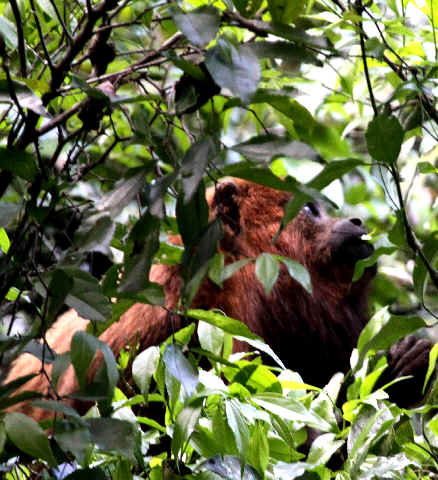
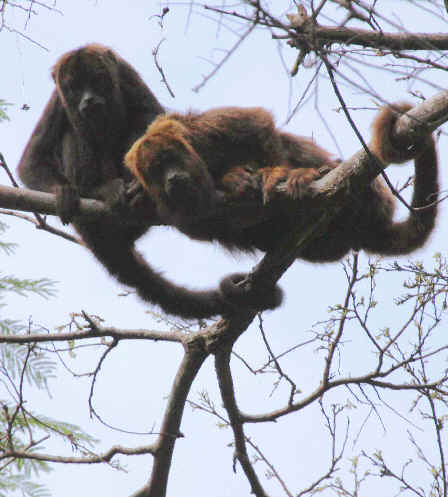
  169. Brown Howler Monkey  (t2) (*) (ph)  ______ se,mn  (in Atlantic Forest from Bahia to Rio Grande do Sul)
    Alouatta guariba
    (formerly A. fusca)
    BR: Bugio  
    (
    Howler Monkeys are locally called "Barbados", or "Beards", in Minas Gerais, because of the long hair covering their large throat sacs.)   


    ABOVE:  A male Brown Howler Monkey photographed 
    during the FONT tour in Minas Gerais, Brazil in October 2009
    BELOW:  2 Brown Howler Monkeys during that same tour. 
    This species is endangered, found only in remnants of the 
    Atlantic Forest of Southeast Brazil.  
    (both photos by Marie Gardner)


  170. Guianan Red Howler Monkey  (*) ______ am  (split from the Venezuelan Red Howler Monkey, Alouatta seniculus) (in north-central Amazonian Brazil) 
    Alouatta macconnelli
    BR: Guariba 

  171. Bolivian Red Howler Monkey  ______  (in southwest Brazil)
    Alouatta sara


    Genus PITHECIA:  Saki Monkeys

  172. Buffy Saki  ______
    Pithecia albicans

  173. Monk Saki ______
    Pithecia monachus

  174. Gray Monk Saki  ______
    Pithecia irrorata

  175. Guianan Saki  ______
    Pithecia pithecia


    Genus CHIROPOTES:  Saki Monkeys
     
  176. White-nosed Bearded Saki (t3) (*) ______  af,am 
    Chiropotes albinasus
    BR: Cuxiu
    or Piroclucu

  177. Brown Bearded Saki  (t2) ______
    Chiropotes satanas


    Genus CACAJAO:  Uakari Monkeys

  178. Red Uakari  ______
    Cacajao calvus

  179. Black Uakari  ______
    Cacajao melanocephalus


    Genus CEBUS:  Capuchins 
     

  180. Brown Tufted Capuchin (*) ______  af,am,mt,ms
    Cebus apella
    BR: Macaco Prego

  181. Black-striped Tufted Capuchin (*) ______ ig
    Cebus libidinosus
    BR: Macaco Prego

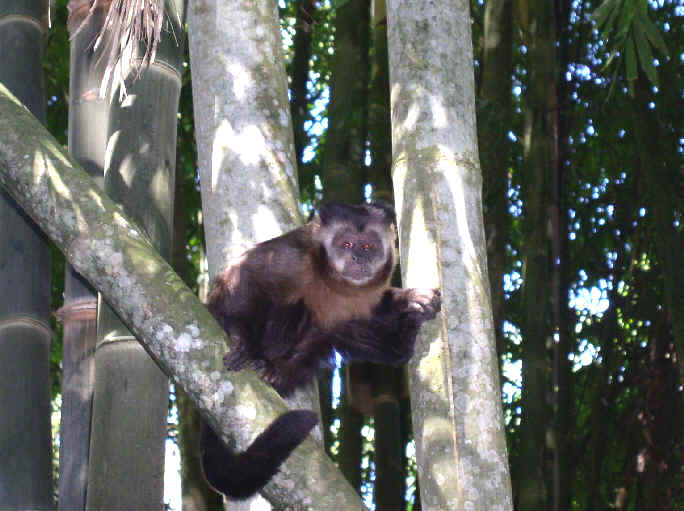
  182. Black Tufted Capuchin  (*) (ph)  ______ mn,se
    Cebus nigritus
    BR: Macaco Prego


    A Black-tufted Capuchin photographed during the FONT August 2007 tour
    in Southeast Brazil
    (photo by Dan Coleman)

  183. White-fronted Capuchin  ______
    Cebus albifrons

  184. Ka'apor Capuchin  ______
    Cebus kaapori

  185. Weeping Capuchin  ______
    Cebus olivaceus

  186. Golden-bellied Tufted Capuchin  (t1) ______
    Cebus xanthosternos


    Genus ATELES:  Spider Monkeys

  187. White-bellied Spider Monkey  (was previously merged with Black Spider Monkey) (*) ______ af
    Ateles belzebuth 
     
    BR: Macaco Aranha  (or Coata)

  188. White-whiskered Spider Monkey  (t2) ______
    Ateles marginatus

  189. Black Spider Monkey  ______
    Ateles paniscus
     
     
  190. Peruvian Spider Monkey  ______
    Ateles chamek


    Genus BRACHYTELES:  Muriqui Monkeys

  191. Northern Muriqui  (t2) (*) ______  (split from Southern Muriqui in 2001) (has been called "Woolly Spider Monkey")
    Brachyteles hypoxanthus

  192. Southern Muriqui  (t2)  ______  (has been called "Woolly Spider Monkey"
    Brachyteles arachnoides


    Genus LAGOTHRIX

  193. Gray Woolly Monkey  ______
    Lagothrix cana

  194. Brown Woolly Monkey  ______
    Lagothrix lagotricha

  195. Silvery Woolly Monkey  ______  (in extreme western Amazonian Brazil)
    Lagothrix poeppigii 


    Genus CALLICEBUS:  Titi Monkeys

  196. Masked Titi  (t3) (*) ph)  ______ mn
    Callicebus personatus
    BR: Sahui Guacu 
    (or Saua or Guigo)


    A Masked Titi photographed during a FONT tour
    in Minas Gerais, Brazil in October 2009

    (photo by Marie Gardner)


  197. Black-fronted Titi  (formerly a subspecies of Masked Titi) (t3) (*) ______ se
    Callicebus nigrifrons
    BR: Sahui Guacu 
    (or Saua or Guigo

  198. Baptista Lake Titi  ______
    Callicebus baptista

  199. Blond Titi  (t1) ______
    Callicebus barbarabrownae

  200. Prince Bernard's Titi  ______
    Callicebus bernhardi

  201. Brown Titi  ______
    Callicebus brunneus

  202. Booted Titi  ______
    Callicebus caligatus

  203. Ashy-black Titi  ______
    Callicebus cinerascens

  204. Coimbra-Filho's Titi  (t1) ______
    Callicebus coimbrai

  205. Coppery Titi  ______
    Callicebus cupreus

  206. Double-browed Titi  ______
    Callicebus discolor

  207. Dubious Titi  ______
    Callicebus dubius

  208. Hoffmanns' Titi  ______
    Callicebus hoffmannsi

  209. Lucifer Titi  ______
    Callicebus lucifer

  210. Mourning Titi  ______
    Callicebus lugens

  211. Black-handed Titi  ______
    Callicebus melanochir

  212. Dusky Titi  ______
    Callicebus moloch

  213. Black-fronted Titi  ______
    Callicebus nigrifrons

  214. Pallid Titi  ______
    Callicebus pallescens

  215. Red-crowned Titi  ______
    Callicebus purinus

  216. Kinglet Titi  ______
    Callicebus regulus

  217. Stephen Nash's Titi  ______
    Callicebus stephennashi

  218. Collared Titi  ______
    Callicebus torquatus


    Genus AOTUS:  Night Monkeys
      
  219. Azara's Night Monkey  ______
    Aotus azarai

  220. Nancy Ma's Night Monkey  ______
    Aotus nancymaae

  221. Black-headed Night Monkey  ______
    Aotus nigriceps

  222. Northern Night Monkey  ______
    Aotus trivirgatus

  223. Noisy Night Monkey  ______
    Aotus vociferans


    AMAZON RIVER DOLPHIN - Family Iniidae

  224. Amazon (or Pink) River Dolphin (*) ______ az
    Inia geroffrensis
    BR: Boutu
    or  Boto


    MARINE DOLPHINS - Family Delphinidae

  225. Tucuxi (*)  ______ am  (or "Gray Dolphin")
    Sotalia fluviatilis
    BR: Tucuxi
    (This species is found in South American rivers draining into the Atlantic & the Caribbean. It occurs throughout the entire Amazon River basin, and also in coastal waters north to Panama, occasionally to Costa Rica.)  

  226. Common Bottlenose Dolphin (*) ______ rs
    Tursiops truncatus
    (These have been seen during FONT Brazil tours from shore by a rock jetty extending about 2 miles out to sea, in Rio Grande do Sul.)


    FRANCISCANA - Family Pontoporiidae

  227. Franciscana  ______
    Pontoporia blainvillei  (the single member of its genus & family)


    PECCARIES - Family Tayassuidae

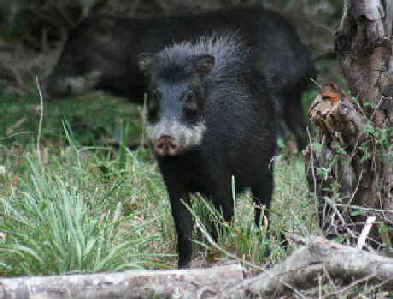
  228. White-lipped Peccary (*) ______ af,mt,ms,se
    Tayassu pecari 
    (the single member of its genus)
    BR: Queixada

  229. Collared Peccary (*) ______ mt
    Dicotyles (formerly Pecari) tajacu 
    (the single member of its genus)
    BR: Catitu


    DEER - Family Cervidae 

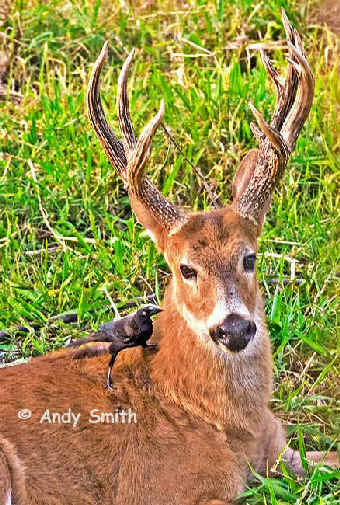
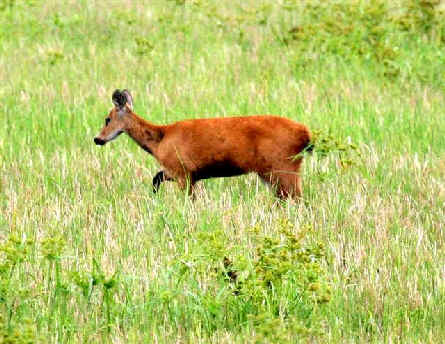
  230. Marsh Deer  (t3) (*) (ph)  ______ ms,mt
    Blastocerus dichotomus 
    (the single member of its genus)
    BR: Cervo do Pantanal


    Above: A Marsh Deer (& a Giant Cowbird) photographed during our 
    Brazil tour in Mato Grosso do Sul in September 2006.
    Below: A Marsh Deer photographed during our tour there in March 2008.
    (photo below by Marie Gardner)


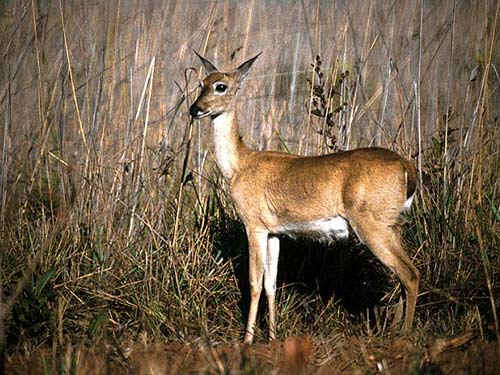
  231. Pampas Deer  (*) (ph)  ______ mn,mt
    Ozotoceros bezoarticus 
    (the single member of its genus)
    BR: Veado-campeiro


    Pampas Deer

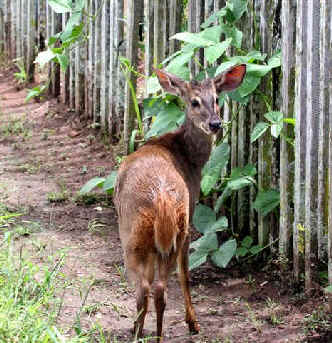
  232. Gray Brocket (Deer)  (*) (ph)  ______ af,rs,mt,ms
    Mazama gouazoubira
    BR: Veado-catingueiro, or Veado-vira


    A Gray Brocket Deer photographed during the FONT Brazil tour
    in Mato Grosso do Sul in March 2008
    (photo by Marie Gardner)

  233. Red Brocket (Deer) (*) ______ af mt,ms  
    Mazama americana
    BR: Veado-mateiro

  234. Pygmy Brocket (Deer) (*) ______ ig  (also called Bororo) (rare in a small geographic range)
    Mazama nana
    BR: Veado


    TAPIRS - Family Tapiridae

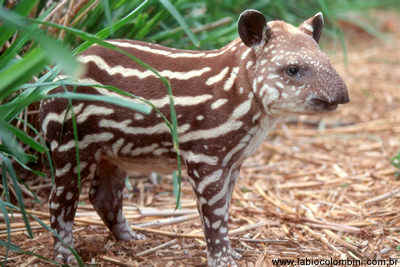
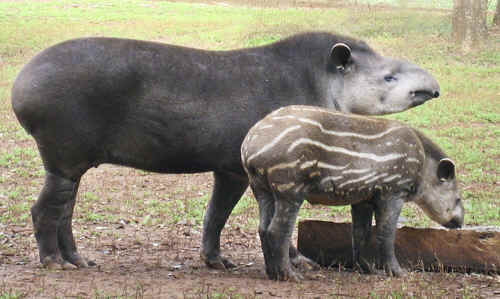
  235. Brazilian Tapir  (ti) (*) (ph)  ______ af,ms,mt
    Tapirus terrestris
    BR: Anta 


    Above: a young Brazilian Tapir
    Below: an adult and a young
    The photo below was taken at a animal scientific research facility 
    in Paraguay during a FONT tour (mostly in Brazil) in August 2008.
    This tapir is an endangered species in Paraguay.
    (lower photo by Pamela Sims)     


    MANATEES - Family Trichechidae

  236. Amazonian Manatee  ______
    Trichechus inunguis


Some Notes regarding Mammals during FONT Tours in Brazil:

During the FONT Brazil Tour in Mato Grosso do Sul during September 2006, mammals seen during one night's "safari" included: a Jaguar, 7 Ocelots, a Pantanal Cat, a Maned Wolf, 2 Brazilian Tapirs, and a number of Giant Anteaters in addition to Marsh Deer, Brocket Deer, Yellow Armadillo, Tapiti (or Brazilian Rabbit), many Capybaras, Crab-eating Fox, Crab-eating Raccoon, and various bats (along with an assortment of nocturnal birds: owls & nightjars).

The very rare Pied Bare-faced Tamarin was seen near Manaus during our August/September 2005 tour in Amazonia.  

As many as 5 Brazilian Tapirs were seen by the Rio Cristalino (in northern Mato Grosso) during our August 1995 tour.

Both adult and juvenile (larger and smaller) Giant Otters were seen during FONT tours in the Rio Cristalino in August 1996, and in the Pantanal in August 2003. 
Two Giant Otters were seen closely during the FONT Brazil tour in August 2008. They were first seen resting on the steps of a wooden dock along a river's edge. 


OTHER WILDLIFE & NATURE:
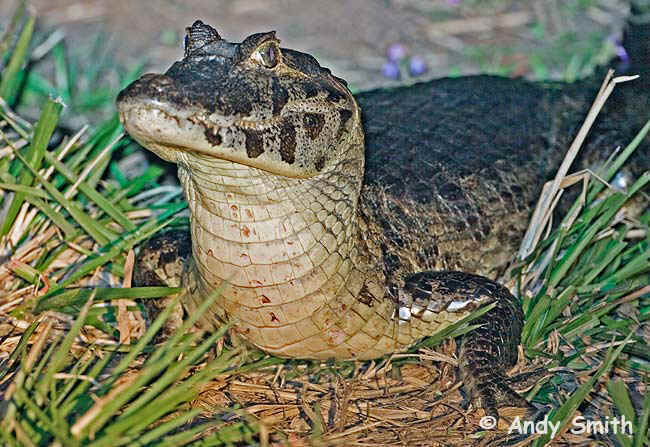
  1. Spectacled Caiman (*) ______ af,mt,ms,rs 
    Caiman crocodilus yacare
    (including the Jacare Caiman subspecies in the Pantanal)


    A Spectacled Caiman photographed during our tour in Mato Gross do Sul
    in September 2006.
    Below is a Caiman in Brazil vertically in the water.. 


  2. Green Iguana (*) ______ mt
    Iguana iguana

  3. Golden (or Black) Tegu (*) ______ ms,mt
    Tupinambus teguixin

  4. Common Anaconda (*) ______ ms,mt
    Eunectes murinus


    An Anaconda in the water
     
  5. Striped Sharpnose Snake (*) ______ mt
    Xenoxybelis argenteus

  6. bright green snake (sp.) (*) ______ af
    (swimming across Rio Cristalino)

  7. Cobra d'Agua  (*) ______ ms
    Hydrodynastes gryas

  8. Cobra Cipo  (*)  ______ ms
    Philodryas nattereri

  9. Marine Toad (*) ______ mt,se  (also called Giant Toad or Cane Toad)
    Bufo marinus

  10. other toads (including Ultramarine) (*) ______

  11. South American Caecilian (also called Ringed Blue Caecilian) (*) ______ mn
    ("leg-less lizard")
    Siphonops annulatus

  12. Helicopter Damselfly (*) ______ af
    Mecitogaster ornata 

  13. Brazilian Morpho Butterfly (*) ______ af
    Morpho deidamia

  14. Sulphur Butterfly (*) ______ af 
    Phoebis sp.

  15. Amphione Dismorpha Butterfly (*) ______ af
    Dismorphia amphione

  16. Green Long-winged Butterfly (*) ______ af
    Philaethria dido

  17. numerous & assorted butterflies (*) ______ af,ig
    A LISTING OF SOUTH AMERICAN, including BRAZILIAN, BUTTERFLIES IS ELSEWHERE IN THIS THIS WEB-SITE 

  18. Leaf-cutter Ants (*) ______ af
    Atta sp.

  19. Burchell's Army Ant (*) ______ af
    Eciton burchelli

  20. "Fire-ants" (their disturbance attracting many birds) (*) ______ mt

  21. other ants en masse (with Fire-eyes and Tufted Antshrikes about) (*) ______ se

  22. Neotropical Colonial Spider (*) ______ br
    Anelosimus eximus " 
    (seen late in the afternoon)

  23. beautiful sunset over Iguacu Falls (*) ______ ig