 |
PO Box 9021,
Wilmington, DE 19809, USA
E-mail: font@focusonnature.com
Phone: Toll-free in USA 1-888-721-3555
or 302/529-1876
Website: www.focusonnature.com |
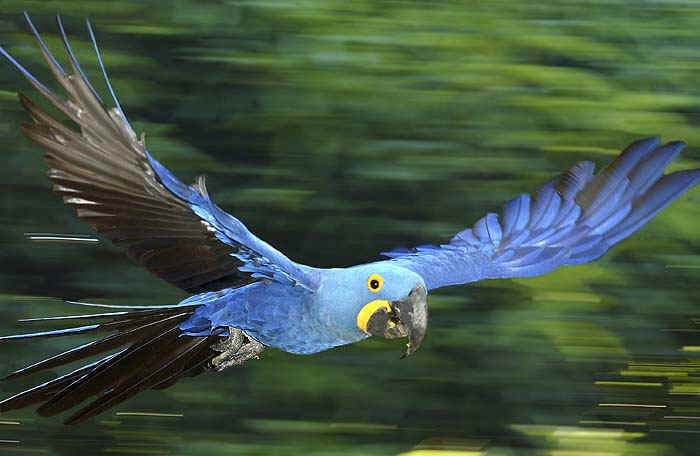
Brazil
Birds
Macaws to Flycatchers
Noting those found during
Focus On Nature Tours
in Brazil with an (*).
from 1992 thru 2014
during the months of February,
March, May, July, August,
September, October, November
Part 2 of a List of
Brazil Birds with some photos,
compiled by Armas Hill
Photo at upper right:
HYACINTH MACAW
Links to Bird Groupings
in this part of this list:
Macaws, Parakeets,
Parrots
Cuckoos
Hoatzin Owls
Potoos, Oilbird
Nighthawks,
Nightjars Swifts
Hummingbirds Trogons
Kingfishers
Motmots
Jacamars Puffbirds
Barbets Toucans
Woodpeckers
Manakins
Cotingas & allies Flycatchers
Links to Other Parts of this List of Brazil Birds:
Part
#1: Tinamous to Doves Part
#3: Antshrikes to Woodcreepers
Part #4: Vireos to Grosbeaks
Links to
Lists of Brazilian Birds in:
The Amazon Basin (in Brazil, Ecuador, Venezuela)
Mato
Grosso & Mato Grosso do Sul (including the Pantanal)
Minas
Gerais, in interior south-central Brazil
Rio
Grande do Sul, in southernmost Brazil
Southeast
Brazil (the states of Rio de Janeiro & Sao Paulo)
and
a special lists of:
Rare
& Threatened Birds of Brazil (with
some photos)
Hummingbirds
of the Americas (with some photos)
There have been 50 FONT
birding tours in Brazil.
1,065 species of birds have
cumulatively been seen during FONT Brazilian tours.
Generally the taxonomy in this list conforms
generally with
that in the Howard & Moore "Complete Checklist of the Birds of
the World", 3rd edition, edited by Edward Dickinson. More recently, some taxonomic order & nomenclature here are from
"Birds of the World - Recommended English Names" by Frank Gill &
Minturn Wright (published in 2006).
Codes:
(BRi): introduced species
in Brazil
(BRe): endemic to Brazil
(BRqe): quasi (or near) endemic to Brazil
(r/BR): a rarity, or vagrant, in Brazil
(t): a globally threatened or
rare species, designated by Birdlife International
(t1): critical (t2):
endangered (t3): vulnerable
(nt): a near-threatened
species globally
In the list that
follows, relating to sightings during FONT tours, the Brazilian region or state & the
months are noted.
AF:
the Alta Floresta and Rio Cristalino
areas (mostly Amazonian)
AM: Amazonas state, mostly in the area of Manaus
BR: the area of Brasilia - the federal capital
ES: Espiritu Santo state
IG: the area of Iguacu Falls (in Parana
state)
MN: Minas Gerais state
MS: Mato Grosso do Sul state
MT: Mato Grosso state (excluding Alta Floresta/Rio
Cristalino)
(including the
Pantanal, Chapada dos Guimaraes, Serra das Araras, &
the Jardim da Amazonia in central MT near
the Rio Claro)
NE:
Northeast
Brazil, in the states of Ceara & Piaui
SE:
Southeast Brazil (in the states
of Rio de Janeiro & Sao Paulo, including areas of Itatiaia
National Park, Cubatao,
Ubatuba, Angra dos Reis,
& Cabo Frio along the coast)
RS:
Rio Grande do Sul - the southernmost state in Brazil
x after the 2-letter code indicates
out-of-range (probable escape)
(ph): species with a photograph in the FONT web-site
Other Links:
Upcoming
FONT Birding & Nature Tours in Brazil
Upcoming
FONT Tours Elsewhere
FONT
Past Tour Highlights
Photo Galleries & Narratives from
past FONT tours
Mammals
& Other Wildlife of Brazil (with some photos)
Butterflies
of Brazil & nearby Argentina, including at Iguazu Falls (with some photos)
Amphibians
& Reptiles of Brazil
(with some photos)
Directory of
Photographs in this Website

Bird-List:
ARA
- Blue-and-yellow Macaw (ph) (*) ______ AF:oct AM:feb,aug MS:mar,aug,sep
MT:aug,oct
Ara ararauna (monotypic)
Outside Brazil, the Blue-and-yellow Macaw has been found during FONT tours
in Ecuador, Venezuela.
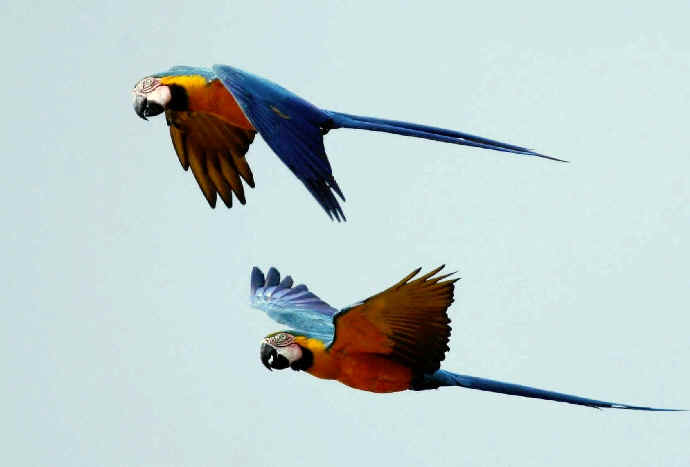
Above and below: Blue-and-yellow Macaws,
photographed during FONT tours in Brazil
(photo above by Marie Gardner)
- Scarlet Macaw (ph) (*) ______ AF:oct AM:aug
Ara m. macao
Outside Brazil, the Scarlet Macaw has been found during FONT tours in
Costa Rica, Ecuador, Venezuela.

Scarlet Macaws
- Red-and-green Macaw (ph) (*) ______ af AM:feb,aug MS:mar,aug
MT:mar,aug,oct
Ara chloroptera (monotypic)
Outside Brazil, the Red-and-green Macaw has been found during FONT tours in
Ecuador, Panama, Venezuela.
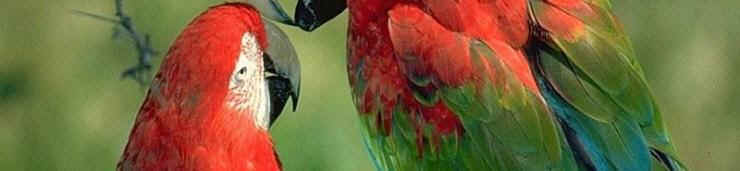
Red-and-Green Macaw
- Chestnut-fronted Macaw (*) ______ AF:oct AM:aug MT:aug,oct
Ara severus castaneifrons
Outside Brazil, the Chestnut-fronted Macaw has been found during FONT
tours in Ecuador, Venezuela.
ORTHOPSITTACA
- Red-bellied Macaw (*) ______ AF:oct AM:aug MT:aug,oct
Orthopsittaca manilata (monotypic)
Outside Brazil, the Red-bellied Macaw has been found during FONT tours in
Ecuador, Venezuela.
PRIMOLIUS
- Blue-winged Macaw (t3) (*) ______ br ig MN:may,sep,oct MT:aug,oct
Primolius (formerly Propyrrhura) maracana
(monotypic)
Primolius maracana has
also been called Illiger's Macaw.
Outside Brazil, the Blue-winged Macaw has been found during
FONT tours in Argentina.
- Golden-collared Macaw (ph) (*) ______
MS:mar,aug,sep mt
Primolius
(formerly Propyrrhura) auricollis (monotypic)
Primulius auricollis has also
been called Cassin's Macaw. Another name has been Yellow-collared
Macaw.
Outside Brazil, the Golden-collared Macaw has been found during FONT tours
in Argentina.
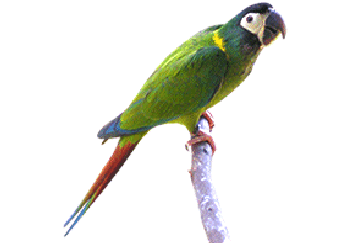
Golden-collared Macaw
- Blue-headed Macaw
______
Primolius
(formerly Propyrrhura) couloni
The Blue-headed Macaw occurs
in far-western Amazonian Brazil.
ANODORHYNCHUS
- Hyacinth Macaw (t2) (BRqe) (ph) (*) ______
MS:mar,aug,sep MT:aug
Anodorhynchus hyacinthinus (monotypic)
Regarding the HYACINTH MACAW, & the 3 next species in
this list, the
GLAUCOUS, INDIGO (or LEAR'S), & the SPIX'S MACAWS. go to: Rare Birds
of Brazil
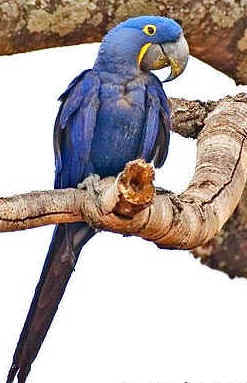
A Hyacinth Macaw photographed during a FONT
Brazil Tour
in Mato Grosso do Sul
- Glaucous Macaw ______ (extinct)
Anodorhynchus glaucus
- Indigo Macaw (t1) (BRe)
______
Anodorhynchus leari
Anodorhynchus leari is also
called Lear's Macaw. It occurs in northeast Brazil.
CYANOPSITTA
- Spix's Macaw (BRe)
______
Cyanopsitta spixii (the single member of its genus)
The Spix's Macaw is now extinct in
the wild. It was only in northeast Brazil. A good book to read with the
story of this bird is "The Spix's Macaw, the Race to Save
the World's Rarest Bird" by Tony Juniper, published in 2002 with
a new afterword.
DIOPSITTACA
Red-shouldered Macaw (*) ______ br MS:aug MT:mar,aug,oct SE:oct
Diopsittaca nobilis longipennis
(the single member of its genus)
GUAROUBA
Golden Parakeet (t2) (BRe) ______
Guarouba guarouba
The Golden Parakeet occurs locally in Amazonian Brazil.
THECTOCERCUS
Blue-crowned Parakeet (or
Conure) (*) ______ MS:aug mt
Thectocercus
(formerly Aratinga) a. acuticaudata
Outside Brazil, the Blue-crowned Parakeet has been found during FONT tours
in Argentina.
PSITTACARA
White-eyed Parakeet (or
Conure) (ph) (*) ______ af AM:feb IG:jul,sep
MN:mar,may,aug,sep,oct MS:mar,aug,sep
MT:mar,aug,oct SE:may,aug,oct
Psittacara
(formerly Aratinga) l. leucophtalmus
Outside Brazil, the White-eyed Parakeet has been found during FONT tours
in Argentina, Ecuador, Paraguay, Venezuela.
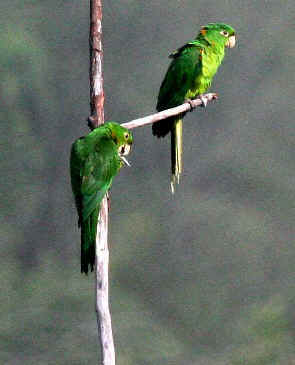
White-eyed Parakeets photographed during a
FONT tour in Brazil
EUPSITTULA
Peach-fronted Parakeet (or
Conure) (ph) (*) ______ br MN:mar,may,aug,sep,oct MS:mar,aug,sep
MT:mar,aug SE:mar,aug
Eupsittula (formerly Aratinga)
aurea (monotypic)
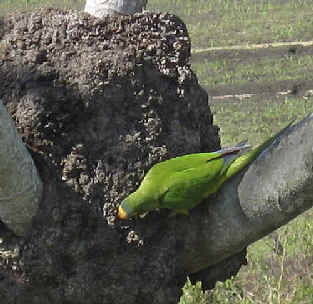
A Peach-fronted Parakeet feeding on termites
in Mato Grosso do Sul
Photographed during the August 2008 FONT Brazil Tour.
Brown-throated Parakeet (or
Conure) (*) ______ AM:aug
Eupsittula (formerly
Aratinga) pertinax
Outside Brazil, the Brown-throated Parakeet has been found during
FONT tours in Venezuela.
Cactus Parakeet (or
Conure) (BRe) ______
Eupsittula
(formerly Aratinga) cactorum
The Cactus Parakeet occurs in northeast
Brazil.
ARATINGA
Dusky-headed Parakeet (or
Conure) (*) ______ mt
Aratinga weddellii (monotypic)
Outside Brazil, the Dusky-headed Parakeet has been found during FONT tours
in Ecuador.
Golden-capped Parakeet (or
Conure) (t3) (BRe) (*) ______ MN:aug,oct
Aratinga auricaplla aurifrons
The Golden-capped Parakeet was considered conspecific with the more-northerly
Sun and
Jandaya Parakeets (or
Conures), Aratinga solstitialis
and jandaya respectively.
Sun Parakeet ______
Aratinga solstitialis
Jandaya Parakeet ______
Aratinga jandaya
Sulphur-breasted Parakeet
______ (locally in Amazonian Brazil)
Aratinga pintoi
Nanday Parakeet (ph) (*) ______ MS:mar,aug,sep
mt (has also been called Black-hooded
Parakeet)
Aratinga (formerly Nandayus) nenday
(monotypic,
and the single member of its genus)
Outside Brazil, the Nanday Parakeet has been found during FONT tours
in Bolivia.
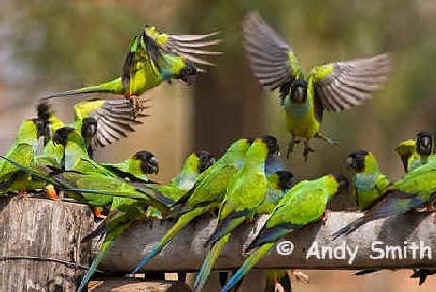
Nanday (or Black-hooded)
Parakeets photographed during the FONT
Brazil Tour
in Mato Grosso do Sul in September 2006
PYRRHURA
Reddish-bellied Parakeet (BRqe) (ph) (*) ______
IG:jul,aug,sep
RS:jul,oct SE:may,jul,aug,oct
Pyrrhura frontalis chiripepe
Pyrrhura frontalis is also
called the Maroon-bellied Parakeet.
Outside Brazil, the Reddish-bellied, or
Maroon-bellied Parakeet has been
found during FONT tours in Argentina, Paraguay.
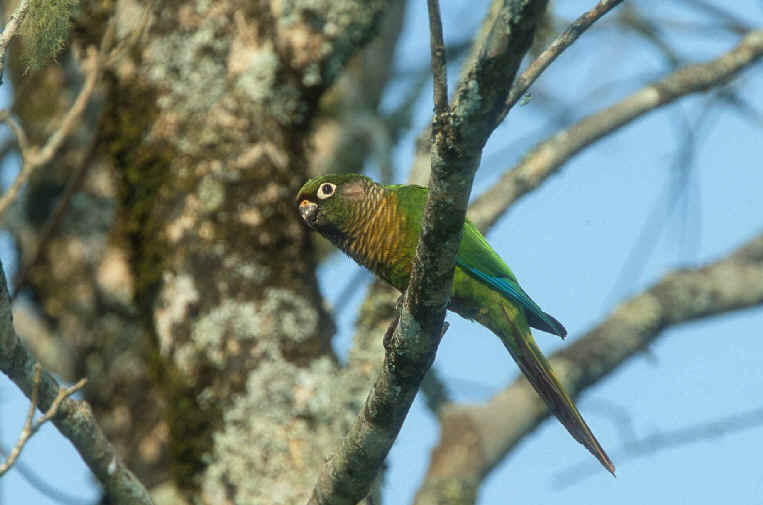
Reddish-bellied Parakeet, but with no reddish or maroon visible on the
belly
(photo by Larry O'Meallie)
Crimson-bellied Parakeet (t3) (*) ______
AF:oct
Pyrrhura perlata (monotypic)
Painted Parakeet ______
Pyrrhura picta
Outside Brazil, the Painted Parakeet has been found during FONT tours in
Venezuela.
Green-cheeked Parakeet (*) ______ mt
Pyrrhura molinae sordida
Outside Brazil, the Green-cheeked Parakeet has been found during FONT
tours in Argentina.
Blue-chested Parakeet (t3) (BRe) ______ (in eastern Brazil)
Pyrrhura cruentata
Maroon-faced Parakeet
______
Pyrrhura leucotis
Madeira Parakeet
______ (may not be a valid species) (in southern Amazonian Brazil)
Pyrrhura snethlageae
Pfrimer's Parakeet ______
Pyrrhura pfrimeri
Blaze-winged Parakeet
(*) ______ ms
Pyrrhura devillei
Deville's Parakeet ______
Pyrrhura lucianii
Fiery-shouldered Parakeet
______
(in far-northern Brazil)
Pyrrhura egregia
Maroon-tailed Parakeet ______
Pyrrhura melanura
Outside Brazil, the Maroon-tailed Parakeet has been found during FONT tours
in Ecuador.
Black-capped Parakeet (nt) ______ (in far-western Amazonian Brazil)
Pyrrhura nupicola
Pearly Parakeet (t3) (BRe) ______ (in northern Brazil)
Pyrrhura lepida
Gray-breasted Parakeet
______ (in eastern Brazil)
Pyrrhura griseipectus
Red-crowned Parakeet
______ (in far-western Brazil)
Pyrrhura roseifrons
Santarem Parakeet (*)
______ AF:oct AM:feb,aug MT:aug,oct
(was Hellmayr's Parakeet)
Pyrrhura amazonum
MYIOPSITTA
Monk Parakeet (*) ______ MS:mar,aug,sep MT:aug RS:jul,oct
Myiopsitta monachus cotorra
Outside Brazil, the Monk Parakeet has been found during
FONT tours in Argentina, Bolivia, Chile (where introduced), Uruguay
FORPUS
Blue-winged Parrotlet (*) ______ af AM:aug br IG:jul MN:mar,oct MS:aug
MT:oct SE:jul,aug,oct (was, at one time, considered
conspecific with the more-northerly Green-rumped Parrotlet, Forpus
passerinus)
Forpus xanthopterygius
(formerly crassirostris) xanthopterygius
Outside Brazil, the Blue-winged Parrotlet has been found
during FONT tours in Argentina, Ecuador.
Dusky-billed (or Sclater's)
Parrotlet (*) ______ af
Forpus s. sclateri
Outside Brazil, the Dusky-billed Parrotlet has been found during FONT
tours in Ecuador.
Green-rumped Parrotlet
______ (in far-northern Brazil)
Forpus passerinus
Outside Brazil, the Green-rumped Parrotlet has been found during FONT tours
in Venezuela.
NANNOPSITTACA
Amazonian Parrotlet ______
Nannopsittaca dachilleae
Tepui Parrotlet ______
Nannopsittaca panychlora
Outside Brazil, the Tepui Parrotlet has been found during FONT tours
in Venezuela.
TOUIT
Sapphire-rumped Parrotlet
______
Touit purpuratus
Scarlet-shouldered
Parrotlet (t3) ______
Touit huetii
Golden-tailed Parrotlet
(t2) ______
Touit surdus
Brown-backed Parrotlet
(t2) ______
Touit melanonotus
BROTOGERIS
Plain Parakeet (BRe) (*) ______ ES:oct SE:mar,may,jul,aug,oct
Brotogeris tirica (monotypic)
Yellow-chevroned Parakeet (*) ______ br
MN:mar,may,aug,oct MS:mar,aug,sep MT:mar,aug,oct (was conspecific with what's now the White-winged Parakeet; when combined,
was called the Canary-winged Parakeet)
Brotogeris c. chiriri
Golden-winged Parakeet (*) ______ AF:oct AM:feb,aug
Brotogeris chrysopterus tuipara
Tui Parakeet (*) ______ AM:feb,aug
Brotogeris s. sanctithomae
White-winged Parakeet
______ (in far-northern Brazil) (was conspecific with what's
now the Yellow-chevroned Parakeet; when combined, was called
the Canary-winged Parakeet)
Brotogeris versicolurus
Cobalt-winged Parakeet
______ (in far-western
Amazonian Brazil)
Brotogeris cyanoptera
Outside Brazil, the Cobalt-winged Parakeet has been found
during FONT tours in Ecuador.
GRAYDIDASCALUS
Short-tailed Parrot (*) ______
AM:aug
Graydidascalus brachyurus (monotypic,
and the single member of its genus)
PIONITES
White-bellied Parrot (or Caique) (t3)
(*) ______ af
Pionites l. leucogaster
Black-headed Parrot (or
Caique) ______ (in far-northern Brazil)
Pionites melanocephalus
Outside Brazil, the Black-headed Parrot has been found during FONT
tours in Ecuador, Venezuela.
PIONOPSITTA (and PYRILIA)
Caica Parrot (nt) (*) ______
AM:aug
Pionopsitta caica (monotypic)
Pileated Parrot (nt) (BRqe) (*) ______ ES:oct
MN:may SE:aug,oct (has also been called the Red-capped Parrot)
Pionopsitta pileata (monotypic)
Outside Brazil, the Pileated Parrot has been found
during FONT tours in Argentina.
Vulturine Parrot (t3) (BRe) (*) _____
af
Pionopsitta vulturina
Orange-cheeked Parrot (nt) ______ (in western Amazonian Brazil)
Pionopsitta barrabandi
Outside Brazil, the Orange-cheeked Parrot has been found during FONT tours in
Ecuador.
GYPOPSITTA
Orange-headed Parrot (nt) (BRe)
______ (has also been called the Bald Parrot)
Gypopsitta
aurantiocephala
PIONUS
Blue-headed Parrot (*) ______ AF:oct AM:feb,aug MT:aug,oct se
Pionus m. menstruus (af,am,mt)
Pionus menstruus reichenowi (se)
Outside Brazil, the Blue-headed Parrot has been found during FONT tours in
Ecuador, Venezuela.
Scaly-headed Parrot (*) ______ IG:jul,aug MN:may,sep,oct MS:aug,sep MT:aug
RS:oct SE:mar,may,jul,aug,oct
Pionus maximiliani melanobelpharus
Outside Brazil, the Scaly-headed Parrot has been found
during FONT tours in Argentina.
Dusky Parrot (*) ______
AM:feb,aug
Pionus fuscus
AMAZONA
Diademed Amazon (or Parrot)
(*) ______ AM:feb,aug (has been part of the Red-lored
Amazon, or Parrot, Amazona autumnalis)
Amazona diadema
Turquoise-fronted Amazon (or
Parrot) (ph) (*) ______ af MN:may
MS:mar,aug,sep MT:aug (has also been called Blue-fronted Amazon, or
Parrot)
Amazona aestiva xanthopteryx
Outside Brazil, the Turquoise-fronted Amazon has been
found during FONT tours in Argentina.
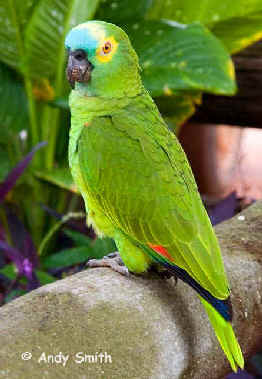
A Turquoise-fronted Amazon
photographed during
a FONT tour
in Mato Grosso do Sul, Brazil
Yellow-crowned Amazon (or
Parrot) (*) _____ AF:oct AM:feb,aug
Amazona o. ochrocephala
(has been regarded as conspecific with Yellow-headed and Yellow-naped
Amazons (or Parrots) of Central America)
Outside Brazil, the Yellow-crowned Amazon has been found during FONT tours in
Ecuador, Venezuela.
Orange-winged Amazon (or
Parrot) (*) ______ AM:feb,aug br MS:mar,aug,sep mt
Amazona a. amazonica (monotypic)
Outside Brazil, the Orange-winged Amazon has been found during FONT tours in
Ecuador, Venezuela.
Yellow-faced Amazon (or Parrot)
(t3) (BRqe) (ph) (*) ______ br
Amazona xanthops (monotypic)
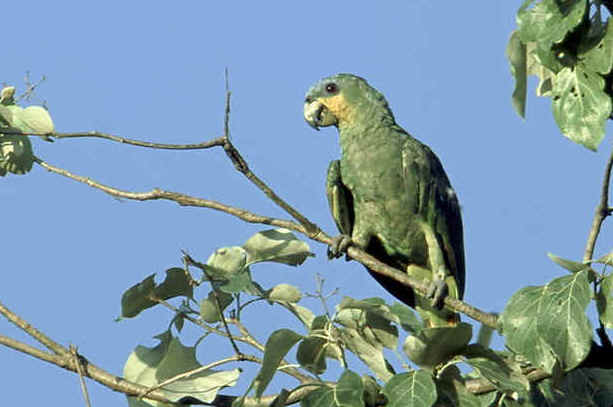
Yellow-faced Amazon
Mealy Amazon (or Parrot)
(*) ______ af AM:feb,aug MN:sep,oct mt
Amazona f. farinosa
Outside Brazil, the Mealy Amazon has been found during FONT tours in
Ecuador, Venezuela.
Vinaceous-breasted Amazon (or
Parrot)
(t2) (BRqe) (*) ______ MN:may,oct RS:oct SE:jul,oct
Amazona vinacea (monotypic)
Red-spectacled Amazon (or Parrot) (t3) (BRe)
(ph)
(*) ______ RS:jul,oct
Amazona pretrei (monotypic)
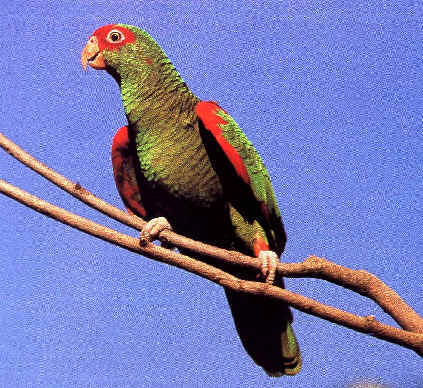
Red-spectacled Amazon
Red-tailed Amazon (or Parrot)
(t2) (BRe) (ph) ______
Amazona brasiliensis
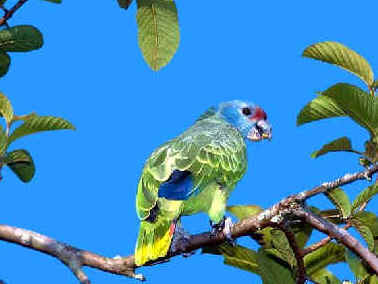
Red-tailed Amazon
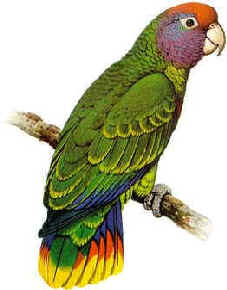
Red-browed Amazon (or Parrot)
(t2) (BRe) ______
Amazona rhodocorytha
Festive Amazon (or Parrot) (t3) ______ (in Amazonian Brazil)
Amazona festiva
White-cheeked Amazon
(or Parrot) (nt) (BRe) ______ (in Amazonian Brazil) (has also been called
Kawall's Amazon, or Parrot)
Amazona kawalli
DEROPTYUS
Red-fan (or Hawk-headed)
Parrot (ph) (*) ______ AF:oct AM:feb,aug
Deroptyus accipitrinus fuscifrons
Outside Brazil, the Red-fan Parrot has been found during FONT tours in
Venezuela.
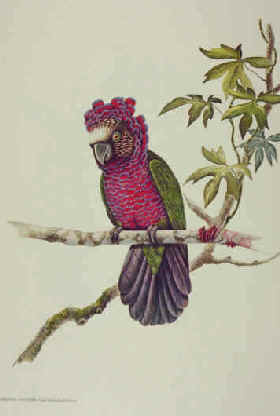
Red-fan Parrot
TRICLARIA
Blue-bellied Parrot
(t3) (BRe)
______
Triclaria malachitacea
CROTOPHAGA
Smooth-billed Ani (ph) (*) ______
AF:oct AM:feb,aug br IG:jul,aug,sep
MN:mar,may,aug,sep,oct
MS:mar,aug,sep MT:mar,aug,oct RS:jul,oct
SE:mar,may,jul,aug,oct
Crotophaga ani (monotypic)
Outside Brazil, the Smooth-billed Ani has been found during FONT tours in
Argentina, Bolivia, Ecuador, Paraguay, Venezuela.
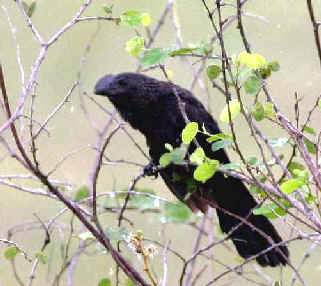
Smooth-billed Ani
Greater Ani (*) ______ af AM:feb,aug ig MS:mar MT:oct
Crotophaga major (monotypic)
Outside Brazil, the Greater Ani has been found during FONT tours in
Argentina, Ecuador,
Venezuela.
COCCYZUS
Dark-billed Cuckoo (*) ______ ig MN:oct mt
Coccyzus melacoryphus (monotypic)
Outside Brazil, the Dark-billed Cuckoo has been found
during FONT tours in Argentina, Venezuela.
Mangrove Cuckoo (ph) ______ (coastally in far-northern Brazil)
Coccyzus minor
Pearly-breasted Cuckoo ______
Coccyzus euleri
Yellow-billed Cuckoo ______
Coccyzus americanus
Black-billed Cuckoo ______
Coccyzus erythropyhalmus
Outside Brazil, the Black-billed Cuckoo has been found in Argentina
(about as far south as the species occurs), Panama.
COCCYCUA
Ash-colored Cuckoo (*) ______
MS:mar mt
Coccycua cinereus (monotypic)
Outside Brazil, the Ash-colored Cuckoo has been found during
FONT tours in Argentina.
Little Cuckoo (*) ______ AF:oct MS:mar,aug mt
Coccycua m. minuta
Outside Brazil, the Little Cuckoo has been found during FONT tours in
Venezuela.
Dwarf Cuckoo ______ (has been recorded in Roriama, in far-northern Brazil)
Coccycua pumilus
Outside Brazil, the Dwarf Cuckoo has been found during FONT tours in
Venezuela.
PIAYA
Squirrel Cuckoo (ph) (*) ______ af AM:feb,aug br ES:oct
IG:jul,sep MN:may,aug,sep,oct MS:aug
MT:mar,aug RS:jul,oct SE:may,aug.oct
Piaya cayana (6 subspecies in Brazil)
Outside Brazil, the Squirrel Cuckoo has been found during FONT tours in
Argentina, Ecuador, Paraguay, Venezuela.
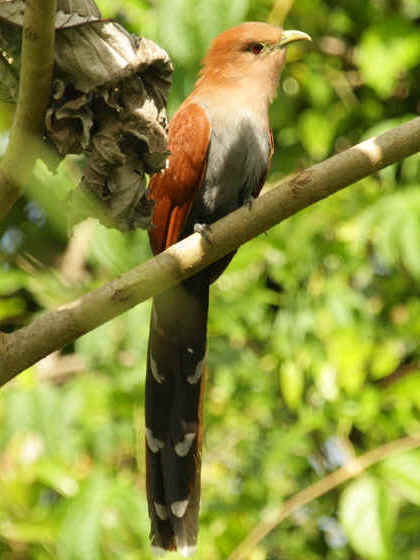
Squirrel Cuckoo
Black-bellied Cuckoo (*) ______ AF:oct
mt
Piaya melanogaster (monotypic)
TAPERA
Striped Cuckoo (*) ______ af AM:feb MN:aug,sep,oct MS:mar,aug,sep
MT:aug RS:oct SE:may,jul,aug,oct
Tapera n. naevia (the single member of its genus)
Outside Brazil, the Striped Cuckoo has been found during FONT tours in
Argentina, Belize,
Venezuela.
DROMOCOCCYX
Pheasant Cuckoo (*) ______
MT:oct
Dromococcyx phasianellus
Outside Brazil, the Pheasant Cuckoo has been found during FONT tours in
Guatemala.
Pavonine Cuckoo ______
Dromococcyx pavoninus
Outside Brazil, the Pavonine Cuckoo has been found during FONT tours in
Argentina.
NEOMORPHUS
Rufous-vented Ground Cuckoo
______
Neomorphus geoffroyi
Scaled Ground Cuckoo (nt) (BRe) ______
Neomorphus squamiger
Red-billed Ground Cuckoo
______ (in western Amazonian Brazil)
Neomorphus pucheranii
Rufous-winged Ground Cuckoo
______ (in far-northern Brazil)
Neomorphus rufipennis
GUIRA
Guira Cuckoo (ph) (*) ______ br ES:oct IG:sep
MN:mar,may,aug,sep,oct MS:mar,aug,sep
MT:mar,aug,oct RS:jul,oct SE:mar,may,jul,aug,oct
Guira guira (monotypic, and
the single member of its genus)
Outside Brazil, the Guira Cuckoo has been found during
FONT tours in Argentina, Bolivia, Paraguay, Uruguay.
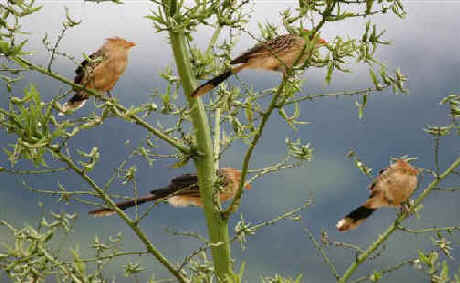
This photo of Guira Cuckoos, taken during the March
2008 FONT Brazil tour,
was subsequently chosen to be in the National Geographic website.
(photo by Marie Gardner)
OPISTHOCOMUS
Hoatzin (ph) (*) ______ af
AM:feb
Opisthocomus hoazin (monotypic, and
the single member of its genus & family)
Outside Brazil, the Hoatzin has been found during FONT tours in Ecuador,
Venezuela.
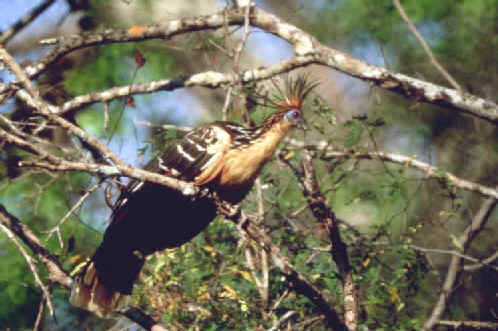
Hoatzin
(photo by Alan Brady)
TYTO
American Barn Owl (ph) (*) ______ MN:aug,sep,oct MS;mar,aug,sep MT:aug,oct
SE:aug
Tyto furcata hellmayri
(subspecies in Brazil north of the Amazon, to
Venezuela & the Guianas)
Tyto furcata tuidara (subspecies in Brazil south of the Amazon, to
Argentina) (mn,ms,mt,se)
The American Barn Owl has been part of the Barn Owl
of Eurasia & Africa, Tyto alba.
But Tyto furcata is a heavier bird,
with a larger and stouter head and body, and much more powerful
talons.
Outside Brazil, the American Barn Owl has been found during FONT
tours in Argentina, Chile, Venezuela.
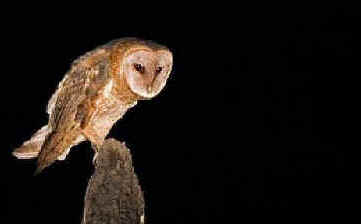
An American Barn Owl photographed during a FONT Brazil Tour in Mato Grosso
do Sul
(photo by Andy Smith)
BUBO
Great Horned Owl (ph) (*) ______ MS:aug,sep MT:aug RS:oct
Bubo virginianus deserti (subspecies restricted to Bahia, in
northeastern Brazil)
Bubo virginianus nacurutu (subspecies from Venezuela to
Argentina) (ms,mt,rs)
Outside Brazil, the Great Horned Owl has been found
during FONT tours in Argentina, Venezuela.
PULSATRIX
Spectacled Owl (ph) (*) ______
af
Pulsatrix perspicillata perspicillata (subspecies in Brazil and
adjacent countries from Peru to the Guianas) (af)
Outside Brazil, the Spectacled Owl has been found during FONT tours in
Costa Rica, Ecuador, Venezuela.
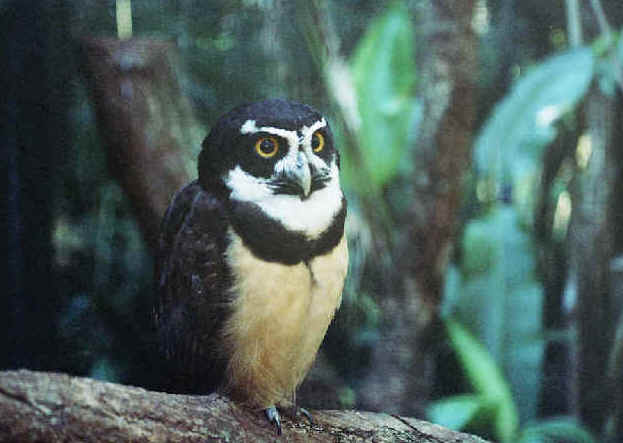
A Spectacled Owl photographed during a FONT tour
Short-browed Owl (BRqe) ______
Pulsatrix pulsatrix
The Short-browed Owl, ranging in Brazil from Bahia south into
northeast Argentina and Uruguay, has been considered a subspecies of the Spectacled
Owl.
Pulsatrix pulsatrix is not well known, but it is believed to be rare
and threatened due to human persecution and habitat destruction.
Geographically, the range of the Short-browed Owl overlaps with that of
the Tawny-browed Owl (below), but the Tawny-browed Owl is
notably smaller with long pale tawny eyebrows and dark chestnut
eyes.
Tawny-browed Owl (BRqe) (*) ______ SE:aug,oct (has also been called White-chinned
Owl)
Pulsatrix koeniswaldiana (monotypic)
The Tawny-browed Owl is uncommon to rare, and locally
endangered as it seems to depend to an extent on intact mountain
forests.
STRIX
Mottled Owl (*) ______
AM:feb MT:oct
Strix virgata borelliana
(subspecies in southeastern Brazil
& northeastern Argentina, a large & more rufous subspecies)
Strix virgata superciliaris (subspecies from Amazonian Peru &
Brazil south to northern Argentina)
(am,mt)
The Mottled Owl inhabits primary
& secondary forests, mostly humid lowland forests. But it also occurs dry
and thorny forests, and from sea level usually to 800 meters, but sometimes
2500 meters above sea level.
Outside Brazil, the Mottled Owl has been found during FONT tours in
Ecuador.
What has been part of the Mottled Owl, and now called the
Mexican Wood Owl, has been found during FONT tours in Costa Rica,
Guatemala, Mexico.
The Mottled Owl, Strix virgata is now a South American species east
of the Andes. The Mexican Wood Owl, Strix
squamulata, ranges from
Mexico south to northwestern South America, south to southwestern
Ecuador.
Rusty-barred Owl (nt) (BRqe) (*) ______
MN:oct SE:oct
Strix hylophila (monotypic)
The Rusty-barred Owl occurs in Brazil from Minas Gerais &
Rio de Janeiro south to Rio Grande do Sul, and also in adjacent Paraguay and
northeastern Argentina.
The species prefers primary & secondary forests, but sometimes it is near
human habitation. It ranges from the lowlands up to 2000 meters above sea
level.
Black-banded Owl ______
Strix
(formerly
Ciccaba)
huhula
Strix hulhula albomarginata (subspecies from northeastern Argentina
& eastern Paraguay to eastern Brazil)
Strix hulhula hulhula (subspecies elsewhere in Brazil, and from
eastern Colombia to northern Argentina)
Outside Brazil, the Black-banded Owl has been found during FONT tours in
Ecuador.
LOPHOSTRIX
Crested Owl (*) ______
af MT:oct
Lophostrix cristata cristata (subspecies
in South America east of the Andes) (af,mt)
The Crested Owl lives mainly in primary forests, often in
lowland rainforest, but it also can be in second-growth woodland. It occurs
from sea level up to 1950 meters.
Outside Brazil, the Crested Owl has been found during FONT tours in
Ecuador.
MEGASCOPS
Tropical Screech Owl (ph) (*) ______
IG:aug MN:sep,oct MS:aug,sep MT:mar
SE:aug,oct
Megascops (formerly Otus)
choliba
Megascops choliba choliba (subspecies in Brazil from southern Mato
Grosso & Sao Paulo to Paraguay) (mt,se)
Megascops choliba crucigerus (subspecies
in northeastern Brazil, and nearby countries)
Megascops choliba decussatus (subspecies
in south-central & southern Brazil) (mn)
Megascops choliba uruguaiensis (subspecies
from southeastern Brazil to Uruguay & northeastern Argentina) (ig)
Outside Brazil, the Tropical Screech Owl has been found during FONT tours in
Argentina, Venezuela.
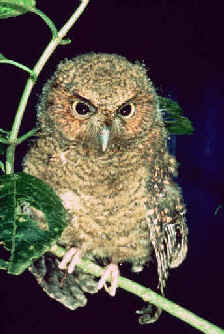
Tropical Screech Owl
Tawny-bellied Screech Owl (*) ______ af
MT:oct (said to be 2 species: Northern Tawny-bellied Screech Owl, Megascops
watsoni & Southern Tawny-bellied Screech Owl,
Megascops
usta)
Megascops (formerly Otus)
watsonii (north of the Amazon)
Megascops (formerly
Otus)
usta (south of the Amazon)
(af,mt)
Outside Brazil, the Tawny-bellied Screech Owl has been found during FONT tours
in Ecuador.
Black-capped Screech Owl (*) ______ ig
SE:may,aug,oct
Megascops (formerly Otus) atricapilla
(monotypic) (ig,se)
The Black-capped Screech Owl was historically lumped with these other
Screech Owls: Guatemalan, Rio
Napo, Montane Forest, and Long-tufted. When so, it was called
the Variable Screech-Owl.
There are 3 color morphs: red, gray, and dark.
Santa Catarina Screech Owl (BRqe)
______ (has been called the Long-tufted Screech Owl)
Megascops
(formerly Otus) sanctaecatarinae
(monotypic)
Megascops sanctaecatarinae
occurs in far-southern Brazil, and adjacent
northeastern Argentina, and Uruguay.
Roraima Screech Owl ______
Megascops roraimae (monotypic)
Megascops roraimae was conspecific with the more-northerly Vermiculated
Screech Owl.
GLAUCIDIUM
Ferruginous Pygmy-Owl (*) ______ af MN:sep,oct SE;aug,oct
Glaucidium brasilianum brasilianum (subspecies
from northeast Brazil south to northern Uruguay) (mn,se)
Glaucidium brasilianum ucayalae (subspecies in northern Brazil
& in nearby countries) (af)
It is possible that Glaucidium
brasilianum ucayalae is a distinct species. It is very
white below like the nominate but has fewer white head streaks.
More study is needed of the Glaucidium
brasilianum complex.
Outside Brazil, the Ferruginous Pygmy Owl has been found during FONT tours
in Argentina, Ecuador, Venezuela.
Chaco Pygmy Owl (ph) (*)
______ MS: mar,aug,sep MT:aug (was
part of the Ferruginous Pygmy Owl)
Glaudidium tucumanum pallens
(subspecies in southwestern Brazil & adjacent Bolivia including the chaco
habitat) (ms,mt)
Vocal & DNA evidence and differences in ecology have justified the
treatment of the Chaco Pygmy Owl as a species separate from the Ferruginous
Pygmy Owl.
Three morphs of the Chaco Pygmy Owl are known: gray, brown, and red.
The brown morph, in the photo below, is an earth-brown coloration. .
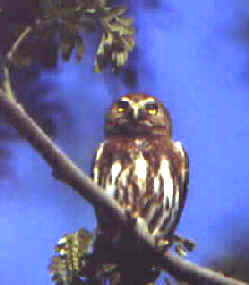
A Chaco Pygmy Owl photographed
during a FONT tour in southwestern Brazil.
When this photo was taken, it was
considered the Ferruginous Pygmy Owl.
(photo by Alan Brady)
Amazonian Pygmy Owl (*) ______ AF:oct MT:aug,oct
Glaucidium hardyi (monotypic)
The Amazonian Pygmy Owl occurs only in the extensive Amazon basin in Brazil
and adjacent counties.
Voice and DNA data has shown that there is a close relationship between the
Amazonian Pygmy Owl and the Yungas Pygmy Owl, of the
southern east slope of the Andes, and the more-northerly Andean Pygmy Owl,
rather than with the Glaucidium minutissimum
complex, that is the two species
below, the Sick's and Pernambuco Pygmy Owls, formerly the "Least Pygmy
Owl".
The Amazonian Pygmy Owl gives a melodious call, consisting of from 10 to 30
fluted notes in rapid succession, with some 10 to 13 notes per second. Each
phrase lasts from 2.5 to 3 seconds, and is repeated at variable
intervals.
The sound is a relatively loud and ringing trill that is unlike the soft
trills given by Sick's and Pernambuco Pygmy Owls.
The Amazonian Pygmy Owl often calls during the
day.
Sick's Pygmy Owl (BRqe) ______
Glaucidium sicki
The Sick's Pygmy Owl was part of what was the "Least Pygmy Owl",
that was Glaucidium minutissimum. It has now been separated and renamed, but
there is still uncertainty about this species and the following, the
Pernambuco Pygmy Owl. Research may lead to further nomenclature and taxonomic
change. Even though locally not rare, Glaucidium sicki is very little studied.
The Sick's Pygmy Owl occurs from eastern Brazil to eastern Paraguay, and
possibly northeastern Argentina. It occupies primary evergreen rainforest and
forest edges from sea level to 1100 meters.
The Ferruginous Pygmy Owl, Glaucidium
brasilianum, overlaps with both the
Sick's Pygmy Owl and the Pernambuco Pygmy Owl, but the Ferruginous Pygmy Owl
is larger and with streaks on the crown rather than spots.
The Sick's Pygmy Owl gives a hollow and slightly drawn-out call. the first
note lasts 0.25 seconds, the second o.2 seconds, with a 0.35 second pause
between the notes. It calls just before dawn, and less often after
dusk.
Pernambuco Pygmy Owl (t2) (BRe) ______
Glaucidium minutissimum
The Pernambuco Pygmy Owl occurs only in state of Pernambuco in northeastern
Brazil. The entire known population lives in a protected forest reserve.
ATHENE
Burrowing Owl (ph) (*) ______ AF:oct AM:aug br ig
MN:mar,may,aug,sep,oct
MS:mar,aug,sep MT:mar,aug,oct RS:oct SE:mar,jul,aug,oct
Athene cunicuaria cunicuaria
(subspecies from southern Brazil, and northern Chile, south to Tierra del
Fuego) (rs)
Athene cunicuaria grallaria (subspecies
from the dry interior of Brazil south to the Brazilian state of Parana, this
subspecies relatively dark above and has rusty bars and a buffy wash below, as
in the photo below) (br,ig,mn,ms,mt,se)
Athene cunicuaria minor (subspecies from the savanna of the upper
Rio Branco in Brazil east to the Guianas, this subspecies is poorly
known) (af,am)
Outside Brazil, the Burrowing Owl has been found during FONT tours in
Argentina, Chile, Paraguay, Uruguay, Venezuela.
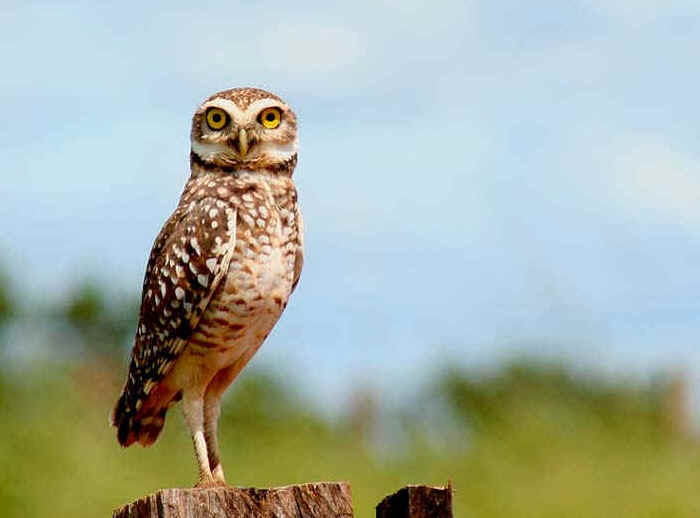
Burrowing Owl
ASIO
Short-eared Owl (ph) (*) ______ br MN:mar RS:oct
Asio flammeus suinda (subspecies
from Brazil south to Tierra del Fuego)
(br,mn,rs)
Outside Brazil, the Short-eared Owl has been found during FONT tours in
Chile, Venezuela.
Stygian Owl ______
Asio stygius barberoi (subspecies
in southeastern Brazil, northern Argentina & Paraguay, this subspecies
larger than the nominate)
Asio stygius stygius (subspecies in central Brazil and north to
Colombia)
The Stygian Owl occurs in humid to semi-arid mountain forests and in
chaco, but it also can be found at lower elevations and in semi-open
landscapes with trees.
Outside Brazil, the Stygian Owl has been found during a FONT tour in
Guatemala.
PSEUDOSCOPS
Striped Owl (ph) (*) ______ MN:sep
MS:mar,aug,sep MT:aug SE:aug
Asio (has been Pseudoscops)
clamator
Asio clamator clamator (subspecies in central & northern Brazil,
north to Colombia)
Asio clamator midas (subspecies in central & southern Brazil,
and into Bolivia and Uruguay, this is the largest and palest sibspecies)
(mn,ms,mt,se)
Outside Brazil, the Striped Owl has been found during FONT tours
in Costa Rica.

A Striped Owl photographed during a FONT
Brazil Tour
in Mato Grosso do Sul
AEGOLIUS
Buff-fronted Owl ______
Aegolius harrisii iheringi ______ (subspecies
in southeastern Brazil & adjacent Uruguay, this subspecies is dark above,
with scapulars that are variably buff-edged, and with a face and underparts
that are a deep orange)
The little-known Buff-fronted Owl inhabits
mountain forests and cloud forests, dry forests, and stinted alpine forests.
It does occur at some lower altitudes, but two subspecies in western South
America are in high in the Andes between 1700 meters & 3900 meters above
sea level.
The secretive Buff-fronted Owl is the only Aegolius
owl in South America.
The Buff-fronted Owl utters very rapid whistled trills, with a
quivering character, with 15 notes per second and lasting 7 to 10
seconds.
NYCTIBIUS
Great Potoo (*) ______ AF:oct mn MS:aug MT:aug
Nyctibius g. grandis
Outside Brazil, the Great Potoo has been found during FONT tours in
Ecuador, Venezuela.
Common Potoo (ph) (*) ______ AF:oct MN:oct MS:mar,sep MT:oct
SE:oct (has also been called Gray
Potoo)
Nyctibius g. griseus
Outside Brazil, the Common Potoo has been found during FONT tours in
Argentina, Ecuador, Venezuela.
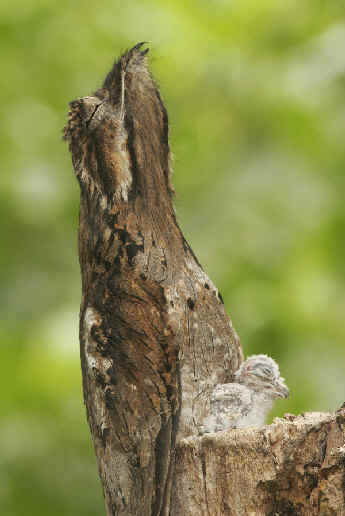
A Common Potoo at a nest with a chick
Long-tailed Potoo (ph) ______
Nyctibius aethereus
Outside Brazil, the Long-tailed Potoo has been found during FONT tours in
Ecuador.
White-winged Potoo
______ (localized in Brazil)
Nyctibius leucopterus
Rufous Potoo ______
Nyctibius bracteatus
STEATORNIS
Oilbird ______ (r/BR)
Steatornis caripensis
The Oilbird occurs only occasionally in western
Amazonian Brazil.
LUROCALIS
Short-tailed Nighthawk (*) ______ af
AM:aug
ES:oct MS:mar MT:oct SE:aug,oct
Lurocalis semitorquatus
(the southern subspecies L. s. natteri has
been called
"Chestnut-banded
Nighthawk")
Lurocalis semitorquatus has also been called the Semicollared
Nighthawk.
Outside Brazil, the Short-tailed Nighthawk has been found during FONT tours in
Argentina, Ecuador, Venezuela.
CHORDEILES
Nacunda Nighthawk (*) ______ br MN:aug MS:aug,sep MT:aug
SE:aug
Chordeiles
(formerly Podager)
n. nacunda
Outside Brazil, the Nacunda Nighthawk has been found during FONT tours in
Argentina, Bolivia, Paraguay, Venezuela.
Lesser Nighthawk (*) ______ af
Chordeiles a. acutipennis
Outside Brazil, the Lesser Nighthawk has been found during FONT tours in
Venezuela.
Common Nighthawk (*) ______ AM:feb
MT:oct
Chordeiles minor (9 subspecies winter in Brazil)
Least Nighthawk (*) ______ MN:mar,sep.oct mt
Chordeiles p. pusillus (mn)
Chordeiles pusillus saturatus (mt)
Sand-colored Nighthawk ______
Chordeiles rupestris
Outside Brazil, the Sand-colored Nighthawk has been found during FONT tours in
Ecuador.
NYCTIPROGNE
Band-tailed Nighthawk (*) ______ AM:feb MS:aug,sep MT:aug
Nyctiprogne leucopyga majuscula
Outside Brazil, the Band-tailed Nighthawk has been found
during FONT tours in Venezuela.
Bahian Nighthawk (nt) (BRe) ______ (another name is Plain-tailed
Nighthawk) (occurs in northeast Brazil)
Nyctiprogne vielliardi
NYCTIDROMUS
Pauraque (ph) (*) ______
AF:oct
AM:aug IG:jul,aug
MN:mar,sep,oct MS:mar,aug,sep MT:aug,oct SE:aug.oct
Nyctidromus albicollis derbyanus
Outside Brazil, the Pauraque has been found during FONT tours in
Argentina, Ecuador,
Venezuela.
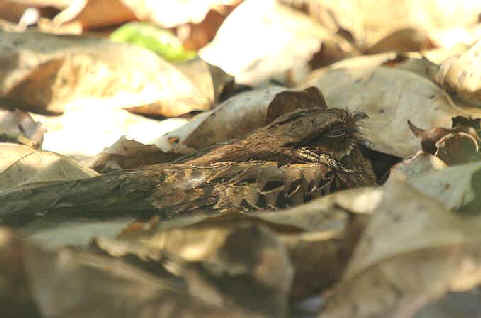
A Pauraque photographed during a FONT
tour
NYCTIPHRYNUS
Ocellated Poorwill (*) ______ af
MT:oct
Nyctiphrynus o. ocellatus
ANTROSTOMUS
Rufous Nightjar (ph) (*) ______ AM:aug MS:aug,sep MT:mar,aug,oct
Antrostomus (formerly Caprimulgus)
rufus rutilus
(Onomatopoetically called "Joao-corta-pau"
in Portuguese)
Outside Brazil, the Rufous Nightjar has been found during FONT
tours in Argentina, Venezuela.
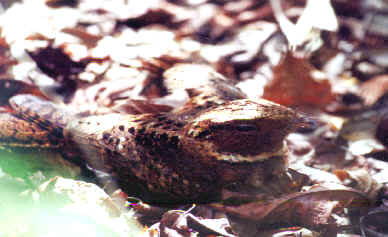
A Rufous Nightjar photographed during a FONT tour
Silky-tailed Nightjar (*) ______
SE:oct
Antrostomus (formerly Caprimulgus)
s. sericocaudatus
SYSTELLURA
Band-winged Nightjar (*) ______ MN:sep,oct
Systellura (formerly
Caprimulgus) l. longirostris
Outside Brazil, the Band-winged Nightjar has been found
during FONT tours in Argentina, Chile, Venezuela.
SETOPAGIS
Little Nightjar (ph) (*) ______ MN:sep MS:mar,aug,sep MT:aug
Setopagis (formerly Caprimulgus) p. parvulus
Outside Brazil, the Little Nightjar has been found
during FONT tours in Argentina, Venezuela.
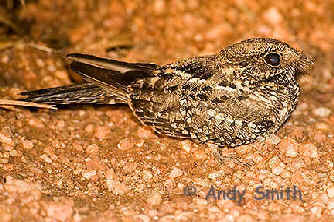
A Little Nightjar photographed during a
FONT Brazil Tour
in Mato Grosso do Sul
Roraiman Nightjar ______ (occurs
in far-northern Brazil)
Setopagis (formerly Caprimulgus) whitelyi
NYCTIPOLUS
Blackish Nightjar (*) ______ AF:oct AM:feb,aug MT:aug,oct
Nyctipolus (formerly
Caprimulgus) nigrescens (monotypic)
Outside Brazil, the Blackish Nightjar has been found during FONT tours in
Ecuador, Venezuela.
Pygmy Nightjar ______
Nyctipolus
(formerly Caprimulgus)
hirundinaceus
The placement of the Pygmy Nightjar in the genus Nyctipolus
is tentative.
HYDROPSALIS
White-tailed Nightjar
______ (in far-northern Brazil)
Hydropsalis
(formerly Caprimulgus) cayennensis
Outside Brazil, the White-tailed Nightjar has been found during FONT tours in
Venezuela.
Spot-tailed Nightjar ______
Hydropsalis
(formerly Caprimulgus) maculicaudus
Outside Brazil, the Spot-tailed Nightjar has been found during FONT
tours in Venezuela.
Ladder-tailed Nightjar (*) ______ AF:oct AM:feb
Hydropsalis climacocerca intercedens
Outside Brazil, the Ladder-tailed Nightjar has been found during FONT
tours in Ecuador.
Scissor-tailed Nightjar (ph) (*) ______
MN:mar,oct MS:mar,aug,sep MT:mar,oct
SE:may,oct
Hydropsalis torquata (formerly
brasiliana)
furcifer
Outside Brazil, the Scissor-tailed Nightjar has been found
during FONT tours in Argentina, Uruguay.
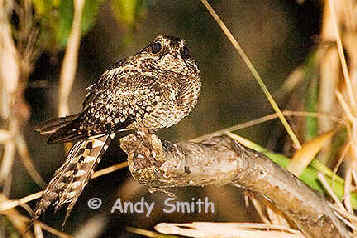
A Scissor-tailed Nightjar photographed
during a FONT Brazil Tour
in Mato Grosso do Sul
MACROPSALIS
Long-trained Nightjar (nt) (BRqe) (*) ______
SE:oct
Macropsalis creagra (monotypic, and the single member of its genus)
ELEOTHREPTUS
Sickle-winged Nightjar (nt) (*) ______ MN:oct
Eleothreptus anomalus (monotypic, and the single member of its
genus)
Outside Brazil, the Sickle-winged Nightjar has been found
during FONT tours in Argentina.
White-winged Nightjar (t2) ______
Eleothreptus candicans
STREPTOPROCNE
White-collared Swift (*) ______ AM:feb MN:mar,sep,oct MT:aug,oct RS:oct
SE:mar,may,jul,aug,oct
Streptoprocne z. zonaris
Outside Brazil, the White-collared Swift has been found during FONT tours
in Argentina, Ecuador, Venezuela.
Biscutate Swift (*) ______ br MN:may,aug,oct se
Streptoprocne b. biscutata
Tepui Swift ______ (in
far-northern Brazil)
Streptoprocne phelpsi
CYPSELOIDES
Sooty Swift (*) ______ SE:mar,aug,oct
Cypseloides fumigatus (monotypic)
Great Dusky Swift (ph) (*) ______ IG:jul,aug,sep MN:sep,oct MT:aug,oct
Cypseloides senex (monotypic)
Outside Brazil, the Great Dusky Swift has been found
during FONT tours in Argentina.
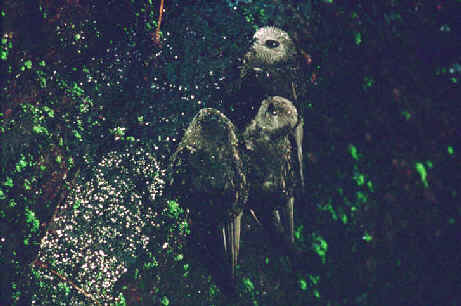
Great Dusky Swifts (above) photographed at
Iguazu Falls (below) during a FONT tour.
The swifts were perched on the mossy,
rocky ledge beneath the falls.

CHAETURA
Ashy-tailed
Swift (*) ______ br IG:jul,sep MN:sep,oct mt RS:oct
SE:mar,aug,oct
Chaetura meridionalis (monotypic)
Outside Brazil, the Ashy-tailed Swift has been found
during FONT tours in Argentina, Paraguay.
Band-rumped Swift (*) ______ AM:aug
Chaetura s. spinicaudus
Outside Brazil, the Band-rumped Swift has been found during FONT tours in
Venezuela.
Gray-rumped Swift (*) ______ af MN:oct RS:oct SE:jul,aug,oct
Chaetura c. cinereiventris
Outside Brazil, the Gray-rumped Swift has been found during FONT tours in
Argentina, Ecuador, Venezuela.
Pale-rumped Swift (*) ______
MT:aug
Chaetura egregia (monotypic)
Mato Grosso Swift (*) ______ AM:feb,aug
MT:aug,oct (was considered conspecific with the Chapman's Swift
of northern
South America) (also called Amazonian Swift)
Chaetura viridipennis (monotypic)
Short-tailed Swift (*) ______ AF:oct AM:feb,aug MT:aug,oct
Chaetura brachyura cinereocauda
Outside Brazil, the Short-tailed Swift has been found during FONT tours in
Ecuador, Venezuela.
Chimney Swift (*) ______
AM:feb
Chaetura pelagica
Outside Brazil, the Chimney Swift
has been found during FONT tours in Chile (far-north).
TACHORNIS
Neotropical Palm Swift
(*) ______ AF:oct AM:feb,aug br MT:aug,oct (was called Fork-tailed Palm
Swift)
Tachornis s. squamata
Outside Brazil, the Neotropical Palm Swift has been found during FONT
tours in Ecuador, Venezuela.
PANYPTILA
Lesser Swallow-tailed
Swift (*) ______ SE:mar,jul,aug
Panyptila c. cayennensis
Outside Brazil, the Lesser Swallow-tailed Swift has been
found during FONT tours in Venezuela.
EUPETOMENA
Swallow-tailed
Hummingbird (ph) (*) ______ br
MN:mar,may,aug,sep,oct MS:mar,aug,sep MT:aug
SE:mar,may,aug,oct
Eupetomena m. macroura
(br,mn,mt)
Eupetomena macroura cyanoviridis
(mn,se)
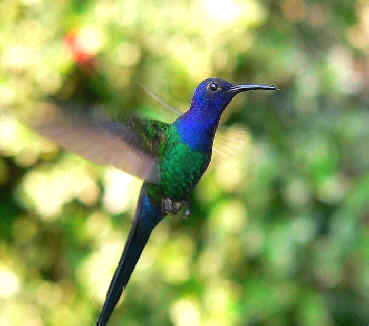
Swallow-tailed Hummingbird
RAMPHODON
Saw-billed Hermit (nt) (BRe) (ph) (*) ______
SE:mar,jul,aug,oct
Ramphodon naevius (monotypic)
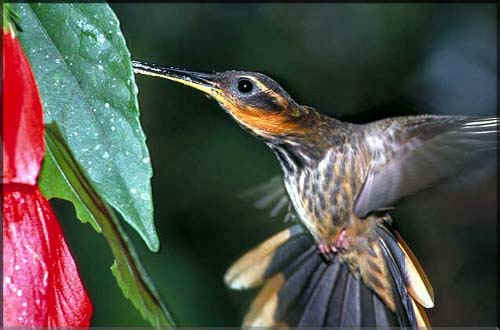
Saw-billed Hermit
GLAUCIS
Rufous-breasted Hermit (*) ______ MN:may,oct mt SE:aug (has also been called Hairy Hermit)
Glaucis h. hirsutus
Outside Brazil, the Rufous-breasted Hermit has been found during FONT
tours in Ecuador, Venezuela.
Hook-billed Hermit (t2) (BRe)
______ (in eastern Brazil)
Glaucis dohrnii
THRENETES
Paie-tailed Barbthroat
______ (includes the Sooty Barbthroat, Threnetes l.
niger)
Threnetes leucurus
PHAETHORNIS
White-bearded Hermit (*) ______
MT:oct
Phaethornis hispidus (monotypic)
Outside Brazil, the White-bearded Hermit has been found during FONT tours in
Ecuador, Venezuela.
Great-billed Hermit (*) ______ af
(was part of the Eastern Long-tailed Hermit of northern Brazil)
Phaethornis malaris
Outside Brazil, the Great-billed Hermit has been found during FONT tours
in Ecuador.
Scale-throated Hermit (*) ______ IG:sep MN:sep,oct SE:may,aug,oct
Phaethornis e. eurynome (mn,se)
Phaethornis eurynome paraguayensis (ig)
Outside Brazil, the Scale-throated Hermit has been found
during FONT tours in Argentina.
Dusky-throated Hermit (*) ______ ES:oct MN:may SE:aug,oct
Phaethornis squalidus (monotypic)
Planalto Hermit (ph) (*) ______ MN:may,sep,oct MS:mar MT:oct SE:aug
Phaethornis pretrei (monotypic)
Outside Brazil, the Planalto Hermit has been found
during FONT tours in Argentina.
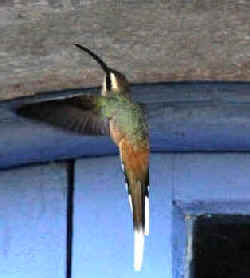
A Planalto Hermit photographed during a FONT
tour
in Minas Gerais, Brazil in October 2008
(photograph by Marie Gardner)
Buff-bellied Hermit (*) ______ mt
Phaethornis subochraceus (monotypic)
Cinnamon-throated Hermit (*) ______ mn,mt
Phaethornis nattereri (monotypic)
Reddish Hermit (*) ______ af MN:may mt SE:aug
Phaethornis r. ruber
Outside Brazil, the Reddish Hermit has been found during FONT tours in
Venezuela.
Minute Hermit (BRe) (*) ______ MN:sep,oct
Phaethornis idaliae (monotypic)
Eastern Long-tailed Hermit (*) ______
AM:feb
Phaethornis superciliosus
Outside Brazil, the Eastern Long-tailed Hermit has been found during
FONT tours in Venezuela.
Needle-billed Hermit ______
Phaethornis philippii
Straight-billed Hermit
______ (in far-northern Brazil)
Phaethornis bourcieri
Outside Brazil, the Straight-billed Hermit has been found during FONT tours in
Ecuador, Venezuela.
Streak-throated Hermit
______ (in far-northern Brazil)
Phaethornis rupurumii
Gray-chinned Hermit
______ (in far-northern Brazil)
Phaethornis griseogularis
Outside Brazil, the Gray-chinned Hermit has been found during FONT tours in
Venezuela.
Little Hermit ______ (in far-northern Brazil)
Phaethornis aethopyga
This species, with this scientific name, is in the book "Birds of
Brazil" by Tomas Sigrist (2006), with a restricted range in west-central
Amazonian Brazil. However, it is not in the book "A Field Guide to the
Birds of Brazil" by Ber van Perlo (2009).
Formerly, what was called the "Little Hermit" had an
extensive range in northern South America & Central America. The "Little
Hermit" in South America has been Phaethornis longuemareus.
ANOPETIA
Broad-tipped Hermit (BRe) (*) ______ ne
Anopetia gounellei
CAMPYLOPTERUS
Gray-breasted Sabrewing (*) ______ af MN:sep,oct mt SE:may
Campylopterus largipennis aequatorialis
(af)
Campylopterus largipennis diamantinensis (mn,mt)
Buff-breasted Sabrewing
______ (in far-northern Brazil)
Campylopterus duidae
Rufous-breasted Sabrewing
______ (locally in far-northern Brazil)
Campylopterus hyperythrus
FLORISUGA
Black Jacobin (ph) (*) ______ MN:may,sep SE:mar,aug,oct
Florisuga (formerly Melanotrochilus) fuscus
Outside Brazil, the Black Jacobin has been found during FONT
tours in Paraguay.
White-necked Jacobin (ph) (*) ______ mt
Florisuga m. mellivora
Outside Brazil, the White-necked Jacobin has been found during FONT tours
in Ecuador, Venezuela.
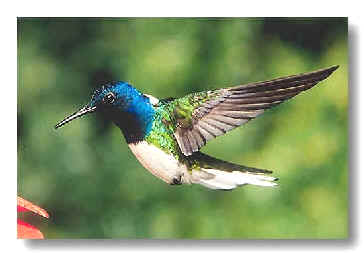
White-necked Jacobin
COLIBRI
White-vented Violetear (ph) (*) ______ br MN:mar,may,sep,oct MS:mar
MT:mar,aug,oct SE:mar,may,aug,oct
Colibri serrirostris (monotypic)
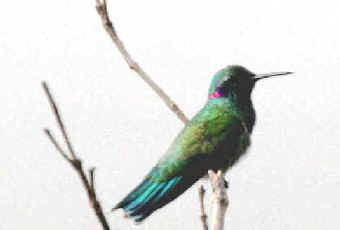
A White-vented Violetear photographed during a
FONT Brazil Tour in March 2008
Sparkling Violetear
______ (in far-northern Brazil)
Colibri coruscans
Outside Brazil, the Sparkling Violetear has been found during FONT
tours in Argentina, Chile (where rare, far-north), Ecuador.
Brown Violetear ______ (with a distinctive, isolated subspecies in northeast Brazil)
Colibri delphinae
Outside Brazil, the Brown Violetear has been found during FONT tours in
Panama.
ANTHRACOTHORAX
Black-throated Mango (ph) (*) ______ af AM:feb br,ig MN:sep MS:aug,sep
MT:mar,aug,oct SE:aug
Anthracothorax nigricollis (monotypic)
Outside Brazil, the Black-throated Mango has been found during FONT tours in
Argentina, Venezuela.
.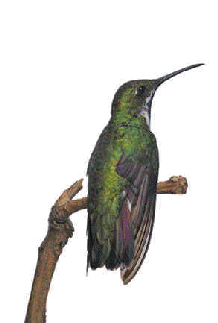
Black-throated Mango
Green-throated Mango
______ (in far-northern Brazil)
Anthracothorax nigricollis
AVOCETTULA
Fiery-billed Awlbill ______ (in far-northern
Brazil)
Avocettula recurvirostris
TOPAZA
Crimson Topaz (ph) (*) ______
AM:aug
Topaza pella smaragdula
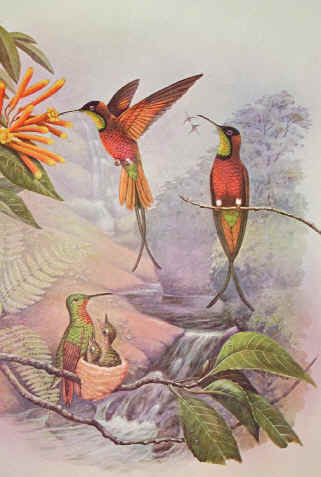
Crimzon Topaz
Fiery Topaz ______ (in
far-northwestern Brazil)
Topaza pyra
CHRYSOLAMPIS
Ruby Topaz (*) ______ af MN:sep,oct MS:mar MT:oct
Chrysolampis mosquitus (monotypic, and the single member of its genus)
Outside Brazil, the Ruby Topaz has been found during FONT
tours in Venezuela.
STEPHANOXIS
Black-breasted
Plovercrest (BRqe) (ph) (*) ______ MN:oct
SE:aug,oct
Stephanoxis lalandi loddigesii (the single member of its genus)
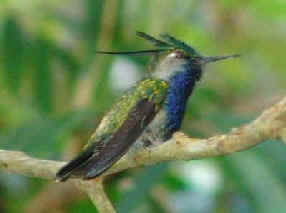
Black-breasted Plovercrest
LOPHORNIS
Dot-eared Coquette (t3) (*) ______ af,mt
Lophornis gouldii (monotypic)
Frilled Coquette (BRe) (*) ______ ES:oct MN:sep SE:aug,oct
Lophornis magnifica (monotypic)
Festive Coquette (*) ______ SE:aug,oct
Lophornis c. chalybea
Tufted Coquette ______ (in far-northern Brazil)
Lophornis ornatus
Peacock Coquette ______ (in far-northern Brazil)
Lophornis pavoninus
DISCOSURA
Racket-tailed Coquette ______
Discosura longicaudus
POPELAIRIA
Black-bellied Thorntail (*) ______ MN:may,oct mt
Popelairia l. langsdorffi
CHLOROSTILBON
Blue-tailed Emerald (*) ______
AM:feb,aug
Chlorostilbon mellisugus subfurcatus
Outside Brazil, the Blue-tailed Emerald has been found during FONT tours
in Ecuador, Venezuela.
Glittering-bellied
Emerald (ph) (*) ______ br
IG:jul,sep
MN:aug,sep,oct MS:mar,aug,sep MT:aug,oct SE:aug,oct
Chlorostilbon aureoventris pucherani
Outside Brazil, the Glittering-bellied Emerald has been
found during FONT tours in Argentina, Bolivia.
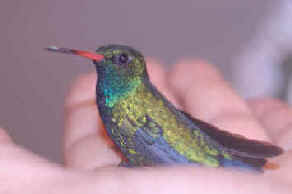
Glittering-bellied Emerald
THALURANIA
Fork-tailed Woodnymph (*) ______ AF:oct AM:feb IG:sep MN:may,sep,oct MS:mar,aug,sep
MT:aug,oct SE:mar,aug,oct
Thalurania furcata baeri (af,mn,ms,mt)
Thalurania furcata eriphile (ig,se)
Outside Brazil, the Fork-tailed Woodnymph has been found during FONT tours in
Argentina, Ecuador, Paraguay, Venezuela.
Violet-capped Woodnymph (*) ______ IG:jul,aug,sep MN:sep,oct RS:oct
SE:mar,may,jul,aug,oct
Thalurania glaucopis (monotypic)
Outside Brazil, the Violet-capped Woodnymph has been
found during FONT tours in Argentina.
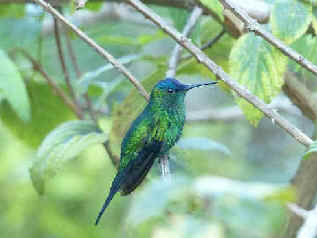
Violet-capped Woodnymph
Long-tailed Woodnymph (BRe)
______ (in northeast Brazil)
Thalurania watertonii
POLYTMUS
White-tailed
Goldenthroat (*) ______ MN:may mt SE:aug
Polytmus guainumbi thaumantias
Outside Brazil, the White-tailed Goldenthroat has been
found during FONT tours in Argentina.
Green-tailed Goldenthroat
______
Polytmus theresiae
HYLOCHLARIS
Gilded Sapphire (ph) (*) ______ ig
MS:mar,aug mt RS:oct
Hylocharis chrysura (monotypic)
Outside Brazil, the Gilded Sapphire has been found during FONT
tours in Argentina, Paraguay, Uruguay.
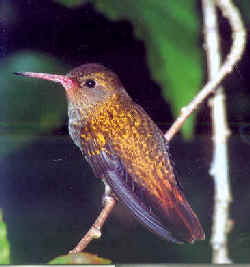
Gilded Sapphire
Rufous-throated Sapphire (*) ______ af
MN:may,aug,sep MS:sep mt SE:aug
Hylochlaris sapphirina (monotypic)
Outside Brazil, the Rufous-throated Sapphire has been
found during FONT tours in Argentina.
White-chinned Sapphire (*) ______ af MN:oct MS:mar SE:aug
Hylocharis cyanus griseiventris (mn,ms,se)
Hylocharis cyanus conversa (af)
Outside Brazil, the White-chinned Sapphire has been found
during FONT tours in Venezuela.
CHLORESTES
Blue-chinned Sapphire (*) ______
AM:feb
Chlorestes notata
CHRYSURONIA
Golden-tailed Sapphire
______ (in far-western Brazil)
Chrysuronia oenone
LEUCOCHLORIS
White-throated
Hummingbird (ph) (*) ______
MN:may,sep,oct RS:jul,oct SE:may,aug,oct
Leucochloris albicollis (monotypic,
and the single member of its genus)
Outside Brazil, the White-throated Hummingbird has been
found during FONT tours in Argentina.

A White-throated Hummingbird at a feeder during
the August 2007 FONT tour in Brazil
(photo by Dan Coleman)
LEUCIPPUS
Olive-spotted Hummingbird (*) ______
AM:aug
Leucippus chlorocercus
Outside Brazil, the Olive-spotted Hummingbird has been found during FONT
tours in Ecuador.
TAPHROSPILUS
Many-spotted
Hummingbird ______ (r/BR)
Taphrospilus hypostictus
There is a single undocumented Brazilian record of a Many-spotted
Hummingbird in the area of Caceres, Mato Grosso.
AMAZILIA
Versicolored Emerald (*) ______ af AM:aug IG:jul,sep MN:mar,sep.oct
MT:mar,oct SE:jul,aug,oct
Amazilia v. versicolor (se)
Amazilia versicolor kubtchecki (af,am,ig,mn,mt)
Outside Brazil, the Versicolored Emerald has been found
during FONT tours in Argentina, Venezuela.
Glittering-throated
Emerald (*) ______ af AM:feb br
IG:sep MN:mar,may,sep,oct MT:aug SE:mar,jul,aug,oct
Amazilia fimbriata tephrocephala
Outside Brazil, the Glittering-throated Emerald has been
found during FONT tours in Paraguay, Venezuela.
Sapphire-spangled
Emerald (*) ______ MN:may,sep,oct
SE:jul,aug,oct
Amazilia l. lactea
White-bellied Hummingbird
______
Amazilia chionogaster
Outside Brazil, the White-bellied Hummingbird has been found during
FONT tours in Argentina.
White-chested Emerald (BRe)
______ (in eastern Brazil)
Amazilia brevirostris
Plain-bellied Emerald ______
Amazilia leucogaster
Green-bellied Hummingbird
______ (in far-northern Brazil)
Amazilia viridigaster
Rondonia Emerald ______
Amazilia rondoniae
HELIODOXA
Gould's Jewelfront
______ (in western Amazonian Brazil)
Heliodoxa aurescens
Black-throated Brilliant
______ (in far-western Brazil)
Heliodoxa schreibersii
Velvet-browed Brilliant
______ (in far-northern Brazil)
Heliodoxa xanthogonys
Outside Brazil, the Velvet-browed Brilliant has been found during FONT
tours in Venezuela.
Pink-throated Brilliant
______ (r/BR)
Heliodoxa gularis
The Pink-throated Brilliant has possibly occurred in
far-western Brazil. The species is not well known,
HELIOTHRYX
Black-eared Fairy (*) ______ AF:oct AM:aug MT:aug SE:aug,oct
Heliothryx aurita auriculatus
Outside Brazil, the Black-eared Fairy has been found
during FONT tours in Venezuela.
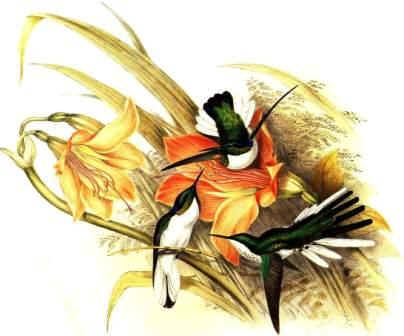
Black-eared Fairy, a hand-colored lithograph by
John Gould in the mid 1800s
APHANTOCHROA
Sombre Hummingbird (BRe) (*) ______ MN:may,oct SE:jul,aug,oct
Aphantochroa cirrhochloris (monotypic)
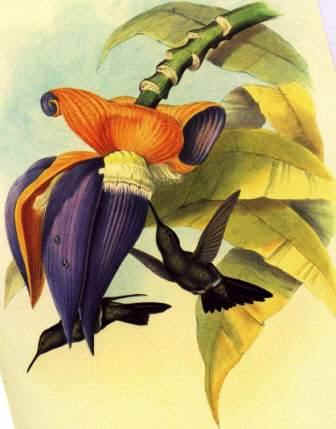
Sombre Hummingbird, a hand-colored lithograph
by John Gould in the mid-1800s
CLYTOLAEMA
Brazilian Ruby (BRe) (*) ______ ES:oct MN:sep,oct SE:may,aug,oct
Clytolaema rubricauda (monotypic)
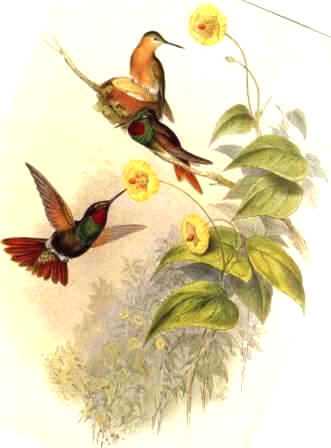
The Brazilian Ruby, above a female, below a
male,
a hand-colored lithograph by John Gould in the mid-1800s
AU0GASTES
Hyacinth Visorbearer
(nt) (BRe) (ph) (*) ______ MN:may,sep,oct
Augastes scutatus (3 subspecies
in Minas Gerais)
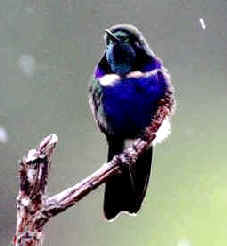
Hyacinth Visorbearer
Hooded Visorbearer (nt) (BRe) ______
(in northeast Brazil)
Augastes lumachella
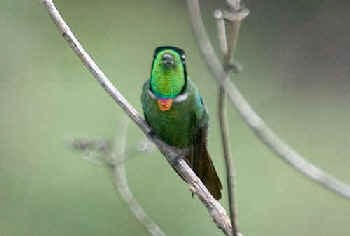
Hooded Visorbearer
HELIACTIN
Horned Sungem (*) ______ br MN:oct MT:mar,aug
Heliactin bilophus (formerly
H. cornuta) (monotypic)
HELIOMASTER
Stripe-breasted
Starthroat (BRe) (ph) (*) ______ MN:sep,oct
se
Heliomaster squamosus (monotypic)
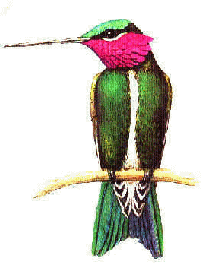
Stripe-breasted Starthroat
Long-billed Starthroat (*) ______ AF:oct MT:oct
Heliomaster l. longirostris
Blue-tufted Starthroat (ph) (*) ______ MS:aug,sep MT:aug
Heliomaster furcifer (monotypic)
Outside Brazil, the Blue-tufted Starthroat has been
found during FONT tours in Argentina.
CALLIPHLOX
Amethyst Woodstar (*) ______ af MN:may,oct MT:aug se
Calliphlox amethystina (monotypic)
Outside Brazil, the Amethyst Woodstar has been found during FONT tours in
Venezuela.
PHAROMACHRUS
Pavonine Quetzal (*) ______ MT:oct
Pharomachrus pavonius (monotypic)
TROGON
Green-backed Trogon (ph)
(*) ______ AF:oct AM:feb,aug MN:oct MT:aug
SE:mar,aug.oct
Trogon v. viridis (af,am)
Trogon viridis melanopterus (se)
The Green-backed Trogon was called the White-tailed Trogon. That
is now the common name for the more-northerly Trogon
chionurus.
Outside Brazil, the Green-backed Trogon has been found during FONT tours
in Ecuador, Venezuela.
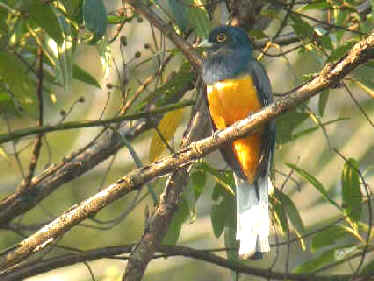
A
Green-backed Trogon photographed during a
FONT Brazil Tour in Minas Gerais.
Black-tailed Trogon (*) ______ af AM:feb MT:aug,oct
Trogon melanurus occidentalis
Outside Brazil, the Black-tailed Trogon has been found during FONT tours
in Ecuador.
Black-throated Trogon (*) ______ IG:jul,aug,sep MN:sep,oct mt SE:aug,oct
Trogon rufus chrysochloros
Outside Brazil, the Black-throated Trogon has been found during FONT tours
in Argentina, Ecuador.
Collared Trogon (*) ______ af
AM:aug mt
Trogon c. collaris
Outside Brazil, the Collared Trogon has been found during FONT tours in
Venezuela.
Blue-crowned Trogon (*) ______ AF:oct AM:feb MN:sep MS:mar,aug,sep
MT:mar,aug,oct
Trogon c. curucui (af)
Trogon curucui behni (mt)
Outside Brazil, the Blue-crowned Trogon has been found
during FONT tours in Argentina.
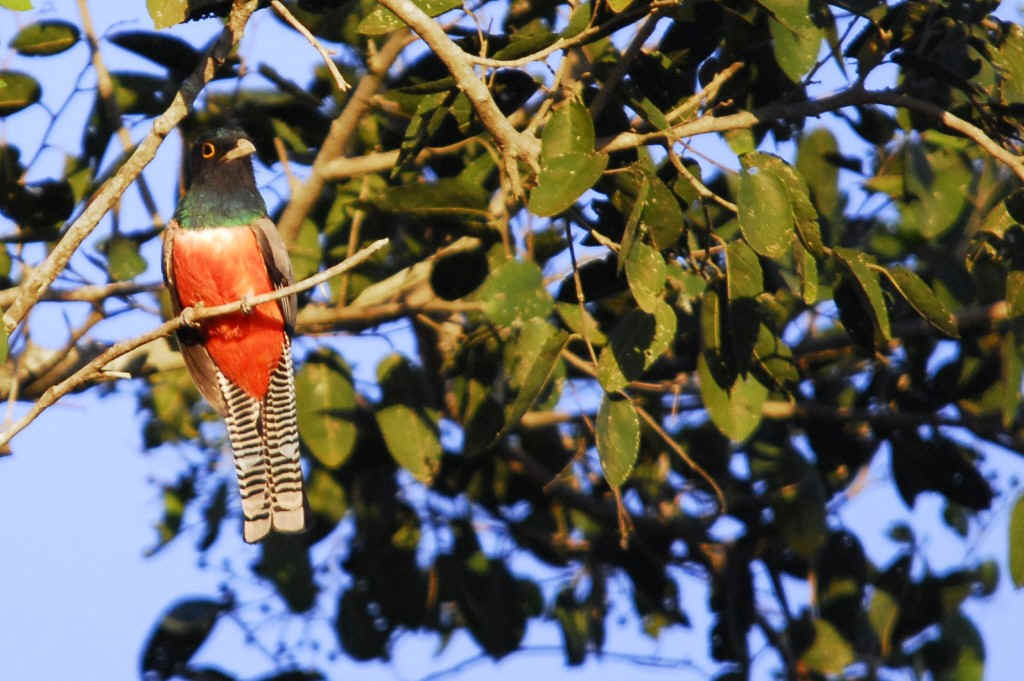
Blue-crowned Trogon
(photo by Marie Grenouillet)
Surucua Trogon (BRqe) (*) ______
IG:jul,aug,sep
MN:sep,oct RS:oct SE:mar,may,jul,aug,oct
Trogon surrucura aurantius (northern subspecies sometimes
referred to as "Brazilian Trogon")
Trogon s. surrucura (southern
subspecies sometimes referred to "Orange-bellied Trogon")
Outside Brazil, the Surucua Trogon has been found during FONT
tours in Argentina, Paraguay.
Violaceous Trogon (*) ______ AM:feb,aug
Trogon violaceus
Amazonian Trogon (*) ______
af MT:oct (has been part of the Violaceous
Trogon)
Trogon r. ramonianus
Trogon ramonianus crissalis
(af,mt)
Outside Brazil, the Amazonian Trogon has been found during FONT tours in
Ecuador.
Masked Trogon ______ (in far-northern Brazil)
Trogon personatus
Outside Brazil, the Masked Trogon has been found during FONT tours in
Venezuela.
MEGACERYLE
Ringed Kingfisher (ph) (*) ______ AF:oct AM:feb,aug br IG:jul,sep
MN:mar,may,sep,oct MS:mar,aug,sep
MT:aug,oct RS:jul,oct SE:may,jul,aug,oct
Megaceryle t. torquata
Outside Brazil, the Ringed Kingfisher has been found during FONT tours in
Argentina, Chile, Ecuador, Uruguay, Venezuela.
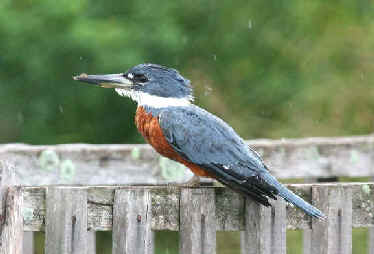
A Ringed Kingfisher photographed during a
FONT tour in Brazil
CHLOROCERYLE
Green Kingfisher (ph) (*) ______ AF:oct AM:feb MN:mar,oct MS:mar,aug,sep
MT:aug,oct RS:oct SE:aug,oct
Chloroceryle americana mathewsii
Outside Brazil, the Green Kingfisher has been found during FONT tours in
Argentina, Ecuador, Venezuela.

A Green Kingfisher photographed during a
FONT Brazil Tour in the Pantanal
Amazon Kingfisher (*) ______ AF:oct AM:feb,aug br MN:mar,sep,oct MS:mar,aug,sep
MT:mar,aug,oct RS:oct SE:aug
Chloroceryle a. amazona (said by some to be monotypic)
Outside Brazil, the Amazon Kingfisher has been found during FONT tours in
Argentina, Ecuador, Venezuela.
Green-and-rufous
Kingfisher (*) ______ af MS:sep
mt SE:aug
Chloroceryle inda (monotypic)
Outside Brazil, the Green-and-rufous Kingfisher has been found during FONT
tours in Ecuador, Venezuela.
American Pygmy Kingfisher (ph) (*) ______
af MS:sep MT:aug SE:aug
Chloroceryle a. aenea
Outside Brazil, the American Pygmy Kingfisher has been found during FONT
tours in Ecuador, Venezuela.
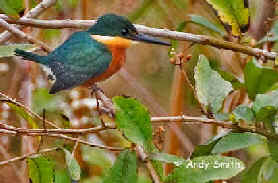
An American Pygmy Kingfisher photographed
during a FONT tour in Brazil
MOTMOTUS
Amazonian Motmot (ph) (*) ______ AF:oct AM:feb MT:mar,aug,oct
Momotus momota pilcomajensis
The Amazonian Motmot was part of an expanded Blue-crowned Motmot.
The Blue-crowned Motmot, Momotus coeruliceps,
is now endemic to Mexico.
Outside Brazil, the Amazonian Motmot has been found during FONT tours
in Argentina, Ecuador, Venezuela.
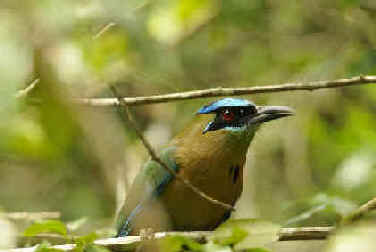
Amazonian Motmot
(photo by Marie Grenouillet)
BARYPHTHENGUS
Rufous-capped Motmot (*) ______ IG:jul,aug,sep MN:oct SE:aug,oct (at one time considered part of
the more-northerly Rufous Motmot)
Baryphthengus ruficapillus (monotypic)
Outside Brazil, the Rufous-capped Motmot has been found
during FONT tours in Argentina.
Rufous Motmot ______ (in western Amazonian Brazil)
Baryphthengus martii
ELECTRON
Broad-billed Motmot (*) ______ af AM:feb mt
Electron platyrhynchum chlorophrys
BRACHYGALBA
Brown Jacamar (*) ______ af MT:oct,aug
Brachygalba lugubris melanosterna
White-throated Jacamar
______ (in western Amazonian Brazil)
Brachygalba albogularis
JACAMARALCYON
Three-toed Jacamar (t2) (BRe) (*) ______ MN:oct
SE:may,aug
Jacamaralcyon tridactyla (monotypic,
and the single member of its genus)
GALBULA
Blue-cheeked Jacamar (*) ______ af
Galbula cyanicollis (monotypic)
Rufous-tailed Jacamar (ph) (*) ______ af,br MN:may,sep,oct MS:mar,aug,sep
MT:mar,aug,oct SE:aug
Galbula ruficauda rufoviridis
Galbula ruficauda heterogyna (ms,mt)
Outside Brazil, the Rufous-tailed Jacamar has been found
during FONT tours in Venezuela.
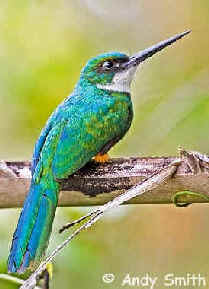
A Rufous-tailed Jacamar photographed
during a FONT tour in Brazil.
One would have to look from the opposite direction to see the rufous on the
tail.
Bronzy Jacamar (*) ______ mt
Galbula leucogastra viridissima
Paradise Jacamar (*) ______ AF:oct AM:feb,aug
Galbula dea amazonum
Outside Brazil, the Paradise Jacamar has been found during FONT tours in
Venezuela.
Green-tailed Jacamar
______ (in far-northern Brazil)
Galbula galbula
Outside Brazil, the Green-tailed Jacamar has been found during FONT tours in
Venezuela.
Yellow-billed Jacamar
______ (in far-northern Brazil)
Galbula albirostris
Outside Brazil, the Yellow-billed Jacamar has been found during FONT tours in
Ecuador.
Bluish-fronted Jacamar
______ (in western Amazonian Brazil)
Galbula cyanescens
White-chinned Jacamar
______ (in western Amazonian Brazil)
Galbula tombacea
Outside Brazil, the White-chinned Jacamar has been found during FONT tours in
Ecuador.
Purplish Jacamar ______ (in western Amazonian Brazil)
Galbula chalcoythorax
Outside Brazil, the Purplish Jacamar has been found during FONT tours in
Ecuador.
GALBALCYRHYNCHUS
White-eared Jacamar ______ (in western Amazonian Brazil)
Galbalcyrhynchus leucotis
Outside Brazil, the White-eared Jacamar has been found during FONT tours
in Ecuador.
Purus Jacamar ______ (in western Amazonian Brazil)
Galbalcyrhynchus purusianus
JACAMEROPS
Great Jacamar (*) ______ af
Jacamerops aureus ridgwayi (the single member of its genus)
Outside Brazil, the Great Jacamar has been found during FONT tours in
Ecuador.
CHELIDOPTERA
Swallow-winged Puffbird (*) ______ AF:oct AM:feb,aug MT:mar,aug,oct (has also been called simply
"Swallow-wing")
Chelidoptera t. tenebrosa
(the single member of its genus)
Outside Brazil, the Swallow-winged Puffbird has been found during FONT
tours in Ecuador, Venezuela.
NOTHARCHUS
White-necked Puffbird (*) ______ AF:oct AM:feb,aug mt
Notharchus macrohynchos paraensis
Outside Brazil, the White-necked Puffbird has been found during FONT tours
in Ecuador.
Buff-bellied Puffbird (BRqe) (*) ______ ig
se
(was considered conspecific with the White-necked Puffbird)
Notharchus swainsoni
Pied Puffbird (*) ______ af AM:feb,aug MT:aug,oct
Notharchus t. tectus
Brown-banded Puffbird
______ (in northern Brazil)
Notharchus ordii
NYSTALUS
Striolated Puffbird (*) ______ af MT:aug
Nystalus striolatus torridus
White-eared Puffbird (ph) (*) ______ br MN:aug,sep,oct MT:mar,aug,oct
SE:oct
Nystalus c. chacuru
Outside Brazil, the White-eared Puffbird has been found during FONT
tours in Argentina.
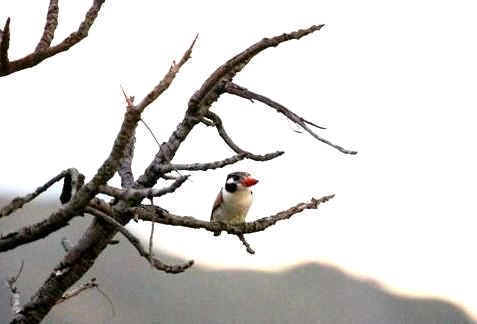
A White-eared Puffbird
photographed during the FONT Brazil Tour in
Minas Gerais in October 2009
Caatinga Puffbird (*) ______ br MN:oct MS:oct mt (was part of "Spot-backed Puffbird")
Nystalus maculatus parvirostris
Chaco Puffbird ______ ig
(was part of "Spot-backed Puffbird")
Nystalus striatipectus
Outside Brazil, the Chaco Puffbird has been found during FONT tours in
Argentina.
MALACOPTILA
Rufous-necked Puffbird (*) ______ af
Malacoptila rufa brunnescens
Crescent-chested
Puffbird (BRe) (*) ______ MN:oct
SE:jul,aug
Malacoptila s. striata
White-chested Puffbird
______ (in Brazil, north of the Amazon)
Malacoptila fusca
Outside Brazil, the White-chested Puffbird has been found during FONT
tours in Ecuador.
Semicollared Puffbird
______ (in far-western Amazonian Brazil)
Malacoptila semicincta
BUCCO
Chestnut-capped Puffbird
______ (in
western Amazonian Brazil)
Bucco macrodactylus
Spotted Puffbird (*) ______ AM:feb
Bucco tamatia
Collared Puffbird
______ (in northern Brazil)
Bucco capensis
MICROMONACHA
Lanceolated Monklet ______ (in western Amazonian Brazil)
Micromonacha lanceolata
NONNULA
Rusty-breasted Nunlet (*) ______
IG:jul mt
Nonnula rubecula simplex
Outside Brazil, the Rusty-breasted Nunlet has been found
during FONT tours in Argentina.
Rufous-capped Nunlet (*) ______ af
(was considered conspecific with the Rusty-breasted
Nunlet)
Nonnula ruficpilla
Fulvous-chinned Nunlet
______ (in western Amazonian Brazil)
Nonnula sclateri
Chestnut-headed Nunlet
______ (in northern Brazil)
Nonnula amaurocephala
MONASA
Black-fronted Nunbird (*) ______ AF:oct AM:feb,aug MT:mar,aug,oct
Monasa n. nigifrons
Outside Brazil, the Black-fronted Nunbird has been found during FONT tours
in Ecuador.
White-fronted Nunbird (*) ______ AF:oct mt
Monasa m. morpheus
Outside Brazil, the White-fronted Nunbird has been found during FONT tours in
Ecuador.
Yellow-billed Nunbird
______ (in western Amazonian Brazil)
Monasa flavirostris
Black Nunbird (*) ______ AM:feb
Monasa atra
Outside Brazil, the Black Nunbird has been found during FONT tours in
Venezuela.
CAPITO
Black-girdled Barbet (t3) (BRe) (*) ______ af mt
Capito dayi (monotypic)
Black-spotted Barbet (*) ______
AM:feb,aug
Capito niger (monotypic)
Scarlet-crowned Barbet
______ (in western Amazonian Brazil)
Capito aurovirens
Brown-chested Barbet (BRe)
______ (locally in Amazonian Brazil)
Capito brunneipectus
EUBUCCO
Lemon-throated Barbet
______ (in western Amazonian Brazil)
Eubucco richardsoni
Outside Brazil, the Lemon-throated Barbet has been found during FONT tours in
Ecuador.
Scarlet-hooded Barbet ______
(far-western Amazonian Brazil)
Eubucco tucinkae
RAMPHASTOS
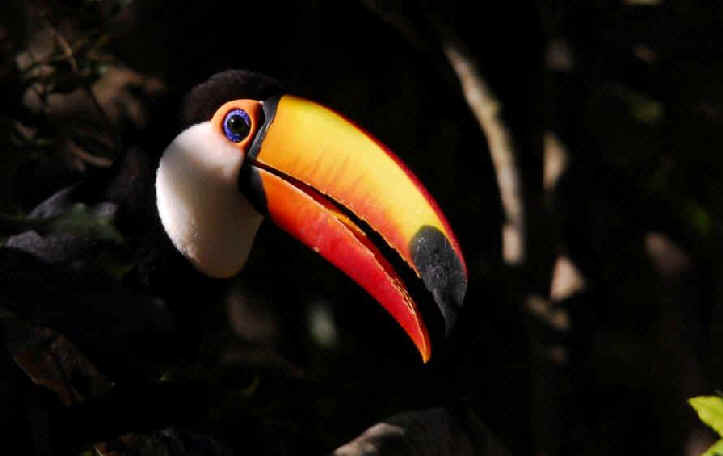
Toco Toucan (ph) (*) ______ br IG:jul,aug,sep MN:mar,may,aug,sep,oct MS:mar,aug,sep
MT:mar,aug
Ramphastos toco albogularis
Outside Brazil, the Toco Toucan has been found during FONT tours in
Argentina.
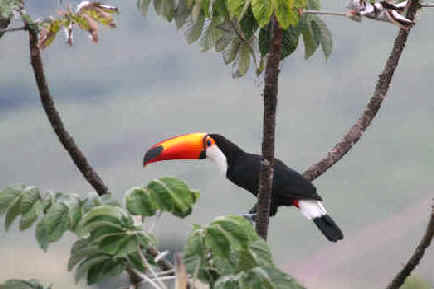
Above: a Toco Toucan photographed during
a FONT tour
in Minas Gerais, Brazil,
Below: another Toco Toucan in the Pantanal of Brazil
(lower photo by Marie Grenouillet)
White-throated Toucan (*) ______ AF:oct AM:feb,aug ES:oct MN:oct
MT:aug,oct (formerly Cuvier's
Toucan)
Ramphastos tucanus cuvieri
Outside Brazil, the White-throated Toucan has been found during FONT tours
in Ecuador, Venezuela.
Channel-billed Toucan (ph) (*) ______ AF:oct AM:feb,aug ES:oct MN:may,oct
MT:mar,aug,oct SE:mar,may,jul,aug,oct (includes "Yellow-ridged
Toucan")
Ramphastos vitellinus ariel
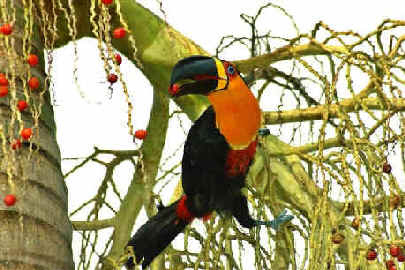
This is the race of the Channel-billed Toucan
in southeastern Brazil.
Green-billed Toucan (BRqe) (ph) (*) ______ ES:oct IG:jul,sep MN:may,sep RS:jul
SE:aug,oct (has been called Red-breasted Toucan)
Ramphastos dicolorus (monotypic)
Outside Brazil, the Green-billed Toucan has been found
during FONT tours in Argentina.
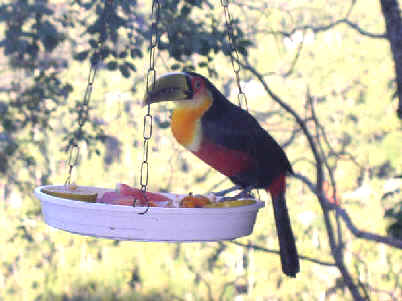
At a feeder, during the FONT August 2007 tour in
Southeast Brazil, a toucan.
As you can see, the traditional name for this bird, the Red-breasted Toucan,
is not the best, as the red is mostly on the belly, and the breast has other
colors.
The new name is Green-billed Toucan.
(photo by Dan Coleman)
PTEROGLOSSUS
Green Aracari (*) ______ AM:feb,aug
Pteroglossus viridis (monotypic)
Outside Brazil, the Green Aracari has been found during FONT tours in
Venezuela.
Lettered Aracari (*) ______ AF:oct MT:mar,aug,oct
Pteroglossus i. inscriptus
Outside Brazil, the Lettered Aracari has been found during FONT tours in
Ecuador.
Chestnut-eared Aracari (*) ______ AF:oct AM:aug IG:jul,aug,sep MS:aug,sep
MT:mar,aug,oct
Pteroglossus castanotis australis
Outside Brazil, the Chestnut-eared Aracari has been
found during FONT tours in Argentina, Paraguay.
Red-necked Aracari (nt) (*) ______ af MT:aug,oct
Pteroglossus bitorquatus reichenowi
Curl-crested Aracari (*) ______ AF:oct
Pteroglossus beauharnaesii (monotypic)
Black-necked Aracari (*) ______ AF:oct AM:feb,aug MN:oct
Pteroglossus a. aracari
Outside Brazil, the Black-necked Aracari has been found during FONT tours
in Venezuela.
Many-banded Aracari
______ (in western Amazonian Brazil)
Pteroglossus pluricinctus
Outside Brazil, the Many-banded Aracari has been found during FONT tours in
Ecuador.
Ivory-billed Aracari
______ (in western Amazonian Brazil)
Pteroglossus azara
Outside Brazil, the Ivory-billed Aracari has been found during FONT tours in
Ecuador.
SELENIDERA
Spot-billed Toucanet (BRqe) (*) ______ ES:oct SE:aug
Selenidera maculirostris (monotypic)
Outside Brazil, the Spot-billed Toucanet has been found
during FONT tours in Argentina.
Guianan Toucanet ______ (in
Brazil, north of the Amazon)
Selenidera culik
Golden-collared Toucanet
______ (in western Amazonian Brazil)
Selenidera reinwardtii
Outside Brazil, the Golden-collared Toucanet has been found during FONT tours
in Ecuador.
Tawny-tufted Toucanet
______ (in western Amazonian Brazil, north of the Amazon)
Selenidera nattereri
Gould's Toucanet ______
Selenidera gouldii
BAILLONIUS
Saffron Toucanet (nt) (BRqe) (ph) (*) ______
ig SE:aug,oct
Baillonius bailloni (monotypic)
Outside Brazil, the Saffron Toucanet has been found during the
FONT tours in Argentina.
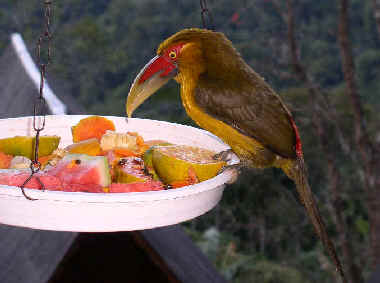
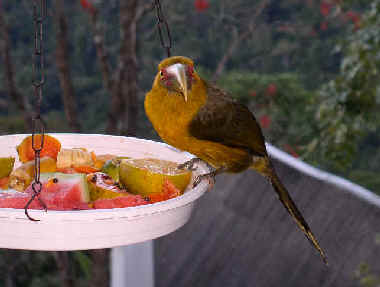
Above & below: A Saffron Toucanet
during the August 2007 FONT tour at Itatiaia in Brazil
(photos by Dan Coleman)
AULACORHYNCHUS
Emerald Toucanet (ph) ______
(in
far-western Brazil)
Aulacorhynchus prasinus
Outside Brazil, the Emerald Toucanet has been found during FONT tours
in Venezuela.
Chestnut-tipped Toucanet
______ (in far-northern Brazil)
Aulacorhynchus derbianus
CELEUS
Chestnut Woodpecker (*) ______ af AM:feb,aug
Celeus elegans jumanus
Outside Brazil, the Chestnut Woodpecker has been found during FONT tours
in Ecuador.
Cream-colored Woodpecker (*) ______
AF:oct
AM:aug MT:aug
Celeus flavus subflavus
Outside Brazil, the Cream-colored Woodpecker has been found during FONT
tours in Ecuador.
Blond-crested Woodpecker (*) ______
IG:sep
MN:sep,oct SE:jul,aug
Celeus f. flavescens (ig,se)
Celeus flavescens ochraceus (mn)
Outside Brazil, the Blond-crested Woodpecker has been
found during FONT tours in Argentina.
Pale-crested Woodpecker (ph) (*) ______ MS:aug,sep MT:mar,aug
Celeus l. lugubris
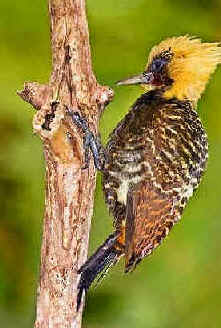
A Pale-crested Woodpecker photographed
during a FONT tour
in Mato Grosso do Sul
Ringed Woodpecker (*) ______ af MT:oct
Celeus torquatus tinnunculus
Scale-breasted Woodpecker
______
Celeus grammicus
Outside Brazil, the Scale-breasted Woodpecker has been found during FONT tours
in Ecuador.
Waved Woodpecker ______ (in northern Brazil)
Celeus undatus
Caatinga Woodpecker (e)
______ (in northeast Brazil)
Celeus obrieni
Rufous-headed
Woodpecker ______ (in far-western Brazil, in the state of Acre)
Celeus spectabilis
COLAPTES
Campo (or Field) Flicker
(ph) (*) ______ br IG:sep MN:mar,may,aug,sep,oct MS:mar,aug,sep
MT:mar,aug,oct RS:jul,oct SE:mar,may,jul,aug,oct
Colaptes c. campestris
Outside Brazil, the Campo Flicker has been found during
FONT tours in Argentina, Paraguay, Uruguay.
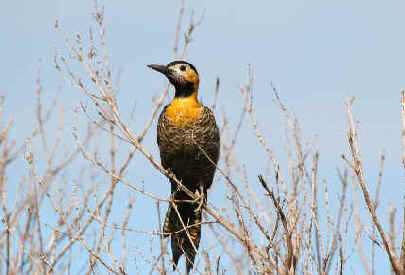
A Campo Flicker photographed during a FONT
tour in Brazil
CHRYSOPTILUS
Green-barred Woodpecker (*) ______ br MN:sep,oct MS:mar,aug,sep MT:aug
RS:jul,oct SE:aug,oct (includes "Golden-breasted
Woodpecker")
Chrysoptilus
(formerly
Colaptes) m. melanochloros
Outside Brazil, the Green-barred Woodpecker has been found
during FONT tours in Argentina, Paraguay, Uruguay.
Spot-breasted Woodpecker (*) ______
AM:feb
Chrysoptilus
(formerly Colaptes) punctigula
PICULUS
Yellow-throated
Woodpecker (*) ______ AF:oct AM:feb,aug
mt SE:jul,aug,oct
Piculus flavigula erythropis
Yellow-browed
Woodpecker (nt) (BRqe) (*) ______ MN:oct
RS:jul SE:may,aug.oct
Piculus aurilentus (monotypic)
Golden-green Woodpecker (*) ______ af MS:aug mt,se
Piculus c. chrysochloros (af,ms,mt)
Piculus chrysochloros polyzonus (se)
White-throated Woodpecker
______ (in western Amazonian Brazil)
Piculus leucolaemus
Golden-olive Woodpecker (ph) ______ (in far-northern Brazil)
Piculus rubiginosus
Outside Brazil, the Golden-olive Woodpecker has been
found during FONT tours in Argentina, Venezuela.
DRYOCOPUS
Lineated Woodpecker (ph) (*) ______ AF:oct AM:feb,aug ES:oct IG:jul,aug
MN:may,oct
MS:aug MT:mar,oct SE:oct
Dryocopus l. lineatus (af,am)
Dryocopus lineatus erythrops (es,ig,mt,se)
Outside Brazil, the Lineated Woodpecker has been found during FONT tours in
Argentina, Ecuador, Venezuela.
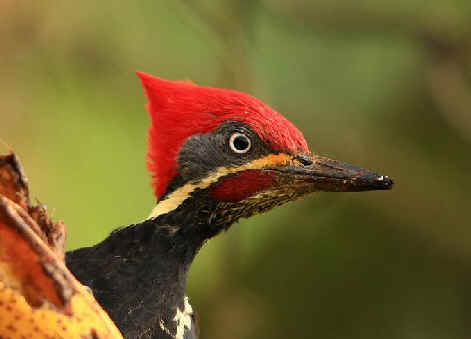
Lineated Woodpecker
Helmeted Woodpecker
(t3) ______ (in southern Brazil)
Dryocopus galeatus
MELANERPES
Yellow-tufted Woodpecker (ph) (*) ______
AF:oct
AM:feb,aug MT:mar.aug,oct
Melanerpes cruentatus (monotypic)
Outside Brazil, the Yellow-tufted Woodpecker has been found during FONT tours
in Ecuador, Venezuela.
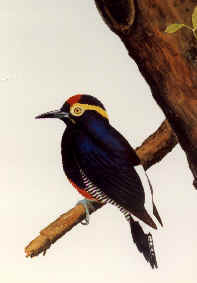
Yellow-tufted Woodpecker
Yellow-fronted
Woodpecker (BRqe) (ph) (*) ______
IG:jul MN:oct
SE:jul,aug,oct
Melanerpes flavifrons (monotypic)
Outside Brazil, the Yellow-fronted Woodpecker has been found
during FONT tours in Argentina, Paraguay.
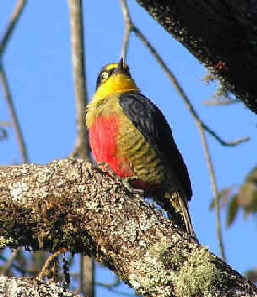
Yellow-fronted Woodpecker
(photographed By Rosemary Lloyd, during a FONT tour in Brazil)
White-fronted
Woodpecker (*) ______ mt
Melanerpes cactorum (monotypic)
Outside Brazil, the White-fronted Woodpecker has been
found during FONT tours in Argentina.
White Woodpecker (ph) (*) ______ MN:mar,may,aug,oct MS:mar,aug,sep MT:mar,aug
SE:aug,oct
Melanerpes candidus (monotypic)
Outside Brazil, the White Woodpecker has been found
during FONT tours in Argentina.
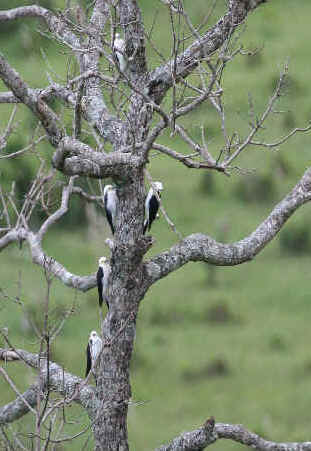
5 White Woodpeckers in a tree to their liking,
during the March 2008 FONT tour in Minas Gerais, Brazil
(photo by Marie Gardner)
PICOIDES
Checkered Woodpecker (*) ______
MT:aug (another spelling is "Chequered
Woodpecker", British)
Picoides mixtus cancellatus
Outside Brazil, the Checkered Woodpecker has been found
during FONT tours in Argentina.
VENILIORNIS
White-spotted Woodpecker (BRqe) (*) ______
RS:oct SE:aug,oct
Veniliornis spilogaster (monotypic)
Outside Brazil, the White-spotted Woodpecker has been
found during FONT tours in Argentina.
Little Woodpecker (*) ______ af MN:may,sep,oct MS:sep,oct MT:aug
SE:aug,oct
Veniliornis passerinus tapajozensis (af)
Veniliornis passerinus olivinus (ms,mt,se)
Veniliornis passerinus taenionotus (mn)
Outside Brazil, the Little Woodpecker has been found during FONT tours in
Argentina, Ecuador.
Yellow-eared Woodpecker (BRe) (*) ______ ES:oct
MN:may,oct
SE:aug
Veniliornis maculifrons (monotypic)
Red-stained Woodpecker (*) ______
MT:aug
Veniliornis affinis ruficeps
Golden-collared Woodpecker (*) ______
AM:aug
Veniliornis cassini
Outside Brazil, the Golden-collared Woodpecker has been found during FONT
tours in Venezuela.
Red-rumped Woodpecker
______ (in far-northern Brazil)
Veniliornis kirkii
Outside Brazil, the Red-rumped Woodpecker has been found during FONT
tours in Venezuela.
CAMPEPHILUS
Crimson-crested
Woodpecker (ph) (*) ______
AF:oct
AM:feb,aug IG:jul MS:mar,sep MT:mar SE:oct
Campephilus m. melanoleucos
Outside Brazil, the Crimson-crested Woodpecker has been found during FONT
tours in Venezuela.
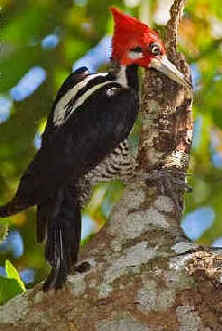
Crimson-crested Woodpecker
Red-necked Woodpecker (*) ______ AF:oct MT:oct
Campephilus rubricollis olallae
Outside Brazil, the Red-necked Woodpecker has been found during FONT tours
in Venezuela.
Robust Woodpecker (BRqe) (ph) (*) ______ ig MN:may SE:aug,oct
Campephilus robustus (monotypic)
Outside Brazil, the Robust Woodpecker has been found during FONT
tours in Argentina.
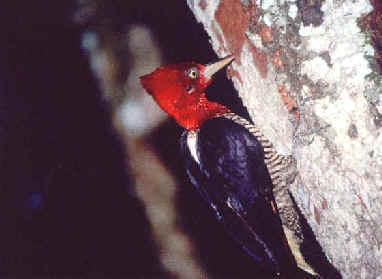
A Robust Woodpecker photographed during a FONT
tour
Cream-backed Woodpecker
______ (not commonly in the Pantanal of Mato Grosso)
Campephilus leucopogon
PICUMNUS
White-wedged Piculet (*) ______ MN:may MS:mar,aug,sep MT:aug,oct (was once called Arrowhead
Piculet; that name later given to a species restricted to northern South
America, now called the Guianan Piculet)
Picumnus a. albosquamatus (mt)
Picumnus albosquamatus guttifer (br)
Bar-breasted Piculet (BRqe) (*) ______ af AM:feb mt
Picumnus a. aurifrons
White-barred Piculet (*) ______ IG:sep MN:may,sep,oct MS:sep SE:jul,aug,oct
Picumnus c. cirratus
Outside Brazil, the White-barred Piculet has been found
during FONT tours in Argentina, Paraguay.
Ochre-collared Piculet (*) ______ IG:jul,sep
Picumnus temminckii (monotypic)
Outside Brazil, the Ochre-collared Piculet has been
found during FONT tours in Argentina.
Mottled Piculet (nt) (*) ______ RS:oct
Picumnus nebulosus (monotypic)
Spotted Piculet (BRe) (*) ______ ne
Picumnus pygmaeus
White-bellied Piculet (t3) ______ (in northern Brazil)
Picumnus spilogaster
Orinoco Piculet ______
(in
far-northern Brazil)
Picumnus pumilus
Lafresnaye's Piculet ______
(locally in Amazonian Brazil)
Picumnus
lefresnayi
Outside Brazil, the Lafresnaye's Piculet has been found during FONT tours in
Ecuador.
Golden-spangled Piculet
______
Picumnus exilis
Outside Brazil, the Golden-spangled Piculet has been found during FONT tours
in Venezuela.
Guianan Piculet (nt) ______ (in far-northern Brazil)
Picumnus minutissimus
Tawny Piculet (t3) (BRe)
______ (in northeast Brazil)
Picumnus fulvescens
Ochraceous Piculet
(t3) (BRe)
______ (in northeast Brazil)
Picumnus limae
Plain-breasted Piculet ______(in far-western Amazonian Brazil)
Picumnus castelnau
Varzea Piculet (t2) ______ (locally in Amazonian Brazil, near the river)
Picumnus varzeae
Rufous-breasted Piculet
______ (in western Amazonian Brazil)
Picumnus
rufiventris
Rusty-necked Piculet ______
Picumnus fuscus
MANACUS
White-bearded Manakin (ph) (*) ______ IG:jul,aug,sep MN:may,sep,oct SE:mar,aug,oct
Manacus manacus gutturosus
Outside Brazil, the White-bearded Manakin has been found
during FONT tours in Argentina, Paraguay, Venezuela.
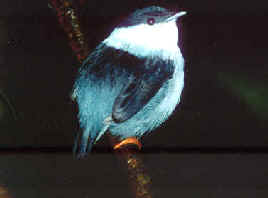
White-bearded Manakin
PIPRA
Red-headed Manakin (BRqe) (*) ______ AF:oct AM:feb MT:oct
Pipra rubrocapilla (monotypic)
Band-tailed Manakin (*) ______
MT:oct
Pipra fascilcauda scarlatina
White-crowned Manakin (*) ______
AM:feb
Pipra
(or Dixiphia) pipra
Outside Brazil, the White-crowned Manakin has been found during FONT tours in
Ecuador, Venezuela.
Crimson-hooded Manakin
______ (in northern Brazil)
Pipra aureola
Round-tailed Manakin
______ (in far-western Brazil)
Pipra chloromeros
Scarlet-horned Manakin
______ (in far-northern Brazil)
Pipra cornuta
Golden-headed Manakin
______ (in northern Brazil)
Pipra erythrocephala
Outside Brazil, the Golden-headed Manakin has been found during FONT tours in
Ecuador, Venezuela.
Wire-tailed Manakin (ph) ______ (in western Amazonian Brazil)
Pipra filicauda
Outside Brazil, the Wire-tailed Manakin has been found during FONT tours in
Ecuador, Venezuela.
LEPIDOTHRIX
Snow-capped Manakin (BRqe) (*) ______ AF:oct mt
Lepidothrix (formerly Pipra) nattereri
(monotypic)
Blue-crowned Manakin
______
Lepidothrix coronata
Outside Brazil, the Blue-crowned Manakin has been found during FONT tours in
Ecuador.
Opal-crowned Manakin (t3) ______ (in northern Brazil)
Lepidothrix iris
White-fronted Manakin
______ (in northern Brazil)
Lepidothrix serena
Tepui Manakin ______ (in far-northern Brazil)
Lepidothrix suavissima
Golden-crowned Manakin
(t3) (BRe)
______ (locally in northern Brazil)
Lepidothrix
(formerly Pipra) vilasboasi
ANTILOPHIA
Helmeted Manakin (BRqe) (*) ______ br MN:sep,oct MS:mar,aug mt
Antilophia galeata (monotypic)
Arapipe Manakin (t1) (BRe)
______ (in northeast Brazil)
Antilophia bokermanni
CHLOROPIPO
Olive Manakin ______
Chloropipo uniformis
XENOPIPO
Black Manakin ______
Xenopipo atronitens (the single member of its genus)
HETEROCERCUS
Flame-crested Manakin (*) ______ mt
Heterocercus linteatus (monotypic)
Yellow-crested Manakin ______
hetero cercus flavivertex
CHIROXIPHIA
Blue
Manakin (*) ______ ES:oct IG:aug
MN:may,sep,oct SE:may,jul,aug,oct (has
also been known as the Swallow-tailed Manakin, although the tail
is not notably so)
Chiroxiphia caudata (monotypic)
Outside Brazil, the Blue Manakin has been found during
FONT tours in Argentina, Paraguay.
Blue-backed Manakin
______ (in northern Brazil)
Chiroxiphia pareola
Outside Brazil, the Blue-backed Manakin has been found during FONT tours in
Ecuador.
ILICURA
Pin-tailed Manakin (BRe) (*) ______ mn SE:mar,may,aug,oct
Ilicura militaris (monotypic,
and the single member of its genus)
CORAPIPO
White-throated Manakin (*) ______
AM:aug
Corapipo gutturalis (monotypic)
MACHAEROPTERUS
Fiery-capped Manakin (*) ______ af MT:aug,oct
Machaeropterus p. pyrocephalus
Eastern Striped Manakin (*) ______ se
Machaeropterus regulus
Western Striped Manakin
______ (in far-western Amazonian Brazil)
Machaeropterus striolatus
Outside Brazil, the Western Striped Manakin has been found during FONT tours
in Ecuador.
TITYRA
Black-tailed Tityra (*) ______
af AM:feb,aug ES:oct ig
MT:aug
RS:oct (in Oct 2004: out of range, in rocks on the long jetty about
2km out to sea) SE:oct
Tityra cayana braziliensis
Outside Brazil, the Black-tailed Tityra has been found during FONT tours
in Argentina, Ecuador, Venezuela.
Masked Tityra (*) ______ AF:oct AM:feb,aug
MT:mar,aug,oct
Tityra semifasciata fortis
Outside Brazil, the Masked Tityra has been found during FONT tours in
Ecuador.
Black-crowned Tityra (*) ______
af,ig MN:oct MS:aug
MT:mar,aug SE:mar,aug,oct
Tityra i. inquisitor
Outside Brazil, the Black-crowned Tityra has been found during FONT tours
in Argentina, Ecuador, Venezuela.
LANIOCERA
Cinereous Mourner
______
Laniocera hypopyrra
SCHIFFORNIS (this genus moved from the manakin
to the cotinga
family)
Greenish
Schiffornis (*) ______ br
ES:oct ig MN:sep mt SE:may,jul,aug,oct (has been called Greenish Mourner; formerly called
Greenish Manakin)
Schiffornis virescens (monotypic)
Outside Brazil, the Greenish Schiffornis has been found
during FONT tours in Argentina.
Thrush-like Schiffornis (*) ______
AF:oct (formerly called Thrush-like Manakin)
Schiffornis turdinus intermedia
Varzea Schiffornis
______ (formerly called Greater Schiffornis,
or Mourner)
Schiffornis major
Outside Brazil, the Varzea Schiffornis has been found during FONT tours in
Ecuador.
IODOPLEURA
Buff-throated Purpletuft (t2) (BRe) (*) ______
SE:mar,aug,oct
Lodopleura pipra (now monotypic)
White-browed Purpletuft (*) ______
af MT:oct
Lodopleura isabellae paraensis
Outside Brazil, the White-browed Purpletuft has been found during FONT tours in
Ecuador.
Dusky Purpletuft
______ (in far-northern Brazil)
Lodopleura fusca
LANIISOMA
Brazilian Laniisoma (t3) (*) ______ se
(has been known as the Shrike-like Cotinga or Elegant
Mourner)
Laniisoma elegans (monotypic, and the single member of its
genus)
(This and the now Andean Laniisoma, L.
buckleyi, of western South America
were traditionally called Shrike-like Cotinga, with the scientific name,
Laniisoma elegans.)
XENOPSARIS
White-naped Xenopsaris (*) ______ MS:mar,aug,sep mt
Xenopsaris a. albinucha (the single member of its genus; has now
been put into the Cotinga family)
PACHYRAMPHUS
Green-backed Becard (*) ______ MN:sep MS:mar,aug,sep mt SE:may,oct
Pachyramphus v. viridis
White-winged Becard (*) ______ IG:sep MN:oct MT:mar,oct SE:mar,oct
Pachyramphus polychopterus spixii
Outside Brazil, the White-winged Becard has been found during FONT tours in
Argentina, Ecuador, Venezuela.
Black-capped Becard (*) ______
AM:aug MN:may MT:mar SE:aug
Pachyramphus m. marginatus
Outside Brazil, the Black-capped Becard has been found during FONT tours
in Venezuela.
Cinereous Becard (*) ______
AM:feb,aug
Pachyramphus rufus
Outside Brazil, the Cinereous Becard has been found during FONT
tours in Venezuela.
Chestnut-crowned Becard (*) ______ af ES:oct IG:jul MN:sep,oct MS:aug
SE:may,jul,aug,oct
Pachyramphus c. castaneus
Outside Brazil, the Chestnut-crowned Becard has been found
during FONT tours in Argentina, Venezuela.
Crested Becard (*) ______ MT:mar,aug SE:aug,oct
Pachyramphus v. validus
Outside Brazil, the Crested Becard has been found during FONT tours
in Argentina.
Glossy-backed Becard
______ (locally in northern Brazil)
Pachyramphus surinamus
Pink-throated Becard ______
Pachyramphus minor
Outside Brazil, the Pink-throated Becard has been found during FONT tours in
Ecuador.
OXYRUNCUS
Sharpbill (*) ______
ES:oct mt SE:may,aug
Oxyruncus c. cristatus
(the single member of its genus)
Outside Brazil, the Sharpbill has been found during FONT tours
in Venezuela.
PHILALURA
Swallow-tailed Cotinga (nt) (BRqe) (ph)
(*)
______ MN:may,sep,oct SE:oct (including at
nest)
Philalura f. flavirostris (the single member of its genus)
Swallow-tailed Cotingas are always a
treat
during FONT Brazil Tours in Minas Gerais
TIJUCA
Black-and-gold Cotinga (nt) (BRe) (*) ______
SE:aug,oct
Tijuca atra (monotypic)
Gray-winged Cotinga
(t3) (BRe) ______
Tijuca condita
PHYTOTOMA
White-tipped Plantcutter
______ (occurs in far-southern Brazil, in extreme southern Rio Grande do
Sul)
Phytotoma rutila
Outside Brazil, the White-tipped Plantcutter has been found during FONT
tours in Argentina.
CARPORNIS
Hooded Berryeater (nt) (BRe) (*) ______ ES:oct
SE:oct
Carpornis cucullatus (monotypic)
Black-headed Berryeater
(t3) ______
Carpornis melanocephala
PIPREOLA
Red-banded Fruiteater
______ (in far-northern Brazil)
Pipreola whitelyi
PORPHYROLAEMA
Purple-throated Cotinga (nt) (*) ______ af
AM:aug
Porphyrolaema porphyrolaema (monotypic,
and the single member of its genus)
Outside Brazil, the Purple-throated Cotinga has been found during FONT tours
in Ecuador.
COTINGA
Spangled Cotinga (*) ______ AF:oct mt
Cotinga cayana (monotypic)
Outside Brazil, the Spangled Cotinga has been found during FONT tours in
Ecuador.
Purple-breasted Cotinga
______ (in northern Brazil)
Cotinga cotinga
Banded Cotinga (t2) (BRe)
______
Cotinga maculata
Plum-throated Cotinga ______
Cotinga maynana
Outside Brazil, the Plum-throated Cotinga has been found during FONT tours in
Ecuador.
XIPHOLENA
Pompadour Cotinga (*) ______
AF:oct
AM:aug MT:oct
Xipholena punicea (monotypic)
White-tailed Cotinga (nt) (BRe) ______
Xipholena lamellipennis
White-winged Cotinga
(t2) (BRe) ______
Xipholena atropurpurea
PHOENICIRCUS
Black-necked Red Cotinga (*) ______ mt
Phoenicircus nigricollis
Guianan Red
Cotinga ______ (in far-northern Brazil)
Phoenicircus carnifex
LIPAUGUS
Screaming Piha (*) ______ AF:oct AM:feb,aug MT:oct
Lipaugus vociferans (monotypic)
Outside Brazil, the Screaming Piha has been found during FONT tours in
Ecuador, Venezuela.
Cinnamon-vented Piha (t3) (BRe) (*) ______ ES:oct MN:sep,oct
Lipaugus lanioides (monotypic)
Rose-collared Piha
______ (in far-northern Brazil)
Lipaugus streptophonus
CONIOPTILON
Black-faced Cotinga
______
Conioptilon mcilhennyi
The Black-faced Cotinga has only been found once in Brazil; a specimen was
collected in the state of Acre in the far-western part of the country in 1994.
The species normally occurs in Peru & Bolivia.
PROCNIAS
Bare-throated Bellbird (t3) (*) ______ ES:oct
IG:sep RS:oct SE:aug,oct
Procnias nudicollis (monotypic)
Bearded Bellbird ______ (locally in northern Brazil)
Procnias averano
Outside Brazil, the Bearded Bellbird has been found during FONT tours in
Venezuela.
White Bellbird ______ (locally in northern Brazil)
Procnias albus
Outside Brazil, the White Bellbird has been found during FONT tours in
Venezuela.
QUERULA
Purple-throated Fruitcrow (*) ______
AM:aug
Querula purpurata (monotypic, and the single member of its
genus)
Outside Brazil, the Purple-throated Fruitcrow has been found during FONT tours
in Ecuador, Venezuela.
PYRODERUS
Red-ruffed Fruitcrow (*) ______
ig MN:may,oct (including a lek) SE:aug.oct
Pyroderus s. scutatus
Outside Brazil, the Red-ruffed Fruitcrow has been found
during FONT tours in Argentina, Venezuela.
GYMNODERUS
Bare-necked Fruitcrow (*) ______
AF:oct MT:aug
Gymnoderus foetidus (monotypic)
Outside Brazil, the Bare-necked Fruitcrow has been found during FONT tours in
Ecuador, Venezuela.
HAEMATODERUS
Crimson Fruitcrow
______ (in northern Brazil)
Haematoderus militaris (the single member of its genus)
CEPHALOPTERUS
Amazonian Umbrellabird (*) ______
AF:oct MT:oct
Cephalopterus ornatus (monotypic)
Outside Brazil, the Amazonian Umbrellabird has been found during FONT tours in
Ecuador.
PERISSOCEPHALUS
Capuchinbird ______
(in
far-northern Brazil)
Perissocephalus tricolor (the single member of its genus)
Outside Brazil, the Capuchinbird has been found during FONT tours in
Venezuela.
RUPICOLA
Guianan Cock-of-the-Rock (ph) (*) ______
AM:feb,aug
Rupicola rupicola
Outside Brazil, the Guianan Cock-of-the-Rock has been found during FONT
tours in Venezuela.
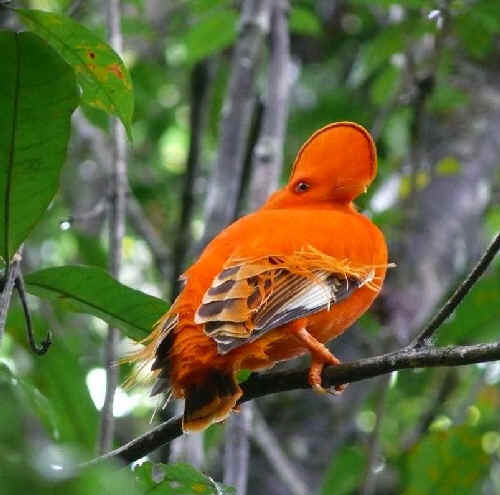
The Guianan Cock-of-the-Rock has been seen during
FONT tours in Amazonian Brazil
PIPRITES
Wing-barred Piprites (*) ______ af
AM:aug MT:oct (at one time called Wing-barred Manakin, but not a manakin)
Piprites chloris grisescens (af)
Piprites chloris boliviana (mt)
Outside Brazil, the Wing-barred Piprites has been found during FONT tours in
Ecuador, Venezuela.
Black-capped Piprites (t3) (*) ______
SE:jul,aug,oct (at one time called Black-capped Manakin, but not
a manakin)
Piprites pileatus (monotypic)
CALYPTURA
Kinglet Calyptura (t1) (BRe)
______
Calyptura cristata
NEOPELMA
Serra do Mar Neopelma (BRe) (*) ______
SE:aug,oct
(was called the Serra do Mar Tyrant-Manakin; was previously part of the
Wied's Tyrant-Manakin, now called Wied's Neopelma)
Neopelma chrysolophum (monotypic)
Wied's Neopelma (t2) (BRe)
______ (has been called Wied's Tyrant-Manakin)
Neopelma aurifrons
Pale-bellied Neopelma
______ (has been called Pale-bellied Tyrant-Manakin)
Neopelma pallescens
Saffron-crested Neopelma
______ (has been called Saffron-crested Tyrant-Manakin) (in far-northern
Brazil)
Neopelma chrysocephalum
Sulphur-bellied Neopelma
______ (has been called Sulphur-bellied Tyrant-Manakin) (in far-western
Brazil)
Neopelma sulphureiventer
TYRANNEUTES
Dwarf Tyranneutes (*) ______ af AM:feb (has been called called Dwarf Tyrant-Manakin)
Tyranneutes stolzmanni (monotypic)
Tiny Tyranneutess ______ (has been called Tiny Tyrant-Manakin)
Tyranneutes virescens
MIONECTES
Ochre-bellied Flycatcher (ph) (*) ______ mt,se
Mionectes o. oleagineus
Outside Brazil, the Ochre-bellied Flycatcher has been found during FONT
tours in Ecuador.
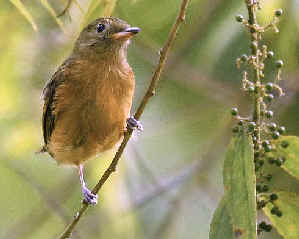
Ochre-bellied Flycatcher
(photo by Leroy Tabb)
McConnell's Flycatcher (*) ______
AM:aug
Mionectes m. macconnelli
Outside Brazil, the McConnell's Flycatcher has been found during FONT tours
in Venezuela.
Gray-hooded Flycatcher (BRqe) (*) ______ MN:may SE:aug,oct
Mionectes rufiventris (monotypic)
Outside Brazil, the Gray-hooded Flycatcher has been
found during FONT tours in Argentina.
LEPTOPOGON
Sepia-capped Flycatcher (ph) (*) ______ ES:oct IG:jul,aug,sep MN:oct MT:oct SE:mar,aug
Leptopogon a. amaurocephalus
Outside Brazil, the Sepia-capped Flycatcher has been found
during FONT tours in Argentina.
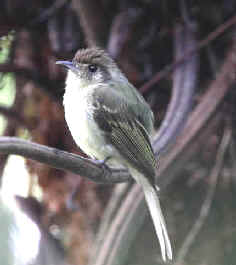
A Sepia-capped Flycatcher photographed
during a FONT tour in Brazil
HEMITRICCUS
Drab-breasted Bamboo Tyrant (*) _____ ES:oct
MN:oct SE:aug,oct
(has also been called Drab-breasted Pygmy Tyrant)
Hemitriccus diops (monotypic)
Brown-breasted Bamboo Tyrant (BRe) (*) ______
SE:oct (has also been called Brown-breasted Pygmy-Tyrant)
Hemitriccus o. obsoletus
Hangnest Tody-Tyrant (nt) (BRe) (*) ______ MN:may SE:oct
Hemitriccus nidipendulus paulistus
Eye-ringed Tody-Tyrant (nt) (BRe) (*) ______ mn
SE:aug
Hemitriccus orbitatus
(monotypic)
White-bellied Tody-Tyrant (*) ______
MT:oct (was part of White-eyed Tody-Tyrant)
Hemitriccus g. griseipectus
Stripe-necked Tody-Tyrant (*) ______ mt
Hemitriccus s. striaticollis
Pearly-vented Tody-Tyrant (*) ______ br
MN:may
MS:mar,aug,sep MT:aug
Hemitriccus m. margaritaceiventer (ms,mt)
Hemitriccus margaritaceiventer wuchereri (br,mn)
Outside Brazil, the Pearly-vented Tody-Tyrant has been
found during FONT tours in Argentina, Paraguay.
Snethlage's Tody-Tyrant (*) ______ af
Hemitriccus m. minor
(3 subspecies in different parts of Amazonian Brazil)
Zimmer's Tody-Tyrant
______ (locally in northern Brazil)
Hemitriccus minimus
Buff-breasted Tody-Tyrant
(t3) (BRe)
______ (in northeast Brazil)
Hemitriccus mirandae
Kaempfer's Tody-Tyrant
(t2) (BRe)
______
Hemitriccus kaempferi
White-eyed Tody-Tyrant ______
Hemitriccus zosterops
Boat-billed Tody-Tyrant
______
Hemitriccus josephinae
Johanne's Tody-Tyrant ______
Hemitriccus johannis
Flammulated Pygmy Tyrant
______
Hemitriccus flammulatus
Fork-tailed Pygmy Tyrant
(t2) ______
Hemitriccus furcatus
Pelzeln's Tody-Tyrant ______
Hemitriccus inornatus
POECILOTRICCUS
Ochre-faced Tody-Flycatcher (*) ______
MN:may,sep,oct RS:oct SE:aug,oct
Poecilotriccus (formerly
Todirostrum) p. plumbeiceps
Outside Brazil, the Ochre-faced Tody-Flycatcher has been
found during FONT tours in Argentina.
Rusty-fronted Tody-Flycatcher (*) ______ mt
Poecilotriccus (formerly Todirostrum)
latirostre
ochropterus
Slate-headed Tody-Flycatcher (ph)
______ (in northern Brazil)
Poecilotriccus
(formerly Todirostrum) sylvia
Outside Brazil, the Slate-headed Tody-Flycatcher
has been found during FONT tours in Venezuela.
Smoky-fronted Tody-Flycatcher
______
(in north & northeast Brazil)
Poecilotriccus
(formerly Todirostrum) fumifrons
Ruddy Tody-Flycatcher
______ (in far-northern Brazil)
Poecilotriccus
(formerly Todirostrum) russatus
Black-and-white Tody-Tyrant
______
Poecilotriccus capitalis
Buff-cheeked Tody-Flycatcher
______
Poecilotriccus senex
White-cheeked Tody-Flycatcher
______ (first found in Brazil recently in western Amazonia)
Poecilotriccus albifacies
TODIROSTRUM
Spotted Tody-Flycatcher (*) ______ af AM:feb ne,mt
Todirostrum maculatum annectens
Yellow-browed Tody-Flycatcher (*) ______ mt
Todirostrum chrysocrotaphum simile
Outside Brazil, the Yellow-browed Tody-Flycatcher has been found during
FONT tours in Ecuador.
Yellow-lored Tody-Flycatcher (BRe) (*) ______ MN:may,sep,oct
SE:mar,aug,oct
(has also been called Gray-headed Tody-Flycatcher)
Todirostrum poliocephalum (monotypic)
Common Tody-Flycatcher (*) ______ br MN:may,sep,oct MS:mar,aug,sep mt
SE:mar,aug,oct
Todirostrum cinereum coloreum (mt)
Todirostrum cinereum cearae (br,mn,se)
Outside Brazil, the Common Tody-Flycatcher has been found during FONT tours in
Ecuador.
Painted Tody-Flycatcher
______ (in far-northern Brazil)
Todirostrum pictum
CORYTHOPIS
Southern Antpipit (*) ______ ig,mt
Corythopis delalandi (monotypic)
Outside Brazil, the Southern Antpipit has been found
during FONT tours in Argentina.
Ringed Antpipit ______ (in Amazonian Brazil)
Corythopis torquatus
Outside Brazil, the Ringed Antpipit has been found during FONT tours in
Ecuador.
PHYLLOMYLAS
Planalto Tyrannulet (BRqe) (*) ______ br MN:may,oct MT:aug SE:may,aug,oct
Phyllomylas fasciatus brevirostris
Rough-legged Tyrannulet (*) ______ MN:sep SE:jul,aug
Phyllomylas b. burmeisteri
Greenish Tyrannulet (BRqe) (*) ______ ig MN:may,sep,oct RS:jul
SE:may,jul,aug,oct
(was conspecific with Reiser's Tyrannulet)
Phyllomylas virescens (monotypic)
Outside Brazil, the Greenish Tyrannulet has been found
during FONT tours in Argentina.
Reiser's Tyrannulet (*) ______ br
(was conspecific with Greenish Tyrannulet)
Phyllomyias reiseri (monotypic)
Gray-capped Tyrannulet (nt) (BRe) (*) ______ MN:sep,oct
SE:mar,may,jul,aug,sep
Phyllomyias griseocapilla (monotypic)
ZIMMERIUS
Slender-footed
Tyrannulet (*) ______ af
Zimmerius gracilipes
Outside Brazil, the Slender-footed Tyrannulet has been found during FONT
tours in Ecuador.
ORNITHION
White-lored Tyrannulet (*) ______
AM:aug
Ornithion inerme (monotypic)
CAMPTOSTOMA
Southern Beardless
Tyrannulet (*) ______ AM:feb br
MN:mar,may,sep,oct MS:aug MToct RS:jul SE:mar,aug,oct
Camptostoma o. obsoletum (mn,rs,se)
Camptostoma obsoletum cinerascens (ms,mt,br)
Outside Brazil, the Southern Beardless Tyrannulet has been found during FONT
tours in Argentina, Ecuador, Paraguay, Venezuela.
PHAEOMYLAS
Mouse-colored Tyrannulet (*) ______
MN:sep,oct MT:aug,oct SE:may,aug
Phaeomylas m. murina
Outside Brazil, the Mouse-colored Tyrannulet has been
found during FONT tours in Bolivia, Paraguay, Venezuela.
CAPSIEMPIS
Yellow Tyrannulet (*) ______ IG:jul MN:may,sep,oct MS:mar SE:aug
Capsiempis f. flaveola
(the single member of its genus)
Outside Brazil, the Yellow Tyrannulet has been found during
FONT tours in Argentina, Paraguay, Venezuela.
TYRANNULUS
Yellow-crowned
Tyrannulet (*) ______ af AM:aug
MT:aug
Tyrannulus elatus (monotypic)
Outside Brazil, the Yellow-crowned Tyrannulet has been found during FONT tours
in Ecuador.
SUBLEGATUS
Amazonian Scrub Flycatcher (*) ______
AF:oct (has been considered part of Southern Scrub Flycatcher)
Sublegatus obscurior
Southern Scrub Flycatcher (*) ______ MN:may,oct
MS:aug MT:mar,aug
Sublegatus m. modestus
SUIRIRI
Chapada Suiriri (nt) (*) ______
MT:mar,aug,oct
Suiriri islerorum
Campo Suiriri (*) ______ br
mn (was
part of the former Suiriri Flycatcher, S. suiriri, with 3 subspecies)
Suiriri affinis
MYIOPAGIS
Forest Elaenia (*) ______ af MS:aug MT:aug
Myiopagis gaimardii subcinerea
Gray Elaenia (*) ______ MN:oct MS:sep mt,se
Myiopagis c. caniceps
Outside Brazil, the Gray Elaenia has been found during
FONT tours in Argentina.
Greenish Elaenia (*) ______ MN:sep SE:oct
Myiopagis v. viridicata
Outside Brazil, the Greenish Elaenia has been found during
FONT tours in Argentina.
Yellow-crowned Elaenia ______ (in northern Brazil)
Myiopagis flavivertex
Outside Brazil, the Yellow-crowned Elaenia has been found during FONT tours in
Ecuador.
ELAENIA
Yellow-bellied Elaenia (ph) (*) ______ af,br IG:sep MN:may,sep,oct MS:mar,aug,sep mt
RS:jul,oct SE:aug.oct
Elaenia f. flavogaster
Outside Brazil, the Yellow-bellied Elaenia has been found during FONT
tours in Argentina, Ecuador, Venezuela.
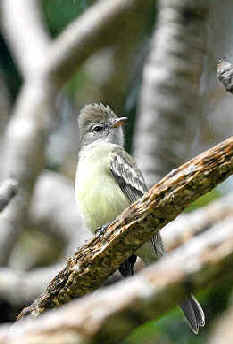
Yellow-bellied Elaenia
Large Elaenia (*) ______ mt
Elaenia spectabilis (monotypic)
Small-billed Elaenia (*) ______ MN:oct MS:sep mt RS:oct SE:aug
Elaenia parvirostris (monotypic)
Outside Brazil, the Small-billed Elaenia has been found during FONT tours in
Argentina, Uruguay, Venezuela.
White-crested Elaenia (*) ______
AM:aug
MN:oct SE:aug
Elaenia a. albiceps
Outside Brazil, the White-crested Elaenia has been found during
FONT tours in Argentina, Chile.
Olivaceous Elaenia (*) ______ RS:oct SE:oct
Elaenia mesoleuca (monotypic)
Highland Elaenia (*) ______ MN:may,sep,oct
Elaenia obscura sordida
Outside Brazil, the Highland Elaenia has been found during
FONT tours in Argentina.
Plain-crested Elaenia (*) ______ br MN:may,sep,oct MT:mar,aug,oct
Elaenia c. cristata
Outside Brazil, the Plain-crested Elaenia has been found during FONT tours
in Venezuela.
Lesser Elaenia (*) ______ br MN:sep,oct MT:oct se
Elaenia chiriquensis albivertex
Outside Brazil, the Lesser Elaenia has been found during
FONT tours in Argentina.
Sierran Elaenia ______ (in
far-northern Brazil)
Elaenia pallatangae
Brownish Elaenia ______ (in Amazonian Brazil, near the river)
Elaenia pelzelni
Rufous-crowned Elaenia ______ (in northern Brazil)
Elaenia ruficeps
Noronha Elaenia (t3) (BRe) ______ (on the Fernando de Noronha islands offshore from northeast
Brazil)
Elaenia ridleyana
Slaty Elaenia ______
Elaenia strepera
Outside Brazil, the Slaty Elaenia has
been found during FONT tours in Argentina.
SERPOPHAGA
Sooty Tyrannulet (*) ______ MN:mar,may,sep,oct RS:jul,oct SE:aug,oct
Serpophaga nigricans (monotypic)
Outside Brazil, the Sooty Tyrannulet has been found
during FONT tours in Argentina.
White-crested Tyrannulet (*) ______
MN:may,oct MS:aug,sep mt RS:oct SE:may,aug,oct
Serpophaga s. subcristata
Outside Brazil, the White-crested Tyrannulet has been
found during FONT tours in Argentina, Bolivia.
White-bellied Tyrannulet
______ (in far-southern Brazil)
Serpophaga munda
Outside Brazil, the White-bellied Tyrannulet has been found during FONT
tours in Argentina.
River Tyrannulet ______ (in
northern Brazil)
Serpophaga hypoleuca
Outside Brazil, the River Tyrannulet has been found during FONT tours in
Ecuador.
INEZIA
Plain Inezia (*) ______ MS:aug
MT:mar (has been called Plain
Tyrannulet)
Inezia inornata (monotypic)
Pale-tipped Inezia
______ (has been called Pale-tipped Tyrannulet) (In far-northern Brazil
near the seacoast)
Inezia caudata
Outside Brazil, the Pale-tipped Inezia has been found during FONT tours
in Venezuela.
MUSCISAXICOLA
Little Ground Tyrant
______
Muscisaxicola fluviatilis
CULLICIVORA
Sharp-tailed Grass Tyrant (nt) (*) ______ br
MN:aug,sep,oct
Culicivora caudacuta (monotypic,
and the single member of its genus)
POLYSTICTUS
Gray-backed Tachuri (nt) (BRe) (*) ______
MN:may,sep,oct
Polystictus superciliaris (monotypic)
Bearded Tachuri (nt) ______
Polystictus pectoralis
Outside Brazil, the Bearded Tachuri has
been found during FONT tours in Argentina.
TACHURIS
Many-colored Rush Tyrant (ph) ______ (in far-southern Brazil)
Tachuris rubrigastra (the single member of its genus)
Outside Brazil, the Many-colored Rush Tyrant
has been found during FONT tours in Argentina, Chile.
PSEUDOCOLOPTERYX
Warbling Doradito (*) ______
RS:jul,oct
Pseudocolopteryx flaviventris (monotypic)
Outside Brazil, the Warbling Doradito has been found
during FONT tours in Argentina, Chile.
Crested Doradito ______
Pseudocolopteryx sclateri
Outside Brazil, the Crested Doradito has
been found during FONT tours in Argentina.
Dinelli's Doradito ______ (r/BR)
Pseudocolopteryx dinelliana
In Brazil, there is one undocumented record of the Dinelli's Doradito
in Mato Grosso.
STIGMATURA
Lesser Wagtail-Tyrant ______
Stigmatura napensis
Outside Brazil, the Lesser Wagtail-Tyrant has been found during FONT tours in
Ecuador.
Bahia Wagtail-Tyrant (BRe) ______ (was part of Lesser Wagtail-Tyrant)
Stigmatura bahiae
Greater Wagtail-Tyrant ______
Stigmatura budytoides
Caatinga Wagtail-Tyrant (BRe) ______ (was part of Greater Wagtail-Tyrant) (in northeast Brazil)
Stigmatura gracilis
PHYLLOSCARTES
Southern Bristle Tyrant (nt) (BRqe) (*) ______
IG:jul,sep
MN:sep SE:mar,jul
Phylloscartes eximius (monotypic)
Sao Paulo Tyrannulet (t3) (BRqe) (*) ______ SE:aug
Phylloscartes paulistus (monotypic)
Oustalet's Tyrannulet (nt) (BRe) (*) ______ SE:aug
Phylloscartes oustaleti (monotypic)
Serra do Mar Tyrannulet (nt) (BRe) (*) ______ SE:aug
Phylloscartes difficilis (monotypic)
Mottle-cheeked
Tyrannulet (*) ______ IG:jul,sep MN:sep,oct
RS:jul SE:mar,jul,aug,oct
Phylloscartes v. ventralis
Outside Brazil, the Mottle-cheeked Tyrannulet has been
found during FONT tours in Argentina.
Bay-ringed Tyrannulet (nt) (*) ______ mn,se
Phylloscartes sylviolus
Restinga Tyrannulet
(t3) (BRe) ______
Phylloscartes kronei
Sooty-headed Tyrannulet
______
Phylloscartes griseiceps
Olive-green Tyrannulet ______
Phylloscartes virescens
Alagoas Tyrannuelt (t1) (BRe)
______ (in northeast Brazil)
Phylloscartes ceciliae
Bahia Tyrannulet (t2) (BRe)
______ (in eastern Brazil)
Phylloscartes beckeri
Black-fronted Tyrannulet
______
(in far-northern Brazil)
Phylloscartes nigrifrons
Minas Gerais Tyrannulet
(t1) (BRe) ______
Phylloscartes roquettei
Chapman's Bristle Tyrant
______ (in far-northern Brazil)
Phylloscartes chapmani
Outside Brazil, the Chapman's Bristle Tyrant has been found during FONT tours
in Venezuela.
MYIORNIS
Eared Pygmy Tyrant (*) ______ IG:jul,sep SE:aug,oct
Myiornis auricularis (monotypic)
Outside Brazil, the Eared Pygmy Tyrant has been found
during FONT tours in Argentina.
Short-tailed Pygmy Tyrant (*) ______
MTaug
Myiornis e. ecaudatus
EUSCARTHMUS
Tawny-crowned Pygmy Tyrant (*) ______
MT:aug
Euscarthmus m. meloryphus
Outside Brazil, the Tawny-crowned Pygmy Tyrant has been
found during FONT tours in Argentina.
Rufous-sided Pygmy
Tyrant (t3) ______
Euscarthmus rufomarginatus
LOPHOTRICCUS
Helmeted Pygmy Tyrant (*) ______
AF:oct
Lophotriccus galeatus (monotypic)
Double-banded Pygmy Tyrant
______ (in far-northern Brazil)
Lophotriccus vitiosus
Outside Brazil, the Double-banded Pygmy Tyrant has been found during FONT
tours in Ecuador.
Long-crested Pygmy Tyrant
______ (in western Amazonian Brazil)
Lophotriccus eulophotes
Pale-eyed Pygmy Tyrant ______
Lophotriccus
(or Atalotriccus) pilaris
Outside Brazil, the Pale-eyed Pygmy Tyrant has been found during FONT
tours in Venezuela.
TOLMOMYIAS
Yellow-olive Flatbill (*) ______ br IG:sep MN:oct MS:aug mt
SE:aug (has been called Yellow-olive Flycatcher)
Tolmomyias s. sulphurescens
Outside Brazil, the Yellow-olive Flatbill has been found
during FONT tours in Venezuela.
Zimmer's Flatbill (*) ______ MT:oct
(formerly part of Yellow-margined Flycatcher)
Tolmomyias a. assimilis
(Formerly an expanded Yellow-margined Flycatcher was Tolmomyias
assimilis; later
more-northerly Yellow-margined Flatbill (or
Flycatcher), of Central America & northern
South America, became Tolmomyias flavotectus)
Gray-crowned Flatbill (*) ______
AM:aug
(has been called Gray-crowned Flycatcher)
Tolmomyias poliocephalus sclateri
Outside Brazil, the Gray-crowned Flatbill has been found during FONT tours
in Ecuador.
Ochre-lored Flatbill (*) ______ ne
SE:may
(has been called Yellow-breasted Flatbill)
Tolmomyias flaviventris
Outside Brazil, the Ochre-lored Flycatcher has been found during
FONT tours in Venezuela.
RHYNCHOCYCLUS
Olivaceous Flatbill (*) _______ af
Rhynchocyclus olivaceus sordidus
Outside Brazil, the Olivaceous Flatbill has been found during FONT tours
in Venezuela.
RAMPHOTRIGON
Bamboo Flatbill (*) ______ IG:jul,sep SE:aug,oct (has been called
Large-headed Flatbill)
Ramphotrigon m. megacephala
PLATYRINCHUS
White-throated-Spadebill (*) ______
IG:sep
MN:sep,oct SE:aug.oct
Platyrinchus m. mystaceus ("Yellow-crested Spadebill")
Outside Brazil, the White-throated Spadebill has been found
during FONT tours in Argentina, Venezuela.
White-crested Spadebill
______ (in Amazonian Brazil)
Platyrinchus platyrhynchos
Golden-crowned Spadebill
______ (in Amazonian Brazil)
Platyrinchus coronatus
Cinnamon-crested Spadebill
______
(in northern Brazil)
Platyrinchus saturatus
Russet-winged Spadebill
(nt) ______ (in southeast Brazil)
Platyrinchus leucoryphus
ONYCHORHYNCHUS
Amazonian Royal Flycatcher (*) ______
af
mt
Onychorhynchus coronatus
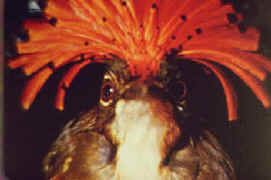
A Royal Flycatcher with an erect crest
Atlantic Royal Flycatcher (t2) (BRe) (*) ______ se
Onychorhynchus swainsoni
MYIOPHOBUS
Bran-colored Flycatcher (*) ______ MN:sep,oct MS:aug MT:aug RS:oct
SE:may,aug,oct
Myiophobus fasiatus flammiceps
Outside Brazil, the Bran-colored Flycatcher has been found
during FONT tours in Argentina, Venezuela.
MYIOBIUS
Black-tailed Myiobius (*) ______ br MN:sep (has been called Black-tailed
Flycatcher)
Myiobius atricaudus ridgwayi
Whiskered Myiobius (*) ______
AF:oct
AM:aug (has been called Whiskered Flycatcher; was conspecific with the
Yellow-rumped Flycatcher (now
Myiobius) of southeast Brazil & the
Sulphur-rumped
Flycatcher (now Myiobius) in Central America & west of the Andes in South
America)
Myiobius b. barbatus (af)
Outside Brazil, the Whiskered Myiobius has been found during
FONT tours in Ecuador.
Yellow-rumped Myiobius (ph) (*) ______ MN:sep
SE:mar,aug,oct
Myiobius barbatus mastacalis
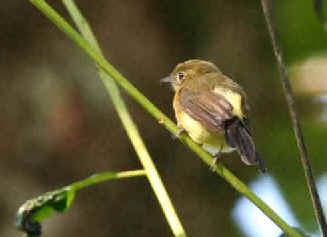
A Yellow-rumped Myiobius photographed during a
FONT tour
in southeast Brazil, near Ubatuba
HIRUNDINEA
Cliff Flycatcher (ph) (*) ______ MN:may,aug,sep,oct
MS:mar MT:mar,aug,oct SE:mar,may,aug,oct (has been called "Swallow Flycatcher")
Hirundinea ferruginea bellicosa
Outside Brazil, the Cliff Flycatcher has been found during
FONT tours in Argentina, Venezuela,
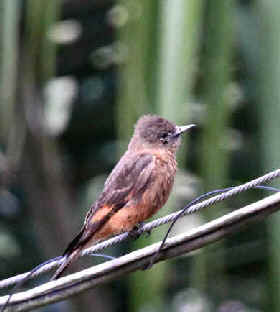
A Cliff Flycatcher photographed during a FONT
tour in Brazil
CNEMOTRICCUS
Fuscous Flycatcher (*) ______ mn,mt SE:octse
Cnemotriccus f. fuscatus
(the single member of its genus)
Outside Brazil, the Fuscous Flycatcher has been found
during FONT tours in Argentina, Venezuela.
LATHROTICCUS
Euler's Flycatcher (*) ______ br MN:oct SE:aug
Lathrotriccus e. euleri
Outside Brazil, the Euler's Flycatcher has been found during FONT tours in
Argentina, Ecuador, Uruguay.
CONTOPUS
Olive-sided Flycatcher (nt) (*)
______ AM:feb
Contopus cooperi
Tropical Pewee (ph) (*) ______ MN:may,sep,oct MS:aug MT:mar,aug
SE:mar,jul,aug,oct
Contopus c. cinereus (mn,se)
Contopus cinereus pallescens (ms,mt)
Outside Brazil, the Tropical Pewee has been found during
FONT tours in Argentina.
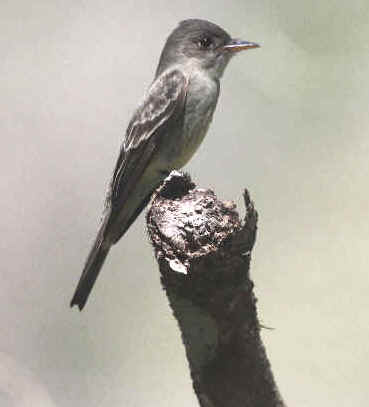
A Tropical Pewee photographed during a FONT tour
Eastern Wood Pewee (*) ______ AM:feb
MT:oct
Contopus virens (monotypic)
Outside Brazil, the Eastern Wood Pewee has been found during FONT tours in
Ecuador.
PYROCEPHALUS
Vermilion Flycatcher (ph) (*) ______ MS:aug,sep MT:aug RS:oct SE:aug,oct
Pyrocephalus r. rubinus (was the single member of its genus
before the splitting of the
Darwin's Flycatcher of the Galapagos)
Outside Brazil, the Vermilion Flycatcher has been found during FONT tours in
Argentina, Bolivia, Chile, Paraguay, Uruguay, Venezuela.
LESSONIA
Patagonian Negrito (ph) ______ (in far-southern Brazil)
Lessonia rufa
Outside Brazil, the Patagonian Negrito has been found during FONT
tours in Argentina, Chile.
OCHTHORNIS
Drab Water Tyrant (*) ______ af
Ochthornis littoralis (monotypic,
and the single member of its genus)
Outside Brazil, the Drab Water Tyrant has been found during FONT tours in
Ecuador.
XOLMIS
Gray Monjita (*) ______ br MN:mar,may,aug,sep,oct MS:aug,sep
MT:mar,aug,oct
RS:oct SE:aug,oct
Xolmis c. cinerea
Outside Brazil, the Gray Monjita has been found during
FONT tours in Argentina, Paraguay.
White-rumped Monjita (*) ______ br MN:mar,may,aug,sep,oct MS:mar,aug,sep
MT:mar,oct SE:mar,aug,oct
Xolmis velatus (monotypic)
White Monjita (ph) (*) ______
MS:mar,aug,sep RS:jul,oct
Xolmis i. irupero
Outside Brazil, the White Monjita has been found during
FONT tours in Argentina, Uruguay.
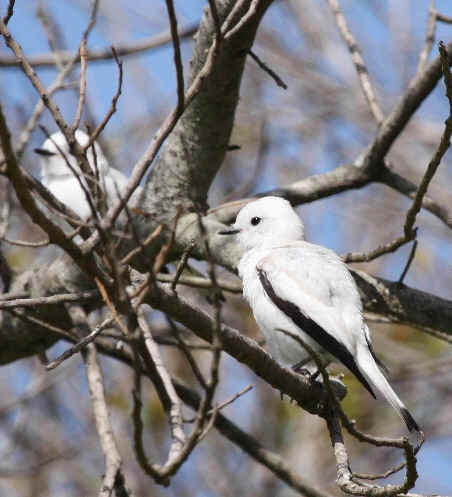
White Monjitas photographed during a FONT
Brazil Tour
in Rio Grande do Sul
HETEROXOLMIS
Black-and-white Monjita (t3) (ph) (*) ______
RS:jul,oct
Heteroxolmis (formerly
Xolmis) dominicana (monotypic, and the single
member of its genus)
Outside Brazil, the Black-and-white Monjita has been found
during FONT tours in Argentina.
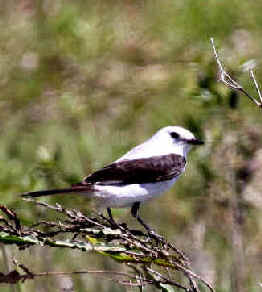
A rare Black-and-white Monjita photographed during
the FONT October 2009 Brazil Tour in Rio Grande do Sul
(photo by Marie Gardner)
KNIPOLEGUS
Blue-billed Black Tyrant (*) ______
ES:oct MN:may,sep RS:jul,oct SE:jul,aug,oct
Knipolegus cyanirostris (monotypic)
Outside Brazil, the Blue-billed Black Tyrant has been
found during FONT tours in Uruguay.
Velvety Black Tyrant (BRe) (ph) (*) ______ MN:may,aug,sep,oct
SE:may,aug,oct
Knipolegus n. nigerrimus
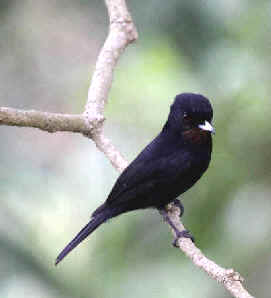
A Velvety Black Tyrant photographed during a
FONT Brazil Tour
Crested Black Tyrant (ph) (*) ______
MN:mar,aug,sep,oct MT:oct RS:oct
SE:may,aug,oct
Knipolegus lophotes (monotypic)
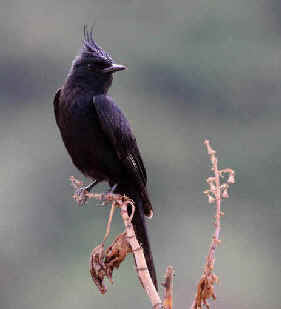
A Crested Black Tyrant during the October 2009 FONT
Brazil Tour in Minas Gerais.
This bird superficially resembles the Phainopepla of western North America,
and when it flies, like the Phainopepla it has wing on its wings.
HYMENOPS
Spectacled Tyrant (ph) (*) ______
RS:oct
Hymenops p. perspicillatus (the single member of its genus)
Outside Brazil, the Spectacled Tyrant has been found during
FONT tours in Argentina, Chile, Uruguay.
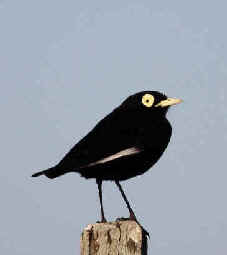
Two Spectacled Tyrants photographed during
the October 2009 FONT tour in Rio Grande do Sul, Brazil,
a male above and a female below.
(photos by Marie Gardner)
FLUVICOLA
Black-backed Water Tyrant (*) ______ af
AM:feb MS:mar,aug,sep MT:aug
(was considered conspecific with the more-northerly Pied Water
Tyrant)
Fluvicola albiventer
Outside Brazil, the Black-backed Water Tyrant has been
found during FONT tours in Argentina, Bolivia.
Masked Water Tyrant (*) ______ MN:mar,may,aug,sep,oct SE:mar,may,jul,aug,oct
Fluvicola n. nengeta
Pied Water Tyrant ______
(in far-northern Brazil)
Fluvicola pica
Outside Brazil, the Pied Water
Tyrant has been found during FONT tours in Venezuela.
ARUNDINICOLA
White-headed Marsh Tyrant (ph) (*) ______
AM:feb,aug br MN:mar,may,sep,oct MS:aug,sep MT:mar,aug RS:oct SE:mar,aug
Arundinicola leucocephala (monotypic)
Outside Brazil, the White-headed Marsh Tyrant has been found during FONT tours
in Argentina, Venezuela.
White-headed Marsh Tyrant
ALECTRURUS
Cock-tailed Tyrant (t3) (ph) (*) ______ br MN:mar,aug,sep,oct mt
Alectrurus tricolor (monotypic, and the single member of its genus)
Cock-tailed Tyrant
photographed during a FONT Brazil Tour in
Minas Gerais in March 2008
Strange-tailed Tyrant (t3)
______
Alectrurus risora
Outside Brazil, the Strange-tailed Tyrant
has been found during FONT tours in Argentina.
GUBRENETES
Streamer-tailed Tyrant (*) ______ MN:mar,may,aug,sep,oct SE:mar,aug,oct
Gubrenetes yetapa (monotypic,
and the single member of its genus)
Outside Brazil, the Streamer-tailed Tyrant has been
found during FONT tours in Argentina.
SATRAPA
Yellow-browed Tyrant (*) ______ br MN:sep,oct MS:aug mt
RS:jul,oct SE:mar,may,aug,oct
Satrapa icterophrys (monotypic,
and the single member of its genus)
Outside Brazil, the Yellow-browed Tyrant has been found
during FONT tours in Argentina, Uruguay, Venezuela.
COLONIA
Long-tailed Tyrant (ph) (*) ______
AF:oct br ig MN:may,sep,oct
SE:mar,jul,aug,oct
Colonia c. colonus (the single member of its genus)
Outside Brazil, the Long-tailed Tyrant has been found during FONT tours in
Argentina, Ecuador.
Long-tailed Tyrant
MACHETORNIS
Cattle Tyrant (ph) (*) ______ IG:jul,aug MN:mar,may,aug,sep,oct MS:mar,aug,sep
MT:mar,aug RS:jul,oct SE:may,jul,aug,oct
Machetornis r. rixosa (the single member of its genus)
Outside Brazil, the Cattle Tyrant has been found during FONT
tours in Argentina, Bolivia, Paraguay, Uruguay, Venezuela.
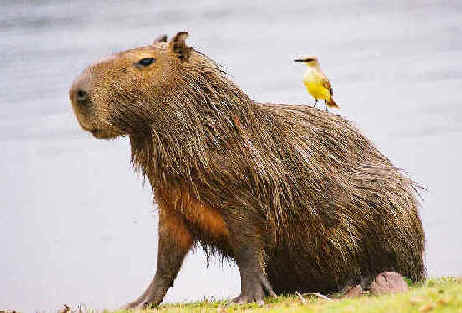
A Cattle Tyrant on the back of a Capybara
photographed during a FONT Brazil Tour in the Pantanal in Mato Grosso do Sul
MUSCIPIPRA
Shear-tailed Gray Tyrant (nt) (*) ______
MN:may,sep SE:aug.oct
Muscipipra vetula (monotypic, and the single member of its genus)
RHYTIPTERNA
Grayish Mourner (*) ______ mt SE:aug
Rhytipterna s. simplex
ATTILA
Rufous-tailed Attila (BRqe) (*) ______ SE:aug
Attila phoenicurus (monotypic)
Gray-hooded Attila (BRe) (*) ______ MN:may SE:mar,aug,oct
Attila r. rufus
Bright-rumped Attila (ph) (*) ______
af AM:feb,aug SE:aug
Attila s. spadiceus
Outside Brazil, the Bright-rumped Attila has been found during FONT tours
in Ecuador.
White-eyed
Attila (*) ______ mt (was called Dull-capped
Attila)
Attila b. bolivianus
Cinnamon Attila (*) ______ af AM:aug
Attila cinnamomeus (monotypic)
Outside Brazil, the Cinnamon Attila has been found during FONT tours in
Ecuador.
Citron-bellied Attila
______ (in western Amazonian Brazil)
Attila citriniventris
Outside Brazil, the Citron-bellied Attila has been found during FONT tours in
Venezuela.
CASIORNIS
Rufous Casiornis (*) ______ mn MT:mar,aug
Casiornis rufus (monotypic)
SIRYSTES
Eastern Sirystes (*) ______ ES:oct IG:jul,sep MN:sep,oct
MN:may,oct
MS:sep MT:aug.oct SE:aug,oct
Sirystes sibilator atimastus
(Western Sirystes, west of the
Andes, is S. albogriseus)
Outside Brazil, the Eastern Sirystes has been found during FONT tours in
Argentina, Ecuador.
MYIARCHUS
Dusky-capped Flycatcher (ph) (*) ______
AM:aug br MN:may,sep,oct MS:aug,sep
MT:aug SE:mar,may,aug,oct
Myiarchus t. tuberculifer
Outside Brazil, the Dusky-capped Flycatcher has been found during FONT
tours in Argentina, Ecuador, Venezuela.
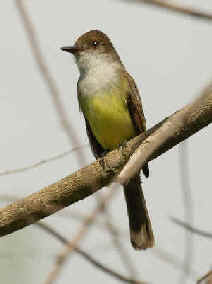
Dusky-capped Flycatcher
(photo by DickTipton)
Short-crested Flycatcher (*) ______ af
ig MN:may,sep,oct MS:aug MT:aug SE:oct
Myiarchus ferox australis
Outside Brazil, the Short-crested Flycatcher has been found during FONT
tours in Argentina, Ecuador, Venezuela.
Brown-crested Flycatcher (*) ______ af
br MN:mar,may,aug,sep,oct MS:mar,aug,sep MT:mar,aug SE:mar,aug,oct
Myiarchus tyrannulus bahiae
Outside Brazil, the Brown-crested Flycatcher has been
found during FONT tours in Argentina, Bolivia, Venezuela.
Swainson's Flycatcher (*) ______ am MN:mar,sep,oct MS:aug,sep mt
SE:aug,oct
Myiarchus swainsoni pelzelni (other subspecies in Brazil in migration)
Outside Brazil, the Swainson's Flycatcher has been found during FONT tours in
Argentina, Ecuador.
TYRANNUS
White-throated Kingbird (ph) (*) ______ br MN:may,sep,oct mt
Tyrannus albogularis (monotypic)
Outside Brazil, the White-throated Kingbird has been found during FONT tours
in Ecuador.
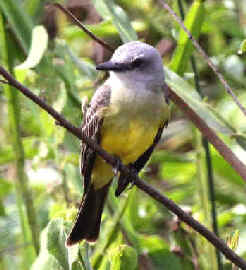
A White-throated Kingbird photographed during
a FONT Brazil tour in Minas Gerais
Tropical Kingbird (ph) (*) ______ AF:oct AM:feb,aug br,es,ig
MN:mar,may,aug,sep,oct
MS:mar,aug,sep MT:mar,aug,oct RS:oct SE:mar,may,jul,aug,oct
Tyrannus m. melancholicus
Outside Brazil, the Tropical Kingbird has been found during FONT tours in
Argentina, Bolivia, Ecuador, Paraguay, Uruguay, Venezuela.
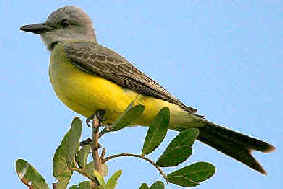
Tropical Kingbird
(photo by Howard Eskin)
Fork-tailed Flycatcher (ph) (*) ______
af AM:feb,aug br,es,ig MN:aug,sep,oct
MS:mar,aug,sep MT:aug,oct RS:oct SE:mar,oct
Tyrannus s. savana
Outside Brazil, the Fork-tailed Flycatcher has been found during FONT
tours in Argentina, Bolivia, Ecuador, Paraguay, Uruguay, Venezuela.
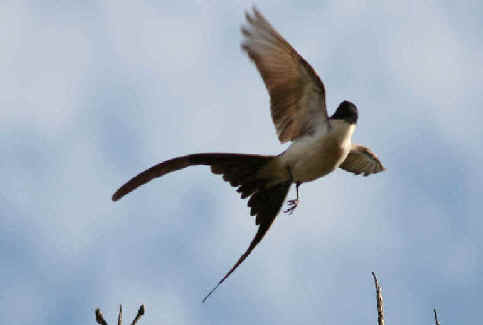
Fork-tailed Flycatcher
EMPIDONOMUS
Variegated Flycatcher (*) ______ AF:oct AM:feb,aug MN:sep,oct MS:mar
MT:oct RS:oct SE:oct
Empidonomus v. varius
(the single member of its genus)
Outside Brazil, the Variegated Flycatcher has been found during FONT tours in
Argentina, Ecuador.
GRISEOTYRANNUS
Crowned Slaty Flycatcher (*) ______ br
MN:sep,oct mt
Griseotyrannus a. aurantioatrocristatus (the single member of its genus)
Outside Brazil, the Crowned Slaty Flycatcher has been found
during FONT tours in Argentina.
TYRANNOPSIS
Sulphury Flycatcher (*) ______ af AM:feb ne
Tyrannopsis sulphurea (monotypic, and the single member of its genus)
Outside Brazil, the Sulphury Flycatcher has been found during FONT tours in
Ecuador.
MEGARHYNCHUS
Boat-billed Flycatcher (*) ______ af AM:feb,aug br IG:jul,aug,sep
MN:may,sep,oct
MS:mar,aug,sep MT:mar,aug,oct SE:mar,may,aug,oct
Megarhynchus p. pitangua (the single member of its genus)
Outside Brazil, the Boat-billed Flycatcher has been found during FONT tours in
Argentina, Ecuador, Venezuela.
CONOPIAS
Three-striped Flycatcher (*) ______ ig,se
Conopias t. trivirgatus
Yellow-throated Flycatcher (*) ______
AM:feb,aug (has been considered conspecific with the White-ringed Flycatcher
of west of the
Andes)
Conopias parva
MYLODYNASTES
Streaked Flycatcher (ph) (*) ______
af AM:aug br,ig MN:sep,oct
MS:mar,sep MT:mar,oct RS:oct SE:mar,oct
Mylodynastes maculatus solitarius
Outside Brazil, the Streaked Flycatcher has been found during FONT tours
in Argentina, Ecuador, Venezuela.
MYIOZETETES
Rusty-margined
Flycatcher (*) ______ af AM:feb
MN:may,oct
MS:aug MT:mar,aug,oct SE:may
Myiozetetes c. cayanensis
Outside Brazil, the Rusty-margined Flycatcher has been found during FONT
tours in Bolivia, Venezuela.
Social Flycatcher (ph) (*) ______
AM:feb,aug br IG:jul,sep
MN:mar,may,aug,sep,oct
MS:mar,aug,sep MT:mar,aug SE:mar,may,jul,aug,oct (has also been called
Vermilion-crowned Flycatcher)
Myiozetetes similis pallidiventris
Outside Brazil, the Social Flycatcher has been found during FONT tours in
Argentina, Bolivia, Ecuador, Paraguay, Venezuela.
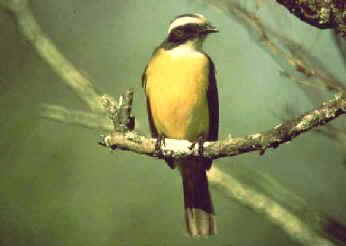
Social Flycatcher
(photo by Alan Brady)
Dusky-chested Flycatcher (*) ______
AF:oct MT:oct
Myiozetetes l. luteiventris
LEGATUS
Piratic Flycatcher (*) ______ af AM:feb,aug MN:sep,oct MT:aug
RS:oct SE:mar,may,jul,oct
Legatus l. leucophalus (the single member of its genus)
Outside Brazil, the Piratic Flycatcher has been found during FONT tours in
Argentina, Ecuador, Venezuela.
PHILOHYDOR
Lesser Kiskadee (*) ______ AF:oct AM:feb,aug MN:sep MS:mar,aug,sep
MT:aug
Philohydor (formerly
Pitangus) l. lictor (the single member of its
genus)
Outside Brazil, the Lesser Kiskadee has been found during FONT tours in
Ecuador, Venezuela.
PITANGUS
Great Kiskadee (ph) (*) ______ AF:oct AM:feb,aug br ES:oct
IG:jul,aug,sep MN:mar,may,aug,sep,oct
MS;mar,aug,sep MT:mar,aug,oct RS:oct,jul
SE:mar,may,jul,aug,oct
Pitangus sulphuratus maximiliani (the single member of its genus)
Outside Brazil, the Great Kiskadee has been found during FONT tours in
Argentina, Bolivia, Ecuador, Paraguay, Uruguay, Venezuela.
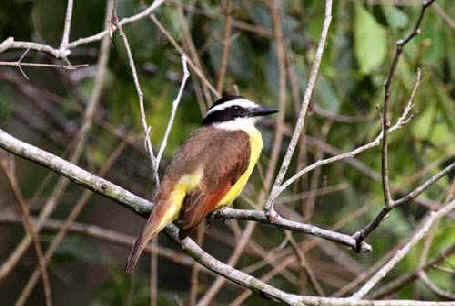
Great Kiskadee, or "Bemtevi" as it's known
in Portuguese
"Bemtevi" as a name is onomatopoetic. Translated to English it means
"It's good to see you".
(photo by Marie Gardner)
To
Top of Page.
