PO Box 9021, Wilmington, DE 19809, USA
E-mail: font@focusonnature.com
Phone: Toll-free in USA 1-800-721-9986
 or 302/529-1876; Fax: 302/529-1085


A Listing of Butterflies & Moths
in
Japan


.
(as during FONT tours 
 in the months of: 
 January, February, April, May, 
 June, November, December)

Butterflies are seen during our spring tours and during our winter tours on the 
southern islands, such as Amami & Okinawa.  


List compiled by Armas Hill

Those with an asterisk (*) seen during FONT Japanese tours, on the respective island as noted.


Numbers noted as (C:xx) refer to pages in "A World of Butterflies", with text by Brian Cassie, and photographs (superb) by Kjell Sandved

Numbers noted as (F:xx) refer to pages in "The Illustrated Encyclopedia of Butterflies", by Dr. John Feltwell  

Numbers noted as (KJB:xx) refer to pages in the "Key to Japanese Butterflies in  Natural Color, by Toshio Inomata", published in 1990

Numbers noted as (JBM:xx) refer to plates in "Japanese Butterflies & Moths" by Takashi Shiramizu, not known when published but a preface in an early edition was written in 1966    

Numbers noted as (S:xx) refer to pages in the "Smithsonian Handbook, Butterflies & Moths", by David Carter

Geographical Codes (relating to Japanese Islands):

AM: Amami
HK: Hokkaido
HN: Honshu
IR: Iriomotejima
IS: Ishigakijima
KY: Kyushu
OK: Okinawa


Throughout the world, there are over 180,000 described species of butterflies and moths (in the order Lepidoptera). 
In the following list of Japanese butterflies and moths, 399 species (with additional subspecies) are included.   


SOME COMMENTARY REGARDING BUTTERFLY IDENTIFICATION:

"Get a guidebook, take a few years, and you'll still make mistakes. Butterfly identification has an initial, deceptive simplicity. 
Individuals in a species vary naturally, an eyespot slightly larger, a color brighter.
Males and females of a species can be strikingly dissimilar.
So can genetic morphs or forms within a gender.
In a single species, butterflies that live in a range of habitats can vary in appearance and produce different populations or geographical races, each better adapted to its environment.
Species can also produce generations of distinct morphs in the same place at different times of the year.

One Tiger Swallowtail is black. On the same flower, another Tiger Swallowtail is yellow.
Another species produces red butterflies in the wet season and blue in the dry. A species darkens in response to air pollution.
A species gains an eyespot. A species loses one."

The above commentary taken from the book, "An Obsession with Butterflies", by Sharman Apt Russell (a wonderful read).  


Links:

Upcoming FONT Birding & Nature Tours in Japan

Birds during previous FONT Tours in Japan  (with photos)

Mammals in Japan  (with photos)

A List of Japanese Butterflies:
        Family PAPILIONIDAE: SWALLOWTAILS (and allies): 
       
There are totally in the world about 700 known species of Swallowtails.

        Genus LUEHDORFIA: A genus of Asian butterflies, whose taxonomy is still to be clarified. 

  1. Luehdorfia puziloi ______ HK,HN (JBM:4) (KJB:3)

  2. Luehdorfia japonica ______ HN (F:48) (JBM:4) (KJB:3&5) 
    (classified in Red Data Book of Threatened Swallowtails as Vulnerable)
    (This species closely related to the
    Parnassius swallowtails. The patterning is typical of a swallowtail, with black bars crossing the wing over a pale yellow ground. There is a modest tail. The scalloped hindwing has a blue spot surrounded by a curved band of yellow. This butterfly occurs in open woodlands in Japan, as its scientific name suggests.)


    Genus PARNASSIUS: A group of over 30 sedentary SWALLOWTAILS, many of which live in mountain habitats.

     
  3. Parnassius eversmanni daisetsuzanus ______ HK (F:71, but not this subspecies) (JBM:4) (KJB:7)
    Evermann's Parnassian
    (also called Yellow Apollo
    (With the name Yellow Apollo, this butterfly is named after the males, which are yellow. The females are white. Both sexes have red spots on the hindwing. There are 12 subspecies. This butterfly occurs in alpine areas, often near forests. Caterpillars feed on Dicentra species in Japan.) 

  4. Parnassius stubbendorfii hoenei ______ HK (JBM:4) (KJB:7)

  5. Parnassius glacialis glacialis ______ HK,HN (JBM:4) (KJB:7)

  6. Pachliopta aristolochiae interposita ______ AM,OK,IS,IR (KJB:9)


    Genus ATROPHANEURA: These Butterflies are closely related to the Troides swallowtails, but are smaller with shorter wings. Many are models for mimics. Species occur from India to Japan.

      
  7. Atrophaneura alcinous ______ AM(*),KY(*),OK(*)  (KJB:9 &11)


    Genus PAPILIO: FLUTED SWALLOWTAILS - one of the most widespread of genera, with over 200 species. Most are tropical (some subtropical). Most have tails. Many are migratory. 

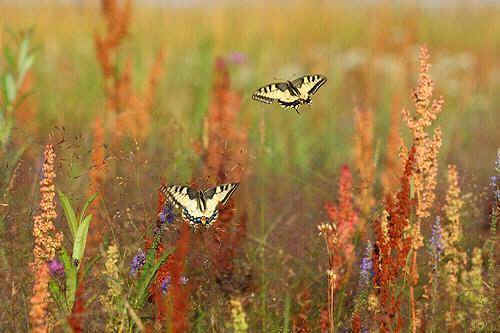
  8. Papilio machaon hippocrates ______ HK,HN,KY(*) (C:41) (F:61, but not this particular subspecies) (JBM:5) (KJB:13) (S:51)
    Old World Swallowtail
    (or Common Yellow Swallowtail, or Artemisia Swallowtail)
    (This attractive migrant butterfly is easily recognized in flight. Throughout its range, there are a large number of subspecies of assorted colors, ranging from dark black to orange. There is always a pair of tails on the hindwing.     
    The last of the above 3 common names reflects a food plant, Artemesia, in North America, but in Eurasia, the food may be Wild Carrot, Fennel, or Milk Parsley.
    The full-grown caterpillars have the same colors as the adult butterfly, and they evert an orange osmeterium from behind the head to scare away predators.) 

  9. Papilio xuthus ______ HK,HN,KY,AM,OK,IS,IR (JBM:5) (KJB:13) 

  10. Papilio macilentis ______ HK,HN,KY(*),AM(*),OK(*) (JBM:6) (KJB:15) 

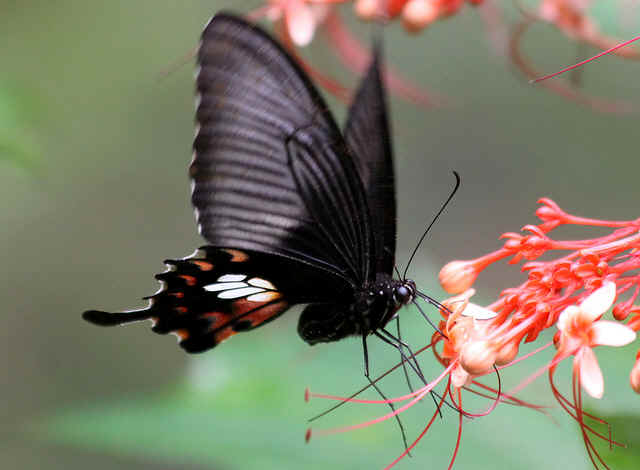
  11. Papilio polytes polytes  ______ AM(*),OK(*),IS,IR (JBM:8) (KJB:15) (S:47)
    Common Mormon 

  12. Papilio protenor demetrius ______ HN,KY,AM(*) (JBM:6) (KJB:17) 
    Papilio protenor liukiuensis ______ OK(*),IS,IR (KJB:17)
    Spangle

  13. Papilio memmon thunbergii ______ HN,KY,AM(*),OK,IS,IR (F:62, but not necessarily this particular subspecies) (JBM:7) (KJB:19)
    Great Mormon
    (This is a widely distributed and variable butterfly, with at least 13 subspecies. The forewings are generally pale brown between the heavily marked veins. The base of all the wings is dark. Females may or may not have tails. Males, usually black, never have tails. This butterfly breeds on citrus, and it is common, visiting flowers along lowland forest paths.) 

  14. Papilio helenus nicconicolens ______ HN,KY,AM(*),OK(*),IS,IR (F:59) (JBM:7) (KJB:19)
    Red Helen
    (This large dark butterfly has a greenish tinge. Its most conspicuous feature is the pale yellow-cream flash near the leading edge of the hindwing, that's covered when the butterfly is at rest, and used to surprise predators. 13 subspecies are known. One of them (P. h. mooreana) is quite large, with the female's wingspan being up to 5.5 inches (140mm). This butterfly frequents open forested areas and visits nectar sources. It breeds on citrus.)   

  15. Papilio dehaanii (formerly bianor) dehaanii ______ HK,HN,KY(*) (JBM:8) (KJB: 21,23,25)
    Papilio dehaanii hachijonis  ______ HN (KJB:21,23,25)
    Papilio dehaanii amamiensis ______ AM(*) (KJB:21,23,25)

  16. Papilio maackii ______ HK,HN,KY (JBM:8) (KJB:27)

  17. Papilio okinawensis ______ OK(*) (KJB:25)

  18. Papilio junia ______ IS,IR


    Genus GRAPHIUM: A large grouping of about 150 species in Africa, Europe, and Asia. Many, but not all, have tails, some very long. Many engage in mud-puddling behavior. Most have speckled patterns and fly quickly.

     
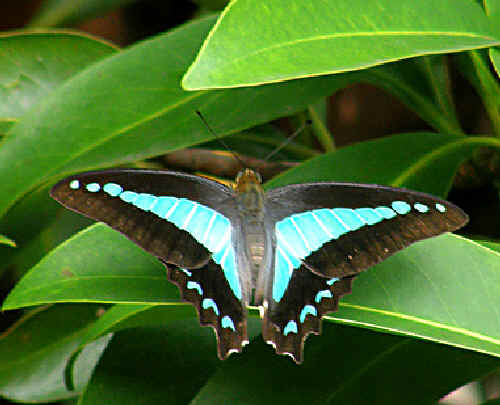
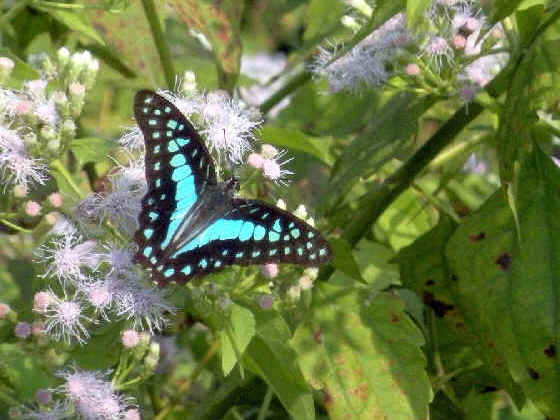
  19. Graphium sarpedon nipponum ______ HN,KY,AM(*),OK(*),IS,IR (C:155, but not this particular subspecies) (F:46) (JBM:5) (KJB:29) (S:54)
    Blue Triangle
    (or the Common Bluebottle)
    (Range: India to china and Japan, south to the Malay peninsula, the Philippines, and as far as New South Wales, Australia.)
    (This butterfly is swift in flight, and engages in mud-puddling. It frequents forest clearings, edges, and waysides. Caterpillars have exploited at least 5 plant families, a factor which has contributed to this species' great success.
    In the butterfly, broad blue-green transparent windows cross the wings. These windows are very effective in strong sunlight, in relation to courtship and defense.)    

  20. Graphium doson albidum ______ HN,KY,AM(*),OK(*) (JBM:5) (KJB:29)
    Graphium doson perillus ______ IS,IR (KJB:29)
    Common Jay


    Family PIERIDAE: most are predominantly white, yellow, or orange in color, and are often referred to as WHITES, YELLOWS, SULPHURS, or MARBLES
    (Worldwide, approximately 1,000 species of whites & sulphurs have been described.)  

  21. Leptidea amurensis ______ HK,HN,KY (JBM:10) (KJB:31)

  22. Leptidea morsei ______ HK (JBM:10) (KJB:31)
     

    Subfamily COLIADINAE: SULPHURS
    (300 species worldwide)

    Genus COLIAS: A large group of "YELLOWS", "SULPHURS", and "CLOUDED YELLOWS" mostly in the Northern Hemisphere (in North America & Asia), but also in Australia, Africa, and South America. Sexes are dimorphic. Many of the species are strong migrants. They breed extensively on members of the Leguminosae, the pea family.

  23. Colias erate poliographys______ HK,HN,KY(*),AM,OK(*),IS,IR (F:86) (JBM:12) (KJB:37) 
    Eastern Pale Clouded Yellow
    (This migrant butterfly flies in flowery meadows. It occurs from eastern Europe across Eurasia to Japan.)   

  24. Colias palaeno aias ______ HN (F:88, but not necessarily either of these two subspecies) (JBM:12) (KJB:37)
    Colias palaeno sugitanii ______ HN (KJB:37)
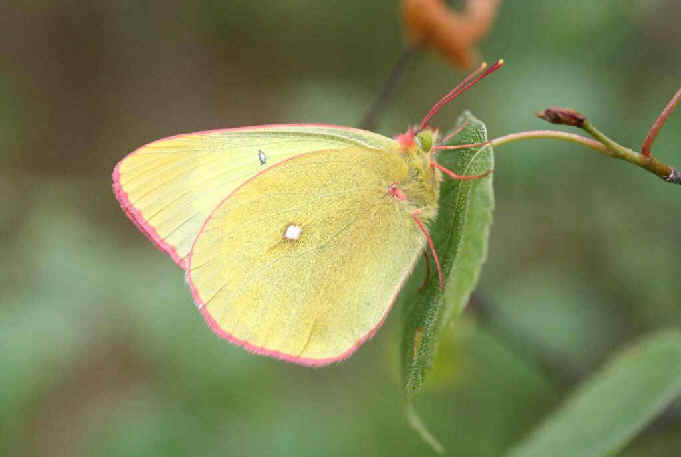
    Moorland Clouded Yellow
    (also called Arctic Sulphur)
    (This larger member of its genus has conspicuous black edges to its wings. The male is a rich lemon color, and the female is a pale cream. Both sexes have pink fringes to the wings, pink legs, and pink antennae. As indicated by its common names, this butterfly occurs on arctic moorlands, and at bogs where its caterpillar food plant, the whortleberry, is found.)  
        

    Genus EUREMA: SMALL YELLOWS - This widespread genus of small butterflies has a mostly circumtropical distribution. They are usually lemon-yellow with black borders. The caterpillars feed on a wide variety of members of the pea family, Leguminosae. 

  25. Eurema blanda arsakia ______ IS,IR (KJB:33)
    Small Grass Yellow 
     

  26. Eurema hecabe hecabe ______ HN(*),KY(*),AM(*),OK(*),IS,IR (F:97, but a different subspecies) (JBM:12) (KJB:33)
    Common Grass Yellow
    (This species occurs in Asia and Africa. In this butterfly, the roundness of the hindwing is distinctive. The male has a yellow ground with an extensive wavy-edged brown-black apical mark. The female is slightly larger with similar markings. This is a common migrant butterfly found in a variety of habitats, from savannas to scrub and gardens.)   

  27. Eurema laeta betheseba ______ HN,KY(*),AM(*),OK(*) (JBM:12) (KJB:33)
    Spotless
    (or Angulated) Grass Yellow 


    Genus GONEPTERYX: Extending from Europe to Asia, large yellow and pale green butterflies. The wings are broad and slightly hooked, and the underside is fairly cryptic.  

  28. Gonepteryx rhamni maxima ______ HN (F:98) (JBM:11) (KJB:35) 
    (Common) Brimstone
    (or the Sulphur)
    (The sexes are different colors. The male is bright lemon-yellow, the female lime-green. Each sex has a single small orange spot in the center of the wings. The wings are strongly curved. This butterfly lives along waysides and in scrubby areas and light woodlands. Its foodplants are buckthorns.)    .  

  29. Gonepteryx aspasia (formerly mahaguru) niphonica ______ HN,KY (JBM:11) (KJB:35)
    Lesser Brimstone


    Genus CATOPSILIA: Mostly African, but also in southern Europe, Asia, and Australia. With broad wings, and often bright colors. Some are strong migrants. The sexes are often dimorphic.
  30. Catopsilia pyranthe pyranthe ______ OK,IS,IR (KJB:39)
    Mottled Emigrant

  31. Catopsilia pomona pomona ______ KY,AM(*),OK(*),IS,IR (F:84) (JBM:13) (KJB:39) 
    Lemon Emigrant
    (also called Lemon Migrant)
    (This butterfly has various color from fresh yellow to dark (in the female). The lemon color is at the base of the wings. Two basic types exist: one with pink antennae, the other with black antennae. Tips of the wings are usually dark. This butterfly is a migrant and a strong flier. It visits open areas, clearings in the forest, and villages in search of nectar sources.)     


    Genus ANTHOCHARIS: Mostly small "WHITE" butterflies which have brightly colored marks inside the tips of the forewings. The colors are usually orange-red (as are the orange tips). They exploit cruciferous plants.

     
  32. Anthocharis cardamines isshikii ______ HN (F:79) (JBM:10) (KJB:41) (S:73)
    Anthocharis cardamines hayashii ______ HN (KJB:41)
    Orange Tip

    (The male is distinguished by the orange tip on the forewing. Both sexes have a green mottling on the underside of the hindwing, which is partially visible on the upperside. The butterfly frequents damp areas, roadsides, and hedges. It can be a wanderer rather than a migrant, and can colonize areas away from where it emerged. There is a single generation a year and a long flight period from March to May.)    

       
  33. Anthocharis scolymus ______ HK,HN,KY (JBM:10) (KJB:41) 


    Genus HEBOMOIA: 3 species with orange tips and wings, 2 found in Asia, and 1 in South America. Strong fliers, which frequent watercourses, trails, and forest edges. The Asian species have numerous subspecies.

     
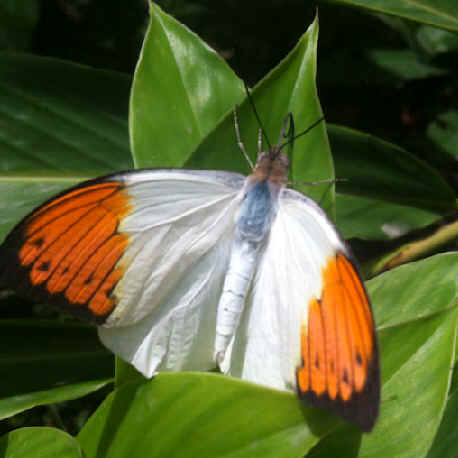
  34. Hebomoia glaucippe liukiuensis ______ KY,AM(*),OK,IS,IR (JBM:11) (KJB: 43) (S:75)
    Great Orange Tip
    (The flight of the male of this species is impressive, with the bright orange tips of the wings easing identification. Both sexes have these orange tips, but the female is seen less often than the male. There are a number of subspecies. This is the largest pierid butterfly in Asia, and it can be quite common in lowlands. It breeds on members of the caper family.)  

    Genus APORIA: Large butterflies found throughout Europe & Asia.

  35. Aporia crataegi adherbal ______ HK (C:85) (F:80) (JBM:11) (KJB:45) (S:66)
    Black-veined White
     
    (Range: Much of Eurasia, from Portugal to Japan; Also: Morocco, Algeria, and Tunisia.) (Black veins cross the white wings, giving this butterfly its common name. The wings are rather papery, and the butterflies lose their scales rapidly during their courtship rituals.)   

  36. Aporia hippia japonica ______ HN (JBM:11) (KJB:45) 


    Genus PIERIS (the following, formerly in this genus, are now said to be in the Genus ARTOGEIA) -- PIERIS is a widespread and successful genus in North America. Europe, and Asia, and with introductions to South America (as well as into North America) and into the Australian region. Some species are strong migrants.    
       

  37. Artogeia (has been Pieris) rapae crucivora ______ HK,HN,KY(*),AM,OK(*),IS,IR (C:39) (F:106) (JBM:9) (KJB:47)
    Small White
    (also called: Small Cabbage White or Sharp-veined White)
    (Occurs in much of the Northern Hemisphere, including Eurasia & North Africa, and in North America where introduced; also Australia & Hawaii.) 

  38. Artogeia (has been Pieris) canidia juba ______  KY(*) (JBM:9) (KJB:47)
    Indian Cabbage White

  39. Artogeia (has been Pieris) melete melete ______ HK,HN,KY(*),AM (JBM:9)  (KJB:49)

  40. Artogeia (has been Pieris) dulcinea (formerly napi) pseudonapi ______ HK (KJB:49) 

  41. Artogeia (has been Pieris) nesis ______ HK,HN,KY (JBM:9)
    Green-veined White 


    Genus APPIAS: a very distinctive group with strongly curved wings, especially in the male. This makes them powerful fliers. Many dwell in virgin rainforest, and males commonly mud-puddle. They occur mainly in Asia, but also in Africa, and the Australian region. The sexes are completely different in color, with the females darker with more subdued colors than the flashy males.

       
  42. Appias lyncida formosana ______ IR  (KJB:53)
    (immigrant species in Japan, since 1966) 

  43. Appias paulina minato ______ AM,OK,IS,IR (JBM:10) (KJB:53)


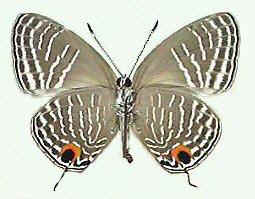
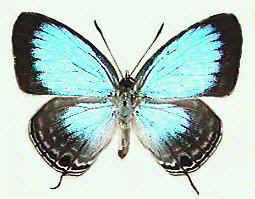
    Family LYCAENIDAE (GOSSAMER WINGS), including: COPPERS, HAIRSTREAKS, BLUES
     
    (throughout the world but mostly in tropical and subtropical regions. The sexes often differ in coloration, and the undersides usually differ from the upper surfaces.
    Among several distinct groups are the HAIRSTREAKS, with tails and bright eyespot markings on the hindwings, creating a "false head" at the rear, to divert attackers.) 
    (Thus far, worldwide, about 5,000 species in this family have been discovered and named. Caterpillars of many of these species are closely associated with ants.)

  44. Taraka hamada hamada ______ HK,HN,KY (KJB:55) 


    Genus CURETIS: A widespread genus of over 40 species. Males have strident red or orange uppers; females yellow or white. 

  45. Curetis acuta paracuta ______ HN,KY,AM,OK,IS,IR (JBM:22) (KJB:55)
    Angled Sunbeam 

  46. Narathura bazalus turbata ______ HN,KY,AM,OK,IS,IR (JBM:14) (KJB:57)
    Powdered Oakblue  

  47. Narathura japonica japonica ______ HN,KY,AM,OK,IS,IR (JBM:14) (KJB:57)

  48. Panchala ganesa loomisi ______ HN,KY (JBM:14) (KJB:57)
    Tailless Bushblue 

  49. Artopoetes pryeri ______ HK,HN,KY (JBM:14) (KJB:59) 

  50. Ussuriana (formerly Coreana) stygiana ______ HK,HN,KY (JBM:15) (KJB:61)

  51. Coreana raphaelis ______ HN (JBM:14) (KJB:61) 

  52. Shirozua jonasi ______ HK,HN (JBM:14) (KJB:63) 

  53. Araragi enthea enthea ______ HK,HN,KY (JBM:15) (KJB:63)

  54. Antigius attilia attilia ______ HK,HN,KY (JBM:15) (KJB:65)  

  55. Antigius butleri ______ HK,HN,KY (JBM:15) (KJB:65)

  56. Japonica onoi onoi ______ HK,HN (KJB:67)
    Japonica onoi mizobei ______ HN (KJB:67)

  57. Japonica lutea lutea ______ HK,HN,KY (JBM:14) (KJB:67)

  58. Japonica saepestriata sepestriata ______ HK,HN (JBM:14) (KJB:67)
    Japonica saepestriata gotohi ______ HN (KJB:67)

  59. Wagimo signatus ______ HK,HN,KY (JBM:15) (KJB:69)

  60. Iratsume orsedice orsecice ______ HK,HN,KY (JBM:15) (KJB:69)

  61. Neozephyrus japonicus ______ HK,HN,KY (JBM:17) (KJB:71)

  62. Chrysozephyrus hisamatsusanus ______ HN,KY (KJB: 71)  

  63. Chrysozephyrus smaragdinus smaragdinus ______ HK,HN,KY (JBM:17) (KJB:73)

  64. Chrysozephyrus brillantinus ______ HK,HN,KY (KJB:75)

  65. Chrysozephyrus (formerly Thermozephyrus) ataxus kirishimaensis______ HN,KY (JBM:17) (KJB:77) 

  66. Favonius saphirinus ______ HK,HN,KY (KJB:79)

  67. Favonius yuasai ______ HN,KY (JBM:16) (KJB:79)

  68. Favonius orientalis ______ HK,HN,KY (JBM:16) (KJB:81)  

  69. Favonius taxila ______ HK,HN (KJB:81)  

  70. Favonius jezoensis ______ HK,HN,KY (JBM:18) (KJB: 83) 

  71. Favonius ultramarinus ______ HK,HN,KY (JBM:16) (KJB:83) 

  72. Favonius cognatus latifasciatus ______ HN (JBM:16) (KJB:87)  

  73. Sibataniozephyrus fujisanus ______ HK,HN,KY (KJB:87)


    Genus DEUDORIX: Commonly called CORNELIAN BUTTERFLIES, or "PLAYBOYS", they occur in the African, Asian, and Australian regions. Some are brightly colored, with either red, blue, or green. Their larvae and pupae feed inside various tropical fruits.

      
  74. Deudorix (formerly Artipe) eryx okinawana ______ AM,OK,IS,IR (F:231) (JBM:18) (KJB:89)
    Green Flash  
    (The uniform dark green on the undersides of this species is both remarkable and distinctive, as greens in butterflies are not that common. The hindwing is drawn out as a short but stubby tail, and there is another thin tail nearby.)   


    Genus RAPALA: About 40 species of Asian and Australian butterflies. Mostly sexually dimorphic.

  75. Rapala arata ______ HK,HN,KY (JBM:18) (KJB:89)


    Genus CALLOPHRYS: Small-sized HAIRSTREAKS, occurring in Europe and Asia, and in North and South America. Many species breed on a variety of plant families.

     
  76. Callophrys ferrea ______ HK,HN,KY (KJB:89)


    Genus FIXENIA: a genus of BROWNS

  77. Fixenia (now Strymonidia) w-album fentoni ______ HK,HN,KY (JBM:18) (KJB:91)
    White Lesser Hairstreak

  78. Fixenia (now Strymonidia) mera ______ HK,HN,KY (JBM:18) (KJB:91)

  79. Fixenia (now Strymonidia) iyonis surugaensis______ HN (JBM:18) (KJB:93)
    Fixenia
    (now Strymonidia) iyonis kiiensis ______ HN (KJB:93)
    Fixenia
    (now Strymonidia) iyonis kibiensis ______ HN (KJB:93)

  80. Fixenia (now Strymonidia) pruni jezoensis ______ HK (F:236) (JBM:18) (KJB:93) 
    Black Hairstreak
     (the name notwithstanding, not more black than others in the genus, even less so) (The tan undersides are characterized by black spots around the dull orange border on the trailing hindwing edge. The uppers are nut-brown with dull orange mostly on the hindwing margin. There is a single tail. The butterflies breed on Blackthorn.)  


    Genus SPINDASIS: Asian and African BLUES called "BARRED BLUES" or "SILVERLINE" butterflies after the lines on their undersides. Characteristically, they have two pairs of tails. 

      
  81. Spindasis takanonis ______ HN (JBM:18) (KJB:95)


    Genus LYCAENA: COPPERS, widespread in Europe and Asia, with some in North America and Australia. They occur mostly in temperate climates. Their colors are in the coppery and orange range, and the undersides often have dark spots. 

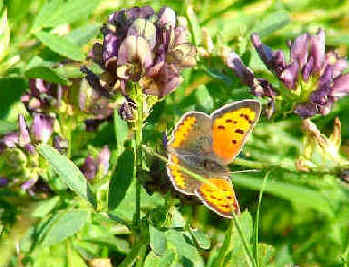
  82. Lycaena phlaeas daimio ______ HK,HN,KY (C:31, but not this particular subspecies) (F:251) (JBM:19) (KJB:95)
    Common
    (or Small) Copper
    (This widespread species frequents wild habitats as well as urban sites, and breeds on docks which are very common as weeds. There are, throughout its vast range, a number of subspecies.)

        
  83. Niphanda fusca ______ HN.KY (JBM:18) (KJB:95)


    Genus LAMPIDES: A genus with one species which has colonized much of the world. 

  84. Lampides boeticus ______ HN,KY,AM,OK,IS,IR (F:246) (JBM:19) (KJB:97)
    Pea Blue (or Long-tailed Blue)
    (One of the most successful of butterflies, this migrant breeds on many leguminous plants. The tail and eye-spot on the underside of the hindwing mirror the head and antennae to confuse predators. Females are a darker blue. Both sexes have a rippled underside pattern.)   


    Genus CATOCHRYSOPS:
     a genus found mostly in Asia, also in Australia. They are similar to CHILADES, but have tails. Butterflies live in clearings and scrubby areas.

  85. Catochrysops panormus exiguus ______ (F:226) (KJB:97)
    Silver Forget-me-not
    (Males have delicate pale blue uppers with a single black spot near the base of the tail. The light and mottled undersides have a distinctive orange and black eye-spot by the tail. Females are darker, dusted in black. These butterflies live in clearings and scrubby areas.)  
          
  86. Nacaduba kurava septentrionalis ______ KY,AM,OK,IS,IR (JBM:19) (KJB:97)
    Transparent 6 Lineblue  
  87. Prosotas nora kanoi ______ IS,IR (JBM:19) (KJB:97)
    Common Lineblue   


    Genus JAMIDES: A small genus of butterflies that occurs from Sri Lanka east to Australia, and north to the southernmost islands of Japan. They may be common along forest paths, where they fly among shrubs. 

  88. Jamides bachus ishigakianus (formerly formosanus) ______ IS,IR (JBM:19) (KJB:97)
    Dark Cerulean

  89. Euchrysops cnejus ______ AM(*),OK,IS,IR (JBM:19) (KJB:97)
    Gram Blue


    Genus ZIZERIA: BLUES found in North America and Asia.

  90. Zizeria karsandra ______ OK,IS,IR (JBM:19) (KJB:99)

  91. Zizeria (formerly Pseudozizeeria) maha argia  ______ HN,KY (JBM:20) (KJB:99)
    Zizeria
    (formerly Pseudozizeeria) maha okinawana ______ AM,OK,IS,IR (KJB:99)
    Pale Grass Blue


    Genus ZIZINA: African, Asian, and Australian BLUES. 

     
  92. Zizina otis emelina ______ HN,KY (F:279, but not this particular subspecies) (JBM:20) (KJB:99)
    Zizina otis riukuensis ______ AM(*),OK(*),IS,IR (KJB:99)
    With a number of common names: Common Grass Blue, Clover Blue, Bean Blue, Lesser Grass Blue, Lucerne Blue
    (The sexes are fairly similar with blue uppers, but females are generally darker. The gray undersides have much speckling. There are at least two named subspecies. This  butterfly occurs in open flowery areas. It breeds on the Sensitive Plant, Mimosa pudica.) 


    Genus EVERES: a small grouping of butterflies found in Europe, Asia, and Australia. They are usually sexually dimorphic and tailed, and breed on members of the pea family, Leguminosae.

  93. Everes argiades hellotia (formerly argiades) ______ HK,HN,KY,AM (F:235) (JBM:19) (KJB:101)
    Bloxworth Blue
    (or Tailed Cupid) (also called Short-tailed Blue) (The subspecies, Everes argiades comyntas, occurs in North America, and is called the Eastern Tailed Blue (F:235))

  94. Everes lacturnus kawaii ______ HN,KY (JBM:19) (KJB:101)
    Everes lacturnus rileyi ______ AM,OK,IR (KJB:101)
    Indian Cupid

  95. Shijimia (formerly Everes) moorei moorei (formerly insperatus) ______ HN,KY (KJB:101)  

  96. Tongeia fischeri ______ HN,KY (JBM:19) (KJB:101) 

  97. Pithecops corvus ryukyuensis ______ OK,IS,IR (JBM:19) (KJB:103)
    Forest Quaker
     

  98. Pithecops fulgens tsushimanus ______ (JBM:19) (KJB:103)
    Blue Quaker 


    Genus NEOPITHECOPS: Found in Asia and Australia.

  99. Neopithecops zalmora ______ IR,IS (F:259)
    (The sexes are fairly similar. The undersides are whitish with a distinctive black spot on the hindwing. The uppersides are brown-black except for a white-patch on the forewing, which is consistently present in the female. The butterfly breeds on Glycosmis pentaphylla.) 


    Genus MEGISBA: An Asian and Australian genus of 2 species, which may or may not have a tail.  

  100. Megisba malaya sikkima ______ AM,OK,IS,IR (F:255) (JBM:19) (KJB:103)
    Malayan 
    (This is a very small but widespread BLUE with a speckled underside. The brown speckles are more pronounced on the hindwing, where there are also some black spots. The butterfly lives in open areas, and breeds on a sapindaceous plant.)

  101. Acytolepis puspa ishigakiana ______ HN,KY,AM,OK,IS,IR (KJB:103) 

  102. Udara albocaerulea albocaerulea ______ HN,KY,AM,OK (KJB:103)


    Genus CELASTRINA: Up to 40, mostly Asian, species of BLUES. Some show a seasonal variation. 

       
  103. Celastrina sugitanii ainonica ______ HK (JBM:20) (KJB:105)
    Celastrina sugitanii sugitanii ______ HN (KJB:105)
    Celastrina sugitanii kyushuensis ______ KY (KJB:105) 

  104. Celastrina argiolus ladonides ______ HK,HN,KY,AM (F:226, but not necessarily this subspecies) (JBM:20) (KJB:105) (S:96)
    Holly Blue
    (also called Spring Azure or Hill Hedge Blue)
    (This butterfly has pale lilac-blue uppers and paler undersides. Females have more black on the apex and margins. In their second generation, they are thickly marked in black. This is a common widespread species in scrub, light woodland, and gardens. The first generation larvae feed on holly, the second on ivy.) 

  105. Celastrina ogasawaraensis ______ (KJB:105) 


    Genus GLAUCOPSYCHE: About 11 species of BLUES, found in North America, Europe, Africa, and Asia. Some are brightly colored. They breed on members of the pea family, Leguminosae. 

  106. Glaucopsyche lycormas lycormus ______ HK,HN (JBM:21) (KJB:107)


    Genus SCOLITANTIDES: Small-sized BLUES in Europe and Asia. They have checkered margins and exhibit sexual dimorphism. They occur in flowery habitats. 

  107. Scolitantides orion jezoensis ______ HK (F:271, but not this particular subspecies) (JBM:20) (KJB:107)
    Checkered Blue
    (The checkering around the margins, after which the butterfly is named, is pronounced on the uppers. The sexes are fairly similar, both having blue scales overlapping a greater suffusion of black. The male usually has more blue on the wings. The undersides are remarkably checkered, with lots of bold black spots over a white-gray background and an orange band on the hindwing. There is no tail. This butterfly lives in flowery habitats, and breeds on stonecrops, Sedum.)

     
  108. Shijimiaeoides divinus barine ______ HN,KY (JBM:21) (KJB:107)


    Genus PLEBEJUS: BLUES which occur in temperate regions of North America and Eurasia. They are relatively small butterflies which exhibit sexual dimorphism. They occur in open flowery areas, and bask in the sunlight. They breed on members of the pea family, Leguminosae.)


  109. Plebejus argus pseudaegon ______ HK (KJB:109)
    Plebejus argus micrargus ______ HN,KY (F:263, but not necessarily either of these subspecies) (JBM:22) (KJB:109) (S:99) 
    Silver-studded Blue
    (The male has purplish blue uppers with a black margin, and pale-gray undersides. The female has dark brown uppers with a set of orange lunules inside the margin. The undersides are a light brown speckled with black. Both sexes have a white fringe and a distinctive band of orange lunules on the underside of the hindwings. The silvery-blue "studs" in each lunule are not always clear. 3 subspecies are recorded. The butterflies live in grassy areas, and coastal scrub. They breed on gorse, Ulex.)  
      

    Genus LYCAEIDES: European and Asian BLUES that are sexually dimorphic, the males often with striking blues on the uppers. They live in open flowery areas such as meadows, and breed on members of the pea family, Leguminosae.  

  110. Lycaeides argyrognomon praeterinsularis ______ HN (F:248, but not necessarily this subspecies) (JBM:22) (KJB:109)
    Reverdin's Blue
    (The rich uniform blue-purple coloration of the male is distinctive. The female is a uniform brown with a row of orange marks along the trailing hindwing edge. The undersides of the male are light-gray. Those of the female are light brown. These undersides have a pronounced orange banding around the wings, especially in the female. The male has blue toward the base of the wings. Both sexes have a white fringe around all the wings. This butterfly lives in flowery areas, and breeds on Crown Vetch, Coronilla varia.)  

  111. Lycaeides subsolanus iburiensis ______ HK (KJB:111)
    Lycaeides subsolanus yaginus ______ HN (JBM:22) (KJB:111)
    Lycaeides subsolanus yarigadakeanus ______ HN (JBM:22) (KJB:111)


    Genus MACULINEA: "Large BLUES", found in Europe and Asia. They are tailless and have darker blue colors than many other BLUES. These butterflies have attracted a lot of attention from collectors, and some species are now scarce. All of those in Europe are classified as "endangered".
    The caterpillars start by feeding on their food plant and then switch to being looked after by ants.  

     
  112. Maculinea teleius ogumae ______ HK (F:254, but not this particular subspecies) (JBM:21) (KJB:113)
    Maculinea teleius matsumurai ______ HK (KJB:113)
    Maculinea teleius shiriyensis ______ HN (KJB:113)
    Maculinea teleius kazamoto ______ HN,KY (KJB:113)
    Maculinea teleius hosonoi ______ HN (KJB:113)
    Maculinea teleius hakusanensis ______ HN (KJB:113)
    Scarce Large Blue
    (Both sexes are fairly similar, though the female has a wider marginal area and larger spots on the wings. The male is a dark blue with long "teardrop marks" on the forewing, this being a key characteristic. The undersides are a yellowy fawn with two rows of black spots on both wings. This rare butterfly breeds on Great Burnet, Sanguisorba.)   

  113. Maculinea arionides takamukui ______ HK,HN (JBM:21) (KJB:115) 
    (Note: It is Maculinea arion, the Large Blue, that became extinct in Britain in 1979. It bred on Thyme, Thymus serphyllum.)  


    Genus VACCINIINA: Dimorphic BLUES found in northern areas of the world, for example, within the Arctic Circle. They breed on Vaccinium, its caterpillar food plants.   

  114. Vacciniina optilete daisetsuzana ______ HK (F:278, but not necessarily this subspecies) (JBM:22) (KJB:115)  
    Cranberry Blue (also called Yukon Blue)
    (The male uppers are violet-blue. The duller female has a less intense violet-blue within dark margins. The undersides in both sexes are a dark slate speckled with black spots and have a small orange mark on the trailing hindwing edge. This butterfly lives in bogs and moors. This species also occurs in northern North America, in Alaska and northern Canada.)


    Family NYMPHALIDAE: BRUSHFOOTS
    (cosmopolitan, with subfamilies range from 8 to 25, depending upon taxonomic treatment)
    (This is the most diverse family of butterflies, with approximately 6,000 known species worldwide. Brushfoot butterflies appear 4 rather than 6-legged as their 2 front legs are much reduced.)  

    Subfamily LIBYTHEINAE: SNOUTS

    Genus LIBYTHEA: SNOUTS  With long palps which protrude under the head like snout (as do those in the genus LIBYTHEANA). Occur in both the Old and New Worlds.   

     
  115. Libythea celtis celtoides ______ HN,KY(*) (F:174) (JBM:22) (KJB:115) (S:145)
    Libythea celtis amamiana ______ AM,OK(*)  (KJB:115)  
    Nettle-tree
    Butterfly (or Eurasian Beak) 
    (This species is recognized by its hooked forewings, and has orange blobs over its warm brown wings. This, the only snout butterfly in Europe, also occurs in North Africa, and has a wide distribution across Eurasia through to Japan. It lives in wooded areas, especially in valleys. One of its common names is from its caterpillar food plant, the Nettle Tree. The butterfly hibernates. it feeds on exudates from tree buds in the spring.)    


    Subfamily DANAIDAE


    Genus IDEA: Large-winged, black and white speckled butterflies which inhabit dense forests of Asia and the Australian region. The butterflies are easily recognized and have a characteristically weak flight. 

  116. Idea leuconoe clara ______ AM(*),OK(*) (F:166) (KJB:117) (S:186)
    Idea leuconoe riukiuensis ______ IS,IR (KJB:117)
    Large Tree Nymph 
    (This large black-and-white butterfly has a trace of yellow on the base of the forewings. The species is a model for the swallowtail, Graphium idaeoides.
    At least 22 subspecies of this butterfly have been recorded from various islands and countries in southeast Asia. On Java, Indonesia, it may now be extinct, due to destruction of its mangrove-swamp habitat.)


    Genus IDEOPSIS: 7 species of the rainforests of Asia, often flying with butterflies of the genus IDEA.  

        
  117. Ideopsis (or now Radina) similis simils ______ AM(*),OK,IS,IR (KJB:117) 


    Genus DANAUS: Known as "Tiger Butterflies", with representatives in all of the world's geographical regions. More species occur in the Old World. Larvae of this genus feed on members of the milkweed and dogbane families, and render themselves poisonous to predators by storing poisons from the plants. Other butterflies mimic the toxic members of this genus.      

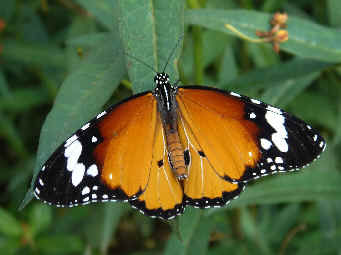
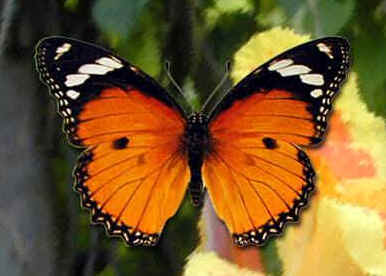
  118. Danaus (or now Anosia) chrysippus chrysippus ______ AM(*),OK(*),IS,IR (C:35) (F:142, but not this particular subspecies) (KJB:119) (S:182)
    Plain Tiger
    (also called Common Tiger)
    (In some parts of its extensive range in the Old World, known as the African Monarch and the Lesser Wanderer.)
    (Due to its wandering nature, this species occurs in a wide variety of habitats. This species lacks the veins present in other similar species. There is a pair of black spots on the usually dull orange hindwing. The apex of the forewing is black with some white markings.)  

      
  119. Salatura genutia genutia ______ IS,IR (JBM:23) (KJB:119)

  120. Parantica sita biphonica ______ HN,KY,AM(*),OK,IS,IR (JBM:23) (KJB:119) 


    Genus CLOSSIANA: A large grouping of medium-sized FRITILLARIES in Europe, Asian, and North America. Found in meadows, both lowland and alpine. They breed on bog plants, including violets. 

  121. Clossiana thore jezoensis ______ HK (JBM:25) (KJB:121) 

  122. Clossiana iphigenia ______ HK (JBM:25) (KJB:121) 

  123. Clossiana freija asahidakeana ______ HK (JBM:25) (KJB:121) 


    Genus BRENTHIS: Small-sized FRITILLARIES occurring in Europe and Asia.

  124. Brenthis daphne iwatensis ______ HK,HN (C:75, but not this particular subspecies) (JBM:26) (KJB:123)
    Brenthis daphne rabdia ______ HN (KJB:123)
    Marbled Fritillary 
     

  125. Brenthis ino mashuensis ______ HK (KJB:123)
    Brenthis ino tigroides ______ HN (JBM:26) (KJB:123) (S:117)
    Brenthis ino tanigawensis ______ HN (KJB:123)
    Lesser Marbled Fritillary
     

  126. Argyronome laodice japonica ______ HK,HN,KY (JBM:27) (KJB:125)
    Eastern Silverstripe 

  127. Argyronome ruslana lysippe ______ HK,HN,KY (JBM:27) (KJB:125)


    Genus ARGYNNIS: This genus of FRITILLARIES is composed of woodland butterflies occurring in Europe and Asia. Butterflies are large, orange, and speckled with black spots. The males have large black brands on the forewings. Some species in this genus breed on violets.


  128. Argynnis paphia tsushimana ______ HK,HN,KY(*) (F:120) (JBM:27) (KJB:125) (S:135)
    Silver-washed Fritillary
    (Of the 3 species in this genus, this may well be the most impressive. The male is very attractive with its long dark marks along the veins on the upper forewing. There are prominent spots all over the uppers of the female, which is very slightly larger. Unlike other fritillaries which lay eggs on violets, this species lays eggs on a tree trunk so the freshly emerged larvae have to walk to their food plants.)   

  129. Nephargynnis anadyomene midas (formerly ella) ______ HK,HN,KY(*) (JBM:27) (KJB:127) 

  130. Damora sagana liane ______ HK,HN,KY (JBM:26) (KJB:127)


    Genus ARGYREUS: Collectively known as FRITILLARIES, these woodland butterflies occur in Europe & Asia. The butterflies are large, orange, and speckled with black spots. The males have large black brands on the forewing. Many of the species in this genus breed on violets.   
  131. Argyreus hyperbius hyperbius ______ HN,KY,AM(*),OK(*),IS,IR (JBM:28) (KJB:127)
    Indian Fritillary 


    Genus FABRICIANA: Large FRITILLARIES that occur in Europe & Asia, closely related to the genus ARGYREUS. 

  132. Fabriciana adippe pallescens ______ HK,HN,KY (JBM:28) (KJB:129)
  133. Fabriciana niobe ______ HK (F:156) (KJB:129)
    Niobe Fritillary 
    (This butterfly lives in meadows and pastures. and breeds on violets.)

  134. Fabriciana nerippe ______ HN,KY (JBM:28) (KJB:129) 


    Genus SPEYERIA: FRITILLARIES related to the genus ARGYREUS. These butterflies are quite variable, with a number of subspecies and forms. They live in open sunny habitats such as meadows, pastures, and forest edges, and breed on violets. 

  135. Speyeria aglaja basalis ______ HK (KJB:129)
    Speyeria aglaja fortuna ______ HN (KJB:129) 

  136. Cupha erymanthis erymanthis ______ IR (KJB:131) 
    (immigrant species in Japan, since 1973)


    Genus MELITAEA: 40 species of FRITILLARIES, found in Europe, Asia, and North America. They are medium-sized, and allied to the ARGYREUS genus. Spotting on the wings is quite variable.  

  137. Melitaea scotosia ______ (JBM:25) (KJB:131) 

  138. Melitaea regama ______ (JBM:25) (KJB:131)


    Genus MELLICTA: About a dozen species found in Europe & Asia. They are spotted, variable, and good fliers.

     
  139. Mellicta britomartis niphona ______ (F:181, but not necessarily this subspecies) (JBM:25) (KJB:131)
    Assmann's Fritillary 
    (This butterfly lives in lowland meadows. It occurs across Eurasia, from eastern Europe east to Japan.)  


    Genus LIMENITIS: White-marked admiral butterflies closely allied to the Ladoga genus. Found in North America, Europe, Asia, and the Australian region. 

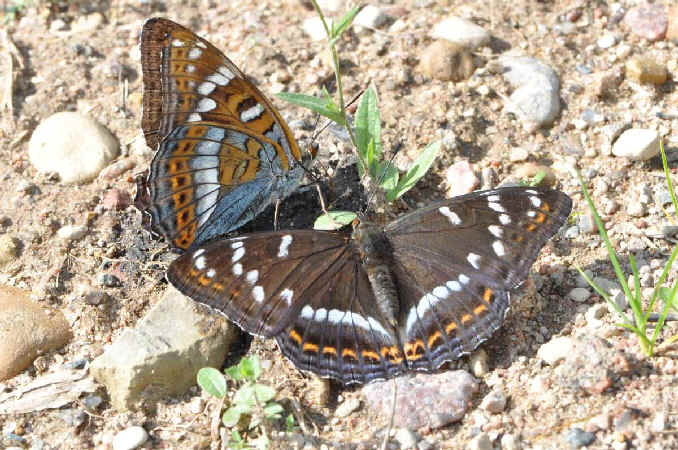
  140. Limenitis (or Ladoga) populi jezoensis ______ HK,HN (F:175, but not necessarily this subspecies) (JBM:29) (KJB:133) 
    Poplar Admiral
    (This is the largest of the admirals. Females are larger, but they have the same basic pattern as the male, a dark ground color with white marks. In this species, there is a series of orange chevrons, which run around the inside of the margins. This butterfly lives in woodland areas, and breeds on aspens and poplars, hence its common name.)    

  141. Limenitis (or Ladoga) camilla japonica ______ HK,HN,KY(*) (C:77, but not this particular subspecies) (KJB:133) (S:137)
    White Admiral

  142. Limenitis (or Ladoga) glorifica ______ HN (KJB:133) 


    Genus ATHYMA: Asian and Australian butterflies with powerful wings; similar to the genus NEPTIS.

     
  143. Athyma perius perius ______ IR (KJB:135) 
    (immigrant species in Japan, since 1967)

  144. Athyma selenophora ishiana ______ IS,IR (KJB:135)


    Genus NEPTIS: 40 small-sized species that occur in Africa, Europe, Asia, and in the Australian region. They are commonly called "GLIDERS" or "SAILORS" because of the way in which they glide through the air. Their colors are characteristic, with a black ground color beneath white lines and spots.    


  145. Neptis alwina ______ HK,HN (JBM:30) (KJB:135) 

  146. Neptis philyra excellens ______ HK,HM,KY (JBM:30) (KJB:135) 

  147. Neptis sappho intermedia ______ HK,HN,KY (JBM:30) (KJB:137) (S:128)
    Common Glider

    (The wing pattern of black-and-white bands is distinctive.) 

  148. Neptis hylas luculenta ______ AM(*),OK,IS,IR (JBM:30) (KJB:137)
    Common Sailor
     

  149. Neptis pryeri fukuda ______ HN (JBM:30) (KJB:137)
    Neptis pryeri iwasei ______ HN (KJB:137)
    Neptis pryeri setoensis ______ HN,KY (KJB:137)
    Neptis pryeri yodoei ______ OK
    (KJB:137) 

  150. Neptis rivularis bergmanni ______ HK (JBM:30) (KJB:139)
    Neptis rivularis shirozui ______ HN (KJB:139)
    Neptis rivularis tadamiensis ______ HN (KJB:139)
    Neptis rivularis insularum ______ HN (KJB:139)


    Genus ARASCHNIA: Characterized by their map-like patterning, these butterflies are found in Europe and Asia.

  151. Araschnia levana obscura ______ HK (C:79, but not necessarily this particular subspecies) (F:120) (JBM:31) (KJB:141) (S:108)
    (European) Map Butterfly

    (The spring form is orange with dark brown markings; the summer form is a dark chocolate-brown with white bands. There is a characteristic map-like pattern of yellowish-white lines on the dark underside.
    There's not just seasonal differences in plumage, but also between male and female. The male, smaller & brighter, is tawny and black. The dark brown female has a yellow band crossing the wings and a partial red band toward the hingwing margins, with white spots near the apex of the forewing. The species flies in open woodland, and breeds on nettles.)  

  152. Araschnia burejana strigosa ______ HK,HN,KY (JBM:31) (KJB:141)


    Genus POLYGONIA: Known as "Comma" Butterflies in Europe, or "Question Mark" or "Anglewing" Butterflies in the USA, they also occur in Asia. They have dark brown, orange, and black wings with ragged edges and an underside which is usually cryptic. The butterflies are strong fliers and hibernate. They often breed on nettles, Urtica species.  
     

  153. Polygonia c-aureum ______ HK,HN,KY (JBM:31) (KJB:143)
    Chinese Comma
      

  154. Polygonia c-album hamigera ______ HK,HN,KY (C:103, but not necessarily this subspecies) (F:196, this subspecies) (JBM:31) (KJB:143) (S:125)
    (Eurasian) Comma
    (The white mark on the underside of the hindwing is the feature after which this species is named. There are seasonal variations, the first generation being lighter than the second generation. The butterfly is territorial, not migratory. It breeds on nettle, Urtica, and hops, Humulus.) 


    Genus NYMPHALIS: A small grouping of butterflies occurring in Europe, Asia, and North America. They are generally powerful fliers. Some species are migratory and hibernate as adults.


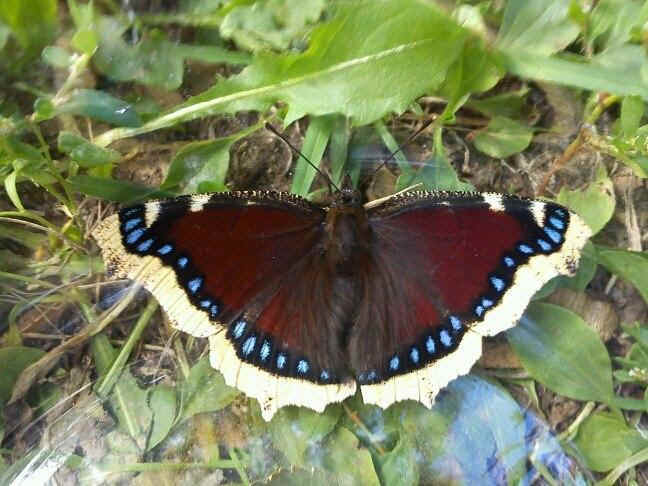
  155. Nymphalis antiopa asopos ______ HK,HN (C:43) (F:187) (JBM:32) (KJB:145) (S:122)
    Mourning Cloak
    (This spectacular butterfly has a dark velvety maroon upperside with blue marginal spots and broad, pale yellow borders to the wings. These creamy-appearing borders are quite distinctive in flight. A fine line of blue spots separate the contrasting maroon and yellow colors. The species occurs in the Northern Hemisphere in both the Old and New Worlds. It is a migrant, often found in pine woodlands and along forest rides and glades, where it breeds on willows, beeches, and elms. Many places this butterfly is the first to be seen in the spring, as it ventures out of its overwintering hibernation for brief sorties on warm, sunny days of late-winter and early-spring.) 

  156. Nymphalis xanthomelas japonica ______ HK,HN,KY (F:188) (JBM:32) (KJB:145)
    Yellow-legged Tortoiseshell 
    (Named after it diagnostic feature, the yellow legs are conspicuous. The uppersides are very similar to Nymphalis polychloros, the Large Tortoiseshell. The hindwing has more orange than other close relatives. This butterfly lives in lowland valleys where it breeds on willows. Its caterpillars are gregarious and live in silken webs. The butterfly is a migrant which hibernates.)    

  157. Nymphalis vau-album samurai ______ HK,HN (F:188) (JBM:32) (KJB:147)
    Comma Tortoiseshell
    (also called False Comma)
    (With markings more pronounced than Nymphalis xanthomeias, this species is very black around the margins and the apex of the forewing. It occurs in forested areas, especially valleys, where it breeds on willows. It hibernates.)   


    Genus INACHIS: This genus has a single species with "eyes" resembling the markings on a Peacock's tail (that is the Peacock, the bird).

     
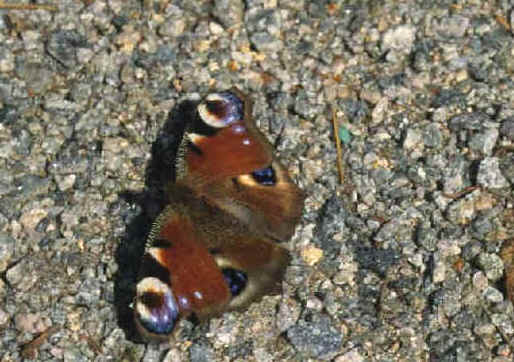
  158. Inachis io geisha ______ HK,HN (C:53, but not necessarily this particular subspecies) (JBM:31) (KJB:147) (S:126)
    Peacock
    (This exquisite butterfly, with a unique pattern, is a favorite of both gardeners and naturalists. It emerges from its chrysalis in summer and is quite fond of garden and hedgerow flowers. In the fall, it retires to a hollow log or tree to hibernate. When it flies again in the spring, it's most likely found along the edges of woodlands, to find a mate. The geographic range is across temperate Eurasia. The butterfly lives around farmyards and in valleys, and breeds on nettles.) 


    Genus JUNONIA: BUCKEYES - a widespread grouping of BROWNS found in nearly all regions of the world. The false "eyes" prominent on the wings have given rise to the collective common name of "Buckeyes". The precise number of species worldwide is yet not determined, as there is still more classifying to be done. At least 6 plant families are exploited as larval food plants.  

  159. Junonia almana almana ______ KY,AM,OK,IS,IR (F:167) (JBM:32) (KJB:153)
    Peacock Pansy
    (This is a variable species which also has wet and dry seasonal forms so different that they were originally believed to be distinct species. Dry season forms have, appropriately, a dried-leaf appearance with a tail. The tailless wet form has eye-spots on the underside. The butterfly visits all sorts of habitats from gardens to mountain clearings. It breeds on Mimosa pudica, the Sensitive Plant.)    

  160. Junonia orithya orithya ______ IS,IR (C:127) (F:168) (KJB:153) (S:121)
    Blue Pansy
    (also called: Blue Argus) (Another name Eyed Pansy)
    (The butterfly has predominately black forewings with white transverse bands and orange-ringed eyespots. The common names come from the beautiful hindwings, on which there is a large amount of blue suffusion. There are white flecks and a small amount of blue on the black forewing. The sexes are essentially the same, but the female is slightly larger with larger eye-spots and a lighter shade of blue on the hindwing. The butterfly lives in open country and is on the wing throughout the year. It breeds on Hygrophila, a member of the acanthus family.)  


    Genus VANESSA: LADY BUTTERFLIES - A widespread grouping of strong fliers, sometimes migratory, with bright oranges and reds.

  161. Vanessa indica indica ______ AM,OK,IS,IR (JBM:32) (KJB:149) (S:138)
    Indian Red Admiral
    (Similar to the Red Admiral ranging across the Northern Hemisphere.)

  162. Kaniska (or Vanessa) canace mojaponicum ______ HK,HN,KY (JBM:32) (KJB:151) (S:139)
    Kaniska
    (or Vanessa) canace ishima ______ AM,OK,IS,IR (KJB:151)
    Blue Admiral 


    Genus CYNTHIA: Representatives of this grouping occur in North America, Europe, Asia, and Australia. Many are powerful migrants, such as Cynthia cardui, the Painted Lady. This genus is very closed related to the genus VANESSA. 

      
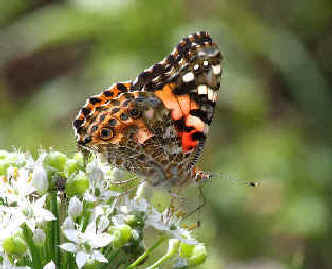
  163. Cynthia cardui ______ HN(*hi),KY,AM(*),OK(*),IS,IR (C:27) (F:140) (JBM:32) (KJB:149) (S:141) 
    Painted Lady
    (This is the most widespread of the world's butterflies. Its range is worldwide, except for Australia and New Zealand. It is a very powerful migrant. Throughout is vast range, this species is quite uniform in its pattern and coloration, although some subspecies do exist. A reason for its success is that it breeds on a wide variety of plants. These include common members of the mallow and daisy families, especially thistles.)


    Genus AGLAIS: In this grouping, there are more species in Europe and Asia than in North America. They are relatively small butterflies with orange, yellow, and black markings. Some species are migratory. They hibernate.  

     
  164. Aglais urticae connexa ______ HK,HN (F:114) (JBM:31) (KJB:149) (S:110)
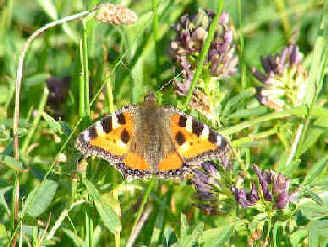
    Small Tortoiseshell
    (or Mountain Tortoiseshell)
    (The sexes are similar, with three black bars on the leading edge of the forewing. This species is very common in all sorts of habitats from gardens to uplands. It breeds on the ubiquitous nettle Urtica species, and is a strong migrant.)


    Genus KALLIMA: "LEAF-BUTTERFLIES", so named because of the cryptic leaf-like pattern on the undersides of their wings. When the butterflies settle with wings together, they become difficult for predators (notably birds) to see. These butterflies occur in Africa & Asia.  

     
  165. Kallima inachus eucerca ______ AM,OK,IS,IR (JBM:33) (KJB:155) (S:127)
    Indian Leaf Butterfly
    (also called Orange Oak Leaf)
    (The uppersides of both the male and female are brightly and attractively colored with orange and purplish blue. The brown underside, with the unusual wing shape makes this one of the most remarkable leaf-mimics.) 


    Genus HYPOLIMNAS: Commonly called "DIADEM BUTTERFLIES" because of the row of spots around the wings which look like a necklace. This genus includes a very widespread species in Asia and the Australian region, H. misippus. There is sexual dimorphism. Females sometimes mimic DANAID butterflies. Found in open sunny areas, villages, glades, and forest edges. They are frequent nectar feeders. 

  166. Hypolimnas bolina ______ (F:164) (JBM:33) (KJB:155)
    Great
    (or Common) Eggfly
    (This is a variable species, with more variation among females than males. Also, there are regional differences. The butterfly is migratory and very widespread. It favors flowers and breeds on a wide variety of plants, especially those of the acanthus family.)
     

  167. Hypolimnas misippus ______ AM(*),OK,IS,IR (F:164) (JBM:33) (KJB:157)
    Dandaid Eggfly 
    (also called Diadem Butterfly, or Six-continent Butterfly
    (This is one of the most widespread butterflies in the world, in part due to human activity. It is thought to have been introduced into the Americas in ships. The sexes are completely different. The male looks like a male h. bolina, but with white wing marks. The female has a number of forms which mimic various danaids such as Danaus chrysippus. This species frequents open flowery places and woodland edges. It breeds on members of the purslane family, Portulacaeae.)   

  168. Hypolimnas anomala truentus ______ (KJB:157)


    Genus CYRESTIS: "MAP-WING BUTTERFLIES" named after the fine transverse lines which cross the forewing. The sexes of all but one species in this genus are alike. These butterflies are in Asia and the Australian region. They feed on Tetracera sarmentosa and Ficus species.  

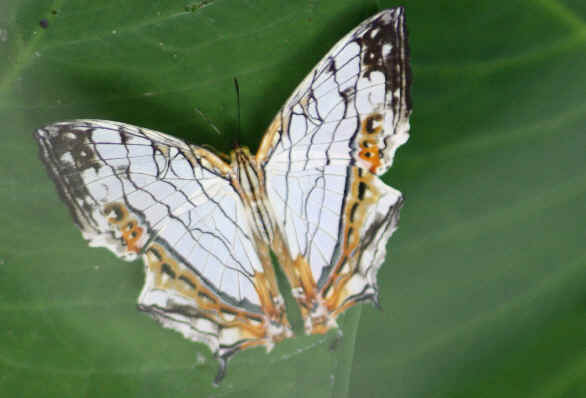
  169. Cyrestis thyodamas mabella ______ HM,KY,AM,OK(*),IS,IR (JBM:34) (KJB:159) (S:107)
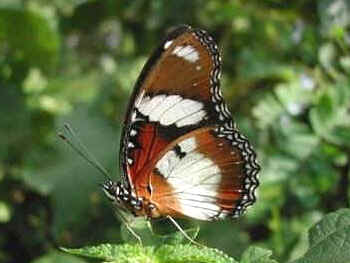
    Common Map
    (The intricate and distinctive pattern of map-like markings on the white wings gives this butterfly its common name. Has a jerky flight.) 


    Common Map, Cyrestis thyodamas mabella, photographed in Okinawa Japan
    (photo by Becky Wood)


  170. Dichorragia nesimachus nesiotes ______ HN,KY (JBM:34) (KJB:159)
    Dichorragia nesimachus okinawaensis ______ AM,OK (KJB:159)
    Dichorragia nesimachus ishigakianus ______ IS,IR (KJB:159)
    The Constable 


    Genus APATURA: Large and powerful butterflies that occur in Europe, Asia, and the Australian region.

  171. Apatura metis substituta ______ HK,HN,KY (JBM:34) (KJB:161) 


    Genus HESTINA: A small grouping of "SIREN BUTTERFLIES" found in Asia and Africa, with indented forewings.

      
  172. Hestina japonica (formerly persimilis) japonica ______ HK,HN,KY (JBM:34) (KJB:161) 

  173. Hestina assimilis shirakii ______ AM(*) (JBM:34) (KJB:161)
    Hestina assimilis assimilis ______
    (deliberately introduced into Japan) 

  174. Sasakia charonda charonda ______ HK,HN,KY (JBM:35) (KJB:163) (S:129)
    Japanese Emperor
    (This beautiful species is the national butterfly of Japan. The dark brown wings of the male have a bronze-green sheen, richly suffused with iridescent purple. A powerful flier.) 


    Genus POLYURA: Powerful butterflies which belong to the Subfamily CHARAXINAE, found in Asia and the Australian region. 

  175. Polyura eudamippus weismanni ______ OK (F:197) (JBM:35) (KJB:163) 
    Great Nawab
    (This is an extremely attractive butterfly on both surfaces. The uppers are lemon-cream to white with a speckled black apex to the forewing containing a few yellowish dots. The hindwing has a row of black spots with white centers and two silver-blue tails. The undersides are silvery white with yellow tracery around the margins and two thin bands across the wings. It has at least 7 subspecies. This is a lowland species, with a widespread distribution.)    


    Subfamily SATYRIDAE: 


    Genus YPTHIMA: These are brown butterflies found in Africa, Asia, and the Australian region. Their coloration is brown and drab. They have pronounced eye-spots. These species live in grassy habitats, such as savanna, and breed on various grasses. 

  176. Ypthima argus ______ HK,HN,KY(*) (JBM:36) (KJB:165)  

  177. Ypthima multistriata (formerly motschulskyi) niphonica  ______ HN,KY (JBM:36) (KJB:165)  

  178. Ypthima riukiuana ______ OK(*) (JBM:36) (KJB:167) 

  179. Ypthima yayeyamana ______ IS,IR (JBM:36) (KJB:167) 

  180. Ypthima masakii ______ IS,IR (JBM:36) (KJB:167) 


    Genus EREBIA: A large grouping of BROWNS with over 100 species, represented in Europe, Asia, North America, and the Australian region. Most live at high elevations. These butterflies are medium-sized and have dark red colors.   

  181. Erebia niphonica scoparia ______ HK (KJB:169)
    Erebia niphonica niphonica ______ HN (JBM:36) (KJB:169)
     

  182. Erebia ligea rishirizana ______ HK (KJB:169)
    Erebia ligea takanonis ______ HN (JBM:36) (KJB:169) 
    Arran Brown


    Genus OENEIS: BROWNS found in North America, eastern Europe, and Asia. The leading edge of the forewing is thickened, distinguishing the Oeneis from other genera. Generally they have muted light brown colors with no pronounced false eyes. They breed on grasses.   

     
  183. Oeneis melissa daisetsuzana ______ HK (F:189, but a different subspecies) (KJB:171)
    Melissa
    (or Mottled) Arctic  (also called White Mountain Arctic)
    (This somber-looking butterfly has a very cryptic hindwing underside covered in black-gray speckles. The uppers are dark-brown, with a smudging of orange in the female. The butterfly lives in grassy areas of the tundra as well as meadows, and breeds on sedges.)   
  184. Oeneis norna asamana ______ HN (KJB:171) 
    Oeneis norna sugitanii ______ HN (JBM:36) (KJB:171)
     

  185. Coenonympha hero latifasciata ______ HK (JBM:36) (KJB:173)
    Coenonympha hero neoperseis ______ HK (KJB:173) 

  186. Coenonympha oedippus annulifer ______ HN (JBM:36) (KJB:173)
    Coenonympha oedippus arothius ______ HN (KJB:173) 


    Genus MINOIS: Medium-sized butterflies related to the SATYRIDS. 

  187. Minois dryas bipunctata ______ HK,HN,KY (C:65, but not necessarily this subspecies) (F:182, but not necessarily this subspecies) (JBM:37) (KJB:175) (S:175)
    Dryad (Butterfly)
    (or The Dyrid)
    (The dark males are easy to see in their mountainous habitat. The females, slightly larger and lighter, are usually near by. On the forewings are a pair of bluish eye-spots. Throughout the range, there are a number of subspecies. Breeding is on various grasses.)  


  188. Ninguta schrenckii ______ HK,HN (JBM:38) (KJB:175) 

  189. Kirinia epaminondas (formerly fentoni) ______ HK,HN,KY (JBM:39) (KJB:177)


    Genus LASIOMMATA: A grouping of European & Asian BROWNS. they ahve brown or orange ground colors, sometimes speckled, and with false eyes on the wings. They live in open sunny sites and breed on grasses.  

  190. Lasiommata deidamia deidamia ______ HK (KJB:177)
    Lasiommata deidamia interrupta ______ HN (KJB:177)


    Genus LOPINGA: BROWNS with a series of prominent eye-spots. 

      
  191. Lopinga achine jezoensis ______ HK (F:176, but not necessarily these 3 subspecies) (KJB:177)
    Lopinga achine oniwakiensis ______ HK (KJB:177)
    Lopinga achine achinoides ______ HN (KJB:177)
    Woodland Brown
    (This is a very distinctive butterfly, with a series of prominent eye-spots, ringed with dull orange around the margins of the wings, and repeated on the underside. The ground color is dirty brown. Females are slightly larger than males. The butterflies live in open woody areas and breed on common grasses.)


    Genus LETHE: A grouping with representatives in the New World as well as Asia and the Australian region. They are BROWN with eye-spots, and breed on sedges, grasses, and bamboos.    
         
     
  192. Lethe europa pavida ______ IS,IR (F:172, but not necessarily this subspecies) (JBM:38) (KJB:179)
    Bamboo Tree-Brown
    (The ground color of this butterfly is a warm chocolate on the uppers. There are at least 3 subspecies. The butterfly is named after its caterpillar food plants, bamboos. It occurs in villages and in the countryside.)

  193. Lethe sicelis  ______ HN,KY (JBM:38) (KJB:179)

  194. Lethe diana diana  ______ HK,HN,KY (JBM:38) (KJB:179) 
    Lethe diana mikuraensis ______ HN (KJB:179)

  195. Lethe marginalis ______ HN,KY (JBM:38) (KJB:179) 


    Genus ZOPHOESSA

  196. Zophoessa callipteris ______ HK,HN,KY (KJB:181)  


    Genus NEOPE: Asian SATYRIDS, with large speckled wings and partial tails on the hindwing. The undersides are a pattern of lines, spots, and bars.  
  197. Neope niphonica niphonica ______ HK,HN,KY (KJB:181)
    Neope niphonica kiyosumiensis ______ HN 

  198. Neope goschkevitschii ______ HK,HN,KY(*) (JBM:39) (KJB:181) 


    Genus MYCALESIS: Occur in Africa, Asia, and the Australian region. These butterflies generally have curved forewings and drab coloration. There are seasonal forms which also display sexual dimorphism. The butterflies live in the shade of dense forest, and breed on grasses and bamboos.       

      
  199. Mycalesis gotama fulginia ______ HK,HN,KY (KJB:183) 

  200. Mycalesis madjicosa amamiana______ AM,OK (KJB:183)
    Mycalesis madjicosa madjicosa ______ IS,IR (KJB:183) 

  201. Mycalesis francisca perdiccas ______ HN,KY (KJB:183) 


    Genus MELANITIS: BROWNS occurring in Africa, Asia, and the Australian region. The forewings, which are curved, hooked, and indented, are characteristic of the genus. The wingshape of the females is more pronounced. Seasonal forms occur, and these differ in shape and color.    

  202. Melanitis leda ismene (formerly leda) ______ AM(*),OK,IS,IR (F:178, but not necessarily this subspecies) (JBM:40) (KJB:185)
    (Common) Evening Brown 
    (This is one of the most widespread of BROWNS worldwide. There is a conspicuous orange-brown eye-spot on the forewing. The butterfly flies at dusk in various habitats: in woodland, bush, an scrub. It breeds on various common grasses.)   

  203. Melanitis phedima oitensis ______ HN,KY,AM,OK (JBM:40) (KJB:185)
    Dark Evening Brown 


    Family HESPERIIDAE: SKIPPERS 
    (A very large family (3,000 species throughout the world) of stout-bodied short-winged butterflies that resemble day-flying moths. The adult butterfly's flight resembles a 'skipping' motion when going from flower to flower. Their forewings are closed above their back when they are settled.)

  204. Bibasis aquilina chrysaeglia ______ HK,HN,KY (JBM:1) (KJB:187)  

  205. Hasora badra badra ______ IR (KJB:187) 
    (immigrant species in Japan, since 1974) 

  206. Hasora chromus inermis ______ AM,OK,IS,IR (JBM:1) (KJB:187)
    Common Banded Awl

  207. Badamia exclamationis ______ IS,IR (JBM:1) (KJB:189)
    Brown Awl

  208. Choaspes benjaminii japonica ______ HN,KY,AM,OK (JBM:1) (KJB:189)
    Choaspes benjaminii formosana ______ IS,IR (KJB:189)
    Indian Awlking  
     

  209. Daimio tethys tethys ______ HK,HN,KY (JBM:1) (KJB:191)  

  210. Tagiades trebellius martinus ______ IS,IR (JBM:1) (KJB:191)  

  211. Erynnis montanus ______ HK,HN,KY (JBM:1) (KJB:191) 

  212. Pyrgus malvae ______ HK (KJB:193) (S:45)
    Grizzled Skipper 
     

  213. Pyrgus maculatus maculatus ______ HK,HN (JBM:1) (KJB:193)  

  214. Leptalina unicolor ______ HK,HN,KY (JBM:2) (KJB:193)  

  215. Carterocephalus palaemon satakei ______ HN (C:47, but not this particular subspecies) (JBM:2) (KJB:195)
    Carterocephalus palaemon akaishianus ______ HN (KJB:195)
    Checkered Skipper
     (also called Arctic Skipper)

  216. Carterocephalus sylvicola ______ HK (JBM:2) (KJB:195)  

  217. Aeromachus inachus inachus ______ HN (JBM:2) (KJB:195)  

  218. Isoteinon lamprospilus lamprospilus ______ HN,KY (JBM:3) (KJB:195)   

  219. Thoressa varia ______ HK,HN,KY (JBM:3) (KJB:197)

  220. Notocrypta curvifascia curvifascia ______ HN,KY,AM,OK,IS,IR (JBM:1) (KJB:197)
    Restricted Demon 

  221. Udaspes folus ______ AM,IS,IR (JBM:1) (KJB:197)
    Green Demon 

  222. Suastus germius germius ______ OK,IS,IR (KJB:199)  
    (deliberate introduction, since 1973)

  223. Erionota torus ______ OK (KJB:199) 
    (deliberate introduction, since 1971)

  224. Thymelicus leoninus leoninus ______ HK,HN,KY (JBM:2) (KJB:199) 

  225. Thymelicus sylvaticus sylvaticus ______ HKHN,KY (JBM:2) (KJB:199)

  226. Ochlodes venatus venatus ______ HK,HN (JBM:2) (KJB:201) (S:45)
    Large Skipper

  227. Ochlodes asahinai ______ IS,IR (JBM:2) (KJB:201) 

  228. Ochlodes ochraceus ______ HK,HN,KY (JBM:2) (KJB:201)  

  229. Hesperia florinda ______ HN (JBM:2) (KJB:203)  

  230. Telicota colon stinga ______ IS,IR (JBM:2) (KJB:203)  

  231. Polanthus flavus flavus ______ HK,HN,KY (JBM:2) (KJB:203) 

  232. Polytremis pellucida pellucida ______ HK,HN,KY (JBM:3) (KJB:205)  

  233. Pelopidas mathias oberthueri ______ HN,KY,AM,OK,IS,IR (JBM:3) (KJB:205)
    Small Branded Swift  

  234. Pelopidas agna ______ OK,IS,IR (JBM:3) (KJB:205) 

  235. Pelopidas jansonis ______ HN,KY (JBM:3) (KJB:205) 

  236. Parnara naso bada ______ AM,OK,IS,IR (JBM:3) (KJB:207)  

  237. Parnara guttata guttata ______ HK,HN,KY,AM,OK,IS,IR (JBM:3) (KJB:207)
    Straight Swift
     

  238. Parnara ogasswarensis ______ (JBM:3)

  239. Borbo cinnara ______ AM,OK,IS,IR (JBM:3) (KJB:207) 


    A LIST OF JAPANESE MOTHS


    The section on moths in the book "Japanese Butterflies & Moths" is thorough, with good plates, but not apparently with all the moths in Japan.
    Also, with the "Smithsonian Handbook, Butterflies & Moths", an assumption is made that when Japan is included in the species' range, it is correct.   
      

    Family THYATIRIDAE

  240. Thyatira batis ______ (S:188)
    Peach Blossom


    Family GEOMETRIDAE

  241. Geometra papilionaria ______ (S:194)
    Large Emerald

  242. Operophtera brumata ______ (S:196)
    Winter Moth

  243. Venusia cambrica ______ (S:197)
    Welsh Wave

  244. Xanthorhoe fluctuata ______ (S:197)
    Garden Carpet

  245. Abraxas grossulariata ______ (S:198)
    Magpie Moth

  246. Biston betularia ______ (S:198)
    Pepper-and-Salt Geometer

  247. Boarmia roboraria ______ (S:199)
    Great Oak Beauty

  248. Plagodis dolabraria ______ (S:201)
    Scorched Wing

  249. Selenia tetralunaria ______ (S:202)
    Purple Thorn

  250. Thinopteryx crocopterata ______ (S:203)
    Orange Swallow-tailed Moth


    Family LASIOCAMPIDAE

  251. Gastropacha quercifolia ______ (S:204)
    Lappet Moth


    Family BRAHMAEIDAE

  252. Brahmaea wallichii ______ (JBM:43) (S:216)
    Owl Moth


    Family SATURNIIDAE

  253. Caligula boisduvalii ______ (JBM:43)

  254. Rhodinia fugax ______ (JBM:43)

  255. Antheraea yamamai yamamai ______ (JBM:43)
    Japanese Silk Moth

  256. Actias artemis aliena ______ (JBM:43)

  257. Samia cynthia pryeri ______ (JBM:43)

  258. Aglia tau ______ (S:222)
    Tau Emperor


    Family SPHINGIDAE: HAWK MOTHS

  259. Acherontia styx crathis ______ (JBM:41)

  260. Agrius convolvuli ______ (JBM:41)
    Convolvulus Hawkmoth

  261. Psilogramma increta ______ (JBM:41)

  262. Hyloicus caligineus caligineus ______ (JBM:41)
    Pine Hawkmoth

  263. Oxyambulyx ochracea ______ (JBM:41)

  264. Phillosphingia dissimilis ______ (JBM:41)

  265. Marumba gschkewitschii echephron ______ (JBM:41)

  266. Callambulyx tatarinovii

  267. Langia zenzeroides nawai ______ (JBM:42)

  268. Hemaris radians ______ (JBM:42)

  269. Cephonodes hylas hylas ______ (JBM:42)

  270. Gurelca himachala sangaica ______ (JBM:42)

  271. Macroglossum fritzei ______ (JBM:42)

  272. Macroglossum pyrrhosticta ______ (JBM:42)

  273. Deilephila elpenor lewisii ______ (JBM:42)

  274. Theretra nessus ______ (JBM:42)

  275. Theretra japonica ______ (JBM:42)

  276. Mimas tiliae ______ (S:240)
    Lime Hawkmoth

  277. Macroglossum stellatarum ______ (S:243)
    Hummingbird Hawkmoth

  278. Deilephila elpenor ______ (S:245)
    Elephant Hawkmoth


    Family NOTODONTIDAE

  279. Cerura vinnula ______ (S:246)
    Puss Moth

  280. Stauropus fagi ______ (S:249)
    Lobster Moth


    Family ARCTIIDAE 

  281. Eilema griseola ______ (JBM:44)

  282. Lithosia quadra ______ (JBM:44) (S:280)
    Four-spotted Footman

  283. Bizone hamata hamata ______ (JBM:44)

  284. Melanaema venata ______ (JBM:44)

  285. Miltochrista striata ______ (JBM:44)

  286. Schistophleps bipuncta ______ (JBM:44)

  287. Spilosoma seriatopunctata ______ (JBM:44)

  288. Spilosoma inaequalis ______ (JBM:44)

  289. Spilosoma infernalis ______ (JBM:44)

  290. Spilosoma flammeola ______ (JBM:44)

  291. Spilosoma subcarnea ______ (JBM:44)

  292. Spilosoma lubricipeda ______ (S:278)
    White Ermine

  293. Rhyparioides metelkana ______ (JBM:44)

  294. Hyphantria cunea ______ (JBM:44) (S:276)
    Fall Webworm Moth

  295. Pericallia matronula ______ (JBM:44)

  296. Nyctemera cenis ______ AM(*) (JBM:44)

  297. Arctia caja ______ (S:274)
    Great Tiger Moth

  298. Phragmatobia fuliginosa ______ (S:277)
    Ruby Tiger Moth


    Family NOCTUIDAE

  299. Trisuloides sericea ______ (JBM:45)

  300. Anacronicta caliginea ______ (JBM:45)

  301. Trichosea champa ______ (JBM:45)

  302. Nacna malachitis ______ (JBM:45)

  303. Acronicta major ______ (JBM:45)

  304. Viminia rumicis ______ (JBM:45)

  305. Cryphia obscura ______ (JBM:45)

  306. Bryophila granitalis ______ (JBM:45)

  307. Heliothis maritima adaucta ______ (JBM:45)

  308. Helicoverpa assulta assulta ______ (JBM:45)
    Oriental Tobacco Budworm

  309. Agrotis segetum ______ (JBM:45)
    Common Cutworm

  310. Agrotis ipsilon ______ (JBM:454)
    Black Cutworm

  311. Ochropleura praecox flavomaculata ______ (JBM:45) 

  312. Diarsia canescens ______ (JBM:45)

  313. Sineugraphe disgnosta ______ (JBM:45)

  314. Xestia efflorescens ______ (JBM:45)

  315. Hermonassa arenosa ______ (JBM:45)

  316. Anaplectoides virens ______ (JBM:45)

  317. Mamestra brassicae ______ (JBM:45) (S:254)
    Cabbage Moth
    (or Cabbage Army Worm)

  318. Perigrapha hoenei ______ (JBM:45)

  319. Orthosia carnipennis ______ (JBM:45)

  320. Mythimna turca ______ (JBM:45)

  321. Pseudaletia separata ______ (JBM:46)

  322. Cucullia elongata ______ (JBM:46)

  323. Cucullia jankowskii ______ (JBM:46)

  324. Xylena japonica ______ (JBM:46)

  325. Sympistis heliophila ______ (JBM:46)

  326. Lithophane plumbealis ______ (JBM:46)

  327. Lithophane venusta ______ (JBM:46)

  328. Rhynchaglaea scitula ______ (JBM:46)

  329. Dasycampa castaneofasciata ______ (JBM:46)

  330. Telora edentata ______ (JBM:46)

  331. Meganephria funesta ______ (JBM:46)

  332. Isopolia strigidisca ______ (JBM:46)

  333. Apamea sodalis ______ (JBM:46)

  334. Leucapamae askoldis ______ (JBM:46)

  335. Triphaenopsis lucilla ______ (JBM:46)

  336. Pygopteryx suava ______ (JBM:46)

  337. Euplexia illusfrata ______ (JBM:46)

  338. Sesamia inferens ______ (JBM:46)

  339. Amphipyra erebina ______ (JBM:46)

  340. Amphipyra tripartita ______ (JBM:46)

  341. Cosmia sanguinea ______ (JBM:47)

  342. Xanthocosmia jankowskii ______ (JBM:47)

  343. Spodoptera litura ______ (JBM:47)

  344. Spodoptera mauritia acronyctoides ______ (JBM:47)
    Tobacco Cutworm

  345. Athetis lineosa ______ (JBM:47)

  346. Dysmilichia gemella ______ (JBM:47)

  347. Callopistria repleta ______ (JBM:47)

  348. Sphragifera sigillata ______ (JBM:47)

  349. Chasminodes nigrilinea ______ (JBM:47)

  350. Eutelia geyeri ______ (JBM:47)

  351. Eutelia clarirena ______ (JBM:47)

  352. Blenina senex ______ (JBM:47)

  353. Gelastocera exusta ______ (JBM:47)

  354. Eligma narcissus ______ (JBM:47)

  355. Ariolica argentea ______ (JBM:47)

  356. Sinna extrema ______ (JBM:47)

  357. Gabala argentata ______ (JBM:47)

  358. Hylophilodes tsukusensis ______ (JBM:47)

  359. Paracrama dulcissima ______ (JBM:47)

  360. Clethrophora distincta ______ (JBM:47)

  361. Pseudoips fagana ______ (JBM:47) (S:259)
    Green Silver-lines

  362. Lithacodia pygarga ______ (JBM:48)

  363. Lithacodia idiostygia ______ (JBM:48)

  364. Lithacodia senex ______ (JBM:48)

  365. Lithacodia fentoni ______ (JBM:48)

  366. Inabaia culta ______ (JBM:48)

  367. Maliattha signifera ______ (JBM:48)

  368. Maliattha vialis ______ (JBM:48)

  369. Bryophilina mollicula ______ (JBM:48)

  370. Micardia argentata ______ (JBM:48)

  371. Enispa lutefascialis ______ (JBM:48)

  372. Corgatha pygmaea ______ (JBM:48)

  373. Corgatha argillacea ______ (JBM:48)

  374. Oruza yoshinoensis ______ (JBM:48)

  375. Oruza divisa ______ (JBM:48)

  376. Perynea subrosea ______ (JBM:48)

  377. Eublemma dimidialis ______ (JBM:48)

  378. Ozarba punctigera ______ (JBM:48)

  379. Holocryptis nymphula ______ (JBM:48)

  380. Araeopteron amoena ______ (JBM:48)

  381. Naranga aenescens ______ (JBM:48)

  382. Acontia bicolora ______ (JBM:48)

  383. Amyna stellata ______ (JBM:48)

  384. Xanthodes transversa ______ (JBM:48)

  385. Stenoloba confusa ______ (JBM:48)

  386. Lokbonycsa jankowskii ______ (JBM:48)

  387. Catocala fraxini jexoensis ______ (JBM:49) (S:260)
    Clifden Nonpareil

  388. Catocala nivea ______ (JBM:49)

  389. Catocala electa zalmunna ______ (JBM:49)

  390. Catocala nubila (JBM:49)

  391. Catocala agitatrix ______ (JBM:49)

  392. Catocala jonasii ______ (JBM:49)

  393. Catocala patala ______ (JBM:49)

  394. Enmonodia vespertilio ______ (JBM:49)

  395. Spirama helicina ______ (JBM:49)

  396. Erebus ephesperis ______ (JBM:50) 

  397. Scoliopteryx libatrix ______ (S:264)
    The Herald


    Family LYMANTRIIDAE: TUSSOCK-MOTHS

  398. Calliteara abietis argentata ______ (JBM:53)

  399. Calliteara pudibunda ______ (S:268)
    Pale Tussock

  400. Laelia gigantea ______ (JBM:53)

  401. Cifuna locuples confusa ______ (JBM:53)

  402. Neocifuna eurydice ______ (JBM:53)

  403. Numenes albofascia ______ (JBM:53)

  404. Orgyia thyellina ______ (JBM:53)

  405. Lymantria monacha ______ (JBM:53) (S:271)
    Black Arches

  406. Lymantria dispar japonica ______ (JBM:53)
    Gypsy Moth


To Top of Page.