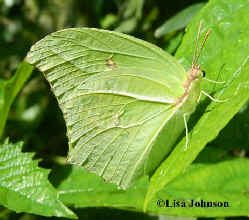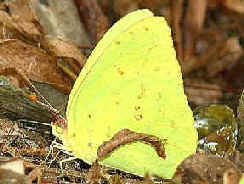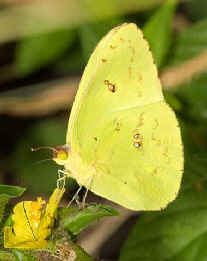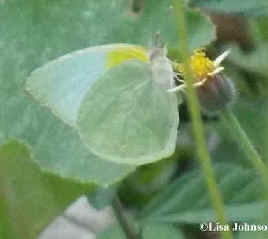
PO Box 9021, Wilmington, DE 19809, USA
E-mail: font@focusonnature.com
Phone: Toll-free in USA 1-800-721-9986
 or 302/529-1876


Part 2 of a List of selected

South America
Butterflies 
and Moths


Noting those during
Focus On Nature Tours

in
Argentina
Brazil
Chile 
Ecuador
Venezuela


A List of South America Butterflies in 5 Parts, compiled by Armas Hill


In the following Part #2: Whites, Yellows, Sulphurs, & Marbles (Pieridae) 
 

Links to other Butterfly groupings:

Part #1 - Swallowtails (Papilionidae)

Part #3 - Hairstreaks, Blues (Lycaenidae) & Metalmarks (Riodinidae)

Part #4 - Brushfoots (Nymphalidae)

Part #5 - Skippers (Hesperiidae)


Codes relating to illustrations in various books:

Numbers noted as (AZ:xx) refer to pages in "Butterflies of Arizona - A Photographic Guide", by Bob Stewart, Priscilla Brodkin, & Hank Brodkin (with fine photographs).

Numbers noted as (BB:xx) refer to pages in "Butterflies of Buenos Aires (Argentina)", by Gustavo Canals

Numbers noted as (C:xx) refer to pages in "A World of Butterflies", with text by Brian Cassie, and photographs (superb) by Kjell Sandved

Numbers noted as (D1:xx) refer to plates in "The Butterflies of Costa Rica and their Natural History (Volume 1): Papilionidae, Pieridae, Nymphalidae", by Philip J. DeVries   

Numbers noted as (DV:xx) refer to pages in "Butterflies Of South America", by Bernard D'Abrera    

Numbers noted as (F:xx) refer to pages in "The Illustrated Encyclopedia of Butterflies", by Dr. John Feltwell  

Numbers noted as (K:xx) refer to pages in the "Kaufman Focus Guide to Butterflies of North America", by Jim Brock & Kenn Kaufman

Numbers noted as (MM:xx) refer to pages in "Mariposas (Butterflies) of Missiones (Argentina)", by Gustavo Canals  

Numbers noted as (PE:xx) refer to plates in the "Peterson Field Guides to Eastern Butterflies", by Paul Opler & Vichai Malikul, 1998 edition. Those noted as (PEp:xx) refer to a page with a photograph.

Numbers noted as (PW:xx) refer to plates in the "Peterson Field Guide to Western Butterflies", by Paul Opler & illustrated by Amy Bartlett Wright, 1999 edition. Those noted as (PWp:xx) refer to a page with a photograph. 

Numbers noted as (RG:xx) refer to pages in "Butterflies of the Lower Rio Grande Valley" by Roland Wauer.

Numbers noted as (S:xx) refer to pages in the "Smithsonian Handbook, Butterflies & Moths", by David Carter.


Additional Codes:


AR: in Argentina
BR: in Brazil
CH: in Chile
EC: in Ecuador
VE: in Venezuela

Butterflies observed during FONT tours noted by an (*) after the 2-letter country code. 


Other Links:

Upcoming FONT Birding & Nature Tours in South America in Brazil

Upcoming FONT Birding & Nature Tours in South America in Argentina & Chile

Lists & Photo Galleries of Birds, including those during FONT Tours in South America

Lists & Photo Galleries of Mammals & Other Wildlife, relating to FONT Tours in South America

Lists of Photo Galleries of Amphibians & Reptiles, including those during FONT Tours in South America


Directory of Photos in this Website, in this list & others


List of Butterflies. Part #2:

          Family PIERIDAE: most are predominantly white, yellow, or orange in color, 
          and are often referred to as WHITES, YELLOWS, SULPHURS, or MARBLES
          
          Worldwide, approximately 1,000 species of whites & sulphurs have been described


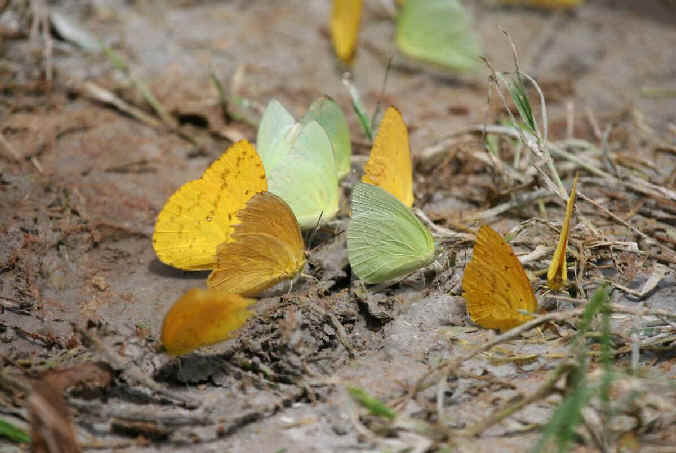
Group of Pieridae during a FONT Brazil Tour
in Mato Grosso do Sul 
(photo by Marie Gardner)


          Genus PSEUDOPIERIS: 
2 species which can favor mountainous habitats, 
          especially in Peru and Ecuador on the western slopes of the Andes.   
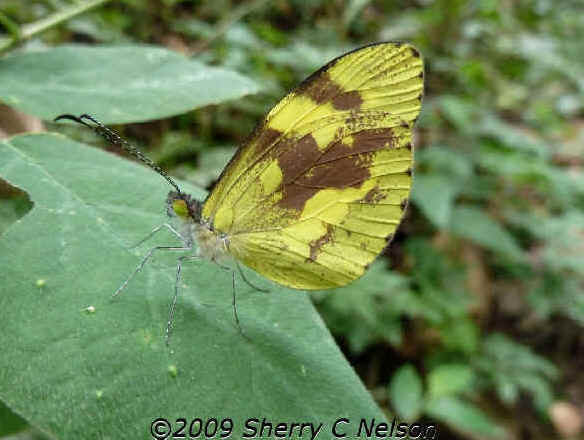
  1. Pseudopieris nehemia ______  (DV1:6)
    Pseudopieris nehemia acquatorialis ______  (DA:53) 
    (subspecies in Ecuador & possibly Peru)
    Pseudopieris nehemia nehemia ______  ARne  (MM:163)
    (subspecies in northeast Argentina)
    Clean Mimic-White
    AR common name: Nehemia 
    (Nehemias was a Jewish leader who lived in the 5th Century B.C.. He had an honorary position in the Persian king's court, and was designated Judah's governor and authorized to reconstruct Jerusalem)     
    BR: Floco de Neve  ("Snowflake") 
    (Range: Mexico to southern Brazil & Argentina) 

  2. Pseudopieris viridula ______

    Pseudopieris viridula has a yellowish green underside. The male has a distinct brown patch on the forewing underside. 


    Subfamily DISMORPHIINAE: MIMIC WHITES

    A long-winged, tropical group

    Genus DISMORPHIA:
    With about 40 species that are remarkable mimics of various distasteful butterflies. 
    The patterning is variable. Sexual dimorphism is marked in the species in this genus. 

  3. Dismorphia lua idae ______ (DV1:6)
    (Range: Costa Rica to Bolivia) 

  4. Dismorphia amphione ______  (DA:51) (DV1:6) (S:74)
    Tiger Mimic-White  (or Tiger Pierid)
    (Range: Mexico thru South America to Bolivia, Peru, the Guianas, & Trinidad; also in the West Indies in Cuba, Hispaniola, Puerto Rico) 

  5. Dismorphia crisia ______ (DV1:6)
    Cloud-forest Mimic-White
    (Range: southern Mexico to Brazil) 

  6. Dismorphia zaela ______ (DV1:7)
    (Range: Costa Rica to Ecuador) 

  7. Dismorphia theucharila ______ (C:363) (DV1:7)
    Clear-winged Mimic-White 
    (or Pierid Mimic as this species looks like an ithomiine clearwing - DV1:35)
    (Range: Mexico to Brazil) 

  8. Dismorphia thermesia 
    Dismorphia thermesia thermesia ______ ARne  (MM:161)
    (subspecies in northeast Argentina)
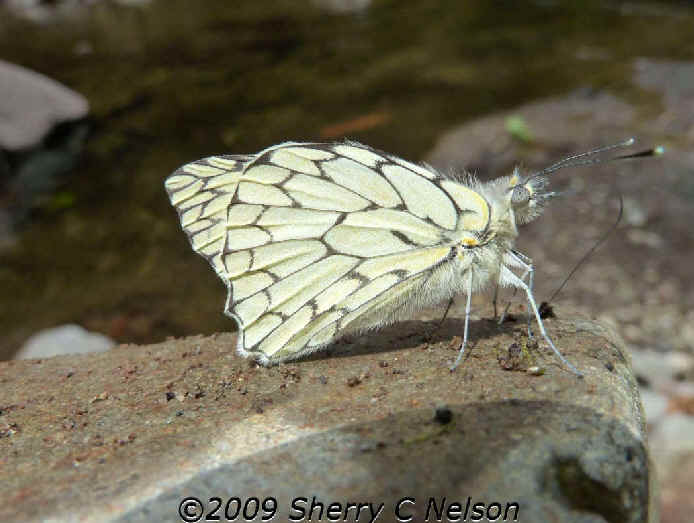
    AR common name: Bonita Perlada  ("Pearled Pretty
    " referring to the stylized outline, uncommon in its family)

  9. Dismorphia astyocha ______ ARne  (MM:162)
    AR common name: Bonita
    (translates to "Pretty")

    The coloring and stylized outline of Dismorphia astyocha is uncommon in this family.

  10. Dismorphia zathoe ______ (DV1:7)
    (Range: Costa Rica to Ecuador) 

  11. Dismorphia orise  ______  (DA:47)
    Dismorphia orise orise  ______ 
    (subspecies in Amazonas, Guianas, Bolivia) 
    (Range: Costa Rica to the Guianas, Brazil, Bolivia, Ecuador, & Peru)  

  12. Dismorphia rhetes ______  (DA:48)
    (Range: Colombia, and possibly Ecuador & Bolivia)

    Dismorphia rhetes strongly resembles certain ITHOMIIDS in both sexes.

  13. Dismorphia pinthaeus ela  ______ (DA:48)
    Dismorphia pinthaeus ela  ______ 
    (subspecies in Ecuador)
    Dismorphia pinthaeus ______ (DA:48)
    (an undescribed race from Colombia)
    (Range: Colombia to the Guianas, Ecuador, Peru, & Amazonas) 

    Dismorphia pinthaeus is often confused with the Ithomiid AERIA species.

  14. Dismorphia (or Lienix) nemesis ______  (DA:50) (DV1:7)
    (Range: Mexico to Venezuela, Ecuador, & Peru)

    In Dismorphia nemesis, sexual dimorphism is very pronounced.

  15. Dismorphia melia ______  (DA:52)
    (Range: southern Brazil)

    Dismorphia melia is a mimic of the two ACRAEID species Actinote thalia & Actinote parapheles, to which it bears a very strong resemblance.   


    Genus PATIA

  16. Patia orise ______ (DV1:7)
    (Range: Costa Rica to Bolivia)  


    Genus ENANTIA:  Closely related to DISMORPHIA, but not as strongly sexually dimorphic. Sun-and-flower loving species, often encountered in numbers on flowers, usually at the end of the rainy season.       

  17. Enantia licinia ______ (DV1:7)
    (Range: Mexico to Brazil) 

  18. Enantia melite ______ (DV1:7)
    Enantia melite cornelia ______  (DA:53)
    (Range: Mexico to Uruguay) 

    Enantia melite is a most variable butterfly.

  19. Enantia clarissa ______ ARne  (MM:160)
    AR common name: Clarisa 
    (referring to scientific name)

  20. Enantia limnorina ______  (DA:52)
    (Range: southern Brazil)

  21. Enantia lina psamathe (or Dismorphia psamathe ______  ARne  (MM:159)  (subspecies in northeast Argentina) 
    AR common name: Bonita Blanca  ("White Pretty")


    Genus HESPEROCHARIS

  22. Hesperocharis hirlanda  ______  (DA:55)
    Hesperocharis hirlanda fulvinota  ______ 
    (subspecies in southern Brazil)
    (Range: Colombia to the Guianas, Ecuador, Peru, Bolivia, Brazil) 


    Genus ARCHONIAS: 3 species. 
    A most interesting genus of PIERIDS. Considered to be involved in mimetic associations with PAPILIONID and HELICONID butterflies and with one species of ARCTIID day-flying moth.
    Comparatively slow-flying, with a fondness for settling on leaves in the sunshine or visiting flowering shrubs, where they spend substantial time & effort on one or two blooms.

  23. Archonias tereas ______ (DV1:7) (F:82)
    (Range: Mexico to Brazil) 

    Archonias tereas looks like a mimic of a female Parides swallowtail. It lives in open parts of rainforests. 

  24. Archonias tereas  ______ 
    Archonias tereas archidona  ______  (DA:63)
      (subspecies in Ecuador - this race thought to resemble a day-flying ARCTIID moth)
    (Range: Mexico to southern Brazil)

  25. Archonias bellona  ______
    Archonias bellona hyrnetho ______ (DA:63)
    (subspecies in Colombia, Ecuador, Peru, Bolivia - shows a resemblance to HELICONID species)
    (Range: Colombia to the Guianas; also to Bolivia & northern Argentina) 


    Genus CHARONIAS: 2 species which can easily be mistaken for ITHOMIIDS or HELICONIIDS

  26. Charonias eurytele eurytele ______  (DA:66)
    Tiger White

    (Range: Guatemala & Belize to Ecuador) 

    Charonias eurytele probably occur only on the western side of the central cordillera in Colombia & Ecuador. 
    The South American populations have white spots on the forewings.  


    Genus EROESSA:  1 species, confined to low and middle altitudes in Chile only. Considered rare & local.

  27. Eroessa chilensis ______  CH  (DA:54)
    Eroessa Butterfly
    CH common name: Mariposa eroesa
    (Range: Chile, endemic. It occurs locally on the coast from Maule to Aisen, and in the foothills of Cautin, Osorno, and Llanquihue.)

    Eroessa chilensis
    is greenish-white. The forewings have a conspicuous, orange transverse band and dark brown wingtips.
    The species lives in Nothofagus forest clearings, where it appears in the spring to feed on red, pink, or white flowers of plants such as the Chilco (Fuchsia magellanica) and Mora (Rubus sp.).    


    Genus MATHANIA:  7 species occurring only in temperate zones or mountainous regions in western South America 
    The leaf-lie appearance of the hindwing underside of the species in this genus affords some camouflage protection.  

  28. Mathania agasicles ______  (DA:55)  
    (Range: Peru, Bolivia; high altitudes)

  29. Mathania leucothea  ______  CH
    CH common name: Mariposa del Quintral
    (Range: in Chile, from Coquimbo to Valdivia) 

    Mathania leucothea can be common in gardens especially near Quintral (Tristerix sp.), an epiphytic plant on which it lays its eggs.
      

    Genus CATASTICTA

  30. Catasticta prioneris ______ (DV1:11)
    (Range: Costa Rica to Peru) 

  31. Catasticta sisamnus  ______  
    Catasticta sisamnus susamnus  ______  (DV1:11)
    (subspecies Honduras to Venezuela)
    (Range: Honduras to Bolivia) 

  32. Catasticta uricoecheae uricoecheae ______  (DA:61)
    (Range: Colombia)

  33. Catasticta niobe ______  (DA:62)
    (Range: Bolivia)

  34. Catasticta poujadei ______  (DA:62)
    (Range: Ecuador; possibly Peru)


    Genus LEODONTA: The number of species in this genus is a matter of conjecture. Some say no more than 2 or 2, others say as many as 10. However, they are an easily recognizable group in the Neotropics, due to their underside pattern together with their fondness for flying along pathways or by narrow stream banks. 

  35. Leodonta dysoni ______ (DV1:11)
    (Costa Rica to Peru)

  36. Leodonta zenobina ______  (DA:66)
    (Costa Rica to Peru & Bolivia)


    Genus PEREUTE: 8 species of the most subtly beautiful PIERIDS from any region of the world, with the outstanding colors being the soft rose-pinks, blue-grays, and cadmium yellow streaks and patches. 
    They can be remindful of the Indo-Australian DELIAS group (the JEZEBELS) in their appearance and behavior.  


  37. Pereute charops ______  (DA:64) (DV1:11)
    Surprising White
    (Range: Mexico to Peru) (Not known to be east of the Andes)

    One of the more attractive features of both sexes of Pereute charops is the almost completely white antennae. 
    Southern races differ in that the males tend to be almost completely black. 

  38. Pereute leucodrosime beryllina ______  (DA:64)
    (Range: Venezuela to Peru) (Not known to be east of the Andes)

  39. Pereute callinira ______ (DA:text)
    (Range: Colombia to Bolivia)

    Pereute callinira is similar to Pereute leucodrosime, but distinguished by the small but clear black spot on the forewing in both sexes. 

  40. Pereute telthusa  ______  (DA:65)
    (Range: Peru, Ecuador, Bolivia, & Brazil (lower Amazon)) 

    The sexes of Pereute telthusa are similar but the female is slightly larger, with rounded wings.

  41. Pereute swainsoni  ______  ARne  (MM:164)
    AR common name: Embustera  ("Lying"  referring to its coloring, uncommon in its family, instead like a NYMPHALIDAE) 
      

    Genus GLUTOPHRISSA: 2 species now said, for structural reasons, to be distinct from the Oriental APPIAS (the GULLS)

  42. Glutophrissa (formerly Appias) drusilla ______ (DV1:12) (K:53) (PE:7)
    Glutophrissa drusilla drusilla ______  ARne  (DA:67) (MM:167)
    (subspecies in northeast Argentina)
    Tropical White
    (other names are: Florida White or Big Milky)
    AR common name: Lechera Grande  (translates to "Big Milky")
    (Range: southern US, Central & South America, also in the West Indies) 


    Genus LEPTOPHOBIA:
    15-16 species whose general characteristic is the silvery-white color of the hindwing underside. Found from moderate to high elevations (to 9,000 ft. or 3,000 meters).

  43. Leptophobia aripa ______ (DV1:12)
    Leptophobia aripa balidia ______  ARne  (MM:165)
    (subspecies in northeast Argentina)
    Common Green-eyed White

    AR common name: Blanquita 
    (translates to "Little White")
    (Range: Mexico to Brazil & northern Argentina) 

  44. Leptophobia caesia ______ (DV1:12)
    (Range: Mexico to Ecuador) 

  45. Leptophobia eleone luca ______  (DA:69)
    (Range: Venezuela, Colombia, Ecuador, Peru, & Bolivia)

    Regarding Leptophobia eleone, an early writer wrote: "They fly over fields and in thickets and are fond of being driven by the wind."

  46. Leptophobia subargentea pastaza ______  (DA:69)
    (Range: Ecuador, Peru, & Bolivia)

  47. Leptophobia penthica ______  (DA:text)
    (Range: Colombia & Ecuador)


    Genus ITABALLIA

  48. Itaballia demophile ______ (DV1:12)
    Cross-barred White
    (Range: Mexico to Paraguay) 

  49. Itaballia pandosia ______ (DV1:12)
    Brown-bordered White
    (Range: Honduras to Venezuela) 


    Genus PIERIBALLIA

  50. Pieriballia mandela ______ (DV1:12)
    (Range: Costa Rica to Peru) 


    Genus TATOCHILA: About 15 species endemic to the southern part of South America, from approximately southern Brazil to Tierra del Fuego; and at moderate to high altitudes from Venezuela to Peru.

  51. Tatochila sterodice macrodice ______  (DA:70) 
    (Range: Colombia to Tierra del Fuego)  

  52. Tatochila theodice  ______  CH
    Andean Foothills White
    CH common name: Mariposa blanca preandina
    (Range: in Chile, from Arica to Valdivia)

  53. Tatochila mercedes  ______  CH
    Common White Tatochila
    (Range: in Chile, from Arica to Magallanes)  


    Genus HYPSOCHILA:
    6 species are in this genus similar to TATOCHILA, differentiated by their smaller size and generally more grayish ground color in both sexes. From Peru to Tierra del Fuego.

  54. Hypsochila wagenknecti  ______  CH
    CH common name: Mariposa de Wagenknect

    (Range: in Chile, from Coquimbo to Santiago, where it is common in foothill areas)

  55. Hypsochila argyrodice  ______  CH
    Pampas White
    CH common name: Mariposa Blanca de la Estepa
    (Range: in Chile, on the Patagonian steppe, where it is uncommon)  


    Genus PHULIA:
    A group of from 3 to 12 species. Their most outstanding characteristic is that they occur at South American high elevations, up to 16,000 ft. (5,000 meters) above sea level. So, observing these little butterflies in the wild would be beyond the capacity of most.

  56. Phula nimphula nympha ______  CH  (DA:70)
    CH common name: Mariposa Blanca Andina
    (Range: central Chile, Argentina, Bolivia - at very high altitudes; in Chile, common in the Andes from Arica to Santiago)


    Genus INTRAPHULIA

  57. Intraphulia ilyodes  ______   CH  
    CH common name: Fulia de Pantano
    (Range: In Chile, in high Andean bofedales and marshes from Arica to Antofagasta) 


    Genus PIERCOLIAS:
    a single species, with the distinction of being the highest-flying butterfly in South America (and certainly one of the highest, if not the highest, in the world), where very strong winds prevail and the butterfly can only fly briefly and subside.

  58. Piercolias huanaco ______ (DA:71)
    (Range: Bolivia)

    When the naturalist Garlepp encountered Piercolias huanaco, he wrote: "It flies on the highest summits of the Cordilleras, amidst the wildest boulders and masses of rock. I cannot understand its choosing such wastes and deserts or how it can exist there at all, where it must be daily covered with snow and ice, where there is absolutely no vegetation, and where only the Condor makes his abode."


    Genus PERRHYBRIS:
    4 species with very strong coloring and markings, and in a couple instances, imitation-heliconid livery.

  59. Perrhybris pyrrha ______ (DV1:12)
    (Range: Costa Rica to Brazil)

  60. Perrhybris lypera ______  (DA:73) (DV1:12)
    (Range: Costa Rica to Colombia & Ecuador)

    The male of Perrhybris lyera is polymorphic. The extreme forms have been erroneously described as separate species. In between, there are intergrades. 


    Genus DAPTONEURA: about 10 species of brightly-colored and strong-flying PIERIDS, given to extraordinary seasonal and local variation, thus making it difficult to determine precisely what are good species or races or even aberrations.

  61. Daptoneura lycimnia  ______   
    Daptoneura lycimnia lycimnia  ______  (DA:74)
    (subspecies in Venezuela)
    Daptoneura lycimnia pantoporia ______ (DA:75)
    (subspecies in southern Brazil & Paraguay)
    (Range: Colombia, Venezuela, & the Guianas to Paraguay; also Trinidad) 


    Genus ASCIA
    : 8 species of large plain white butterflies with some brown or gray markings especially in the females.

  62. Ascia josephina josepha ______ (DV1:12)
    (Range: Central & South America, also the Antilles) 

  63. Ascia monuste ______ (DV1:12) (K:53) (PE:8)
    Ascia monuste orseis ______  ARne  (MM:168)
    (subspecies in northeast Argentina)
    Great Southern White 
    AR common name: Sayju 
    (a Guarani word meaning "pale, yellowish")
    BR common name: Borboleta da Couvre

    (Range: southern US, Central & South America, also the Antilles) 

    The migrating females of Ascia monuste are almost totally gray in color, while non-migratory females are largely yellowish-white with dark brown margins.

  64. Ascia buniae  ______  
    Ascia buniae phaloe  ______   (DA:68) 
    (the most-encountered subspecies) 
    Ascia buniae sublineata ______ 
    (subspecies in Peru, with a yellow ground color) 
    (Range: Brazil to the Guianas, also Peru & Paraguay) 
    |
    Forms of Ascia buniae in southern Brazilian have strong markings.  
     

    Subfamily COLIADINAE: SULPHURS

    300 species worldwide


    Genus COLIAS: SULPHURS: 
    This genus in South America tends to occupy temperate and/or high altitude habitats. Essentially, this genus, of 10 species, is Holarctic (North American/Eurasian).  


  65. Colias (or Zerene) cesonia ______  CH  (C:249) (DV1:8) (F:109) (K:69) (PE:10)
    (Southern) Dogface 
    CH common name: Mariposa amarilla boliviana
    (Range: Mexico to Argentina; in Chile in the valleys of Arica & Tarapaca) 

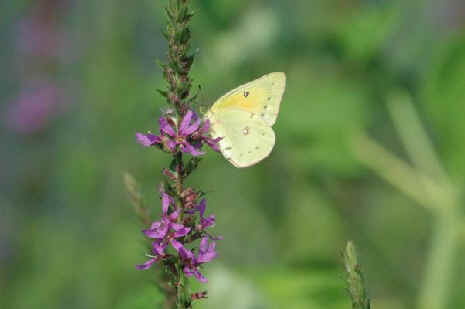
    The Dogface, or Colias cesonia, is common, particularly so where there is cattle ranching. The leguminous plants on which it breeds are used for cattle. 
    Overall, Colias cesonia is lemon-colored. It has broad, irregular black margins on the forewings that suggest a dog's face in silhouette.   


    Southern Dogface
    (photo by Doris Potter)

  66. Colias lesbia  ______  CH
    Colias lesbia lesbia ______ ARne  (MM:170)
    Colias lesbia andina  ______  (DA:56)
    Lucen's Butterfly
    AR common name: Isoca de la Alfalfa
    BR common names: Borboleta da Alfafa or Borbolelinha Alaanjada 
    (Range: Bolivia to Tierra del Fuego; in Chile in Nuble, Malleco, and Magallanes)

    Colias lesbia is sexually dimorphic. The wings of the male are orange with black margins. Those of the female are gray with darker gray spots.
     
  67. Colias vauthierii  ______  CH
    CH common name: Colias de la Alfalfa

    (Range: in Chile, from Atacama to Chiloe)

    Colias vauthierii is sexually dimorphic. The wings of the male are orange with black margins. Those of the female are gray with black or dark patches.

    Colias vauthierii is found in alfalfa fields, as is the previous species, Colias lesbia.

  68. Colias flaveola  ______  CH
    CH common name: Colias de Blanchard
    (Range: in high Andean valleys in Argentina & Chile, where it is a common species)

    Colias flaveola is a pale grayish-green. Males have an orange spot on the hindwing.
      
  69. Colias mendozina  ______  CH
    CH common name: Colias de Mendoza
    (Range: Primarily an Argentine species. In Chile, rare on hillsides and quebredas of the Aconcagua Valley near Portillo) 

    Colias mendozina is a pale gray.


    Genus ANTEOS: ANGLED SULPHURS

    Often found flying high over the canopy or along rivers. 

  70. Anteos clorinde ______ ARne  (DV1:8) (F:78) (K:77) (MM:171) (PE:10) (S:71)
    White-angled Sulphur
    (or the Clorinde) (also called Ghost Brimstone
    AR common name: Anteo  (Anteo, in Greek mythology, was a giant.)
    (Range: Mexico to Paraguay & northeast Argentina)


    White-angled Sulphur
    (photo by Doug Johnson)


  71. Anteos maerula ______ (DV1:8) (F:78) (K:77) (PE:10)
    Yellow-angled Sulphur
    (also called Yellow Brimstone)
    (Range: southern US to Peru)


    Genus PHOEBIS: GIANT SULPHURS: 
    the most conspicuous tropical sulphurs,  common, and found in open areas & forest edges, adult males cluster on moist sand along rivers & streams 

  72. Phoebis rurina ______ (DV1:8) (F:105)
    Phoebis rurina rurina ______  (DA:56,57)
    (Range: Mexico to Peru)

    Phoebis rurina is a strong migrant, it is in both lowlands &highlands. 

  73. Phoebis (or Rhabdodryas) trite ______ (DV1:8) 
    Phoebis trite banksi  ______  ARne  (MM:176) 
    (subspecies in northeast Argentina)
    Straight-lined Sulphur
    AR common name: Hoja Amarillo  ("Yellow Leaf", as when it rests with its wings folded, it blends into the vegetation thus becoming invisible)  
    (Range: Mexico to Argentina, also the Antilles)

  74. Phoebis philea philea ______ ARne  (DA:58) (DV1:8) (F:105) (K:75) (MM:173) (PE:10) (S:70)
    Orange-barred Sulphur
     
    (another name is Yellow Apricot)
    AR common name: Mananita  (translates to "Morning", with the color of the wings being the same as that of the sky at the break of day) 
    (Range: southern United States to southern Brazil & northeast Argentina) 

    In addition to visiting flowers, males of Phoebis philea visit wet sand and mud, probably to obtain sodium. This general habit of many Pierids has been known since Henry Walter Bates was on the Amazon. 

  75. Phoebis sennae ______  (C:247) (DV1:9) (F:105) (K:75) (PE:10)
    Phoebis sennae sennae ______  (DA:57)
    Phoebis sennae marcellina ______ ARne  (MM:172)
    (subspecies in northeast Argentina) 
    Phoebis sennae amphitrite  ______  CH 
    (subspecies in Chile)
    Cloudless Sulphur
    AR common name: Febo  (referring to the color of the wings)
    BR common name: Casca da Limao
    CH common name: Mariposa Limonera
    (Range: southern US to Argentina, also in Antilles. In Chile, from Atacama to Valdivia)
     
    Phoebis sennae can be abundant in both lowlands & highlands. It prospers in open land.


    Cloudless Sulphur

  76. Phoebis neocypris neocypris ______ ARne  (MM:175)  (subspecies in northeast Argentina)
    AR common name: Ciprina 
    (one of the names of the goddess Venus)  

  77. Phoebis argante argante ______ ARne  (DV1:9) (F:104) (MM:174)  (subspecies in northeast Argentina)
    Argante Giant Sulphur
    (or Argante)
    AR common name: Yema  ("Yema" means "˙olk" of an egg, alluding to the color of the wings)
    BR common name: Gema de Ovo 
    (also meaning "yolk of an egg") 
    (Range: Mexico to Argentina) 

  78. Phoebis agarithe ______ (DV1:9) (F:104) (K:75) (PE:10)
    Large Orange Sulphur
    (Range: southern US to Brazil)


    A female Large Orange Sulphur


    Genus KRICOGONIA

  79. Kricogonia lyside ______ (DV1:8) (K:77) (PE:8)
    Lyside Sulphur
    (or Lyside)
    (Range: southern US to Venezuela, also the Antilles)


    Genus APHRISSA

  80. Aphrissa (or Phoebis) statira statira ______  ARne  (DV1:9) (F:80) (MM:177) (PE:10)  (subspecies in northeast Argentina)
    Statira Sulphur 
    (other names are: Yellow Migrant, or Migrant Sulphur)
    AR name: Manifestante  (referring to its habit of meeting in assemblies, as do demonstrators)
    (Range: Mexico to Brazil) 

  81. Aphrissa (or Phoebis) boisduvalii ______ (DV1:9)
    Peach-patched Sulphur
    (Range: Guatemala to Brazil & Bolivia)


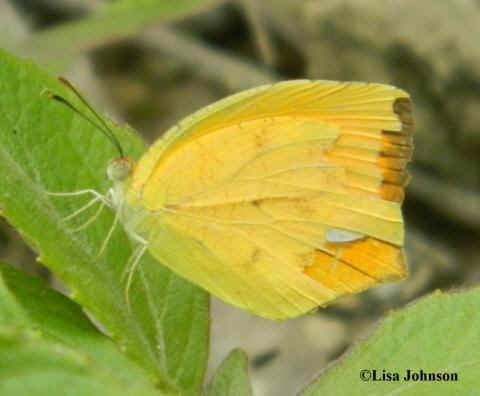
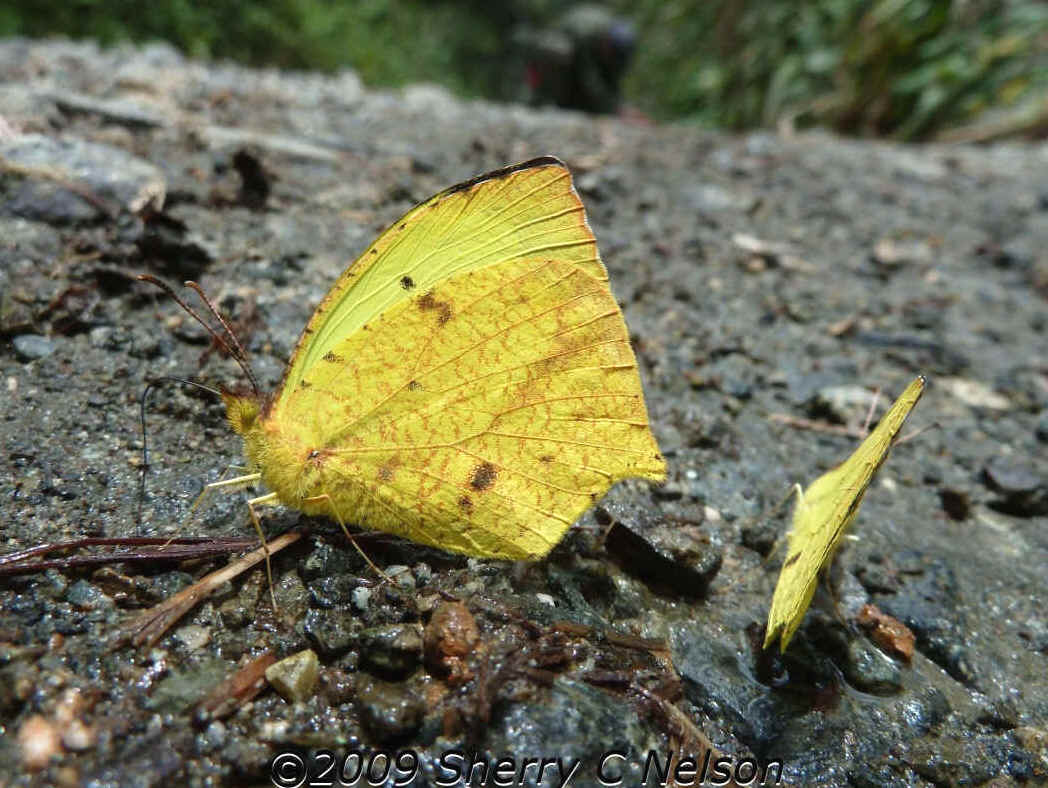
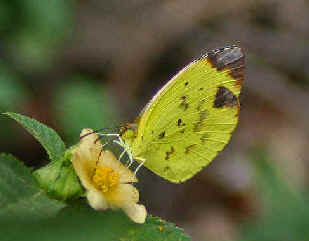
    Genus EUREMA: SMALL YELLOWS 

  82. Eurema proterpia ______  (DA:61) (DV1:10) (F:97) (K:69) (PE:11)
    Tailed Orange
    (or Little Jaune)
    (Range: southern US, thru Central & South America, also the Antilles) 

    There are seasonally different forms of both sexes of Eurema proterpia. 

  83. Eurema mexicana ______ (DV1:10) (F:97) (K:73) (PE:11)
    Mexican Yellow
    (Range: southern US, thru Central & South America) 

  84. Eurema salome ______ (DV1:10) (K:69) (PE:text)
    Salome Yellow
    (Range: southern US to Colombia & Venezuela)

  85. Eurema xanthochlora ______ (DV1:10)
    Scarce Yellow
    (Range: Mexico to Bolivia)

  86. Eurema gratiosa ______ (DV1:10)
    (Range: Costa Rica to Venezuela)        

  87. Eurema albula ______   (DV1:10) 
    Eurema albula sinoe  ______  ARne  (MM:179) 
    (subspecies in northeast Argentina)  
    Ghost Yellow
    AR common name: Alba  ("White")
    (Range: Mexico to Brazil & ne Argentina, also West Indies)  

  88. Eurema (or Terias) deva deva ______ ARne  (MM:180) (subspecies in northeast Argentina)
    Eurema deva chilensis  ______  CH 
    (subspecies in Chile)
    AR common name: Limoncito 
    (translates to "Small Lemon"
    CH common name: Mariposa amarilla
    (Range: in central Chile, Copiapo to Aconcagua)

    The larvae of Eurema deva feed (in Chile) on the mimosa tree, Cassia stipulacea, 
    In central Chile, where the butterfly is very common, it occurs in scrub on Andean slopes up to around 5,500 feet above sea level. The butterfly is a slow flier.      j

  89. Eurema (or Pyrisitia) nise ______ (DV1:10) (K:71) (PE:11)
    Eurema nise tenella  ______  ARne  (MM:182) 
    (subspecies in northeast Argentina)
    Mimosa Yellow 
    (also called Jamaican Sulphur)
    AR common name: Limoncito del Nordeste  ("Northeastern Small Lemon",
    as another subspecies is found in northwestern Argentina)
    (Range: southern US to Argentina, also West Indies)

  90. Eurema daira  ______  (DA:60) (DV1:10) (F:96) (K:71) (PE:11)
    Eurema daira daira  ______ 
    (subspecies in the mainland Americas)
    Barred Yellow
    (or Barred Sulphur)
    (Range: southern US to Uruguay, also West Indies)  

    Eurema daira has seasonal dimorphism in both sexes.

  91. Eurema elathea  ______  (DV1:10) 
    Eurema elathea flavescens  ______  ARne  (MM:178)
    (subspecies in northeast Argentina)
    AR common name: Limoncito Adornado 
    (translates to "Small Decorated Lemon"
    (Range: Nicaragua to Brazil & northeast Argentina, also West Indies) 

  92. Eurema (or Pyrisitia) leuce leuce ______  (DA:59)  (MM:181)
    AR common name: Limoncito Manchado  ("Small Spotted Lemon") 
    (Range: Panama to Argentina; also the West Indies)

  93. Eurema phiale phiale ______  (DA:60)
    (Range: east to southeast Brazil; Colombia, Bolivia)

    Eurema phiale has seasonal dimorphism.