 |
PO
Box 9021, Wilmington, DE 19809, USA
E-mail: font@focusonnature.com
Phone: Toll-free in USA 1-888-721-3555
or 302/529-1876 |
North Carolina
Birds
during Focus On Nature Tours
1992 thru 2015
during land-birding tours
and offshore pelagic trips
during the months of May,
June,
July, August, September
A List of North Carolina Birds by Armas Hill
The numbers following the bird
names indicate the number of years during which the bird was
found with FONT North Carolina landbirding (with
a
maximum of 12 years of records).
Birds only during FONT pelagic trips off North Carolina are without such numbers.
234 species of birds have cumulatively been found during FONT tours in North
Carolina. A notable subspecies brings the following list to 235.
late-spring: in
May–June
summer: in
July-August–September
Codes:
(p): seen only during FONT offshore pelagic trips, 1992-2000
(+p): seen during offshore pelagic trips & on (or from)
land
(t): globally-threatened
species, as designated by Birdlife International
(t1): critical (t2): endangered
(t3): vulnerable
(nt): a near-threatened species
globally
(USe): endemic to the United States
(NAr): rare in North America
(NCr): rare in North Carolina
(VAo): seen only during tour in nearby Virginia
(*):
notable sightings (with some notes following list)
(i): an introduced species
(ph): species with a photo in the FONT website
Links:
An
Essay about Carolina Birds (some interesting reading)
A
Complete List & Photo Gallery of North American Birds, in 6 parts:
Part #1: Grouse to Anhinga
Part #2: Condor to
Shorebirds Part #3: Jaegers to Cuckoos
Part #4: Owls to Flycatchers Part
#5: Shrikes to Pipits Part
#6: Olive Warbler to
Buntings
Lists with Other North Carolina Nature (each with some photos):
Mammals (Land & Sea)
Butterflies
Moths Dragonflies & Damselflies
Amphibians &
Reptiles Wildflowers
& Other Plants
Marine Life (inc. Jellyfish, Mollusks (Shells), & Arthropods: Crustaceans
& Echinoderms) Fish
Directory of Photos in this Website
Upcoming FONT Birding & Nature Tours:
in North
America (inc. North Carolina)
by month in: 2015
2016 or: by geographic locations
worldwide
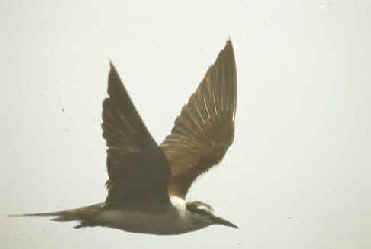
A Bridled Tern off the
North Carolina Coast
(photograph by Alan Brady)
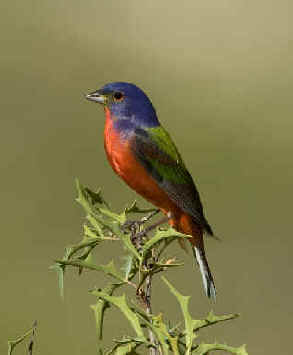
Painted Buntings are
seen during our land-birding tour
in the spring along the North Carolina coast.
(photograph by Clair de Beauvior)

Bird-List:
- Northern Bobwhite (nt) (ph) ______ 12
Colinus v. virginianus
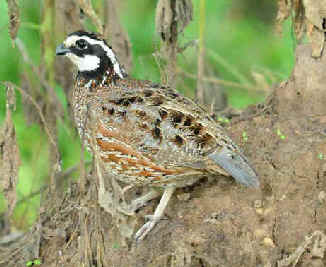
Northern Bobwhite
(photo by Howard Eskin)
Common Pheasant (i) ______ 1 late-spring
Phasianus colchicus
Some Common Pheasants,
dependent upon their race, have also been called "Ring-necked
Pheasant".
Wild Turkey (ph) ______ 3 late-spring
Meleagris gallopavo silvestris
Mute Swan (i) (ph) ______ 1 late-spring
Cygnus olor
Tundra Swan (ph)
______
1 late-spring
Cygnus c. columbianus
The North American subspecies,
Cygnus c. columbianus,
has been called the "Whistling
Swan".
Canada Goose ______ 12 late-spring
Branta c. canadensis
Snow Goose (ph) ______ 1 late-spring
Chen (has
been Anser) caerulescens atlanticus ("Greater
Snow Goose")
Mallard (ph) ______
9 late-spring
Anas p. platyrhynchos
American Black Duck (ph) ______ 9 late-spring
Anas rubripes
(monotypic)
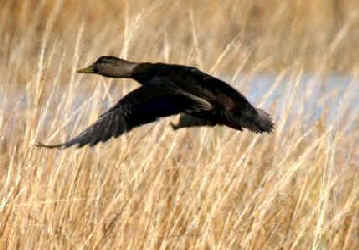
American Black Duck
(photo by Marie Gardner)
Gadwall (ph) (*) ______ 8 late-spring
Anas s. strepera
Blue-winged Teal (ph) ______
4
Anas discors (monotypic)
Northern Pintail (ph) ______ 1 summer
Anas acuta
(monotypic)
Northern Shoveler (ph) ______
1 summer
Anas clypeata
(monotypic)
American Wigeon (ph) ______ 1 summer
Anas americana (monotypic)
Wood Duck (ph) ______ 7 late-spring
Aix sponsa
(monotypic)
The Wood Duck has also been
called the "Carolina Duck".
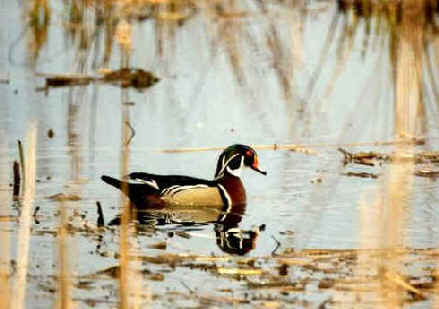
A Wood, or "Carolina" Duck
(photo by Marie Gardner)
Black Scoter (ph) ______ 1 late-spring
Melanitta americana
The Black Scoter was
conspecific with the Common
Scoter of
Europe, Melanitta nigra)
Common Eider (NCr, in the summer)
(ph) (*) ______ 1 summer
Somateria mollissima dresseri
Common Merganser (ph) ______ 1 late-spring
Mergus merganser americanus
Common Loon (+p) (ph) ______
7
late-spring
Gavia immer (monotypic)
Red-throated Loon (ph) ______ 1 late-spring
Gavia stellata
(monotypic)
Cory's Shearwater (p) (ph) ______
Calonectris (diomedea) borealis
What has been the Cory's Shearwater has been considered by some to be 3 species:
those that breed in the Mediterranean
as: Scopoli's
Shearwater, Calonectris diomedea
those
that breed in the Azores, Madeira, & Canary Islands as: Cory's Shearwater,
Calonectris borealis
and those that breed in the Cape Verde Islands as:
Cape Verde Shearwater, Calonectris edwardsii
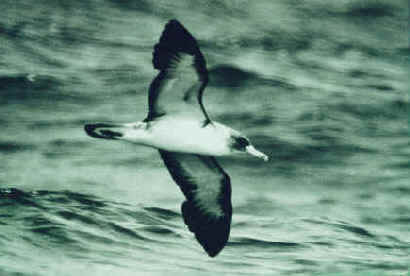
Cory's Shearwater
(photo by Alan Brady)
Great Shearwater (p) (ph) ______
Puffinus gravis
(monotypic)
Puffinus gravis has
been called the Greater Shearwater.
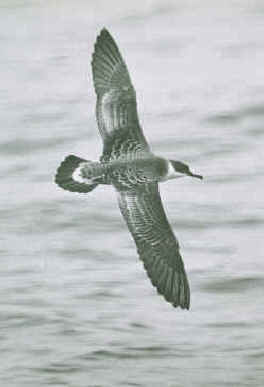
Great Shearwater
(photo by Alan Brady)
Sooty Shearwater (nt) (+p) (ph) (*)
______
Puffinus griseus (monotypic)
Audubon's Shearwater (p) (ph) ______
Puffinus l. lherminieri
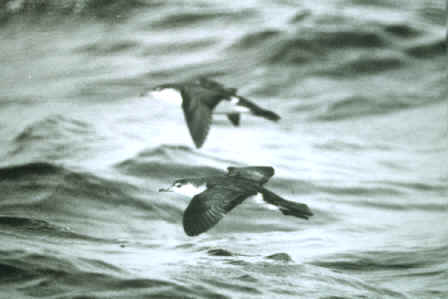
Audubon's Shearwaters
(photo by Alan Brady)
Manx Shearwater (p) ______ summer
Puffinus puffinus (now monotypic)
(now monotypic)
The Manx Shearwater did
include what is now
the Yelkouan
and the Balearic
Shearwaters of
the Mediterranean. Those birds do not occur in the western Atlantic.
Black-capped Petrel (t2) (p)
(ph) ______
Pterodroma h. hasitata (the other subspecies,
a dark form which bred (or possibly breeds) on Jamaica, may now be extinct)
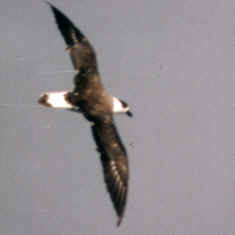
Black-capped Petrel
Trindade Petrel (t3) (p) (NAr) (*) ______
(was called Herald Petrel, see note below)
Pterodroma arminjoniana
The
Trindade Petrel in the Atlantic Ocean is now said to be distinct from the
closely-related Pterodroma
heraldica, the Herald Petrel, of the Pacific Ocean.
Note:
the correct spelling for the island, off the Brazilian coast, where the bird
breeds is "Trindade".
Fea's Petrel (nt) (p) (NAr) (ph) (*)
______
Pterodroma feae
The subspecies of the Fea's Petrel that breeds on the Cape Verde Islands is
Pterodroma
f. feae.
The subspecies that breeds on a small island off
Madeira and possibly on the Azores is Pterodroma
f. deserta.
These may be determined to be 2 species.
The Fea's Petrel was considered part of Soft-plumaged Petrel,
Pterodroma mollis.
Bulwer's Petrel (p) (NAr) (ph) (*) ______
Bulweria bulwerii (monotypic)
Leach's Storm Petrel (p) ______
Oceanodroma l. leucorhoa
Band-rumped Storm Petrel (p) (*) ______
Oceanodroma castro
(monotypic)
Oceanodroma castro
has also been called the Harcourt's, or Madeiran Storm
Petrel.
Wilson's Storm Petrel (+p) (ph)
(*) ______
Oceanites oceanicus
2 subspecies of the Wilson's Storm Petrel occur in the North Atlantic: O.
o. oceanicus and O. o.
exasperatus)
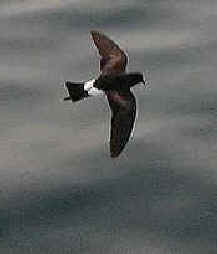
Wilson's Storm Petrel
White-faced Storm Petrel (p) (NAr) (ph) (*)
______ summer
Pelagodroma marina
(the single member of its genus)
2 subspecies of the White-faced
Storm Petrel occur in the North
Atlantic:
P. m. hypoleuca, breeding
in the Madeira & Canary Is., and
P. m. eadesi, breeding
in the Cape Verde Is.
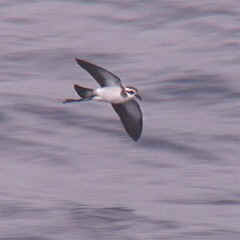
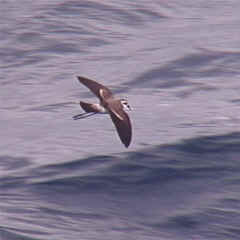
Two photographs of a White-faced Storm Petrel
during a FONT pelagic trip off the East Coast of the US
Pied-billed Grebe (ph) ______ 2 summer
Podilymbus p. podiceps
American White Ibis (ph) ______ 12 late-spring
Eudocimus albus
(monotypic)
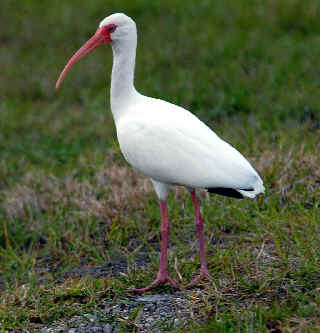
American White Ibis
(photo by Howard Eskin)
Glossy Ibis (ph) ______
6
Plegadis falcinellus (although
many places world-wide, considered monotypic)
Great Blue Heron (ph) ______ 11 late-spring
Ardea h. herodias
"Great White Heron" (NCr) ______ 1 summer
Ardea herodias occidentalis
The "Great White Heron" is a white morph of the Great Blue
Heron. This form is found mostly in salt
water habitats. It is Never common. Persecution and natural disasters reduced it
to about 150 birds in 1935. North of Miami, Florida, it is only an isolated
wanderer.
Great Egret (ph) ______ 12 late-spring
Ardea alba egretta (was Casmerodius,
or Egretta alba)
Snowy Egret (ph) ______
12 late-spring
Egretta
t. thula (was
Leucophoyx thula)
Little Egret (NAr) (VAo) (ph) ______
1 late-spring
Egretta g. garzetta
Little Blue Heron (ph) ______ 12 late-spring
Egretta caerulea
(was Florida caerulea) (now monotypic)
caerulea
(was Florida caerulea) (now monotypic)
Tricolored Heron
(ph) ______ 10 late-spring
Egretta (formerly Hydranassa) tricolor ruficollis
Egretta tricolor
was called the Louisiana Heron.
Reddish Egret (NCr) (ph) (*) ______ 1 summer
Egretta r. rufescens (was
Dichromanassa rufescens)
Western Cattle Egret (ph) ______ 11 late-spring
Bubulcus i. ibis
As info, the Eastern Cattle
Egret, Bubulcus coromandus, occurs
in southern and eastern Asia.
Green Heron (ph) ______ 12 late-spring
Butorides v. virescens
The Green Heron was, for a
time, considered conspecific with the nearly-cosmopolitan Striated Heron,
and was then called the Green-backed Heron.
Black-crowned Night Heron (ph) ______ 10
Nycticorax nycticorax hoactli
Yellow-crowned Night Heron (ph)
______ 4
Nyctanassa v. violacea
White-tailed Tropicbird (p) (ph) (*) ______
Phaethon lepturus catesbyi
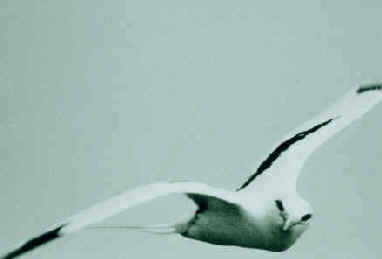
White-tailed Tropicbird
(photo by Alan Brady)
Red-billed Tropicbird (p) (ph) (*)
______
Phaethon aethereus mesonauta
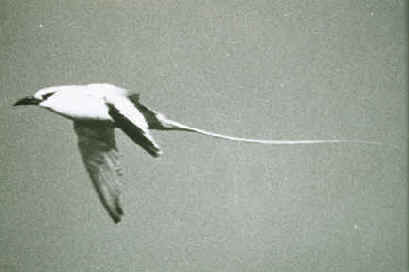
Red-billed Tropicbird
(photo by Alan Brady)
Magnificent Frigatebird (p) (NCr) (ph) (*)
______ late-spring
Fregata magnificens (monotypic)
Brown Pelican (ph) ______ 12 late-spring
Pelecanus occidentalis carolinensis
Brown Booby (+p) (ph) (*) ______
summer
Sula l. leucogaster
Masked Booby (p) ______ late-spring
Sula d. dactylatra
Northern Gannet (+p) (ph) ______ 5 late-spring
Morus (formerly Sula) bassanus (monotypic)
Double-crested Cormorant (ph) ______ 12 late-spring
Phalacrocorax a. auritus (another
subspecies in the southeast US: P. a. floridanus)
Turkey Vulture (ph) ______ 12 late-spring
Cathartes aura septentrionalis
Black Vulture (ph) ______
8 late-spring
Coragyps atratus (now said to be
monotypic) (the single member of its genus)
Mississippi Kite ______ 8 late-spring
Ictinia mississippiensis (monotypic)
Osprey (ph) ______ 11
Pandion haliaetus carolinensis (the
single member of its genus)
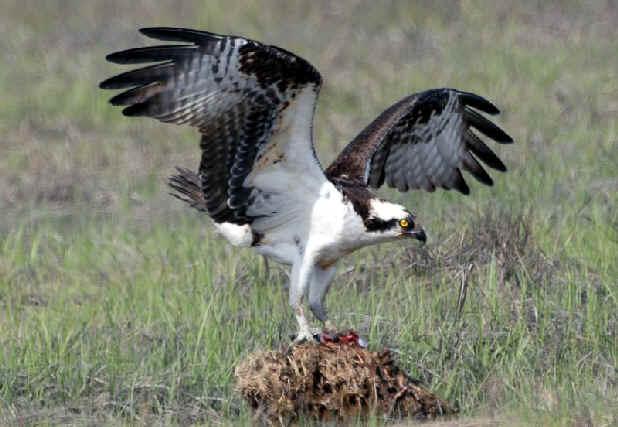
Osprey
(photo by Howard Eskin)
Bald Eagle (ph) ______ 1 late-spring
Haliaeetus leucocephalus
Red-shouldered Hawk (ph) ______
2
Buteo l. lineatus
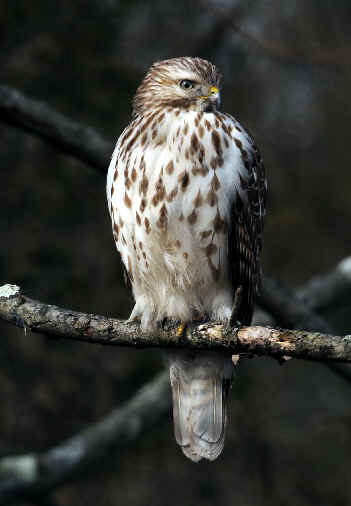
A juvenile Red-shouldered Hawk
(photo by Howard Eskin)
Red-tailed Hawk (ph) ______ 11
Buteo jamaicensis borealis
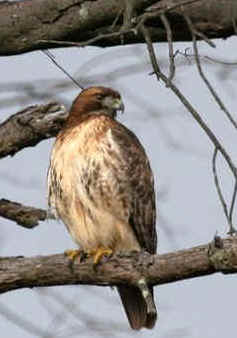
Red-tailed Hawk
(photo by Marie Gardner)
Northern Harrier (ph) ______
4 late-spring, summer
Circus cyaneus hudsonius
The Northern Harrier was
conspecific with the Hen Harrier of Eurasia, Circus
cyaneus.
American Kestrel (ph) ______ 4
Falco s. sparverius
Merlin (ph) ______
2
Falco c. columbarius
Peregrine Falcon (ph) ______
2
Falco peregrinus
Clapper Rail (ph) ______ 11
Rallus crepitans (was R. longirostris)
(2 subspecies in North
Carolina: R. c. crepitans in
northeast North Carolina and R. c. waynei in
southeast North Carolina)
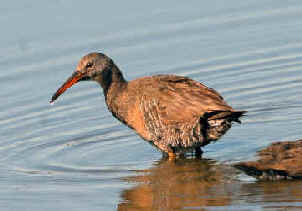
Clapper Rail
(photo by Howard Eskin)
Virginia Rail (ph) ______
7 late-spring
Rallus l. limicola
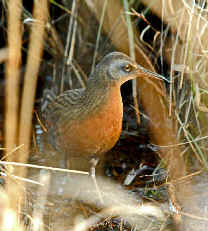
Virginia Rail
(photo by Howard Eskin)
Black Rail (nt) ______
5 late-spring
Laterallus j. jamaicensis
Common Gallinule (ph) ______ 2
Gallinula galeata (formerly chloropus)
American Coot (ph) ______ 2
Fulica a. americana
American Oystercatcher (ph) ______ 11 late-spring, summer
Haematopus p. palliatus
Black-necked Stilt (ph) ______
7
Himantopus mexicanus
The Black-necked Stilt has been considered by some to be a part
of the nearly-cosmopolitan Black-winged Stilt, Himantopus
himantopus.
American Avocet (ph) ______ 3
Recurvirostra americana (monotypic)
Black-bellied Plover (ph) ______
7 late-spring, summer
Pluvialis squatarola cynosurae
Another name for Pluvialis
squatarola is Grey Plover, especially in the Old
World.
American Golden Plover (*) (ph) ______
1 summer
Pluvialis dominica (monotypic)
Semipalmated Plover (ph) ______ 7 late-spring, summer
Charadrius semipalmatus (monotypic)
Piping Plover (t3) (ph) ______ 4
Charadrius melodus (monotypic)
Wilson's Plover (ph) ______ 8 late-spring
Charadrius w. wilsonia
Killdeer (ph) ______
12 late-spring, summer
Charadrius v. vociferus
Upland Sandpiper ______ 2 summer
Bartramia longicauda (monotypic, and
the single member of its genus)
"American" Whimbrel
(ph) ______ 3
Numenius phaeopus hudsonicus
Long-billed Curlew (NCr) (*) ______ 1 summer
Numenius americanus
(2 subspecies in western North
America: N. a. parvus & n. a. americanus. Those
that wander east ?)
Marbled Godwit (ph) ______
4 summer
Limosa f. fedoa
Greater Yellowlegs ______
6
Tringa melanoleuca (monotypic)
Lesser Yellowlegs (+p) (ph) ______
6
Tringa flavipes (monotypic)
Solitary Sandpiper ______ 1 late-spring
Tringa s. solitaria
Spotted Sandpiper (ph) ______
4
Actitis macularius (monotypic)
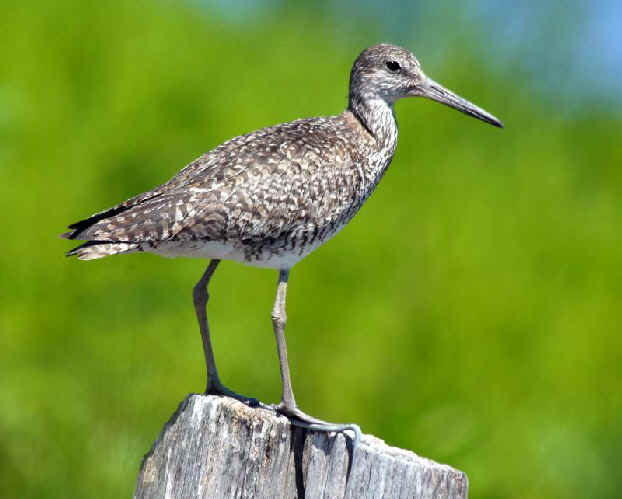
Willet (ph) ______ 12 late-spring, summer
Tringa (formerly Catoptrophorus) s. semipalmatus
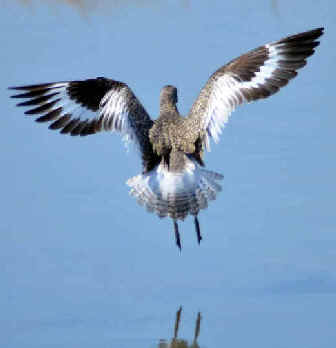
Above & below: Willets
(photos by Howard Eskin)
Ruddy Turnstone (+p) (ph) ______
9 late-spring, summer
Arenaria interpres morinella
Red Knot (ph) ______ 8 late-spring, summer
Calidris canutus rufa
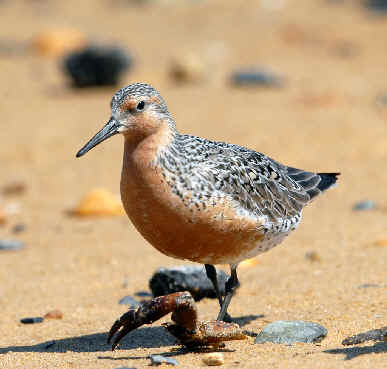
Red Knot
(photo by Howard Eskin)
Sanderling (+p) (ph) ______
9
Calidris alba rubida
Semipalmated Sandpiper (+p)
(ph) ______ 10 late-spring, summer
Calidris pusilla (monotypic)
Western Sandpiper (ph) ______ 2
Calidris mauri (monotypic)
Least Sandpiper (ph) ______
6 late-spring, summer
Calidris minutilla (monotypic)
White-rumped Sandpiper (ph) ______
4
Calidris fuscicollis (monotypic)
Pectoral Sandpiper (ph) ______
2 summer
Calidris melanotos (monotypic)
Dunlin (ph) ______ 2 late-spring
Calidris alpina hudsonia
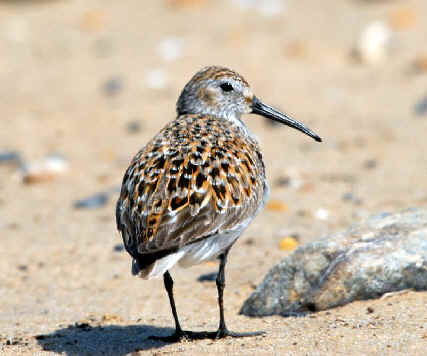
Dunlin
(photo by Howard Eskin)
Curlew Sandpiper (NCr) (ph) ______
3 summer
Calidris ferruginea (monotypic)
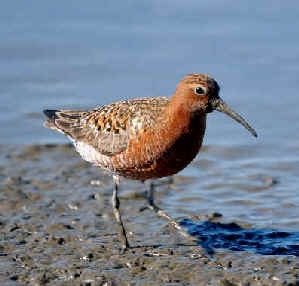
A Curlew Sandpiper in breeding plumage
(photo by Howard Eskin)
Stilt Sandpiper (ph) ______ 3 summer
Calidris (formerly Micropalama) himantopus
Ruff / Reeve (*) (ph) ______ 1 summer
Philomachus pugnax (monotypic, and
the single member of its genus)
Buff-breasted Sandpiper (nt)
(ph) ______ 1 summer
Tryngites subruficollis
(the single
member of its genus)
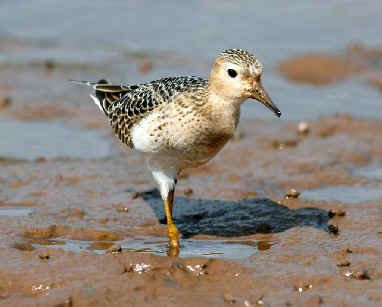
Buff-breasted Sandpiper
(photo by Howard Eskin)
Short-billed Dowitcher (ph) ______
7
Limnodromus griseus hendersoni
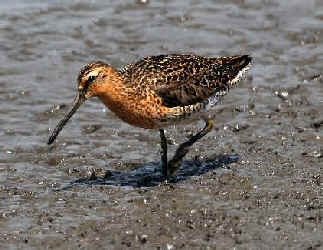
Short-billed Dowitcher
(photo by Howard Eskin)
Long-billed Dowitcher (ph) ______ 3 summer
Limnodromus scolopaceus (monotypic)
Wilson's Phalarope ______ 3 summer
Phalaropus (formerly Steganopus) tricolor
(monotypic)
Red-necked Phalarope (+p) (ph) ______
8
Phalaropus lobatus (monotypic)
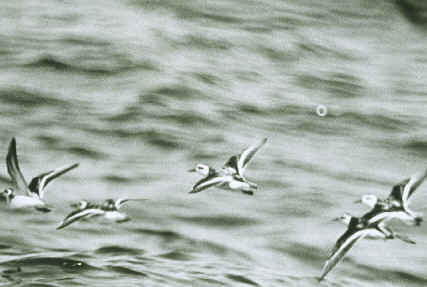
Red-necked Phalaropes at sea
(photo by Alan Brady)
Pomarine Jaeger (p) (ph) ______
Stercorarius pomarinus (monotypic)
Stercorarius pomarinus
is also called the Pomarine Skua, especially in the Old
World.
Parasitic Jaeger (+p) (ph) ______ 4
Stercorarius parasiticus
(monotypic)
Stercorarius parasiticus
is also called the Arctic Skua,
especially in the Old World.
Long-tailed Jaeger (p) (ph) ______
Stercorarius longicaudus pallescens
Stercorarius longicaudus
is also called the Long-tailed Skua, especially in the
Old World.
South Polar Skua (p) (ph) ______
Stercorarius
(formerly Catharacta) maccormicki
(monotypic)
Laughing Gull (+p) (ph) ______ 12 late-spring, summer
Leucophaeus (formerly Larus) atricilla megalopterus
Bonaparte's Gull (*) (ph) ______
1
Chroicocephalus (formerly Larus)
philadelphia (monotypic)
Ring-billed Gull (ph) ______
9 late-spring, summer
Larus delawarensis (monotypic)
"American" Herring Gull (+p)
______ 12 late-spring, summer
Larus argentatus smithsonianus
Larus argentatus smithsonianus has
been considered
conspecific with the Herring
Gulls of
Europe, L. a. argenteus & L. a. argentatus, and
with the Vega
Gull of
eastern Asia, L. vegae.
Great Black-backed Gull (ph) ______ 12 late-spring, summer
Larus marinus (monotypic)
Gull-billed Tern (ph) ______
9 late-spring, summer
Gelochelidon (formerly Sterna) nilotica aranea
Caspian Tern (ph) ______ 8 late-spring, summer
Hydroprogne (formerly Sterna) caspia
Royal Tern (+p) (ph) ______ 12 late-spring, summer
Thalasseus (formerly Sterna) m. maxima
Sandwich Tern (+p) (ph) ______
11 late-spring, summer
Thalasseus (formerly Sterna)
sandvicensis acuflavida
Common Tern (+p) ______ 11 late-spring, summer
Sterna h. hirundo
Arctic Tern (+p) (*) (ph) ______ 4 late-spring
Sterna paradisaea (monotypic)
Forster's Tern (ph) ______
10 late-spring, summer
Sterna forsteri
(monotypic)
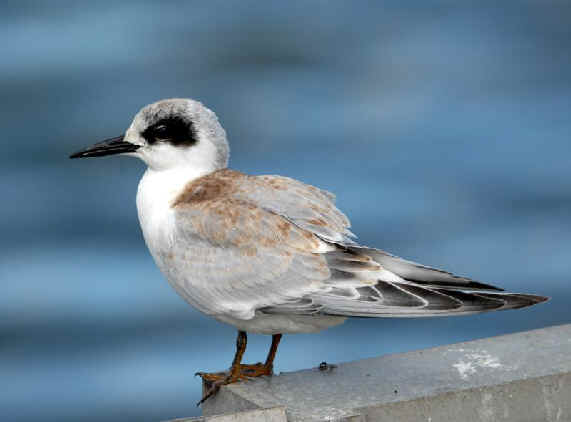
Forster's Tern
(photo by Howard Eskin)
Least Tern ______ 12 late-spring, summer
Sternula (formerly Sterna) a. antillarum
Bridled Tern (p) (ph) ______
Onychoprion (formerly Sterna) anaethetus melanoptera
Bridled Tern
(photo by Alan Brady)
Sooty Tern (+p) (ph) ______
7
Onychoprion (formerly Sterna) f. fuscata
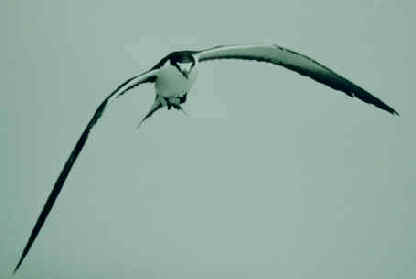
Sooty Tern
(photo by Alan Brady)
Black Tern (+p) (ph) ______ 7
Chlidonias niger surinamensis
Black Skimmer (ph) ______ 11
Rynchops n. niger
Atlantic Puffin (p) (*) (ph) ______ 1 summer
Fratercula a. arctica
Feral Pigeon (i) ______ 12 late-spring, summer
Columba livia
Mourning Dove ______ 12 late-spring, summer
Zenaida macroura carolinensis
Eurasian Collared Dove (i) (*) ______
1 summer
Streptopelia d. decaocto
Yellow-billed Cuckoo (ph) ______ 12 late-spring, summer
Coccyzus americanus (monotypic)
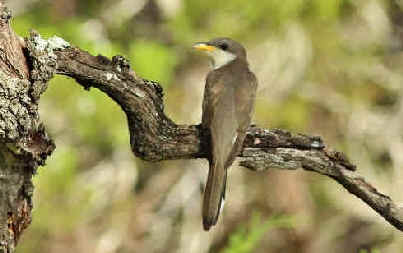
Yellow-billed Cuckoo
(photo by Rhett Poppe)
American Barn Owl (ph) ______
1 summer
Tyto furcata
The American Barn Owl has
been part of the Barn Owl of Eurasia and Africa,
Tyto alba.
But Tyto furcata is a heavier
bird, with a larger and stouter head and body, with much more powerful
talons.
Eastern Screech Owl (ph) ______ 4
Megascops
(formerly Otus) a. asio
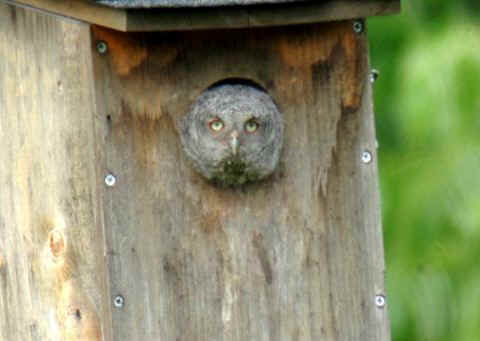
A young Eastern Screech Owl
(photo by Howard Eskin)
Great Horned Owl (ph) ______
8
Bubo v. virginianus
Barred Owl (ph) ______ 6 late-spring, summer
Strix varia georgica
Chuck-Will's-Widow ______
12 late-spring
Caprimulgus carolinensis (monotypic)
Whip-poor-will ______ 3 late-spring
Caprimulgus v. vociferus
Common Nighthawk (ph) ______ 11 late-spring, summer
Chordeiles m. minor
Antillean Nighthawk (NCr) (*) ______ 1 summer
Chordeiles gundlachii vicinus
Chimney Swift ______ 12 late-spring, summer
Chaetura pelagica (monotypic)
Ruby-throated Hummingbird (ph) ______ 10 late-spring, summer
Archilochus colubris
(monotypic)
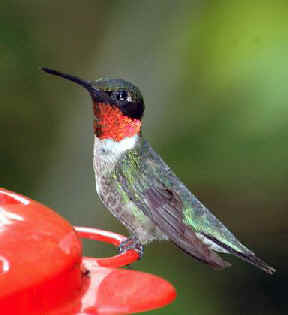
A male Ruby-throated Hummingbird
(photo by Howard Eskin)
Belted Kingfisher (ph) ______
7
Megaceryle
(formerly Ceryle) alcyon
(monotypic)
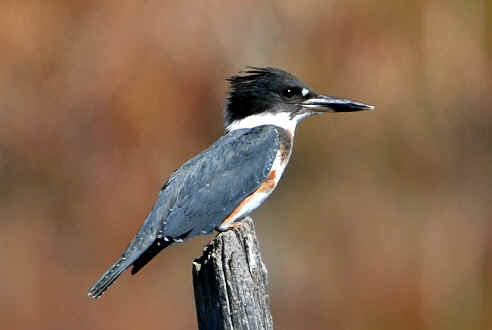
Belted Kingfisher
(photo by Howard Eskin)
"Yellow-shafted" Northern Flicker
______ 12 late-spring, summer
Colaptes auratus luteus
Red-bellied Woodpecker (ph) ______ 12 late-spring, summer
Melanerpes carolinus
(monotypic)
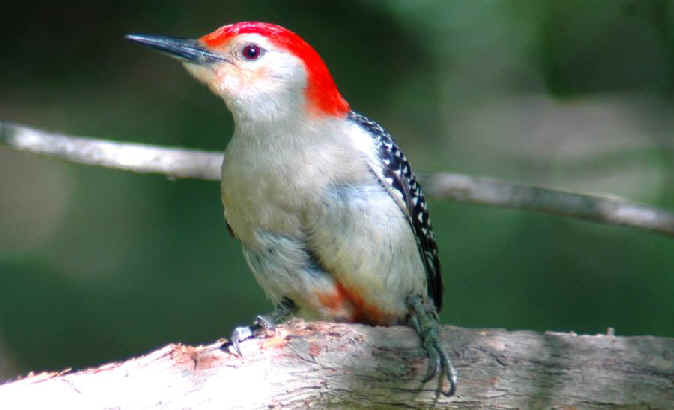
Red-bellied Woodpecker
(photo by Howard Eskin)
Red-headed Woodpecker (ph) ______ 11 late-spring
Melanerpes erythrocephalus (monotypic)
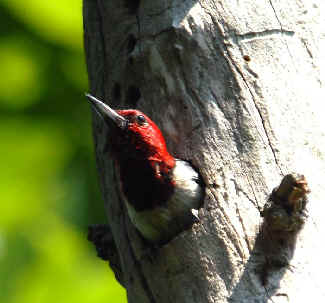
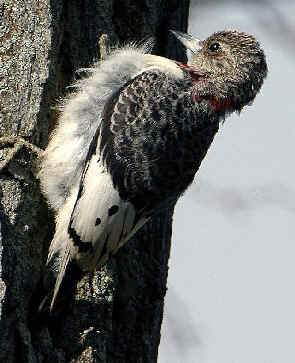
Red-headed Woodpeckers,
an adult
(above) and an immature
(below)
(photos by Howard Eskin)
Downy Woodpecker (ph) ______ 9 late-spring, summer
Picoides p. pubescens
Hairy Woodpecker (ph) ______
7
Picoides v. audubonii
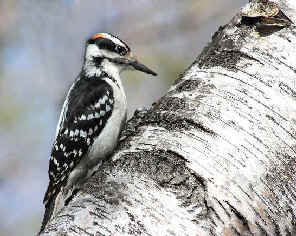
Hairy Woodpecker
(photo by Doris Potter)
Red-cockaded Woodpecker (t3) (USe) ______ 12 late-spring
Picoides borealis (monotypic)
Pileated Woodpecker (ph) ______ 10 late-spring, summer
Dryocopus p. pileatus
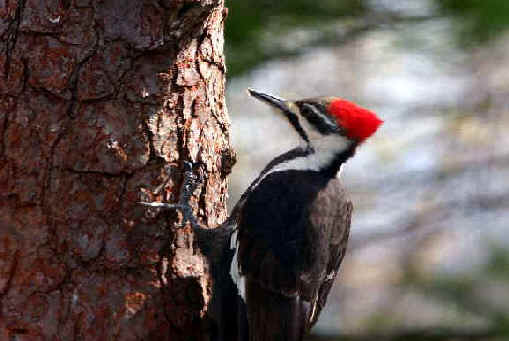
Pileated Woodpecker
Eastern Kingbird (ph) ______
11 late-spring, summer
Tyrannus tyrannus (monotypic)
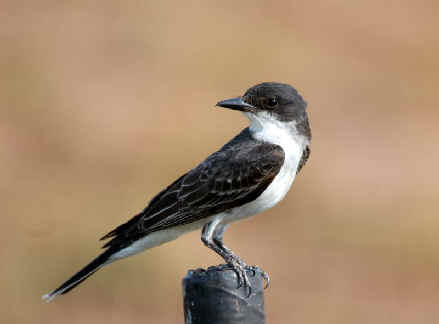
Eastern Kingbird
(photo by Howard Eskin)
Great Crested Flycatcher (ph) ______ 12 late-spring, summer
Myiarchus crinitus (monotypic)
Acadian Flycatcher ______ 12 late-spring, summer
Empidonax virescens (monotypic)
Eastern Wood Pewee (ph) ______ 11
Contopus virens (monotypic)
Eastern Phoebe (ph) ______ 4 late-spring
Sayornis phoebe (monotypic)
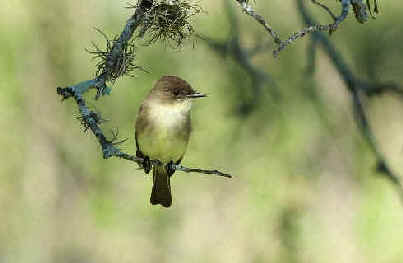
Eastern Phoebe
(photo by Rhett Poppe)
Loggerhead Shrike (ph) ______ 1 late-spring
Lanius ludovicianus
White-eyed Vireo (ph) ______ 12 late-spring, summer
Vireo g. griseus
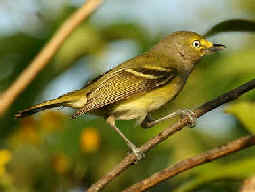
White-eyed Vireo
(photo by Dick Tipton)
Blue-headed Vireo (ph) ______ 1 late-spring
Vireo s. solitarius
The Blue-headed Vireo was
part of the former Solitary Vireo.
Yellow-throated Vireo ______ 4 late-spring
Vireo flavifrons (monotypic)
Red-eyed Vireo ______
10 late-spring, summer
Vireo o. olivaceus
Blue Jay (ph) ______ 12 late-spring, summer
Cyanocitta c. cristata
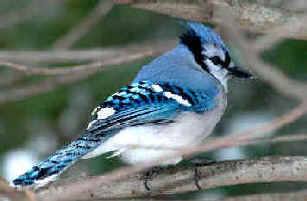
Blue Jay
(photo by Howard Eskin)
American Crow ______ 12 late-spring, summer
Corvus b. brachyrhynchos
Fish Crow (USe) ______ 12 late-spring, summer
Corvus ossifragus (monotypic)
Carolina Chickadee (USe) (ph) ______ 12 late-spring, summer
Poecile
(formerly Parus) c. carolinensis
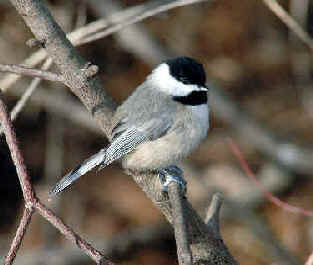
Carolina Chickadee
(photo by Howard Eskin)
Tufted Titmouse ______ 12 late-spring, summer
Baeolophus (formerly Parus) bicolor
White-breasted Nuthatch (ph) ______
6 late-spring
Sitta c. carolinensis
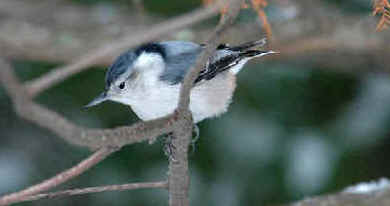
White-breasted Nuthatch
(photo by Howard Eskin)
Brown-headed Nuthatch (ph) ______ 12 late-spring, summer
Sitta p. pusilla (this subspecies
endemic to the southeast US; the other is in the Bahamas)
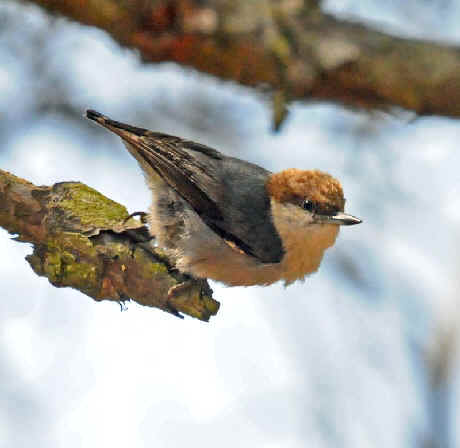
Brown-headed Nuthatch
(photo by Howard Eskin)
Purple Martin (ph) ______ 12 late-spring, summer
Progne s. subis
Barn Swallow (+p) (ph) ______ 12 late-spring, summer
Hirundo rustica erythrogaster
American Cliff Swallow ______ 1
late-spring
Petrochelidon pyrrhonota
Tree Swallow (+p) (ph) ______
5
Tachycineta bicolor (monotypic)
Northern Rough-winged Swallow
(ph) ______
6
Stelgidopterys s. serripennis
Carolina Wren (ph) ______
12 late-spring, summer
Thryothorus l. ludovicianus
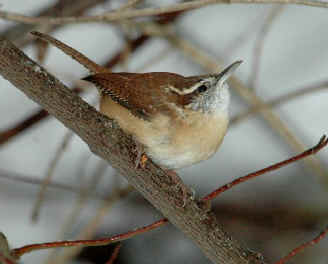
Carolina Wren
(photo by Howard Eskin)
House Wren (ph) ______
4
Troglodytes a. aedon
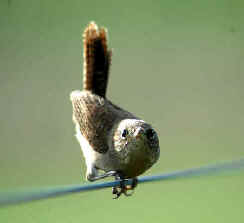
A House Wren, looking at you!
(photo by Howard Eskin)
Marsh Wren (ph) ______
6
Cistothorus palustris waynei
Gray Catbird (ph) ______
11 late-spring, summer
Dumetella carolinensis
(monotypic, and the single member of its genus)
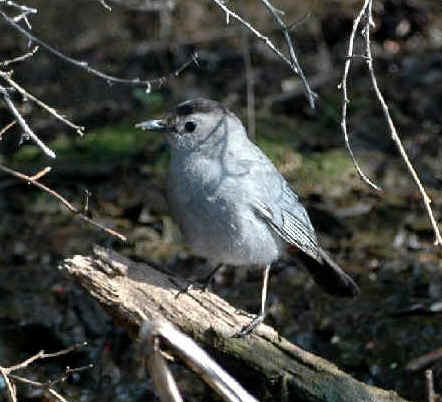
Gray Catbird
(photo by Howard Eskin)
Northern Mockingbird (ph) ______
12 late-spring, summer
Mimus p. polyglottos
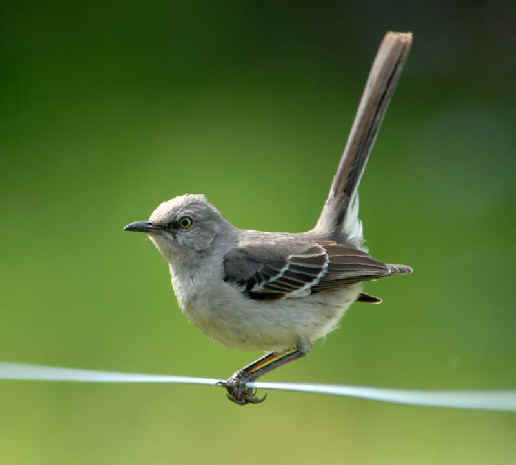
Northern Mockingbird
(photo by Howard Eskin)
Brown Thrasher (ph) ______
11 late-spring, summer
Toxostoma r. rufum
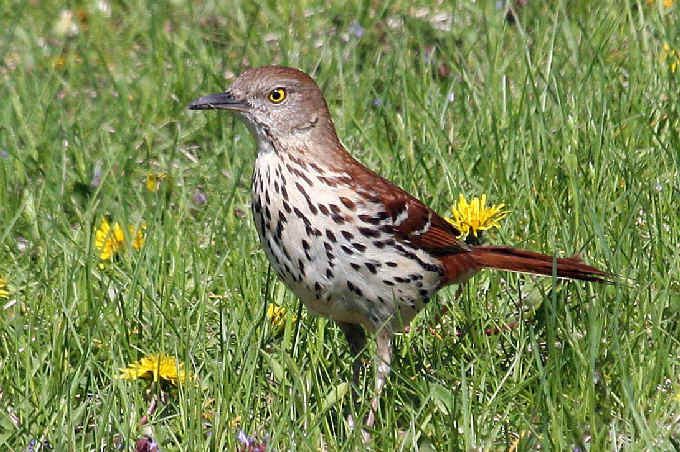
Brown Thrashers were numerous during the
FONT North Carolina tour in May 2009.
(photo by Doris Potter)
American Robin ______ 12 late-spring, summer
Turdus m. migratorius
Wood Thrush ______ 8 late-spring
Hylocichla mustelina (monotypic, and the single member of its genus)
Eastern Bluebird (ph) ______
12 late-spring, summer
Sialia s. sialis
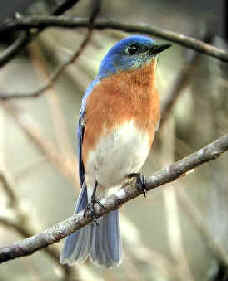
Eastern Bluebird
(photo by Howard Eskin)
Blue-gray Gnatcatcher (ph) ______ 11 late-spring
Polioptila c. caerulea
Cedar Waxwing (ph) ______ 7
Bombycilla cedrorum (monotypic)
European Starling (i) (ph) ______ 12 late-spring, summer
Sturnus v. vulgaris
House Sparrow (i) ______ 12 late-spring, summer
Passer d. domesticus
House Finch (i) (ph) ______ 10 late-spring, summer
Carpodacus mexicanus frontalis
American Goldfinch (ph) ______
8 late-spring, summer
Carduelis t. tristis
Black-and-white Warbler ______
3
Mniotilta varia (monotypic, and the single species of its genus)
Blue-winged Warbler (ph) ______
1 late-spring
Vermivora pinus (monotypic)
Northern Parula (ph) ______
9
Setophaga (formerly Parula) americana
(monotypic)
Yellow Warbler (ph) ______
6
Setophaga (formerly Dendroica)
petechia
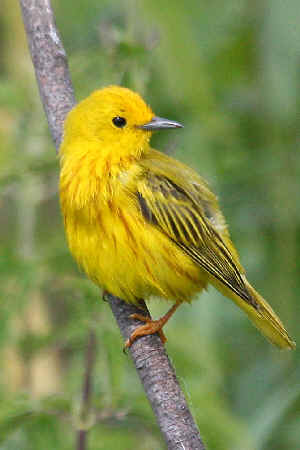
Yellow Warbler
(photo by Doris Potter)
Magnolia Warbler (+p) (ph) ______
3
Setophaga (formerly Dendroica) magnolia
(monotypic)
Black-throated Blue Warbler ______ 1 summer
Setophaga (formerly Dendroica) caerulescens
(2 subspecies in North Carolina: S. c. caerulescens &
S. c. cairnsi)
Black-throated Green Warbler (+p)
(ph) ______ 5
late-spring
Setophaga (formerly Dendroica) virens
(now considered monotypic, although
"Wayne's
Warbler" has been S. v. waynei)
"Wayne's Warbler" is a breeder in cypress habitat in
eastern North Carolina.
The "northern" Black-throated Green Warbler, which
migrates through North Carolina, breeds further north in spruce-hemlock
habitat.
Bay-breasted Warbler (+p) ______
1 late-spring
Setophaga (formerly Dendroica) castanea
(monotypic)
Blackburnian Warbler (ph) ______
1 late-spring
Setophaga (formerly Dendroica) fusca
(monotypic)
Yellow-throated Warbler (ph) ______
10
Setophaga (formerly Dendroica) dominica
(3 subspecies in the eastern US)
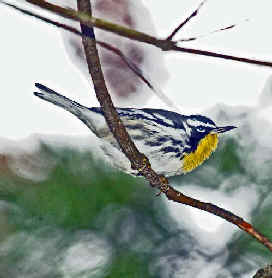
Yellow-throated Warbler
(photo by Howard Eskin)
Blackpoll Warbler (ph) ______
1 late-spring
Setophaga (formerly Dendroica) striata
(monotypic)
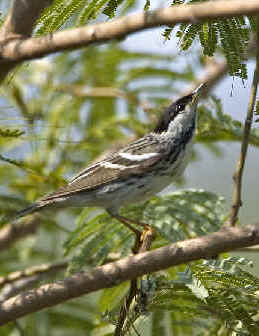
Blackpoll Warbler
Pine Warbler (ph) ______ 12 late-spring, summer
Setophaga
(formerly Dendroica) p. pinus
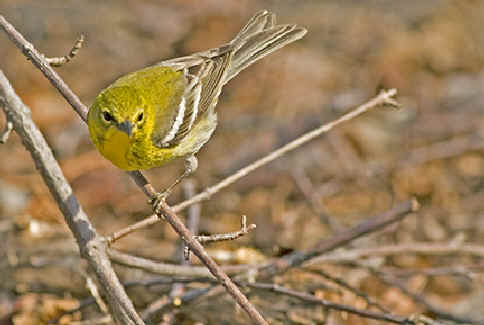
Pine Warbler
(photo by Andy Smith)
Prairie Warbler (ph) ______
11
Setophaga (formerly Dendroica) discolor (2
subspecies in the southeast US: S.d. discolor and S. d.
paludicola)
"Scrub Warbler" might
be a better name! But Alexander Wilson did not name the bird after the
western prairies or grassy plains, but rather after "the barrens of
southwestern Kentucky" where he found the bird, an area known to local
residents as "prairie country".
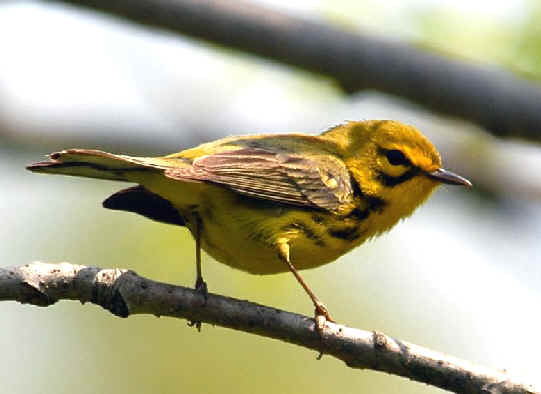
Prairie Warbler
(photo by Howard Eskin)
Prothonotary Warbler (ph) ______
12 late-spring, summer
Protonotaria citrea (monotypic, and the single species of its genus)
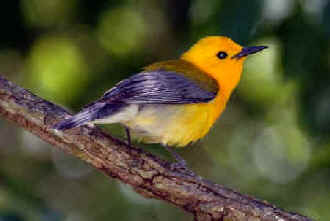
Prothonotary Warbler
(photo by Howard Eskin)
Swainson's Warbler ______ 8 late-spring
Limnothlypis swainsonii (monotypic, and the single species of its
genus)
Worm-eating Warbler ______
9 late-spring, summer
Helmitheros vermivorum (monotypic, and the single species of its
genus)
Ovenbird (ph) ______ 9 late-spring, summer
Seiurus a. aurocapilla
Northern Waterthrush (+p) ______
3
Parkesia (formerly Seiurus) noveboracensis
(now said to be monotypic)
Louisiana Waterthrush ______ 4 late-spring
Parkesia (formerly Seiurus) motacilla
(monotypic)
Kentucky Warbler ______
6 late-spring
Geothlypis (formerly Oporornis) formosus
(monotypic)
Mourning Warbler (ph) ______ 1 late-spring
Geothlypis (formerly Oporornis)
philadelphia (monotypic)
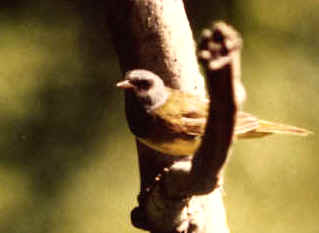
Mourning Warbler
(photo by Armas Hill)
Common Yellowthroat (ph) ______ 12 late-spring, summer
Geothlypis t. trichas (another subspecies occurs in the
southeast US, G. trichas ignota)
Hooded Warbler ______
8 late-spring
Setophaga (formerly Wilsonia) citrina (monotypic)
Canada Warbler (ph) ______ 1 late-spring
Cardellina (formerly Wilsonia) canadensis
(monotypic)
American Redstart (ph) ______
6
Setophaga ruticilla (monotypic, and the single species of its
genus)
Yellow-breasted Chat (ph) ______ 6 late-spring
Icteria v. virens (the single member of its genus)
Eastern Meadowlark (ph) ______
12 late-spring, summer
Sturnella magna argutula
Red-winged Blackbird (ph) ______ 12 late-spring, summer
Agelaius p. phoeniceus
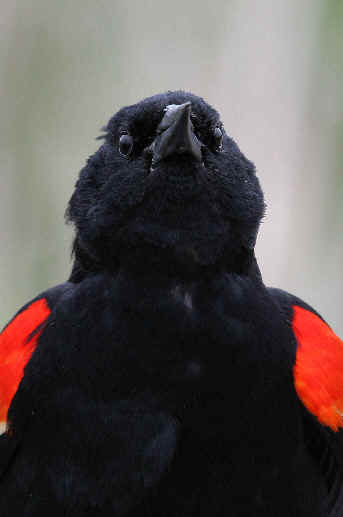
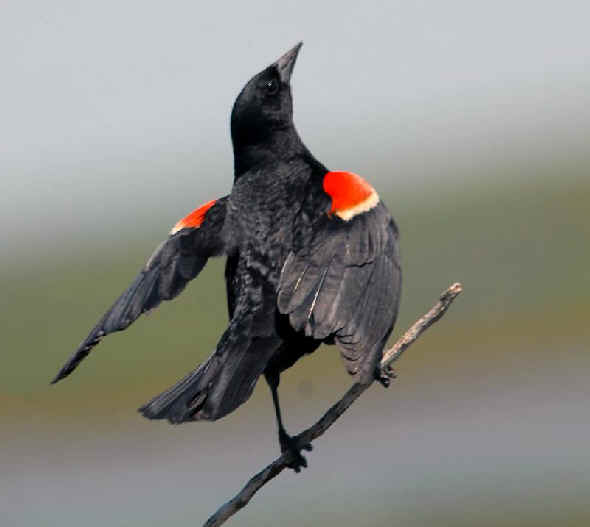
Red-winged Blackbirds
(upper photo by Doris Potter; lower photo by Howard Eskin)
Orchard Oriole (ph) ______ 10 late-spring
Icterus s. spurius
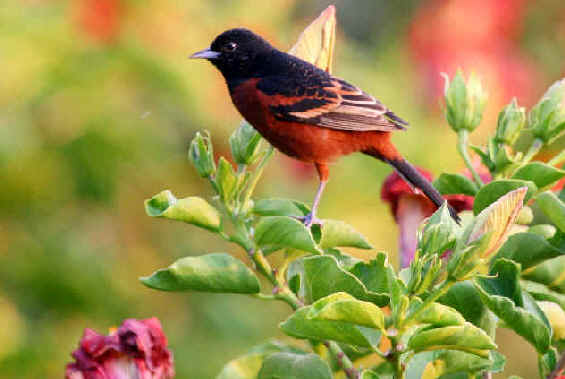
Orchard Oriole
(photo by Marie Gardner)
Baltimore Oriole ______ 1 late-spring
Icterus galbula
(monotypic)
The Baltimore Oriole was, for a while, said to be conspecific with
the Bullock's Oriole of western North America, and when so it was
called the Northern Oriole.
Boat-tailed Grackle (USe) ______ 12 late-spring, summer
Quiscalus major torreyi
Common Grackle ______ 12 late-spring, summer
Quiscalus quiscula
Brown-headed Cowbird (ph) ______
12 late-spring, summer
Molothrus a. ater
Summer Tanager (ph) ______ 10 late-spring
Piranga r. rubra
Bachman's Sparrow (USe) ______ 12 late-spring (the "Pine-Woods
Sparrow")
Aimophila aestivalis bachmani
Henslow's Sparrow (nt) (ph) ______
5 late-spring
Ammodramus h. henslowii
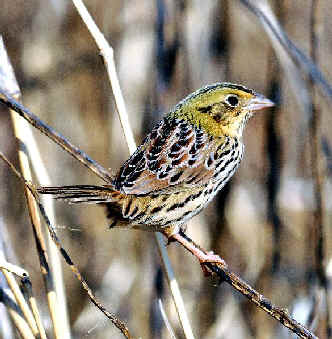
Henslow's Sparrow
(photo by Howard Eskin)
Grasshopper Sparrow (ph) ______
5 late-spring
Ammodramus savannarum pratensis
Seaside Sparrow ______
6
Ammodramus maritimus macgillivrayi
Saltmarsh Sparrow (t3) (ph) ______
1 late-spring
Ammodramus caudacutus diversus
The Saltmarsh Sparrow was conspecific with what is now the Nelson's
Sparrow. When so, it was called the Sharp-tailed Sparrow.
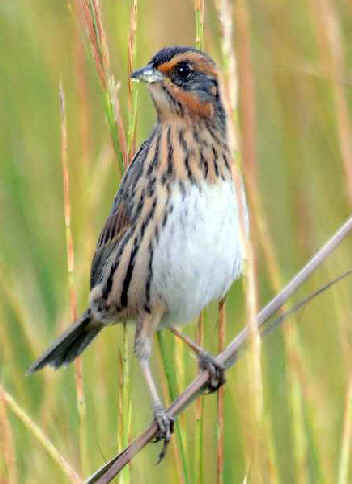
Saltmarsh Sparrow
(photo by Howard Eskin)
Chipping Sparrow (ph) ______ 10 late-spring
Spizella p. passerina
Field Sparrow (ph) ______ 9
Spizella p. pusilla
Song Sparrow (ph) ______ 9
Melospiza melodia atlantica
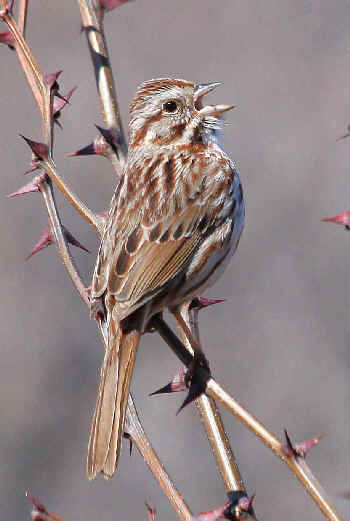
Song Sparrow
(photo by
Doris Potter)
Eastern Towhee (ph) ______ 11 late-spring, summer
Pipilo erythrophthalmus rileyi
The Eastern Towhee was the Rufous-sided Towhee.
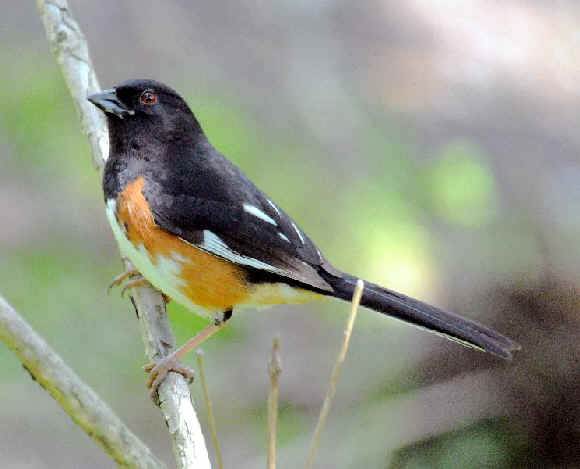
A male Eastern Towhee
(photo by Howard Eskin)
Northern Cardinal (ph) ______ 12 late-spring, summer
Cardinalis c. cardinalis
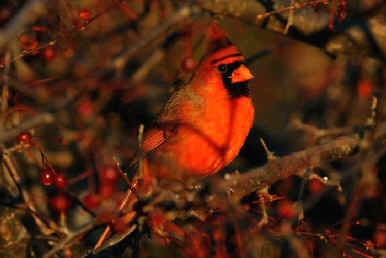
Northern Cardinal
(photo by Howard Eskin)
Blue Grosbeak (ph) ______
12 late-spring, summer
Passerina c. caerulea
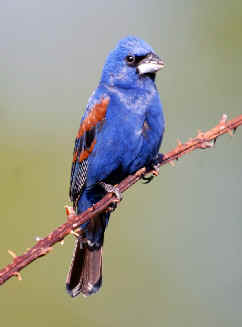
Blue Grosbeak
(photo by Howard Eskin)
Indigo Bunting (ph) ______
12 late-spring, summer
Passerina cyanea
(monotypic)
Painted Bunting (ph) ______
11 late-spring
Passerina c. ciris

Notes regarding
some special bird sightings during FONT North Carolina Tours,
indicated in the previous list with an
(*)
Trinidade (or Herald)
Petrels have been seen during FONT NC pelagic trips
1992-99, seven years out of eight. 2 years in June, 6 years in
August.
The first "soft-plumaged-type",
or Fea's Petrel, during a FONT pelagic trip, in June '95,
was photographed well by Mike Danzenbaker & Alan Brady. There
were subsequent sightings during FONT trips in 1996, 1998, and
1999.
A Bulwer's Petrel on August
8, 1998 was the first seen and photographed off eastern North
America.
Sooty Shearwaters are
uncommon off North Carolina during mid and late summer. The
species was seen from shore in August 1994.
As many as 160 Band-rumped
Storm-Petrels were seen during one pelagic trip in August
'97. There was another good day for Band-rumped Storm-Petrels
in August '98 when about 120 were seen.
White-faced Storm-Petrels
were seen during FONT NC pelagic trips in 1996 & 1999. In '96
in August, in '99 (twice) in July and August.
During June '96, a couple birds of
the sea were seen on a beach: a Wilson's Storm-Petrel seen
closely, resting, before it flew back out to sea. An Arctic
Tern was seen on the same beach at the same time.
White-tailed Tropicbirds
were seen during 4 of 5 pelagic trips in August '97. During one
trip 3 were seen.
An immature Red-billed
Tropicbird was close to the boat, on the water, in May '98.
A Loggerhead Sea Turtle
in August '94 was seen at the same time and place offshore as a Brown Booby (off Nags
Head). Another Brown Booby was seen that month from
Ocracoke Island.
Magnificent Frigatebirds,
seen at sea in '93 & '95, are unusual over North Carolina
waters.
A "Great White Heron"
was present in August 1994 at Pea Island National Wildlife
Refuge.
A Reddish Egret was at a
pond by Bodie Island lighthouse in August 1994.
Gadwalls were seen with
young in August 1994.
A Common Eider was in the
surf at Cape Point (Cape Hatteras) in August 1993.
Most of the unusual shorebirds
were seen at Pea Island National Wildlife Refuge along the Outer
Banks, including:
in Aug '93: American
Golden-Plover & Long-billed Curlew
in Aug '94: Ruff
in Aug '93, '94, '95: Curlew
Sandpiper.
A single Bonaparte's Gull
was seen on Ocracoke Island in August 1994.
An Atlantic Puffin, seen on
and in flight over 82-degree F. water on August 14, 1993,
represented the southernmost record ever for the species (and
possibly a first record for North Carolina).
An Antillean Nighthawk was
with Common Nighthawks at the dunes of Cape Point (Cape
Hatteras) in August 1994.
A Eurasian Collared-Dove
was seen near Cape Hatteras, in August '94, in Buxton. That
species (native to the Old World) has been spreading north from
Florida, having arrived there from the nearby Bahamas (where
apparently introduced from Europe).
A Sooty Tern was seen in
August 1994 flying over Buxton. A pair nested that year in the
nearby Cape Point tern colony. All-dark juvenile Sooty Terns
were seen during an August '93 FONT pelagic trip.
Some landbirds seen offshore
during FONT pelagic trips in August have included:
Lesser Yellowlegs ('94), Barn
Swallow ('93 & '95), Tree Swallow ('94), Northern
Waterthrush ('93).
Landbirds seen offshore in May '98
included: Ruddy Turnstone, Sanderling, and 3
species of warblers: Magnolia, Bay-breasted, and Black-throated
Green.
