
PO Box 9021, Wilmington, DE 19809, USA
E-mail: font@focusonnature.com
Phone: Toll-free in USA, Canada, & Puerto Rico 1-800-721-9986
or 302/529-1876; Fax: 302/529-1085
PO Box 9021, Wilmington, DE
19809, USA
E-mail: font@focusonnature.com
Phone: Toll-free in USA, Canada, & Puerto Rico 1-800-721-9986
or 302/529-1876; Fax: 302/529-1085
HIGHLIGHTS
FROM FOCUS ON NATURE TOURS in 2007
INCLUDED HERE ARE BIRDING & NATURE TOURS CONDUCTED IN: ARIZONA, BELIZE, BRAZIL, CHILE, the DOMINICAN REPUBLIC
(2
tours: in February/March & in April),
GUATEMALA (2 tours: in January & July), HONDURAS, ICELAND, JAPAN (3 tours:
in January, May, December), the LESSER ANTILLES (ST. LUCIA & ST.
VINCENT), PUERTO RICO, SPAIN, and SWEDEN.
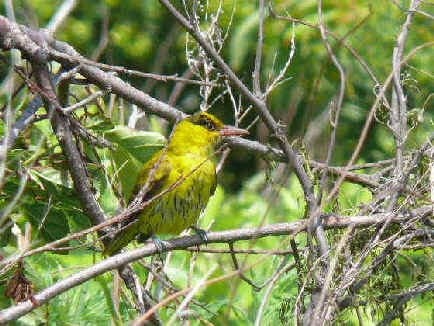
A bird seen during a FONT tour in Japan in
2007
was the Black-naped Oriole,
a species more apt to be seen on the Asian mainland,
but we saw a number of them nicely
on the small Japanese island of Hegura in May.
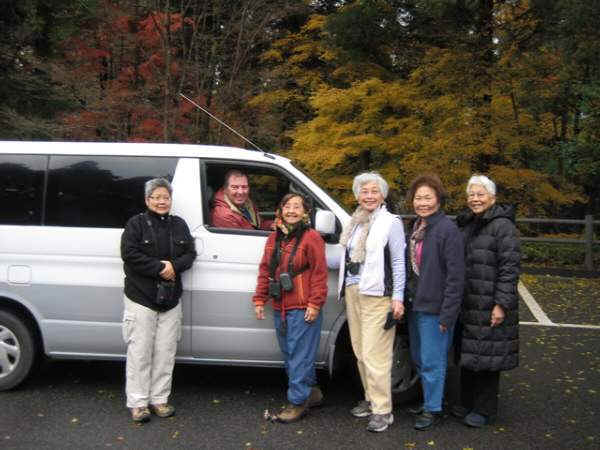
People during a FONT
tour in Japan in 2007
included these during the December 2007 tour.
They went to Japan from Thailand and California, USA.
Armas Hill of FONT, is, as he often is, in the driver's seat.

The tour summaries here are given with the most-recent tours first.
 For some tours there
are links below for longer NARRATIVES. Also
there are links to UPCOMING TOUR ITINERARIES, and LISTS relating to BIRDS,
MAMMALS, & OTHER NATURE.
For some tours there
are links below for longer NARRATIVES. Also
there are links to UPCOMING TOUR ITINERARIES, and LISTS relating to BIRDS,
MAMMALS, & OTHER NATURE.
Links to tours:
LESSER ANTILLES (St. Lucia & St. Vincent) (December 2007)
ICELAND (September/October 2007)
DOMINICAN REPUBLIC (& adjacent HAITI) (April 2007)
DOMINICAN REPUBLIC (& adjacent HAITI) (February/March 2007)
GUATEMALA (December 2006/January 2007)

Lesser
Antilles (St. Lucia & St. Vincent) - December 2007
During this tour,
there were both "Parrots & Pirates of the Caribbean".
On both of
the islands of St. Lucia & St. Vincent, there are endemic & rare
Amazon Parrots. We saw both.
And both "Parrots & Pirates" in that we did
some birding at the coastal setting in St. Vincent where the movie "Pirates
of the Caribbean" was filmed (the first & second of the 3 such movies
that have been made). Birds at the former movie-set included Brown Booby,
Magnificent Frigatebird, Antillean Crested Hummingbird, and Yellow-bellied
Elaenia in addition to ubiquitous Bananaquits. But those Bananaquits were quite
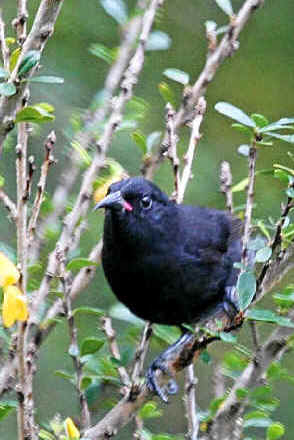
interesting, in that they were all-black except for the red of their mouths
visible when they called. Of the 41 subspecies of Bananaquits throughout the
Caribbean and Latin America, nearly all have yellow underparts. Only those on
the Caribbean islands of St. Vincent & Grenada are all-black.
At another spot coastal spot during the tour, on the island of St. Lucia, one of
our highlights was when about 50 Red-billed Tropicbirds were rapidly soaring about
in the strong wind at a high cliff.
This tour continued into 2008 in the Lesser Antilles on the lush, green island
of Dominica, where also there were endemic, rare Amazon parrots (2 species) and
other filming locations of the 2nd & 3rd "Pirates of the
Caribbean" films.
In all, during this, our annual "holiday tour", we saw 80 species of
birds, most of which were Caribbean specialties, and many them were
island-endemics, rarities, or birds that were just-plain nice to
see.
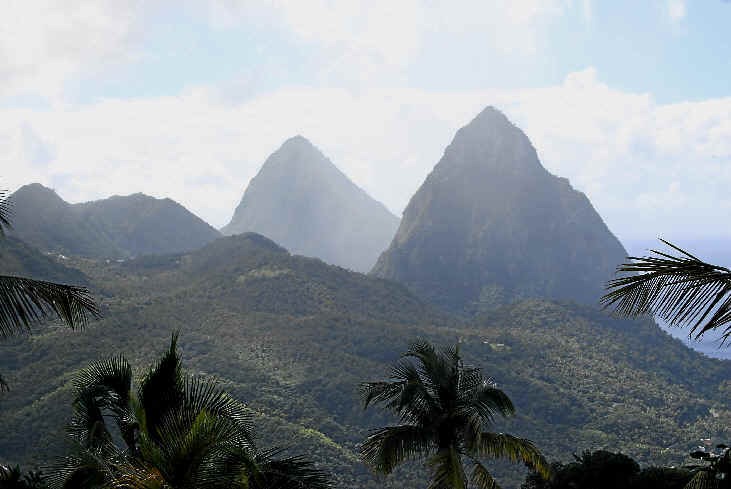
St Lucia Scenery
(photographed during the December 2007 FONT Lesser Antilles tour
by Marie Gardner)
Links:
More about the FONT Lesser Antilles Tour in Dec '07/Jan '08
List of Birds during our Lesser Antilles Tour - Dec '07 / Jan '08
Cumulative List of Birds during FONT Lesser Antilles Tours
Cumulative List of Birds during FONT Caribbean Tours (with photos)
Upcoming
FONT Caribbean Birding & Nature Tours

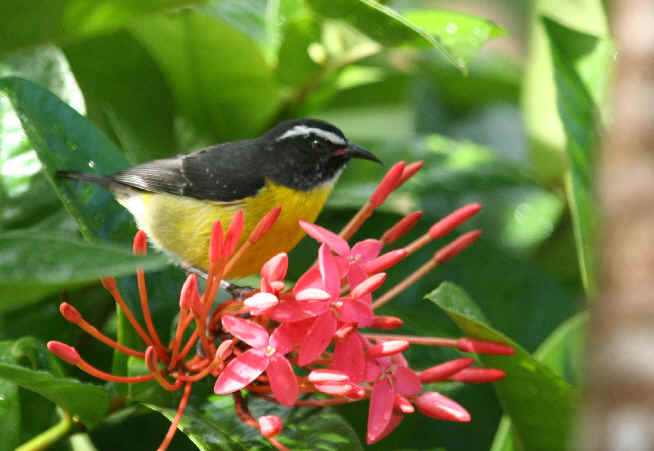
Throughout
much of the New World,
and particularly in the Caribbean,
there are a number of subspecies of Bananaquits.
That number is 41.
The Bananaquit on the island of Saint Lucia (above)
is quite different than the all-black form (below)
on the nearby island of St Vincent.
This was the 29th
FONT birding & nature tour in Japan, and our third in 2007. Highlights, as
usual, during such late-fall and winter tours, included: the cranes, the eagles,
and the Blakiston's Fish-Owl.
Most of our birding was on the southern island of Kyushu and the northern island
of Hokkaido. There was also some birding on Honshu
(in the Tokyo area), and
during the pelagic trip on the ferry from Honshu to Hokkaido.
Many of our winter tours in Japan have been in January, when it's colder and
when there's more snow in Hokkaido. Being a bit earlier in the season, and being
a bit warmer, there were some interesting aspects to our visit in Hokkaido this
time. We saw both Steller's Sea Eagles and the White-tailed
Eagles, but
not as many. We did, however, see, nicely, a raptor that we had never seen on
Hokkaido previously - a perched Mountain Hawk-Eagle - a large bird, apparently a
female.
Red-crowned, or Japanese, Cranes were at the feeding station, but we also saw a
few of them at various other places as we traveled about in southeastern
Hokkaido. And, even though the river was not yet frozen, we did have the good
fortune, indeed, to see, one evening, the large and rare Blakiston's
Fish-Owl.
We've seen that special bird during ALL of our 18 late-fall or winter birding
tours in Japan.
During the ferry-ride north to Hokkaido, there were birds all the time. The most
abundant of them was the Black-legged Kittiwake. We saw thousands of them flying
about above the water in the wind. Also flying with their distinctive arching
flight were the 75 or so Laysan Albatrosses we saw. There were also Pomarine
Skuas, both Streaked and Short-tailed Shearwaters, and both
Fork-tailed and
Sooty Storm-Petrels. With the storm-petrels, a single Bonin Petrel was seen.
There were not as many gulls (other than the kittiwakes)
as during our
ferry-trips in January, nor were there as many alcids, although some Japanese
Murrelets were seen.
On Kyushu, in addition to the thousands of cranes that come from mainland Asia
to spend the winter (Hooded & White-naped), other highlights were in a river
valley that we visit. Along that river in picturesque hills, we saw hundreds of
Mandarin Ducks. Where that river meets the sea, on a mudbar, there were
Spoonbills - both the rare Black-faced, and the Eurasian.
The Mandarin Ducks were not the only attractive waterfowl during the tour. We
also enjoyed, on Hokkaido, the equally attractive Smews and Harlequin
Ducks.
With such birds as these, as we were in nice settings in the Japanese
countryside, partaking in the Japanese culture, we enjoyed the entire
tour!
Links:
More
about the FONT Japan Tour in December 2007
List of Birds during our Japan Tour - December 2007
List of Birds during FONT Japan Tours in 2007
Cumulative List of Birds during our Japan Tours (with photos)
Upcoming FONT Japan Birding & Nature Tours
Chile
- November 2007
There was a pelagic
trip offshore from Valparaiso that was again, as it always has been, a part of
our annual FONT birding & nature tour in Chile.
And again, during that
boat-trip, on November 23, 2007, some "very good birds" were seen.
But this time, the "best" of
them were 2 Northern Royal Albatrosses, both seen sitting on the water
very close to us. Those large albatrosses, so big, even seemed to dwarf the
other 3 species of Albatrosses that were either on the water or flying by
us in the air: the Black-browed, the Buller's, and the Salvin's.
The wingspan of the Northern Royal Albatross is as much as 138 inches (that's
11.5 feet, or nearly 6 feet per wing!) Wow, what a bird to see as we did!
The plumages of the 2 individuals were a bit different; one was an adult, and
the other nearly so. The wingspan of the Salvin's Albatross is 98 inches.
That of the Black-browed, 88 inches; the Buller's, 83 inches. So
these wingspans (of the albatrosses also known as "Mollymawks")
are in the realm of 7 to 8 feet in length - that is each wing being from
about 3.5 to 4 feet long.
Those albatross-wings enabled the birds to fly a long way. 3 of our 4 albatross
species flew from New Zealand breeding sites to the offshore Chilean waters
where we saw them.
We only went offshore a couple hours out, and a couple hours
back to land. It's 9,647 kilometers (one-way) from New Zealand to Chile.
For those of us who flew by jet from North America to Chile, as a comparison,
it's 6,959 kilometers (one-way) from New York. The 3 species of albatrosses
that crossed the Pacific (the Northern Royal, the Salvin's,
and the Buller's) traveled further to see us than we did to
see them (referring to our flights in planes from places such as Texas and
Pennsylvania). And, yes, those albatrosses certainly did see us too,
as "chum" was tossed from the boat, attracting the oceanic birds by
scent from miles around.
Not only were the albatrosses drawn in. There were many other seabirds
also in the waters around us, including shearwaters, petrels, giant-petrels,
storm-petrels, pelicans, gulls, terns, boobies, and phalaropes. The
last of these, the Red Phalaropes, actually were not attracted to the
"chum", but there were many this year, as we estimated that we saw
about a couple thousand of them.
On land, during our November '07 Chile Tour,
there was another wonderful encounter with a big bird - one of the biggest of
American birds that soars in the sky. The Andean Condor has a wingspan of
up to 122 inches. That's over 10 feet. The Andean
Mountains, that were the
backdrop to condors were saw, were also big. But still, how impressive it
was to see a dozen condors, fly by between us and the mountain, one after
the other, from right to left, as if in a parade. The grouping was a mix of
adult and immature birds.
A bird with "Giant" in its name has already been alluded to here. The Southern
Giant Petrel has a wingspan of 81 inches (almost as long as that of the Buller's
Albatross - and almost as long as that of another of our
"biggies", the Peruvian Pelican which has wingspan of 90
inches).
In the mountains, we saw another bird named "Giant". With a length of
up to 9 inches, it was the Giant Hummingbird, the largest of the 320 or
so species in that family (which is, by the way, the second largest of bird
families in the Americas, and which contains, at the far end of the scale from
the Giant Hummingbird, the smallest bird in the world).
During our November 2007 tour in central Chile, we saw over 125 species of
birds, during the 17th FONT tour in that country. The first FONT birding &
nature tour anywhere was in Chile, back in November 1990.
Click the link above for more regarding the birds we saw during this, our
latest, Chilean tour.
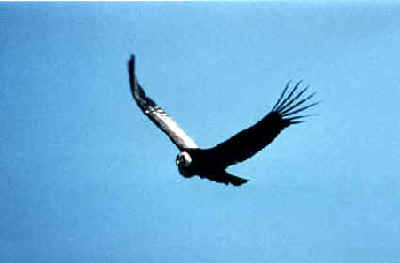
During our
November 2007 Chile tour,
we saw over a dozen Andean Condors fly by in procession.
In all during the tour, we saw from 15 to 20.
(photo by Alan Brady during A FONT tour)
Links:
More about the FONT Chile Tour in November 2007
List of Birds during our Chile Tour - November 2007
List of Birds during FONT Chile Tours
Upcoming FONT Chile Birding & Nature Tours
Iceland
- September/October 2007
This was the 15th FONT
birding & nature tour in Iceland. In late September & early October, as
usual, birds in Iceland are either migrating or about to, mostly to mainland
Europe. Staging flocks are found of waterbirds, such as Whooper Swans &
various geese; of shorebirds such as European Golden Plovers, and of landbirds
such as the Redwing. Some birds arrive in Iceland in September/October to spend
the winter, among the Iceland Gull (it breeds further north in Greenland). Other
birds seen in the fall are in Iceland all year, including the Gyrfalcon,
White-tailed Eagle, Black Guillemot, Barrow's Goldeneye, Harlequin Duck, and
Rock Ptarmigan. Again, in '07, it was a wonderful time to see these birds in
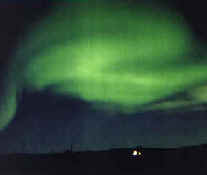
Iceland, as well as, after dark, the Northern Lights.
Links:
Cumulative List of Birds during FONT Tours in Iceland
Cumulative List of European Birds during FONT Tours
Upcoming FONT Birding & Nature Tours in Europe
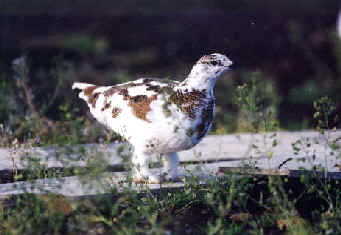
The Rock
Ptarmigan is always a treat to see in Iceland.
Some years there are more. Some years there are less. The population fluctuates.
On the basis of what we saw October 2007, it's been a good year for them.
This tour focused
on a most intriguing aspect of the natural world: "bird
migration". And it took place in some of the most pleasant settings
anywhere! Two places in particular that we visit are the southernmost point in
Sweden, at Falsterbo and Skanor, and the long, narrow island in the Baltic, off
southeastern Sweden, known as Oland. In 2007, at both of these places, again for
us, as in the past, during the last week of September, our experiences were
wonderful.
At Falsterbo and Skanor, the birds were funneling through. Those birds were of
various sorts, including: landbirds, waterbirds and raptors overhead in the sky.
There were many!
Even without birds, Oland would be a very nice place. Every little village there
is like a postcard. But with the birds, it's all the better - and it can't be
much better than thousands of cranes, and geese and ducks - in addition to an
assortment of others. Also in the thousands, one day, were Common Eiders, in
flocks on their migration south. As many as 35,000 eiders were tallied one
morning before 10am, and they continued beyond that. Distracting from that,
however, were White-tailed Eagles (both adult and immature), and small trees
near the coast that were dripping with Goldcrests and European
Robins. At the
bird-banding (or ringing) station at the south end of Oland, one day during our
visit, the bird "number 1 million since 1946" was banded (or, as the
Europeans say, ringed). It was a European Robin.
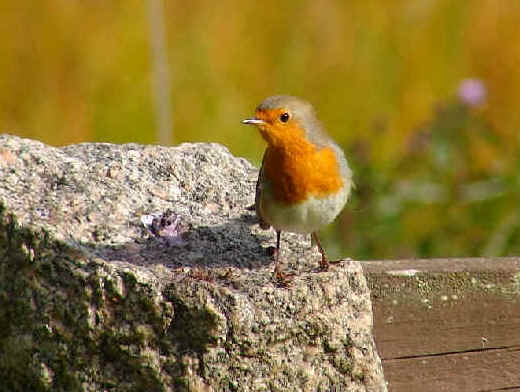
A European
Robin photographed during the FONT Sep 07 Sweden tour
(photo by James Scheib)
Links:
More about the FONT Sweden Tour in September 2007
Birds & Other Wildlife during our Sweden Tour - September 2007
Cumulative List of Birds in Sweden during FONT Tours
Cumulative List of European Birds during FONT Tours
Mammals
& Other Wildlife during previous FONT tours in Sweden
Photos of Swedish Nature & Scenery during the FONT Sep '07 Tour
Upcoming FONT Birding & Nature Tours in Europe
We've called this
our tour for "Jabiru & Jaguar".
And,
again this year, as last year, it was. We saw both.
In 2006, during our tour in the Brazilian region of Mato
Grosso do Sul, we saw a Jaguar at night, first as it was still and
then as it walked across a field.
During this tour, in 2007, our sighting of the
magnificent animal was during the day. From an open vehicle, a few feet above
the ground, we saw it, closely, not more than a few yards away. The spots on its
back were visible in the tall grass, and a few times the animal raised its large head to look
at us. What a sight! What an experience!
The Jabirus that day (also large) were wonderful to see as well.
We saw a number of them, usually standing or walking on the ground or at pools
of water. But a particularly nice sighting was of an adult Jabiru and 2 smaller ones
an a
nest high up in a tree.
One time, as we were observing a pair of Jabirus feeding in a pool, a
herd of more than a dozen White-lipped Peccaries walked by between us and
the birds. Among the peccaries, there were some very small ones, recently
born.
The Jabiru was certainly not the only large bird during the tour. There
were also Greater Rheas and Hyacinth Macaws. The latter were very
exciting to see, one morning, as one pair, then another, flew across against the
blue sky above us!
In all, 305 species of birds were found during this 10-day tour, the 41st FONT
birding & nature tour in Brazil.
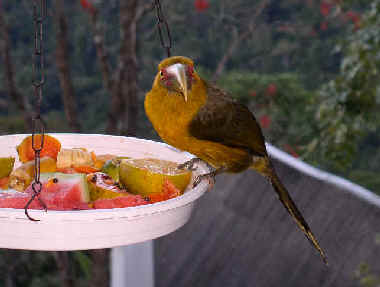
A Saffron Toucanet photographed as it feasted
during the FONT Aug 07 Brazil tour
(photo by Dan Coleman)
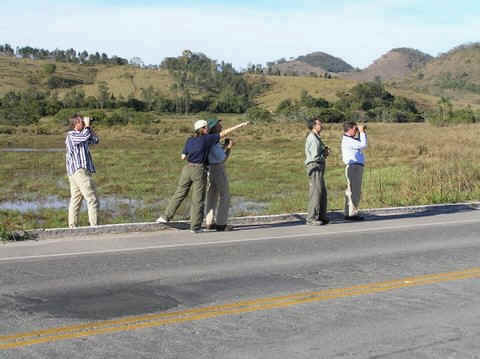
FONT tour participants birding along
the side of a quiet road
in the state of Minas Gerais
during our August 2007 tour in Brazil.
Links:
More
about the FONT Brazil Tour in August 2007
Birds & Other Wildlife during our Brazil Tour - August '07
Cumulative List of Birds during our Brazil Tours - Part 1 (Tinamous thru Flycatchers)
Cumulative List of Birds during our Brazil Tours - Part 2 (Antshrikes thru Grosbeaks)
Upcoming FONT Birding & Nature Tours in Brazil
During this tour,
our path crossed with a couple very special birds from Mexico: the Mexican
Yellow Grosbeak and the Rufous-backed Robin.
Another bird that we saw, very rare
for Arizona, was a Ruddy Turnstone at the edge of a lake.
These birds were, of
course, along with the regulars, including a number of Hummingbirds such as the
White-eared, and a fine assortment of raptors.
Among species in the last
category, we saw: Short-tailed Hawk, Black Hawk, Gray Hawk, Mississippi Kite,
Northern Crested Caracara, in addition to numbers of Cooper's, Red-tailed, and
Swainson's Hawks.
Certainly a highlight of the tour was when a pair of Montezuma Quail was
close
to us on the ground. The female had just walked in front of us across the road.
Our good sighting notwithstanding, we can assure you from our experience, that
Montezuma Quails after being seen well can quickly, however, become very
difficult to see in the grass.
Links:
More
about the FONT Arizona Tour in July 2007
Birds
& Other Wildlife during our Arizona Tour - July '07
Cumulative
List of Birds during our Arizona Tours
Mammals during our Arizona Tours (with photos)
Upcoming FONT Birding & Nature Tours in Arizona
This was the 14th
FONT tour in Guatemala. Among its highlights were:
an Olive
Ridley Sea Turtle hatchling that we watched on a beach as it made its way into the surf of the
ocean,
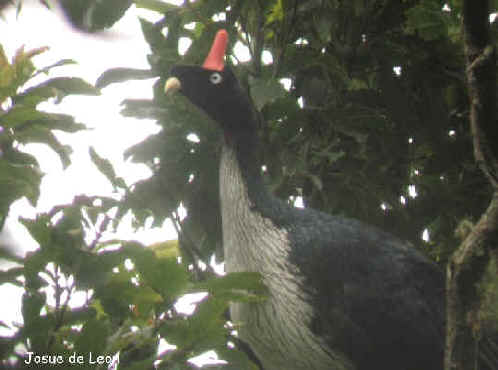
and then, the following day, seeing 2 spectacular Horned Guans! on
branches in trees just above us, in a mountain forest.
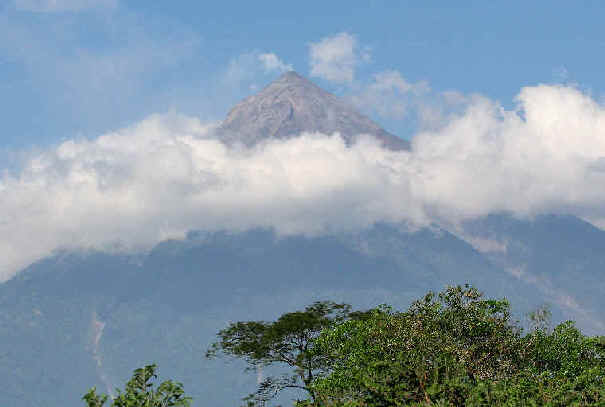
In the highlands of Guatemala,
there are numerous volcanoes,
and on one of them during our July 2007 Guatemala Tour,
we saw a very rare bird - the Horned Guan!
In the photo below, one of the two that we saw.
And again, during this tour, as during others in Guatemala previously, at the Mayan ruins of Tikal, the Orange-breasted Falcon was seen at a temple.
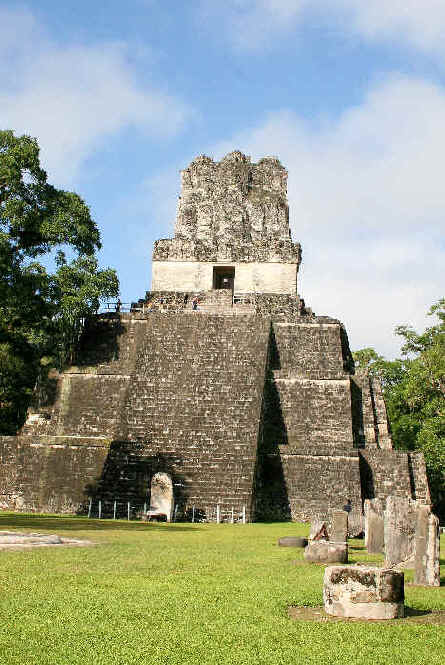
A Tikal temple
Links:
More about the FONT Guatemala
Tour in July 2007
Birds & Other Wildlife during our Guatemala Tour in July '07
Cumulative List of Birds during our Guatemala Tours (with photos)
Upcoming Guatemala Tour Itineraries
During this, our
28th birding & nature tour in Japan, and
our 11th in the spring, we visited 5 islands. 2 among them were the major
Japanese islands of Honshu and
Kyushu. Also we went to the more-southerly islands of Okinawa
and Amami.
And the other island we visited was a small one, offshore from Honshu in the Sea
of Japan, called Hegura. Although
the island is small (one can walk its perimeter in less than an hour), it
was on Hegura that we saw biggest number of birds: 111 of the 204 species found
totally during the tour.
Our Spring 2007 Japan tour was our 6th to Hegura
Island. That tally of 111 species was our highest there (surpassing
the 102 species that we saw in 2004).
Hegura Island is a place to see not only
"Japanese" birds, but also some more common elsewhere in Asia.
Such birds, that are vagrants or rarities in Japan, that have been nearly annual
for us on Hegura, have included these, seen again during our tour in '07:
Mugimaki Flycatcher, Swinhoe's Robin, and Tristram's Bunting.
Other birds more of mainland Asia that we saw on Hegura in '07 were:
Little & Yellow-browed Buntings, Isabelline & Pied
Wheatears, Chinese Grosbeak, Daurian (or Purple-backed) Starling,
Black-naped Oriole, and the avian "star of the show" for the
Japanese birders also on the island, the Black Drongo.
On Hegura, we saw 2 Chinese Pond Herons. Nearby, on the picturesque Noto
Peninsula, a rural part of Honshu, on a wet ricefield, we saw a Chinese Heron.
From the passenger ferry between Hegura Island
and the Noto Peninsula, we saw Japanese Murrelet on the water, and
many Streaked Shearwaters in flight. (Yes it's a passenger ferry. On
Hegura, there are no motor vehicles other than 1 small red firetruck and 1 small
white ambulance.)
On the island of Okinawa (in a forested
region called Yambaru), we saw both the Okinawa Rail and the Okinawa
Woodpecker. The former was "new to science" in the 1980's. The
latter is very rare. The rail we saw at dusk our first day on the island. The woodpecker
we saw the next morning at a nest.
Another very rare bird was seen during our stay on the island of Amami.
It's an endemic, the Amami Thrush.
Also on that island we saw an animal that's seen only very rarely, the nocturnal
Amami Rabbit of the deep forest in the hills, where also after dark, one
night, we encountered at least 25 Ryukyu Scop-Owls. Most of them we
heard; a few we saw.
Among the birds that we saw on Kyushu were
the Fairy Pitta and the Copper Pheasant. Both of these are
certainly "notables"!
The latter is a Japanese endemic, as is the Green Pheasant that we also
were glad to see earlier during the tour. These Japanese pheasants
were really 2 of many sightings that we were happy to have in Japan in the
Spring of 2007.
The Black-naped Oriole is a bird most apt to
be seen on the Asian mainland,
but we saw a number of them nicely during our Japan Spring Tour
on Hegura Island in 2007.
Links:
More about the FONT Japan Tour in May 2007
Birds & Other Wildlife during our Japan Spring Tour - May 2007
Cumulative List of Birds during our Japan Tours (with photos)
Birds during FONT tours on Hegura Island (with photos)
Birds during FONT tours on the island of Amami
Birds during FONT tours on the island of Okinawa
Upcoming FONT Birding & Nature Tours in Japan
This tour was in southern and central Spain. It was the 24th FONT tour in that country, where it was springtime with the birding good indeed. In fields there were symphonies of larks. At those where we were with Great and Little Bustards, there were songs and displays of Calandra and Short-toed Larks. Crested Larks seemed to be everywhere. In mountains where Bluethroats were also singing on the tops of bushes, Skylarks were displaying with their seemingly never-ending song high in the sky. In southern Spain, waterbirds in and near the renowned Coto Donana Reserve included flocks of Flamingos, some rare White-headed Ducks, and the Red-knobbed Coot, a bird more often seen in Africa. Throughout the tour, we saw raptors, including Old World Vultures (Griffon, Eurasian Black, and Egyptian), Eagles (Short-toed, Booted, and Golden), and Kestrels (both Lesser and Common), just to name some. At one particular cliff, late one day, we saw nicely an adult Eagle Owl, and nearby two fluffy offspring. Again, the birding in Spain in the springtime, during April '07, was good indeed.
Links:
List of Birds during our Spain Tour - April 2007
Cumulative List of Birds during our Spain Tours
Upcoming FONT Birding & Nature Tours in Europe
Dominican
Republic (&
adjacent Haiti)
- April 2007
This was the second FONT tour in the Dominican Republic in 2007, and our 16th
tour there in all.
During this tour, we found 124 species of birds,
including most of the endemics, rarities, and specialties.
Among them were: the
LaSelle Thrush, Hispaniolan Crossbill, and Golden Swallow.
Always good to see,
as they were again, in the Dominican Republic were: the Hispaniolan Trogon, both
of the Todies (the Broad-billed & the Narrow-billed), the
Antillean Piculet,
and the Flat-billed Vireo.
At dusk, one evening, we encountered both the Least
Poorwill and the Hispaniolan Nightjar.
In April, some birds that had wintered in
South America had arrived such as the Antillean Nighthawk and the Least
Tern.
Additionally, there were migrants, and the resident breeding birds were in song
on territory.
At the shore of the large lake, Lago Enriquillo, about 200 feet
below sea-level, in addition to American Flamingos and other waterbirds, there
was, on land, the rare Rhinoceros Iguana.
Links:
List of Birds during our Dominican Republic Tour - April 2007
Cumulative List of Birds during our Dominican Republic Tours
Upcoming FONT Birding & Nature Tours in the Caribbean
This was our 27th birding tour in Puerto Rico, and again a good one! Just about
all of the endemic and specialty birds that we sought were seen. (Unfortunately,
the very rare Puerto Rican Parrot has become quite difficult to find, and we did
not see it as we have in the past.)
Among the fine birds that we did see were:
White-tailed Tropicbird, Key West Quail-Dove, Puerto Rican Lizard-Cuckoo, Puerto
Rican Tody (always a favorite), Adelaide's Warbler, and both the Puerto Rican
Spindalis and the Puerto Rican Tanager.
At one rather remote spot in
southwestern Puerto Rico, we saw 4 members of the blackbird tribe at once: the
rare Yellow-shouldered Blackbird along with Greater Antillean Grackles, the
Shiny Cowbird, and the colorful Troupial. Not long prior to that we had seen the
Puerto Rican (formerly the Black-cowled) Oriole, making 5 icterids seen during
an hour.
During 2 of our nights, in addition to hearing the Coqui Frogs outside our
rooms, we heard the varied vocabulary of the Puerto Rican
Screech-Owl.
Links:
More about FONT Birding &
Nature Tours in Puerto Rico
List of Birds during our Puerto Rico Tour - April 2007
Cumulative List of Birds during FONT Puerto Rico Tours
Upcoming FONT Birding & Nature Tours in the Caribbean
We have not done many
Belize tours over the years; this was only our second since 1992.
But that small
country is a wonderful destination for nature in general and birds in
particular.
Over 200 species of birds were found during our tour, in an
assortment of habitats, including an offshore coastal caye (or island), where
off its shore there was some fine snorkeling, and onshore: savannas and
wetlands, and forests of pines in the hills and tropical broadleaf trees in the
lowlands.
Among our favorite birds were: a Northern Potoo perched ever so
still
during the day, a Jabiru at its nest, a Southern Lapwing seen our first
day of the tour, a Shiny Cowbird, most likely one of the first in the country, and 2 species of Catbirds
seen together, the
Gray and the Black (the former a non-breeding visitor on the offshore island
where the latter is an uncommon resident, a globally near-threatened species).
Other nature included: West Indian Manatees
(called "sea cows" in Belize), Yucatan Black Howler Monkeys (called
"baboons" in Belize), a Red Brocket Deer (called "antelope"
in Belize), and the Paca (in Belize called the "gibnut"). We didn't
see a Jaguar, but we did find large fresh tracks of one in the mud.
In the sea,
there were a number of colorful tropical fish at the reef, along with rays and a
Hawksbill Sea Turtle. Easy to get to, this great natural destination is one that
we'll be visiting in the future many more times than we have in the
past.
Links:
More
about the FONT Belize Tour in March 2007
Lists of Birds & Other Wildlife during our Belize Tour - March 2007
Cumulative Lists of Birds & Other Wildlife during our Belize Tours
A Photographic Sampling of the Nature & Culture in Belize from the FONT March '07 Tour
Upcoming FONT Birding & Nature Tours in Central America
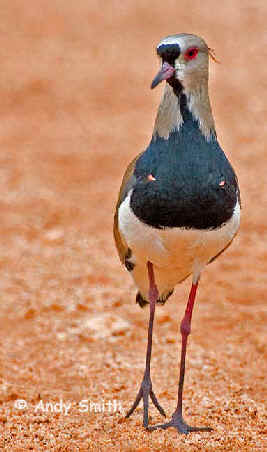
Not that
long ago, the Southern Lapwing (pictured
above),
a common bird in South America,
occurred in Central America about as far north
as the Panama Canal.
More recently it's spread into Costa Rica
(where during our tours we've seen adults at a nest).
During our March 2007 tour in Belize,
we saw a Southern Lapwing at Crooked Tree.
We're told that it appeared there over a year
prior to our tour - and it stayed.
The
Dominican Republic (& adjacent Haiti) - Feb/Mar 2007
This was the 15th FONT
birding & nature tour on the Caribbean Island of Hispaniola, where a number
of rare & endemic birds occur, along with various Caribbean specialties.
Over 100 species of birds were found during this tour, including most of the
endemics. 2 species during this tour were "new" for our cumulative
Dominican Republic list, bringing it up to 185. Those 2 species were Brown Booby
and Wilson's Phalarope (the latter a vagrant on Hispaniola).
As we've done in
the past, we visited the Haitian border where we saw some birds in that country.
In addition to birds during the tour, we saw the rare Rhinoceros Iguana (endemic
to Hispaniola), the Buffy Flower Bat, and a fine assortment of butterflies. (Another
FONT tour took place in the Dominican Republic in April '07.)
Links:
Birds & Other Wildlife during our Dominican Republic Tour in Feb/Mar. '07
Cumulative List of Birds during our Dominican Republic Tours
Upcoming Caribbean Tour Itineraries
This birding &
nature tour was in a country, Honduras, not known as much for such tours as
let's say Costa Rica, Trinidad, and others. But Honduras is a wonderful place
for such travel, with a variety of habitats to be explored including rain
forest, cloud forest, pine forest, grassland, and mangrove-lined estuaries.
During our tour, we visited each of the habitats just mentioned, each with its
set of birds.
Among the more than 200 species during the tour, we saw one that's
"resplendent", and another that's "lovely". The Resplendent
Quetzal was in a cloud forest filled with the beautiful sounds of solitaires
and nightingale-thrushes. The Lovely Cotingas that we saw in a tree feeding on
fruits. There were both male and female cotingas, about a half-dozen in all. The
male's a brilliantly bright blue.
It was a colorful day, that day, for birds,
also with chlorophonias, honeycreepers, tanagers, toucans, trogons, and a
selection of hummingbirds.
Yes, Honduras is a good place to go for birds, and
we'll be going
back.
Links:
Birds & Other Wildlife during our Honduras Tour in Feb. '07
Cumulative List of Birds during our Honduras Tours
Upcoming Central America Tour Itineraries
This was the 27th
FONT birding & nature tour in Japan, and the 17th such tour in the winter,
when among the highlights are the cranes and the eagles.
During this tour, there
were 5 species of Cranes (Red-crowned, White-naped, Hooded, Common, &
Sandhill), and large numbers of both Steller's Sea-Eagles and White-tailed
Eagles were observed.
And once again, as during every FONT Japan tour in the
winter, we saw the big & rare Blakiston's Fish-Owl.
Other notable bird
species during the tour included: Copper Pheasant, Solitary Snipe, Black-faced
Spoonbill, Spectacled Guillemot, Long-billed Murrelet & other alcids, Laysan
Albatross, Mandarin Duck, and Hodgson's Hawk-Eagle.
During the tour the 3 main
Japanese islands of Honshu, Hokkaido, and Kyushu were visited.
Lastly we went to
the smaller island of Amami, where we saw the bird specialties (endemic or
nearly-so) including: the Amami Woodcock, Amami Thrush, Lidth's Jay, and
Ryukyu Robin.
During this tour, Japanese Macaques (or "Snow Monkeys") were
seen on 2 islands, Honshu &
Kyushu.
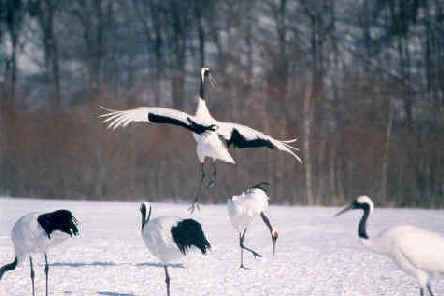
Red-crowned Cranes were seen, and
enjoyed, again
during the FONT Japan Tour
on Hokkaido in January 2007
Links:
More about the FONT Japan
Tour in January 2007
Birds & Other Wildlife during our Japan Winter Tour - January '07
List of Birds during FONT Japan Tours in 2007
Cumulative List of Birds during our Japan Tours (with photos)
Upcoming FONT Birding & Nature Tours in Japan
Guatemala
- December 2006 / January 2007
Again, our annual
holiday tour was in Guatemala, a great destination not just for the festivities
of the season, but also for a nice assortment of birds and other nature. And
certainly not to be ignored is that the weather during the time of the tour was,
as usual, about perfect. Thus, there were the components for an enjoyable tour,
in each of the varied habitats that we visited, including the marshes near the
Pacific, the high mountain forests nestled between volcanic peaks, and during
our treks along rivers and forest trails by temples remaining from a
civilization that flourished over a thousand years ago. Collectively, we found
over 250 species of birds in these settings, where we also saw animals,
butterflies, and wonderful scenery, during this, the 13th FONT tour in
Guatemala.
Click the link above to other links with a fine collection of photos taken
during the tour, and lists of birds and other wildlife during both this tour and
in Guatemala cumulatively during all of our tours there. About 550 birds are now
in
the cumulative list.
Links:
More about the FONT Guatemala Tour in Dec '06 / Jan '07
Photos
of Nature & Scenery from our Guatemala Tour Dec '06/Jan '07
Birds & Other Wildlife during our
Guatemala Tour in Dec '06/Jan '07
Cumulative List of Birds during our Guatemala Tours (with photos)
Upcoming
FONT Birding & Nature Tours in Guatemala
